9 min read

HIPAA-Compliant Mass Texting & Recalls for Cerbo EHR Practices

HIPAA-Compliant Mass Texting & Recalls for Cerbo EHR Practices
💡 HIPAA-compliant mass texting and patient recalls for Cerbo EHR practices help you bring back patients who drift off care. Curogram fills a gap that Cerbo does not.
  • Reach hundreds of overdue patients by text in under 5 minutes.
  • Build segments from Cerbo data, like patients not seen in 90+ days.
  • Send personal recall texts with a direct booking link.
  • Track replies, bookings, and revenue in one dashboard.
  • Stay fully HIPAA-compliant with audit trails and opt-outs.
Based on our internal data, one practice saw a 35% reconversion rate and recovered 1,240 patients. Most lapsed patients are not gone. They are simply unreached.

Open your Cerbo scheduling report and scroll the overdue list. You likely see names you remember. A thyroid plan that was working. A gut protocol near its retest. Each one drifted away quietly, not by choice.

This is the hard truth for integrative and functional medicine teams. Cerbo gives you deep clinical tools and a clear care trajectory. Yet it offers no built-in way to reach those patients at scale. So the list keeps growing.

You cannot call 200 people in a day. Portal messages rarely get read. Email blasts feel cold and easy to ignore. Meanwhile, your front desk is already buried in intake, scheduling, and supplement orders.

That is where HIPAA-compliant mass texting and patient recalls for Cerbo EHR practices change the math. Instead of one slow call at a time, you send a personal text to a whole group at once. The message lands in the place people actually check. And it carries a link to book in one tap.

This is what we call mass messaging for an integrative medicine EHR. It is not marketing. It is clinical outreach. A recall simply reminds patients to continue care they already started.

The opportunity is real and measurable. Based on our internal data, a multi-location practice using SMS recalls saw a 35% appointment reconversion rate.

That same effort brought back 1,240 patients from recall texts alone. These were not new leads. They were patients already in the practice's pipeline.

In this guide, we will name the slow problem draining your panel. We will show how automated lapsed patient outreach for Cerbo EHR works. And we will walk through a real "after" picture you can copy this quarter.

The Villain: The Silent Attrition

Integrative and functional medicine does not work like urgent care. Patients do not arrive once and leave fixed. Care unfolds over months, not minutes.

A typical plan looks like this. First, a 90-minute consult. Then lab work, a 6-week check-in, supplement changes, and a 3-month reassessment. After that, ongoing fine-tuning. The patient is meant to return again and again.

Direct primary care (DPC) and concierge practices run on a similar rhythm. They manage capped panels of 300 to 600 members. Those members pay monthly for access and steady communication. In both models, return visits are the financial engine.

So attrition is not one dramatic event. It is a slow fade. And Cerbo's clinical tools, while strong, cannot detect that fade or act on it.

How the Slow Fade Actually Happens

Picture a new patient who leaves with a 12-week plan. She feels hopeful. Her lab draw is set for week 8.

At week 6, life gets busy. She forgets to book the draw. Cerbo shows no upcoming visit, but no alert fires. By week 10, she has gone quiet.

By then, 30 other patients have also missed key touchpoints. The front desk could call each one. With everything else on their plate, that is simply not possible.

A portal message goes out. It goes unread. She still means to follow up. But intent without a nudge becomes delay, and delay becomes loss. Three months later, she sees someone else.

What the Slow Fade Costs

Let's run a simple example to show the stakes. These are illustrative figures, not survey data.

Practice detail

Example value

Patients seen per day

15–20

Average visit value

$300–$500

Annual attrition rate

15–25%

Patients lost per year

150–400

Remaining visits per patient

3–5


Multiply those out and the loss is large. Even at the low end, that is well over six figures a year. And that revenue came from patients already in your care.

For DPC and concierge teams, the math is recurring. Each lapsed membership can mean $100 to $300 a month. That loss compounds every single month it goes unaddressed.

The clinical cost stings just as much. A patient who quits mid-protocol loses real progress. Months of careful work can unravel.

The Human Side of It

The physician-owner feels this most. They scan the overdue list and recognize faces. Some are 3 months late. Some are 6 months. A few have not been seen in a year.

They want to reach out. But Cerbo has no mass outreach tool built in. The portal feels useless here, since these are the people who stopped logging in. Calling 50 names would eat a full day.

So the list grows. Each month, another 10 to 15 patients slide from "overdue" to "lost." This is the silent attrition. It is not a fire alarm. It is a slow leak that drains a quarter of your panel before you notice.

The Guide: The Reactivation Engine

Curogram acts as your reactivation engine. It is a HIPAA-compliant mass SMS platform built to bring patients back. With it, you can reach hundreds of people in minutes through the channel they actually use.

Think of it as patient reactivation for functional medicine Cerbo practices. Instead of slow calls, you send targeted texts. The note reads like a personal message, not a sales blast.

How the Mass SMS Campaign Manager Works

The tool centers on simple, smart segments. You group patients by clear rules drawn from Cerbo. For example, anyone not seen in 90+ days. Or patients in a specific protocol or treatment phase.

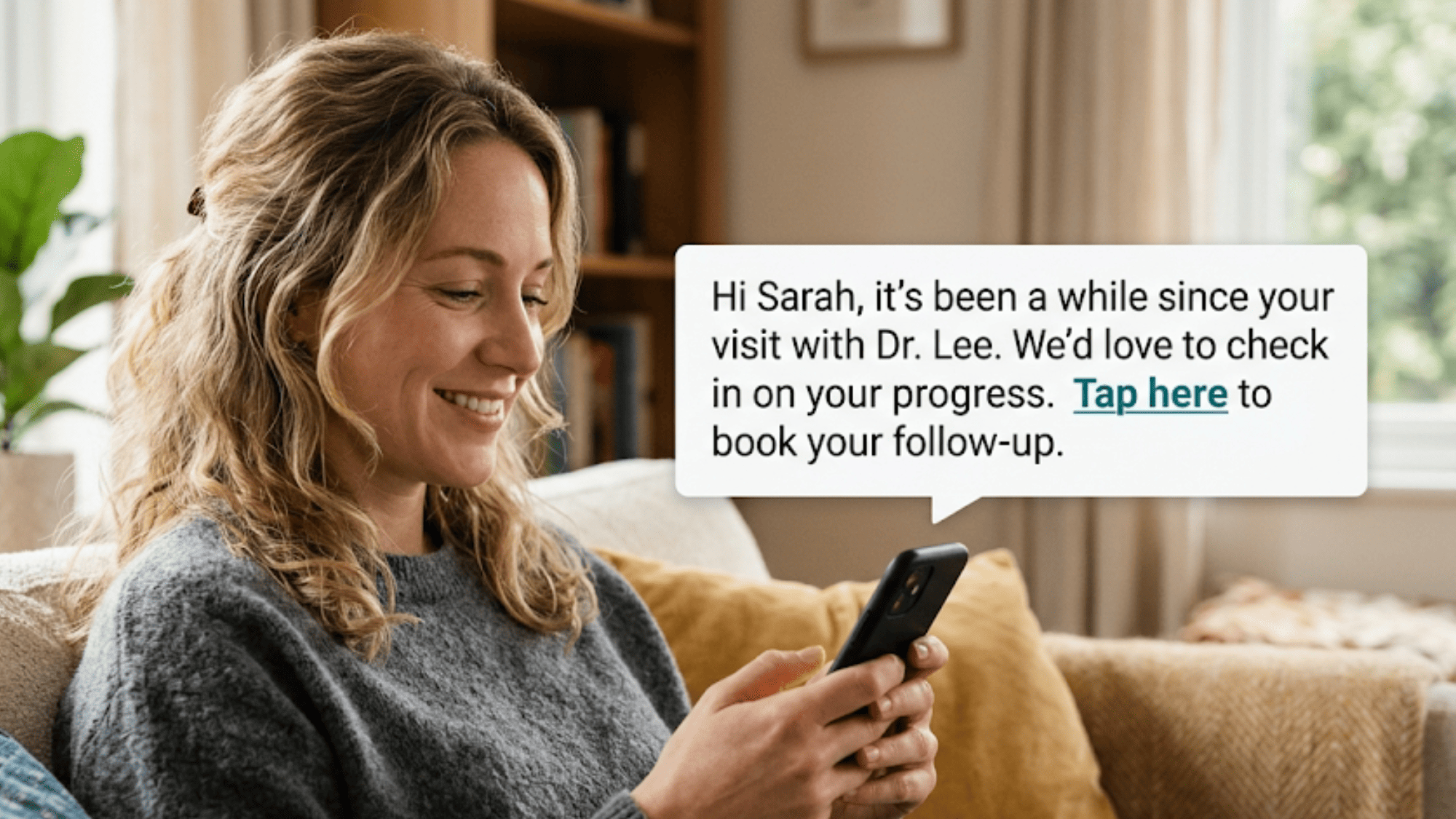
Then you send one warm, personal text to the whole group fast. A typical message looks like this:

"Hi [Name], it's been a while since your visit with Dr. [Provider]. We'd love to check in on your progress. Tap here to book your follow-up."

The text carries a direct scheduling link. Replies flow back to one dashboard as two-way chats. So staff can answer questions before the patient books. You watch delivery, replies, and bookings update in real time.

How the Cerbo Integration Closes the Loop

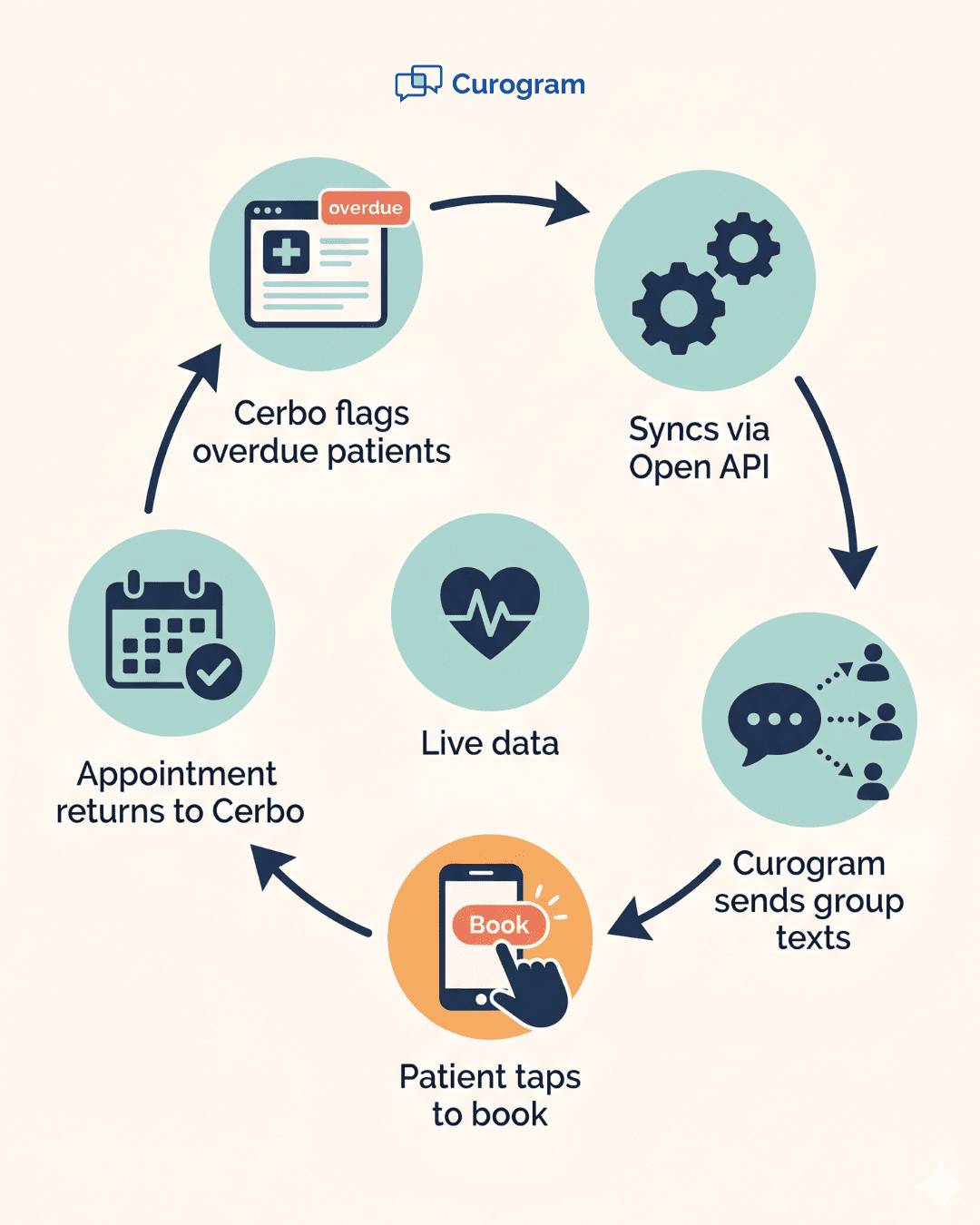
This is where Cerbo patient recall campaigns by SMS become data-driven, not guesswork. Curogram connects through Cerbo's Open RESTful API. Visit history, last-seen dates, and contact info sync over automatically.

That sync powers real targeting. You build segments from true clinical data, not hand-typed lists. When a patient replies and rebooks, the new visit flows back into Cerbo's schedule.

So the workflow is a clean, closed loop. You spot overdue patients in Cerbo. You reach them through Curogram. Then you return them to Cerbo's pipeline. That is automated lapsed patient outreach for Cerbo EHR, start to finish.

Circular diagram showing HIPAA-compliant patient recall workflow between Cerbo EHR and Curogram

Why this Fits Integrative Care So Well

Longitudinal care and recalls are a natural match. Your patients are supposed to come back. A recall is not a cold pitch. It is a nudge to continue care already in motion.

That framing matters if "marketing" makes you uneasy. A recall is clinical outreach, plain and simple. It serves the patient's own treatment goals.

HIPAA mass text tools also help Cerbo DPC and concierge practices in a second way. They keep the whole panel engaged. You can send wellness tips, seasonal health notes, and renewal reminders by text. That steady contact reinforces membership value and slows churn.

The Success: The Connected Panel

The shift here is real and trackable. Your overdue list stops being a sad, static report. It  becomes a campaign you can launch in minutes.

Based on our internal data, the results are strong. A multi-location practice ran SMS recalls and saw a 35% appointment reconversion rate. From those texts alone, 1,240 patients came back for care.

The channel is the key reason this works. Texts get read, and they get read fast. Portal messages and email rarely come close. Most people open a text within minutes of getting it.

The Shift from Leak to Loop

Name the change clearly: from silent attrition to a connected panel. Every 90 days, you run a recall targeting patients who drifted. DPC teams send monthly wellness texts that prompt preventive visits.

Your panel stops being a quiet database. It becomes an active, engaged community. You finally reach every patient, not just the few who check the portal or pick up the phone.

What it Looks Like on a Real Monday

It is the first Monday of the quarter. The Practice Manager opens Curogram. She builds a segment: 87 patients not seen in 90+ days.

She reviews the template and drops in the provider's name. Then she hits send. Within an hour, 14 patients reply.

By Friday, 31 patients have rebooked. One texts back, "Thanks for reaching out — life got busy. Booking now." Another asks about her supplement plan, and staff answer right in the chat before booking her.

The physician scans the week's schedule. A thyroid patient who vanished four months ago is back. Her protocol had been working all along.

The practice did not lose her to attrition. It simply had not reached out yet. Now it can reach out at scale, every quarter, on autopilot.

Why a Connected Panel Beats a Growing Overdue List

A growing overdue list is a sign of trapped value. Each name is a patient who meant to return. The intent is already there. What's missing is a timely, easy nudge.

A connected panel flips that dynamic. Outreach becomes routine, not heroic. You no longer rely on staff to find spare hours for 50 phone calls. The system surfaces who to reach and sends the message for you.

This is the heart of mass messaging for an integrative medicine EHR. Cerbo holds the clinical story. Curogram carries that story back to the patient by text. Together, they keep care continuous.

The payoff stacks up over time. A recovered patient often has 3 to 5 visits left in their plan. So one reactivation is rarely a single visit. It is a restored relationship.

For DPC and concierge teams, the win is retention. A member who feels seen renews. A member who drifts cancels. Steady, useful texts tip the balance toward staying.

That is why the connected panel matters so much. It turns a slow, silent loss into a steady, visible gain. And it does so with tools your team already knows how to use.


Patient at home reading a HIPAA-compliant recall text from her provider with a tap-to-book link

What Makes Curogram the Right Fit for Cerbo Practices

Why does Curogram pair so well with Cerbo? Because the two tools solve different halves of the same problem. Cerbo runs your clinical world with depth and care. Curogram runs your patient outreach at scale.

Cerbo was built for integrative and functional medicine charting. It tracks long protocols, labs, and supplement plans with real detail. What it does not include is a native mass texting or recall tool. That gap is exactly where patients slip away.

Curogram fills that gap without adding clutter to your day. It connects through Cerbo's Open RESTful API, so data flows both ways. Patient lists, visit dates, and contact info sync over on their own. New bookings made by text return straight to Cerbo's schedule.

The platform is also built for trust and safety. Curogram is HIPAA-compliant and SOC 2 certified. Every message runs through an encrypted system with full audit trails. Patients can opt out anytime by replying STOP, which keeps you TCPA-safe.

For your team, the daily use is simple. Staff build a segment, pick a template, and send. Replies arrive as two-way chats in one place. There is no new clinical system to learn and no double charting.

For DPC and concierge teams, the value runs deeper than recalls. You also get panel-wide messaging for wellness tips and renewals. That steady contact protects the recurring revenue your model depends on. It keeps members feeling cared for between visits.

The result is a clean division of labor. Cerbo handles clinical continuity. Curogram handles patient continuity. One keeps the record. The other keeps the relationship.

That balance is the real reason practices add Curogram. It does not replace Cerbo. It completes it.

Conclusion: Stop Losing Patients You've Already Earned

Here is the simple takeaway. Cerbo is excellent for the clinical side of care. It tracks your charts, protocols, and long treatment plans well.

But Cerbo has no built-in way to reach patients who drift. That gap is where the silent attrition lives. And it quietly drains revenue you already earned.

Curogram closes that gap. Its HIPAA-compliant mass texting and patient recalls for Cerbo EHR practices bring lapsed patients back. The same tool keeps DPC and concierge panels engaged month after month.

Think of it this way. Cerbo protects your clinical continuity. Curogram protects your patient continuity. One holds the record. The other sends the text that brings them home.

The proof is in the numbers. Based on our internal data, recalls drove a 35% reconversion rate. That effort brought back 1,240 patients who had drifted off care. Most of them were never truly lost. They were only unreached.

So look at your overdue list one more time. Every name is a patient who meant to return. They just needed a nudge through a channel they check.

You do not have to call them one by one. You do not have to hope they log in to a portal. You can reach the whole group in minutes, with a personal text and a booking link.

Make outreach routine instead of heroic. Turn a growing list into a quarterly habit. Trade slow loss for steady, active re-engagement.

Stop letting earned patients slip away in silence. Schedule a demo and watch how recalls reach hundreds of lapsed patients in minutes.


Frequently Asked Questions

How do recall texts stay HIPAA-compliant when sent to so many patients at once?

They run through Curogram's encrypted, SOC 2 platform with full audit trails. Each text invites a patient to schedule without listing diagnoses or treatment details. Patients can opt out anytime by replying STOP.

Why do text recalls work better than portal messages or phone calls?

Most people read texts within minutes, while portal notes and emails sit unread. Texts also reach patients who stopped logging in. And one message can reach a whole segment, which no phone tree can match.

How can I target only certain patients instead of my whole list?

You build segments from data synced out of Cerbo. Group by last visit date, provider, appointment type, or protocol phase. So you can text patients not seen in 90+ days while leaving everyone else out.

Why is mass texting a good fit for integrative and functional medicine?

Care here unfolds over months, so patients are meant to return. A recall is not a cold pitch. It is a clinical reminder to continue a plan already in progress, which patients tend to welcome.

How does Curogram help DPC and concierge practices beyond recalls?

It powers panel-wide messaging, not just reactivation. You send wellness tips, seasonal notes, and renewal reminders by text. That steady contact reinforces membership value and slows the churn that erodes recurring revenue.