
How Telehealth Enhances Patient Engagement
 Carylee Gali : 4/4/22, 7:00 AM
Telehealth helps establish patient engagement and expands care beyond the office using video conferences, SMS, and remote patient monitoring (RPM).
5 min read

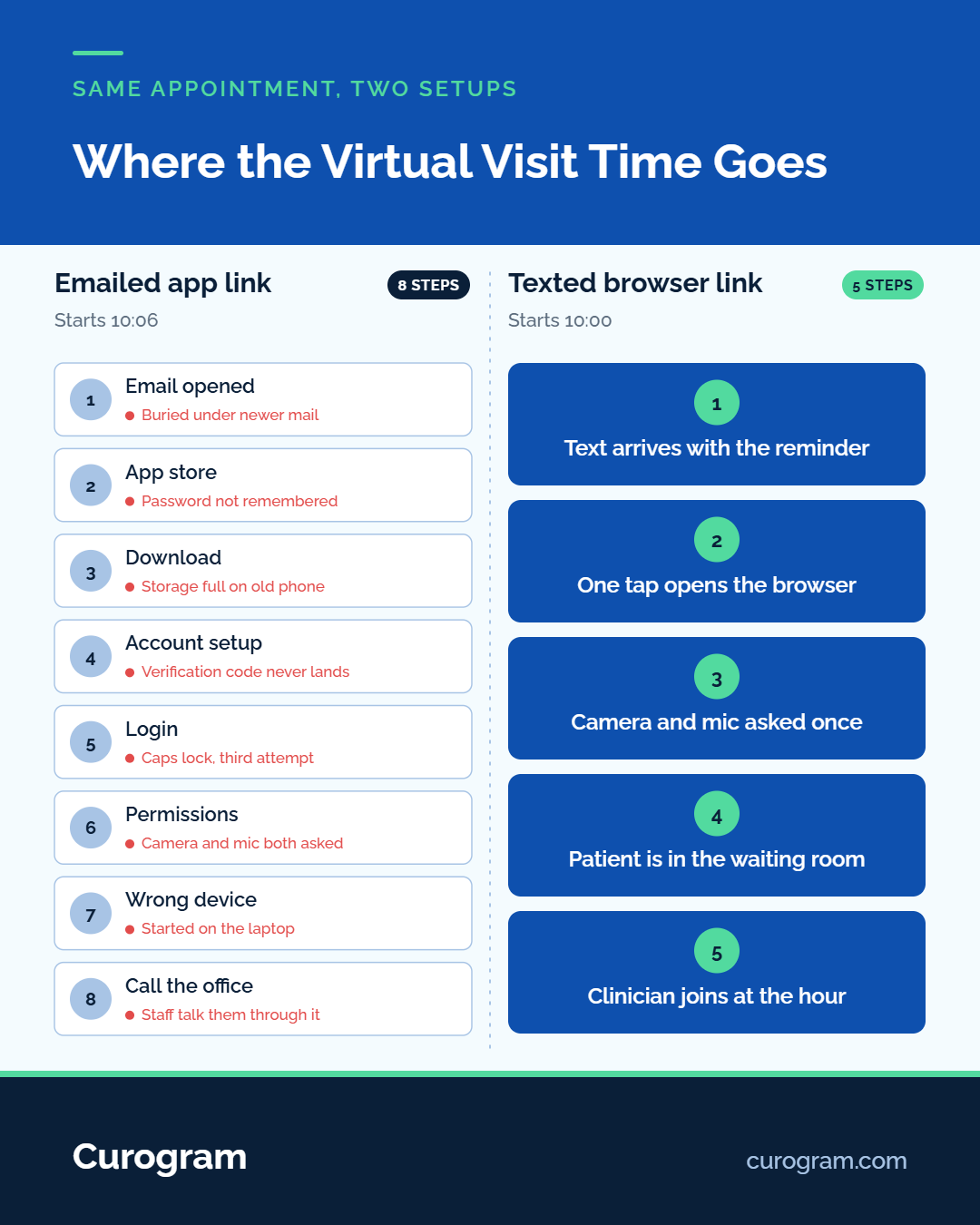
The visit was booked for 10:00. At 10:06, the doctor is still reading an app store link aloud to a 74-year-old.
That is where telehealth efficiency goes. Not to the technology, but to the six minutes before it starts working.
Seven real savings sit behind a virtual visit. Each one is measurable, and each one survives only if joining takes a single tap.
Our position is that the gains are proven and the setup is where practices lose them. The federal data backs that up more than any vendor page does.
Physician use of telemedicine has fallen since 2021, and it fell hardest in solo and rural practices. Those are the places with nobody spare to talk a patient through a download.
A virtual slot has no room to prepare and no parking lot. That changes what a schedule can hold.
Rooming, vitals, and the walk to the exam room all disappear. A 15-minute follow-up becomes a 15-minute follow-up rather than 25 minutes of building time.
Late cancellations stop being dead air. A virtual patient can be moved up by 40 minutes with one text, because nobody has to drive.
Most scheduling friction is not the calendar. It is the three voicemails it took to agree on a time.
Send the slot by text, and the reply comes back in minutes. The confirmation writes to the chart, so the front desk never rekeys it.

Researchers matched 87,376 appointments at an urban academic health center and published it in JAMIA Open in 2024. Telemedicine no-shows came in at 5.2%.
In-person visits in the same system ran 6.6%. Taking the visit virtual removed the two usual reasons to miss it, transport and time off work.
That finding does not hold in every population, so read your own numbers before promising a figure to anyone.
An in-person reminder tells a patient where to drive. A virtual one has to carry the door with it.
Put the join link in the text. A patient ready five minutes early taps once instead of hunting through an inbox for a confirmation email.
Charting is where virtual visits cost more than in-person ones. That is a setup problem rather than a clinical one.
A separate video tool means the note starts in one window and lands in another. Start and end times get typed from memory hours later.
Time-based codes depend on those numbers. Guessing them is both a billing risk and a documentation one.
Practices looking at telehealth ROI for Elation Health start by checking that visit times sync to the chart automatically. The note is then built on a timestamp rather than a recollection.
Ask any vendor one question before signing. Does the visit record write back to the chart, or does somebody retype it?
Remote care works when the patient can get in. Everything else is secondary to that one step.
Curogram Highlight: No App, No Login, One LinkCurogram's Virtual Visits open in the phone browser from a text link. Nothing to download, no account to create, no password to reset at 10:02. That matters most for the patients telehealth was built for. An 80 year old on a four year old phone can still join a visit. EMR integration is what sends the link with the reminder instead of someone pasting it by hand. Curogram's telehealth software connects with 70+ EMR and practice management systems. Curogram is HIPAA compliant and SOC 2 Type II certified. |
Most groups did not choose their virtual care tools. They collected them in 2020 and never stopped.
One department bought a video platform. Another used a different one. A third kept doing phone calls and writing notes afterward.
Each tool holds its own record of the visit. Pulling a year of virtual care into one report then takes a person and a spreadsheet.
Enterprise groups consolidating virtual visits on GE Centricity route every modality through one platform that writes to the chart. The data arrives where the billing already lives.
Reporting stops being an archaeology project. Volume by site, by provider, and by visit type comes out of one system.
Continuity is the clinical argument for telehealth, and behavioral health is where it shows up first.
Weekly therapy survives a snowstorm, a sick child, and a shift change when the session is a link. A missed week in behavioral health is not a neutral event.
Practices running telehealth in InSync send the session link from the scheduling dashboard and document in the same window. Session details and timestamps store against the record.
A video visit shows the pill bottles on the counter and the stairs the patient mentioned. That context never arrives in an exam room.
Ask the patient to walk to the medicine cabinet. Two minutes of that beats a reconciliation form every time.
Access is the claim most often made for telehealth and the one the federal data complicates.
The National Center for Health Statistics published figures in June 2026 covering office-based physicians. Use fell from 86.5% in 2021 to 80.0% in 2024.
|
Practice type |
2021 |
2024 |
|---|---|---|
|
All office-based physicians |
86.5% |
80.0% |
|
Rural, outside a metro area |
83.3% |
60.9% |
|
Solo practice |
76.3% |
70.6% |
|
Practices of 11 or more |
96.8% |
89.6% |
|
Surgical specialties |
74.8% |
60.1% |
Rural practices dropped 22 points. The places telehealth was supposed to reach are the ones letting go of it.
Congress extended the Medicare telehealth flexibilities in the Consolidated Appropriations Act, 2026, signed on February 3, 2026. They now run through December 31, 2027.
Patients can keep taking visits at home, with no geographic restriction. Audio-only stays covered where it fits clinically, and FQHCs and rural health clinics can still bill as the distant site.
Reimbursement is not what is pushing rural practices out. Setup friction is, and that is a fixable problem.
All seven savings are real. Shorter slots, fewer no-shows, cleaner notes, less travel, one data trail, steadier follow-up, and wider reach.
Every one of them runs through the same gate. If the patient cannot join in a tap, the visit starts late, and the savings are gone.
That is why the NCHS numbers matter more than any benefit list. Solo and rural practices gave up telemedicine first, and they had the least slack to absorb the friction.
Coverage is settled through 2027, so the policy excuse is gone. What is left is whether joining a visit takes one tap or six minutes.
See what a no-app virtual visit looks like from the patient's phone and from your schedule. Book a Curogram demo.
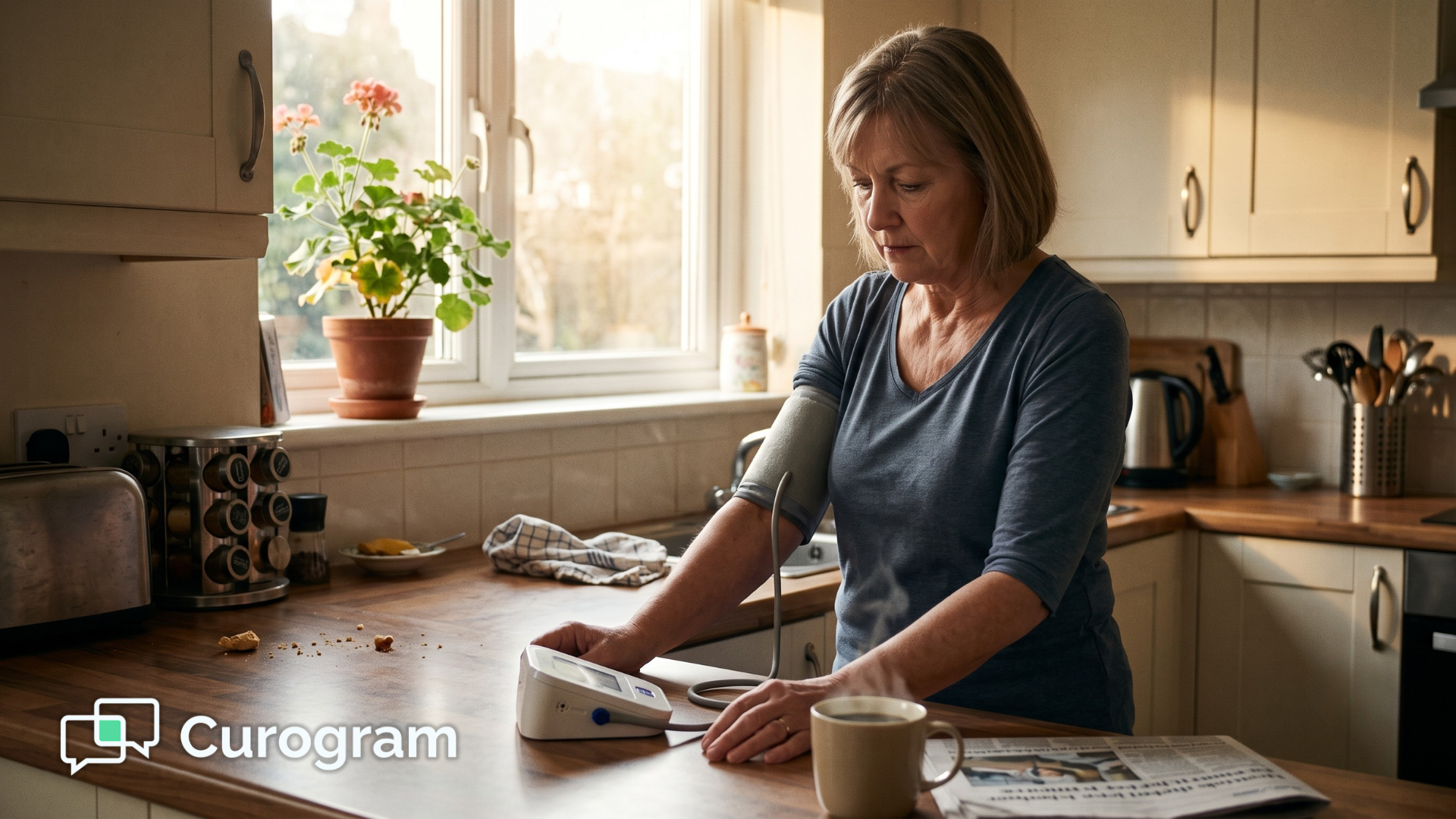 Carylee Gali : 4/4/22, 7:00 AM
Telehealth helps establish patient engagement and expands care beyond the office using video conferences, SMS, and remote patient monitoring (RPM).
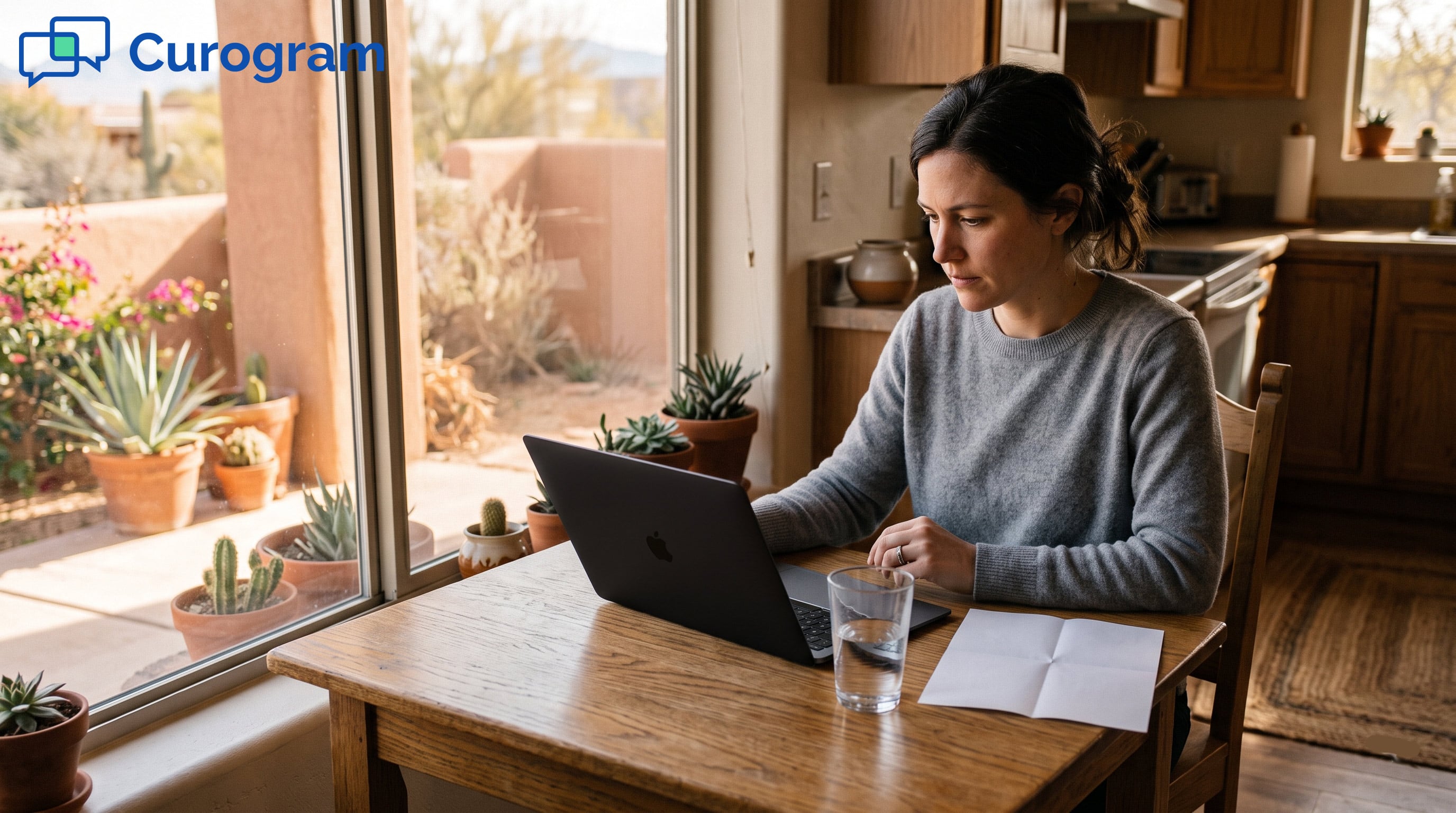
 Michael Hsu : 6/8/20, 8:43 AM
Telehealth is picking up pace, but are you ready to transition to telemedicine? Learn about laws and regulations on practicing telemedicine in...
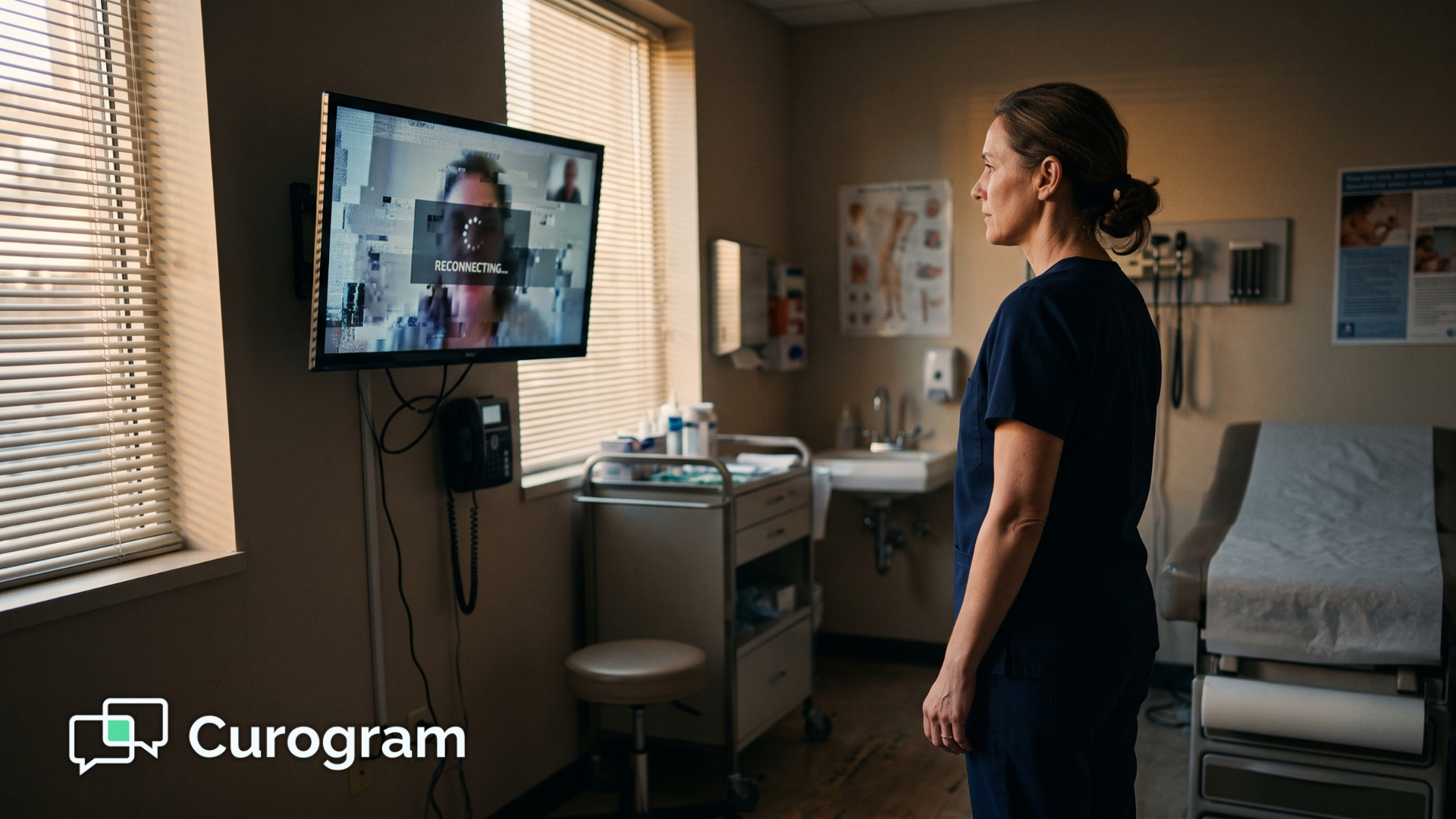 Carylee Gali : 11/23/22, 4:18 PM
The six biggest barriers to telemedicine, what they cost your practice, and how to overcome each one with tools your team will use.