10 min read

Telemedicine for GE Centricity: Virtual Care Patchwork Consolidation

Telemedicine for GE Centricity: Virtual Care Patchwork Consolidation
💡 No-app telemedicine GE Centricity EHR integration virtual visits lets enterprise practices replace 3 to 5 leftover COVID-era platforms with one unified system. GE Centricity has no built-in telehealth. So most clinics still juggle Doxy.me, Zoom for Healthcare, and other tools at the same time.

This patchwork creates duplicate vendor costs of $50K to $100K each year. It also blocks Centricity integration and forces patients to download many apps.

Curogram fixes this through one Centricity-linked platform. Patients get an SMS link, tap it, and join the visit. No app. No login. Visit notes flow straight into Centricity charts. Vendor costs drop by 60% to 70%, and deployment takes just 2 to 4 weeks.

You adopted telehealth in March 2020 to keep your doors open. Your dermatology team picked Doxy.me. Oncology went with Zoom for Healthcare. Psychiatry chose a third tool for privacy reasons.

It worked. Patients got care. Revenue kept flowing. You survived the crisis.

But here we are, four years later. And you are still running all five of those platforms.

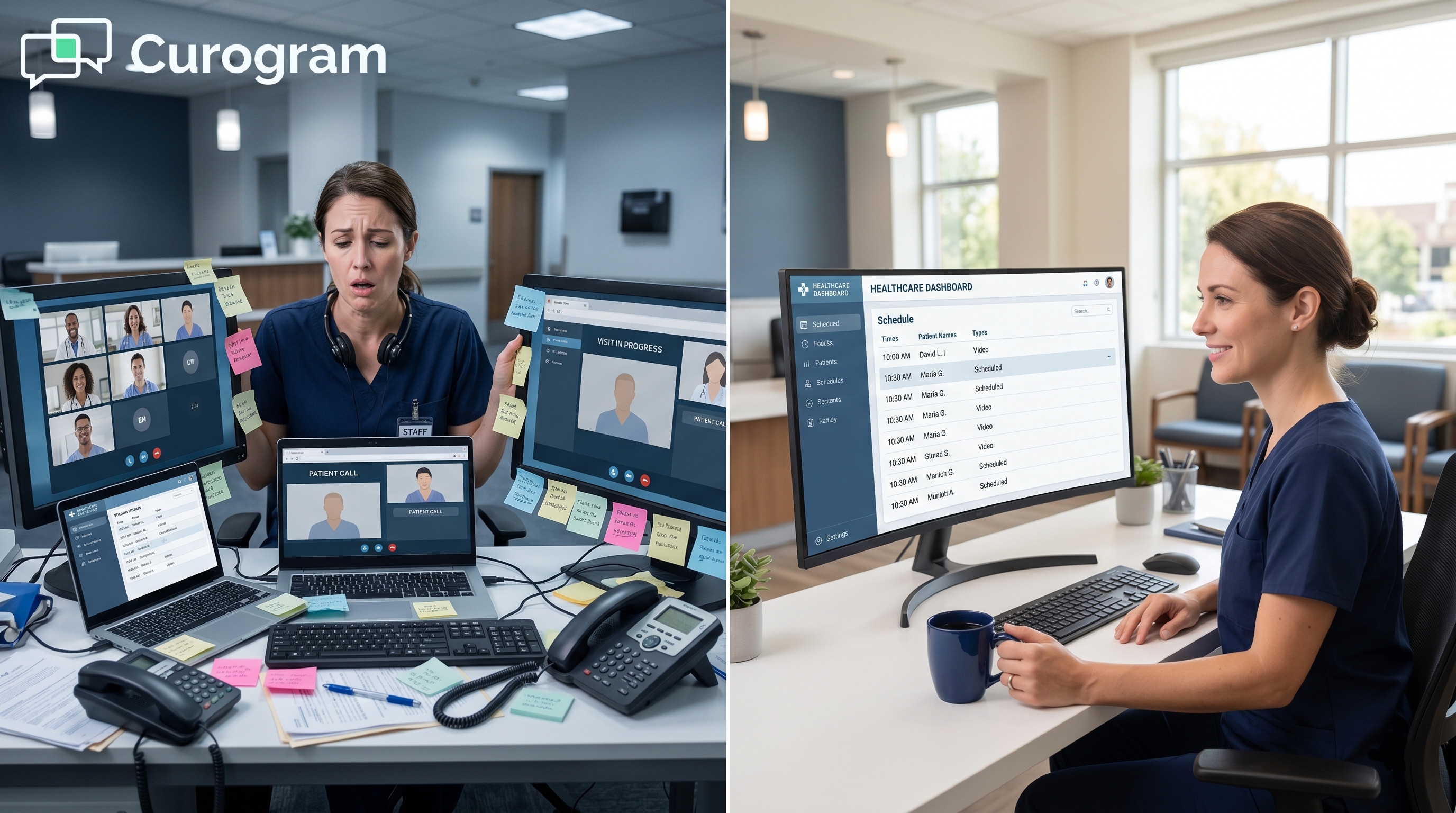
This is the quiet cost of the COVID rush. Your IT team manages five vendor contracts. Your front desk staff guesses which link to send.

Your patients download three apps just to see different specialists in your network. And none of it talks to GE Centricity.

The kicker? You are paying $50K to $100K each year for tools that do roughly the same job. Worse, your virtual visit notes still get copy-pasted into Centricity charts by hand. Mistakes slip through. Time gets wasted.

This is telemedicine consolidation GE Centricity territory, and it is the last big cleanup job from the pandemic era. The good news is that fixing it does not require a rip-and-replace. It just requires the right unified virtual care platform Centricity practices can actually plug into.

That is where Curogram comes in. We help enterprise practices roll three to five telehealth tools into one. Patients click an SMS link and join. Staff stop juggling logins. Notes flow into the chart on their own. Costs drop.

In this guide, we will walk through why the patchwork sticks around, what a real COVID telehealth patchwork replacement looks like, and how no-app video visits healthcare Centricity teams can deploy in just 2 to 4 weeks.

By the end, you will see how SMS video visit access healthcare can be both simpler and cheaper than what you run today.

Let's get into it. 

The Villain: The COVID Patchwork

The COVID patchwork is the quiet tax most enterprise Centricity practices still pay. It hides in vendor invoices, staff frustration, and patient drop-offs.

Before we fix it, we need to see how it formed and why it stuck around for four years.

The Emergency Choices That Made Sense in 2020

In March 2020, the rules changed overnight. Clinics had days, not months, to launch video care. GE Centricity offered no built-in telehealth tool. Leaders had to act fast or lose patients.

So each department picked what fit. Primary care chose Doxy.me because it was simple. Specialists chose Zoom because it handled complex consults. Psychiatry chose a privacy-first option.

These were smart, fast calls at the time. Nobody planned for them to be permanent.

The Permanent Patchwork Nobody Cleaned Up

By 2021, the worst of the crisis was over. Consolidation should have followed. It did not.

Each department fought to keep its tool. "Our staff is trained on Zoom." "Doxy.me works for our flow."

IT had bigger fires to fight. So the patchwork hardened into the status quo.

Today, that same enterprise still runs Doxy.me, Zoom for Healthcare, and a third tool. None of them link to Centricity. None of them link to each other.

Vendor Cost Bleeding Across Three to Five Contracts

Each tool comes with its own bill. Doxy.me has one fee. Zoom for Healthcare has another. The third tool has a third. Yet the feature overlap is 80% or more.

A 20-location enterprise often pays $50K to $100K each year in pure duplicate vendor spend. Based on our internal data, consolidating to a single platform cuts these costs by 60% to 70%. That money is sitting on the table right now.

The Integration Desert Between Centricity and Telehealth

None of the legacy tools push notes into Centricity. When a provider wraps a Zoom visit, the notes sit in Zoom. A staff member must then copy them into the Centricity chart by hand.

It's slow. It's error-prone. And it makes virtual visits feel like a side system instead of real care. Documentation gaps follow.

The Patient App Gauntlet

Now flip the camera to the patient side. A patient books a cardiology video visit. Do they open Doxy.me or Zoom? They can't recall.

They download the wrong app. Or both. Or neither. Older patients fight with logins. Patients on cheap phones run out of storage. The visit gets skipped.

This is real revenue loss. The table below shows what app friction costs in plain numbers.

Patient Friction Point

Outcome

Required app download

2 to 3 times higher abandonment

Multiple apps per practice

Confused, missed visits

Account or password setup

Elderly patient drop-off

Limited phone storage

FQHC patient drop-off


The COVID patchwork is no longer an emergency choice. It's a leaky pipe. Fixing it is the next move.


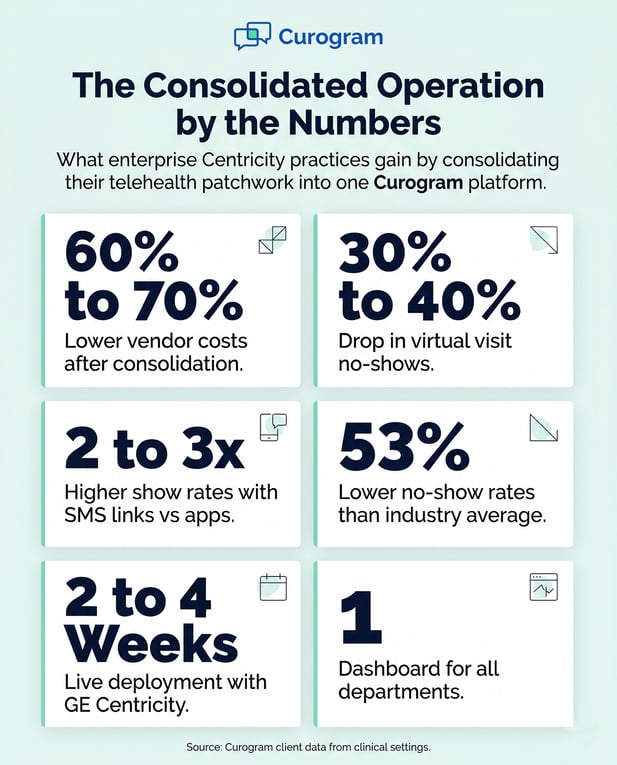
Telehealth ROI stats showing 70% lower costs, 53% fewer no-shows with Curogram

The Guide: The Unified Virtual Care Platform

The fix is not another telehealth tool stacked on top. The fix is one platform that pulls all virtual care into a single, Centricity-linked flow.

This is where Curogram steps in as your unified virtual care platform Centricity team.

One Platform That Replaces All Five

Curogram is built to consolidate. It handles simple primary care visits. It handles complex specialty consults. It handles psychiatry, derm, and the rest.

The feature gap between your current tools is small. The overlap is huge. So one well-built platform can do the job of five, with no clinical compromise.

That means one dashboard. One vendor relationship. One set of staff training. One security review.

No-App Video Visits Built for Real Patients

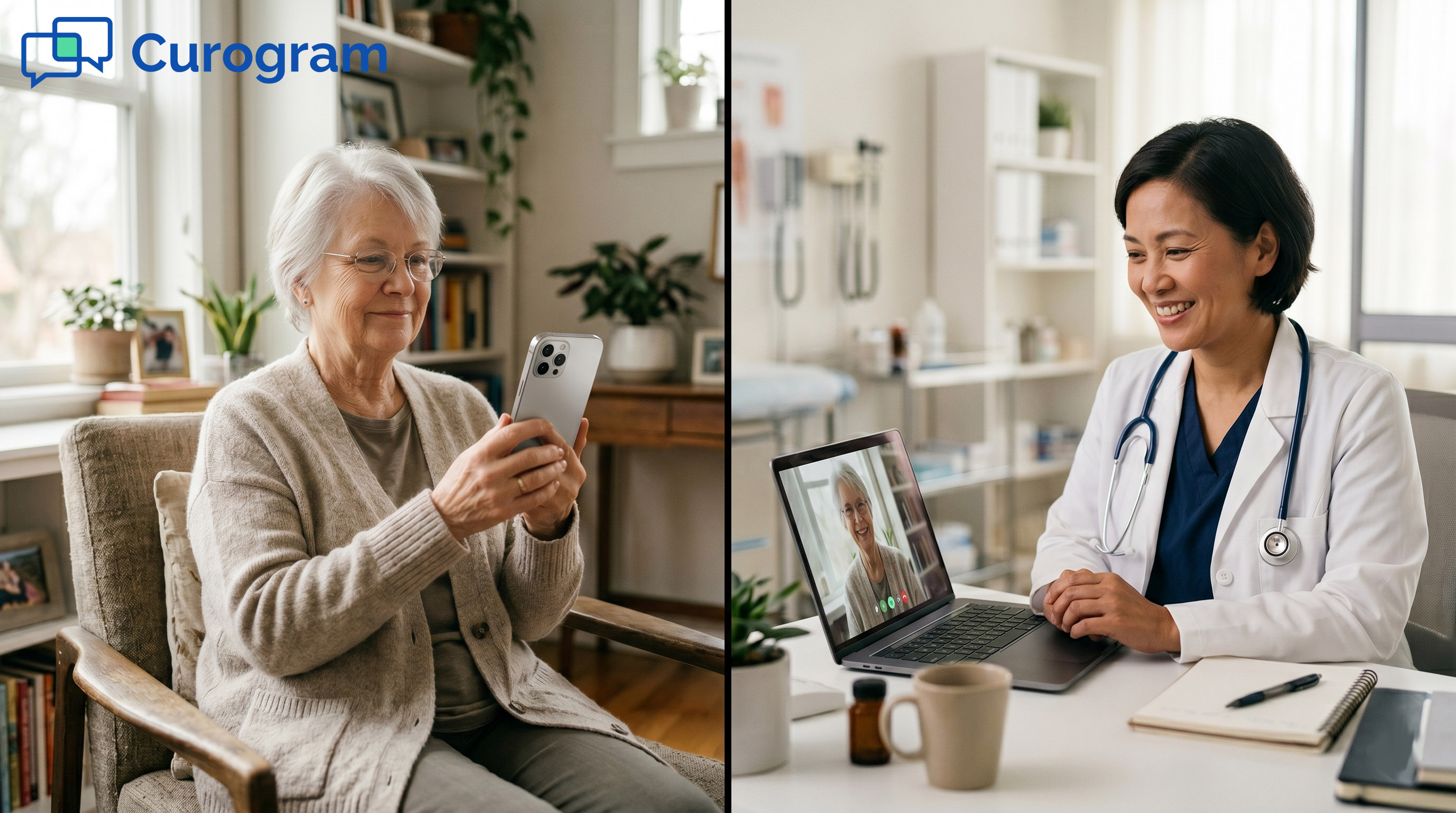
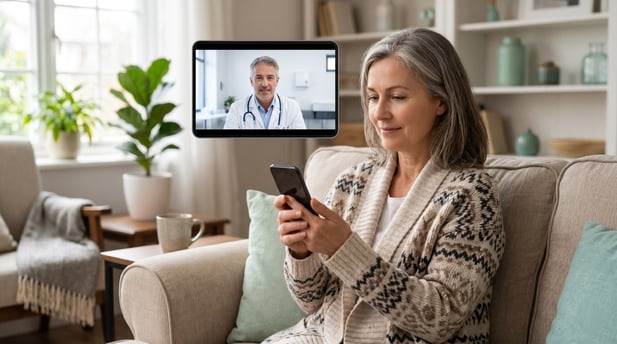
Here's how a Curogram visit feels for the patient. They get an SMS: "Hi Maria, your visit with Dr. Lee is ready. Tap here to join."

They tap. The video room loads in 2 to 3 seconds. They're on the call. No app. No password. No account setup.

This is the heart of SMS video visit access healthcare leaders have been chasing for years. Based on our internal data, patients who get SMS links show up at rates 2 to 3 times higher than patients told to download an app. That's a massive jump for one design choice.

Why SMS Beats App Downloads Every Time

Texts work on every phone. Older flip-style smartphones included. Patients already know how to tap a link. They do it twenty times a day.

App downloads, by contrast, ask for storage, logins, and trust. Each ask is a chance to quit. SMS removes all of them in one move.

Built for FQHC and Elderly Populations

FQHC patients often share devices or run low on storage. Elderly patients often struggle with new app flows. Both groups thrive when the link just works.

This is why no-app video visits healthcare Centricity practices serve underserved patients better. Access goes up. No-shows go down.

Centricity Integration That Skips the Copy-Paste

Curogram plugs straight into Centricity's appointment, messaging, and documentation flows. When a provider wraps a video visit, the notes flow into Centricity on their own. No manual entry.

The virtual visit becomes a true part of the Centricity chart. Not a side note. Not a Zoom export. Just a clean, complete record in the same system staff already use.

This is what real no-app telemedicine GE Centricity EHR integration virtual visits look like in practice. Care, billing, and follow-up all live in one place.

The Consolidation Outcome at a Glance

Before Curogram

After Curogram

3 to 5 telehealth tools

1 platform

3 to 5 vendor contracts

1 vendor

Manual chart entry

Auto-populated Centricity notes

App downloads required

SMS link to join

Department silos

Standard flow across all sites


One guide. One platform. One clean fix for the last loose thread of 2020.

The Success: The Consolidated Operation

What does this look like once it's live? Let's move from theory to results. Real practices have already walked this path, and the numbers are clear.

The Metric: Real Cost and No-Show Wins

Covina Arthritic Clinic is a strong example. They moved from three telehealth tools down to one with Curogram. Their annual platform costs dropped by 60% to 70%, which freed up $50K or more each year.

The patient side won too. No-show rates for virtual visits fell by 30% to 40%. Based on our internal data, this lift comes mostly from killing app friction at the front door.

Other practices using Curogram see similar wins across visit types. Curogram no-show rates run 53% lower than the industry average. That holds for primary care, psychiatry, derm, and beyond.

Vendor Cost Savings You Can Bank On

A 20-location enterprise often spends $50K to $100K on duplicate telehealth tools each year. Cutting 60% to 70% of that is real money. It's not a soft "efficiency gain."

It's a line item your CFO can point to. It funds other tech, hires, or service lines. That makes consolidation an easy yes at the budget table.

Patient Show-Up Rates That Move the Needle

Show rates drive revenue. Every recovered visit slot adds to the bottom line. Based on our internal data, practices see a 10% to 20% revenue lift just from filling slots that no-shows used to waste.

For a busy enterprise, this compounds fast. More visits, more billings, same staff.

The Shift: From Platform Patchwork to Unified System

The story is bigger than dollars. The whole operation changes shape.

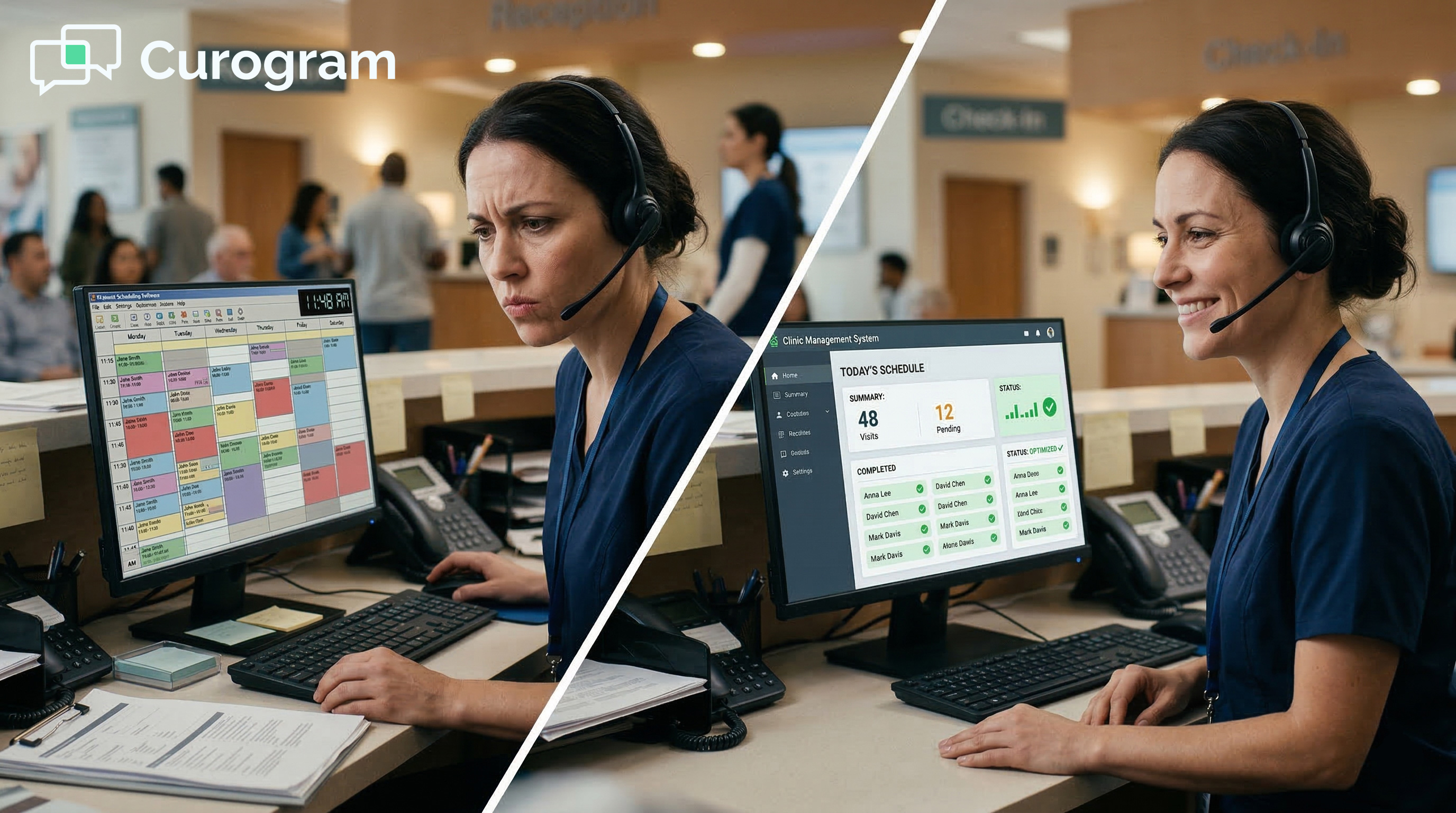
IT stops juggling five integrations, five security reviews, and five billing logins. Operations directors stop defending duplicate contracts each renewal cycle. Front desk staff stop guessing which link to send.

Patients stop hunting through three apps for one visit. Providers stop waiting on copied notes. The team finally gets the simple, post-COVID flow it should have had in 2021.

The Outcome: Virtual Care That Feels Like Real Care

Virtual visits stop feeling like a bolt-on. They feel like a clean extension of the in-person visit.

A patient gets an SMS link. They tap it. They join. They talk to their provider. The note lands in Centricity on its own. The bill flows from the same system.

That is the full unified virtual care platform Centricity teams aim for. It's a quiet, boring, well-run process. And boring is what enterprise healthcare wants from its tech.

Quick Look: What Consolidated Means in Numbers

Outcome

Before

After

Platforms in use

3 to 5

1

Annual vendor spend

$50K to $100K

60% to 70% lower

Virtual no-show rate

High

Down 30% to 40%

Documentation entry

Manual copy-paste

Auto into Centricity


The patchwork ends. The unified flow begins.


The Deployment Reality: 2 to 4 Weeks, Zero Disruption

A lot of teams stall here. They love the idea of consolidation but fear the rollout. The good news is that this deployment is built to be boring and fast.

The Timeline: A Live Centricity Integration Already Exists

Curogram is not a build-from-scratch project for your IT team. The Centricity integration already works. It's live in real enterprise practices today.

Most enterprises go from kickoff to first live visit in 2 to 4 weeks. There are no clinical workflow changes. Staff don't need to learn a brand-new charting flow.

Training is small. Mostly, it's about confirming the SMS link experience and the dashboard view. That's it. The rest of the team keeps working in Centricity the same way they always have.

What Zero Disruption Looks Like Day to Day

Your providers still chart in Centricity. Your front desk still books in Centricity. Your billing still runs from Centricity.

Curogram sits behind the scenes. It powers the video room. It pushes the notes. It sends the SMS link. The staff-facing change is small, and the patient-facing change is positive.

Why a Live Integration Matters

Many telehealth tools claim "Centricity-friendly." Few have a live, tested integration. The difference shows up in deployment speed.

A live integration means you skip months of custom work. You skip the risky pilot of unproven hooks. You get a known, repeatable rollout.

The Pilot Approach: Start Small, Then Scale

Most enterprises start with one department. Primary care is the usual choice because the visit flow is simple. This builds confidence before specialty teams join in.

The pilot runs for 2 to 4 weeks. The team checks three things:

  • Do no-app visits actually work?

  • Do no-shows drop?

  • Do notes hit Centricity cleanly?

Once those boxes are checked, the rollout moves to specialty departments. Derm, psychiatry, oncology, and the rest come online over the next 8 to 12 weeks.

Phase

Timeline

Goal

Kickoff and setup

Week 1

Centricity integration live

Pilot department

Weeks 2 to 4

Validate no-app flow

Specialty rollout

Weeks 5 to 12

All departments on Curogram

Legacy sunset

Weeks 8 to 16

Old contracts canceled


The Legacy Platform Sunset

As Curogram spreads, the old tools get retired. Each cancellation kicks in fresh savings. This is where the COVID telehealth patchwork replacement becomes real money in the bank.

By week 12, all virtual visits run through Curogram. Doxy.me, Zoom for Healthcare, and the third tool come off the books. The duplicate spend is gone.

Your IT team manages one integration. Your finance team pays one bill. Your patients learn one flow. That's the full reward of a clean, fast deployment.

Patient at home on video call with a doctor using a user-friendly mobile health app

Conclusion: The Virtual Care Patchwork Is Fixable

The COVID patchwork is the last big leftover from the rush of 2020. Five platforms. Five contracts. Five logins. And no real link to your Centricity chart.

This setup made sense as an emergency move. It does not make sense as a long-term plan.

Pulling 3 to 5 platforms into one Centricity-linked solution does three big things. It cuts vendor costs by 60% to 70%.

It kills app friction for patients. It standardizes virtual care across every department and location.

Based on our internal data, the patient win is just as big as the cost win. No-shows drop. Show-up rates climb. Underserved groups, including elderly and FQHC patients, finally get access that just works.

GE Centricity is your clinical hub. Curogram is your virtual care platform. Both systems are stronger together than apart.

You don't replace Centricity. You don't rip out workflows. You just plug in the piece that should have been there all along.

How many telehealth tools is your organization still running from 2020? If the answer is more than one, there's money and time waiting to be reclaimed.

Most enterprise Centricity practices we talk to have three to five. Most have never run a real consolidation review. Most are surprised by the size of the savings on the table.

The COVID era proved that virtual care belongs in healthcare for good. The next era is about making it boring, clean, and built-in. That's the work of true telemedicine consolidation GE Centricity practices need.

You moved fast in 2020 because you had to. You can move fast now because you choose to. The patchwork can come down in weeks, not years.

Book your demo today and take the last big step of your post-COVID transition. 


Frequently Asked Questions

How can Curogram replace all five of our current telehealth platforms?

Curogram is built as a consolidation platform from the ground up. It supports simple primary care visits, complex specialty consults, psychiatry, derm, and other visit types in one tool.

The feature overlap between your current platforms is high, so a single system can cover every use case. No clinical compromise is needed.

Why does the no-app video visit model work better than app-based telehealth?

Apps add friction at every step, including downloads, logins, and storage demands. SMS links skip all of that since every patient already knows how to tap a text.

Based on our internal data, no-app visits have show-up rates that are 2 to 3 times higher than app-based ones. This gap is biggest for elderly patients and FQHC populations.

How does Curogram integrate documentation into GE Centricity?

Curogram links directly to Centricity's appointment, messaging, and charting flows. When a video visit wraps, the notes flow into the Centricity chart on their own. Staff no longer need to copy and paste from a separate tool. This kills documentation gaps and saves real staff time each day.

Why should we consolidate now if our patchwork already works?

Your current tools may run, but they leak $50K to $100K each year in duplicate costs. They also drive patient drop-offs and slow staff workflows.

Based on our internal data, consolidating cuts vendor costs by 60% to 70% and lifts virtual show rates by 30% to 40%. Waiting just means paying that tax for another year.

How long does the full consolidation process take in practice?

Most enterprises go live on a pilot department in 2 to 4 weeks. Specialty rollouts add another 8 to 12 weeks for a full enterprise sweep. Old vendor contracts come off the books as each department migrates. The whole project usually wraps within a single quarter.