9 min read

Curogram vs Phreesia Cost Comparison and ROI for Mid-Size Clinics

Curogram vs Phreesia Cost Comparison and ROI for Mid-Size Clinics
💡 A Curogram vs Phreesia cost comparison shows two very different paths to ROI. Phreesia uses an enterprise pricing model with hidden tiers, hardware costs, and long setup times. Curogram offers clear pricing, fast launch, and no extra hardware. For mid-market clinics, this gap matters.

Phreesia targets large health systems with deep revenue cycle needs. Curogram targets clinics that want to fix no-shows, calls, and intake. Based on our internal data, Curogram clients cut no-show rates by 53% versus the industry.

Atlas Medical dropped no-shows from 14.20% to 4.91% in three months. The choice comes down to fit. If you need full revenue cycle tools at scale, Phreesia fits. If you want a fast, lean platform that pays back in weeks, Curogram fits better.

Choosing between Curogram and Phreesia is more than a software pick. It is a money choice with a long-term impact. Mid-market clinics often pick the wrong tool and feel the cost for years to come.

Phreesia is built for big health systems. It charges enterprise rates, needs special hardware, and takes months to fully launch. Many clinics never see the real price until they are deep into sales talks with the team.

Curogram is built for small and mid-size clinics. It uses clear pricing, has no extra hardware, and a setup time of under two weeks. Staff can change settings on their own without paid help from the vendor.

The real test is not the sticker price. It is the total cost of ownership over time. That means setup fees, hardware, training, support contracts, and the long wait before the tool starts to pay off. For clinics with 3 to 15 providers, these added costs can swallow most of the real value.

A Curogram Phreesia cost comparison ROI study shows where each tool wins. Phreesia helps large groups capture co-pays and verify insurance at scale. Curogram helps clinics cut no-shows, recall lost patients, and free up staff time. Both deliver ROI, but on very different timelines.

Based on our internal data, Curogram clients see no-show rates 53% lower than the industry average. Atlas Medical Center cut their no-show rate from 14.20% to 4.91% in just three months. Covina Arthritic Clinic now confirms over 1,100 visits per month with no extra staff time.

This guide breaks down the real numbers. We will look at setup costs, hidden fees, time-to-value, and the kind of ROI each platform really delivers. By the end, you will know which model fits your clinic, your team, and your budget best. Let's start with the big picture.

The Enterprise Cost Model vs. Agile Clinical ROI

Healthcare practices face one big money question. Should you pay for an enterprise platform built for huge health systems? Or should you pick an agile tool that pays back fast? The right answer depends on your size and your daily pain points.

The enterprise vs agile patient engagement cost gap is real. Enterprise tools come with hidden tiers, hardware, and long setup. Agile tools like Curogram come with clear pricing and a fast path to value. Most mid-market clinics fall in the second group.

Sticker price is not the real number to watch. Total cost of ownership is the true cost. That includes hardware, training, vendor support, and the time you wait for the tool to start. For a 5-provider clinic, this gap can mean profit or loss.

Phreesia's model targets revenue cycle tasks. Think insurance checks, co-pay capture, and patient financing. These tasks pay off when you process thousands of visits per day across many sites. They are less helpful for a small 4-provider specialty clinic.

Curogram's model targets clinical workflow ROI. The platform fights no-shows, cuts call volume, and brings back lost patients. These wins show up in revenue within weeks, not months.

Based on our internal data, Atlas Medical Center cut no-shows from 14.20% to 4.91% in three months. That is a fast clinical revenue lift, not a slow finance one. Covina Arthritic Clinic now sends over 1,100 confirmed visits per month with no new hires.

When you weigh patient engagement platform ROI mid-market clinics need most, the answer is clear. The tool must match your real-world pain points. If your team chases patients, not claims, agile beats enterprise.

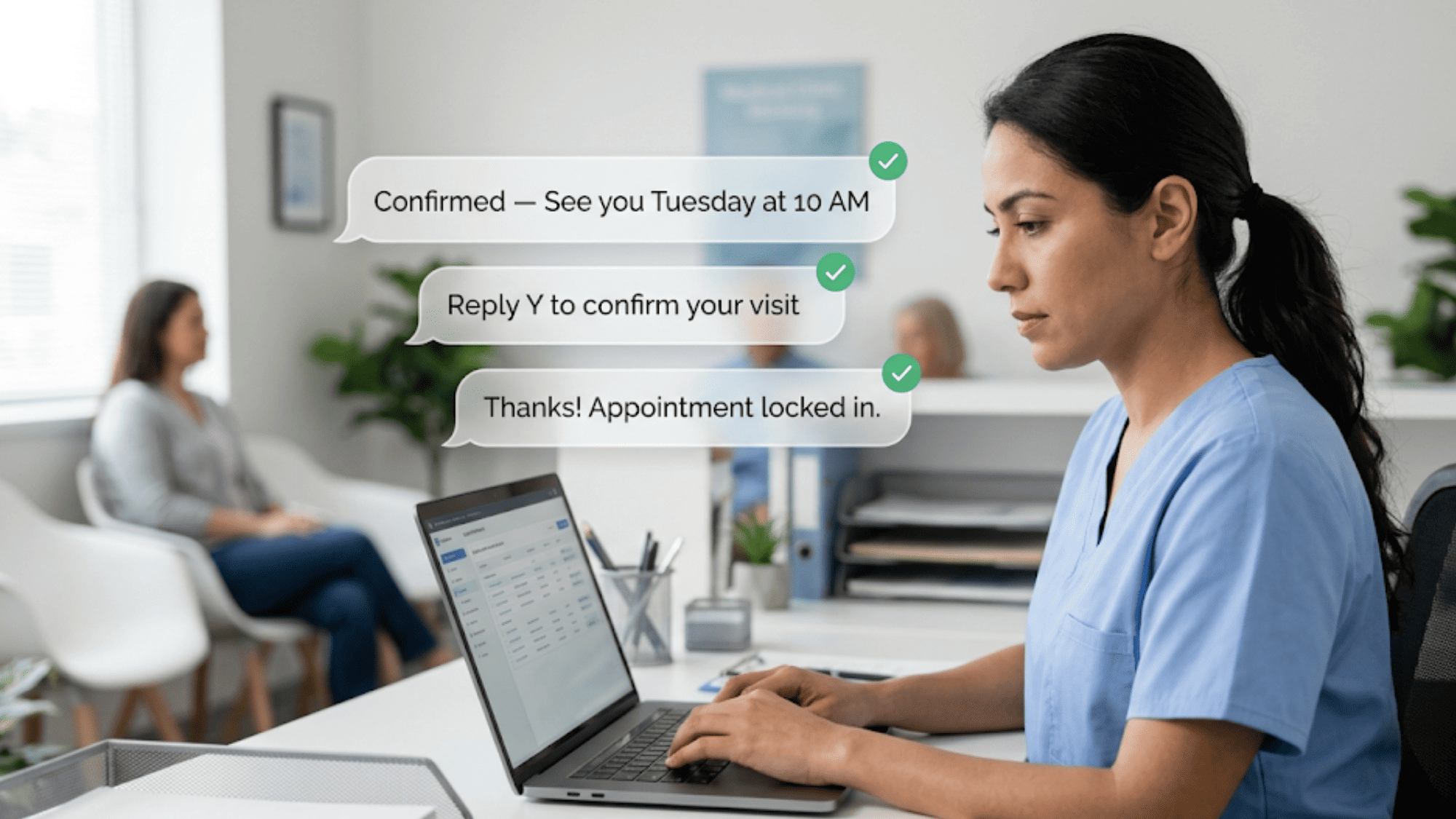
Medical receptionist reviewing automated patient appointment confirmations on a laptop at a modern clinic front desk

Enterprise Implementation Overhead and Opaque Pricing

Phreesia's pricing model is well known for being unclear. Public reviews from 2026 confirm this is still the case. The vendor uses enterprise tier contracts. Per-provider or per-location pricing is the norm, but those numbers stay private.

Phreesia pricing opaque enterprise costs are a top buyer concern in 2026. The issue hits mid-market clinics in three big ways. You can't do quick budget math without a sales call, and you can't easily compare prices with rival tools. Hidden fees also show up later for hardware, training, and support add-ons.

Beyond the base contract, Phreesia adds many cost layers. Here are the big ones:

  • PhreesiaPad hardware for each check-in spot
  • Long setup work with paid consultants
  • Custom builds for your insurance and payment flows
  • Ongoing support contracts for any change to the workflow
  • Staff training for the rigid intake process

A real Phreesia implementation cost analysis must add all of these layers up. For a 10-provider clinic, this stack can run well into six figures in year one. The base subscription price is just the start of your real spend.

Buyers studying Phreesia total cost of ownership medical practices report the same hidden layers year after year. Each year brings more support fees and hardware refreshes. The tool stays useful, but only with an IT team to keep up.

Curogram takes a very different path. Pricing is clear and posted up front. Setup takes under two weeks with no PhreesiaPad-style hardware. Your own staff can update settings, send forms, or change reminders without a paid ticket.

Based on our internal data, this lean setup means clients see ROI in weeks. Day-one savings come from less call volume and faster patient confirms. There is no long ramp-up period eating your budget.

Clinical Revenue Recovery vs. Financial Intake Capture

The big economic split between Curogram and Phreesia comes down to where they make money for you. Curogram drives clinical revenue recovery. Phreesia drives financial intake capture. Both work, but they hit very different lines on your P&L.

No-shows are a big revenue leak for many clinics. A practice losing 10–50% of visits per month can lose $20,000 to $30,000. Curogram's confirm flows hit 75% or higher rates. The platform also pushes the result back to your EHR with no manual work.

Based on our internal data, Atlas Medical dropped no-show rates from 14.20% to 4.91% in three months. That is 3X better than the industry average. The revenue lift began within weeks, not months.

Patient recall is another big lever. A multi-location practice using Curogram saw 35% of recall texts turn into a booked visit. That is 1,240 patients seen who would have slipped away. Each visit means real cash flow, not just a clean intake form.

Native text-to-pay also helps close the cash gap. Many clinics still see 20% of bills paid by paper check. SMS payments cut that wait time and lift collection rates without extra staff work.

Online reviews drive new patient growth. One multi-location client gained 1,064 new 5-star Google reviews in just three months. That review boost helps clinics show up at the top of Google Maps and Search.

Phreesia's revenue model works on a different plane. It captures co-pays, verifies insurance, and offers patient financing at check-in. The catch: it fixes the front of the visit but misses the no-show. These are wins for big revenue cycle teams, not for clinics drowning in calls.

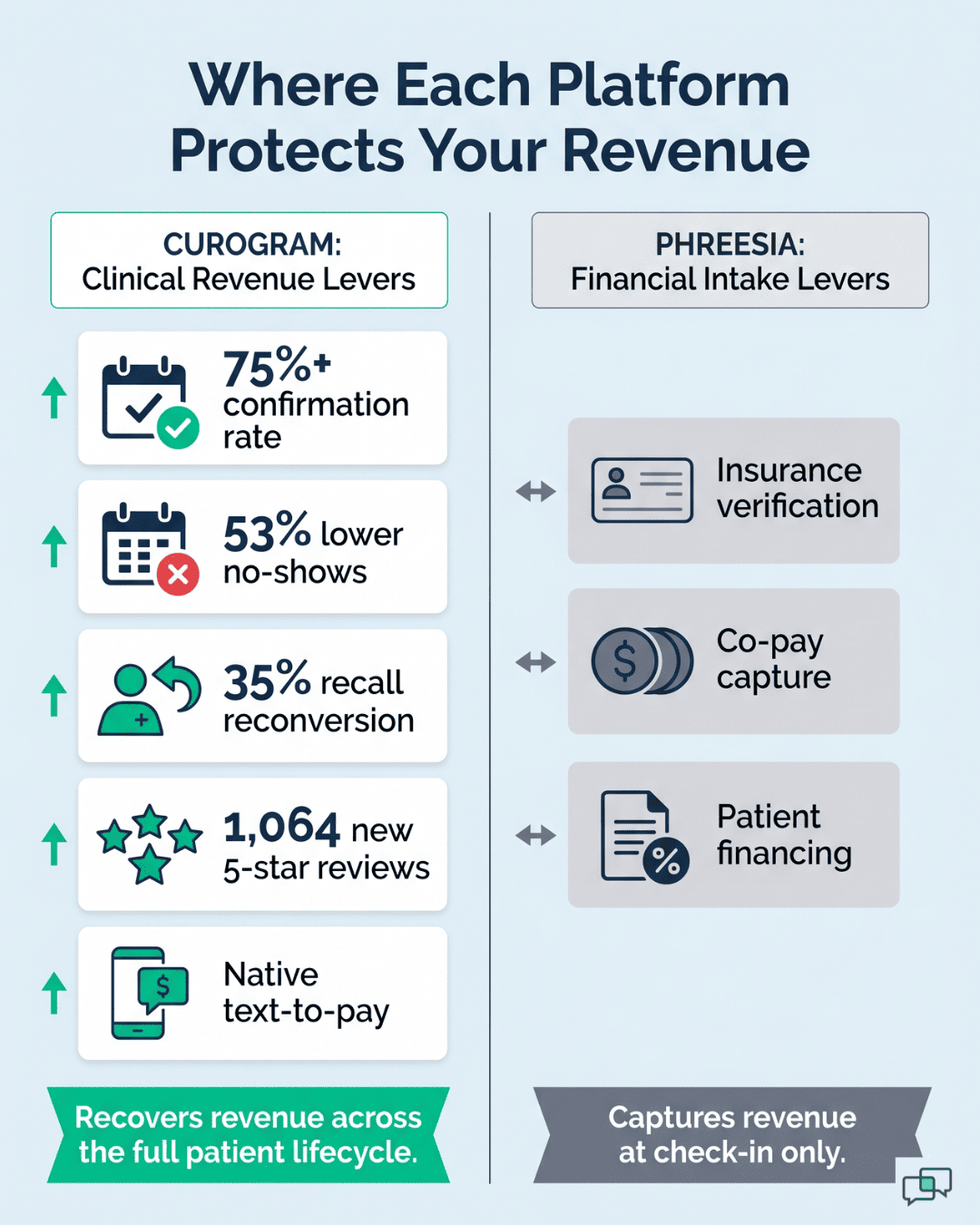
Side-by-side comparison of Curogram's 5 clinical revenue tools against Phreesia's 3 financial intake tools

Total Cost of Ownership Comparison

Total cost of ownership is more than the price tag on a contract. It is what you spend, lose, or wait for over the full life of the tool. Below is a clear side-by-side view to help you compare both platforms in real terms.

Here is a quick breakdown of the cost layers each mid-market clinic should expect:

Cost Category

Curogram

Phreesia

Subscription pricing

Clear, posted up front

Opaque, enterprise tiered

Hardware needs

None

PhreesiaPad at each check-in spot

Setup time

Under 2 weeks

8 to 16 weeks (often longer)

Implementation fees

Low and bundled

High consulting hours

Ongoing config changes

Done by your staff

Vendor support ticket

Staff training

About 10 minutes

Hours of workflow training

Time-to-first-value

Days

Months

Best fit

3–15 provider clinics

Large health systems


Hidden costs often eat the budget quietly. With Phreesia, you may pay for hardware refreshes, custom report builds, and extra support tickets. Each item can add thousands per year to your bill. With Curogram, those line items shrink or vanish from the picture.

Time also has a price tag. Every week you wait for a long setup is a week of lost ROI. A clinic that signs on Day 1 and goes live in two weeks captures revenue right away. A clinic stuck in a 4-month setup loses that same time, plus the consulting hours.

Staff cost is another quiet line item to track. Phreesia's setup needs paid vendor help to change a form or update a reminder. Curogram lets your front desk make those changes in just a few minutes.

Don't forget the cost of failed adoption. A rigid system that staff resist may go unused. That risk is higher with enterprise tools that need long training. Curogram's simple design helps drive faster team buy-in.

There is also the cost of switching later. Many clinics outgrow or sour on Phreesia after one or two years. Migration to a new tool costs more time and money. Picking the right size from day one avoids that pain.

Based on our internal data, mid-market clients often see clinical revenue gains within the first month. That speed means a smaller upfront risk and a clearer path to ROI. The agile model wins on both speed and cost predictability.

Matching Your Economic Model to Your Clinical Reality

The right platform depends on your real day-to-day pain points. Cost only matters if it solves the problems you actually have. Map your tool to your true challenge, not to the loudest sales pitch you hear.

Start with a simple test. Where does your team spend most of its time? If your staff chases claims, denials, and co-pays at scale, you need deep revenue cycle tools. Phreesia is built for that work.

But if your staff spends hours on no-show calls and patient texts, your pain is clinical. Curogram is built for that.

Here are signs that mid-market clinics often see in their daily work:

  • Phones ringing all day with simple intake or confirm questions
  • No-show rates north of 10%
  • Patients who don't return for follow-up visits
  • Front desk drowning in paper forms
  • Slow patient payments that drag on AR

These are clinical workflow gaps, not finance gaps. They are the gaps Curogram was made to close. Each one ties straight to the clinic's bottom line.

Phreesia's strengths sit elsewhere. It shines for big networks with hundreds of locations and large revenue cycle teams. Insurance checks at scale, patient financing, and co-pay capture all matter at that size. For a 5-provider specialty clinic, those tools may sit unused.

Ask one direct question to settle the call. What grows your bottom line more — capturing co-pays at check-in or keeping patients in their chairs? For most mid-market specialty clinics, it is the second one.

Based on our internal data, clients who match their tool to their real pain see ROI within weeks. They cut no-shows, recall lost patients, and free up staff. That is the agile model at work in real clinics.

Conclusion

The Curogram vs Phreesia choice is really a fit choice. Both tools work, but they serve very different clinics. The wrong fit costs you time, money, and staff trust for years to come down the road.

Phreesia is a strong tool for very large health systems. It charges enterprise rates, runs on its own hardware, and takes months to launch fully. For huge groups with deep IT teams, that scale pays off. Claim wins and co-pay capture become real money.

Curogram is built for mid-market clinics with 3 to 15 providers. The pricing is clear, the setup is under two weeks, and the staff can run it without paid help. The tool fights no-shows, cuts calls, and recalls lost patients in real time.

The numbers tell the story. Based on our internal data, Curogram clients cut no-shows by 53% versus the industry average. Atlas Medical Center dropped no-shows from 14.20% to 4.91% in three months. A multi-location client earned 1,064 new 5-star reviews and 1,240 patient visits from recall texts.

These are real wins, on a real timeline, for real clinics. They are not slow finance gains that take years to show up. They are clinical revenue gains you can see in your next quarter's books.

If your clinic is large and your pain is revenue cycle, Phreesia may fit. If your clinic is mid-size and your pain is clinical workflow, Curogram is the smarter pick.

The choice is about more than cost. It is about speed to ROI, daily ease of use, and a tool that matches the way your team works. Pick the one that pays you back the fastest.

Don't take our word for the deployment speed — watch it. Request a demo and see exactly how mid-market clinics go live in under 14 days.

Frequently Asked Questions

How does Phreesia's total cost of ownership compare to Curogram for mid-market practices?

Phreesia includes hidden tier pricing, hardware costs, long setup, and vendor support fees. Curogram offers clear pricing, no hardware, and a two-week launch. For mid-market clinics, Curogram usually wins on total cost.

Why is Phreesia's pricing model often called opaque?

Phreesia uses enterprise tier contracts based on per-provider or per-location rates. Those numbers are not posted publicly. You must go through a sales call to get a real quote, which slows budget planning for clinics.

How fast can a mid-market clinic see ROI with Curogram vs Phreesia?

Curogram clients often see ROI within weeks. Setup runs under two weeks, and no-show wins begin almost right away. Phreesia takes 8 to 16 weeks to launch, which delays its return by months.

Why does setup time matter so much in a Phreesia implementation cost analysis?

Each week of setup is a week of lost revenue and added fees. A 4-month launch can quietly cost six figures in delayed wins. Faster setup means faster ROI for your bottom line.

How do I know which platform fits my clinic's economic model?

Map your top pain. If it's claim denials and co-pays at scale, Phreesia fits. If it's no-shows, calls, and patient retention, Curogram fits. Match the tool to the daily work, not the sales pitch.