Curogram vs Phreesia EHR Integration Architecture: Which One Wins?
💡 The Curogram Phreesia EHR integration architecture debate comes down to one key question: what data reaches your clinicians first? Curogram's...

9 min read
Mira Gwehn Revilla
:
May 28, 2026
Your front desk is buried in calls, no-shows, and missed follow-ups every day. But your enterprise patient intake platform was built for financial workflows, not clinical ones. Phreesia handles billing intake well. The biggest daily pains in 2026, though, are mostly clinical.
No-shows, missed calls, and slow paper forms now drain more time than billing tasks ever did. Enterprise financial tools were not built to fix these clinical workflow gaps.
That mismatch is why many mid-market practices are looking elsewhere right now. A strong Phreesia alternative mid-market practice setup focuses on clinical outcomes first.
This is why the switch from Phreesia to Curogram migration is gaining traction in 2026. Mid-market practices want to retire bulky PhreesiaPad hardware for good.
They want mobile-first intake, two-way texting, and missed-call recovery in one place. They also want SMS recall and automated review requests built right in.
Curogram offers all of these tools in one single mobile-first system. The switch from enterprise intake to clinical automation often cuts total monthly spend, too.
You drop hardware leases, enterprise license fees, and vendor support costs each month. Your front desk team can fully manage every workflow in-house.
This complete Phreesia to Curogram transition guide walks through the move in clear phases. You will learn how to audit your current setup the right way. You will see when to migrate from Phreesia financial platform features safely. We will share real numbers from real clinics, too.
Curogram onboarding from Phreesia takes about four weeks for most mid-market practices. By the end of this guide, you will have a clear plan ready. Your team will know each step in order. The move is faster and simpler than most teams expect at the start.
Mid-market practices have a unique set of pain points each day. They are too large to run on a basic phone tree and paper forms alone. But they are too small to need a multi-million dollar enterprise platform. Phreesia was built for large health systems with deep billing layers.
These clinics often find that Phreesia's financial focus does not match their daily work. Staff spend hours on calls, no-shows, and follow-ups, not on insurance forms. PhreesiaPad units sit in lobbies but do not solve those clinical issues. The full cost feels heavy for the value actually gained.
|
The real shift happens when leaders ask one key question:What slows down our front desk the most each week? The answer is almost never financial intake. It is missed calls, growing no-show rates, and slow recall outreach. |
This is why many leaders choose to migrate from Phreesia financial platform setups to lighter clinical tools. They do not want to drop billing support fully. They want a platform that fits their real daily workflow. Curogram fills that gap with mobile-first tools and built-in text-to-pay.
Cost is a second big driver for the switch. Phreesia's enterprise pricing and hardware fees stack up fast over time. Curogram replaces those with a single, simpler subscription each month. Most practices see lower total spend within the first three months of use.
There is also a control issue worth noting. With Phreesia, workflow changes often require vendor tickets and wait time.
With Curogram, your team controls every setting in-house from day one. Based on our internal data, automated reminders alone can cut no-show rates by more than half.
Phase 1 of any migration starts with a careful audit. The goal is to split your needs into two clear buckets. One bucket is financial tasks. The other bucket is clinical workflow gaps.
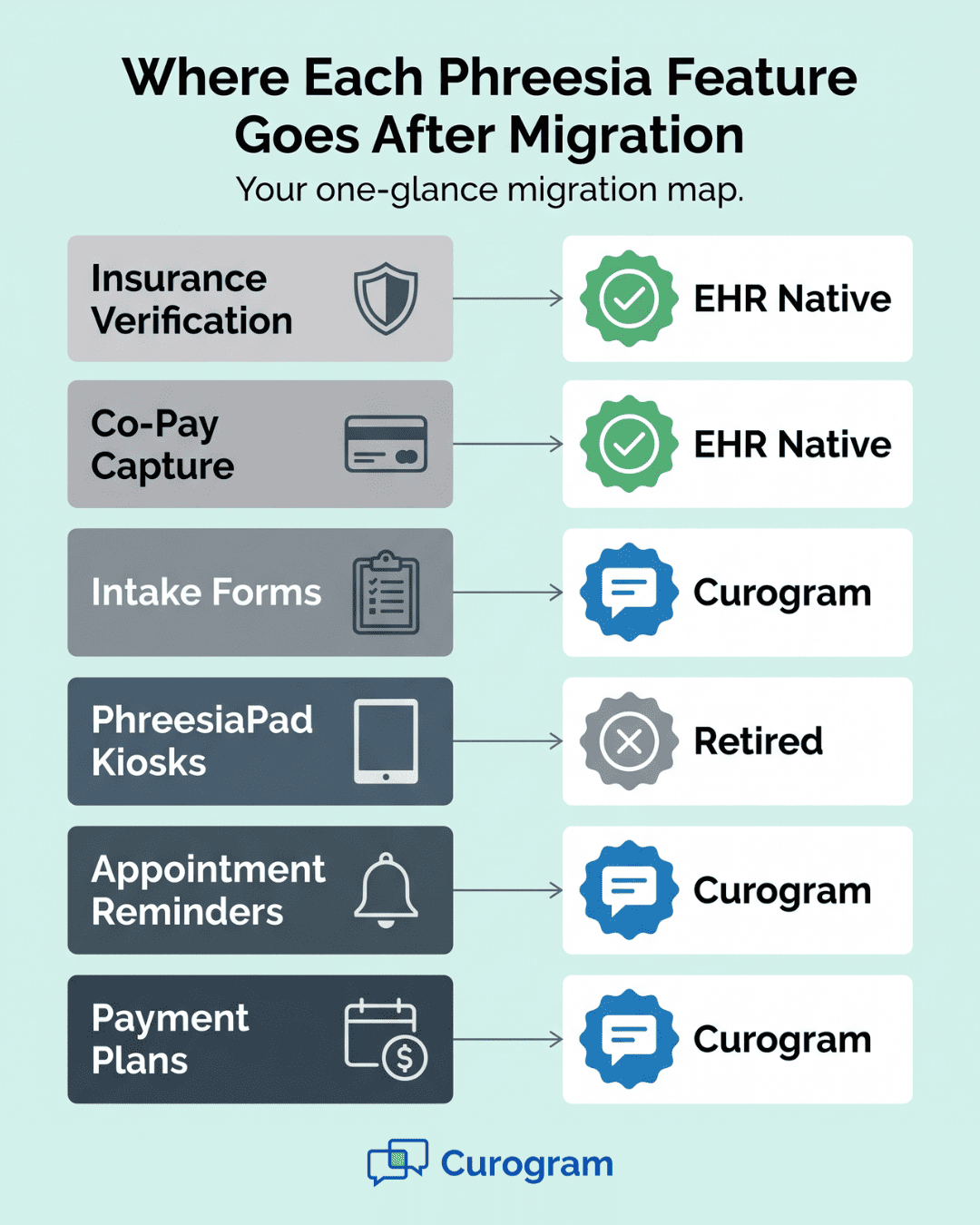
This split matters because not every Phreesia feature needs a direct replacement. Some financial tasks are already supported by your EHR's native tools. Others can move to Curogram's text-to-pay function. The rest may not even be needed once you fully decommission Phreesia.
Start the audit by listing every Phreesia feature your team actually uses today. Common ones include insurance verification, co-pay collection, payment plans, and intake forms. Add appointment reminders and any custom workflows you depend on. Be honest about which features are used daily versus rarely.
Next, check what your EHR can already do on its own. Most modern EHRs handle insurance eligibility checks and basic co-pay processing natively. Practices often discover they have been paying Phreesia for tools their EHR already had. This finding alone can justify the migration on cost grounds.
Catalog every clinical gap that Phreesia does not address. These include missed-call recovery, two-way messaging, and SMS recall outreach. They also include automated review generation and rule-based appointment confirmation logic. These are the gains Curogram will deliver in the next phases.
Inventory all PhreesiaPad hardware across your offices. Note serial numbers, lease end dates, and lobby placement. This list drives your decommission plan in Phase 3. Without it, hardware costs may linger long after you stop using the units.
A well-run audit usually takes three to five business days. The output is a simple workflow map. Each Phreesia feature gets one label: replaced by EHR, replaced by Curogram, or retired. This map becomes your single source of truth for the whole migration.
Phase 2 is where the real platform shift happens. Curogram is built for fast deployment, often in just days. This lets you run both platforms in parallel for a short window. Patients see no service drop during the switch.
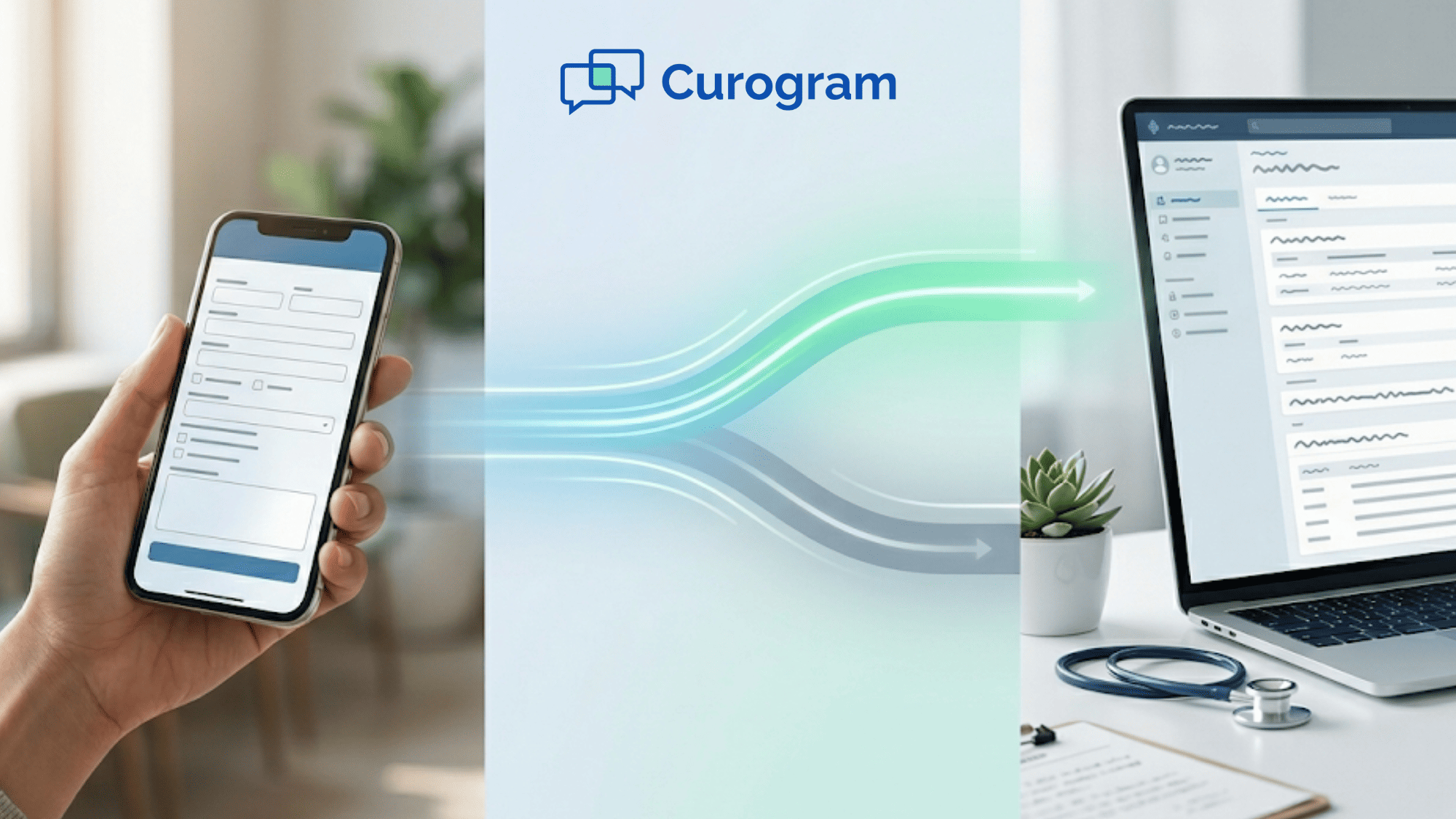
This step validates that clinical data writes back to the right discrete fields. Phreesia mostly sent financial data to the EHR, not clinical intake fields. Curogram extends what your EHR can actually do.
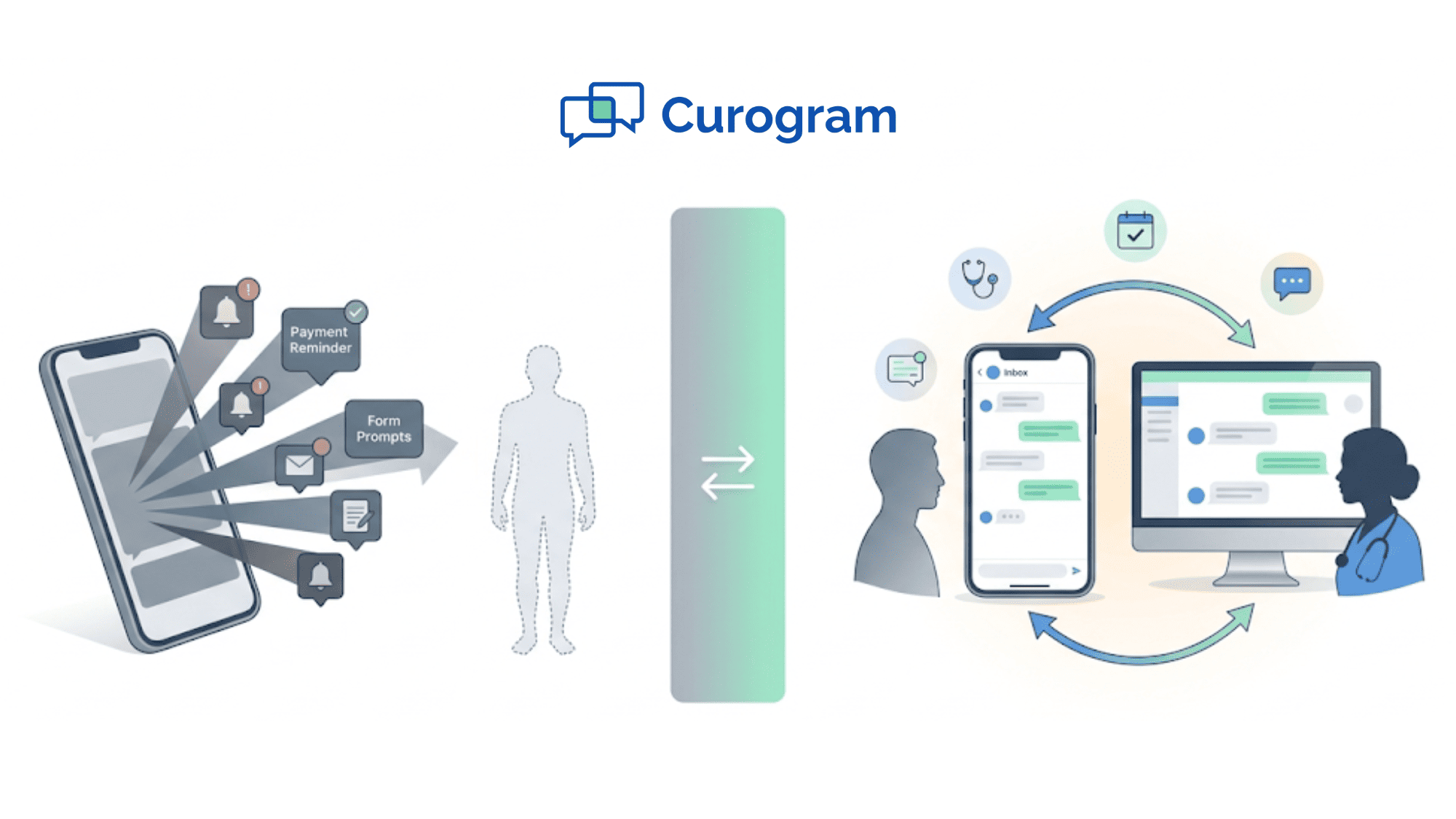
Once the integration is live, activate appointment confirmation workflows in Curogram. Use clear rules so confirmations auto-update the EHR in real time. Staff stop checking voicemail for confirmations. The unified two-way messaging inbox replaces the old notification model.
This includes missed-call-to-text, text-to-pay, SMS recall, and automated reviews. These are tools most practices never had under their enterprise financial platform. They start working on day one of go-live.
As patients move to Curogram's mobile intake, PhreesiaPad units can come out of lobbies. Patients fill out forms on their own phones before the visit. This is faster, cleaner, and removes infection control concerns. Hardware leases can then be canceled at term end.
|
Based on our internal data, Atlas Medical Center cut no-show rates from 14.20% to 4.91% in just three months. Covina Arthritic Clinic confirmed over 1,100 appointments per month after launch. These are real results from clinics that ran the same playbook. Speed of value is one of the biggest gains in this transition. |
The parallel-run model gives staff a soft landing, too. They learn Curogram on real patient flows before Phreesia is fully off. By the end of Phase 2, most teams already prefer the new platform. The mobile-first design is simpler than hardware-based workflows.

A clear timeline keeps the migration on track from day one. Most mid-market practices complete the full move in four weeks. Each phase has set tasks, owners, and success metrics to hit. The table below maps each week to specific milestones and goals.
|
Migration Phase |
Timeline |
Key Activities |
Success Metric |
|
Phase 1: Audit |
Week 1 |
Separate financial vs. clinical needs; identify EHR-native capabilities; inventory hardware |
Complete workflow map with replacement plan for each Phreesia feature |
|
Phase 2: Integration |
Week 2 |
Establish Curogram EHR API; validate clinical write-back; activate confirmations and intake |
Discrete data sync verified; clinical workflows active and tested |
|
Phase 3: Transition |
Week 3 |
Migrate patient communications to Curogram; launch text-to-pay; begin PhreesiaPad decommission |
Two-way messaging active; text-to-pay processing; hardware retired from exam rooms |
|
Phase 4: Go-Live |
Week 4 |
Full Curogram adoption; activate reviews and recall; sunset Phreesia contract |
Confirmation rate ≥75%; staff managing all workflows in-house; single vendor |
Week 1 is the audit phase. Your goal here is clarity, not action. You will not change any patient workflows yet. You simply document what Phreesia does and where each feature lands after the move.
Week 2 is the heaviest technical week. The Curogram team helps your IT lead set up the EHR API. You validate that data flows in both directions. Test confirmations and intake on a small group first.
Week 3 is the transition week for patients and staff. Two-way messaging goes live in your unified inbox. Text-to-pay starts running on your billing side. PhreesiaPad units come out of waiting rooms one at a time.
Week 4 is full go-live. All staff manage workflows in Curogram only now. Reviews and SMS recall start running on autopilot. You give Phreesia formal contract sunset notice based on your terms.
By the end of Phase 4, you should hit at least a 75% confirmation rate. Your staff should be making all workflow changes in-house. You should also be down to one vendor for engagement tools. These markers tell you the migration is truly complete.

After go-live, the focus shifts from migration to results measurement. You need clear proof that the new platform delivers real value. Two key categories drive the return on investment. The first is cost cuts; the second is clinical revenue gains.
On the cost side, you eliminate the Phreesia subscription, hardware leases, and vendor support fees. Most mid-market clinics see five-figure annual savings here alone.
Add the staff time saved from fewer manual confirmation calls. This is hard money back in your operating budget each month.
Clinical revenue gains often dwarf the cost savings. Based on our internal data, Curogram clients hit a 75%+ average appointment confirmation rate. Atlas Medical Center cut no-shows from 14.20% to 4.91% in three months. Each saved slot is direct revenue your practice did not lose.
SMS recall is another big revenue driver. Based on our internal data, 35% of patients who receive an SMS recall book within a month. One multi-location practice saw 1,240 patients return from recall alone. That is recurring revenue from patients you already had.
Review generation also fuels new patient acquisition over time. One practice gained 1,064 new 5-star reviews in just three months.
That added visibility on Google brings in new patients without ad spend. Reviews compound over time, unlike paid marketing campaigns.
Track these specific metrics monthly after go-live:
The end result is a full shift from financial infrastructure to clinical automation. The same engagement budget now delivers far more clinical value each month. That alignment is the true win of the migration. It also frees staff to focus on patients, not on hardware tickets.
The switch from Phreesia to Curogram migration is more than a vendor change. It is a full shift in how your practice runs each day. You move from hardware-based financial intake to mobile-first clinical automation. That shift unlocks gains your old setup never could.
The four-week timeline makes the move feel manageable, not scary. Week 1 sets the audit. Week 2 builds the integration. Week 3 transitions patients to mobile workflows. Week 4 closes out the old contract for good.
The real value comes after go-live. Confirmation rates above 75%. No-show drops of 50% or more. Hundreds of monthly recall bookings. New 5-star reviews coming in every week with zero extra staff effort.
The cost story matters, too. You drop PhreesiaPad hardware leases. You retire enterprise subscription fees. You stop paying for vendor support tickets. You replace it all with one simpler monthly platform.
Mid-market clinics gain something even bigger than savings: control. Staff can update message templates without filing tickets. They can adjust reminder logic in minutes, not weeks. Patient engagement finally feels like a tool, not a long service contract.
A strong Phreesia to Curogram transition guide gives your team confidence at every step. The audit shows you what stays and what goes. The integration step makes sure data flows clean. The transition week tests every workflow live.
Mid-market practices that complete this move often wonder why they waited so long. The clinical gains are visible in week one. The cost gains are visible in month one. The cultural gains, where staff feel in control again, last for years.
If your practice has felt the gap between financial intake and clinical workflow, the path forward is clear. Audit your needs. Build a four-week plan. Then make the switch with full confidence.
Find out how mid-market practices retire PhreesiaPad units without losing a single intake or confirmation. Request a demo to see the mobile-first replacement in action.
A structured migration takes about four weeks. Week 1 covers the audit. Week 2 sets up EHR integration and core workflows. Week 3 transitions patients and retires hardware. Week 4 is full go-live with Phreesia contract sunset.
Most mid-market practices have clinical gaps Phreesia was never built to solve. Curogram fixes no-shows, missed calls, recall, and reviews in one mobile platform. The total monthly cost is also lower than enterprise pricing models.
Curogram sends each patient a mobile intake link before the visit. They complete forms on their own phone in minutes. Data writes back into your EHR's discrete clinical fields automatically. Lobby tablets are no longer needed.
Many financial tasks are already handled by your EHR's native tools. Insurance eligibility and basic co-pay processing are common examples. The Phase 1 audit identifies these overlaps so you avoid paying for the same feature twice.
Curogram pairs your EHR's native insurance verification with built-in text-to-pay. Patients pay co-pays by clicking a secure SMS link on their phone. This is faster than kiosk-based collection and improves overall payment completion rates.
💡 The Curogram Phreesia EHR integration architecture debate comes down to one key question: what data reaches your clinicians first? Curogram's...
💡 A Curogram vs Phreesia cost comparison shows two very different paths to ROI. Phreesia uses an enterprise pricing model with hidden tiers,...
💡 Curogram and Phreesia take very different paths to patient engagement. Curogram uses two-way messaging built around real conversations between...