
 Carylee Gali
Pros and Cons of Text and Voicemail Appointment Reminders
 Carylee Gali : 11/23/22, 3:23 PM
Text vs voicemail appointment reminders: what the 2026 evidence shows, the one-a-day cap covering both, and the opt-out rule most practices miss...

Two practices lose the same patient on the same Tuesday. At the first office, the cancellation lands in voicemail. The front desk returns the call the next afternoon, reaches no one, and leaves a message.
The patient calls back two days later during a lunch break, waits on hold, and hangs up. Three weeks pass before anyone notices the follow-up never got booked.
At the second office, the patient gets a text within the hour asking if everything is okay and offering two open times. They reply “Thursday works.” The visit is back on the calendar before the patient has put the phone down.
Both offices had the same patient, the same reason to cancel, and the same empty slot. Only the workflow was different.
Patients keep appointments when showing up and rescheduling take less effort than skipping, and almost every source of that effort sits inside your office. Forgotten dates, long waits, phone tag, and a drive across town during work hours are all things your team can shrink.
The five steps below cover the full path to the visit. They start with the waiting room, where a long delay makes patients think twice about the next booking. From there come rewards for patients who keep their appointments, a faster way to reschedule, and reminders sent the way each patient asks for them.
Long waits are one of the reasons patients hesitate to keep their appointments. Sitting 40 minutes past the booked time on a hard chair is the part of the visit many patients dread most.
Some delays are out of your hands. Your front desk can remind every patient to arrive 15 minutes early, and someone will still walk in late for the 9:00 slot and push every visit after it back. A late patient is still better than a canceled one, so the schedule bends.
The catch is the patients who absorb that delay. The longer they wait, the more likely they are to cancel their next visit. A comfortable waiting room makes those extra minutes easier to sit through.
A few upgrades that help:
Patients still notice a long wait. A room they’re comfortable in makes them far less likely to hold it against you.
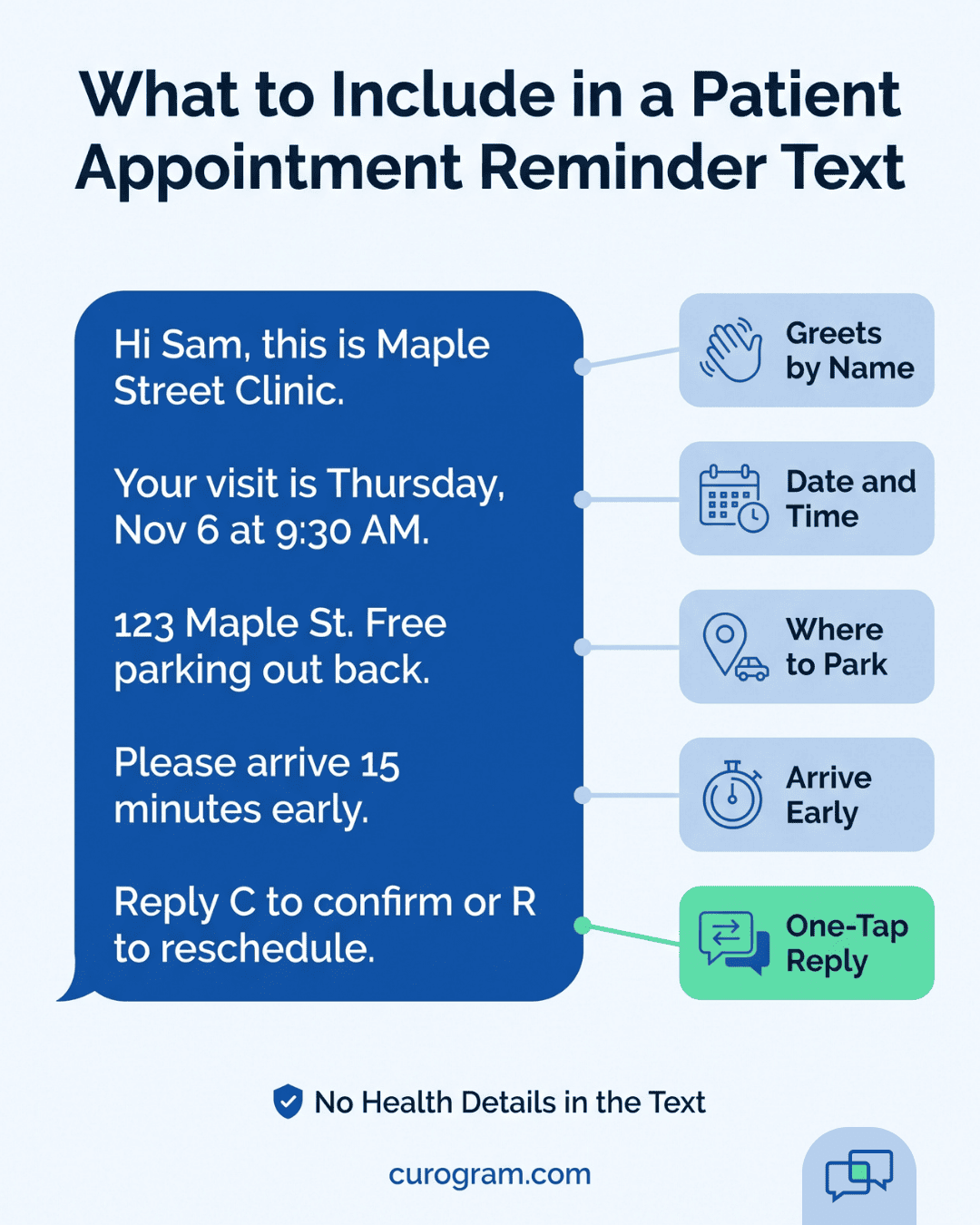
A small reward gives patients one more reason to show up. Pick one or two of these and run them on a set schedule, monthly or twice a month, so patients know what to expect.
Check with your compliance advisor before you launch the first two. Federal rules limit what you can give patients covered by Medicare or Medicaid, and discounts on services and gift cards draw the most scrutiny. Thank-you notes and texts carry no such limits.
When a patient cancels, reach out the same day by phone or text. Ask what happened, and keep the tone warm so the patient doesn’t feel blamed. A short text works well:
“Hi Maria, we saw you had to cancel today’s visit. Is everything okay? Reply with a day that works better, and we’ll find you a new time.”
The goal is to rebook the patient while they’re still thinking about the visit. Let them reschedule whichever way is easiest for them: a phone call, a text reply, or an email.
An online scheduling tool makes that even easier. Patients can book or move their own appointments at any hour and pick the date and time that suit them. When a patient moves a visit ahead of time, the open slot shows up on your schedule, so your front desk can offer it to someone on the waitlist.
Easy rescheduling cuts down on last-minute cancellations and no-shows. A patient who can move a visit in 30 seconds is more likely to move it than skip it.

Many missed appointments come down to one thing: the patient forgot. By the time they remember, it’s too late to make it on time, or they’ve already made other plans.
Automated reminders fix most of that. They go out on their own, so your front desk isn’t spending the afternoon dialing tomorrow’s patient list, and fewer patients cancel or forget.
Reminders can backfire, though. A patient who gets an email, a text, and a phone call about the same visit starts to tune them out. Some get annoyed enough to switch to another practice.
The fix is to ask. When a patient books, your front desk should cover two questions:
| Ask | Example answers |
|---|---|
| How should we remind you? | Text, email, or phone call |
| When should the reminder arrive? | 3 days before, 1 day before, or the morning of the visit |
Save the answers in the patient’s record, and send reminders only that way.
A short, polite reminder in the channel the patient picked is the one they’re most likely to read. It jogs their memory, and it shows your office respects how they like to be reached. Both make a no-show less likely.
During the COVID-19 pandemic, many patients weren’t sure it was safe to visit a clinic, and no-shows and cancellations climbed. Many practices responded by launching telemedicine programs, and the visit type stuck.
Before the pandemic, telemedicine mostly served patients in remote areas. Demand grew fast once people were told to stay home and keep their distance, and patients got used to seeing their doctor on a screen.
A telemedicine visit happens by video or phone call. It works much like an in-person appointment, but the patient joins from home or work. A follow-up on blood pressure readings or a medication check fits well in a 15-minute video slot.
With no drive, no need to arrange childcare, and no time off work, many of the usual reasons to cancel disappear.
No single tip in this list will bring cancellations to zero. Combined, they make showing up easier than skipping.
Tell patients why each visit matters, too. When your doctor explains that the 3-month follow-up is how they’ll know whether the new dose is working, the patient sees the visit as part of their treatment. Patients who understand that are more likely to keep the appointment.
Most no-shows are decided days before the appointment. A patient forgets, dreads the wait, can’t get through to reschedule, or can’t take the afternoon off, and skipping becomes the easier choice. Every tip above makes showing up easier.
Patients feel the difference through your communication. A reminder in the format they asked for, a text reply that moves their visit to Thursday, and a video link that saves them the drive all keep the appointment on your schedule. Each one also takes a task off your front desk, which is already busy checking in the patients who did show up.
Curogram handles that communication by text. Patients get automated reminders on the schedule and channel they choose.
They can reply to confirm or reschedule, and your staff sees those replies in one HIPAA-compliant inbox that works with your EHR. When an in-person visit isn’t needed, patients can join a telemedicine visit from a link on their phone, with no app to download.
Start with the step that leaks the most appointments at your practice. For many offices, that’s the gap between a cancellation and a rebooked visit.
Request a demo to see how Curogram fits your schedule. We’ll look at where your no-shows and cancellations come from and show you which messages can win those appointments back.
 Carylee Gali : 11/23/22, 3:23 PM
Text vs voicemail appointment reminders: what the 2026 evidence shows, the one-a-day cap covering both, and the opt-out rule most practices miss...

 Joshua Inciso : 5/16/22, 7:47 AM
Convenience is key when it comes to patient engagement. Here are 10 reasons you need to tap into the power of technology - and online scheduling.

 Jess Koslow : 4/27/22, 9:10 AM
Curogram helps multi-location healthcare practice in Chicago increase booked appointments by over 1000%. Find out how.