GE Centricity Appointment Reminders: Reduce No-Shows With Curogram
💡 GE Centricity specialty clinics face ongoing challenges with patient no-shows and incomplete appointment preparation. Automated appointment...
12 min read
Aubreigh Lee Daculug
:
January 19, 2026
Table of Contents
Every empty appointment slot costs imaging centers money. MRI machines, CT scanners, and ultrasound systems represent significant capital investments that need consistent utilization to deliver returns. When patients miss appointments or arrive unprepared for their scans, these expensive assets sit idle while schedules fall behind.
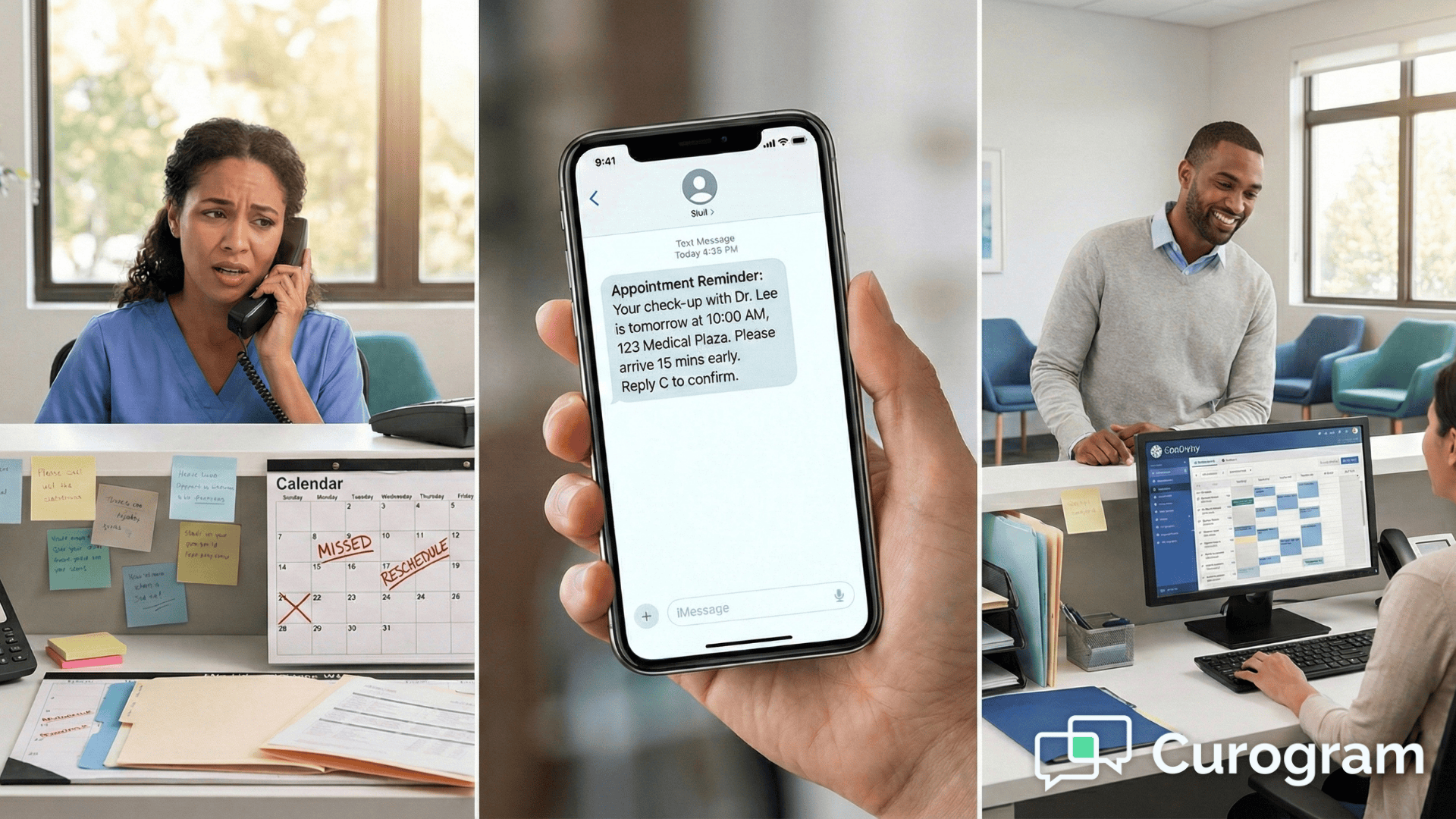
Traditional reminder systems rely on manual phone calls that consume staff hours and deliver inconsistent results. Front desk teams juggle dozens of calls daily, explaining different preparation protocols for various imaging types. Some patients never answer their phones, others forget the verbal instructions, and preparation requirements get lost in translation.
The challenge grows across multi-location networks. Facilities use different equipment, each modality requires specific preparation, and instructions can vary by site. A contrast CT patient needs different guidance than a pelvic ultrasound patient—yet both require clear, consistent communication.
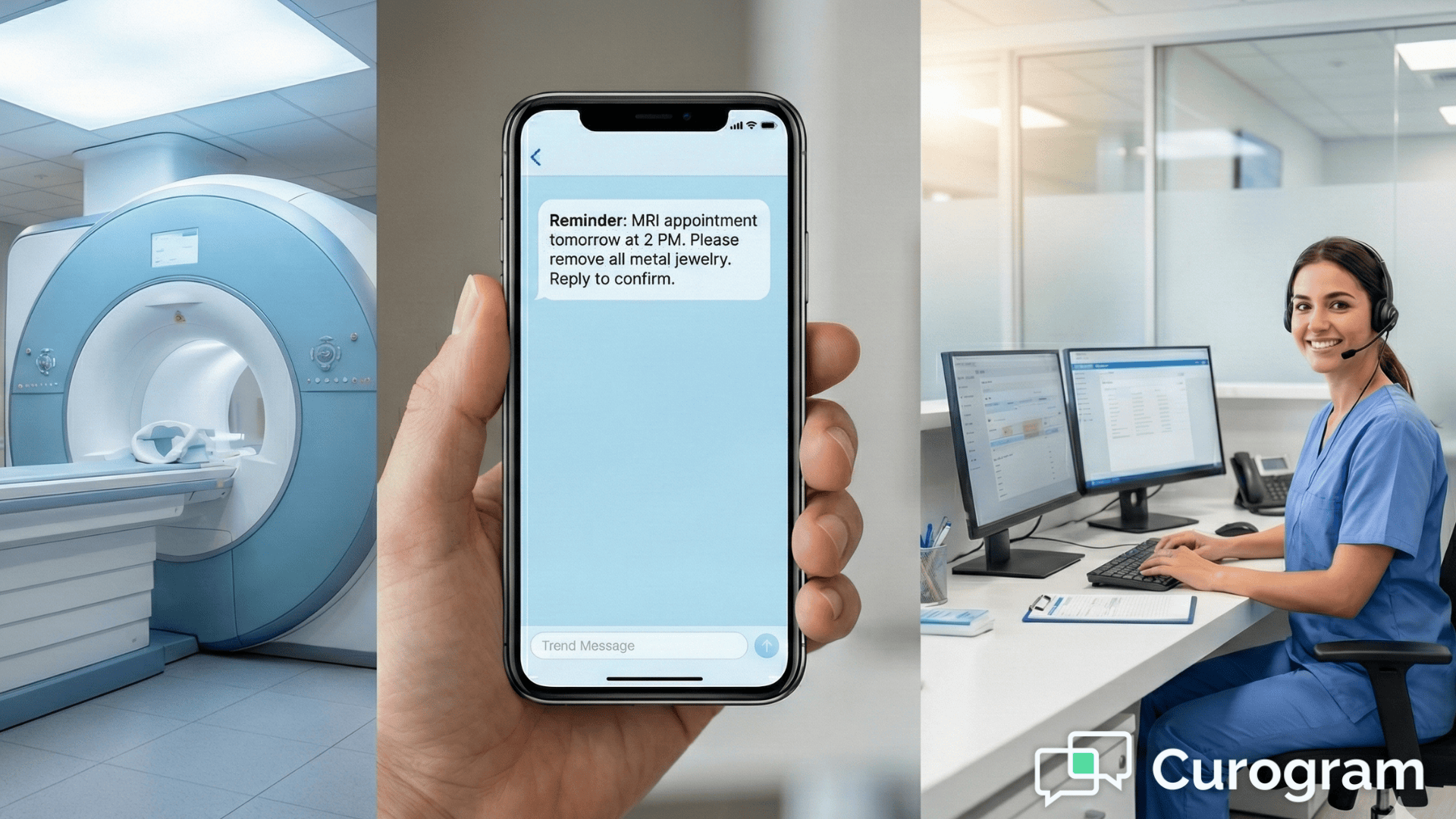
Automated appointment reminders address this with modality-specific messaging. The system identifies each imaging type and sends the correct preparation instructions at the right time. Scheduling integration removes manual data entry, while location-aware routing delivers facility-specific directions.
For Medstreaming imaging centers, the results are clear: fewer no-shows, better-prepared patients, reduced staff burden, and improved throughput—leading to stronger operational and financial performance.
Imaging centers face unique pressures that make communication automation essential. High-value equipment, complex prep requirements, and multi-site operations leave little room for manual errors. When patients miss appointments or arrive unprepared, costly imaging time is lost.
Multi-location networks face compounded communication challenges. Medstreaming imaging centers often operate multiple facilities with different equipment and patient needs, making consistent messaging difficult when reminders rely on staff phone calls. Instructions vary, details get missed, and patients receive inconsistent information across locations.
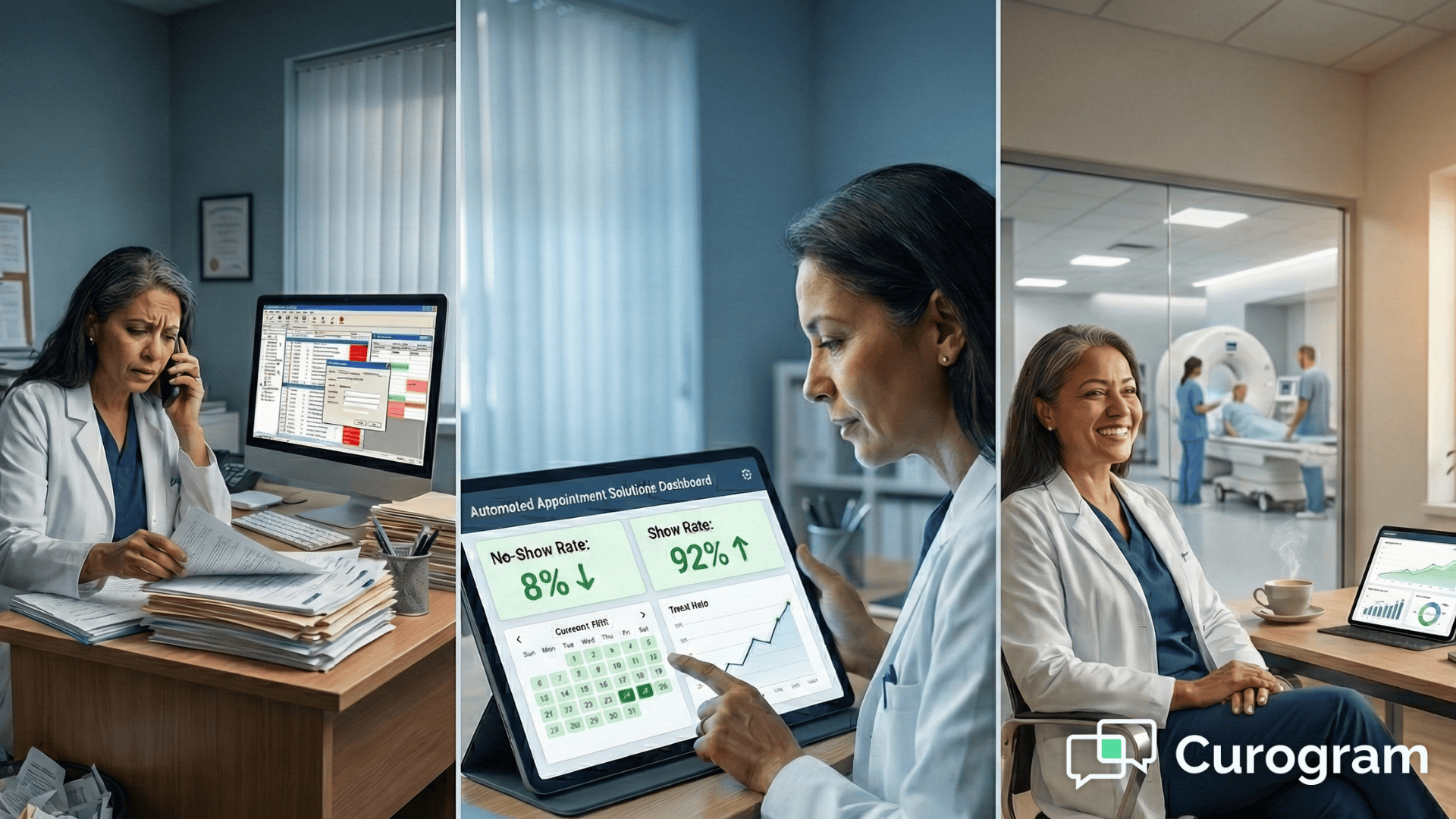
Manual reminder calls also strain front desk teams. Between scheduling, insurance checks, and patient intake, staff rarely have time for 30–50 daily reminder calls. These calls are often rushed or skipped, increasing no-shows and poor preparation.
Preparation requirements vary widely by modality. MRIs involve strict safety screening, contrast CTs require fasting and allergy checks, and ultrasounds often need precise timing or bladder preparation. Communicating these details consistently is difficult with manual processes.
Automated systems solve this with reliable, scalable messaging. Modality-specific templates deliver the right instructions to each patient, while location-aware routing ensures accurate, facility-specific information every time.
Poor patient preparation creates cascading operational issues that affect equipment use, staff productivity, image quality, and revenue. Despite reminders, unprepared patients still arrive—wearing metal for MRIs, eating before fasting ultrasounds, or missing hydration steps for contrast CTs—forcing delays and rework.
Daily throughput drops when preparation issues are routine. Missing just two of 20 daily MRI slots cuts capacity by 10%, adding up to 40–60 lost appointments per month and hundreds of missed scans annually—worth hundreds of thousands in lost revenue.
These disruptions ripple through the day. Early delays push schedules back, create patient wait times, and force technologists to rush, increasing stress and risk.
Staff morale also suffers. Repeatedly managing preventable preparation failures leads to frustration, wasted time, and reduced engagement across front desk and imaging teams.
Preparation-related delays strain referring provider relationships. Rescheduled studies delay results, slow treatment decisions, and create frustration for both physicians and patients. Reliable service is critical to referral trust—and preparation failures erode it.
The financial impact is multi-layered. Empty slots reduce revenue, staff productivity drops as time shifts to issue resolution, patient satisfaction declines, and marketing costs rise to replace lost volume. At the core of these issues is inadequate pre-appointment communication.
Curogram integrates directly with Medstreaming scheduling systems to automate modality-specific messaging without changing staff workflows. When an imaging procedure is scheduled, the system automatically identifies the modality and sends the appropriate preparation messages.
Location-aware routing simplifies communication across multi-site networks. The system identifies the appointment location and automatically includes directions, parking, check-in details, and contact information in reminder messages.
This is critical for networks with equipment spread across facilities. Patients are guided to the correct location with preparation instructions tailored to both the modality and site.
Single-entry integration eliminates duplicate data entry. Appointment details entered in Medstreaming automatically sync to Curogram in real time, including modality, location, and patient contact information—no extra systems or manual steps required.
Staff workflows stay the same. Schedulers use familiar Medstreaming tools while Curogram securely handles reminder delivery in the background. Patients receive timely messages, and staff can confirm delivery without added effort.
Two-way messaging lets patients respond in real time to confirm appointments, request reschedules, or ask preparation questions. Messages route to the right staff, reducing phone volume while preserving a personal patient experience.
Delivery and engagement tracking provides visibility into reminder performance, including delivery, opens, responses, and outcomes. Centers can refine messaging based on real data.
Curogram manages the technical infrastructure, security, and HIPAA compliance behind the scenes, with dedicated support available. Imaging centers stay focused on patient care while communication runs reliably.

Automated reminders deliver measurable operational gains across imaging centers. Preparation-related cancellations decline as patients receive clear, timely instructions, while studies show no-show rates drop by 20–30% compared to manual calls—improving throughput and revenue performance.
Workflow velocity improves when patients arrive on time and fully prepared. Technologists move efficiently between exams, reducing delays and preserving schedule integrity. This improved flow allows centers to increase daily scan volume without extending hours or adding equipment.
Patient readiness also streamlines check-in. When instructions are delivered in advance, staff spend less time re-educating patients and more time moving them quickly into exam rooms—reducing anxiety and improving the overall experience.
Staff morale improves when repetitive, low-value tasks are automated. Instead of spending hours on reminder calls, teams can focus on meaningful patient interactions and clinical priorities. This shift reduces burnout and supports staff retention in tight labor markets.
Preparation compliance also improves with timely, modality-specific instructions. When patients clearly understand fasting, hydration, and medication requirements ahead of time, adherence increases—resulting in higher-quality images, fewer repeat scans, and more accurate diagnoses.
Consistent communication across all locations builds patient trust and reinforces brand identity. Every patient receives the same clear, professional information regardless of facility or scheduler, signaling operational maturity in competitive markets.
Reminder performance analytics support continuous improvement. Delivery, response, and no-show data by location, modality, or time of day help centers refine timing, messaging, and outreach strategies for better results.

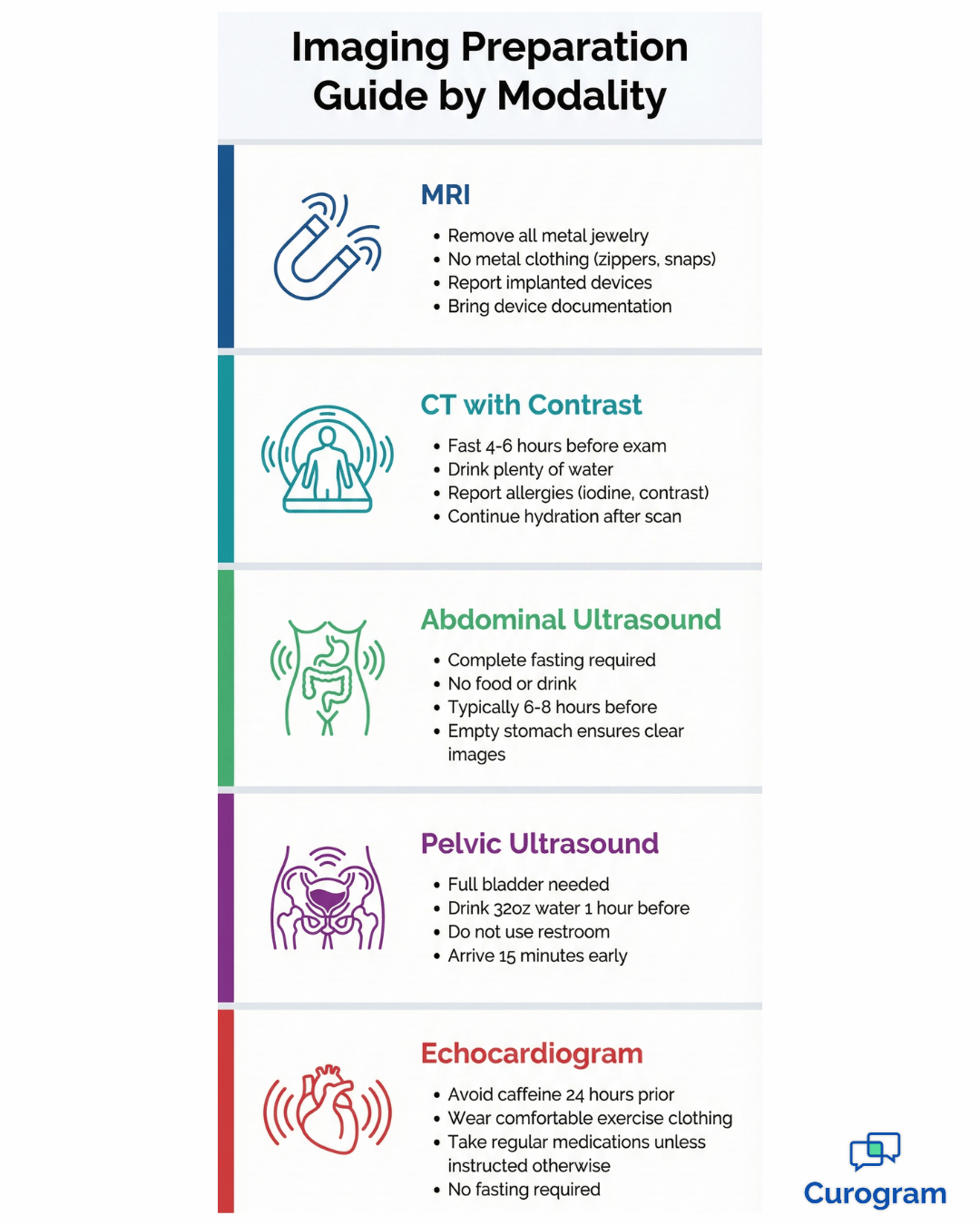
Each imaging modality requires distinct preparation protocols that patients must follow for safe, successful procedures. Automated reminder systems deliver targeted guidance matched to specific exam requirements, ensuring patients receive relevant instructions without information overload.
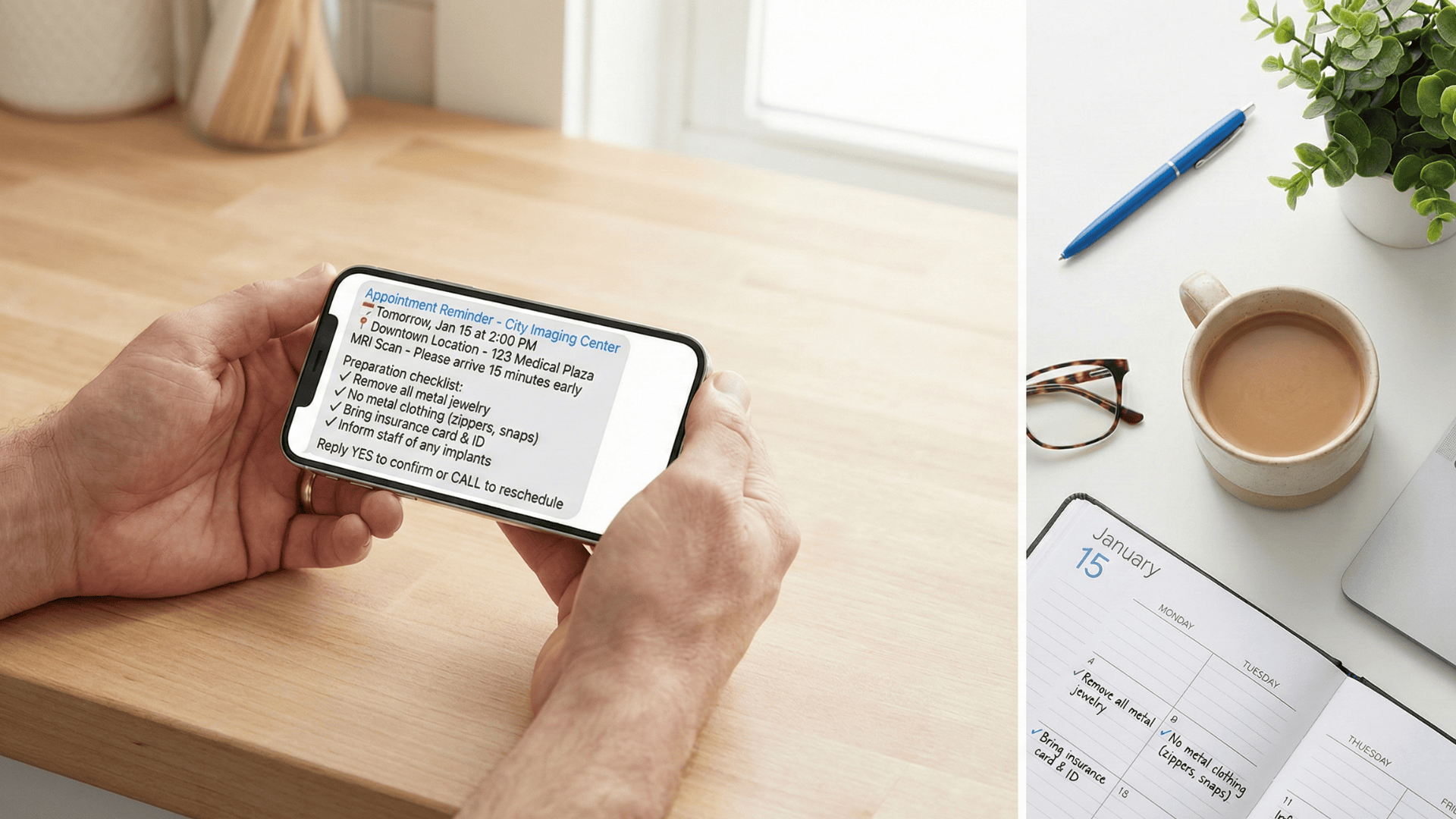
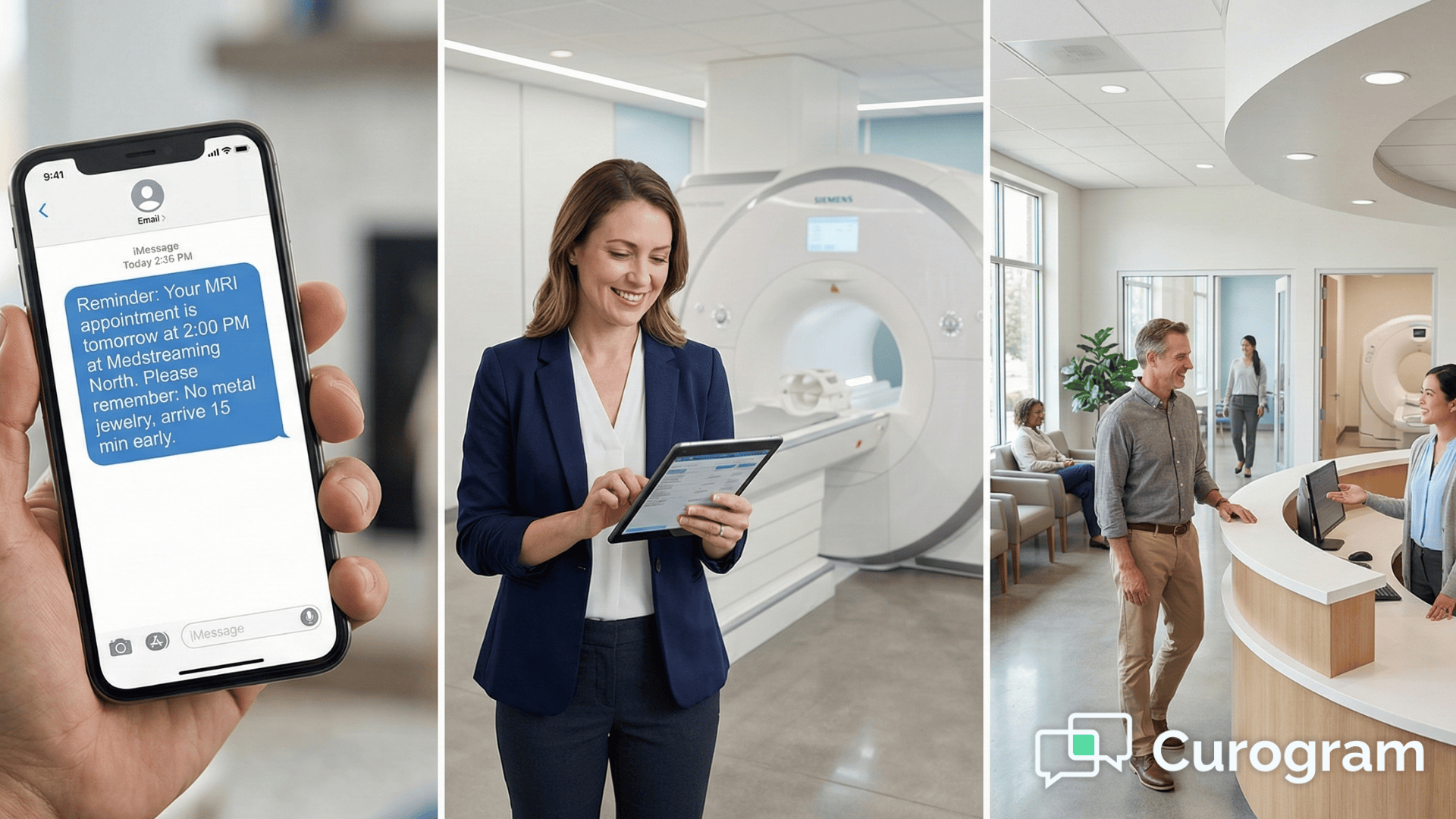
MRI safety requires strict metal screening due to powerful magnetic fields. Automated reminders provide clear checklists covering jewelry, accessories, and other removable metal items before arrival.
Messages also address implanted devices or internal metal, prompting patients to bring MRI safety documentation when needed. Clothing guidance helps patients arrive dressed appropriately, reducing gown changes and speeding preparation.
Contrast CT scans require careful preparation that balances fasting with hydration. Automated reminders clearly explain when patients should stop eating while reinforcing the importance of drinking water to support safety and image quality.
Messages explain how hydration protects kidney function and helps clear contrast after the scan, with tailored guidance for patients with diabetes or kidney disease. Built-in allergy screening prompts patients to report prior contrast or iodine reactions early, allowing staff to plan pre-medication or alternative protocols and prevent day-of delays.
Ultrasound preparation varies widely by exam type. Abdominal ultrasounds require fasting for clear imaging, while pelvic exams depend on proper bladder filling—making precise, exam-specific instructions essential.
Automated reminders identify the ultrasound type and deliver the correct preparation guidance, including exact fasting cutoffs or hydration timing. This precision prevents common errors, improves first-time scan success, and reduces rescheduling and delays.
Cardiovascular imaging includes echocardiograms, vascular ultrasounds, and stress testing, each with unique preparation requirements that directly affect diagnostic accuracy.
Automated reminders provide exam-specific guidance, such as avoiding caffeine before stress tests, limiting tobacco before vascular studies, and following appropriate fasting instructions. Clear medication messaging helps patients understand which medications to take or hold, supporting safe, accurate results.
Multi-facility imaging networks rely on accurate, location-aware routing. Automated reminders guide patients to the correct facility with precise directions and location-specific details.
Messages include maps, parking options, entrance instructions, and floor or suite information. Facility-specific check-in guidance helps patients arrive confident and on time, reducing confusion, delays, and appointment-day stress.
Equipment utilization and patient flow efficiency determine imaging center financial performance. Automated reminders directly influence both factors through improved patient behavior and reduced operational friction.
Consistent patient preparation establishes the foundation for operational efficiency. When every patient receives complete, clear preparation instructions with adequate lead time, compliance rates increase measurably. Higher compliance means fewer delays, fewer rescheduled appointments, and more completed exams per operating day.
Modality utilization improves when scheduled appointments reliably convert into completed exams. No-shows and unprepared patients leave high-cost MRI, CT, and ultrasound capacity unused, directly limiting revenue and patient access. Automated reminders close this gap by ensuring patients arrive informed, prepared, and on time.
Even modest improvements deliver outsized returns. Reducing no-show rates from 15% to 10% increases completed exams by 5%, adding hundreds of scans annually without extending hours, adding staff, or purchasing new equipment. These recovered appointments represent incremental revenue with minimal marginal cost.
Early cancellations further improve capacity management. When patients respond to reminders in advance, staff can refill open slots from waitlists or accommodate urgent add-on cases. This proactive rebooking is far more effective than absorbing same-day no-shows that permanently waste capacity.
Prepared patients also move through intake faster. Front desk teams verify compliance instead of re-educating, technologists start exams on time, and schedules maintain momentum throughout the day. Morning efficiency prevents downstream delays, keeping afternoon appointments on schedule.
Over time, these improvements compound. Predictable workflows reduce staff stress, stabilize daily throughput, improve patient satisfaction, and elevate the professionalism of the imaging operation—creating sustained operational and financial gains without additional capital investment.
Healthcare communication platforms must meet strict HIPAA privacy and security requirements. Protecting patient information is not optional—it is a core obligation for any system handling protected health information (PHI).
Curogram uses a HIPAA-compliant messaging architecture built for healthcare, with encryption in transit and at rest, strict access controls, and formal business associate agreements.
Message content is PHI-safe by design. Reminders share appointment and preparation details without revealing diagnostic or sensitive clinical information, reducing privacy risk while maintaining clear, effective patient communication.
Security operates automatically in the background. Industry-standard encryption protects every message during transmission, making intercepted data unreadable without authorized access. Imaging center staff do not need to manage security settings or workflows—protection is built into the platform.
Comprehensive audit trails provide visibility and accountability by tracking message delivery, engagement, and patient responses. These records support HIPAA audits, internal compliance reviews, and ongoing quality improvement efforts.
Role-based access controls further protect patient privacy by limiting visibility based on job function. Staff access only the information necessary for their role, maintaining compliance while supporting efficient daily workflows.
Healthcare communication platforms require fundamentally different architecture than generic business messaging tools. Curogram was purpose-built for medical practice operations with deep understanding of clinical workflows, regulatory requirements, and operational realities.
Curogram is built specifically for radiology workflows, not adapted from consumer messaging tools. Reminder templates, timing logic, and integrations are designed around real imaging center operations, supporting consistent communication across all modalities.
The platform scales from single-location practices to large multi-facility networks. Centralized management maintains consistency while allowing location-level customization, and high message volumes are handled reliably as organizations grow.
An intuitive design keeps training minimal. Staff can use the system almost immediately because it mirrors familiar scheduling and communication workflows, reducing implementation friction and encouraging adoption.
Enterprise-grade infrastructure ensures dependable, on-time messaging. Proactive monitoring, redundancy, and seamless updates keep the platform running without disruption or IT involvement, giving imaging centers confidence in daily operations.
Automated appointment reminders deliver immediate operational improvements for imaging centers struggling with no-shows, preparation compliance, and staff workload. The technology addresses fundamental communication challenges that affect every diagnostic imaging facility regardless of size or patient volume.
Benefits extend across the entire organization. Patients receive timely, accurate communication, front desk teams reclaim time from repetitive reminder calls, technologists work with prepared patients, and leaders see improved throughput and financial performance.
For Medstreaming imaging centers, automated reminders integrate directly into existing scheduling workflows without disruption. The system handles multiple locations, imaging modalities, and complex preparation protocols automatically, delivering consistent, modality-specific instructions across the network.
Implementation is fast with minimal training. Centers often see measurable no-show reductions within weeks, with rapid ROI driven by more completed appointments and reclaimed staff productivity.
Book a demo to see Curogram integrated with Medstreaming workflows. Discover how automated appointment reminders improve imaging center operations, reduce no-shows, and enable staff to work more efficiently.
Automated reminders reduce no-shows by sending patients timely messages about their upcoming appointments. These reminders help patients remember their appointment dates and times. The messages also include preparation instructions specific to each imaging type, which reduces confusion and improves patient readiness. Studies show that automated reminders can decrease no-show rates by 20% to 30%. The system sends multiple reminders at strategic times before appointments, giving patients several opportunities to confirm, reschedule, or ask questions.
Proper preparation ensures high-quality images and patient safety during imaging exams. MRI scans require patients to remove all metal objects to prevent serious safety hazards from the magnetic field. CT scans with contrast need patients to fast and stay hydrated to protect kidney function. Ultrasounds require specific preparation like fasting or bladder filling to get clear images of internal organs. When patients don't prepare correctly, the exam may need to be rescheduled or the image quality may be poor. This wastes time, delays diagnosis, and frustrates both patients and staff.
Medstreaming reminder automation uses location-aware routing to send patients the right information for their specific facility. When a patient schedules an appointment at any location in the network, the system automatically knows which facility they'll visit. Reminder messages include that location's address, parking information, and check-in procedures. The system can also handle situations where different locations have different equipment. If one facility has the MRI machine and another has CT scanners, patients receive directions to the correct location with preparation instructions for their specific imaging type.
HIPAA-compliant reminders protect patient privacy through several security measures. Messages are encrypted during transmission so nobody can intercept and read them. The content of reminders is carefully written to avoid including sensitive diagnostic information. Only authorized staff can access patient communication records, and the system tracks who views what information through audit trails. The platform includes business associate agreements and meets all technical safeguards required by HIPAA. This ensures that appointment reminders enhance communication without compromising patient privacy or putting the imaging center at risk for compliance violations.
Curogram was designed specifically for healthcare workflows rather than being adapted from a general business tool. The company's developers spent time working alongside front desk staff in medical facilities, including imaging centers, to understand real operational challenges. This resulted in a platform that integrates seamlessly with healthcare systems, requires minimal training, and handles the complexity of medical practice operations. The system understands imaging-specific needs like modality-based preparation instructions and multi-location routing. It also maintains HIPAA compliance while providing the features imaging centers actually need to reduce no-shows and improve patient communication.
💡 GE Centricity specialty clinics face ongoing challenges with patient no-shows and incomplete appointment preparation. Automated appointment...
💡 Automated appointment reminders help Medstreaming imaging centers reduce no-shows and improve revenue. When MRI and CT scanners sit empty,...
💡 HIPAA-compliant texting in Medstreaming keeps patients informed, on schedule, and protected—streamlining communication for high-volume imaging...