
The Ultimate Guide to Healthcare Communication: 35+ Strategies
Discover 35+ healthcare communication strategies to improve patient safety, outcomes, trust, and effective patient care.
15 min read

Effective communication with elderly patients is the cornerstone of exceptional geriatric care, forming the very foundation upon which trust, accurate diagnosis, and patient cooperation are built. The first step involves creating a calm, respectful, and patient environment, ensuring you speak clearly and listen actively to both verbal and non-verbal cues.
This comprehensive guide will delve into 12 essential strategies, exploring everything from overcoming sensory impairments to navigating difficult conversations, providing you with a complete framework for fostering meaningful and productive interactions. By mastering these techniques, healthcare providers and caregivers can significantly enhance the quality of life and health outcomes for the older adults in their care.
Before diving into specific techniques, it's vital to understand why mastering effective communication with elderly patients is not just a 'soft skill' but a critical clinical competency. The quality of communication directly impacts every facet of the healthcare journey for older adults. It's the primary vehicle for understanding symptoms, explaining complex medical information, and building a therapeutic alliance.
Poor communication can lead to misdiagnoses, medication errors, patient frustration, and a breakdown in the patient-provider relationship. Conversely, when done well, it empowers patients, respects their autonomy, and leads to demonstrably better health outcomes.
It transforms a clinical interaction from a procedural task into a collaborative partnership, fostering an atmosphere of dignity and mutual respect that is essential for holistic well-being.
Accurate diagnosis relies on the free flow of information from the patient. An elderly patient who feels rushed, ignored, or intimidated is less likely to share a full spectrum of their symptoms, especially those they might find embarrassing or trivial.
For example, a subtle symptom like intermittent dizziness or a minor change in cognitive function could be a critical clue for a serious underlying condition.
Creating a safe and open communicative space encourages patients to be more forthcoming, providing the clinician with the complete picture needed for an accurate diagnosis. This is a primary benefit of prioritizing effective communication with elderly patients.
Complex medication schedules and lifestyle changes are common in geriatric care. If a patient doesn't fully understand why a medication is necessary, how to take it correctly, or what side effects to watch for, their adherence to the treatment plan will inevitably suffer.
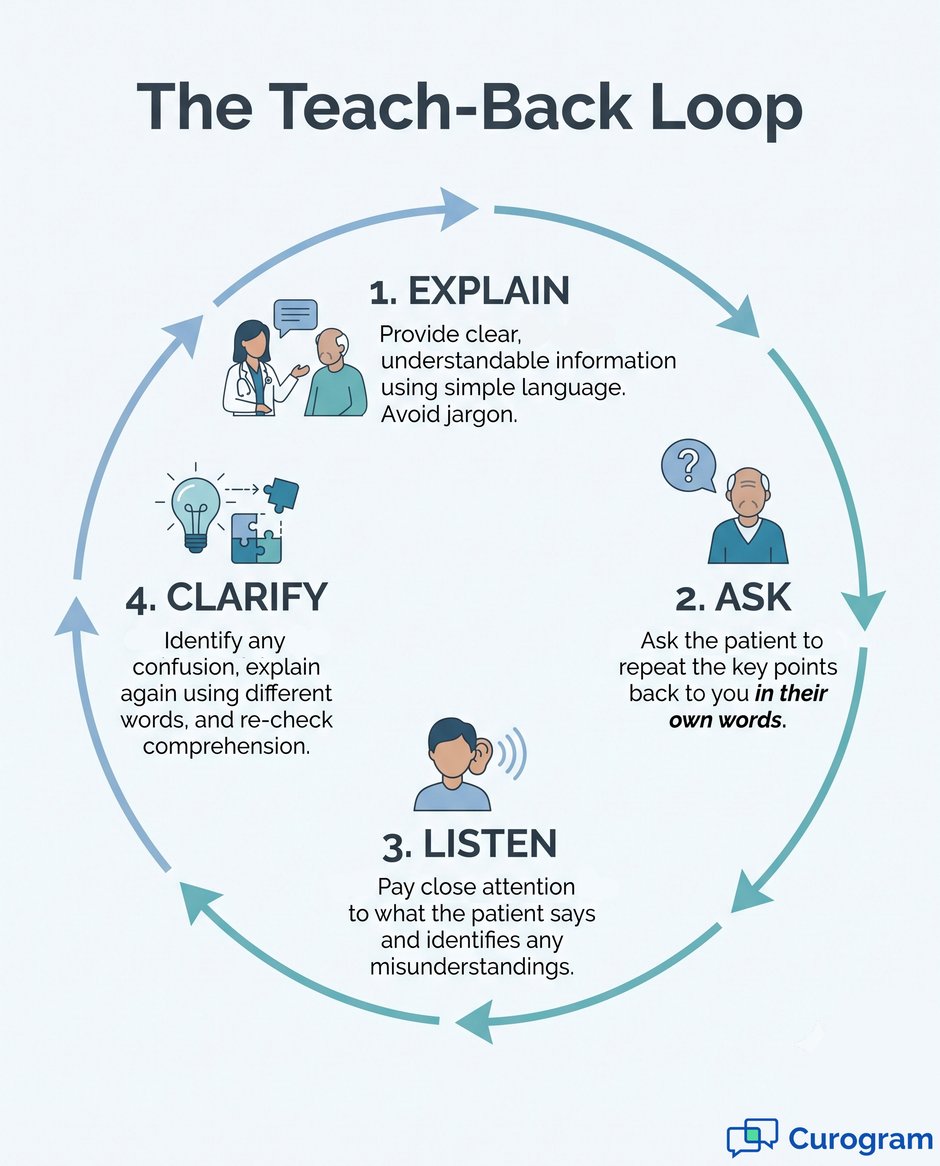
Good communication techniques, such as the "teach-back" method, where a patient explains the plan in their own words, ensure comprehension and buy-in. When a patient feels like a partner in their care plan, they are more invested in following it, leading to better management of chronic conditions and overall health.
Trust is the currency of healthcare. For many older adults, a long-term relationship with a healthcare provider is a source of stability and comfort. This trust isn't built overnight; it's forged through consistent, empathetic, and respectful communication.
When a provider takes the time to listen, validate concerns, and show genuine care, the patient feels seen and valued as an individual, not just a collection of medical conditions. This rapport is indispensable, particularly when navigating sensitive topics or difficult healthcare decisions.
At its core, good general communication techniques with the elderly include a set of foundational principles that prioritize the patient's comfort and understanding. These are not just strategies but a mindset—an approach rooted in empathy and respect that should underpin every interaction.
Patience is paramount. Older adults may process information more slowly, have difficulty retrieving memories, or simply wish to share their stories. Rushing them creates anxiety and shuts down communication. Allow for pauses and silence; give them the time they need to formulate their thoughts and responses.
Empathy is the ability to understand and share the feelings of another. Try to see the situation from their perspective. Acknowledge their frustrations, fears, and joys. Phrases like "That sounds very difficult," or "I can understand why you would feel that way," can validate their experience and strengthen your connection.
Active listening is more than just remaining silent while someone else speaks; it's a dynamic process of engagement. This involves giving the speaker your full attention, putting away distractions like phones or charts, and maintaining appropriate eye contact.
Pay close attention to non-verbal cues: Are they wringing their hands? Avoiding eye contact? Are their facial expressions congruent with their words? Reflect back what you hear to confirm understanding. For example, "So, if I understand you correctly, the pain in your knee gets worse after you walk for about 10 minutes. Is that right?" This not only confirms information but also shows the patient that you are truly listening.
The physical environment can significantly help or hinder communication. A noisy, chaotic room with constant interruptions is a major barrier. Whenever possible, choose a quiet, private, and well-lit space. Minimize background noise by closing a door or turning off a television.
Ensure the room temperature is comfortable. Sit at the same level as the patient, rather than standing over them, which can feel intimidating. This simple act of adjusting the environment sends a powerful message that you are focused on them and that this conversation is important.
While we will explore many techniques, the single answer to "What is the best method to interacting with elderly patients?" is to adopt a consistently patient-centered approach.
This overarching method means moving away from a traditional, paternalistic model of care ("doctor knows best") and toward a collaborative partnership. It involves seeing every elderly individual as unique, with their own history, values, preferences, and goals.
This method requires you to consciously tailor your communication style to fit the specific person in front of you. Do they prefer formal titles or their first name? Are they a "just the facts" person, or do they appreciate small talk to build rapport first?
A patient-centered approach means you are constantly assessing and adapting. It's about asking questions like, "What is most important to you right now?" or "How can I best support you in managing your health?"
This philosophy is the framework that makes all other specific techniques truly effective, ensuring that the patient feels respected, heard, and in control of their own healthcare journey.
Here we present a dozen core, actionable strategies. Integrating these into your practice will profoundly improve the quality of your interactions and the care you provide.
This seems obvious, but it's often overlooked in a busy clinical setting. Avoid using complex medical jargon or technical terms. Instead of saying "hypertension," say "high blood pressure." Instead of "myocardial infarction," say "heart attack."
Speak at a moderate pace, enunciating your words clearly. Do not shout, as this can distort sound and can be perceived as anger, especially for someone with a hearing aid. Pause between sentences and concepts to give the person time to process the information.
Much of what we communicate is through body language. Maintain an open posture—uncross your arms and legs. Lean in slightly to show you are engaged. Use gentle, respectful touch, such as a hand on the arm, if it feels appropriate and is culturally acceptable for the patient.
A warm smile and consistent, friendly eye contact can put a person at ease more effectively than any words. Be mindful of your own facial expressions; a look of impatience or distraction can instantly shut down a conversation.
Sensory decline is a common reality of aging.
This is one of the most powerful tools for ensuring comprehension. After you explain something important, like a new medication or a follow-up plan, ask the patient to explain it back to you in their own words. This is not a test of their memory, but a test of how well you explained the concept.
You can phrase it gently: "I want to be sure I did a good job explaining this. Can you tell me in your own words how you're going to take this new medicine?" If they can't explain it correctly, you know you need to clarify and explain it in a different way.
Family members and caregivers can be invaluable allies in communication, but it's a delicate balance. Always address the patient first and foremost, even if a family member is present. This respects the patient's autonomy.
You can then ask the patient for permission to include others in the conversation: "Would it be alright if we discuss this with your daughter here as well?"
They can help fill in gaps in the medical history or reinforce instructions later. However, be wary of situations where a family member speaks for the patient, and always strive to keep the patient as the central focus of the interaction.
The way you ask questions determines the quality of the answers you receive. Avoid leading questions ("You're not having any chest pain, are you?").
Instead, use open-ended questions to encourage a detailed response: "Can you tell me more about what you're feeling?" or "How has your appetite been this past week?" For patients who are overwhelmed, you may need to switch to simple, direct yes-or-no questions to get specific information.
Don't overwhelm an older patient with too much information at once. Prioritize the most important points and discuss them first. A good strategy is to "chunk and check." Present one key concept or instruction (the "chunk"), and then check for understanding (using the teach-back method) before moving on to the next.
Providing a simple written summary at the end of the visit can be incredibly helpful for them to refer to later. For a deeper understanding of structuring patient interactions, explore our guide on improving patient outcomes with empathy.
Communicating with individuals living with dementia or Alzheimer's requires a special skill set.
Reinforce your spoken words with clear, simple written materials. This could be a list of medications with dosages and times, a diagram of the body to explain a procedure, or a calendar with follow-up appointments clearly marked.
Use large, legible fonts (at least 14-point) and plenty of white space. Visuals can often convey information more effectively than words alone. Our article on navigating complex caregiving scenarios provides further insights into creating helpful patient aids.
Discussions about a poor prognosis, end-of-life care, or the need to stop driving are emotionally charged. Use the "SPIKES" protocol as a guide:
Different cultures have varying norms around communication, personal space, family involvement, and views on aging and authority. Avoid making assumptions. Ask respectful questions to understand the patient's cultural background and how it might influence their healthcare preferences.
For example, in some cultures, it is considered disrespectful to deliver bad news directly to an elder; the family expects to be informed first. Understanding these nuances is key to respectful and effective communication with elderly patients.
Technology can be a bridge, not a barrier. Telehealth visits can be a convenient option, but ensure the patient is comfortable with the platform. Use patient portals to send follow-up information, but don't assume everyone has access or is tech-savvy.
Simple technologies can also be highly effective. A tablet can be used to show large-print text or educational videos during a visit. A digital voice recorder can be used (with permission) to record instructions for the patient to listen to later. The goal is to use technology to support, not replace, human connection.

To truly excel, we must go beyond the standard clinical advice. The following subsections offer unique perspectives that can transform your communication from merely effective to truly exceptional.
Humor, when used appropriately, can be a powerful tool to break the ice, reduce tension, and humanize the clinical encounter. A shared laugh builds instant rapport. Of course, it must be used with care and sensitivity, but lightheartedness can be a welcome relief in a sterile medical environment.
Similarly, taking a moment to listen to a patient's story—about their youth, their family, their career—does more than just pass the time. It validates their life experience, shows them you see them as a whole person, and can often reveal important information about their values and what matters most to them.
What about patients who cannot speak due to a stroke, advanced dementia, or other conditions? Communication does not end where speech does. Focus intently on non-verbal cues. A furrowed brow, a grimace, or restlessness can signal pain or distress. A relaxed facial expression or a soft touch of your hand can signal comfort.
Use communication boards with pictures or words they can point to. Ask simple yes-or-no questions where they can nod, blink, or give a thumbs-up. Your calm, reassuring presence and gentle touch can communicate care and empathy more profoundly than any words. You can find more tips in our blog post about activities for seniors.
Constantly engaging in empathetic, high-stakes communication is emotionally draining. It is vital for healthcare professionals and caregivers to practice self-care to avoid burnout. This means recognizing the emotional toll of the work, debriefing with colleagues after difficult conversations, and setting healthy boundaries.
Engaging in mindfulness, hobbies, and ensuring adequate rest are not luxuries; they are essential for maintaining the emotional reserves needed to provide compassionate care. According to the National Institute on Aging, caregiver stress is a significant health concern, underscoring the need for robust self-care practices.
Even skilled providers hit roadblocks with older patients. Naming these barriers is the first step to solving them. Small changes in habit and workflow can clear most of them fast.
Many older adults did not grow up with today's medical terms. Some read at a basic level, and others speak English as a second language. Do not assume a patient understood just because they nodded. Ask them to repeat the plan in their own words instead.
Use plain words and short sentences during every visit. Offer written notes in large print for them to take home. When language is a barrier, use a trained interpreter, not a family member. Clear, open communication protects patients from costly mistakes.
Short visits are a real problem in busy clinics. Rushing an older patient often backfires and hides key symptoms. A calm start saves time later by preventing confusion and repeat calls.
Try a few simple time-savers. Set one or two clear goals for the visit up front. Use the chunk-and-check method to share information in small pieces. A short written summary at the end cuts down on follow-up questions.
Communication should not stop when the patient leaves. Older adults often forget instructions within an hour of a visit. Consistent communication between visits keeps them on track with medicine and follow-ups.
Reminders and check-ins fill this gap well. A simple text can confirm the next appointment or flag a refill. These small touches lead to more meaningful interactions and fewer missed visits. They also help patients feel cared for all year, not just in the exam room.
When an older adult opens up about grief, anxiety, or a hard life transition during a visit, the referral that follows matters as much as the conversation itself. A long wait, a mismatched therapist, or a confusing intake can quietly undo the trust you just built.
Sailor Health is a mental health service built around later-life needs, with older, experienced therapists who have spent their careers sitting with grief, caregiving strain, chronic illness, and the identity shifts that come with aging. Sessions happen from home by phone or video, which lowers the practical barriers that often stall follow-through. Sailor Health is in-network with Medicare, and most members have a $0 copay, with no waitlists to clear before care begins.
Alongside counseling, a care navigator helps with the connective work that referrals usually leave to the patient: checking Medicare eligibility, coordinating with the primary care team, and preparing for appointments. For a patient who already feels unseen in a fast system, that continuity is often what turns a referral into real care. You can learn more at sailorhealth.com.
Technology should support human contact, not replace it. The right tools keep older patients informed and connected with less effort. They also free up staff to spend more face time with each person.
Older patients miss visits for many reasons. They may forget the date, lose the reminder card, or lack a ride. Two-way texting solves much of this in plain, simple language. Patients can confirm, reschedule, or ask a quick question in seconds.
The results speak for themselves. Based on our internal data, one clinic cut its no-show rate from 14.20% to 4.91% in three months. That is more than 3X better than the industry average. Fewer missed visits mean better care and steadier practice revenue.
Long paper forms frustrate many older adults. Secure digital forms let them fill in details from home at their own pace. Larger text and simple layouts make this far easier on the eyes. Family can help too, with the patient's consent.
Keep the tools simple and the choices clear. Not every senior is comfortable online, so always offer a phone or in-person option. A patient portal works best when it sends short, friendly nudges. The goal is access for everyone, not extra stress.
Good communication is not just a feeling. You can track its impact with a few clear numbers. These metrics show leaders where care and workflow are improving.
Start with two easy numbers to watch. No-show rate tells you if reminders and clear scheduling are working. The reactivation rate shows how many overdue patients return for care. Both matter a lot for older adults with chronic needs.
Small workflow changes can move these numbers fast. Based on our internal data, recall texts brought back 1,240 patients from one campaign. About 35% of those who got a recall message booked within a month. That is care restored and revenue recovered at the same time.
|
Metric |
Result |
Source |
|---|---|---|
|
No-show rate reduction |
14.20% to 4.91% in three months |
Based on our internal data |
|
Patient reactivation |
1,240 patients returned from one recall campaign |
Based on our internal data |
|
Recall reconversion rate |
35% booked within a month |
Based on our internal data |
|
Five-star reviews |
1,064 new reviews in three months |
Based on our internal data |
Patient reviews are a window into how communication feels. Older patients and their families often mention warmth, patience, and clarity. A short survey after each visit surfaces problems early. It also gives quiet patients a simple way to speak up.
Reviews build trust with future patients, too. Based on our internal data, one practice earned 1,064 new five-star reviews in three months. About 90% of its patients left five-star ratings. Steady feedback turns single visits into lasting, meaningful interactions.
Effective communication with elderly patients is not a single action but a complex, dynamic skill woven from threads of patience, clarity, empathy, and respect.
It requires you to be a technician who can speak clearly and overcome sensory barriers, an artist who can read non-verbal cues and use humor wisely, and a humanist who honors the life story and dignity of every individual.
By adopting a patient-centered philosophy and diligently applying the 12 strategies outlined in this guide—from the "teach-back" method to navigating the most difficult conversations—you move beyond simply treating a condition. You begin to truly care for the person.
You build bridges of trust across generational and health divides, ensuring that older adults are not just passive recipients of care, but active, respected partners in their own health journey. This is the ultimate goal, and its achievement is one of the most rewarding aspects of working with the elderly.
Ready to put these strategies to work? See how Curogram helps your team support older patients with less effort. Book a quick demo today and watch simple reminders and secure texting fit right into your workflow.

Discover 35+ healthcare communication strategies to improve patient safety, outcomes, trust, and effective patient care.
 Joshua Inciso : 4/26/22, 7:00 AM
Automated tools in healthcare make processes more effective and efficient. Learn how to automate communication and enhance patient engagement.
 Joshua Inciso : 5/27/22, 8:45 AM
Discover the reasons why patient engagement is vital to your healthcare practice’s future, as well as strategies to improve it.