Mass Texting for Prime Clinical | Crisis & Broadcasts
💡 HIPAA-compliant mass texting for Prime Clinical lets medical practices reach their entire patient roster in minutes.Instead of calling each...
8 min read
Jo Galvez
:
March 4, 2026
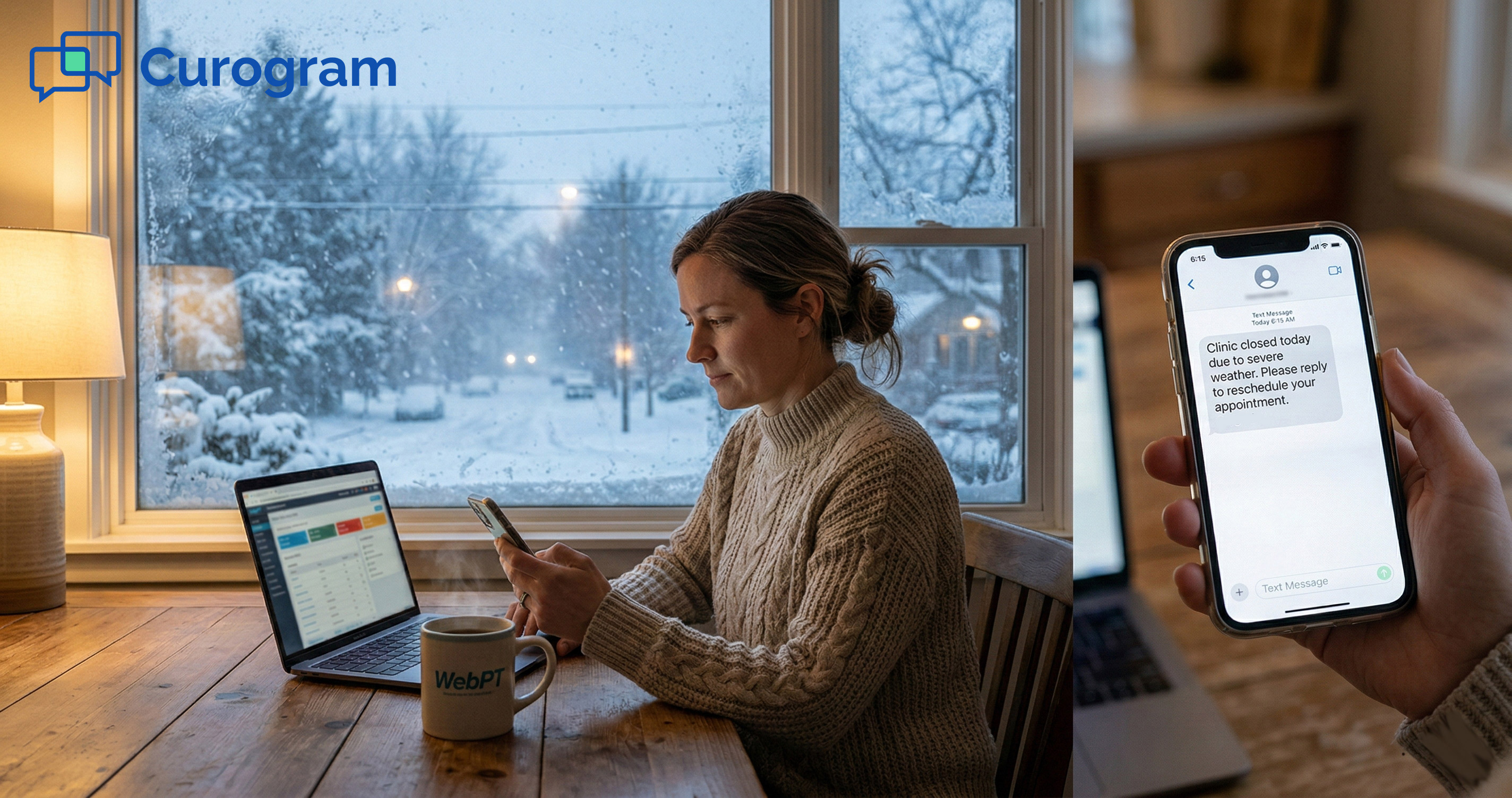
Picture this. It's 7:15 on a Tuesday morning. Snow is piling up fast. Your lead therapist just texted: "I can't make it in."
Fourteen patients are on the books, and the first one arrives in 45 minutes.
What do you do? Print the schedule. Start calling. Get voicemail after voicemail. By the time you reach half the list, three patients are already in the parking lot, upset and confused. Sound familiar?
This is the reality for too many physical therapy clinics that still rely on old-school phone trees and email blasts during a crisis. The problem isn't effort. It's the method.
Emails sit in spam folders. Calls go straight to voicemail. And every lost minute means lost revenue and lost trust.
That's why urgent patient messaging for WebPT clinics has become a must-have, not a nice-to-have. When the unexpected strikes, you need a tool that cuts through the noise and reaches people where they actually look: their phones.
Text messages have a 98% open rate. Most are read within 3 minutes. Compare that to email, where open rates hover around 20% on a good day.
For a practice manager trying to clear a schedule and rebook patients before the morning rush, those numbers matter.
Curogram offers a WebPT broadcast texting integration built for exactly these moments. It's not a marketing tool.
It's an operational lifeline that lets you filter, compose, and blast a message to every affected patient in under 60 seconds. Even better, patients can reply right away to reschedule or confirm changes.
In this guide, we'll walk through why the old phone tree fails, how an emergency broadcast system works with WebPT, and what happens when you handle a crisis in one minute instead of one hour.
Every practice manager knows the dread that comes with a last-minute disruption. A sick provider, a power failure, or a sudden storm can throw the whole day off track.
The tools most clinics use to handle these moments haven't changed in decades. That's the core of the problem.
It's 7:30 AM. A therapist calls in with the flu. They have 14 patients booked, with the first slot at 8:00 AM. The front desk jumps into action. They print the day's schedule and begin dialing each patient one by one.
Five calls go straight to voicemail. Three patients don't pick up. Two ask to hold while they check their calendars.
Meanwhile, the clock keeps ticking. By 7:50 AM, only six patients have been reached. The rest are on their way.
This is the morning panic. It happens more often than most clinics care to admit. The manual phone tree was never designed for speed. It was built for a time when people answered their home phones.
At 8:05 AM, three patients walk through the door. They drove 20 minutes in the snow. Nobody warned them.
The front desk apologizes, but the damage is done. Those patients are frustrated, and some may not come back.
When you can't notify patients of provider illness in time, the fallout goes beyond a single missed visit. Trust erodes. Reviews suffer. And the staff who spent the morning on the phone are too drained to focus on the patients who did show up.
Some clinics try using email for these alerts. You could send a message through WebPT Reach, for instance. But will the 8:00 AM patient check their inbox while driving to the clinic? Probably not.
Emails get buried under promotions, spam, and unread newsletters. The open rate for healthcare emails sits around 20%.
For an emergency closure alert in physical therapy, that's not good enough. You need near-instant visibility, and email simply can't deliver that.
The manual phone tree eats the entire morning. Your front desk staff spends two to three hours calling, leaving messages, and calling again. That's time taken away from check-ins, billing, and patient care.
Worse, you still lose revenue. By the time you reach everyone, most patients have moved on with their day.
They don't want to reschedule right then. They'll call back later, maybe, or they won't. The old phone tree doesn't just waste time. It costs you money.
If your goal is to replace the manual phone tree with something faster and more reliable, the answer isn't a better phone list. It's a better channel.
When a crisis hits, you don't need a marketing tool. You need a red phone. Something fast, direct, and built for operations. That's exactly what Curogram provides for WebPT clinics.
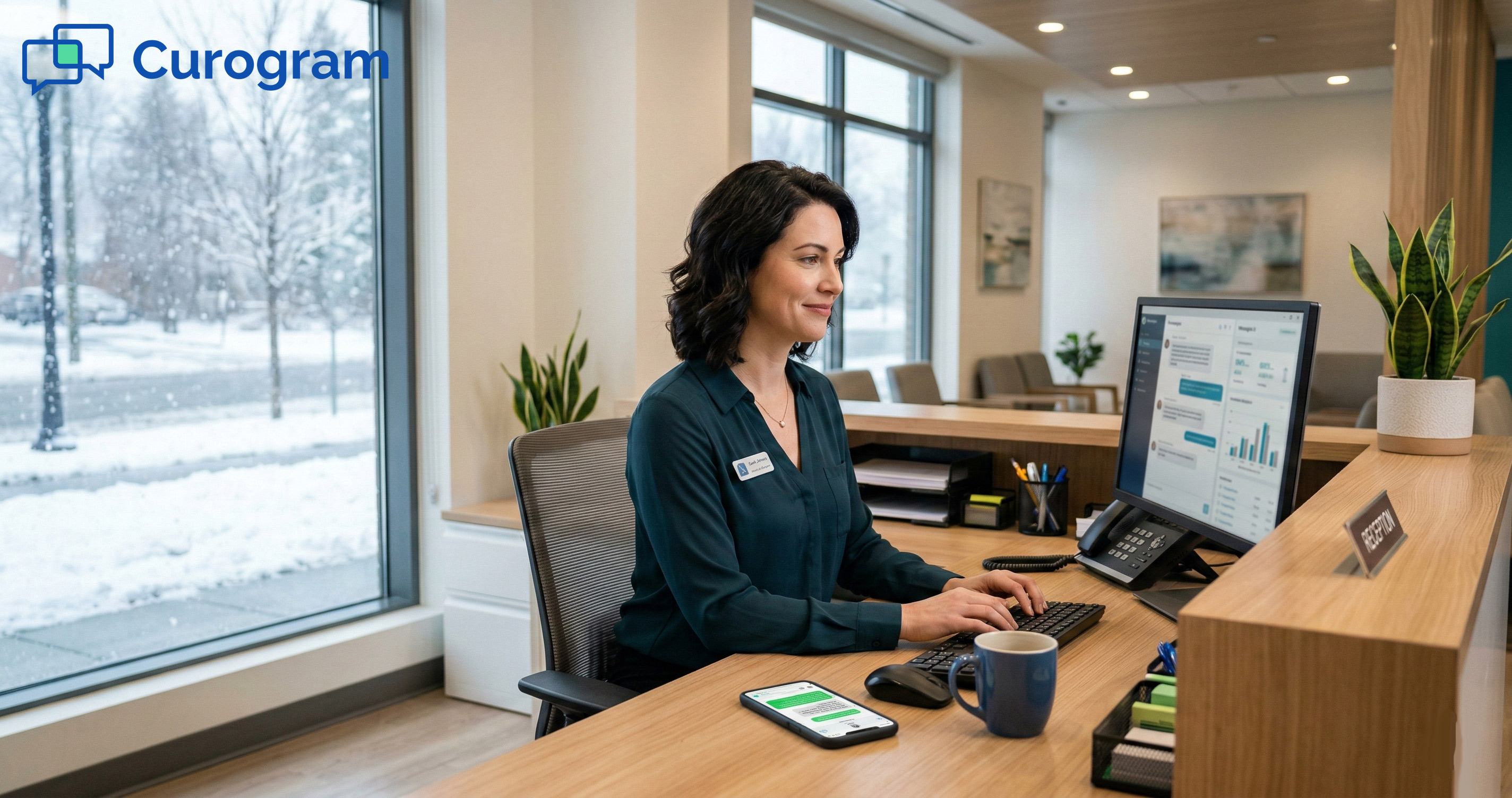
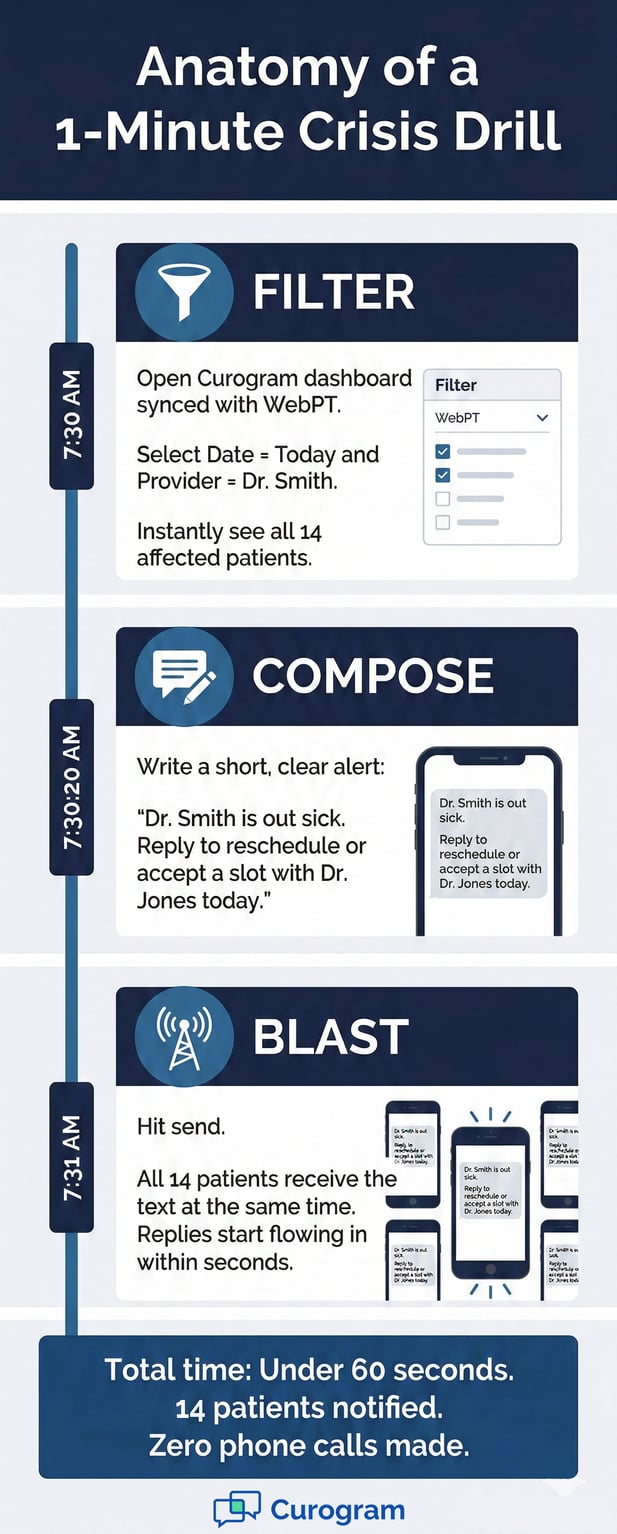
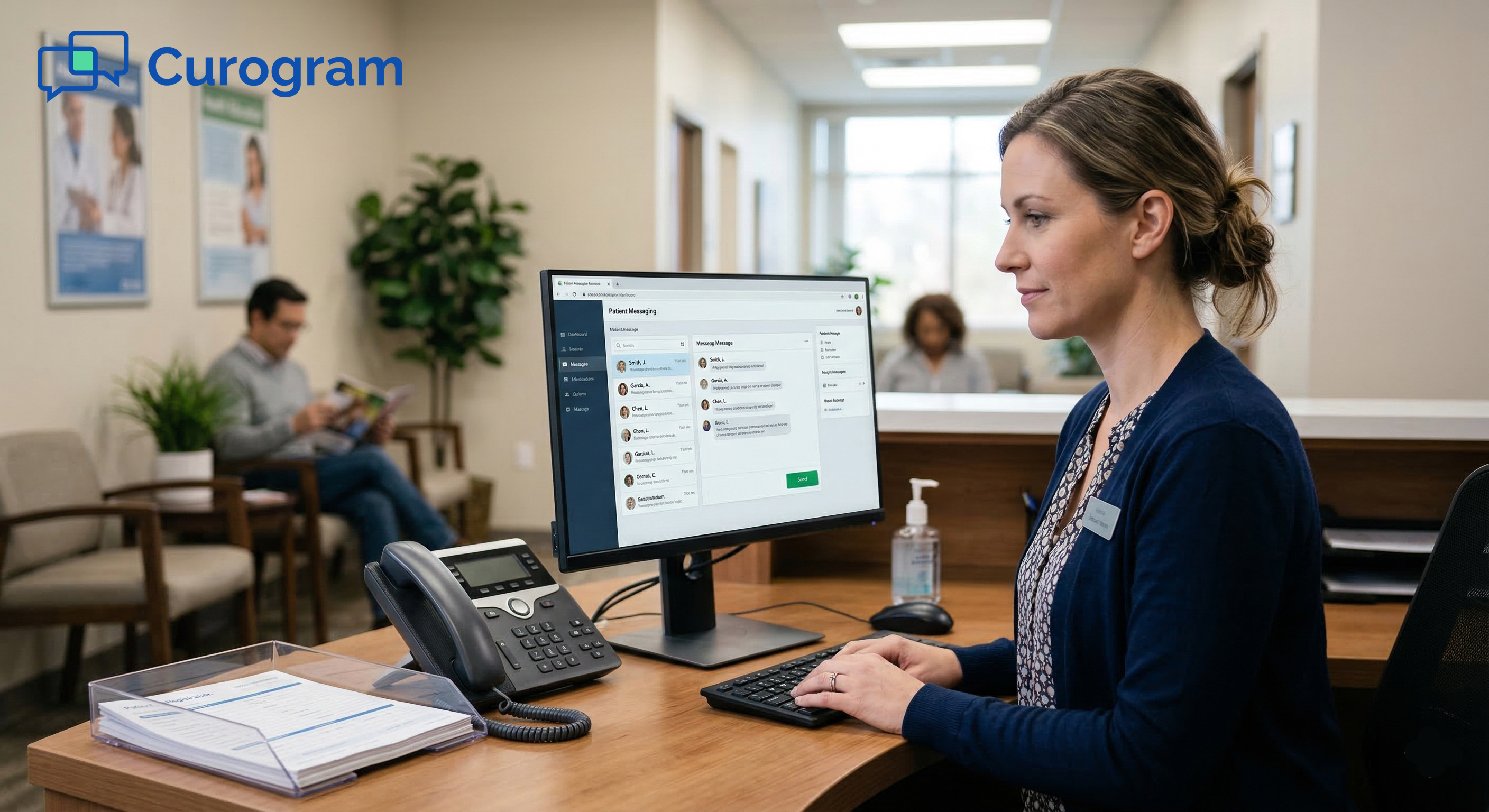
Curogram syncs directly with your WebPT schedule. When a provider calls in sick, you don't need to dig through spreadsheets or print anything. Just open the Curogram dashboard and filter by date, provider, or location.
Select "Date = Today" and "Provider = Dr. Smith." In seconds, you see every patient on that provider's schedule. No guesswork. No manual sorting.
The WebPT broadcast texting integration does the heavy lifting so your team can act fast.
This filtering step is what makes operational mass texting different from generic blast tools. You're only reaching the patients who need to know, not your entire database.
Once you've selected the right patients, compose your message. Keep it short and clear. Something like: "Dr. Smith is out sick today. We have openings with Dr. Jones, or we can reschedule you for tomorrow. Reply with your preference."
Hit send. That's it. Fourteen patients get the message at the same time. No calling. No waiting on hold. No printing schedules and crossing off names with a pen.
The whole process takes less than 60 seconds from start to finish.
Here's where Curogram stands apart from basic alert systems. Most mass text tools send one-way "do not reply" messages.
Curogram opens a 2-way conversation. Patients can text back right away with their choice.
"Reschedule me for Thursday." "I'll take the slot with Dr. Jones." "Cancel my visit for this week." Each reply lands in a secure inbox where your staff can respond, confirm, and update the schedule without picking up the phone.
This two-way flow turns a stressful morning into a smooth exchange. Patients feel heard. Staff stays in control. The schedule gets rebuilt in minutes, not hours.
While crisis alerts are the headline use case, this system works for everyday operations too.
Waitlist updates, last-minute openings, schedule changes, and even weather-related delays all benefit from the same workflow.
Emergency closure alerts for physical therapy clinics are just the starting point. Once you have a fast, reliable broadcast channel in place, you'll find new ways to use it every week. The tool grows with your practice.

Speed matters in a crisis. The faster you reach patients, the less chaos you deal with later.
Here's what happens when a WebPT clinic uses Curogram's broadcast system in a real-world scenario.
Text messages have a 98% open rate. That's not a typo. Nearly every text sent gets read, and most within three minutes.
Compare that to email at roughly 20%, or phone calls that go to voicemail more than half the time.
For a practice manager dealing with a sick provider at 7:30 AM, this gap is everything. You're not hoping patients see your message sometime today.
You know they'll see it right now. That certainty changes how you handle the crisis.
When you send urgent patient messaging for WebPT clinics through Curogram, you're using the channel with the highest chance of reaching people. That's not marketing fluff. It's basic math.
Let's put this in context. You send a broadcast to 14 patients at 7:31 AM. By 7:35 AM, 13 of those patients have opened the message.
Ten have already replied with their preference. Four accept the slot with the backup provider. Six ask to reschedule for later in the week.
By 7:40 AM, your schedule is rebuilt. No one shows up confused. No one drives through a snowstorm for nothing. Your staff didn't waste a single minute on hold or leaving voicemails.
A cancelled morning doesn't have to mean lost revenue. When patients reply fast, you can shift them to open slots with other providers. You can also pull from your waitlist to fill any gaps that remain.
The key is speed. If you wait until 9:00 AM to start reaching out, patients have already made other plans.
But at 7:31 AM, they're flexible. They haven't left the house yet. That tiny window is where revenue gets saved or lost.
Clinics that use operational mass texting through Curogram report fewer no-shows and faster rebook rates on disrupted days. The schedule stays productive even when plans go sideways.
There's a side benefit that doesn't show up on a spreadsheet. Patients notice when you respect their time.
A quick heads-up text at 7:31 AM tells them you care. It says, "We didn't want you to waste your morning."
That kind of gesture builds loyalty. Patients talk about it. They leave better reviews. They stick with your practice because they know you'll keep them in the loop, even when things go wrong.
In physical therapy, where treatment plans span weeks or months, that trust compounds. One well-timed text can strengthen a relationship that lasts for years.
Below are some of the most common questions practice managers ask about using Curogram for urgent messaging with WebPT.
No. WebPT Reach is designed for marketing. Think newsletters, health tips, and patient engagement campaigns. It works well for those purposes, but it wasn't built for time-sensitive operations.
Curogram is built for operational moments: closures, provider sick calls, waitlist alerts, and schedule changes.
These need high-speed, high-visibility texts that patients open within minutes, not hours. Marketing emails and operational texts serve very different needs.
However, they can still work together. Use Reach for your monthly newsletters and patient education content.
Use Curogram when you need to notify patients of provider illness, office closures, or last-minute schedule shifts. The two tools complement each other without overlap.
Think of Reach as your slow-burn marketing engine. Think of Curogram as your red phone for operations.
Yes. If the power goes out or a major storm shuts down the office, you can select all providers and all locations.
The system sends to your entire patient base in seconds. You don't need to segment or build a list by hand.
This is especially useful for multi-location practices where a single event might affect one site but not another. You pick the scope, and the broadcast reaches only the right group.
Whether you need to reach 5 patients or 500, the process is the same. Filter, compose, send. The flexibility means you can handle a single provider's absence just as easily as a full clinic shutdown.
Yes. As long as your message doesn't include protected health information like a specific diagnosis or treatment details, operational alerts are permitted under HIPAA guidelines.
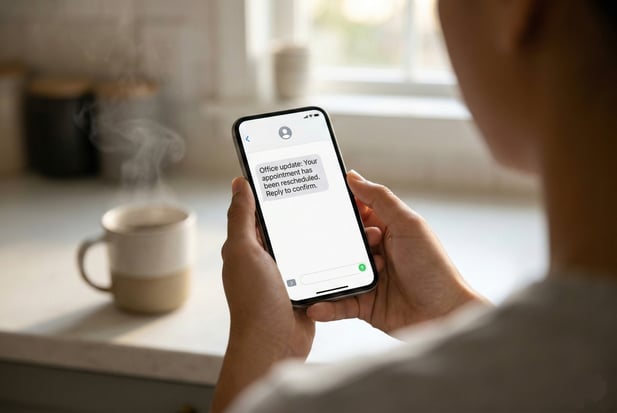
Messages like "The office is closed today" or "Your appointment has been rescheduled" are perfectly fine.
Curogram ensures that all patient replies land in a secure, encrypted inbox. Your team can respond without worrying about data leaks or compliance violations.
Curogram was designed from the ground up with HIPAA compliance in mind. Every message thread is encrypted.
Audit trails are maintained. And your staff can communicate with patients through a platform that meets the same security standards as your EMR.
You get the speed of texting with the safety your practice requires.

Emergencies don't send calendar invites. They show up without warning, and the clinics that handle them best are the ones that planned ahead.
Most clinics operate in a reactive mode. Something breaks, and then they scramble. But it doesn't have to be that way.
With a broadcast system already set up and linked to WebPT, your response plan is ready before the crisis even starts.
Set up your emergency templates now. A snow day message, a provider illness alert, a power outage notice.
When the moment comes, you just select the template, pick the patients, and send. Done in under a minute.
The manual phone tree had its day. That day is over. Today's patients expect fast, clear communication on their phones.
They don't want a voicemail at 8:15 AM telling them the office is closed when they're already in the parking lot.
By choosing to replace the manual phone tree with 2-way text broadcasts, you give your staff their mornings back.
You give your patients the respect they deserve. And you protect your revenue on the days that matter most.
Your patients appreciate the heads-up. It respects their time and keeps them safe, especially during bad weather or sudden closures. That small act of care goes a long way.
Book a demo with Curogram and set up your first emergency template today. The next snow day, sick call, or power outage won't catch you off guard.
💡 HIPAA-compliant mass texting for Prime Clinical lets medical practices reach their entire patient roster in minutes.Instead of calling each...
💡 Emergency patient communication for WebPT clinics works best with pre-built SMS broadcast tools.When snow days, power outages, or provider...
💡 To fill schedule gaps in Prime Clinical Systems, the most direct method is targeted broadcast messaging through Curogram. Practices filter...