


9 min read

Automated Appointment Reminders for WebPT | Protect the Plan of Care

Automated Appointment Reminders for WebPT | Protect the Plan of Care
💡 Automated appointment reminders for WebPT help rehab clinics protect Plan of Care adherence through interactive 2-way SMS.

By syncing with the WebPT schedule, Curogram sends text reminders for PT appointments based on visit type. New evals get multiple alerts plus intake links.

Recurring visits get a single reminder 24 hours before.
Patients confirm or cancel by replying to the text. If they cancel, your staff can pivot fast and fill the slot.

This approach can reduce no-shows that physical therapy clinics face by up to 53%. It also saves front desk teams over 10 hours a week in manual calls.

The result is stronger POC adherence strategies rehab teams can rely on, fewer patient dropouts, and more patients who finish their full care plans.


A patient walks in for their first eval. They're in pain. They're motivated. You build a solid Plan of Care — 12 visits over six weeks. Then Visit Four comes around, and the chair is empty.

Sound familiar? It should. Missed visits are one of the biggest threats to outcomes in rehab. They break the chain of progress.

They cost your clinic real money. And they often lead to full dropouts that could have been stopped.

The root cause is rarely that patients don't care. Most of the time, they simply forgot.

Life got busy, the reminder email went to spam, or nobody called to confirm. That gap between your schedule and your patient's memory is where recovery falls apart.

This is where automated appointment reminders for WebPT change the game. Instead of relying on your front desk to call every patient on the books, you can use smart, 2-way text messages that sync right with your WebPT schedule.

Patients get a quick nudge. They reply to confirm. And if they can't make it, your team knows right away, in time to fill the slot.

The impact is hard to ignore. Clinics using this kind of system reduce no-shows that physical therapy owners dread by up to 53%.

Front desk staff get back hours each week. And most vital, more patients stay on track and finish their care plans.

In this guide, we'll walk through why missed visits spiral out of control, how smart reminders work with WebPT, and what happens when your clinic stops chasing patients and starts keeping them.

If you've ever lost sleep over broken Plans of Care, this is the piece you need to read.

The Villain: The Broken Chain and The Lost Patient

Every Plan of Care is built on a simple idea: show up, do the work, get better. But when one visit falls through, the whole chain can break.

Here's why missed visits hurt far more than most clinic owners realize.

Why One Missed Visit Starts a Spiral

Physical therapy works because it builds on itself. Each session sets the stage for the next. When a patient skips a visit, they don't just lose that day, they lose forward progress.

The Clinical Momentum Problem

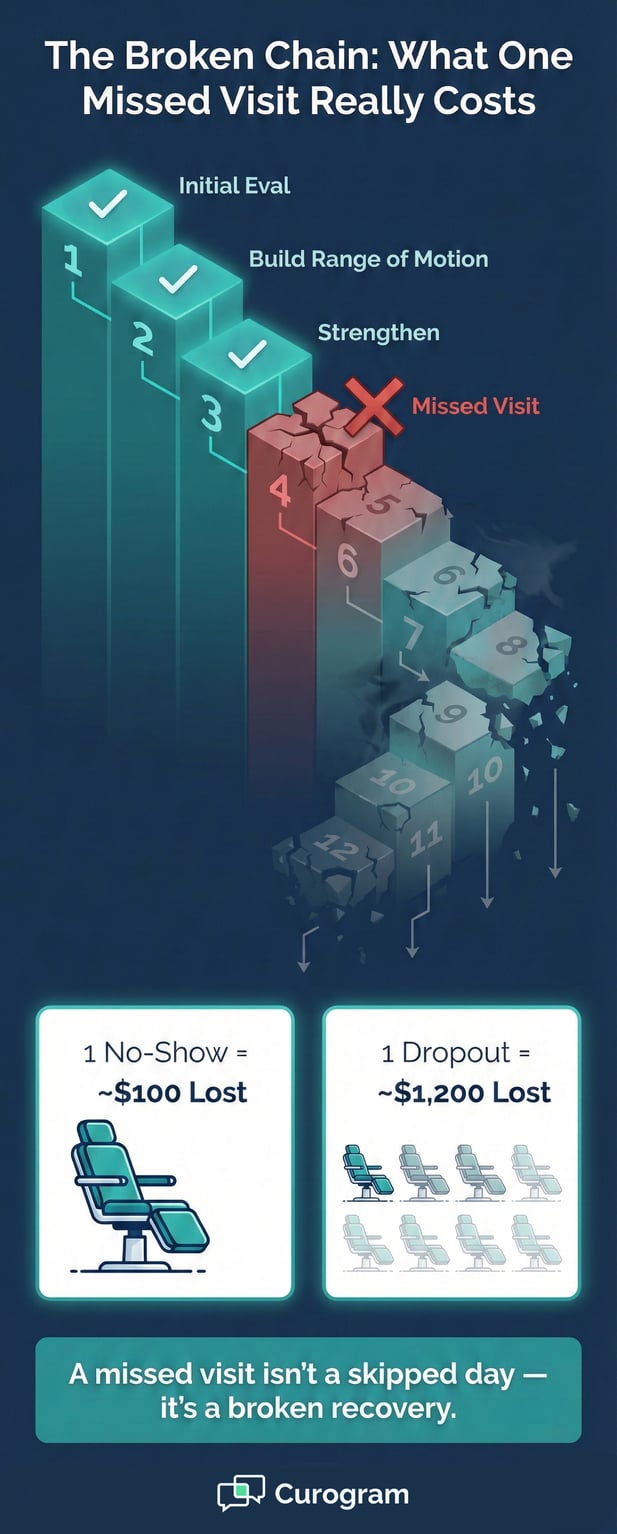
Think of a Plan of Care like a staircase. Each visit is one step up. Miss a step, and the patient stalls or slides back. A skipped session in week three can undo gains from weeks one and two.

This is what makes rehab different from a one-time doctor visit. The treatment only works when it's done in order and on time. One gap sets off a chain reaction that's hard to fix.

Clinicians know this. But patients often don't. They see a missed visit as a minor blip, not a setback. Without WebPT patient attendance tracking in place, no one flags the problem until it's too late.

The Psychology of the No-Show

Here's what happens in the patient's mind. They miss a visit. Nobody calls. Nothing changes. So they think, "Maybe I don't need this after all."

That silence sends a message: your absence doesn't matter. It lets doubt creep in. Once a patient starts to question whether therapy is worth the effort, the dropout risk jumps fast.

A quick follow-up text could reverse that thinking. But if your system doesn't catch the miss in real time, the window closes. The patient moves on, and you lose the full Plan of Care.

The Real Cost of Dropouts

No-shows don't just hurt outcomes. They hit your bottom line in ways that compound over time.

Revenue Lost Per Missed Visit

A single no-show costs the average PT clinic around $100. That's the direct loss from a slot that went unfilled. It adds up fast if you see five or more empty chairs each week.

But the bigger damage happens when a no-show turns into a dropout. If a patient leaves after visit four of a 12-visit plan, you lose the eight visits that remain. That's roughly $1,200 gone — per patient.

The Gap in WebPT's Native Tools

WebPT is great at building and managing your schedule. It tracks visits, documents progress, and keeps your clinical data in one place. But it wasn't built to chase patients who fall off the radar.

The default options — email blasts or manual phone calls — aren't enough to prevent patient dropouts in today's fast-paced world. Patients don't open emails from clinics. And your staff doesn't have time to call every name on the list.

That gap between scheduling and showing up is where you need a better tool. You need something that meets patients where they already are: on their phones, reading texts.

The Guide: Intelligent, 2-Way Reminders

The fix isn't more phone calls or louder emails. It's a smarter kind of reminder, one that talks back. Here's how 2-way text reminders work with WebPT to keep your schedule full and your patients on track.

How 2-Way SMS Reminders Work

Most reminder systems send a one-way message: "You have an appointment tomorrow."

That's fine, but it doesn't give patients a chance to respond. Curogram flips the script with true 2-way SMS.

Confirm, Cancel, and Pivot in Real Time

When a patient gets a text reminder, they can reply "Y" to confirm. That reply flows back to your WebPT schedule and marks the visit as confirmed. Your staff sees a green status at a glance, no phone call needed.

If a patient replies that they can't make it, the system flags it right away. Your front desk can then send a quick text: "Thanks for letting us know! We have an opening tomorrow at 4 PM. Want that instead?"

This turns a would-be no-show into a reschedule.

That fast pivot is what makes text reminders for PT appointments so much more useful than a basic email alert. It creates a live loop between your clinic and your patients.

No More Manual Confirmation Calls

Without automated tools, your front desk spends up to two hours a day calling patients to confirm visits. That's time taken from check-ins, billing, and other core tasks.

With 2-way reminders in place, your staff only needs to follow up with the few patients who didn't reply. Instead of calling 40 people, they call three or four. The rest is confirmed by text in seconds.

Custom Reminders by Appointment Type

Not all visits are equal. A first eval needs more prep than a follow-up. Your reminder strategy should match.

New Eval Reminders

For new patients, Curogram can send up to three reminders before the visit. These texts can include a link to intake forms, a map to your clinic, and details on what to bring. This reduces first-visit cancellations and cuts down on paperwork at the door.

New evals have the highest no-show risk. More touchpoints before the visit means higher show rates. When a patient arrives with their forms done, your session starts on time.

Recurring Visit Reminders

Patients who come in two or three times a week don't need a flood of texts. Curogram uses smart logic to send one reminder 24 hours before the next visit. If the patient was just in yesterday, the system can suppress the alert.

This avoids what patients dread most: being over-messaged. It keeps the reminder helpful, not annoying. And it's all built on top of POC adherence strategies rehab clinics need to keep patients engaged without pushing them away.


Infographic showing a broken physical therapy care plan chain due to a missed visit

The Success: Completed Care Plans

When patients show up, good things happen. Your outcomes improve. Your revenue stays steady. Your team spends less time putting out fires. Here's what changes when you get attendance right.

The Numbers That Matter

Automated reminders don't just feel like a good idea — the data backs them up. The impact is clear across every metric that matters to clinic owners.

A 53% Drop in No-Shows

Clinics that use Curogram's automated appointment reminders for WebPT see no-show rates fall by up to 53%. That's not a small shift. For a clinic that runs 200 visits a week, it could mean 10 to 15 more patients in chairs every single week.

Those recovered visits translate straight into revenue. They also mean more patients hit the milestones they need for a strong recovery. It's a win on both sides — clinical and financial.

10+ Hours Saved Weekly for Front Desk Staff

The old way is simple but slow: print a list, pick up the phone, and call each patient. That takes up to two hours every single day. Over a five-day week, your front desk burns through 10 or more hours on calls alone.

With automated text reminders, that call list shrinks to a handful. Your team can spend their time on check-ins, billing, or helping the patients who are right in front of them. It's a better use of talent across the board.

Better Outcomes, Better Stories

Reducing no-shows is about more than money. It changes the kind of results your clinic delivers and how patients feel about their experience.

Higher Plan of Care Completion Rates

When patients stick to the full plan, they get better. It's that simple. Clinics with strong WebPT patient attendance tracking see more patients reach their discharge goals. That means better functional outcomes and fewer re-referrals down the line.

A completed care plan also strengthens your data. When outcomes are strong, you can prove value to referral sources, payers, and new patients researching your clinic. It's a cycle that feeds itself.

More Five-Star Reviews and Referrals

Patients who finish their care plans leave happier. They felt cared for. They saw results.

They're far more likely to leave a five-star review or refer a friend. That kind of organic growth is hard to buy.

On the flip side, patients who drop out don't feel great about the experience. They may not leave a bad review, but they won't go out of their way to praise your clinic either. Keeping them engaged through the full plan is the best marketing move you can make.  


Frequently Asked Questions for WebPT Users

We hear a lot of the same questions from rehab clinics that run on WebPT.

Here are clear answers to the most common ones about how Curogram's automated reminders work with your current system and daily workflow.

Does it write back the confirmation to WebPT?

Yes. When a patient replies "Y" to the text reminder, Curogram updates the status in WebPT right away. The appointment changes color — for example, it shifts to "Confirmed" — so your staff can see at a glance who's coming in and who still needs a follow-up.

This sync runs in real time. There's no need to log into a second dashboard or copy data between systems. The reply flows straight back into the same WebPT schedule that your team already checks every morning.

That means fewer surprises at the start of the day. Your front desk opens the schedule and knows exactly where things stand.

Confirmed visits are green, no-replies are flagged, and cancellations are marked. It's the kind of WebPT patient attendance tracking that saves time and keeps your clinic on course.

Can we send different messages for different providers?

Yes. You can fully customize the reminder script based on the provider, the visit type, or both.

For example, you could send a message that says: "Remember to bring your shorts for your knee eval with Dr. Jones."

Another provider might want a different tone or set of details.

This level of control makes each reminder feel personal, not like a generic blast. Patients respond better when the text reads as if it came from a real person rather than a system. Your team decides the wording, and Curogram handles the delivery.

You can also adjust the content by visit type. A new eval reminder might include a link to intake forms and a map to the clinic.

A follow-up visit might just include the date and time with a quick confirm prompt. Staff can update these scripts at any time with just a few clicks.

What about multiple appointments in one week?

Curogram has smart logic built in to handle patients with frequent visits. If someone comes in three times a week, the system won't send three separate reminders back-to-back. It can bundle alerts or suppress them if the patient was just in the clinic the day before.

This is key for rehab settings where patients follow a tight schedule. Without this logic, patients get flooded with texts and start to tune them out, or worse, they ask to opt out.

That defeats the whole purpose of using text reminders for PT appointments in the first place.

The system knows when to reach out and when to stay quiet. It adapts based on real visit data, not a rigid calendar.

This balance keeps the reminder helpful rather than annoying, and it supports the kind of POC adherence strategies rehab clinics depend on without causing alert fatigue.


Physical therapist working with a patient in a busy, fully attended clinic session

Attendance Is Clinical

Here's the truth most clinics overlook: attendance isn't just an admin task. It's a clinical one. You can't treat a patient who isn't in the room.

Every tool in your clinic — your equipment, your staff, your expertise — means nothing if the patient doesn't show up. A reminder isn't a nuisance. It's part of the treatment plan. It creates the kind of structure patients need to stay on course.

Think about it this way. You wouldn't skip a step in a home exercise program and call it complete. The same logic applies to attendance.

Each visit has a purpose. Each one builds on the last. When patients miss that rhythm, the plan falls apart.

Automated appointment reminders for WebPT give your clinic a safety net. They catch the gaps before they turn into dropouts.

They keep your front desk focused on care, not phone calls. They put the power back in your patients' hands with a simple text reply.

This isn't about flooding patients with messages. It's about sending the right message at the right time. One reminder before a recurring visit.

Three touches before a new eval. Smart logic that knows when to stay quiet. That's how you prevent patient dropouts without wearing out your welcome.

If you're ready to protect your Plans of Care and see fewer empty chairs, it starts with one step. Automate your reminders. Sync them with WebPT. Let your team focus on what they do best — helping patients get better.  

Start Your 30-Day Free Trial and see your no-show rate drop in the first week.

Automated Appointment Reminders for Elation Health: Protect Your Time

Automated Appointment Reminders for Elation Health: Protect Your Time

💡 Independent practices can set up automated appointment reminders for Elation Health through Curogram's direct integration. This system sends...

Read More
How to Cut No-Shows with Automated Appointment Reminders for Lytec

How to Cut No-Shows with Automated Appointment Reminders for Lytec

💡 Automated appointment reminders for Lytec practice workflows help medical offices cut no-show rates by up to 53% and remove the need for manual...

Read More
End the Morning Scramble with Elation Health Automated Confirmations

End the Morning Scramble with Elation Health Automated Confirmations

💡 Automated patient confirmations for Elation Health cut the morning phone rush that drains clinic staff. With Curogram, your team stops calling...

Read More