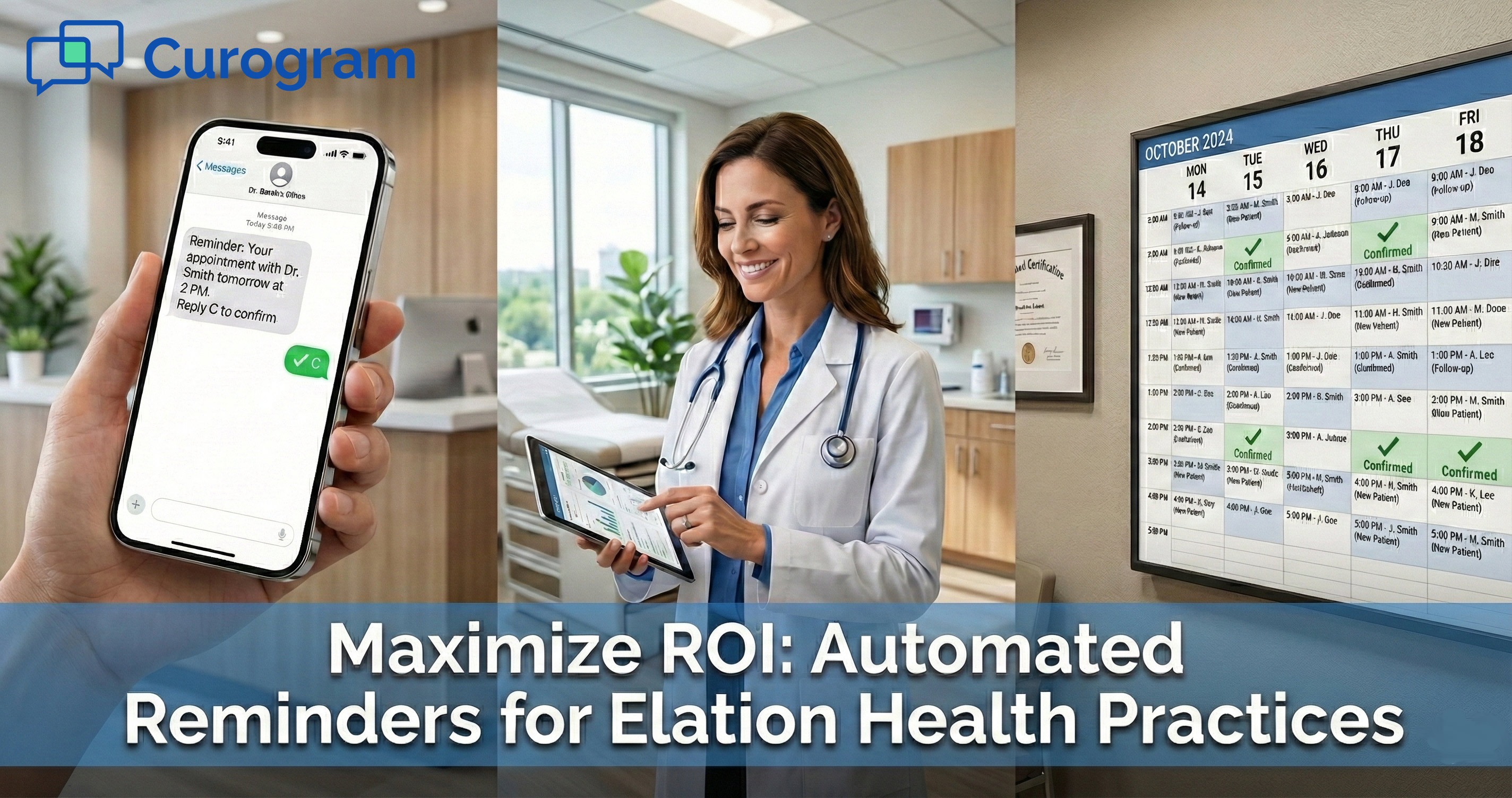
Maximize ROI: Automated Reminders for Elation Health Practices
💡 Independent practices lose thousands each month from empty exam rooms. A single no-show can cost up to $500 in lost revenue. When you add up just...
11 min read
Jo Galvez
:
Updated on January 28, 2026
Table of Contents
Every morning starts the same way in most small practices. Your front desk staff pulls up tomorrow's schedule and starts calling. Some patients don't answer. Others promise to call back but never do. By the time you finish the list, half the morning is gone.
Then the no-shows begin. A patient misses their follow-up visit. Another forgets their specialist appointment. Each empty slot costs your practice money you can't recover. More importantly, it breaks the thread of care you work hard to maintain.
Independent practice scheduling faces unique pressure. Unlike large health systems, you can't absorb the hit from missed visits. Your lean team doesn't have hours to spend on phone calls. Yet patients still need reliable ways to confirm their appointments.
This is where automated patient confirmations change everything. When you integrate Curogram with Elation Health, your reminders go out by text without any manual work. Patients get clear messages at the right time. They respond with one tap. Your calendar updates itself.
The impact shows up fast. Practices see their no-show rates drop by 53% within the first month. Staff members stop spending their mornings on the phone. Schedules stay full, which protects your revenue. Most importantly, patients keep their appointments and stay on track with treatment.
The system works because it removes barriers. No patient portals to log into. No apps to download. Just simple text messages that reach people where they already are. When specialty clinic no-show reduction becomes this straightforward, both your practice and your patients win.
No-shows create more problems than just empty rooms. For independent practices, every missed visit cuts deeper than you might realize. Understanding these costs helps explain why automated appointment reminders for Elation Health make such a big difference.
Small practices operate on tight margins. When a patient misses their slot, you lose that revenue forever. You can't bill for time you set aside but didn't use. Unlike big hospital systems with hundreds of daily visits, your practice feels each gap in the schedule.
Think about it this way. If you have eight appointment slots per day and two patients don't show, that's 25% of your daily potential gone. Multiply that across a month or year, and the numbers become staggering. Some practices lose tens of thousands of dollars annually to no-shows alone.
Direct primary care models feel this even more. When members pay monthly access fees, no-shows waste the time you could spend with other patients who need care. The impact ripples through your whole business model.
Large health systems spread risk across many locations and providers. You don't have that cushion. Every visit matters to keeping your doors open and your team paid.
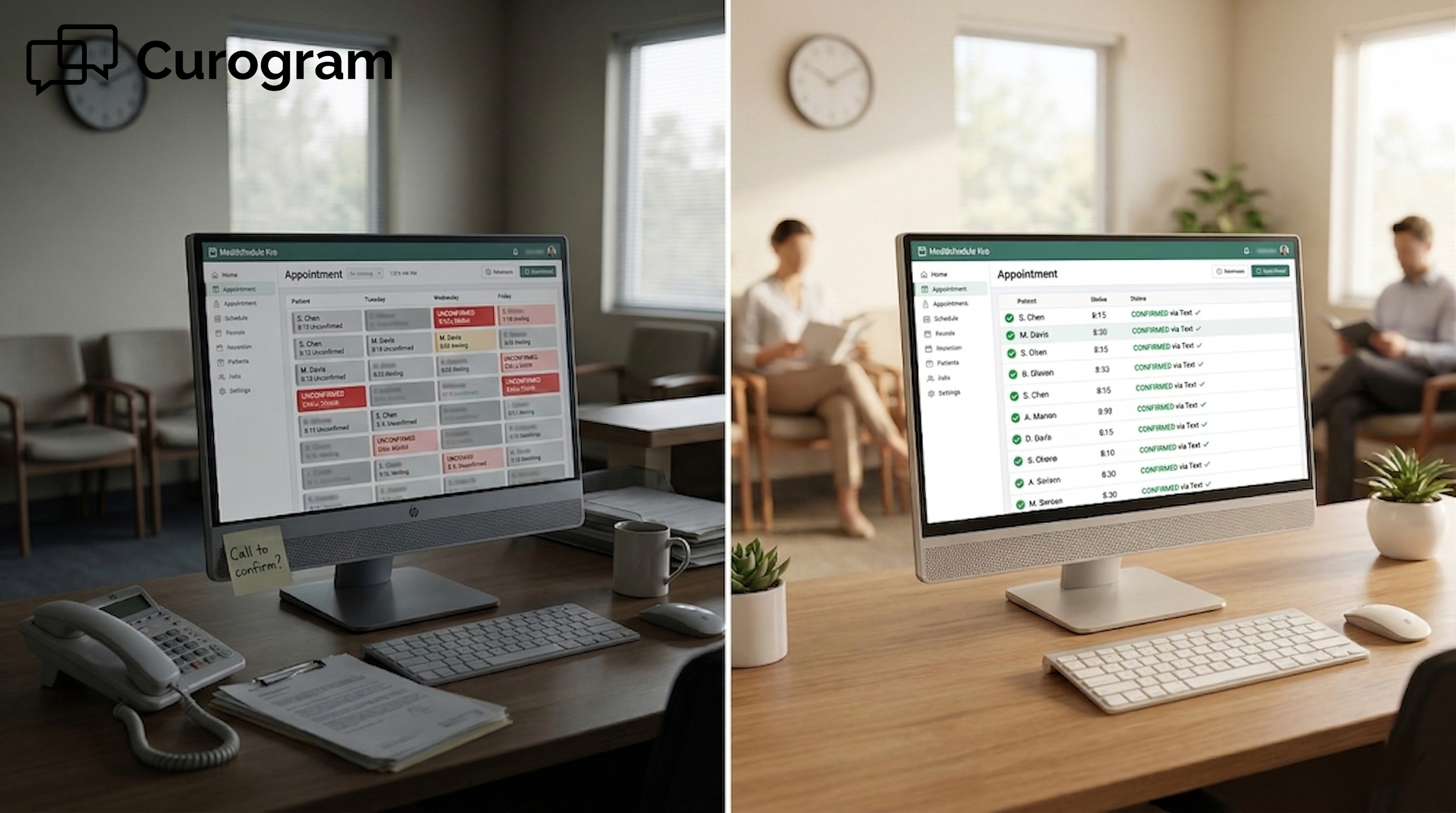
Your front desk staff arrive early to start calling. They work through yesterday's list and tomorrow's schedule. Some calls go to voicemail. Others turn into long talks about insurance or directions. By 10 AM, they're already behind on everything else.
This daily routine drains energy and morale. Staff members feel like they're always playing catch-up. They can't help patients at the desk because they're stuck on the phone. Important tasks get pushed back, creating a backlog that grows each day.
The stress doesn't stop there. When you do reach patients, some get annoyed by the interruption. Others say they'll confirm but forget. You end up calling the same people multiple times, which wastes even more time.
When team members spend hours on repetitive calls, they lose time for meaningful work. This leads to frustration and turnover. Hiring and training new staff costs far more than preventing the problem in the first place.
No-shows break more than schedules. They disrupt the continuity of care you work hard to build. A patient misses their diabetes follow-up, and their blood sugar goes unchecked. Someone skips physical therapy, and their recovery stalls.
These gaps in care lead to worse outcomes. Patients who miss appointments are less likely to stick with treatment plans. Conditions that could have been caught early progress to more serious stages. What started as a scheduling issue becomes a clinical problem.
For chronic disease management, regular visits form the backbone of success. When patients miss these touchpoints, you lose the chance to adjust medications, review symptoms, and provide support. The relationship you've built with them weakens over time.
In independent practice scheduling, you often know your patients personally. You notice when someone misses visits. But without good systems, those patients slip through the cracks before you can intervene.
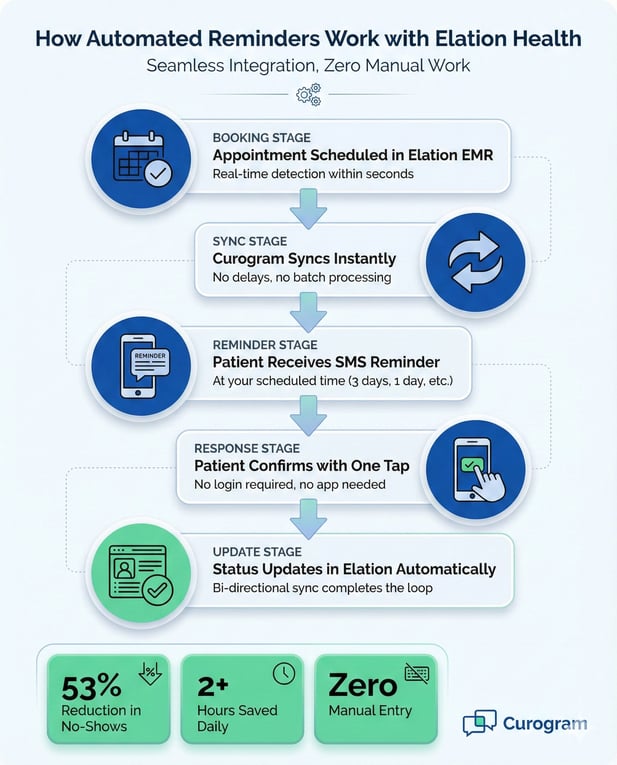
Setting up automated patient confirmations doesn't require technical expertise or hours of configuration. The Elation EMR appointment reminder integration connects directly to your existing calendar. Once active, the system handles reminder workflows without manual intervention. Here's how each piece works together.
Curogram watches your Elation Health calendar constantly. The moment you book an appointment, the system sees it. There's no delay or batch processing. The integration starts working the second the visit gets scheduled.
You control when reminders go out. Some practices send messages three days before, then again one day before. Others prefer a single reminder 24 hours out. The timing adapts to what works best for your patient panel and specialty.
The system also detects changes. If you reschedule an appointment or cancel it, Curogram updates immediately. Patients don't get reminders for visits that no longer exist. This prevents confusion and unnecessary phone calls to your office.
Real-time sync means your reminders always match your current schedule. No outdated messages, no manual updates to worry about. The system stays accurate without any effort from your team.
When patients get their text message, they see clear options. They can confirm with one tap, reschedule if needed, or cancel if necessary. Their response travels back to Elation Health automatically. No one on your team types anything.
The appointment status changes in your EMR right away. If a patient confirms, you see that marked in Elation. If they need to reschedule, that information appears too. Your calendar always reflects the current situation.
This two-way flow saves hours of manual data entry. Your front desk doesn't check phones and then update records. The integration does both steps instantly. This frees your team to focus on patients who actually need help.
In practices with limited staff, every minute counts. When confirmations flow back automatically, your team can handle higher patient volumes without feeling overwhelmed. The system scales with you as your practice grows.
Patients receive a simple text message. No apps to download, no passwords to remember, no portals to navigate. They read the message and respond right there. This simplicity drives the highest response rates in the industry.
The message includes a secure link if patients need more details. But for basic confirmations, they never have to click anything. Just text back 'yes' or choose from the options provided. Even patients who struggle with technology find this easy.
This approach removes the biggest barrier to patient engagement. Portal logins stop many people from confirming appointments. When you eliminate that friction, confirmation rates jump. More patients respond, which means fewer surprise no-shows.
People check their text messages dozens of times per day. They don't check patient portals that often. By meeting patients where they already are, automated appointment reminders for Elation Health achieve response rates that traditional methods can't match.

Independent practices thrive on personal relationships with patients. Your reminder system should reflect that same attention to detail. Curogram lets you customize messages and timing to match how you actually practice medicine. This keeps the human touch while automating the logistics.
Not all appointments need the same reminder approach. A new patient's first visit requires different handling than a routine check-up. The system lets you set unique schedules based on appointment type.
For new patient consultations, you might send three reminders: one week out, three days before, and one day ahead. This extra touchpoint helps nervous first-timers feel prepared and valued. It also reduces the higher no-show risk that comes with new patients.
Regular follow-ups might only need a single reminder. Your established patients know the routine and just need a gentle nudge. This prevents reminder fatigue while still keeping people on track.
You can also adjust tone and content. Messages to your direct primary care members might sound more personal and friendly. Specialty clinic reminders could include specific prep instructions or what to bring.
Matching Reminders to Your Practice Style
This flexibility lets independent practice scheduling feel less robotic. Your messages can sound like they came from your actual team, maintaining the personal feel patients expect from smaller practices.
Many appointments require patient preparation. Lab work needs fasting. Physicals need current medication lists. Procedures require specific pre-visit steps. Including these details in your reminder saves time and improves visit quality.
When patients arrive prepared, you can focus on clinical care instead of scrambling for information. The visit starts on time and covers what it needs to cover. This makes better use of everyone's time.
The reminders can include links to forms or questionnaires. Patients complete paperwork before they arrive, which eliminates waiting room delays. Your staff spends less time chasing down information and more time supporting patient care.
When patients come ready for their visit, you can spend the full appointment time on what matters. This leads to better care and higher satisfaction for both you and your patients.
Life happens, and patients sometimes need different times. Instead of calling your office during business hours, they can request a reschedule through their reminder text. This works for them and helps you, too.
When someone asks to reschedule, your team gets notified right away. You can offer new time slots from your actual availability. Once the patient picks a time, the system updates both calendars automatically.
This creates a chance to fill that gap. If you keep a waitlist, you can contact the next patient immediately. A slot that would have sat empty now generates revenue. For specialty clinic no-show reduction, this fill rate makes a huge difference.
The system also tracks patterns. If certain appointment types see more rescheduling, you can adjust your booking strategy. Maybe you can add buffer slots or change how far in advance you schedule. The data helps you optimize over time.
When patients can easily reschedule instead of just not showing up, you keep them in your schedule. They get the care they need at a better time, and you avoid a complete loss of that appointment slot.
Numbers tell the real story of how automated appointment reminders for Elation Health change daily operations. These improvements show up in your revenue, your staff's workload, and your ability to grow. Here's what practices actually see after implementation.
This isn't a best-case scenario or cherry-picked data. Practices using Curogram with Elation EMR reminder integration typically cut their no-shows by more than half within the first 30 days. Some see even better results.
Think about what that means for your revenue. If you lose $10,000 per month to no-shows, you suddenly recover $5,300 of that. Over a year, that's more than $63,000 back in your pocket. For small practices, that could cover a staff member's salary or new equipment.
The improvement comes from meeting patients where they are. Text messages get read within minutes. They don't require logging into anything or making a phone call. This convenience translates directly to higher confirmation rates.
Your schedule stays full because fewer people forget or skip their appointments. This consistency makes planning easier and reduces the stress of wondering whether your day will be profitable.
Why a 53% Reduction Matters More for Independent Practices
Large health systems can absorb some no-shows across their many providers. You can't. Every percentage point of improvement directly impacts your bottom line and your ability to keep serving your community.
Manual confirmation calls consume time your staff doesn't have. When you eliminate that task, those hours become available for more valuable work. Your team can focus on patient care, billing follow-up, or other priorities that actually need human attention.
Two hours might not sound like much, but it adds up fast. That's 10 hours per week, 40 hours per month, nearly 500 hours per year. If your front desk staff makes $20 per hour, you're saving $10,000 annually in labor costs alone.
More importantly, your team feels less stressed. They're not racing through call lists while trying to help patients at the desk. This better work environment reduces turnover, which saves you the huge cost of hiring and training replacements.
The saved time also improves patient experience. When someone walks in with a question, your staff can actually help them instead of being tied to the phone. This responsiveness builds the kind of reputation that brings in more patients.
The Ripple Effect of Time Savings
Freed-up time doesn't just mean less stress. It creates space for your practice to improve in other areas. Staff can tackle projects that have been waiting, provide better service, or simply work at a sustainable pace.
Growth usually means hiring more people. But automated patient confirmations change that equation. Your current team can handle a larger patient panel without drowning in administrative work.
When you add 20% more appointments to your schedule, you don't need 20% more staff time for confirmations. The system handles the increased volume automatically. This makes expansion more profitable because your overhead doesn't grow as fast as your revenue.
For practices considering adding another provider or opening additional days, this matters a lot. You can test growth without committing to new hires. If the expansion works, great. If not, you haven't locked yourself into extra payroll.
This flexibility gives independent practices the agility that once only belonged to larger organizations. You can adapt to opportunities quickly because you're not constrained by staffing logistics.
Building a Sustainable Growth Model
Specialty clinic no-show reduction through automation isn't just about fixing problems. It's about creating a foundation for long-term growth that doesn't burn out your team or blow up your budget.
Practices considering automated patient confirmations often have similar questions. Here are clear answers to help you understand how the system works in real-world settings.
How fast does the sync happen?
The sync between Curogram and Elation Health happens almost instantly. When you book an appointment in your EMR, the reminder system picks it up within seconds. The same goes for updates or cancellations.
This near-real-time connection means you don't need to worry about delays or batch processing. Changes are reflected immediately, which keeps your reminders accurate and prevents confusion for patients.
Fast sync protects you from embarrassing mistakes. If you reschedule someone, they won't get a reminder for the old time. This reliability builds trust with your patient panel.
Can we customize the message for our DPC members?
Yes. The system lets you tailor messages to match your practice's voice. Direct primary care practices often want a warmer, more personal tone that reflects their membership model. You can write messages that sound like they came from your actual team.
You can also create different message templates for different appointment types. New patient visits might get more detailed information. Quick follow-ups might use simpler language. This flexibility helps maintain the personal touch that defines independent practice scheduling.
Customization ensures your automated messages don't feel generic. They can reflect your values and the unique relationship you have with your patients.
What happens if a patient texts back a question?
When patients reply with questions, Curogram routes their messages to your secure inbox. Your staff can read and respond from the same platform they use for reminder management. Everything stays in one place.
The system tracks the conversation thread, so you have context for every interaction. This helps your team provide accurate answers without confusion. All communication stays HIPAA compliant throughout the process.
Your staff can respond in a simple, professional manner that matches your practice style. The Elation EMR reminder integration handles the technical side while your team focuses on giving patients the information they need.
Two-way messaging creates opportunities for better service. Patients appreciate getting quick answers, and you build stronger relationships without adding phone call volume to your front desk.

You started your practice to take care of patients, not to spend hours on phone calls. Every minute your team wastes on manual confirmations is a minute stolen from real patient care. The empty slots in your schedule represent both lost revenue and missed chances to help people.
Automated appointment reminders for Elation Health solve this problem without adding complexity to your workflow. The system works quietly in the background while you focus on medicine. Your patients get the reminders they need. Your staff stops drowning in phone lists. Your schedule stays full.
The results speak for themselves. A 53% drop in no-shows means thousands of dollars back in your practice each month. Two hours saved daily means your team can actually breathe. The ability to scale without hiring means you can grow when you're ready.
Most importantly, better appointment attendance means better patient outcomes. When people show up for their visits, they get the care they need. Chronic conditions stay managed. Preventive care happens on schedule. The continuity you work so hard to maintain actually works.
Setting this up takes minutes, not hours. The Elation EMR reminder integration connects to your existing calendar. You choose your reminder timing and message style. Then the system takes over. No technical skills required. No IT department needed. Just results.
Take back control of your schedule. Give your staff their time back. Help your patients stay on track. See the difference that automated patient confirmations make when they're done right.
Schedule a quick demo today to see how Curogram’s automated appointment reminders for Elation Health can eliminate your no-shows and give your staff their time back.
💡 Independent practices lose thousands each month from empty exam rooms. A single no-show can cost up to $500 in lost revenue. When you add up just...
💡 Using reminders can reduce no-shows DrChrono clinics face every week. Patients receive helpful prompts that keep visits top-of-mind. Reduce...
💡 DrChrono appointment prep reminders help patients arrive prepared. With integrated reminders, your staff avoids long calling lists, and you can: