
1 min read
Telehealth in InSync EMR with Curogram
💡 Telehealth in InSync EMR brings secure, app-free virtual care to behavioral health practices. Providers can see patients anywhere while keeping...
10 min read
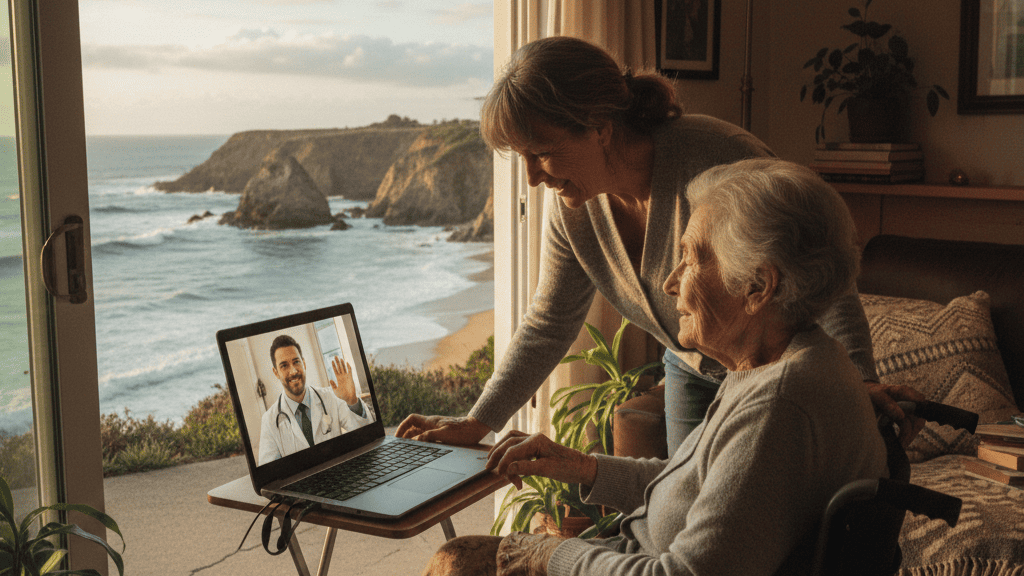
Run therapy sessions from inside your InSync schedule.
Send one click links by SMS or email in seconds.
Use InSync telehealth workflows for groups and individuals.
Keep documentation, notes, and billing inside InSync EMR.
Give patients a way to attend when travel or childcare is hard.
Protect privacy with HIPAA compliant telehealth technology.
Curogram helps you deliver high-quality virtual care without unnecessary apps or risky workarounds.
You have probably had this experience. A patient wants to keep working with you, but life gets in the way. They miss a visit because the bus was late. They cancel because a child is sick. They stop coming because the drive is too long after work.
Telehealth changed that pattern for many behavioral health programs. During the COVID-19 pandemic, mental health was a top specialty delivered virtually. Telebhealth reduces barriers like transportation, childcare, and stigma. It's also able to keep outcomes comparable to in-person therapy for many conditions.
Still, you may feel the weight of telehealth when the tools do not fit your daily work. You might copy links from one system to another and track notes in different windows. This blog focuses on bringing virtual visits in together with a dedicated partner. We will first look at the challenges you face without integrated telehealth. Then you will learn about telehealth workflows for individual and group therapy sessions.
By the end, you'll find quick steps to get started in improving your telehealth services. Let's jump right in.
In our complete guide, we discussed how important it is to use HIPAA-compliant telehealth in InSync that's healthcare-grade. The following issues reinforce this need:
You see it often. A patient starts therapy with good intentions. They show up for the first few visits. Then the small barriers start to build. Their car breaks down. A work schedule changes. A caregiver cannot find a ride. Over time, the trip to your office feels heavier than the help it brings.
National research on behavioral health shows that travel and distance are major reasons people miss or skip care, especially in rural and low income communities. Telehealth helps remove that barrier by letting people connect from home or work, but only if it is simple and consistent. When telehealth tools are clumsy or unreliable, patients may not trust them either. If you have to send different links each week or fix audio issues during every visit, people will feel that virtual care is just as hard as driving across town. Without integrated telehealth inside your EMR, you risk trading one barrier for another.
Surveys of behavioral health providers report that fragmented telehealth setups are a top source of frustration. They describe toggling between windows, managing different logins, and worrying about whether each tool is truly HIPAA compliant. This kind of workflow also makes supervision and auditing harder. If your video tool sits outside InSync, it is easier to lose track of what platform was used for each visit and how consent was handled. Those gaps matter when you need to prove that your virtual care meets privacy and security standards.
Group therapy can be powerful for patients who feel alone in their struggles. It is also one of the most natural fits for telehealth. You know how much easier it is for people to log in from home than to find transportation and childcare for weekly groups. Research on telehealth group treatment, including work with veterans and families, shows that virtual groups can be safe, feasible, and linked with higher enrollment and attendance.
When Curogram connects with InSync, your virtual visits start inside the schedule you already use. You select an appointment, choose virtual care, and the system creates a secure link for that session. With a few clicks, you send that link by SMS or email. The patient receives a clear message with the date, time, and one tap access to their video room.
Patients often say they prefer telehealth when it is easy to join. Polls by the American Psychiatric Association and other groups show that many adults are open to virtual mental health services and that convenience is a major reason. When you use virtual visits InSync with automated messaging, you reduce the steps between intention and action. That simple experience reduces missed connections and last minute phone calls about how to log in.
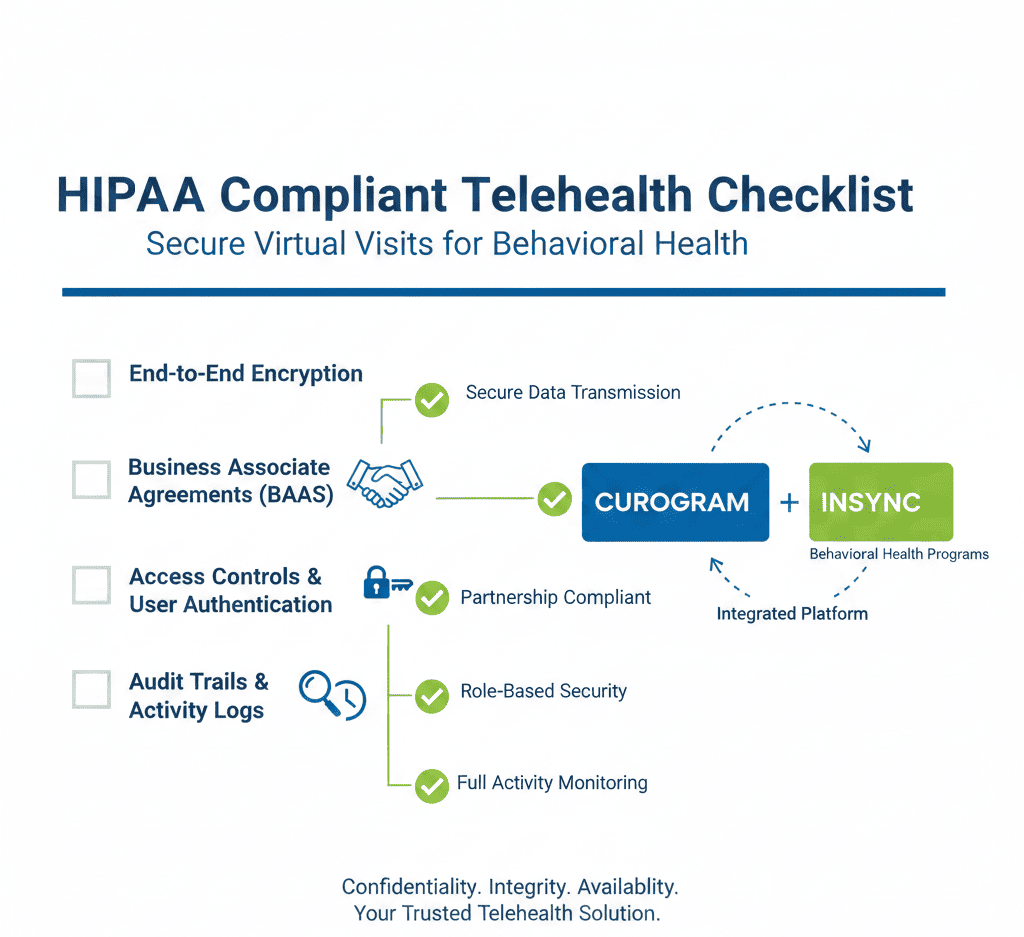
Curogram is built as a healthcare communication platform, not a general consumer video app. The telehealth tools use encryption, access controls, and formal Business Associate Agreements so you can align your work with HIPAA telehealth requirements. You do not have to guess whether a random meeting platform meets privacy rules or try to manage separate consent forms on your own.
For therapy sessions, this matters. Patients share deep and personal information when they meet with you. Guidance from telebehavioral health best practice reports stresses the need to use secure, purpose built platforms for video visits, especially for trauma treatment, substance use care, and work with minors. With Curogram tied into InSync telehealth workflows, you can run both individual and group visits in a way that meets those expectations and supports trust.
When telehealth tools sit inside your InSync environment, your documentation does not have to chase your video visits. Attendance, visit details, and notes stay connected to the same encounter. You are not moving between a separate telehealth portal and your EMR to see who showed up or which link they used. This is the heart of integrated InSync telehealth workflows.
Studies on telehealth implementation in behavioral health settings show that integrated systems help clinicians maintain consistent documentation and reduce errors. When everything lives together, it is easier to review charts, support billing and compliance reviews, and understand patterns in virtual care. You keep your focus on clinical work instead of on the mechanics of moving information between tools.
One of the clearest benefits of virtual care is better attendance. When you offer virtual visits InSync, you remove travel time, parking stress, and many childcare problems. Research on behavioral health telehealth shows that remote visits help patients keep appointments, especially when they face transportation barriers or tight work schedules. A 2023 meta-analysis on digital mental health care also found that dropout rates for virtual cognitive behavioral therapy were often lower than for in person care.
You probably see this in your own practice. People who used to cancel because of traffic now join on time from home. Parents who once juggled rides and babysitters can log in while a child naps in the next room. As attendance becomes more stable, treatment plans move forward. Symptoms are tracked more reliably. Crises are caught earlier instead of after several missed visits.
Integrating Curogram with InSync simplifies your day. Instead of opening separate apps for scheduling, video, reminders, and documentation, you work inside one environment. You can see which therapy sessions are virtual at a glance. When it is time for the visit, you open the chart and launch the telehealth room from the same screen. That reduces friction and cognitive load.
Reports on telehealth adoption in behavioral health note that providers value platforms that fit into existing workflows and reduce the number of separate systems. When your InSync telehealth workflows are built into the EMR you already use, you do not have to rebuild habits from the ground up. That familiarity supports better focus in sessions, more complete notes, and less time spent troubleshooting technology between visits.
When telehealth ties into InSync, many of the frustrating steps disappear. Patients tap a link in a text message or email that they already understand. You do not have to send separate meeting IDs or long instructions. Over time, this low friction experience helps virtual care feel like a normal option in your program. It becomes part of how you work, not an exception you use only in emergencies.
If you serve rural communities or neighborhoods with limited transportation options, you already know what distance can do to care. Some patients travel hours for a single visit or miss appointments because they share a car with family members. Telehealth research focused on rural behavioral health shows that remote visits can bridge provider shortages and make it easier for people to attend follow ups.
Group therapy sessions and family meetings often benefit from telehealth. People who would never travel across town on a weeknight may be willing to join a group from their couch. A study on online group mental health treatment found that telehealth groups were safe, feasible, and associated with increased enrollment and attendance among post 9/11 veterans.
When your telehealth platform integrates with InSync, you can manage these groups more smoothly. You create a virtual meeting space, send links to all group members, and track attendance in connection with your EMR schedule. This reduces manual list management and supports better documentation of who attended which sessions. For families who live apart or share complicated schedules, virtual groups and family sessions can also make it easier to participate in care together.
The pandemic showed how quickly in person care can be disrupted. Weather events, local emergencies, or building issues can also force you to cancel visits with very little notice. Programs that had telehealth in place were able to keep many therapy sessions going during those times. National data sets from government and research groups show that telehealth allowed mental health care to continue when in person visits dropped sharply.
HIPAA rules for telehealth can feel complex. You have to think about encryption, access controls, Business Associate Agreements, and secure storage of protected health information. Federal guidance and independent checklists emphasize that telehealth vendors must be willing to sign proper agreements and support technical safeguards as part of a full compliance program.
When virtual visits happen inside InSync, you can track telehealth use and outcomes alongside in person care. You can view how many therapy sessions happen virtually, whether attendance patterns differ, and how different groups respond to virtual options. Case studies and telehealth trend reports encourage programs to use data on visit types and attendance to make strategic decisions about service delivery.
At the heart of all of this is a simple feeling for your patients. When you use virtual visits InSync in a thoughtful way, care feels like it fits into real life. People can attend therapy during lunch breaks, after putting children to bed, or from a private room at work. Telehealth research and national polls show that many patients now expect virtual options and often prefer them for mental health services because of convenience and privacy.
Picture a mid-sized behavioral health group with several outpatient locations. Before they used integrated telehealth, their group therapy sessions were always in person. Many groups started strong then shrank as people missed meetings due to work, travel, or childcare. Staff heard the same message from patients over and over. The group was helpful, but getting to the clinic every week was hard.
The group decided to pilot Curogram telehealth integrated with InSync for several of their evening groups. They kept their InSync schedule as the source of truth and set those visits as virtual. Curogram then sent one click links by SMS and email for each scheduled group session. Patients did not have to track meeting IDs or download new apps. They simply tapped the link at the scheduled time. Within a few months, attendance reports showed that average group participation had increased by about 20 percent compared with the previous in person only format.
Clinicians noticed a change in the room, even though the room was now virtual. People who had rarely spoken started to share from the safety of their homes. Caregivers joined from different locations in the same city. When bad weather or transportation issues came up, people still logged in. The technology did not solve every challenge, but it removed a major barrier that had pushed patients out of care for reasons beyond their control.
If you want to move toward integrated telehealth, it can help to break the process into clear steps. This checklist gives you a simple path you can follow without overwhelming your team:
When you use InSync as your EMR, you already rely on it to organize charts, billing, and schedules. Adding Curogram as your telehealth and communication layer builds on that foundation instead of replacing it. Curogram connects directly to your InSync schedule so that virtual visits InSync feel like a natural extension of the calendar you use every day. Session links, reminders, and secure messages all draw from the same patient and appointment data.
When you rely on disconnected tools, telehealth can feel like one more burden. But when you bring virtual visits together with Curogram, telehealth becomes effortless. Workflows help you send one-click links, manage sessions, and keep documentation complete.
As you refine your approach, you will see fewer no-shows and a more stable path for underserved people. In the end, integrated telehealth is about giving your patients reliable healthcare access.
Interested to improve your virtual consults using the best tools? Book a quick demo with us to learn how.
1 min read
💡 Telehealth in InSync EMR brings secure, app-free virtual care to behavioral health practices. Providers can see patients anywhere while keeping...

1 min read
💡 Telehealth in DrChrono gives small clinics a secure way to reach patients where they are. With telehealth integrated into workflows, you can: ...
1 min read
 Jo Galvez : Jan 9, 2026, 8:00:01 AM
💡 Telehealth in Veradigm helps imaging centers handle pre-exam prep, post-visit consults, and patient coordination more easily. Fewer no-shows...