
Telehealth for Veradigm Imaging Centers
 Jo Galvez : Jan 9, 2026, 8:00:01 AM
Deliver HIPAA-compliant virtual consultations directly from Veradigm with Curogram — secure, simple, and scalable for enterprise care.
Every minute counts when you manage multiple scan rooms, prep protocols, and tight schedules. One missed detail can delay an entire day of appointments. All of these factors contribute to daily pressure in the operations.
Phone tag with patients eats up staff time. Unclear prep instructions lead to failed exams. Follow-up visits get pushed back because patients can't make it in. These small issues add up to big workflow problems.
Virtual visits help Veradigm users solve these daily challenges. Remote consultations let teams connect with patients before procedures start. This simple shift prevents common delays and keeps operations running smoothly.
Consider a typical scenario. A patient needs an IR procedure that requires specific prep steps. Traditional workflows rely on phone calls to explain these steps. But patients often misunderstand verbal instructions. They show up unprepared, forcing staff to reschedule.
Telehealth changes this pattern. Imaging staff can walk patients through prep requirements face-to-face. They answer questions in real time. Patients see exactly what they need to do. The result? Fewer cancellations and better use of scan time.
The same benefit applies to follow-up care. Patients often skip results review appointments because of travel barriers. Telehealth removes that obstacle. They can discuss findings from home or work. Attendance rates improve, and patients get answers faster.
For enterprise imaging groups, these improvements scale across every location. Standardized virtual workflows create consistency that manual processes can't match. Staff work with confidence knowing each site follows the same approach.
This article explores how telehealth transforms daily operations for Veradigm imaging centers. You'll learn specific ways virtual care improves pre-procedure screening, strengthens follow-up processes, and reduces common workflow bottlenecks. Each section offers practical insights you can apply to your own practice.
Radiology teams juggle complex tasks every day. High patient volume demands precise coordination. When communication breaks down, the whole schedule suffers.
Traditional workflows rely heavily on phone calls and manual follow-ups. Staff spend hours clarifying details and answering basic questions. This approach works, but it wastes valuable time that could go toward direct patient care.
Virtual visits at Veradigm centers add a new layer of efficiency. They give teams a direct, visual way to connect with patients. This reduces misunderstandings and speeds up routine interactions.
The benefits show up across multiple areas. Pre-procedure prep becomes clearer. Follow-up conversations happen faster. No-show rates drop. These changes free up staff for more critical tasks.
Phone-based communication creates unnecessary back-and-forth. Patients call with questions about prep, timing, or location. Staff answer the same questions repeatedly throughout the day.
Remote consultations streamline these conversations. Patients can see visual aids and written instructions during the call. They ask questions and get immediate answers. One virtual visit often replaces three or four phone calls.
This approach cuts down on staff interruptions. Team members can schedule virtual sessions in blocks. They maintain focus on other tasks between scheduled calls. Workflow becomes more predictable and less chaotic.
The time savings add up quickly. A center that handles 50 appointments per day might save 30 minutes or more. That time can go toward improving other aspects of patient care.
Not every patient can visit the center during standard business hours. Work schedules, transportation issues, and family obligations create barriers. These limitations lead to missed appointments and delayed care.
Telehealth offers convenient alternatives. Patients can connect from home, work, or anywhere with internet access. Early morning or evening slots become possible. This flexibility improves access for working patients and caregivers.
Imaging centers gain scheduling flexibility, too. Virtual slots fill gaps in the daily calendar. Staff can offer more appointment options without adding physical space. The practice serves more patients without expansion costs.
This benefit matters most for follow-up care. Patients who need quick result reviews can schedule virtual visits within days. They don't wait weeks for an available in-person slot. Faster follow-up leads to better outcomes and higher satisfaction.
Multi-site imaging networks face consistency challenges. Each location may handle prep instructions differently. Staff at different sites use their own communication methods. This variation creates confusion and increases errors.
Virtual care systems standardize these processes. Every location follows the same protocols for pre-visit consultations. Patients get uniform information regardless of which site they visit. Quality remains consistent across the entire network.
This standardization improves training efficiency, too. New staff learn one set of procedures instead of adapting to local variations. Management can track performance metrics across all sites. Problems become easier to identify and fix.
Enterprise groups see the biggest gains. They can implement best practices organization-wide through virtual workflows. Changes roll out simultaneously to all locations. The network operates as one coordinated system instead of separate facilities.
Pre-procedure screening determines whether patients are ready for their exams. Missing this step leads to cancelled appointments and wasted resources. Telehealth makes screening more thorough and efficient.
IR procedures and contrast studies require detailed patient reviews. Staff need to verify medical history, check for allergies, and confirm prep compliance. These checks prevent complications and protect patient safety.
Phone screenings miss important visual cues. Staff can't see if patients understand instructions. They rely on patients to accurately report their own medical status. This creates gaps that only surface on appointment day.
Virtual visits Veradigm practices employ solve this problem. Clinicians can see patients' reactions and body language. They share screens to review documents together. This face-to-face interaction catches issues that phone calls miss.
The screening becomes a true conversation. Patients feel more comfortable asking questions. Staff gain confidence that patients understand requirements. Both sides leave the session with clear expectations.
Patients often struggle to remember all their medications over the phone. They forget doses or misspell drug names. These errors put them at risk during procedures.
Remote consultations let patients show their pill bottles to the camera. Staff can verify names, doses, and frequencies visually. This method proves more accurate than verbal lists. It reduces the chance of dangerous drug interactions.
Poor preparation can cause cancelled imaging exams. Patients don't follow fasting rules. They take medications they should have stopped. They arrive having eaten when they needed an empty stomach.
These failures waste time and resources. The imaging slot goes unused. Staff still processed intake paperwork. The patient makes a wasted trip. Everyone loses.
Telehealth sessions prevent these failures. Staff walk patients through prep steps using visual aids. They show examples of acceptable foods and drinks. Patients can take notes while watching the demonstration.
Follow-up care becomes easier with this foundation. Patients who understood prep instructions the first time need less guidance for future visits. The learning compounds over time. Repeat patients arrive better prepared for each appointment.
Memory fades quickly after appointments. Patients forget details they learned during screening calls. They call back with the same questions days later.
Virtual care platforms let staff send written summaries immediately after sessions. Patients receive clear, step-by-step instructions they can review anytime. This reference material reduces confusion and callback volume. Staff spend less time on repeat explanations.
Cancelled appointments create scheduling gaps that harm efficiency. A single cancellation can leave expensive equipment sitting idle. The impact multiplies across high-volume practices.
Pre-visit virtual screenings catch issues early. If a patient isn't ready, staff know days in advance. They can reschedule and fill the slot with another patient. The schedule stays full and productive.
This proactive approach improves financial performance. Centers reduce lost revenue from same-day cancellations. They maximize the use of expensive imaging equipment. Each scan room operates at a higher capacity.
Patient satisfaction improves as well. People appreciate not making wasted trips. They value the clear communication that prevents misunderstandings. These positive experiences lead to better reviews and stronger referral rates.
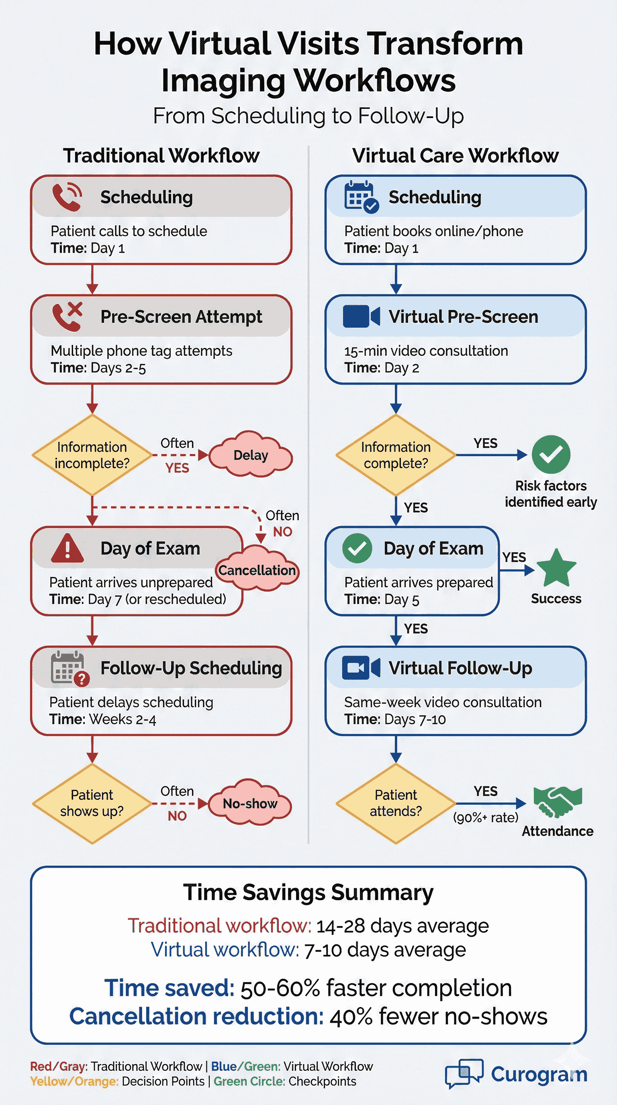
Follow-up appointments close the care loop. Patients need clear explanations of their results. Delayed or skipped follow-ups leave patients anxious and unclear about next steps. Virtual care transforms this critical phase.
Traditional follow-up scheduling creates unnecessary wait times. Patients book appointments weeks out because in-person slots fill quickly. This delay causes stress and sometimes affects treatment decisions.
Results often sit ready while patients wait for available appointments. Radiologists complete their reports promptly. But patients can't discuss findings until their scheduled visit. Critical information stays locked up when it should be shared.
Remote consultations eliminate these bottlenecks. Imaging centers can schedule virtual results reviews within 48 hours. Patients connect from anywhere to discuss their findings. The conversation happens while details are still fresh.
This speed benefits both sides. Patients get peace of mind faster. They can start the next steps in their care journey sooner. Imaging centers close cases quickly and maintain a steady workflow. Nothing sits pending while waiting for an appointment slot.
Some findings need immediate discussion. Urgent cases require prompt communication. Waiting for a scheduled follow-up isn't always safe or practical.
Virtual visits that Veradigm systems support let staff connect with patients the same day. A radiologist can review concerning findings directly with the patient. This immediate connection speeds up referrals to specialists. Treatment begins faster when every hour counts.
Medical imaging reports use complex terminology. Patients struggle to understand what findings mean for their health. Confusion leads to anxiety and sometimes poor adherence to recommended follow-up.
Phone conversations about results fall short. Patients can't see the images being discussed. They have trouble visualizing anatomical references. Abstract verbal descriptions don't create clear mental pictures.
Virtual sessions change this dynamic completely. Clinicians can share screens to show actual imaging studies. They point to specific areas while explaining findings. Patients see exactly what the radiologist saw.
This visual approach improves comprehension dramatically. Patients understand their conditions better. They ask more informed questions during the session. Better understanding leads to stronger compliance with treatment plans.
Screen sharing lets clinicians use multiple visual tools. They can display diagrams alongside actual scans. Anatomical charts help orient patients to what they're seeing. Arrows and annotations highlight important features.
This education happens in real time. Patients ask questions as they arise. Clinicians adjust explanations based on patient reactions. The conversation flows naturally instead of feeling rushed. Both parties gain confidence that the message was understood.
Patients process medical information at different speeds. Some need time to absorb complex diagnoses. They may want to review explanations with family members later.
Many telehealth platforms allow session recording with consent. Patients can watch the conversation again at home. They share recordings with caregivers or other providers. This reference material supports ongoing decision-making about follow-up care and treatment options.
Traditional follow-up processes generate heavy administrative work. Staff make multiple phone calls to reach patients. They leave voicemails that don't get returned. They send letters that may not arrive.
Each failed contact attempt requires documentation. Staff track outreach efforts across multiple systems. This busy work pulls them away from direct patient care activities. The administrative burden grows with patient volume.
Virtual follow-up appointments simplify this process. One scheduled session replaces multiple contact attempts. Patients confirm attendance through automated reminders. Staff spend less time chasing people down.
The efficiency gain compounds across the organization. A 200-patient-per-week practice might save 10-15 hours of administrative time. That time can support better patient care in other areas. Staff morale improves when they spend less time on repetitive tasks.
Virtual care platforms integrate with scheduling systems. They send automatic reminders as appointments approach. Patients receive text messages and email notifications. They can confirm attendance with one click.
This automation catches potential no-shows early. If a patient doesn't confirm, staff can reach out proactively. They fill cancelled slots before they become problems. The schedule stays optimized without constant manual monitoring.
Transportation challenges keep many patients from attending follow-ups. Some live far from imaging centers. Others lack reliable vehicles. Public transit may not reach the facility easily.
Work schedules create another barrier. Taking time off for appointments costs money. Patients skip follow-ups they consider less urgent. They prioritize work obligations over healthcare visits.
Remote consultations remove these obstacles completely. Patients join from their lunch break or after work hours. They avoid travel time and parking hassles. Attendance rates climb when access becomes this convenient.
Some patients face physical barriers to in-person visits. Chronic pain makes travel difficult. Mobility aids complicate transportation. These patients benefit most from virtual options.
Telehealth gives them equal access to follow-up care. They discuss results from home in comfort. Physical limitations no longer prevent them from getting the necessary information. Healthcare becomes more inclusive through technology.
Patients feel more in control when they have convenient options. They appreciate flexibility in how they receive care. This positive experience builds trust and strengthens the patient-provider relationship.
Virtual visits also reduce anxiety for some patients. Medical settings make certain people uncomfortable. They feel more relaxed discussing results from familiar surroundings. Comfort leads to better communication and understanding.
IR procedures need detailed patient education. Patients must understand risks, benefits, and post-procedure care. They need clear instructions about medication management. This education takes time and careful explanation.
Virtual sessions provide ideal conditions for this teaching. Clinicians can share visual materials and answer questions thoroughly. Patients see diagrams of what will happen during their procedure. They understand exactly what to expect.
This preparation reduces anxiety and improves outcomes. Well-informed patients cooperate better during procedures. They follow post-procedure instructions more carefully. The entire care experience becomes smoother for everyone involved.
Patients with multiple health conditions require extra evaluation. Their medications may affect procedure safety. Kidney function, blood clotting, and allergies all matter. Missing these factors creates dangerous situations.
Virtual screening appointments allow thorough risk assessment. Clinicians review complete medical histories with patients. They identify potential complications before procedure day. Problems get addressed in advance instead of causing delays.
This careful screening protects both patients and staff. Procedures go forward only when conditions are optimal. The IR suite operates more efficiently because surprises rarely occur. Safety and efficiency improve together through better preparation.
Independent locations often develop their own habits. One site might call patients three times. Another sends emails. A third uses text messages. This inconsistency confuses patients who visit multiple locations.
Centralized virtual care creates uniform processes. Every patient gets the same screening experience regardless of location. Staff follow identical protocols for prep education and follow-up care. Quality stays consistent across the network.
Management gains visibility into all operations. They track metrics across sites using the same measurements. Problems become obvious when one location performs differently. Leadership can address issues quickly with clear data.
New employees learn one set of procedures instead of local variations. Training becomes faster and more reliable. Staff can transfer between locations without relearning workflows. The organization operates as a cohesive unit.
Physical expansion costs significant money. Building new waiting rooms and consultation spaces requires major investment. Real estate costs, construction delays, and permitting add complexity. These barriers slow growth.
Virtual care removes these limitations. Imaging centers handle more patients without adding square footage. Consultation capacity grows through technology instead of construction. The practice scales efficiently as volume increases.
This approach improves return on investment. Money saved on construction goes toward better equipment or staff. The business grows profitably without the risk of overbuilt facilities. Flexibility increases as virtual capacity adjusts easily to demand.
Phone tag wastes enormous amounts of time. Staff call patients who don't answer. They leave messages that generate callback requests. Each interaction requires documentation. The cycle repeats for simple questions.
Scheduled virtual visits replace this inefficient pattern. Both parties connect at an agreed time. All questions get answered in one session. Staff complete documentation immediately while details are fresh.
The time savings prove substantial. A staff member might save two hours daily by eliminating phone tag. That time supports more valuable activities like patient education or care coordination. Productivity increases without adding headcount.
Verbal instructions alone often fail. Patients forget details after appointments end. They call back asking the same questions. This creates extra work for staff.
Virtual platforms support automatic session summaries. Patients receive written instructions via secure message. They can review this information anytime. Family members can read the same materials.
Written documentation reduces confusion and callbacks. Patients follow instructions more accurately when they can reference written steps. Compliance improves. Staff spend less time on repeat explanations. Everyone benefits from this simple documentation feature.
Patients use technology for banking, shopping, and communication. They expect the same digital options for healthcare. Traditional phone-only communication feels outdated and frustrating.
Virtual visits match modern patient preferences. They offer the convenience people expect from other services. Patients can schedule, confirm, and attend appointments through their devices. This seamless experience improves satisfaction across all age groups.
Satisfied patients leave positive online reviews. They recommend the practice to friends and family. This word-of-mouth marketing proves more valuable than advertising. Modern care options become a competitive advantage in crowded markets.
Younger demographics expect digital-first healthcare options. They choose providers based partly on technology offerings. Practices without virtual care may lose these patients to competitors. Offering telehealth demonstrates innovation and patient-centered thinking.
Trust forms the foundation of strong patient relationships. Clear communication builds trust more than any other factor. When patients understand their care, they feel confident in their providers.
Virtual visits create better conditions for meaningful dialogue. Video calls feel more personal than phone conversations. Patients can see facial expressions and body language. These visual cues strengthen connection and understanding.
Responsive communication shows patients they matter. Quick virtual follow-ups demonstrate commitment to their care. This responsiveness builds loyalty that lasts for years. Patients stay with practices that make them feel valued and heard.
The right telehealth platform makes all the difference. Poor integration creates more problems than it solves. Curogram works specifically with imaging workflows and Veradigm systems. This focused approach delivers real operational benefits.
Generic telehealth tools force staff to adapt their processes. They create extra steps and duplicate data entry. This friction undermines the efficiency gains telehealth should provide.
Curogram integrates directly with Veradigm scheduling and documentation. Virtual appointments appear in the same calendar as in-person visits. Staff use familiar workflows without learning entirely new systems. This reduces training time and adoption resistance.
The integration maintains data consistency across systems. Information entered once flows where it needs to go. Staff avoid repetitive data entry. Error rates drop when information doesn't require manual copying between platforms.
Small-scale solutions break down at enterprise volume. They can't handle thousands of appointments across multiple locations. Performance suffers, and reliability becomes questionable.
Curogram supports high-volume operations from the ground up. The platform handles peak loads without slowdowns. Multi-site networks operate smoothly even during busy periods. IT teams maintain confidence in system reliability.
This scalability matters for growing organizations. As patient volume increases, the system keeps pace. Practices don't outgrow their telehealth solution. One platform serves current needs and future growth without requiring replacement.
Security and compliance can't be afterthoughts in healthcare technology. Every virtual session involves protected health information. Breaches create legal liability and destroy patient trust.
Curogram employs end-to-end encryption for all communications. Sessions meet HIPAA requirements without extra configuration. Enterprise IT teams maintain full oversight and audit capabilities.
This security framework reduces organizational risk. Compliance teams can verify protection measures easily. Practices avoid the liability exposure that comes with inadequate telehealth security. Patient data stays protected throughout the care journey.
Imaging workflows face constant pressure to do more with less. Every improvement in efficiency matters. Virtual visits Veradigm practices implement address core operational challenges while improving patient experience.
The benefits touch every phase of care. Pre-procedure screening becomes more thorough and reliable. Patients arrive better prepared. Exam failures drop. Schedule reliability improves.
Follow-up care happens faster and with better outcomes. Remote consultations eliminate wait times and travel barriers. Patients understand their results more clearly. Compliance with treatment plans strengthens.
Administrative burden decreases across the board. Staff spend less time on phone tag and repetitive explanations. Virtual sessions replace multiple inefficient interactions. Time saved goes toward higher-value activities.
Multi-location networks gain consistency and efficiency. Standardized virtual workflows ensure quality across all sites. Growth happens without facility expansion. The organization scales profitably.
Patient satisfaction improves through modern, convenient access to care. People appreciate flexibility and responsiveness. Positive experiences lead to better reviews and stronger referrals. The practice builds competitive advantage.
For Veradigm users specifically, the right telehealth solution makes implementation smooth. Curogram delivers enterprise-grade virtual care built for imaging workflows. Integration happens without disrupting established processes. Security and compliance stay strong.
The combination of proven technology and imaging-focused design creates lasting value. Centers improve operations while serving patients better. Both efficiency and quality rise together. That dual benefit defines successful healthcare innovation.
Book a Demo to See Curogram + Veradigm in Action.
 Jo Galvez : Jan 9, 2026, 8:00:01 AM
Deliver HIPAA-compliant virtual consultations directly from Veradigm with Curogram — secure, simple, and scalable for enterprise care.
 Jo Galvez : Jan 9, 2026, 4:00:00 PM
Discover how Veradigm users increase revenue and patient access through integrated, HIPAA-compliant telehealth powered by Curogram.
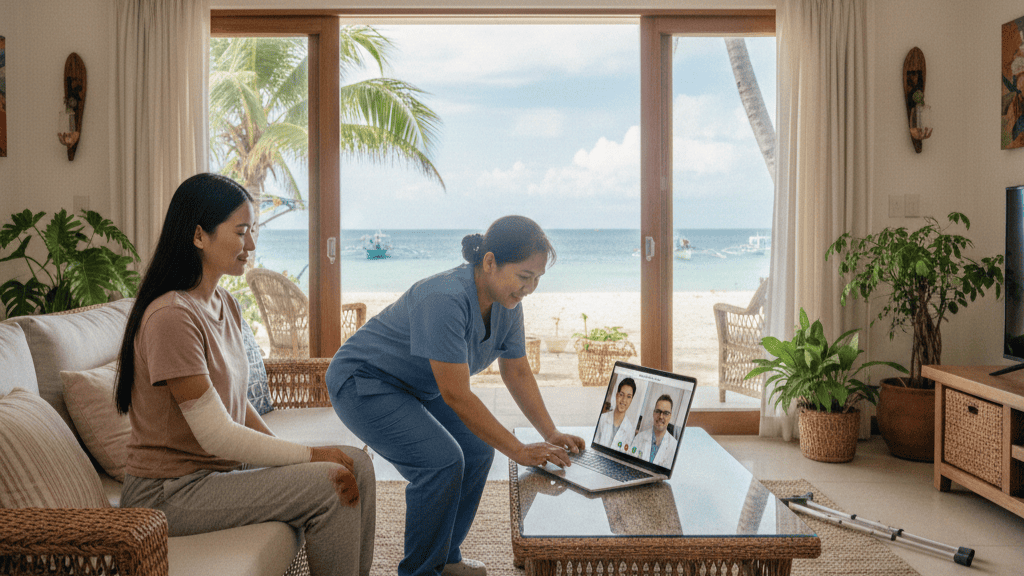
Learn how radiology networks using Ramsoft simplify follow-ups and patient consults with Curogram’s secure telehealth platform.