Streamlining Radiology Prep Instructions with HIPAA Texting in Exa
💡 Radiology patient communication in Exa becomes more reliable through secure texting. HIPAA-compliant texting helps reduce confusion and makes...
14 min read
Mira Gwehn Revilla
:
Dec 23, 2025 2:00:00 PM
Table of Contents
Your front desk just fielded its fifth call this hour about MRI prep instructions. Meanwhile, a Your front desk just took its fifth call this hour about MRI prep steps. At the same time, a vascular patient missed their procedure. Why? They didn't grasp the medication hold rules. This happens every day in imaging centers nationwide.
Most radiology practices still rely on phone calls for patient communication. But here's the problem: this method clogs up your entire workflow. Staff burn hours fielding the same prep questions over and over. Patients wait on hold. Some never get through. Key instructions? They get garbled or forgotten by appointment day. Complex procedures make things even messier.
IR cases need precise timing around blood thinners, fasting rules, and post-care steps. Vascular work demands careful medication tracking and ride planning. Each new requirement triggers another phone call. More confusion. More room for error.
StreamlineMD practices are flipping this script with HIPAA-secure texting. No more phone tag. Imaging centers now reach patients where they want to be reached. Prep instructions? They arrive on autopilot. Questions come in, answers go out—no hold music required. One staff member can juggle dozens of chats at once while staying fully HIPAA-compliant.
The results speak for themselves. Call volumes plunge by hundreds each month. No-shows drop because patients get timely reminders and can confirm or reschedule in seconds. Exam completion rates climb when patients actually understand their prep steps. Staff efficiency skyrockets when they're not stuck on repeat.
But the wins go deeper than simple convenience. Better communication means more procedures finish as planned. Fewer last-minute bailouts keep your modality calendars packed tight. Less phone chaos frees your team to tackle the clinical work that truly needs their skills.
This is how modern radiology practices use secure 2-way messaging to reshape their operations from the ground up.
Radiology practices juggle too many moving parts each day. Each modality brings unique prep needs. MRI patients need screening for implants and pacemakers. CT scans may need contrast steps and NPO status. Ultrasound visits demand specific prep based on the body area scanned.
This gets tangled fast when patients start asking questions. Are they NPO from midnight or just six hours? Can they take their blood pressure meds? What about morning coffee? These sound simple. But they spark dozens of phone calls that derail your workflow.
Vascular and IR procedures pile on more hurdles. These cases often need multiple pre-steps spread across several days. Patients must stop certain meds at exact times. They need rides home because sedation means no driving. Consent forms require review and sign-off. Each step opens the door to mixed signals.
Your call center takes the hit from all this back-and-forth. Front desk staff answer the same prep questions on loop throughout the day. They burn time chasing patients who missed calls or didn't pick up. When contact finally happens, the chat often reveals a problem: patients never got the first instructions. Or they didn't grasp them clearly.
Staff repeat identical info to different patients constantly. This repetitive grind exhausts everyone and kills efficiency. Your skilled team could tackle complex tasks. Instead, they're trapped answering basic procedure questions.
Meanwhile, patients who can't reach anyone right away may arrive unprepared. Or they just cancel. Incomplete exams waste time and resources for everyone involved. Each botched exam means rebooking, lost revenue, and one frustrated patient.
The communication gaps stretch beyond prep instructions alone. Patients need arrival time updates when schedules shift. They have questions about insurance checks or paperwork needs. They want to know what recovery looks like. Each of these needs triggers yet another phone call.
Your scheduling team faces relentless pressure to keep modality calendars packed while juggling last-minute changes. When patients can't easily confirm or reschedule, no-show rates creep upward. Empty slots drain revenue and slow throughput. The financial damage stacks up over time.
Modern patients expect better ways to communicate. They text friends, family, and other service providers all day long. But reaching their imaging center? That requires a phone call during business hours. This gap between what patients prefer and what's available creates friction in your workflow.
The result? A communication system that can't grow with your practice. As you add procedures and see more patients, call volume rises in lockstep. You can't just hire your way out. More staff means higher overhead, but the core inefficiency stays put. Learn more about modernizing healthcare communication workflows.
HIPAA compliance adds another layer to every patient interaction. Phone chats can be overheard. Voicemail messages may not be secure. Staff need training on proper handling of protected health data across all channels. These requirements are vital but add complexity to an already tough workflow.
Radiology workflows depend on precise prep instructions, timely reminders, and clear patient communication. With recent CMS texting guidance updates supporting secure digital communication, text-based automation handles these tasks efficiently while freeing staff from repetitive phone work.
Text-based automation reshapes how imaging centers deliver prep instructions to patients. The system sends modality-specific guidance on autopilot when appointments get booked. MRI patients receive screening questions about implants, pacemakers, and metal in their body.
CT patients get NPO reminders timed to their appointment. Ultrasound prep instructions arrive based on the specific exam type. These messages fly out without any staff lifting a finger.
The automation runs around the clock, ensuring every patient gets their instructions at the right moment. Patients can review the info whenever it suits them. They can save the messages and check back anytime they need to.
Step-by-step prep guides replace confusing verbal instructions that slip through the cracks. Instead of trying to recall everything discussed during a phone call, patients have written guidance they can follow. The messages spell out specific timeframes for fasting, medication changes, and other requirements. This clarity cuts down prep-related questions and boosts compliance.
Medication and allergy checks happen through simple text exchanges. Patients can confirm their current meds or flag concerns that need staff review. This back-and-forth communication lets your team prioritize responses based on clinical importance. Not just whoever called first.
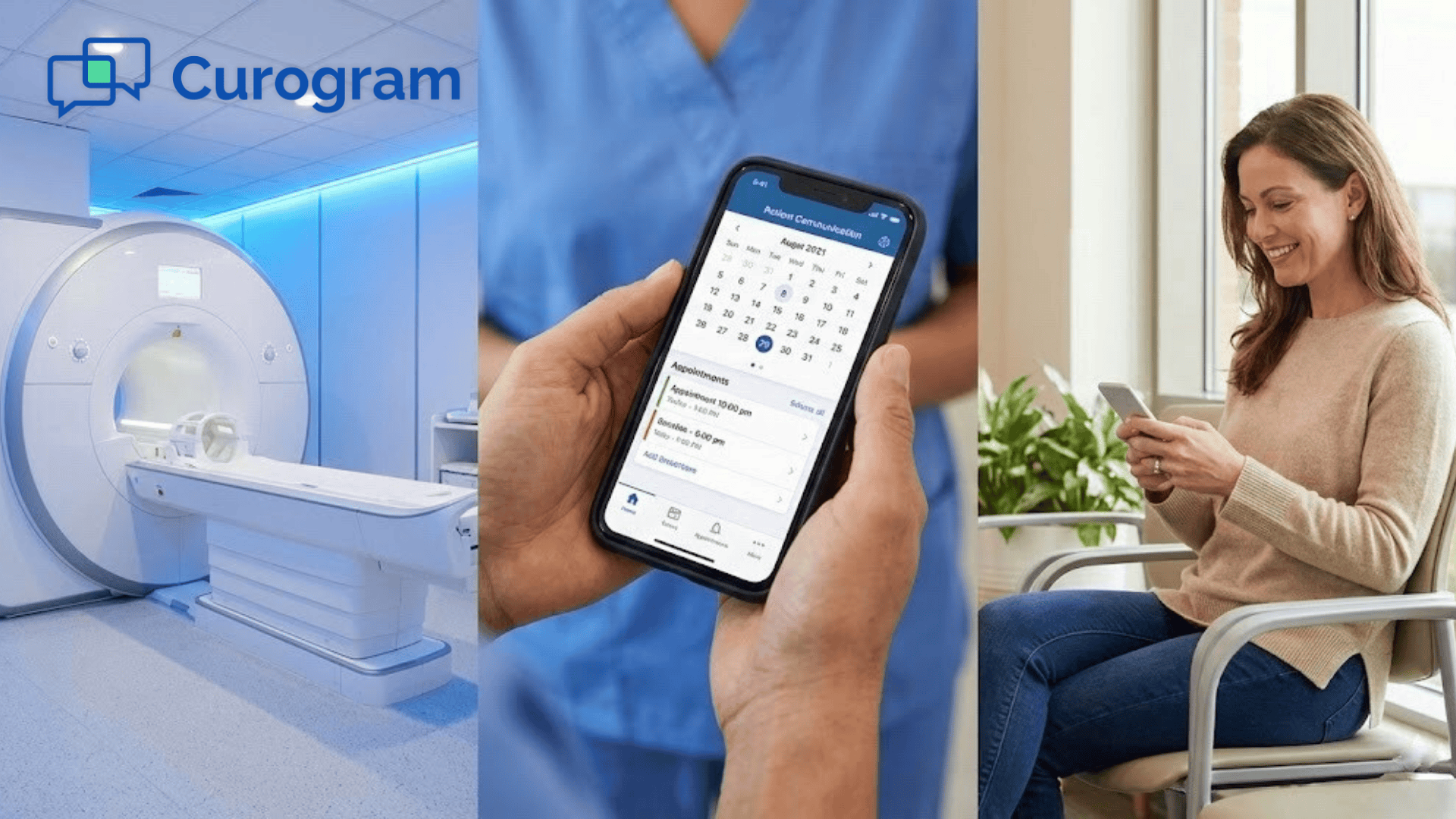
Automated appointment reminders arrive via text at set intervals before each procedure. Patients get a 48-hour notice, then a 24-hour reminder, then a same-day confirmation. Each message includes a simple way to confirm attendance or request rescheduling.
This "message us to reschedule" approach makes it easy for patients to manage conflicts. Instead of feeling guilty about canceling, they can quickly notify your practice and work out a new time. Early notification gives your scheduling team time to fill the slot with another patient.
Confirmation responses provide real-time visibility into appointment status. Your team can see which patients have confirmed and which haven't responded. This allows proactive outreach to patients who may be at higher risk of no-show. The result? Fuller schedules and more predictable daily throughput.
Text reminders reach patients where they already spend time throughout the day.
Unlike phone calls that might hit voicemail or emails that sit unread, texts typically get opened within minutes. This immediacy helps keep appointments top-of-mind for busy patients.
One staff member can now manage communication with dozens of patients at once. Text conversations don't demand the real-time commitment of phone calls. Your team can respond to multiple patients during natural breaks in their workflow. This efficiency multiplies throughout the day.
Hundreds of monthly calls get replaced with back-and-forth patient texting. Staff answer questions when they have capacity, not whenever the phone rings. This shift reduces interruptions and allows better focus on clinical tasks. Your team experiences less stress from constant phone management.
Front desk efficiency increases dramatically when routine communication moves to text. Staff can handle scheduling, check-in, and other tasks without constant phone interruptions. The time saved compounds across your entire team. Reception areas become calmer and more organized.
Template responses ensure consistent, accurate information delivery. Staff can quickly send pre-approved answers to common questions. This standardization reduces errors and ensures all patients receive the same high-quality guidance. New team members can provide excellent support faster because they have proven message templates to work from.

Vascular and IR procedures involve multiple critical steps that can't afford miscommunication or missed instructions. Secure texting coordinates complex medication holds, consent processes, and recovery care with precision timing that phone calls can't match.
Vascular and IR procedures demand careful coordination of multiple preparation steps. Unlike diagnostic imaging, these cases involve medication management, fasting requirements, and complex consent processes. Each element requires clear communication at specific timeframes before the procedure date.
Anticoagulant holds represent a critical safety concern. Patients on warfarin, rivaroxaban, or other blood thinners need precise instructions about when to stop these medications. The timing varies by drug and procedure type. Text-based communication delivers these instructions with clear timeframes and confirmation prompts.
GLP-1 medications add another coordination layer for many patients. These popular diabetes and weight management drugs can affect gastric emptying and anesthesia safety. Patients need to know exactly when to hold these medications before their procedure. Automated text reminders ensure this information reaches patients at the right time.
Pre-procedure fasting instructions arrive with specific time cutoffs. Instead of remembering "nothing after midnight," patients receive clear guidance about when to stop eating and drinking. The messages can specify what liquids are allowed and when.
Consent status follow-ups happen seamlessly through secure messaging. Patients can confirm they received and reviewed consent documents. They can ask questions about the procedure before arriving.
Transportation and after-care preparation require advance planning. Many IR procedures involve sedation that prevents patients from driving themselves home. Text reminders prompt patients to arrange a driver before their appointment. Follow-up messages can confirm these arrangements are in place.
Recovery space preparation at home matters for optimal outcomes. Patients need to understand what supplies to have ready and what support they'll need. Text-based instructions can include checklists and helpful tips. This proactive communication reduces post-procedure complications and calls.
Procedure schedules shift throughout the day based on case complexity and emergencies. When arrival times change, text updates reach patients immediately. Patients appreciate knowing exactly when to arrive.
Updated instructions can be delivered quickly as situations evolve. If a case is running behind, patients can receive a revised timeline. If additional preparation is needed, the information goes out instantly. This flexibility keeps workflows moving smoothly despite inevitable changes.
Patient triage questions help staff prioritize clinical needs. Simple text exchanges can identify patients who need immediate attention versus those with routine questions. Your clinical team can focus on high-priority situations.
Keeping throughput consistent requires managing multiple patients across different procedure stages. Some patients are in pre-procedure preparation. Others are in recovery. Still, others are handling post-procedure follow-up. Text communication helps coordinate all these moving pieces simultaneously without overwhelming staff.
The efficiency gains become especially valuable during busy procedure days. When your IR suite is fully booked, every minute matters. Text-based coordination reduces delays and keeps cases flowing. Staff can update patients, coordinate with the clinical team, and manage documentation without phone tag.
Emergency case bumping requires delicate patient communication. When an urgent case displaces a scheduled procedure, affected patients need quick notification and rescheduling options. Text messages deliver this news sensitively while offering immediate alternatives.
Follow-up instructions reach patients while recovery information is fresh. Instead of trying to remember verbal guidance given while they're still groggy, patients receive written instructions they can review at home.
Pain and symptom checks happen at scheduled intervals after discharge. Automated messages ask patients to report their pain levels and any concerning symptoms. This monitoring helps identify complications early. Your clinical team can intervene quickly when problems arise.
Recovery monitoring via secure messaging provides ongoing support without requiring office visits. Patients can send updates about their healing progress. They can ask questions as they arise.
Wound care questions get addressed through secure photo sharing when appropriate. Patients can document concerning areas and send images for clinical review. This capability reduces unnecessary emergency visits while ensuring problems get proper attention. Your team can triage based on actual visual information.
Medication management continues through text-based reminders and confirmations. Patients receive prompts to restart held medications at the appropriate time. They can confirm they've picked up new prescriptions.
Activity restriction reminders help patients avoid common recovery mistakes.
Messages can prompt patients about lifting limits, driving restrictions, and when to resume exercise. These gentle reminders reduce the risk of setbacks that delay full recovery.
Follow-up appointment scheduling happens smoothly through text conversation. Instead of calling to book a post-procedure check, patients can confirm their follow-up time via message. They can also request changes if the scheduled time doesn't work.
The cumulative effect of post-procedure text communication is better outcomes and fewer complications. Patients feel supported throughout recovery. They know how to reach your team if concerns arise.
Your clinical team gains peace of mind knowing patients have clear recovery guidance. The documentation created through text exchanges provides a record of patient education and responses. This audit trail supports quality assurance and risk management efforts.
Text-based communication meets patients where they are while dramatically cutting phone traffic that bogs down your practice. This shift transforms both patient experience and staff efficiency in ways that phone systems simply can't deliver.
Patients prefer texting over long hold times by an overwhelming margin. They can send a question during their lunch break and receive an answer without blocking 20 minutes for a phone call. This convenience aligns with how people already communicate in every other aspect of their lives.
Reduced anxiety comes from simple, real-time responses. When patients can get quick answers to prep questions or appointment details, they feel more confident and prepared. The ability to save and reread messages also helps patients who need to review information multiple times.
Text communication removes the pressure of trying to remember everything discussed during a phone call. Patients can refer back to their message history whenever needed. This reference capability is especially valuable for complex procedures with multiple preparation steps.
The immediacy of text responses builds trust and satisfaction. Even if staff can't answer immediately, patients appreciate knowing their message was received. The visible message history shows your practice is responsive and attentive to patient needs.
Technologists and front desk teams avoid repetitive calls when routine communication moves to text. Instead of explaining NPO requirements for the hundredth time, staff can focus on equipment preparation, quality assurance, and direct patient care.
Staff load shifts from reactive communication to ordered workflow. Rather than dropping everything when the phone rings, team members can plan their response times. They can batch message responses during natural workflow breaks.
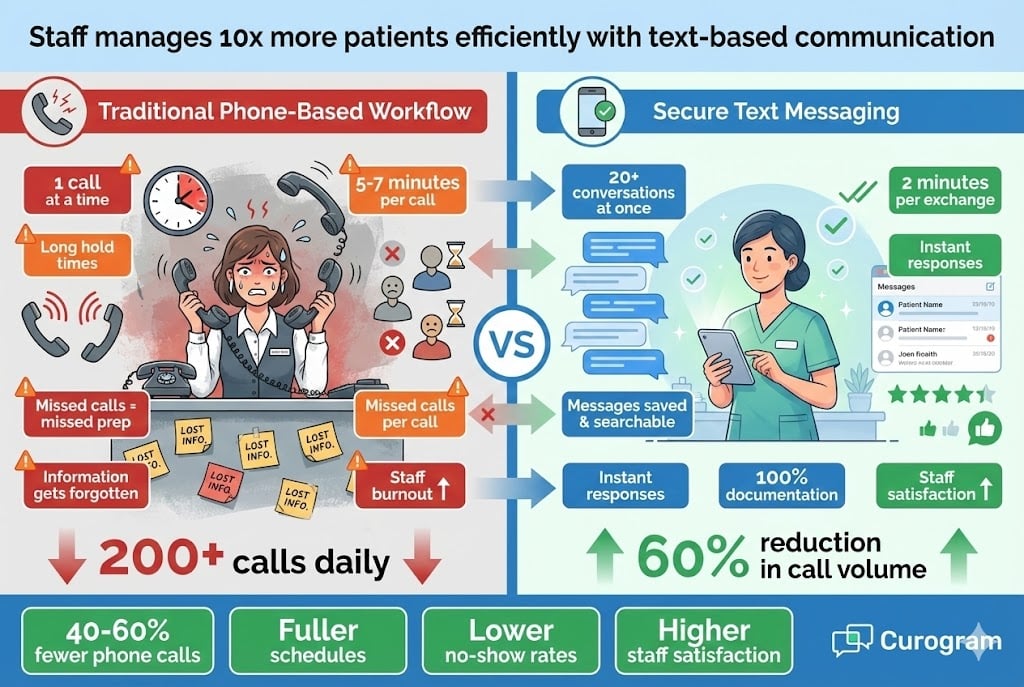
The time savings are substantial and measurable. Practices report reducing daily phone calls by 40-60% after implementing text-based communication. Those recovered hours translate into capacity for more procedures, better patient care, or reduced overtime costs.
Professional growth opportunities increase when staff aren't buried in phone work.
Team members can pursue additional training, take on specialized roles, or contribute to practice improvement initiatives. This development benefits both staff satisfaction and overall practice quality.
Secure messaging creates ripple effects that strengthen your entire radiology operation beyond simple communication efficiency. These system-wide improvements protect revenue, reduce errors, and maintain compliance without adding administrative burden.
çRadiology teams work together seamlessly when communication channels are clear and documented. Coordination between diagnostic imaging, interventional radiology, vascular procedures, and scheduling happens in real-time. No information gets lost in verbal handoffs or phone tag.
Team members can see the complete communication history with each patient.
This visibility eliminates duplicated efforts and ensures everyone works from the same information. When a scheduler sees that a technologist already addressed a prep question, they don't waste time covering the same ground.
Ensuring patients follow prep instructions becomes much easier with documented communication. Automated confirmations show which patients received and acknowledged their prep guidance. Staff can follow up with patients who haven't confirmed receipt.
Patients remain reachable for clarification right up until their appointment. If questions arise about prep status or special requirements, staff can quickly verify details via text. This accessibility prevents situations where patients arrive unprepared.
Exam completion rates increase when communication improves. Better-prepared patients mean fewer canceled or rescheduled procedures. Your modality schedules stay full with productive appointments.
Secure PHI exchange happens automatically through encrypted communication channels. Staff don't need to worry about HIPAA violations from unsecured text messages. The platform handles encryption and security requirements behind the scenes.
Consistent documentation and audit trails support compliance requirements.
Every message is logged and stored securely. This record-keeping aids quality assurance reviews and provides protection in case of disputes.
Certain communication scenarios work better through text than phone calls. Understanding when to use each channel maximizes efficiency while improving patient experience.
Prep instructions deliver better results via text because patients can save and review them repeatedly. Arrival time changes reach patients instantly without playing phone tag. Basic triage questions get answered without tying up phone lines for urgent calls.
Simple procedural clarifications happen faster through text exchanges. Appointment confirmation takes seconds via text versus minutes on the phone. Insurance follow-ups can be handled asynchronously, allowing staff to batch responses efficiently.
Uploading photos or paperwork securely becomes simple through text-based platforms. Patients can submit consent forms, insurance cards, or wound care images directly through secure messaging. This capability eliminates faxing, mailing, or in-person document delivery.
StreamlineMD's comprehensive platform extends beyond basic texting to support your entire patient communication strategy. These integrated features work together to modernize every touchpoint in your radiology workflow.
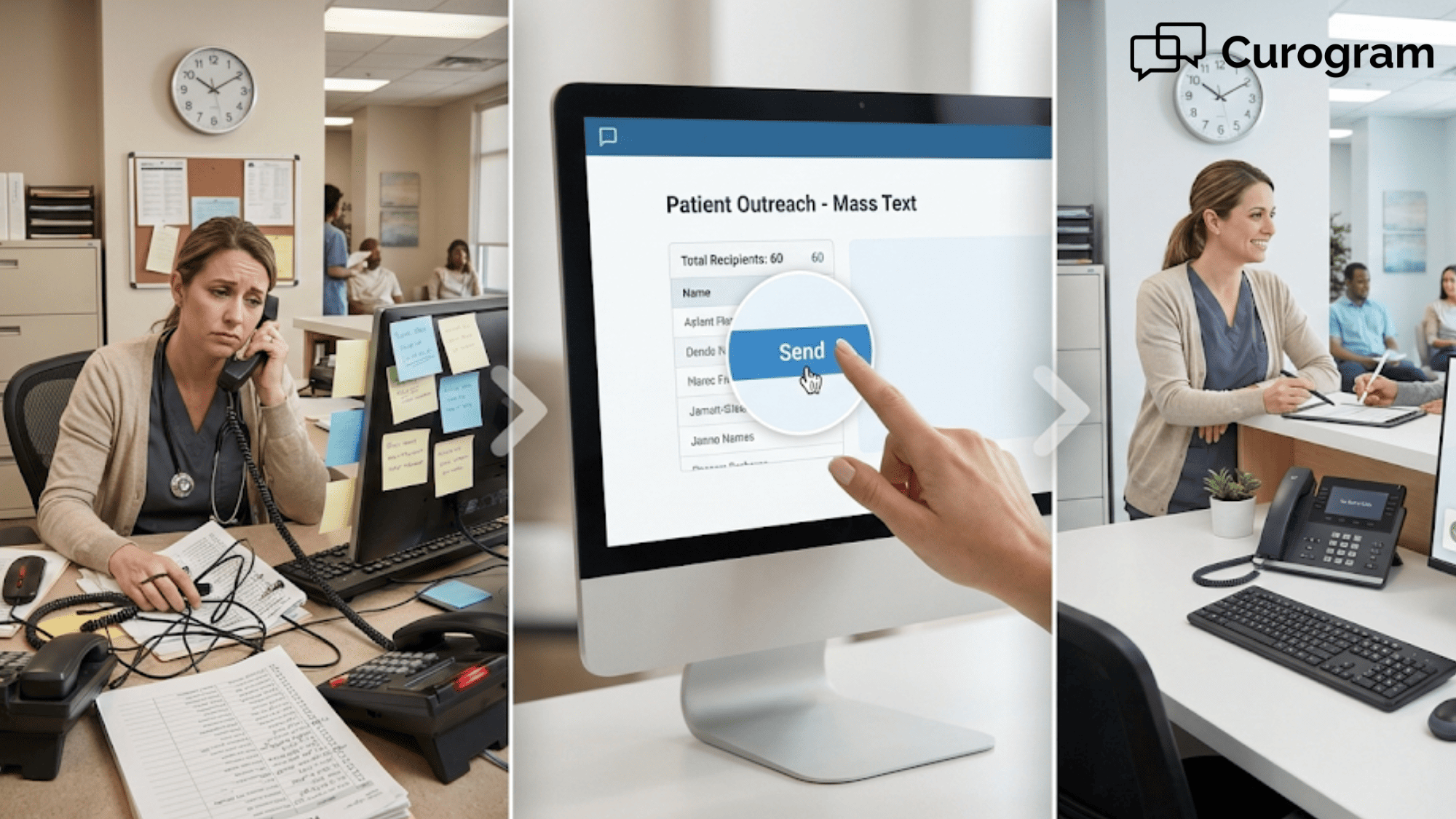
Appointment reminders keep your schedules full and reduce no-shows across all modalities. Online patient forms eliminate clipboard paperwork and speed up check-in processes. Mass texting capabilities let you communicate important updates to multiple patients simultaneously.
Telehealth integration supports remote consultations when in-person visits aren't necessary.
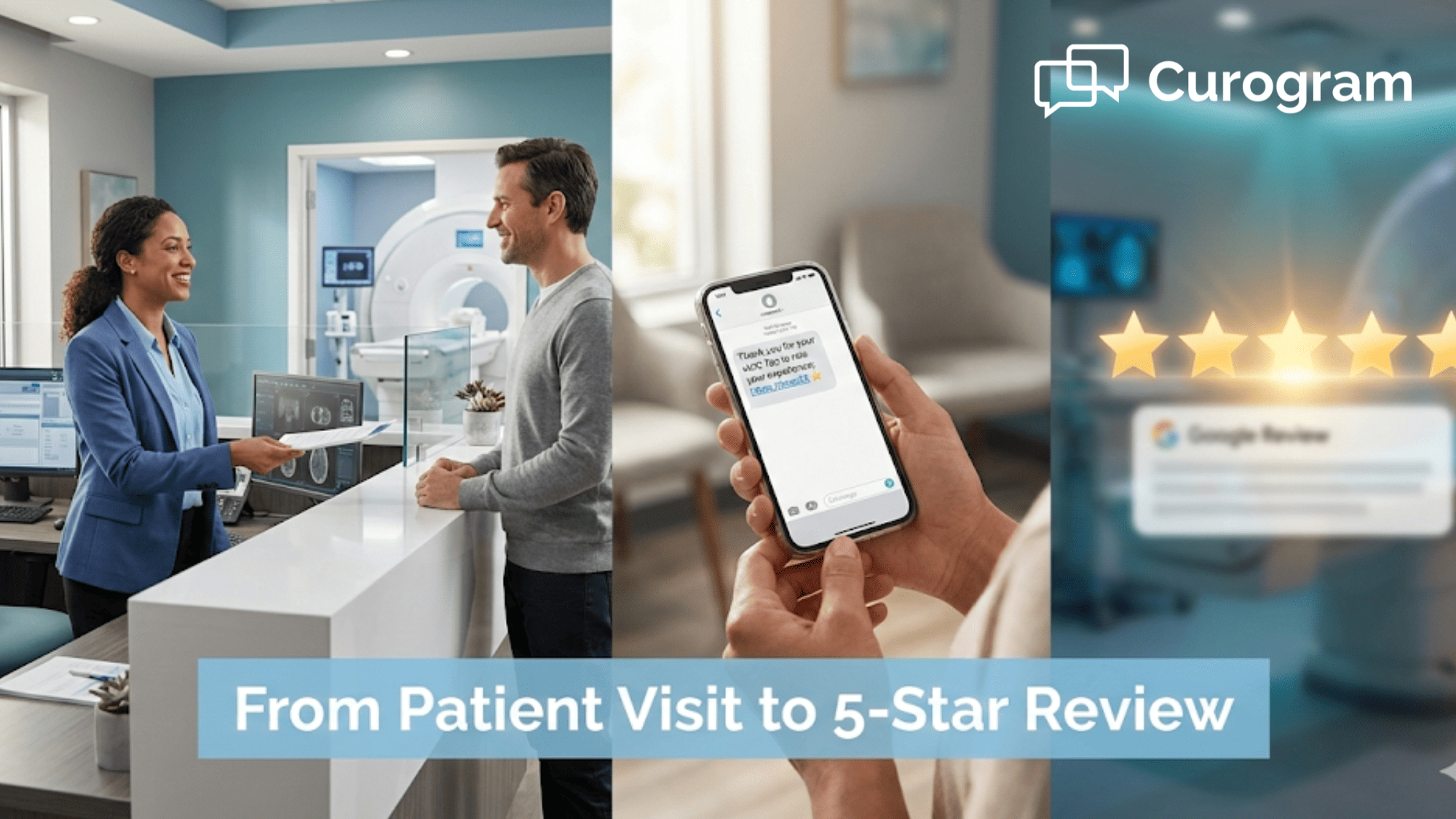
Reputation management tools help you gather and respond to patient feedback systematically. Text-to-Pay functionality simplifies payment collection and reduces accounts receivable delays.
Each of these features integrates with your existing practice management systems. The result is a unified communication ecosystem that serves both patients and staff efficiently.
How Curogram Powers StreamlineMD's Patient Communication
Curogram provides the HIPAA-compliant texting platform that makes StreamlineMD's workflow improvements possible. The system integrates directly with your practice management software to automate appointment reminders, prep instructions, and follow-up communication without manual data entry.
The platform handles thousands of patient conversations simultaneously while maintaining complete security. Every message is encrypted both in transit and at rest. Your staff can communicate confidently knowing all interactions meet HIPAA requirements and industry security standards.
Automation features save your team hours every day. Set up appointment reminder sequences once and they run automatically for every patient. Create prep instruction templates for different modality types and procedures. Build post-procedure check-in workflows that monitor recovery without staff intervention.
Two-way messaging lets patients respond to automated messages with questions or concerns.
These responses route to your team for handling during normal workflow. The system flags urgent messages for immediate attention while routine questions can be addressed in batch.
Template libraries give staff quick access to proven responses for common questions. New team members can provide expert-level support immediately using pre-approved messages. This consistency improves communication quality across your entire team.
Analytics and reporting show exactly how text communication impacts your practice. Track message volume, response times, and patient engagement rates. Measure the reduction in phone calls and improvement in no-show rates. These metrics demonstrate clear ROI from your communication investment.
The platform scales with your practice growth. Whether you're a single-location imaging center or a multi-site radiology group, Curogram adapts to your volume and complexity. Add new users, locations, and modalities without communication bottlenecks.
Integration capabilities connect Curogram with your existing systems. The platform works alongside your practice management software, EHR, and scheduling tools. This connectivity eliminates double data entry and ensures accurate patient information flows through all systems.
HIPAA-compliant texting transforms radiology workflow from reactive and phone-dependent to proactive and efficient. StreamlineMD practices that implement secure 2-way messaging see immediate benefits across their operations. Faster communication means better coordination.
Staff can manage dozens of patient conversations simultaneously. Information reaches patients instantly regardless of phone availability. Questions get answered without interrupting clinical workflows.
Higher exam readiness follows naturally from improved communication. Patients receive clear prep instructions at the right time. They can clarify confusion before appointment day. This preparation reduces incomplete exams and keeps schedules productive.
Better patient coordination extends from initial scheduling through post-procedure recovery. Automated reminders reduce no-shows. Real-time updates manage schedule changes smoothly. Follow-up communication supports safe recovery and catches complications early.
Prepared patients equal higher revenue retention. Every procedure that completes as scheduled protects expected revenue. Reduced no-shows eliminate the financial drain of empty appointment slots. Better outcomes mean fewer complications and higher patient satisfaction scores that drive referrals.
The competitive advantage of modern communication grows stronger each year. Patients increasingly expect convenient digital communication from all their healthcare providers. Practices that meet these expectations win patient loyalty and market share.
Ready to transform your radiology workflow? Book a demo to see how Curogram and StreamlineMD improve patient communication, reduce call volume, and boost your practice efficiency.
Ready to transform your radiology workflow? Book your demo today to see how Curogram boost your practice efficiency.
Automated texting sends prep instructions at scheduled times before each appointment. MRI patients receive screening questions about implants and metal objects. CT patients get NPO reminders timed to their procedure. Patients can review messages multiple times and ask clarifying questions without real-time pressure. This approach significantly reduces prep-related cancellations and incomplete scans.
Vascular and IR procedures require complex coordination around medication holds, fasting protocols, and transportation arrangements. Text messaging delivers time-sensitive reminders about blood thinner holds and medication adjustments at precisely the right moments. Patients can confirm ride arrangements and understand recovery restrictions.
Practices track key metrics like call volume reduction, which typically shows 40-60% fewer routine phone calls. No-show rates decrease as reminders and easy rescheduling improve attendance. Exam completion rates increase when patients arrive properly prepared. Staff satisfaction surveys show improved job satisfaction. Revenue metrics also improve as fuller schedules and fewer cancellations protect expected income.
💡 Radiology patient communication in Exa becomes more reliable through secure texting. HIPAA-compliant texting helps reduce confusion and makes...
💡 Radiology patient communication Ramsoft users need must be secure and easy to manage. HIPAA-compliant texting gives you one place to guide...
💡 Appointment reminders in DrChrono help small clinics cut no-shows. Automation keeps schedules on time through features such as: Automating...