How Medstreaming Imaging Centers Improve Workflows With HIPAA Texting
💡 Patient communication Medstreaming workflows often struggle when imaging centers rely on phone calls and manual follow-ups. Radiology texting...
9 min read
Aubreigh Lee Daculug
:
January 17, 2026
Table of Contents
The scanners are running, the schedule is full, and the phones keep ringing. On the surface, the imaging center appears calm. Behind the scenes, staff are managing last-minute changes, prep questions, and missed connections that can disrupt the day.
Imaging centers using Medstreaming operate at a fast pace. MRI appointments are booked weeks ahead. CT and ultrasound schedules shift daily. Patients need clear instructions and timely updates, yet communication often depends on phone calls that go unanswered.
Each missed call creates a ripple. Prep instructions arrive late. Schedule changes are overlooked. Staff leave voicemails and hope for callbacks. By the time patients arrive unprepared or confused, the impact is already felt.
This is not a scheduling failure. It is a communication gap. Manual outreach struggles to keep up with the scale and complexity of modern imaging operations.
Mass texting changes how imaging teams communicate. Instead of reacting one patient at a time, staff can send clear messages to everyone affected. Instructions arrive when they matter most, and updates reach patients before problems escalate.
When imaging centers automate patient notifications Medstreaming already tracks, communication becomes part of the workflow. Staff spend less time chasing calls, and patients arrive better prepared. The day runs with fewer interruptions.
Multi-location imaging centers feel this pressure most acutely. With scanners running across multiple sites, a single breakdown in communication can echo throughout the network. Medstreaming keeps appointments organized, but as volume increases, patient outreach becomes harder to manage—especially when each location operates with its own rhythm and constraints.
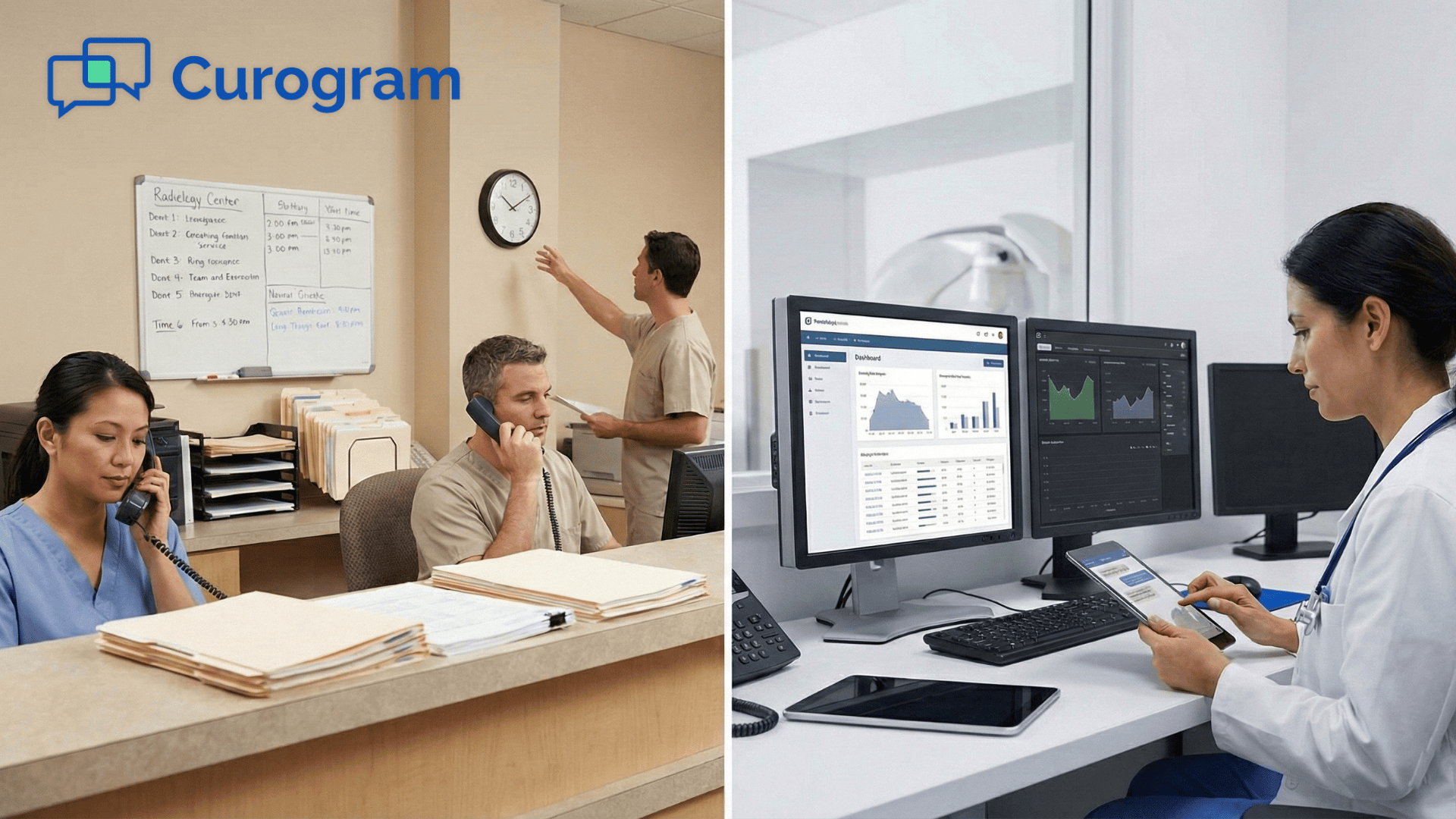
Patients move between facilities expecting the same experience every time. They assume prep instructions will be clear, reminders will arrive on time, and updates will be consistent. For staff, delivering that consistency often means hours on the phone, repeating the same information, leaving voicemails, and hoping someone calls back before it’s too late.
Phones tied up with reminder calls and unanswered voicemails
Prep instructions rushed or missed as staff juggle high call volume
Confusion when patients have multiple exams with different requirements
Inconsistent communication methods across locations
Frequent interruptions that pull staff away from patient care
These issues don’t appear all at once. They accumulate quietly. A front desk team spends the first hours of the morning chasing callbacks. A scheduler pauses new bookings to confirm prep details. A technologist steps out of a scan to answer a question that should have been resolved days earlier.
By mid-day, the cost is clear. Patients arrive unprepared. Exams are delayed or rescheduled. Staff fatigue sets in as small interruptions stack up, slowing throughput and increasing frustration. The operation still functions—but only through constant manual effort.
This is where communication becomes more than a support task. It becomes a workflow issue. When patient notifications remain manual, they lag behind the pace of imaging operations. When they’re automated and aligned with Medstreaming workflows, communication moves at the same speed as the schedule—quietly, consistently, and without disruption.
Manual broadcast communication works—until it can’t keep pace. As imaging volume increases, phone-based outreach becomes reactive and inconsistent. Delays build, messages are missed, and small inefficiencies compound into operational drag.
The impact is most visible when plans change.
When a scanner goes offline, staff must reach patients quickly to reschedule or redirect them. Manual calls move one patient at a time. Voicemails pile up, follow-ups stretch across hours or days, and schedules remain uncertain while available equipment at other locations goes unused.
Rescheduling decisions are delayed
Equipment downtime lasts longer than necessary
Idle scanner time translates directly to lost revenue
Backlogs form that take days to unwind
What should be a brief outage often turns into a scheduling ripple that affects multiple locations, forcing staff to rebalance already-full calendars.
Prep communication adds another layer of risk. Manual reminders vary by staff member, workload, and timing—one patient receives clear guidance, while another hears a rushed summary. Critical steps are easily missed.
MRI safety screening details not fully explained
Fasting or hydration requirements underemphasized
Contrast-related instructions delivered inconsistently
Multi-exam prep details left unclear
When patients arrive unprepared, exams are delayed, repeated, or canceled, wasting scanner time and leaving appointment slots unrecovered. Inconsistent prep communication also increases liability risk when safety information isn’t delivered consistently.
Routine schedule changes cause similar strain when communication lags. Staffing adjustments or maintenance prompt appointment moves, but late notifications disrupt arrival patterns—patients arrive early, late, or not at all, and throughput suffers.
Explaining schedule changes repeatedly
Managing frustrated or confused patients
Attempting last-minute recovery of missed appointments
Meanwhile, technologists wait for patients who never show, creating idle time that disrupts tightly planned workflows and reduces daily patient capacity.
During unexpected closures caused by weather, power outages, or emergencies, the limits of manual communication are clear. Phone lines are overwhelmed, patients are hard to reach, and messages arrive too late—or not at all.
Some patients still travel to closed facilities, while others arrive frustrated or anxious. Staff must manage in-person explanations while coordinating mass rescheduling under pressure.
These moments expose the core weakness of manual outreach: when speed and consistency matter most, one-by-one communication can’t keep up, and the effects can linger well beyond the disruption itself.

Mass texting removes timing and availability from the communication equation. Messages are delivered instantly, can be read at any time, and give patients information they can easily revisit—allowing imaging teams to communicate clearly and consistently at scale.
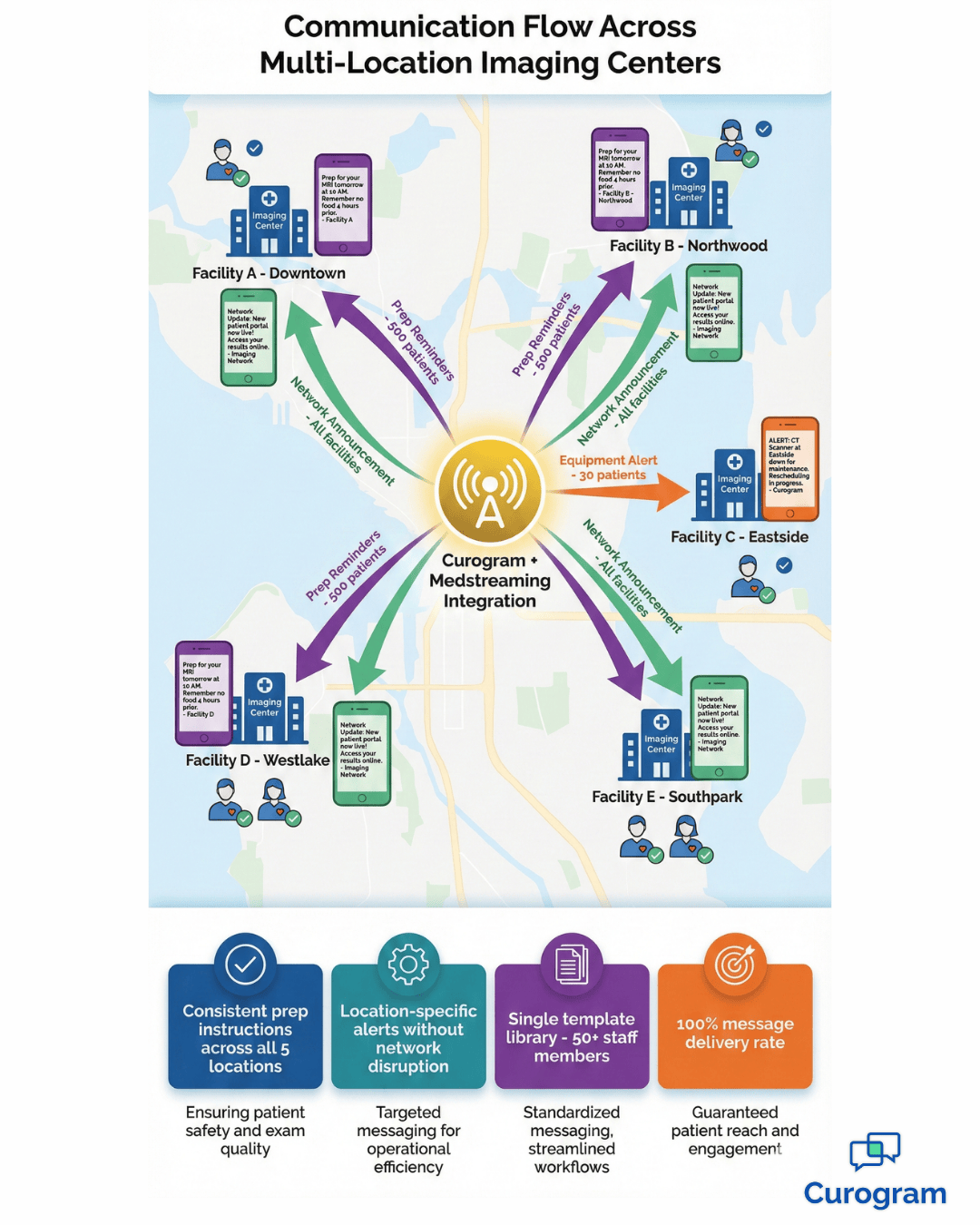
Broadcast messages notify all affected patients at once. When equipment goes offline, alerts reach patients before they leave home, reducing unnecessary travel and front desk congestion. For multi-location centers, messages can include alternative appointment options, keeping schedules moving.
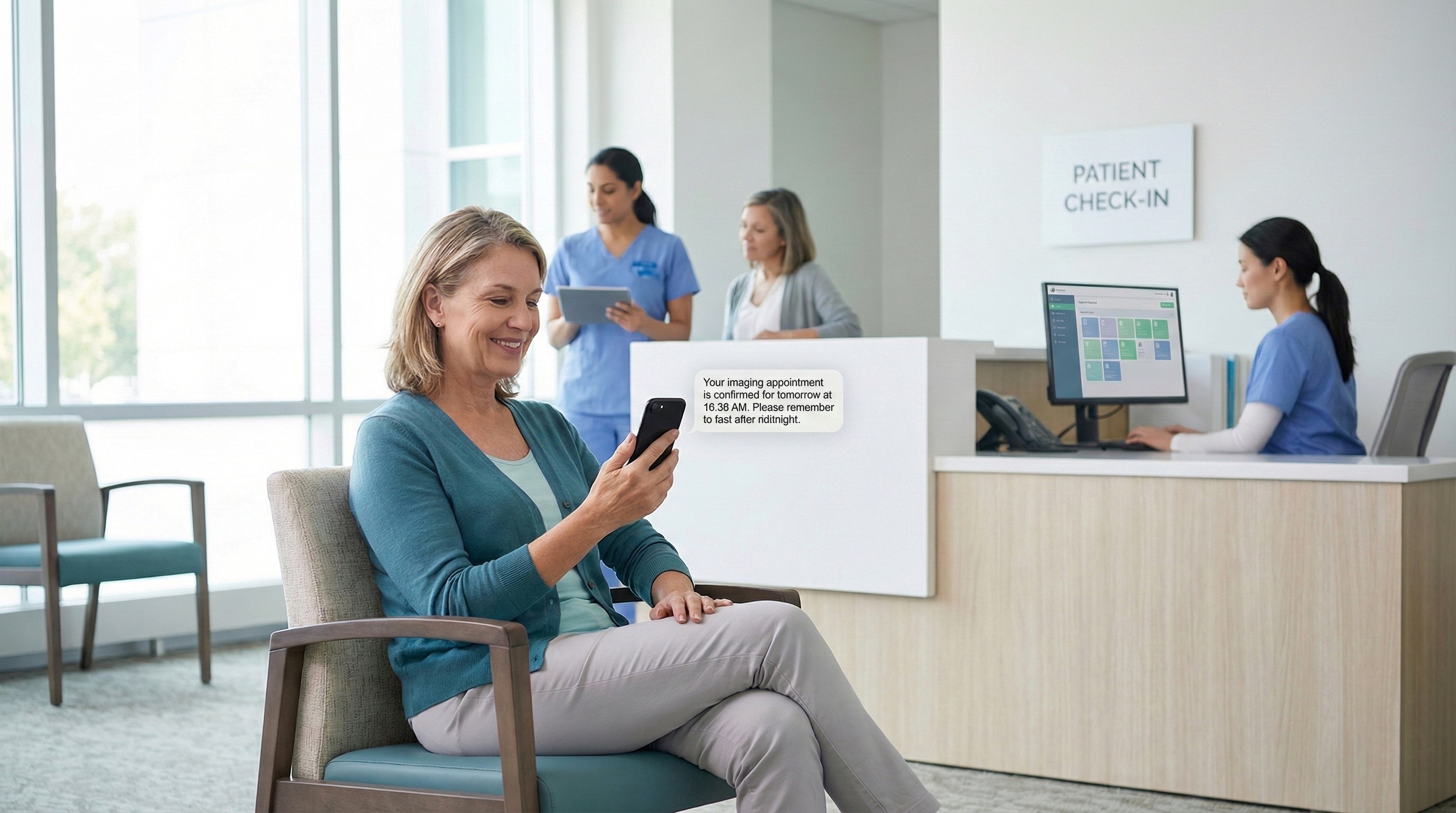
Automated reminders timed to imaging schedules improve patient readiness without overwhelming patients. Prep steps are reinforced at the right moments—early for general guidance and closer to the appointment for critical details like fasting or arrival instructions.
Prep messaging can also be tailored by modality, ensuring relevance. Patients receive instructions specific to their exam—MRI, CT, cardiac, or ultrasound—reducing incomplete exams and cutting down on last-minute prep questions.
Standardized templates support consistency across locations. With templated messaging:
Instructions remain clear and accurate across all sites
Messages are complete and professionally written without overwhelming patients
Patients know what to expect regardless of location, building trust in the network
Automation also strengthens recall workflows. Patients due for follow-up imaging receive reminders without manual tracking, helping centers maintain steady volume and avoid scheduling gaps. Automated recalls support timely follow-ups across mammography, CT surveillance, and cardiac imaging.
By automating patient notifications Medstreaming already manages, communication becomes part of the workflow. Staff spend less time reacting to issues, operations run more predictably, and teams can focus on higher-value patient interactions.
Effective automation depends on how well systems work together. Medstreaming and Curogram align scheduling data with communication workflows, reducing manual steps for staff and keeping outreach connected to daily operations.
Messages are automatically routed based on exam type, ensuring patients receive exam-specific instructions without staff intervention. This reduces follow-up questions and improves preparation accuracy across all imaging modalities.
Messages can be targeted to a single location or multiple facilities depending on the scope of an issue. This is especially useful for localized equipment delays, weather closures, or site-specific maintenance that doesn’t impact the entire network.
Messages are triggered based on appointment timing and urgency, reaching patients when information is most useful—not too early to be forgotten or too late to act—maximizing the impact of each communication.
Communication relies on existing Medstreaming data entered during scheduling, eliminating duplicate data entry. This saves time, reduces errors, and removes the burden of managing multiple systems with overlapping information.

Mass texting supports imaging scenarios where speed, clarity, and consistency matter most. Across radiology and cardiovascular services, automation helps teams manage high volumes, frequent schedule changes, and complex prep requirements without increasing staff burden.
Pre-appointment reminders for MRI and CT exams deliver exam-specific instructions patients can review as needed. MRI messages may include metal screening, pacemaker questions, and claustrophobia guidance, while CT reminders focus on fasting, hydration, and contrast protocols.
For cardiac MRI and stress testing, messages can also include medication timing and caffeine restrictions. Written instructions reduce anxiety, improve preparation accuracy, and lower inbound call volume, resulting in fewer delays and cancellations.
When imaging equipment goes offline due to maintenance or technical issues, rapid communication is critical. Mass texting enables staff to notify all affected patients immediately, explain the situation, and outline next steps before patients begin traveling.
Messages can include rescheduling options or redirection to another location within the network. This proactive approach reduces frustration, prevents wasted travel, and allows staff to focus on resolution rather than phone calls.
Same-day schedule changes are common in busy imaging centers. Mass texting allows teams to notify patients of delays or time shifts before arrival, reducing waiting room congestion.
When appointments must move to another day, messages can offer alternative time slots and allow patients to respond directly. This reduces phone tag, lowers no-shows, and helps recover appointments that might otherwise be lost.
Weather events, power outages, or facility incidents can force sudden closures. Mass texting enables immediate broadcast of closure notices, along with clear instructions for rescheduling and next steps.
Follow-up messages keep patients informed as conditions change, protecting safety and reducing the communication burden on staff during high-stress situations.
Screening events, mobile units, and peak-volume days require careful coordination. Mass texting helps manage patient flow by sending arrival, parking, and entrance instructions that reduce confusion at check-in.
Proactive updates for later appointments help patients adjust arrival times, supporting steady throughput and smoother operations.
Automated recall messages remind patients when follow-up imaging is due, such as annual mammograms or surveillance CTs. This supports continuity of care while maintaining steady volume and reducing scheduling gaps.
Each use case reduces manual effort, improves patient readiness, and helps imaging teams maintain control during busy or unpredictable days—without adding complexity to staff workflows.
Curogram delivers HIPAA-compliant mass texting built for healthcare workflows, meeting the privacy and security standards imaging centers require. Messages are encrypted, auditable, and reliable, protecting patient information while supporting compliance with minimal staff effort.
The platform keeps communication clear and professional without adding complexity. Staff can send messages with confidence and minimal training, while security runs quietly in the background.
Integrated with Medstreaming, Curogram automates patient notifications already tied to scheduling workflows. Prep reminders, recall alerts, and schedule changes are delivered at the right time without manual intervention, reducing staff workload and keeping operations on track.
Standardized templates ensure consistent, high-quality messaging across all locations, with exam-specific instructions that build patient trust. Templates can be customized by site while maintaining brand consistency.
As imaging networks grow, the Medstreaming–Curogram integration scales effortlessly—maintaining communication quality across higher volumes, seasonal surges, and new locations without increasing staffing needs.
Clear, timely communication is critical to smooth imaging operations and a strong patient experience. As imaging centers grow across modalities and locations, manual outreach can no longer keep pace. Missed or delayed messages quickly disrupt schedules, increase staff workload, and affect patient readiness.
Mass texting offers a scalable solution. Prep reminders, recall alerts, and urgent schedule updates reach patients quickly and clearly, giving them time to prepare and adjust plans before issues arise.
Automating patient notifications Medstreaming already manages reduces workload across teams. Front desk staff handle fewer repetitive calls, technologists see better-prepared patients, and schedulers spend more time optimizing future appointments. Efficiency improves without adding headcount.
Patients benefit from consistent communication they can revisit at any time, arriving informed and confident. Fewer exams are delayed or canceled, improving both satisfaction and operational performance.
For multi-location networks, standardized communication ensures a reliable experience at every site and supports sustainable growth.
By integrating Medstreaming with Curogram, imaging centers move from reactive outreach to proactive communication that runs in the background—creating more predictable operations, higher patient satisfaction, and stronger long-term results.
Ready to see the difference? Book a demo with Curogram to learn how HIPAA-compliant mass texting integrates with Medstreaming to streamline imaging workflows.
Mass texting automates routine patient communication such as appointment confirmations, prep instructions, and schedule updates using Medstreaming data, reducing the need for manual phone calls. This leads to fewer callbacks, shorter phone queues, and better-prepared patients who arrive on time with completed prep. Because messages are written and easy to reference, patients have fewer questions, and staff can focus on higher-value tasks instead of repetitive outreach.
Automation connects communication directly to existing Medstreaming scheduling data, eliminating duplicate entry and reducing errors. In high-volume imaging environments, manual tracking of reminders, recalls, and disruptions is unsustainable and unreliable. Automated workflows ensure every patient receives the right message at the right time while standardizing communication quality across staff, modalities, and locations.
Automated recall alerts notify patients when they’re due for follow-up or screening exams based on imaging history, preventing missed care and lost volume. By prompting patients to schedule exams at recommended intervals, recalls support continuity of care while creating predictable, recurring appointment demand. This is especially valuable for preventive and surveillance imaging, which represents a significant portion of imaging revenue.
Mass texting allows imaging centers to notify all affected patients immediately when schedules change due to equipment issues, delays, or closures. Patients receive updates before leaving home, reducing frustration, unnecessary travel, and front desk congestion. Proactive communication helps schedules recover faster and creates a calmer environment for both staff and patients.
Patients prefer text messages because they’re fast, convenient, and non-disruptive. Texts can be read anytime, referenced multiple times, and eliminate phone tag, making them ideal for appointment details and prep instructions. With extremely high open rates and alignment with everyday communication habits, texting ensures important information reaches patients in a way that respects their time and schedules.
💡 Patient communication Medstreaming workflows often struggle when imaging centers rely on phone calls and manual follow-ups. Radiology texting...
💡 Mass texting in Veradigm helps imaging centers reach thousands of patients quickly while staying HIPAA-compliant. This communication tool...
💡 GE Centricity practices use HIPAA-compliant texting to solve radiology workflow problems. Instead of managing hundreds of daily phone calls,...