11 min read
Mobile Intake Forms for SmartCare EHR: The Client Experience
Mira Gwehn Revilla
:
June 19, 2026
Yes. With a platform like Curogram, behavioral health clients get intake forms by text and finish them on their phone before the first session. No app, no portal login, no paper.
Here is what that looks like:
- A text link opens a mobile-friendly form right in the phone browser.
- Clients answer at home, in private, at their own pace.
- Each answer saves as they go, so nothing gets lost.
- Forms stay HIPAA-compliant from the first tap to final submit.
- Staff skip retyping every answer into SmartCare EHR.
For many people, saying yes to therapy takes real courage. They weigh the choice for weeks. Then they finally book that first visit.
So the last thing they need is a wall of paperwork. Yet that is often what waits for them. A clipboard, a pen, and a thick packet of forms.
Behavioral health intake is heavy by design. Forms ask about trauma, family history, drug use, and money. A new client may face 19 pages of it. They fill it out in a busy waiting room, with strangers nearby.
Many clinics ask clients to arrive 30 minutes early just for this. For someone already anxious, that half hour feels long. Some freeze. Some walk out. Some never come back at all.
This is where the client experience starts to break down. The forms are not really the problem. The place and the timing are.
There is a kinder way to do this. Clients can get their intake forms by text instead. They tap a link, and a mobile form opens on their phone. They answer at home, on the couch, at their own pace.
This is the heart of a strong SmartCare EHR behavioral health intake forms mobile client experience. SmartCare EHR holds the clinical records. A platform like Curogram carries the forms to the client by text. The two tools work side by side.
In this article, we look at intake through the client's eyes. First, we walk through the old paper process and how it feels. Then we show what changes when forms arrive by text. You will see why this small shift can decide whether a client returns.
The goal is simple. Make the first step easier, so more people take it.
The Villain: The Paper Mountain from the Client's Perspective
Most clinics see intake as a back-office task. Clients see it very differently. For them, the paper packet is the first thing the practice ever hands them. It sets the tone for everything that follows.
Picture the size of that packet. Nineteen pages is common in behavioral health. There are consent forms, history forms, screening tools, and billing pages. Each one asks for something personal. Together, they form a paper mountain.
The Early Arrival Rule
Many practices ask clients to come 30 minutes ahead of time. The reason is simple: staff need those forms done before the session. But that rule lands hard on the person filling them out.
A first visit is already stressful. The client may be nervous, tired, or close to tears. Asking them to sit and write for half an hour adds weight to a heavy moment. Some leave the waiting room before they are even called.
The packet itself can be a wall, not a door. Many behavioral health clients live with conditions that make long forms tough.
A person with serious mental illness may struggle to focus. Someone with ADHD may lose their place after page three. A client in active substance use may not be able to read 19 pages at all.
These are not edge cases. They are the everyday population that behavioral health practices serve. A 19-page packet quietly screens out the very people who need care most. That is the opposite of intake barrier reduction.
Mailing Forms Ahead of Time Does Not Fix It
Some clients do not have a stable address. People experiencing homelessness may have no mailbox to receive a packet. A letter sent home assumes a "home" that is not always there.
Then there is the clock. Say a client runs 15 minutes late, which is common when anxiety is high. They still have a full packet to finish. Now the front desk faces a hard choice.
They can shorten the session to make up the time. They can push the client to a later slot. Or they can reschedule the visit for another day. None of these feels good to the client.
And here is the quiet damage. When a first session gets cut short or moved, the client hears a message. The message is, "This was harder than it should have been."
For someone who almost did not show up, that message can end care before it begins. Avoidance gets reinforced.
The Cost Does Not Stop with the Client
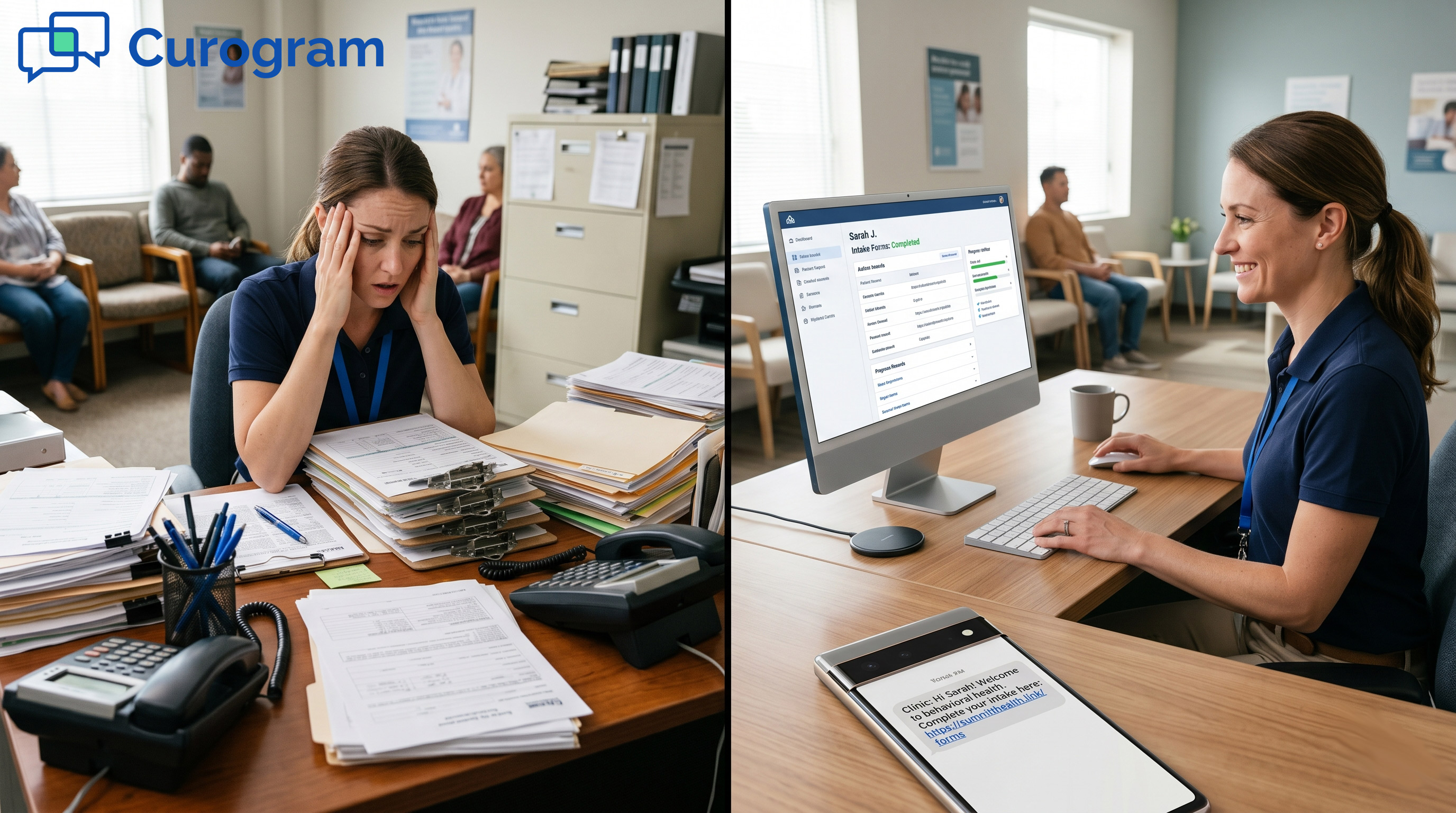
Staff carry the weight too. Once the packet is done, someone has to type every answer into SmartCare EHR by hand. On a busy intake day, that is hours of work.
Hand-typing also breeds mistakes. A wrong birthdate, a missed allergy, a misread phone number — these small errors do not stay small. They flow into clinical notes, billing claims, and privacy records. One typo can follow a client for months.
So the paper mountain hurts twice. It makes the client's first step harder. It makes the staff's job slower and riskier. Both sides lose, and no one really wins.
The truth is that none of this protects care quality. The clinical work happens in the session, not in the waiting room. The paperwork is just a gate in front of the help. When the gate is too tall, people turn around.
This is the real problem to solve. Not the forms themselves, but how and when clients face them. Change that, and the whole first visit changes with it. The next section shows how.
The Guide: The Intake Accelerator
The fix is not to delete the forms. The clinic still needs that data. The fix is to change where, when, and how clients fill them out. This is where Curogram acts as the Intake Accelerator.
Curogram is a HIPAA-compliant communication platform. It replaces the 19-page paper packet with secure digital forms. Those forms go out by text before the first appointment.
Clients complete them early, and staff skip the manual data entry. The result is a smoother SmartCare EHR behavioral health intake forms mobile client experience for everyone.
The core tool here is Mobile Intake Forms. A client gets a simple text message a day or two before their visit. The text holds one link. They tap it, and a clean, mobile form opens in their phone browser. No app to install, no password to remember.
This is the whole patient intake text link experience in a nutshell. Tap, fill, submit. The form is built for a small screen, so it is easy to read and quick to move through. Clients answer in private, wherever they feel safe.
What Stays the Same?
Curogram does not replace SmartCare EHR. SmartCare EHR is still your clinical home. All notes, assessments, and treatment records live there, exactly as before.
Curogram simply handles the client-facing side. It carries the form out by text, collects the answers, and brings them back in clean form. Think of it as adding SmartCare EHR mobile intake for behavioral health teams, without touching your clinical system. The two tools complement each other.
That means front-desk staff stop retyping forms by hand. The data arrives ready to use. This kind of pre-appointment form completion cuts both the wait and the error rate. Staff get hours back, and clients get a faster check-in.
Why Does this Matter for Behavioral Health in Particular?
Because these populations face real hurdles that general medicine often does not. Take clients with serious mental illness.
A short, guided text form is far easier to face than a thick packet. Take people in substance use treatment. They can answer hard questions at home, not under the eyes of a full waiting room.
Court-mandated clients often arrive guarded and unsure. A text link met on their own phone feels less like a test. CCBHCs serve high volumes with tight intake rules. Digital forms help them move people through without a paper jam.
Some worry that texting makes care feel cold or distant. In practice, the opposite is true. A 19-page clipboard is what feels impersonal. It treats a scared person like a stack of forms to process.
Meeting clients on their phone meets them where they already are. They can pause, breathe, and pick the moment that feels right. They can sit with a hard question instead of rushing through it in public. That space is a gift, not a barrier.

Real Intake Barrier Reduction
You remove the early arrival rule. You remove the public waiting-room writing. You remove the mailbox problem. What is left is a path that more clients can actually walk.
And the timing changes everything for clinicians too. When forms come in before the visit, the provider can read them first. They walk into the session already knowing the basics. The first words can be about the person, not the paperwork.
So the Intake Accelerator does two jobs at once. It lowers the cost of starting care for the client. It raises the quality of that first session for the clinician. The next section shows what that feels like on the other side.
The Success: The Welcomed Client
Imagine the same first visit, but flipped. The client already finished their forms at home two nights ago. They walk in with nothing to carry and nothing to dread. The front desk simply says, "We're all set — come on back."
That small change reshapes the whole experience. Let's look at three ways it helps, with real examples from behavioral health care.
Less Fear at the First Session
A first session is an emotional moment. The client is deciding, often in real time, whether they can trust this place. Paperwork in that moment adds pressure at the worst time.
When intake is done in advance, that pressure is gone. The client filled out the hard parts at home, in a calm space. Maybe they paused on the trauma question and came back an hour later. That pause is not possible on a waiting-room clipboard.
Consider a client with panic disorder. A crowded waiting room can trigger symptoms before the session even starts. Cutting their wait from 30 minutes to two minutes lowers that spike. They reach the therapist's office steadier and more present.
Or consider someone returning to care after a relapse. Shame is already high. Asking them to write out their drug use in public can be the final straw. Doing it privately at home protects their dignity and keeps them in the door.
The first session is hard enough on its own. Removing the paperwork wall lets it be about healing, not forms.
More Forms Actually Get Finished
Paper packets have a quiet failure rate. People skip pages, miss a signature, or run out of time. Then staff chase down the gaps later, which delays care and billing.
Mobile forms close those gaps. The form can require key fields before moving on. It can flag a missing signature on the spot. So the version that comes back is more complete.
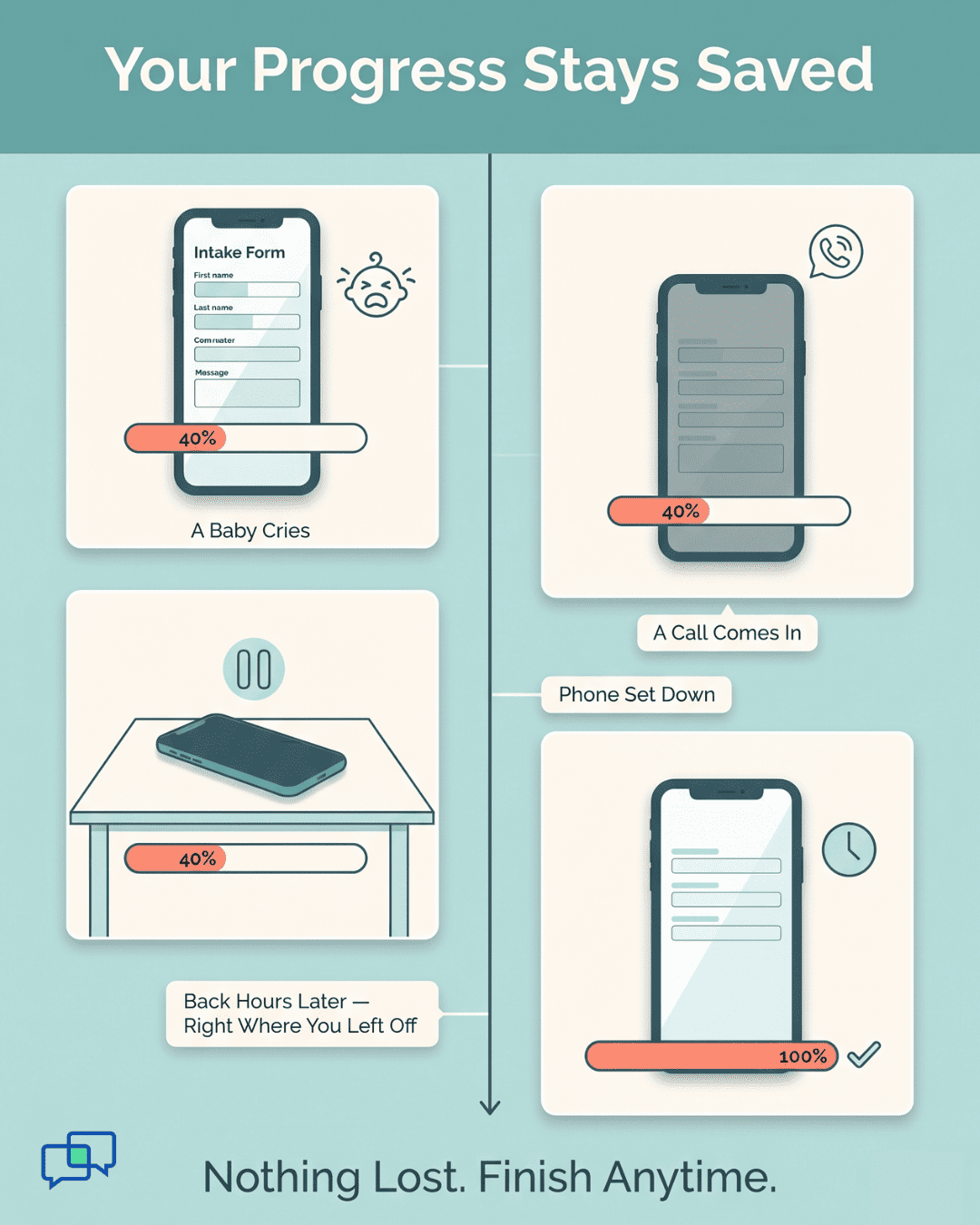
Auto-save is the real hero here. Each answer is stored as the client types it. If they get a phone call halfway through, nothing is lost. They tap the link again and pick up right where they stopped.
This matters most for clients with focus challenges. A person with ADHD may do three pages, take a break, and finish later. A parent may pause to handle a child, then return after bedtime. The form waits patiently for them. That flexibility lifts completion rates in a way paper never could.
Strong pre-appointment form completion also helps attendance. A client who has already invested 15 minutes is more likely to show up. They have, in a small way, already started care.
Forms that Meet Clients on Any Phone
The third win is reach. Behavioral health serves many people with limited tech access. They may not own a laptop or have home internet. But the vast majority carry a smartphone.
Mobile-first forms are built for exactly that reality. There is no app to download, which saves data and storage. There is no portal account to create, which removes a major drop-off point. A simple browser link works on almost any phone.
This is what digital forms accessibility really means. It is not just clean design. It is making sure the person with the oldest phone and the smallest data plan can still finish. That is a core need for the populations behavioral health practices serve.
Picture a client living in a shelter. They have no mailbox and no computer, but they do have a phone. A mailed packet never reaches them. A text link reaches them in seconds. The form meets them where they actually are.
A Quick Side-by-Side
Here is how the two paths compare from the client's seat:
|
Client moment |
Paper packet |
Forms by text |
|
Where they fill it out |
Busy waiting room |
Home, in private |
|
When they fill it out |
Rushed, 30 min early |
Days ahead, at own pace |
|
If interrupted |
Start over or lose work |
Auto-save holds their place |
|
Tech needed |
Pen and clipboard |
Any smartphone |
|
If they have no address |
Packet never arrives |
Text still reaches them |
|
Arrival feeling |
Anxious and rushed |
Welcomed and ready |
The right column is what most clients quietly wish for. Together, these wins create the kind of mobile client experience that behavioral health practices on SmartCare EHR want for their intake.

How Curogram Turns One Text Link Into a Complete Intake Packet
The magic of Curogram is how much it does behind one simple tap. The client only ever sees a text and a link. But under that link sits a full intake engine built for behavioral health.
It starts with the send. Curogram texts the form a day or two before the visit. You can set this to fire on its own when an appointment is booked. No staff member has to remember to do it.
The client taps the link and the Mobile Intake Forms open at once. The form is clean, short on each screen, and easy to read. It can hold consents, screening tools, history, and billing details. Every field is sized for a phone, not shrunk from a printout.
As the client answers, the form saves each entry. If they stop, they can return later with no lost work. Required fields make sure key items, like a signature or allergy, are not skipped. So the packet that comes back is both complete and correct.
Every step stays HIPAA-compliant. The link is secure, and the data is encrypted in transit and at rest. For substance use clients, the process respects 42 CFR Part 2 privacy rules. The client's information is as protected as anything shared in the office.
Then the data lands clean and ready for your team. Staff no longer retype 19 pages by hand into SmartCare EHR. They review, confirm, and move on. The errors that come from manual entry simply fade away.
The result is the calm, mobile-first patient intake text link experience clients deserve. One text, one tap, one finished packet — sent before they ever walk through the door.
Conclusion: Let Clients Complete Intake on Their Terms
The first session is hard enough. Filling out 19 pages of paperwork in a waiting room should not be the reason a client does not come back.
Think back to where we started. A nervous person finds the courage to book care. Then a paper mountain meets them at the door. That gate turns away the very people who need help most.
There is a better path, and it does not ask you to replace what works. SmartCare EHR stays your clinical backbone. It holds your notes, your assessments, and your records, just as it does today. Nothing about your clinical system has to change.
Curogram simply extends that system to the client's phone. It provides secure online forms and digital intake that reach the client where they already are. SmartCare EHR is built for your clinical data. Curogram is built for your clients' comfort.
Together, they make a practice that is both strong on care and easy to reach. The clinician walks in prepared. The client walks in welcomed. And the front desk stops drowning in hand-typed forms.
The change starts with one decision: end the paper intake process. You can see exactly how it works in your own setting. See how Curogram fits alongside SmartCare EHR for behavioral health organizations like yours.
Your clients took a brave first step by booking. The intake process should reward that step, not punish it. Meet them on their phone, on their terms, before they ever arrive.
Turn your paper mountain into one simple text link. Request a quick demo to see Curogram's secure digital intake in action for your practice.
Frequently Asked Questions
Every form Curogram sends is HIPAA-compliant, with encryption protecting answers during submission and storage. For substance use treatment, forms also follow 42 CFR Part 2 privacy rules. The data stays as protected as anything shared in person.
The form lives at a secure web link, not inside an app. Clients tap the text, and the form opens right in their phone browser. No app, no account, and no SmartCare portal login lowers the chance they give up early.
Auto-save holds every answer as they type. They can reopen the link and pick up where they stopped. If anything is still open at arrival, staff help with the rest in person, and the early work still saves real time.
Clients answer hard questions at home, in private, at their own pace. They skip the early arrival rule and the public waiting-room writing. They reach the session calmer and more present, instead of rushed and exposed.
Most clients own a smartphone, even without a computer or home internet. A simple browser link needs no app, no large download, and no account. This reach matters for people in shelters or other unstable housing.