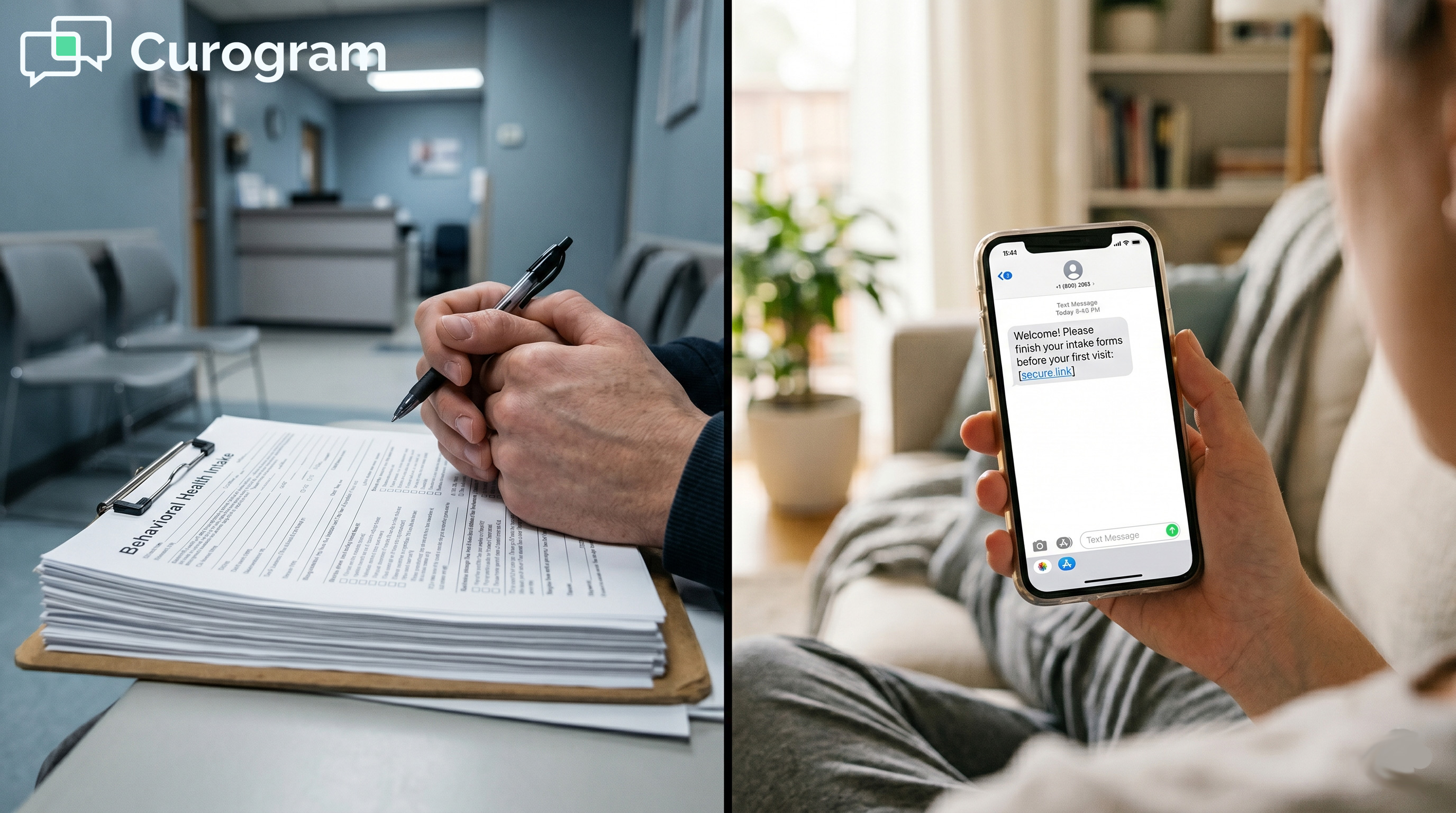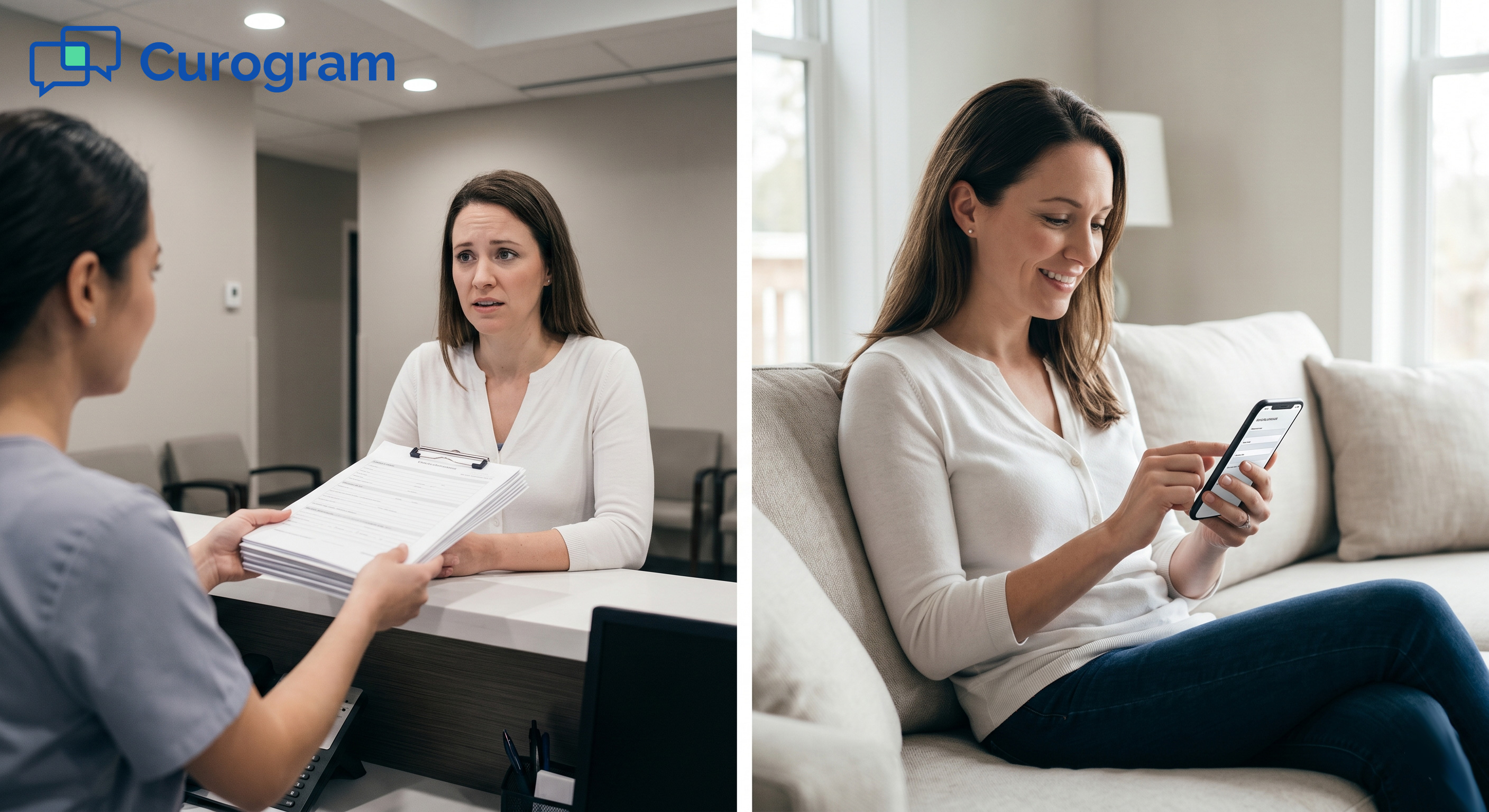
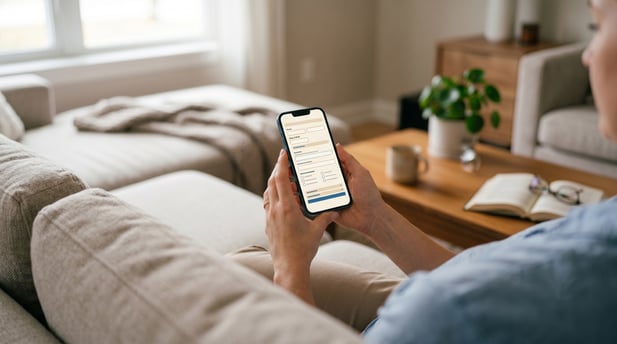
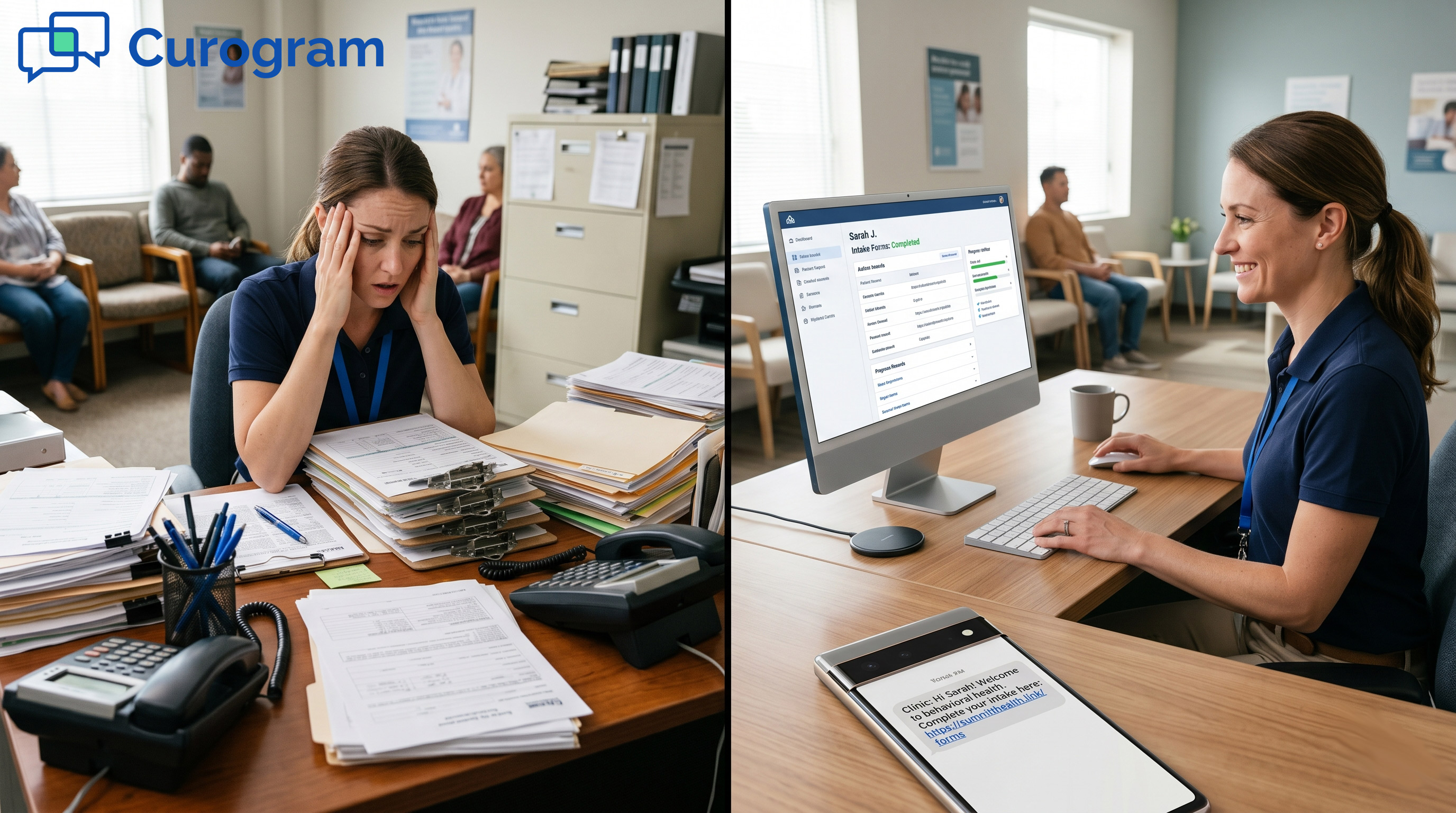
Curogram texts a secure link to each new client. They fill out consent forms, PHQ-9, GAD-7, AUDIT-C, and insurance details on their phone. There is no app, no login, and no paper packet.
Every form is HIPAA compliant, SOC 2 Type II certified, and meets 42 CFR Part 2 rules for substance use care. Clients finish before the first session starts. Staff skip the manual typing. The result is faster, cleaner intake for your practice.
The first therapy session is hard enough. Filling out forms should not be the reason a client never comes back.
Yet that is what happens in many practices. The clipboard becomes the first thing a nervous client meets.
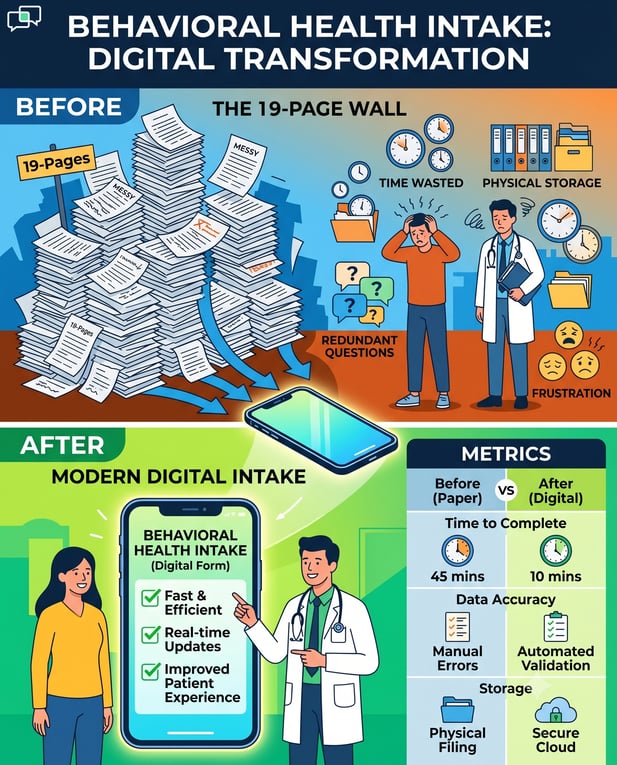
Behavioral health intake is heavy. A new client may face 15 to 19 pages of paper. There are consent forms, privacy notices, and clinical screens like the PHQ-9 and GAD-7. For someone already anxious, that stack feels like a wall.
And it is not only the client who feels the weight. Staff retype each answer into the system by hand.
The same data gets touched twice, once on paper and once on a keyboard. That slow, double work adds up across every new client.
So practices ask clients to arrive 15 to 20 minutes early. Some do. Many do not.
People with anxiety or a packed schedule often skip the visit instead, and the early-arrival rule quietly fuels first-session no-shows.
Here is the strange part. You may already run Proven EHR for its smart clinical and billing tools.
Proven handles your records with real skill. But it leaves the front door, intake, stuck on paper and pens.
This is the blind spot: sharp tools on the inside, a clipboard at the entrance. The fix does not mean replacing Proven EHR.
It means adding a digital layer that meets clients where they already are, on their phone.
The fix is closer than it looks. It does not require new software for your clinical work. It simply moves the paperwork off the clipboard and onto the phone.
That layer is Curogram. It sends secure online forms by text, before the visit. Clients tap, type, and submit from home or the bus.
This guide shows how paperless intake for your Proven EHR practice can work, step by step.
The Villain: The Blind Spot – AI-Powered Clinical Tools, Paper-Powered Intake
Every tool has a gap. For many Proven EHR practices, the gap is intake. The software shines once a client is in the system.
Getting them in is still a paper job. Let us look at why that hurts.
The Blind Spot
Proven EHR manages notes and billing well. Intake is where it goes quiet. A behavioral health packet often runs 15 to 19 pages. That includes consent forms, clinical screens, and insurance papers, and none of it gets easier on paper.
The Agitation
To handle the load, clients must show up early. The ask sounds small. It is not. A 20-minute wait with a clipboard raises stress for someone already on edge. Then staff retype every answer by hand, touching each field twice.
The Consequence
This double work costs more than time. Staff lose 15+ minutes per new client to manual entry, based on Curogram client data from clinical settings.
Retyping also breeds errors. A wrong digit can follow a client through their chart and their bill.
On busy days, the backlog grows fast. One peak morning can bury a small front desk. The table below shows the gap in plain terms.
|
Paper and Clipboard |
Curogram Digital Forms |
|
Filled in the waiting room |
Filled on the client's phone |
|
15 to 20 minute early arrival |
Done anytime before the session |
|
Staff retype by hand |
Answers flow in digitally |
|
Errors common from retyping |
Errors near zero |
|
High client stress |
Low client stress |
The Reality
Here is the truth. You picked Proven EHR for its clinical strength. And still, the client's first touch is a pen and a page.
The most human moment, the welcome, runs on the least modern tool you own.
That mismatch is the blind spot in plain sight. The goal is simple: eliminate paper intake in behavioral health for good. A digital layer can do exactly that, without touching your clinical records.

The Guide: Curogram, the Paperless Front Door
So how do you close the gap without ripping out Proven EHR?
You add a paperless front door. Curogram sends forms by text and brings them back clean. Here is how each piece works.
The Solution
The flow starts at scheduling. When staff book a new client, that event can trigger a form send.
The client gets a simple text with a secure link to their intake forms. One tap opens everything they need.
The Feature
The forms are built for a phone first. Big buttons. Easy typing. No squinting. Clients fill them out at their own pace, wherever they feel calm.
No App, No Login
There is nothing to download. The link opens right in the phone's browser, with no account and no password to forget. This is why so many practices text intake forms to therapy clients with little friction.
Auto-Save for Real Life
Life interrupts. A child calls. The bus arrives. Auto-save holds each answer, so no one starts over.
Clients can pause and return without losing a thing, which is mobile intake for Proven EHR behavioral health done right.
The Integration
Finished forms land back in Curogram's dashboard. Staff review them before the session begins. Clinical notes still live in Proven EHR, as always.
There is no data migration and no new workflow to learn, so Curogram sits beside Proven, not on top of it.
The Behavioral Health Fit
This is not a generic form tool. It is tuned for behavioral health. Consent under 42 CFR Part 2 for substance use care is handled with full care.
Screens like the PHQ-9, GAD-7, and AUDIT-C go digital, and state-specific consent rules are supported too.
These are HIPAA compliant digital forms, and Proven users get them without extra lift.
The same digital intake forms for Proven EHR behavioral health practices can flex by program, from psychiatry to therapy to MAT.
The Success: Clients Arrive Ready, Staff Focus on Care
What changes when the clipboard disappears? A lot, and fast. The wins show up for clients, staff, and the books. Here is what practices tend to see.
The Metric
The time savings are clear. Staff save 15+ minutes per new client once manual entry ends, based on Curogram client data from clinical settings.
Because clients type their own answers, transcription errors drop to near zero. The data arrives the way the client meant it.
|
Intake Win |
Result |
|
Time saved per new client |
15+ minutes |
|
Transcription errors |
Near zero |
|
No-show rates with texting and reminders |
53% below the industry average* |
*Curogram client data from clinical settings.
The Shift
Call it the prepared session. The client walks in with intake already done. No clipboard. No early arrival. The first real moment with your practice is the session itself, not a stack of forms.
That is a warmer welcome, and clients feel it. For someone who was anxious about coming at all, that small ease can make the difference. The visit starts with care, not paperwork.
The Outcome
The ripple effects matter most. When the early-arrival rule goes away, first-session no-shows fall.
Curogram client data from clinical settings shows no-show rates running well below the industry average once texting and reminders are in place.
Staff move from typing to caring. Records stay clean from the very first entry. Cleaner intake and fewer no-shows also protect revenue, since every kept session counts. The gain is quiet but real.
Conclusion: The First Session Is Hard Enough Without a Clipboard
Let us bring it back to the start. Proven EHR is built for your clinical records. It documents care with precision and handles billing with ease.
Curogram is built for the moment just before that, the welcome.
Think of it this way. Proven EHR is for your charts. Curogram is for your client's first impression. A 19-page paper packet is not the greeting your practice wants to give.
The blind spot is fixable. You do not need to replace your system or retrain your team. You add one digital layer that texts forms ahead of time, and the clipboard simply retires.
And the gains stack up. Clients arrive calm and ready. Staff stop retyping and start caring. Records stay clean from the first field, and no-shows fall when the early-arrival rule disappears.
Compliance does not get left behind either. The forms are HIPAA compliant and SOC 2 Type II certified.
They meet 42 CFR Part 2 rules for substance use care, and sensitive data stays protected in transit and at rest.
There is a human side too. For a client with anxiety, the phone feels safer than a crowded lobby.
They can pause, breathe, and finish at home. That small comfort can be the reason they show up at all.
There is a cost angle as well. Each missed first session is lost time and lost revenue. Each retyped form is a chance for error. Removing both is a steady boost for the practice.
Your staff feel it most. Hours once lost to data entry come back. That time can go to clients, to follow-ups, or simply to a calmer day, which tends to mean less burnout.
Proven EHR digital intake forms for behavioral health with text delivery are not native to the platform.
Curogram fills that gap, cleanly and securely. You keep Proven for what it does best, and you let Curogram handle the front door.
So here is the simple next step. Stop asking clients to start their care with a clipboard. Text secure forms before the first session instead.
Book a demo and see Curogram's behavioral health intake forms in action.
Frequently Asked Questions
Use a HIPAA compliant platform like Curogram that texts a secure form link to the client's phone. They open it in their browser, fill it out, and submit. No app, login, or paper packet is needed. The completed forms return to staff before the session starts.
Paper packets force clients to arrive 15 to 20 minutes early to fill them out. For someone with anxiety or a tight schedule, that extra step feels like a barrier. Many skip the visit instead of facing it. Removing the early-arrival rule takes that pressure away.
Curogram handles intake, while Proven EHR keeps managing clinical notes and billing. Completed forms sit in Curogram's dashboard for staff to review. There is no data migration and no new system to learn. The two tools work side by side.
When clients type their own answers, staff no longer retype them by hand. That removes the main source of transcription errors. The data arrives exactly as the client entered it. Clean intake then flows into both records and billing.
Curogram's forms are HIPAA compliant, SOC 2 Type II certified, and meet 42 CFR Part 2 consent rules for substance use care. Data is encrypted in transit and at rest. Nothing is stored on the client's device after they submit. Each program can also use its own consent set.