

8 min read

Mobile Intake for BH Clients | Curogram

Mobile Intake for BH Clients | Curogram
💡 Behavioral health clients can fill out intake forms on their phone before the first session. Platforms like Curogram treat behavioral health intake forms as a mobile client experience.

The client gets a text link. It opens a mobile form in the phone browser. There is no app to download and no portal login. Clients finish at home, at their own pace, before they walk in.

For someone anxious about a first therapy visit, this removes the waiting-room stress that drives no-shows. The forms stay HIPAA and 42 CFR Part 2 compliant, so consent is handled the right way.

Based on Curogram client data from clinical settings, no-show rates run 53% below the industry average. The result is simple. The first touchpoint becomes care, not a clipboard.

A first therapy session is hard to book. It is harder to show up for. The client has already weighed the fear, the cost, and the courage it takes. Then they reach the door and meet a clipboard.

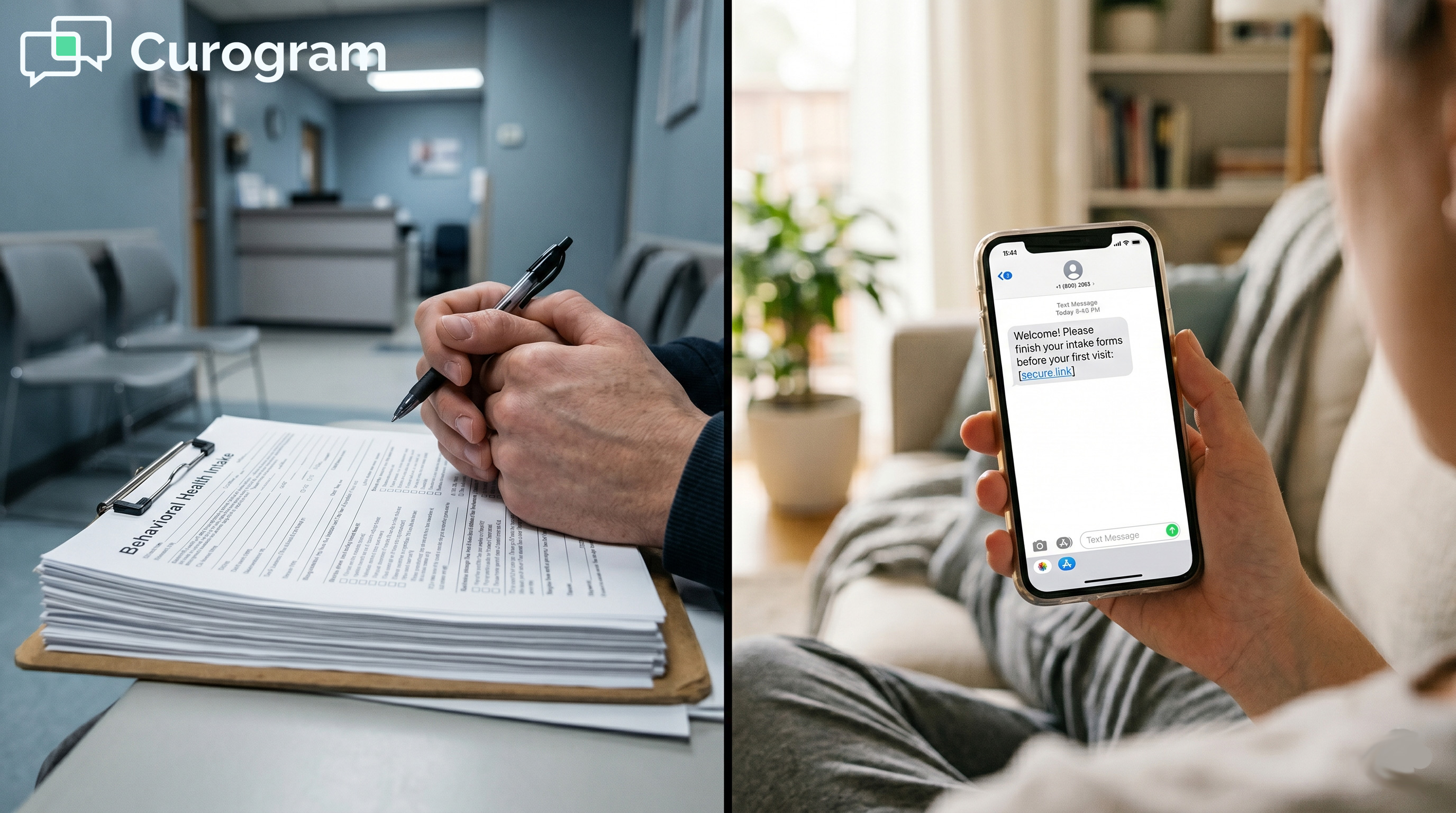
Nineteen pages wait on a hard chair. Consent forms. History questions. Insurance details. The pen feels heavy, and the room feels colder than they hoped.

Picture the moment from the chair. The lobby is quiet. A stranger hands over a thick packet. Care begins with a form, not a face.

This is the waiting-room wall. It greets people at their most fragile moment. For a client with anxiety or active substance use, a thick packet can feel like too much.

Some rush. Some freeze. Some never come back.

Staff did not plan it this way. The paper-and-clipboard habit is simply old. Proven EHR handles the clinical record well, yet it does not fix intake at the front door. So the burden lands on the client, right when they can carry the least.

There is a kinder path. The behavioral health intake forms mobile client experience flips the script.

Instead of paper on arrival, the client gets a text a few days early. They tap a link and answer in their own space.

No app. No login. No early arrival. Just a calm, private moment on the phone they already own. By the time they walk in, the forms are done and the session can start.

This article looks at intake through the client's eyes. You will see what a text-first welcome feels like.

You will see why it lowers first-session anxiety. And you will see how one small change keeps people in care.

The first session should start with a person, not paperwork. Let the clipboard go. 

The Villain: The Waiting Room Wall, Paper Packets That Block the Door to Care

The hardest part of care is often the start. The waiting-room wall stands right there. It is the stack of paper that meets clients before their first session begins. Let us look at why it pushes people away.

The Packet That Overwhelms

Paper intake was built for staff filing, not for nervous first-timers. The weight of it lands on the client. Two parts make it hard to face.

Nineteen Pages on a Hard Chair

One prospect counted 19 pages of intake forms per new client. That is consent, history, screening tools, and insurance, all on paper. For a calm person, it is tedious. For an anxious one, it is a wall.

Add ADHD or the fog of active substance use. The packet stops being paperwork. It becomes a reason to give up. The pen feels heavy before the first question.

Each page asks for focus the client may not have that day. Consent language is dense. Screening tools probe painful ground. The form wants calm at the exact moment calm is hardest.

The Early-Arrival Trap

Most practices ask clients to arrive 20 minutes early for forms. That rule sounds small. It is not, for someone who already dreads the visit.

Traffic, nerves, or one missed bus can break the plan. Arrive late, and the session gets cut short or moved. The first try at care ends in a reschedule.

Many clients read the rule as one more hoop. A few decide the visit is not worth the hassle. The hoop, not the therapy, makes the call for them.

When the First Step Becomes the Last

Paper intake fills the last quiet minutes before therapy with stress. The client sits, sorts pages, and second-guesses the choice to come. That is the opposite of calm preparation.

Some clients skip the early arrival on purpose. They cannot face the lobby and the clipboard at once. So they do not show, and the practice loses them before treatment starts.

The cost is quiet but real. A booked slot sits empty. A person who reached out gets no help. Both the client and the practice lose.

A packet also sends a message. It says the office comes first and the person second. For someone testing their trust, that message stings.

From the paperless intake client perspective, mental health visits deserve a softer start. The first sign of a practice should not be a clipboard and a pen.

Text intake forms and the therapy client experience they create can change that first moment. The villain here is not the staff. It is the old habit they inherited.


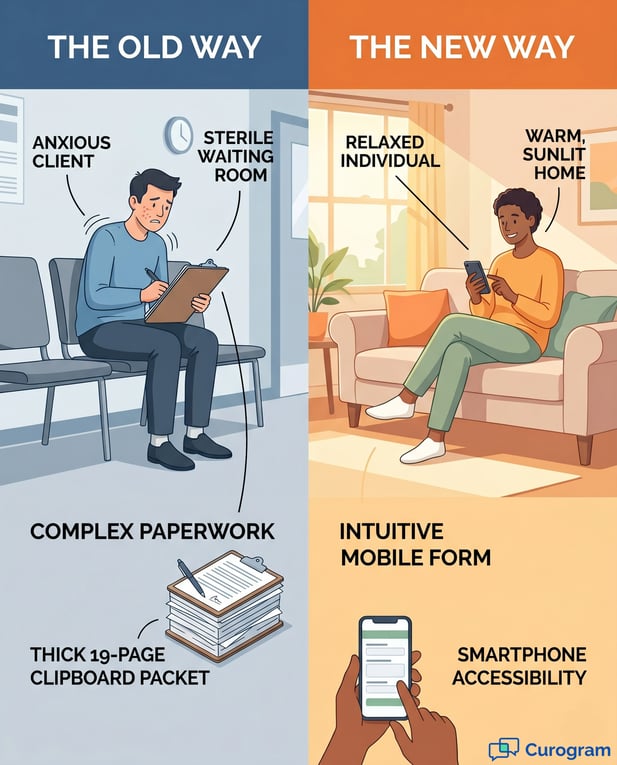
Infographic comparing stressful paper intake at a clinic with relaxed mobile intake at home

The Guide: Curogram, Intake on the Client's Terms

So what does a kinder front door look like? It starts before the client arrives.

Curogram gives a behavioral health (BH) practice a paperless front door. Clients answer on their own phone, and the clipboard never enters the story.

A Text Link, Not a Clipboard

The whole flow begins with one message. It is built to feel easy, even for someone who is on edge.

The First Message

The client gets a simple text: “Welcome to [Practice]. Please finish your intake forms before your first visit: [secure link].”

One tap opens the form. It loads in the phone's normal browser.

There is no app to download. There is no portal to join. There is no new password to forget. The link works on any smartphone, which is the point.

That low bar matters in behavioral health. A client in crisis has no patience for setup. One tap is the whole ask.

Built for a Real Phone

The form is made for thumbs, not desktops. Fields are large. Pages scroll. Answers save on their own as the client moves.

This is what mobile-friendly intake forms for a BH practice should feel like. The client can pause, take a breath, and pick up later. A stalled answer does not erase the work already done.

Slow networks do not break the flow either. The form is light, so it loads on a weak signal. A client on a bus can still finish in minutes.

Intake That Respects the Client

Mobile intake forms for behavioral health clients let people answer in a safe place. Home is calmer than a lobby. A bus seat beats a waiting-room chair for many.

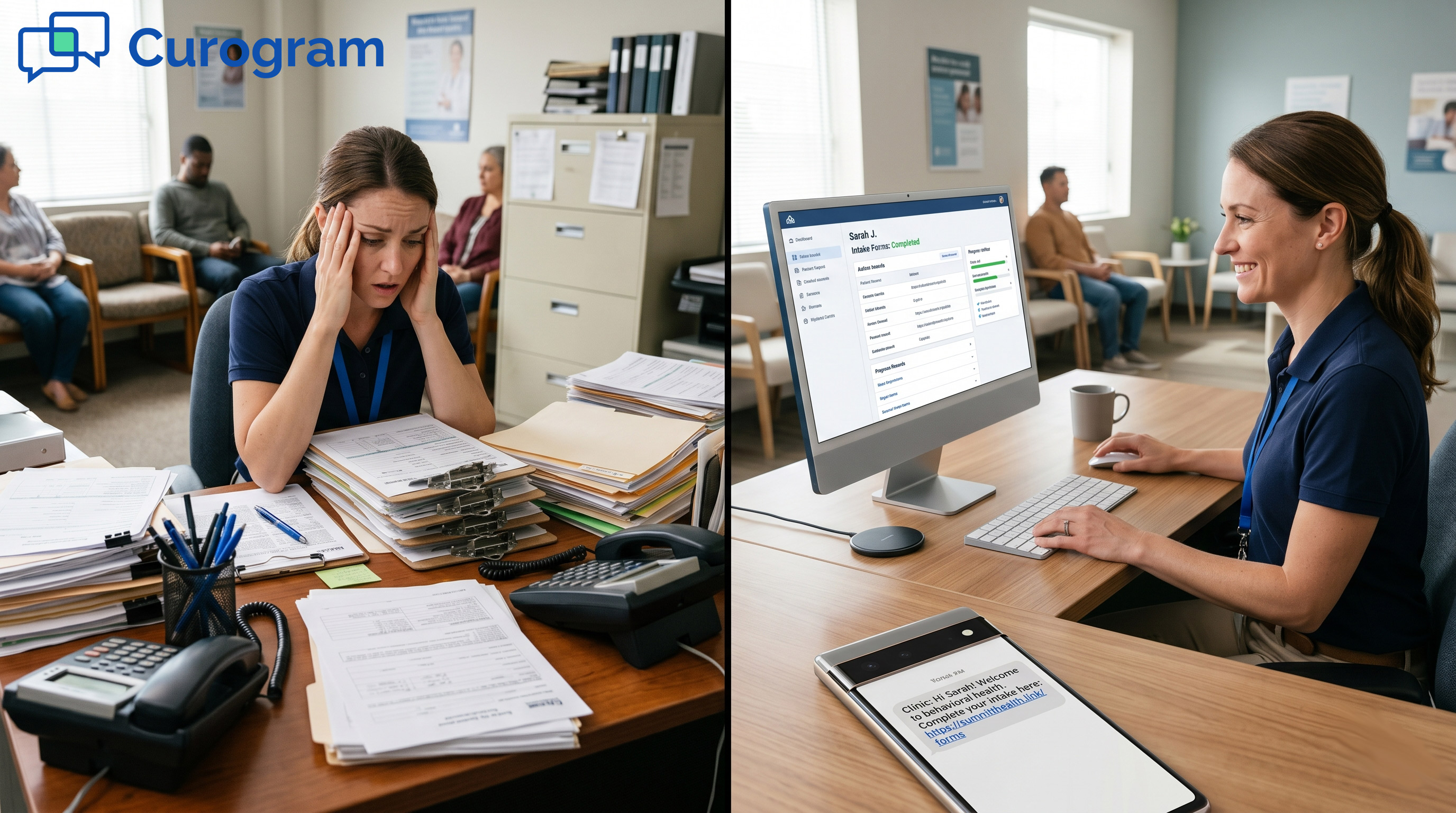
On arrival, the client walks straight to the session. No clipboard waits. The finished forms already sit in the staff dashboard, ready to review.

Privacy is part of the comfort. No one nearby can read the screen. Sensitive answers stay between the client and the chart. That safety is hard to feel in a crowded lobby.

Staff feel the change too. They stop chasing pens and loose pages. They greet each client by name instead of pointing to a chair.

Timing helps as well. The text arrives days ahead, not at the door. There is room to read, reflect, and answer without a clock running.

The fit with behavioral health is real. A private, familiar space lowers the guard that a public lobby raises. Because forms arrive by text, the channel is the same one clients use to chat each day.

Curogram does not replace Proven EHR. It simply opens the paperless front door that Proven leaves shut. 


The Success: Clients Arrive Ready for Their Session, Not Paperwork

Move intake home, and the whole first visit shifts. The client arrives calm and prepared. Staff start with a person, not a pile of forms. Here is what that change looks like in practice.

From Clipboard to Comfort

The shift is small on paper but large in feeling. It shows up in two clear ways.

A Calmer First Visit

Intake done at home means the lobby loses its sting. The client is not sorting pages while nerves climb. They walk in ready to talk, which is the whole goal.

Auto-save helps too. A client can stop, breathe, and return without losing answers. Higher completion rates follow when forms bend to real life.

The therapist gains time as well. The chart is ready before the door opens. The first minutes go to listening, not logistics.

Fewer No-Shows at the Start

The early-arrival rule was a quiet cause of first-session no-shows. Remove it, and a common reason to skip the visit disappears. The client keeps the session they worked hard to book.

Based on Curogram client data from clinical settings, no-show rates run 53% below the industry average.

Confirmation rates top 75% across active clients. Each kept slot is care delivered and revenue saved.

Confirmed sessions also steady the schedule. Fewer gaps mean fewer wasted hours. The team can plan the day with more trust.

Paper intake vs. mobile intake, at a glance:

The Old Way (Paper Packet)

The New Way (Mobile Intake)

19 pages on a clipboard

The same forms on the phone

Filled out in a waiting-room chair

Filled out at home, at the client's pace

Arrive 20 minutes early

Walk straight to the session

Staff re-key data by hand

Answers flow to the dashboard

First feeling: stress

First feeling: calm


A Better Digital Intake Experience for Behavioral Health

The digital intake experience for behavioral health changes the first touchpoint for good. The session becomes the first real moment with the practice, not 19 pages on a chair.

Direct digital submission also removes transcription errors. Nothing is re-keyed by hand from a paper form. What the client types is what the chart shows.

Fewer errors also means safer care. A wrong allergy or dose never gets typed in. The record reflects the client, word for word.

The therapeutic relationship starts on the right foot. Care leads, and admin fades into the background. For a field built on trust, that first impression matters more than most.

Clients notice the difference, even if they cannot name it. The visit simply felt easier from the first text. That ease is part of what brings them back for the second session.

A patient talking to a therapist in a comfortable environment

ConclusionThe First Session Should Start with Care, Not a Clipboard

The front door sets the tone for all that follows. A clipboard says wait and work. A text says we are ready for you. One small change shapes the whole first visit.

Move intake to the phone, and the lobby stops being a hurdle. Clients finish forms in their own space, on their own clock. The barrier that drives first-session no-shows quietly disappears.

The change asks little of the client. It asks little of the staff. Yet it reshapes the riskiest moment in care, the very first one.

This is the paperless intake idea seen from the client's chair. Mental health visits begin with calm, not a stack of paper.

The phone in a pocket becomes the gentlest tool in the room. Fear has less room to grow when the first task feels easy.

Proven EHR is built for your clinical records. Curogram is built for your client's first impression. The two are not rivals; they handle different jobs.

Proven holds the chart and billing, while Curogram opens the paperless front door it leaves shut.

The fix is small, and the payoff is human. Based on Curogram client data from clinical settings, no-show rates run 53% below the industry average.

Each kept slot is one more client who stayed in care. That is the real win, not just the saved minutes.

So give your clients a warmer welcome. Text their intake forms before they reach the door. A link is a kinder hello than a clipboard and a pen. The first message can set the tone for the whole relationship.

Think of the clients who almost did not come. A softer start may be what tips them toward staying. That is care that begins before the session does.

Small front-door choices add up over a year. Each kept first visit is a story that continued. The clipboard never wrote stories like that.

The choice is not Curogram or Proven EHR. It is both, each doing what it does best. Clinical depth from one, a warm welcome from the other.

A first session carries a lot of weight. It can decide whether someone returns at all. Make that moment about them, not a stack of pages.

Go paperless and watch Curogram's behavioral health intake forms in action. Book a demo and find out if it fits your program.


Frequently Asked Questions

How do behavioral health clients fill out intake forms on their phone?

The client gets a secure text link before the first session. One tap opens a mobile form in the phone's browser. They answer at home, at their own pace, with auto-save along the way. No app, no login, and no paper packet are needed.

Why does mobile intake lower first-session anxiety?

A waiting-room clipboard adds stress at an already tense moment. Filling out forms at home keeps the client in a calm, private space. The lobby stops being a test to pass before care begins. So clients arrive ready to talk, not rattled by paperwork.

How is client data kept safe when forms are done on a phone?

All form data is encrypted in transit and at rest. The platform is HIPAA compliant, SOC 2 Type II certified, and 42 CFR Part 2 compliant for SUD consent. No data stays on the client's device after they submit. Security holds whether the client is on home Wi-Fi or mobile data.

How do clients without a smartphone complete intake?

They can fill out forms on a practice tablet when they arrive. Paper forms remain a simple backup for anyone who needs one. Most behavioral health clients do carry a smartphone today. The practice keeps full flexibility for the few exceptions.

Why is a text link a better first touchpoint than a paper packet?

A text meets clients on the device they already use all day. It signals that the practice is ready and thinking ahead. A 19-page packet, by contrast, greets people at their most fragile moment. The warmer hello can be the reason a client comes back.


Digital Intake Forms for Proven EHR | Curogram

Digital Intake Forms for Proven EHR | Curogram

💡 Proven EHR digital intake forms for behavioral health with text delivery are not built into the platform itself. Proven EHR is strong at clinical...

Read More
Automate Intake Workflow for Proven EHR | Curogram

Automate Intake Workflow for Proven EHR | Curogram

💡 Proven EHR intake form automation for staff workflow starts with secure online forms that fire off the moment a new client books.Curogram texts...

Read More
TherapyNotes Online Intake Forms: Send Clients Secure Forms via Text

TherapyNotes Online Intake Forms: Send Clients Secure Forms via Text

💡 TherapyNotes secure online intake forms behavioral health practices use are often still paper-based or stuck inside a portal login. The result is...

Read More