6 min read

Automated Reminders for Proven EHR Behavioral Health Practices

Automated Reminders for Proven EHR Behavioral Health Practices
💡 Proven EHR automated appointment reminders behavioral health SMS are not built into the platform. Proven's AI builds smart schedules, yet it cannot make clients show up. That gap matters. No-show rates in behavioral health run high, from 20% to 50%, draining revenue every month.

Curogram closes the gap. It adds automated 2-way SMS reminders. Clients confirm, cancel, or reschedule with one reply. No phone tag. No app to download.
Based on Curogram client data from clinical settings, automated reminders cut no-show rates by 53% below the industry average. One clinic dropped from 14.2% to 4.91% in three months.

Every reminder stays HIPAA compliant, SOC 2 Type II certified, and 42 CFR Part 2 ready for SUD care. Messages can hide the treatment type to protect privacy. Proven sets the schedule. Curogram helps fill it.

Picture your front desk at 9 a.m. The phone is already glued to someone's ear. Staff is calling client after client to confirm today's sessions. Most calls go straight to voicemail.

This is the daily grind in many behavioral health practices. The team makes 40 to 60 confirmation calls a day. Clients rarely pick up unknown numbers. The chairs that should be full sit empty instead.

Proven EHR helps with part of this problem. Its AI builds smart, efficient schedules for every clinician. That is real value. But the schedule is only half the battle.

Here is the catch. Proven EHR automated appointment reminders behavioral health SMS do not exist inside the platform.

Proven plans the calendar, then stops at the front door. There is no built-in way to nudge clients or confirm they will come.

That blind spot is costly. No-show rates in behavioral health often run from 20% to 50%. For a mid-size practice, that can mean tens of thousands in lost revenue each month.

Worse, a missed session is not just money. It can mean a relapse, a crisis, or a break in care.

So, how do you fix it without ripping out Proven EHR? You add the missing layer. The fix sits beside Proven EHR and asks little of your team.

Automated reminders for a Proven EHR behavioral health practice run quietly in the background. Clients get a text, reply once, and the chair stays full.

This guide breaks down the problem and the fix. You will see why calls fail and how texting changes things. You will also see what real results look like. We will keep it simple and practical.

The goal stays steady. Fewer empty chairs, less phone tag, and more time for client care. Let us start with the blind spot itself.

The Villain: The Blind Spot

Proven EHR is strong at planning. Its AI shapes each day, so clinicians stay busy. But planning a session and filling it are two different jobs. This is where many practices hit a wall.

The Confirmation Grind

Most teams confirm sessions by hand. Staff dial 40 to 60 clients a day. They leave voicemails, wait, then dial again. Few people answer a number they do not know.

The loop repeats all morning. Call, voicemail, no callback, empty chair. This grind eats hours that could go to client care. It also wears your team down fast.

Trying to reduce no-shows in a Proven EHR practice with calls alone rarely works. The tool was never built for outreach.

Why an Empty Chair Costs So Much

Each missed session is income you cannot bill. The math adds up quickly. Picture a practice with 12 clinicians. Each sees about 18 clients a week at $120 a session.

At a 25% no-show rate, that is roughly $64,800 in lost revenue every month. Behavioral health margins are thin. Those gaps are hard to absorb.

Here is how that example breaks down:

Practice detail (example)

Figure

Clinicians

12

Sessions per clinician each week

18

Average revenue per session

$120

No-show rate

25%

Monthly revenue lost

About $64,800


Behavioral Health Raises the Stakes

In behavioral health, a no-show is more than a money problem. A skipped session can break a client's momentum. It may signal a relapse or a crisis. Care works best when it stays steady.

Psychiatry alone sees no-show rates near 23%. SUD programs often run higher.

A behavioral health reminder system that Proven EHR users can add helps keep clients on track. It protects both revenue and recovery.


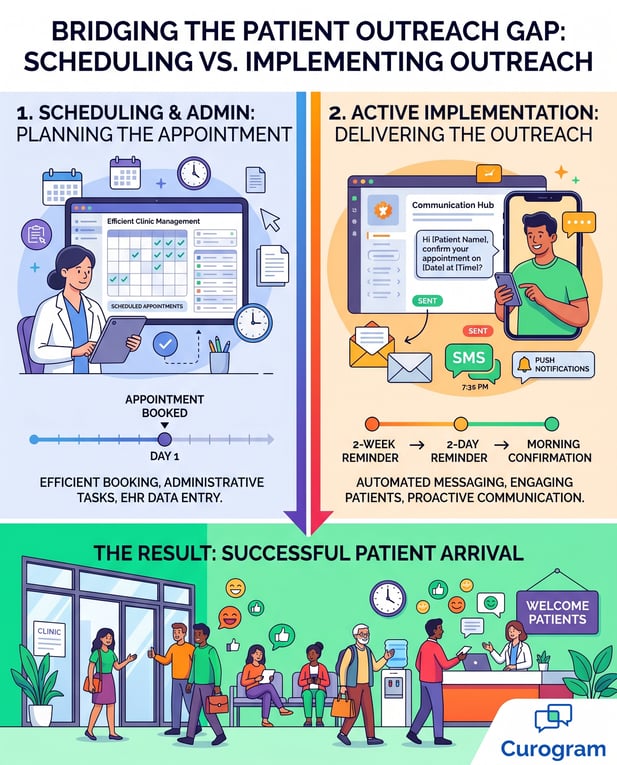
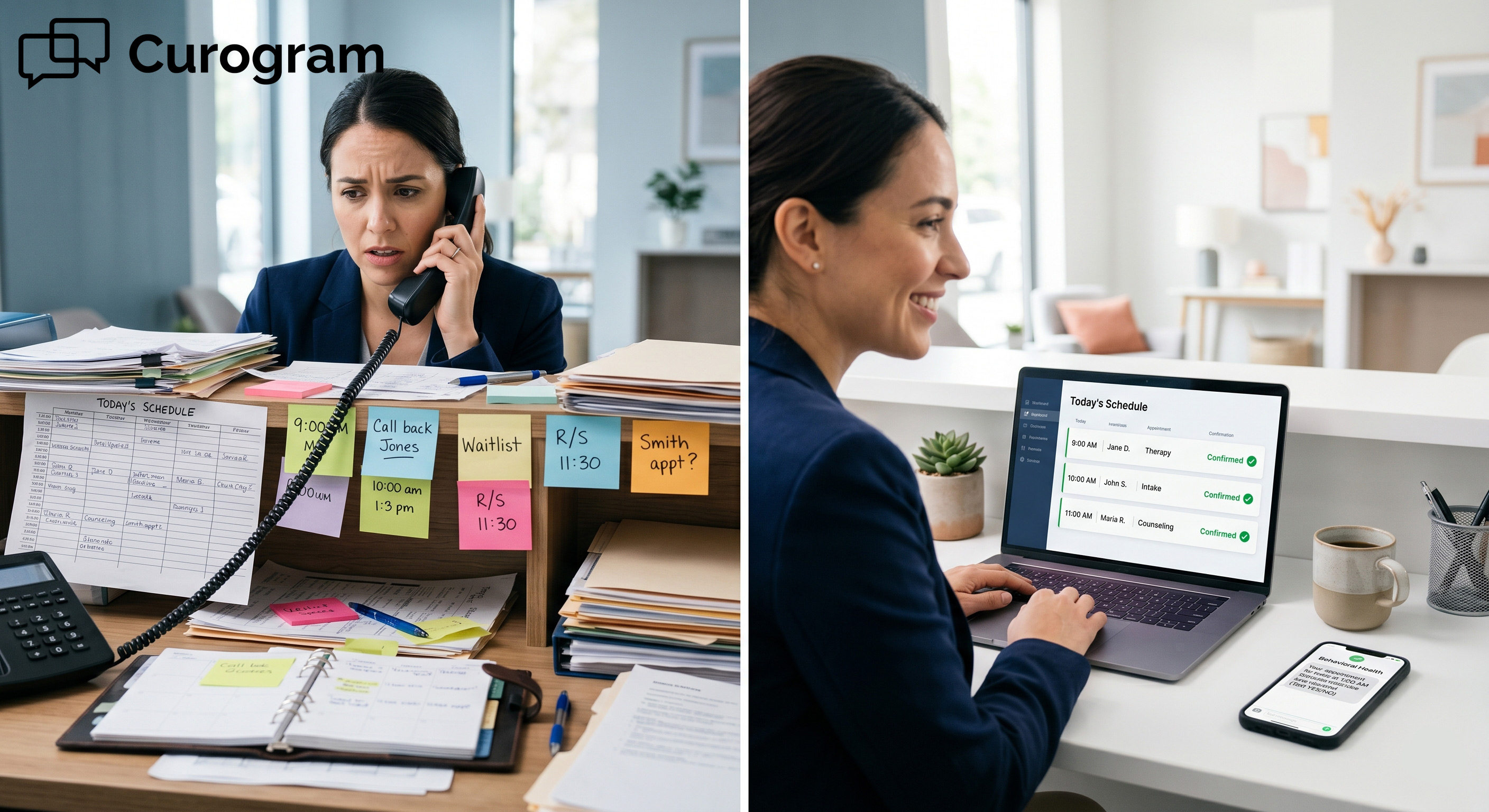
Infographic comparing clinic scheduling with active patient outreach implementation leading to success

The Guide: Curogram — Automated Reminders That Fill Every Chair

You do not need to replace Proven EHR. You need to add the piece that it skips. Curogram is that piece. It works as a quiet reminder layer beside your EHR.

Reminder Sequences That Run Themselves

Set it up once, and it keeps working. You decide the flow, then step back. There are two parts worth knowing.

Set the Timing

You choose when each reminder goes out. A common setup sends one 48 hours before, one at 24 hours, and one at 2 hours. You pick the words and the schedule one time. After that, it runs on its own.

Let Clients Reply

These are 2-way messages, not one-way blasts. Clients reply to confirm, cancel, or reschedule.

A cancellation can trigger a waitlist text to fill the open slot. This is the automated session confirmation Proven EHR users have been missing.

Works Alongside Proven EHR, No API Needed

Curogram does not plug into Proven's code. There is no API to build or maintain. You manage reminders from a simple dashboard. Proven keeps its job, and Curogram handles outreach.

Because they stay separate, setup is fast. You can run different flows for outpatient, IOP, PHP, and MAT programs.

Each program gets the right message at the right time. SMS appointment reminders in behavioral health finally fit how your practice really works.

Texting is the channel that makes this click. To go deeper, see our guide on 2-way HIPAA-compliant texting.

Built for Behavioral Health Privacy

Privacy is not optional in this field. Curogram reminders are HIPAA-compliant and SOC 2 Type II certified. They are also 42 CFR Part 2 ready for SUD care.

Messages can leave out the treatment type. A reminder shows the time, not the diagnosis.

This helps court-mandated clients, too, since every confirmation is logged. Proven EHR no-show reduction through SMS does not have to cost anyone their privacy. 


The Success: From $64,800/Month Lost to Revenue Recovered

Numbers tell the story best. When reminders run on their own, chairs fill, and staff breathe. Here is what practices tend to see.

Fewer No-Shows, Fuller Schedules

Automated texting moves the no-show needle fast. Based on Curogram client data from clinical settings, no-show rates drop 53% below the industry average.

One clinic fell from 14.2% to 4.91% in just three months. That is about 3 times better than the typical benchmark.

Confirmation climbs too. Across current Curogram clients, more than 75% of sessions get confirmed by text. People answer a text far more often than a call.

Result

What practices see

Source

No-show rate

53% below industry average

Curogram client data from clinical settings

One clinic's drop

14.2% to 4.91% in 3 months

Curogram client data from clinical settings

Confirmation rate

More than 75% of sessions

Curogram client data from clinical settings

Revenue lift

10% to 20%

Curogram client data from clinical settings


Time and Money Back to the Practice

Fewer empty chairs mean more billed sessions. Curogram client data points to a 10% to 20% lift in revenue as slots fill. For a 12-clinician practice, that can mean about $34,000 recovered each month.

The time savings are just as real. Staff stops the all-morning call routine. They shift 2 to 4 hours a day back to client care. One clinic confirmed over 1,100 sessions a month with no manual calls.

Reminders also pair well with recalls. Clients who drift away can be pulled back with one text. In one practice, SMS recalls brought back 1,240 clients and reconverted 35% of those contacted. You can read more in our guide to mass messaging and client recalls. 

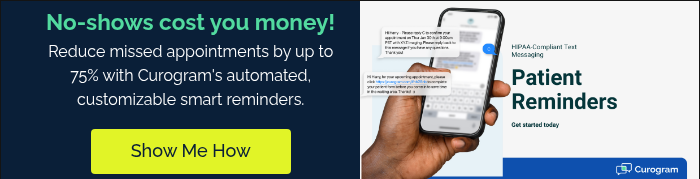
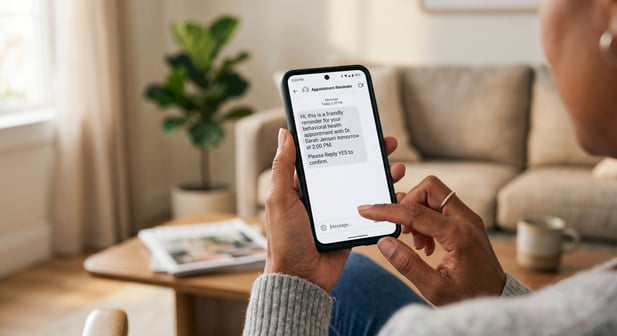
Close-up of a patient holding a smartphone displaying an appointment reminder text message

Conclusion: Your AI Optimizes the Schedule, Let Curogram Fill It

Proven EHR builds a great schedule. That is its strength. But a perfect calendar with a 25% no-show rate still bleeds money. A plan only pays off when clients show up.

Curogram closes that loop. Proven decides when sessions happen. Curogram makes sure clients actually arrive. Together, they turn a schedule-first practice into a revenue-first one.

Think back to the blind spot. The AI plans the day, then goes quiet at the front door. Reminders fill that silence. They reach clients where they already are, on their phones.

The shift is simple to picture. No more calling 80 times a day to confirm sessions. There is a better way. Reminders go out, clients reply, and the day fills itself.

Now think about those hours back in your week. Less phone tag. More focus on care. Fewer gaps in treatment for the clients who need it most.

The cost of waiting is real. Every month without reminders is another month of empty chairs. That is revenue you will not get back. It is also the sessions that clients miss.

So here is the move. Stop calling to confirm and start automating it. Recover the revenue your practice loses to no-shows. Let Proven plan the day while Curogram protects it.

This is not about adding more work. It is about taking work away. The reminders run themselves, and your team gets its mornings back.

Want to see the numbers for your own practice? Schedule a free demo. In a 15-minute walkthrough, you will see how automated reminders work right alongside Proven EHR. 


Frequently Asked Questions

How do automated reminders keep behavioral health sessions HIPAA compliant?

Curogram reminders are HIPAA compliant, SOC 2 Type II certified, and 42 CFR Part 2 ready for SUD care. Messages can leave out the treatment type, so a text shows the time but not the diagnosis. That keeps the details private, even on a lock screen. Every confirmation is also logged for your records.

Why do clients respond better to text reminders than phone calls?

Most people ignore calls from numbers they do not know. A text is quick, quiet, and easy to answer on the go. Clients can reply with one word to confirm or reschedule. Based on Curogram client data from clinical settings, more than 75% of sessions get confirmed this way.

How does Curogram work alongside Proven EHR without an API?

Curogram runs as a separate reminder layer next to your EHR. There is no code to connect and no API to maintain. You set up reminder flows in a simple dashboard, and they run on their own. Proven keeps planning the schedule while Curogram handles outreach.

Why do no-shows cost behavioral health practices so much?

No-show rates in behavioral health run from 20% to 50%, which is high. Each empty chair is a session you cannot bill, and margins here are thin. A missed visit can also break a client's progress or signal a crisis. So the loss is both financial and clinical.

How soon can a practice see fewer no-shows after starting reminders?

Many practices see a shift within the first few months. In one case, no-shows fell from 14.2% to 4.91% in just three months. Setup is fast because there is no API to build. Once reminders are live, confirmations usually start climbing right away.