- No app download eating phone storage
- No portal login or forgotten password
- Joins in under 10 seconds on any browser
- 42 CFR Part 2 compliant, with neutral lock-screen alerts
- Works for both individual and group sessions
A client signs up for treatment. That choice took real courage. Soon, a text reminder arrives for their first video session. What happens next decides whether they stay or slip away.
For SUD and behavioral health practices, this moment is fragile. Portal logins, app downloads, and forgotten passwords stand between the client and care. Each extra step is a chance to give up. And in early recovery, giving up can lead to relapse.
Curogram changes the math. The fix is easy telehealth for SUD and behavioral health clients with no app, launched by SMS. A text arrives. The client taps. The session opens in their phone's browser in seconds.
There is no download. There is no login. There is no portal to learn. The technology gets out of the way, so the client can simply show up.
Why does this matter so much here? Because no download telehealth for SUD clients removes the friction that breaks treatment. A client on a borrowed phone may lack storage for an app. A client with anxiety may read a failed login as proof they cannot cope.
This guide is about telehealth access barriers in SUD recovery, and how to remove them. We will look at where clients drop off and why. Then we will show how SMS video reshapes care for addiction clients.
Based on our internal data, Atlas Medical Center cut no-show rates from 14.20% to 4.91%. Curogram practices also see 53% lower no-show rates than the industry average. The link is simple: when access never fails, clients keep coming back.
For Sigmund AURA practices, that link is everything. Access is not just a feature. For these clients, access is treatment.
The Villain: The Friction Dropout
The biggest threat to telehealth is not resistance. It is friction. The "Friction Dropout" happens when the tech is harder to use than the client's will to attend. When that gap opens, the client simply disappears.
Behavioral health and SUD clients face barriers that other patients rarely meet. A client in early recovery may struggle with focus and planning. A multi-step task feels huge: find the app, download it, make an account, log in, grant access. Each step is a place to quit.
Anxiety makes it worse. A client may read a failed login as a sign they cannot manage care. A client on court-mandated treatment may use a borrowed or prepaid phone. That phone may lack the storage for an app or the data for a large download.
How the Dropout Unfolds
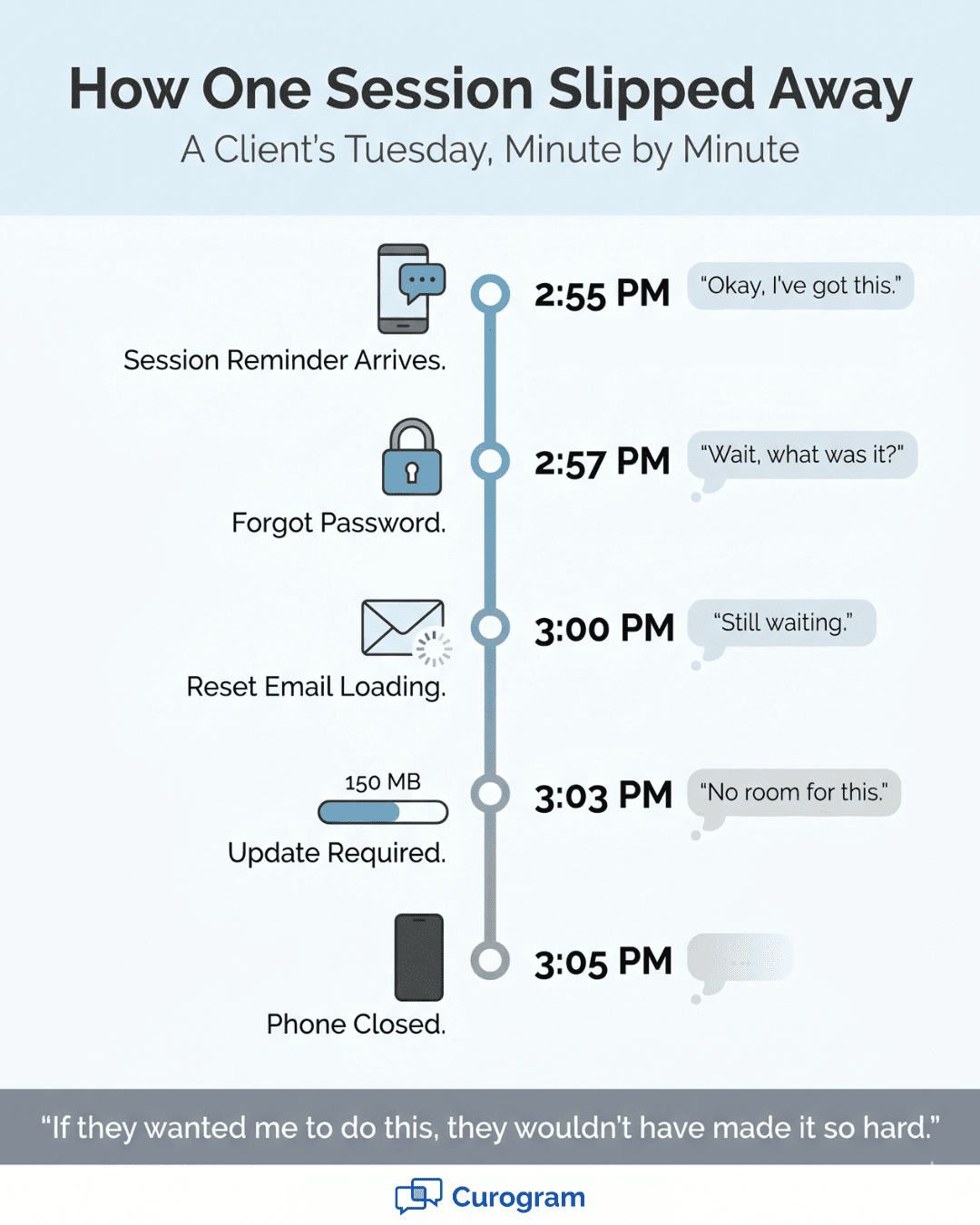
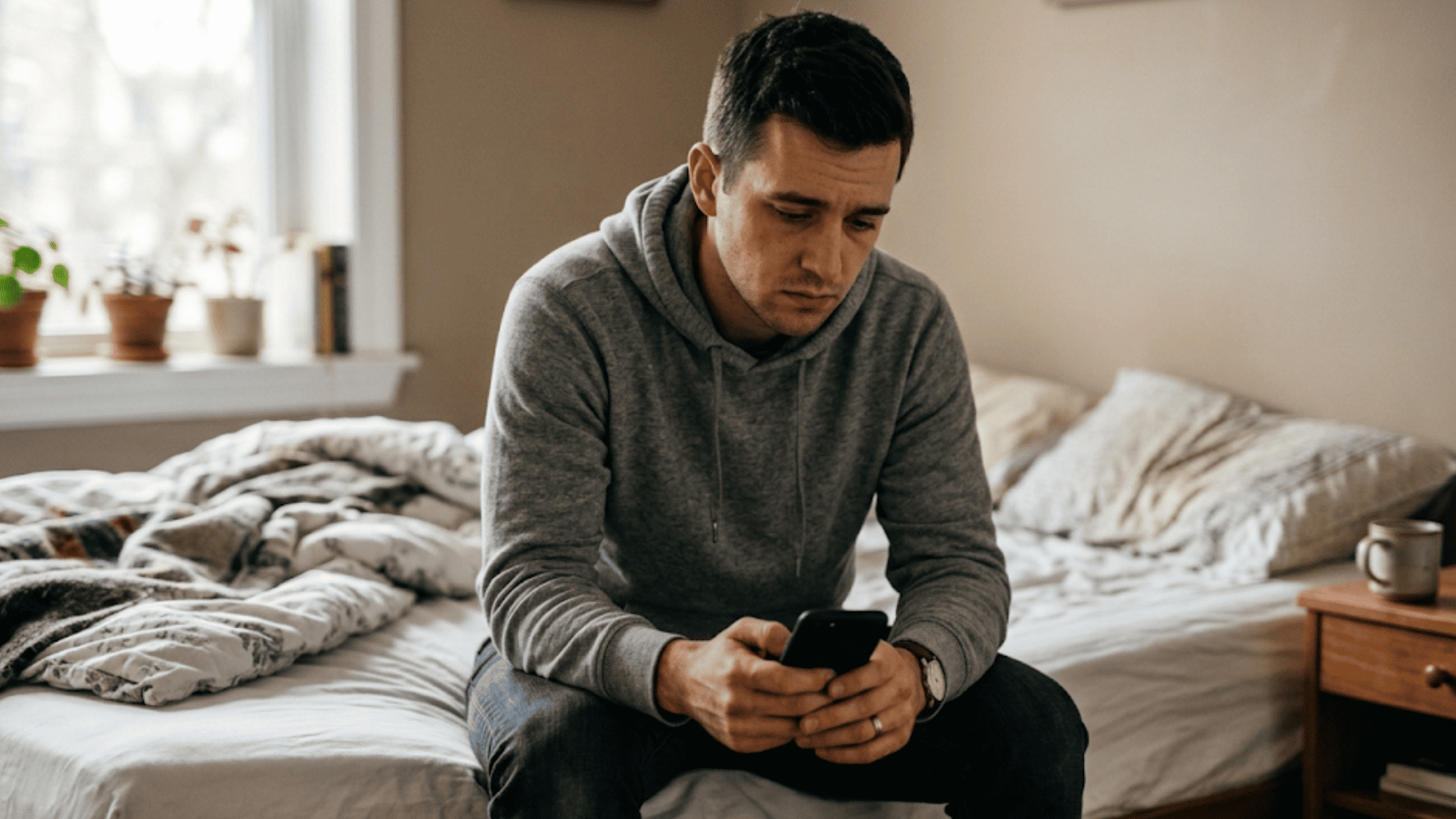
A client is in week two of outpatient SUD care. They have a video session for medication management. Their motivation is shaky. They almost skipped scheduling it at all.
They open their phone and see the portal alert. They tap it. The screen asks them to log in. They cannot recall the password they made two weeks ago. So they tap "Forgot Password."
The reset email takes three minutes. They log in at last. Then they see "Update Required." The app needs 150 MB of storage they do not have. They close the phone. They do not attend. They do not reschedule.
The clinician writes "client no-show" and moves on. The treatment bond fractures over a download prompt.
The Cost Runs Deep
For SUD clients, one missed session can break medication management. It can snap the structure of court-mandated care. It can feed the isolation that drives relapse.
For clients with depression, a failed login confirms a painful belief: nothing works, so why try? The portal does not just fail as tech. It fails as a clinical tool. It adds friction at the exact moment the client is most fragile.
The Aftermath
The client who wanted help on Tuesday is gone by Thursday. The clinician cannot tell what went wrong. Was it resistance? A life crisis? A storage error on a cheap phone?
The chart shows a missed session. The real story is a tech barrier no one meant to build. But the client felt it as rejection from the very system meant to help. Their takeaway is heartbreaking: if they wanted me to do this, they would not have made it so hard.
This is why telehealth access barriers in SUD recovery deserve real attention. The portal does not lose clients who refuse care. It loses clients who wanted care but could not reach it.

The Guide: Telehealth That Meets Clients at Their Motivation Level
Good telehealth does not test the client. It meets them where they are. Curogram's SMS video removes every step between the wish to attend and the clinician's face on screen. A text arrives. They tap. The session starts.
The tool that makes this work is the Tap-to-Join Session Link. It runs on any phone with a browser. There is no app to download and no storage to spare. There is no login and no password to recall. There is no account and no email to verify.
The link arrives as a plain text message. Text is the most universal channel we have. Nearly every phone can open one, even an old or prepaid model. When the client taps, a video session opens right in the browser.
The Client Experience Feels Effortless
A text says, "Tap to join your session." They tap. Their camera turns on. Their clinician appears. That is the whole flow.
For the client, Curogram is invisible. It is not a separate product they must learn. It is simply how their practice does telehealth. Behind the scenes, the clinician keeps using Sigmund AURA for notes and treatment plans. Curogram only handles the video link.
This split matters. Sigmund AURA stays the clinical record system. Curogram becomes the bridge to the session. Neither tool fights the other. Each does what it does best.
Clinically Fit for the Clients
In early recovery, every minute in treatment is a minute not using. A tech barrier that breaks that minute is not neutral. It carries weight.
SMS video protects the therapeutic window. It makes sure a client's will to attend is never blocked by a download, a lost password, or a frozen app. Strong behavioral health telehealth client engagement by SMS keeps the client connected at the moment that matters most.
Court-mandated clients gain too. They must prove they attended. Zero-friction access means sessions happen on time, every time. The compliance record stays clean because the tech never got in the way.
It does not just save a few taps. It removes the single point where fragile clients tend to vanish. The session that almost did not happen now happens by reflex.
This is the heart of the SMS video session client experience for addiction care. The client does not think about the tech. They think about getting better. That is exactly the point. When access feels easy, the client's focus stays where it belongs: on recovery, not on a login screen.

The Success: Clients Stay in Treatment Because Access Never Fails
When access never fails, retention follows. This is the promise of zero-download telemedicine for SUD treatment retention. The client's path from "I want to attend" to "I am in the session" shrinks to a single tap.
Clients join in under 10 seconds. They download zero apps. Based on our internal data, Curogram practices see 53% lower no-show rates than the industry average. Atlas Medical Center cut no-shows from 14.20% to 4.91% over three months.
For SUD clients, this is more than convenience. Treatment retention is tied to recovery outcomes. The longer a client stays engaged, the better their odds. So frictionless access is not a perk. It is a clinical tool.
Think about what a no-show really costs. It is a lost dose check-in. It is a broken routine. It is a window where relapse can creep in. Cutting no-shows is not just good for the practice. It is good for the client's life.
The Shift: From The Friction Dropout to The Seamless Session
The client's view of telehealth changes. It goes from a tech puzzle to a single tap. Clients who once missed sessions because the portal beat them now attend with ease.
Here is what that looks like day to day. A client in a MAT program gets a text at 2:55 PM. It reads, "Tap to join your 3:00 session with Dr. Chen." They tap. Dr. Chen appears. The session starts on time.
The client does not think about the tech. They think about their recovery. They attend the next session, and the one after that. The habit forms because the path is smooth.
Three months later, the clinician reviews the chart. There are no missed video sessions since the switch to SMS video. The treatment bond that almost ended at a download prompt is now the anchor of the client's recovery.
Let us make the contrast concrete: Picture two clients with the same shaky motivation on the same day.
|
Step |
Portal Telehealth |
SMS Video (Curogram) |
|
Get the alert |
Portal push notice |
Plain text message |
|
Open the session |
Log in with password |
Tap the link |
|
Forgot password? |
3-minute reset email |
Not needed |
|
App update? |
150 MB download |
None |
|
Browser support |
App often required |
Any browser works |
|
Time to join |
Several minutes |
Under 10 seconds |
|
Likely result |
No-show |
Session attended |
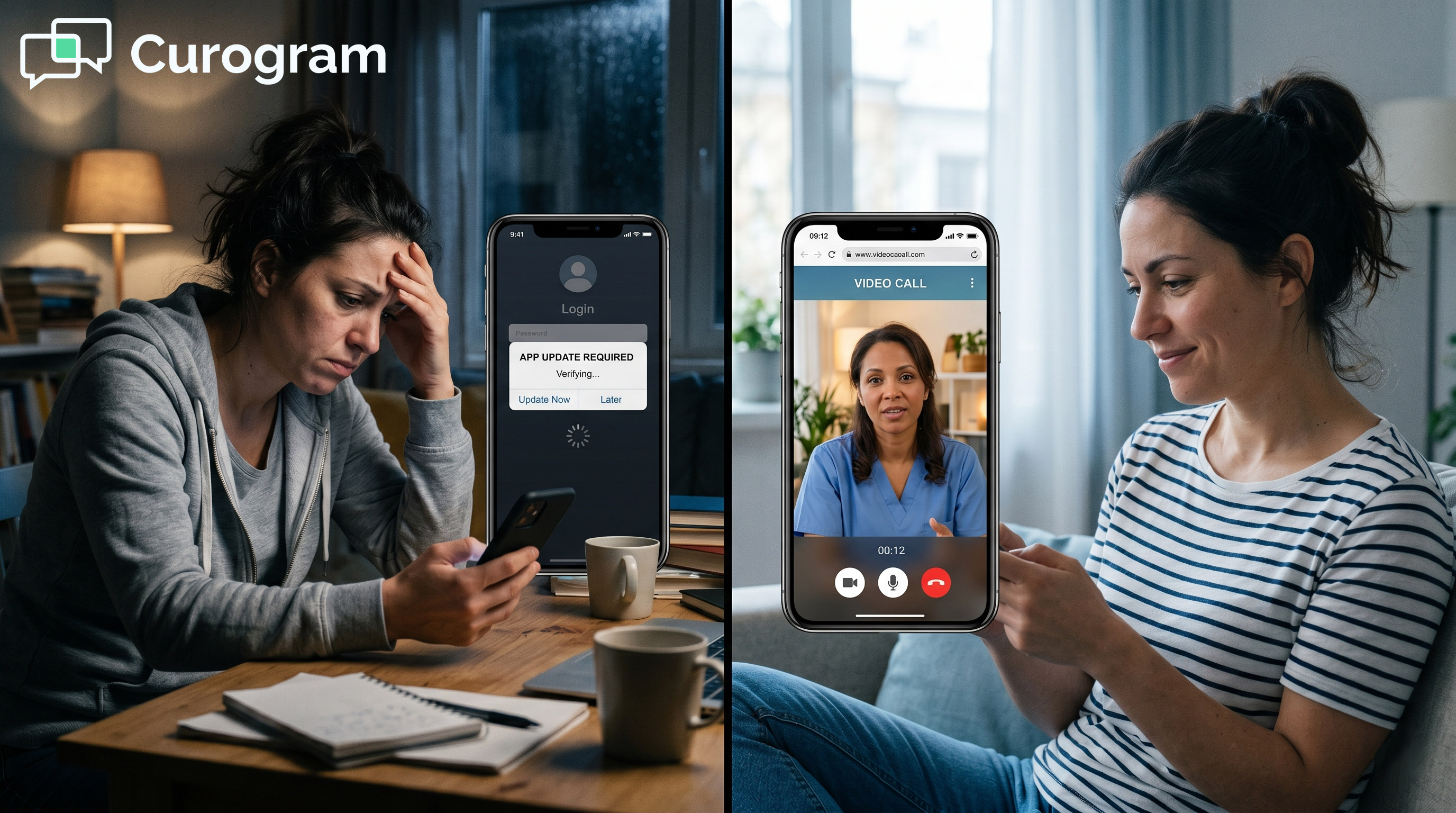
The portal client gives up at step two. The SMS client is already on screen. Same motivation, two outcomes. The only difference is friction.
Why Access Equals Retention
Each removed step is one less reason to quit. For a client in early recovery, that can be the margin between staying and slipping.
Now scale it across a caseload. If a portal loses one in five fragile clients to friction, that is a large share of preventable no-shows. Closing that gap protects revenue and, more importantly, protects people.
The Privacy Layer
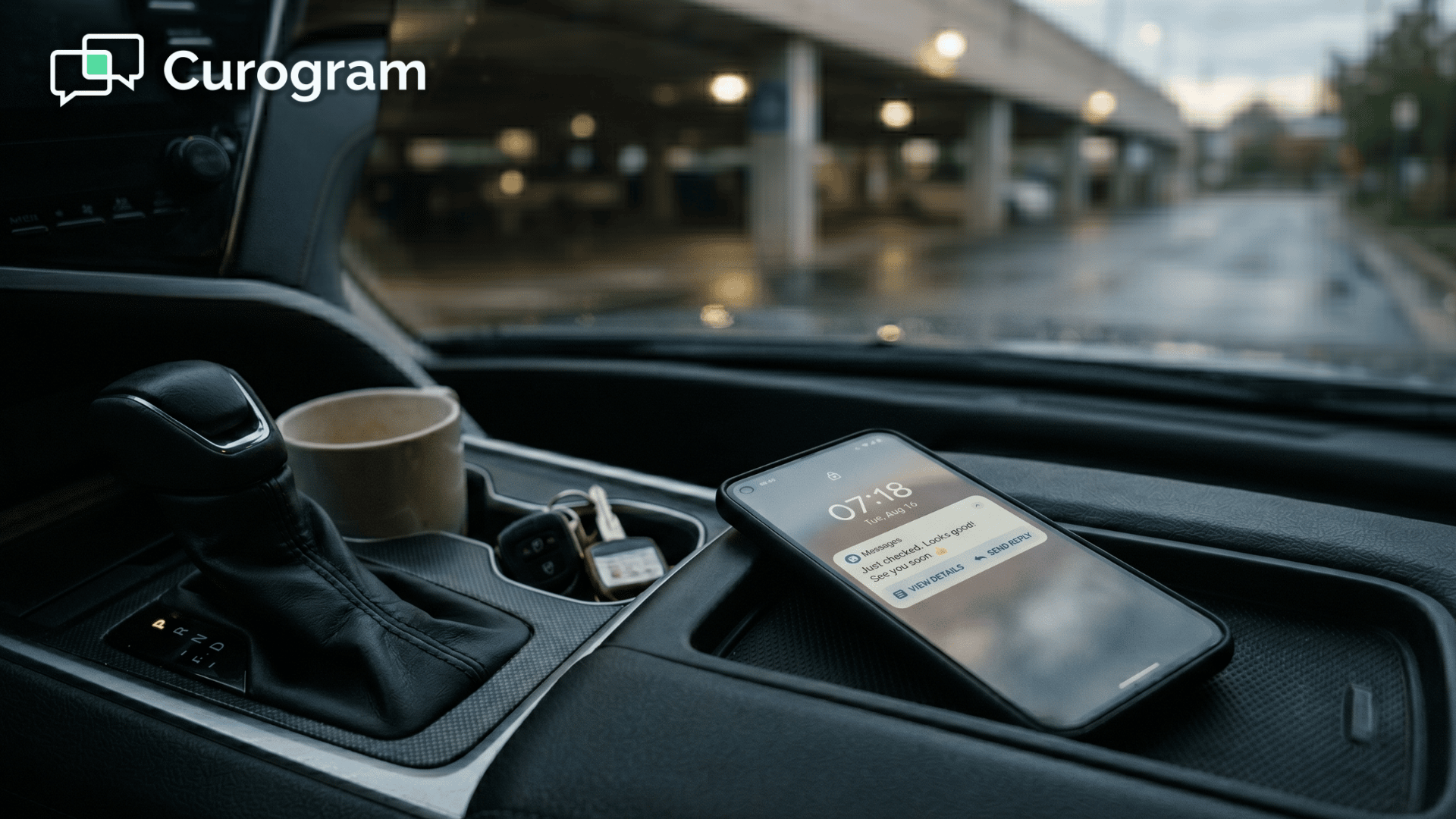
SMS video is HIPAA, SOC 2 Type II, and 42 CFR Part 2 compliant. Session texts never reveal treatment type on a lock screen. For SUD clients, this is both a legal need and a trust issue.
A client who fears being "found out" may avoid care. A neutral text alert removes that fear. The message says, "Tap to join your session," and nothing more. Privacy and access work together, not against each other.
Why Frictionless Access Is the Most Powerful Engagement Tool for Recovery
Why does removing friction matter more than any other feature? Because for SUD and behavioral health clients, the barrier is the dropout. A client rarely quits because they stopped wanting care. They quit because the path to care got too hard.
Curogram's SMS video attacks this at the root. It strips telehealth down to one action: tap a text link. There is no app, no login, and no portal to master. The session opens in the phone's browser, so any device works.
This design choice is clinical, not cosmetic. Each removed step is one less moment for fragile motivation to break. A client in early recovery does not need a tech challenge. They need their clinician's face, fast.
The privacy layer deepens the trust. Session texts stay neutral on the lock screen, in line with 42 CFR Part 2. A client never worries that a passerby will see their treatment type. That comfort keeps them coming back.
The fit with Sigmund AURA is clean. The clinician keeps Sigmund AURA for notes and treatment plans. Curogram simply carries the client into the session. The two tools never overlap or compete.
The payoff shows up in the data. Based on our internal research, Curogram practices see 53% lower no-show rates than the industry average. Atlas Medical Center dropped from 14.20% to 4.91% no-shows. Clients join in under 10 seconds.
Strong behavioral health telehealth client engagement by SMS is not about flashy tech. It is about getting out of the way.
When access is easy, the client's energy goes to recovery, not to a login screen. That is the whole point. Frictionless access is the most therapeutic tool a practice can offer because it protects the one thing recovery needs most: showing up.
Conclusion: Access Is Treatment
Portal-based telehealth builds dropout points for the very people behavioral health practices serve. Every login, download, and password is a chance for a fragile client to vanish. SMS video removes those barriers. It protects the treatment continuity that SUD clients depend on.
The split in roles is simple. Sigmund AURA holds your clinical records and treatment plans. Curogram handles the moment just before the session starts. That moment is where the client either connects or disappears.
For these populations, that moment is clinical. A client in early recovery does not see a login screen as a minor step. They see it as a wall. Making that moment frictionless is making it therapeutic.
Think back to the client in week two. Their motivation was shaky. With a portal, a download prompt ended their session before it began. With SMS video, a single tap kept them in care.
That is the whole story in one contrast. Same client. Same will to attend. Two different outcomes, decided only by friction.
Your clients chose to seek treatment. That choice was brave and hard-won. Do not let a download prompt be the reason they stop. Do not let a forgotten password break the bond they came to build.
Easy telehealth for SUD and behavioral health clients with no app, launched by SMS, is not a small upgrade. It is a clinical safeguard. It keeps the door open at the exact moment a client decides whether to walk through it.
Book a quick demo and experience the exact tap-to-join flow your clients will. See how zero-download access protects retention for SUD and behavioral care.
Frequently Asked Questions
It removes every step where fragile clients drop off. No app, login, or password stands in the way. The client taps a text and joins in seconds, so shaky motivation never has time to break before the session starts.
Portals demand multi-step effort: download, log in, recall a password, update the app. Clients with anxiety, impaired focus, or unstable phones cannot reliably finish these steps. The friction, not a lack of will, is what causes most no-shows.
Session texts stay neutral, in line with 42 CFR Part 2. The alert reads "Tap to join your session" with no treatment type, specialty, or practice name shown. So even if someone else sees the phone, confidentiality holds.
For SUD clients, retention is tied to recovery. Each missed session can break medication management and feed relapse. Removing friction protects engagement at the most fragile moments, so easy access directly supports better treatment outcomes.
Sigmund AURA stays your record for notes and treatment plans. Curogram only handles the video link that carries the client into the session. The two tools never compete; each does one job, and the client sees a single smooth experience.

Mira Gwehn Revilla