
Notenetic Text-to-Pay for Behavioral Health Practices
💡 Notenetic text-to-pay for behavioral health practice billing is a simple way to collect copays and balances by text, running right alongside...
7 min read
Aubreigh Lee Daculug
:
June 24, 2026
A behavioral health client can do everything right and still miss her session. She sets the reminder. She clears her schedule. She shows up early.
Then the portal asks for a password she can't remember.
That gap — between a ready client and a working video room — is where telehealth quietly breaks down. The video isn't the problem. Notenetic's native telehealth is genuinely strong: HIPAA-compliant, included with every subscription, and built into the clinical workflow.
The trouble lives in the four steps before the video even loads.
Think about what those steps ask.
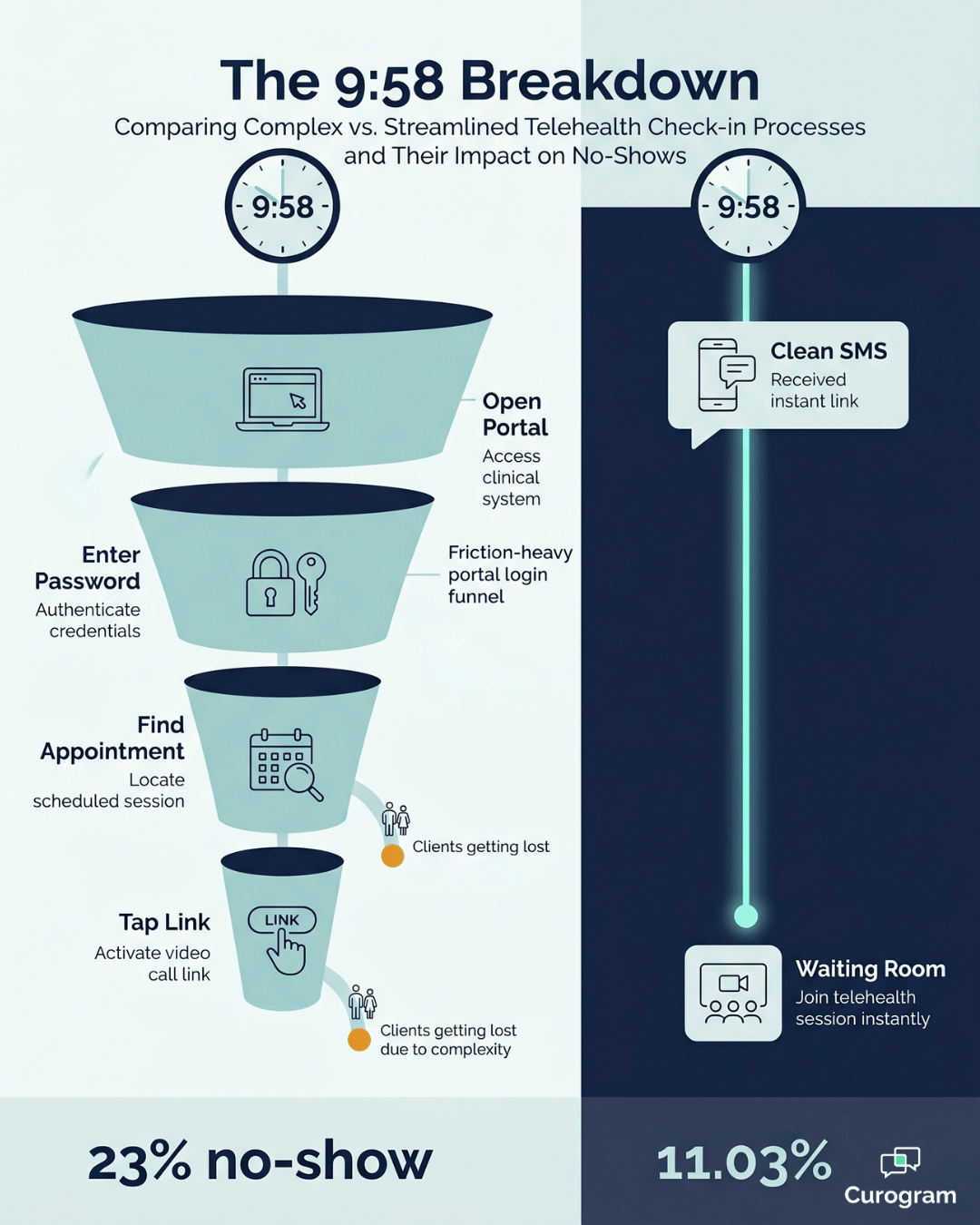
Open the portal, enter a password, find today's appointment, tap the link. For a client minutes before a session, that's the exact kind of multi-step task most likely to fall apart under pressure.
This is where Curogram's Notenetic integration changes the math. Instead of replacing the video, it adds a doorway to it. The client gets one text with one tap that drops her straight into the waiting room — no download, no portal account, and no password to recall.
No-download telehealth for Notenetic behavioral health clients respects something most platforms quietly ignore. People carry real cognitive load into the moments before a session: anxiety, decision fatigue, and sometimes the very symptoms they came to treat.
Recalling a password then is the wrong ask at the wrong time.
When access gets easier, attendance follows close behind. Curogram's psychiatry-specific clients run an 11.03% no-show rate against the 23% industry average, and a meaningful share of that gap comes from removing the login scramble.
The fix isn't more technology. It's less of it at the worst possible moment.
Below, we'll unpack why the login fails behavioral health clients, how a one-tap launch removes it without touching the video, and what that change does for your attendance and revenue.
Here's the moment that breaks telehealth. A psychiatry client spent two weeks getting ready for her first video session. She opens the Notenetic portal at 9:58, and the screen says "forgot password."
The reset email goes to an inbox she rarely checks. By 10:08, she has given up and rescheduled. Often, she doesn't come back.
The video she never reached works perfectly. Once a client actually launches it, Notenetic's telehealth is a real strength — secure, reliable, and built into the clinical workflow. The failure isn't the room. It's the hallway leading to it.
For an anxious client, a forgotten password isn't a minor hiccup. It's a spiral. The clock is moving, the session is starting, and the one tool standing between her and help is asking her to problem-solve under stress.
That's the exact state therapy exists to ease, showing up at the worst possible time.
Many people seek behavioral health care because depression, ADHD, or active substance use makes multi-step tasks harder than usual. A four-step login asks them to spend the cognitive energy they came to rebuild.
Easy, low-friction access matters most for telehealth therapy clients who are already running low on focus — it's the difference between a kept session and an empty room.
Each locked-out moment is a quiet withdrawal from the client's trust in the practice. "The tech failed me" slides into "this isn't for me."
In behavioral health, where the decision to engage is often fragile, that erosion shows up in the numbers:
Lower retention, more pre-session drop-off, and rescheduled sessions that silently become never-rescheduled ones.
None of this is a knock on the video. It's a reminder that behavioral health video session access depends on the steps before the camera ever turns on.
Curogram doesn't replace Notenetic's video. It acts as the doorway to it — a HIPAA-compliant SMS layer that walks the client straight to the door without making her remember which hallway it's on.
Here's the flow, start to finish:
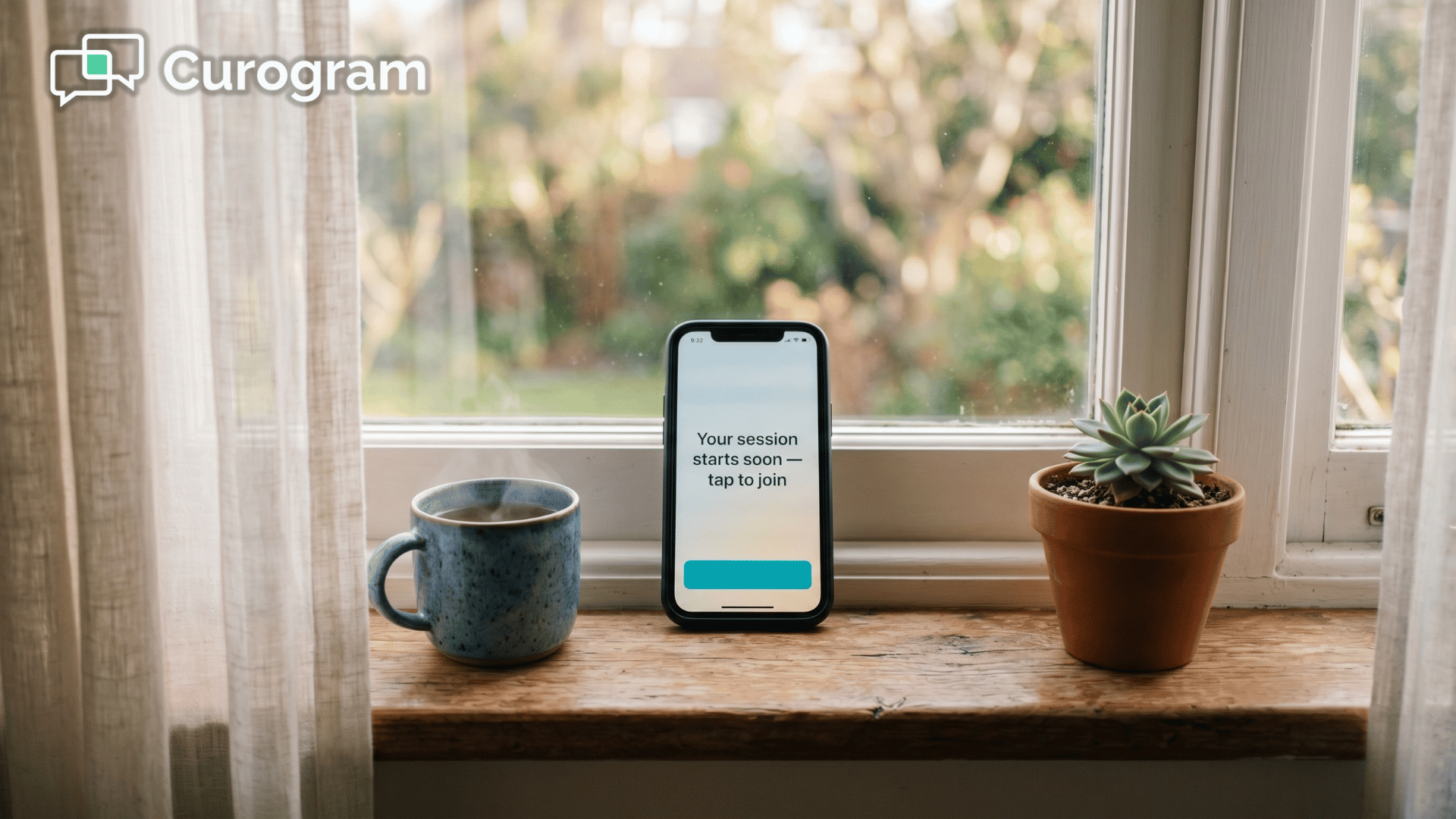
That's the entire experience. A single text, a single tap, straight into the waiting room. This is what no-app behavioral health telehealth looks like in practice — access that asks nothing of the client except to show up.
Compliance holds up under this model, too. For substance use treatment clients governed by 42 CFR Part 2, the message content is configurable to leave out any treatment-specific language. The text reads as a neutral reminder, and the link reveals nothing to anyone glancing at the phone.
Everything runs on HIPAA-compliant, SOC 2 Type II certified infrastructure — the same standard behind Curogram's two-way HIPAA-compliant texting.
The design fits how behavioral health clients actually arrive. One-tap psychiatry telehealth removes the password spiral for anxious clients.
It strips out the multi-step task for clients managing depression, ADHD, or active substance use. And for anyone on a shared device, the link itself gives nothing away about why they're in treatment.
A single text replaces a four-step gauntlet. For a client already low on bandwidth, that's not a small upgrade.

Numbers tell this story better than promises.
When the login disappears, attendance climbs — and behavioral health practices feel it first, because their clients are the ones the old flow failed hardest.
A short comparison makes the gap concrete:
| Measure | Industry Baseline | Curogram Result |
|---|---|---|
| Psychiatry no-show rate | 23% | 11.03% |
| Composite no-show, all specialties | — | 53% below average |
What does that mean in real terms?
Take a psychiatry practice running 200 telehealth visits a month.
At a 23% no-show rate, roughly 46 sessions vanish.
At 11.03%, that number drops to about 22.
So that's 24 recovered sessions a month — close to 290 a year — time that would otherwise sit empty on the schedule.
For your team, recovered sessions are recovered revenue and recovered care. If each visit bills $150, those 24 monthly saves add up to about $3,600 a month, or more than $43,000 a year. All from a change the client never has to learn.

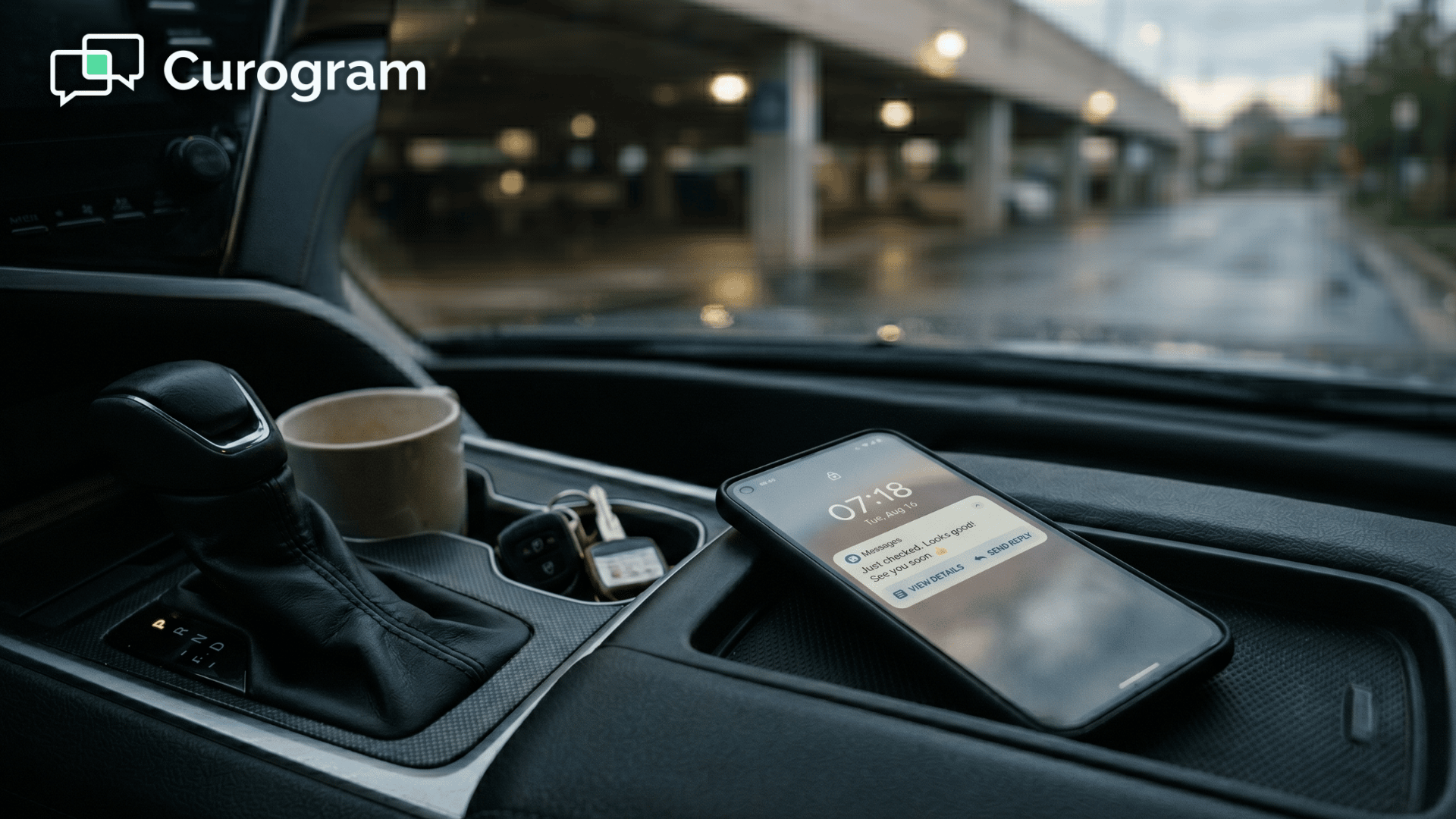
The payoff isn't only financial. The pre-session experience shifts from an access scramble to something calmer. A client launches her medication management session from the parking garage with one tap.
A DBT client trades "does this link still work" for "the coffee's ready, the session is up."
A new substance use treatment video session — the most fragile attendance moment in the practice — actually happens, because joining was a tap, not a tutorial.
That's the quiet power of an anxiety-friendly telehealth launch:
The client arrives with her focus intact, ready to use the session for the work she came to do.
If a fix this useful sounds like a heavy lift, here's the relief: it isn't. The one-tap launch sits alongside Notenetic rather than on top of it. Nothing in your current setup gets torn out or rebuilt.
Here's what your practice doesn't have to do:
The real work lands almost entirely on the setup side, and it's a one-time job. Once the launch timing and the message wording are configured, the system runs quietly in the background for every appointment after that.
That's the part practices tend to underestimate. The change your clients feel most is the change your staff has to think about least.
Behavioral health telehealth has a strange failure point. The video works, the clinician is ready, and the client is there. And still the session doesn't happen — not because of the care, but because of a forgotten password.
Notenetic's native video is strong, and it should stay exactly where it is. The problem was never the room. It was the four-step walk to reach it at 9:58 in the morning, when a client's focus is stretched thinnest.
Fix that walk, and the rest of the platform finally gets to do its job.
That's the whole idea behind a one-tap SMS launch. Notenetic handles the secure video session your clinicians trust. Curogram handles the friction-free way in. One sends a single text, the client taps once, and she lands in the waiting room — no download, no portal, no password.
The pairing matters most for the clients who need it most. Think of the anxious first-timer, or the client managing depression or ADHD. Think of the person walking into substance use treatment, where a single hard step can quietly end the relationship before it starts.
Remove the lockout, and telehealth stops failing exactly the people it's meant to serve.
The results back this up. Curogram's psychiatry clients run an 11.03% no-show rate against a 23% industry average — fewer empty slots, more kept sessions, and a steadier path to the revenue you were already supposed to earn.
So stop asking clients to do their hardest cognitive task at their hardest cognitive moment. Give them a doorway, not a puzzle.
Want to see what one-tap access looks like inside your workflow? Schedule a Demo built around your behavioral health practice, and watch a real client join in a single tap — from a parking lot or a kitchen. No long-term contract required.
Yes. Curogram is HIPAA-compliant, SOC 2 Type II certified, and signs a Business Associate Agreement with every practice. The text itself holds only a secure session link, and the actual video lives behind that link inside Notenetic's native room, encrypted in transit and access-controlled. For substance use clients under 42 CFR Part 2, the message content can be set to leave out any treatment-specific wording.
The Notenetic Client Portal stays available exactly as it is today. Clients who can't or prefer not to use SMS keep launching sessions through the portal. The one-tap launch is an extra access channel, never a forced one. You lose no existing capability — you simply add a low-friction option for the large majority who benefit from it.
Yes, and that's the entire point of the design. The launch needs no Curogram account, no app install, and no prior signup. The client gets a normal-looking text, taps the link, and lands in the session. For new clients especially — where the first session is the highest-friction moment in the whole relationship — that simplicity matters enormously.
No. Curogram is the doorway, not the door. Notenetic keeps doing what it does well: hosting the secure, HIPAA-compliant video your clinicians already rely on. Curogram only changes how the client gets in, sending her straight to Notenetic's native session instead of through the portal.
The message text is configurable, so it can read as a plain reminder with no treatment-specific language. Nothing on the screen — or in the link preview — reveals why the client is in care, which protects privacy on shared or visible devices. The delivery, link, and session access all run on HIPAA-compliant, SOC 2 Type II certified infrastructure.
💡 Notenetic text-to-pay for behavioral health practice billing is a simple way to collect copays and balances by text, running right alongside...
💡 A strong Notenetic balance collection workflow for a behavioral health practice recovers more money without the hard collection posture that...
💡 Notenetic 2-way texting for behavioral health practices isn't a built-in Notenetic feature.The EHR's Client Portal handles messaging, but only...