


End Notenetic Telehealth Pre-Session Tech Support Calls
💡 Behavioral health coordinators lose their busiest five minutes to the same call every morning. A client can't find the portal login for a session...
7 min read
Aubreigh Lee Daculug
:
July 2, 2026
She did everything right. Two weeks of preparation. A calendar reminder set. A morning meeting moved to make room.
And she still missed her first telehealth therapy appointment.
Not because she changed her mind. Because she couldn't get past the login screen.
This is the quiet problem hiding inside behavioral health telehealth. The video works. The clinician is ready. The client wants to be there.
Yet the session never starts.
If you run a therapy, psychiatry, or substance use practice on Notenetic, you already know its integrated video is a real strength. It is HIPAA-compliant, included with your subscription, and built right into your clinical workflow. You are not paying for a separate Zoom or Doxy.me license.
So the video is not the gap. The gap is everything that happens before it.
Between your strong Notenetic video and the client who needs to join, there is still a portal step.
Login. Password. Find today's appointment. Tap the right link.
Each step is small on its own. Together, they ask a lot of someone who is anxious, distracted, or struggling to focus minutes before care.
That is where sessions disappear. Not in the clinical work, but in the access steps right before it.
Notenetic telehealth SMS launch for behavioral health is the fix that closes this last-mile gap. Curogram adds a simple text layer beside your EHR.
One message. One tap. Straight into the room.
No app to download. No password to reset. No frantic search at 9:58 AM.
In this article, you will see where these sessions slip away, why portal logins fail behavioral health clients more than any other group, and how a one-tap launch keeps care on schedule. The numbers are not small.
For your practice, they show up as kept appointments and steadier revenue.
In primary care, a three-minute access delay is an annoyance. In behavioral health, it is a lost session.
That difference matters more than it looks. The clients you serve in psychiatry, therapy, and substance use treatment are often managing the exact challenges that make a multi-step login hard: anxiety, executive function struggles, active substance use, or severe depression.
The portal asks them to think clearly at the one moment thinking clearly is hardest.
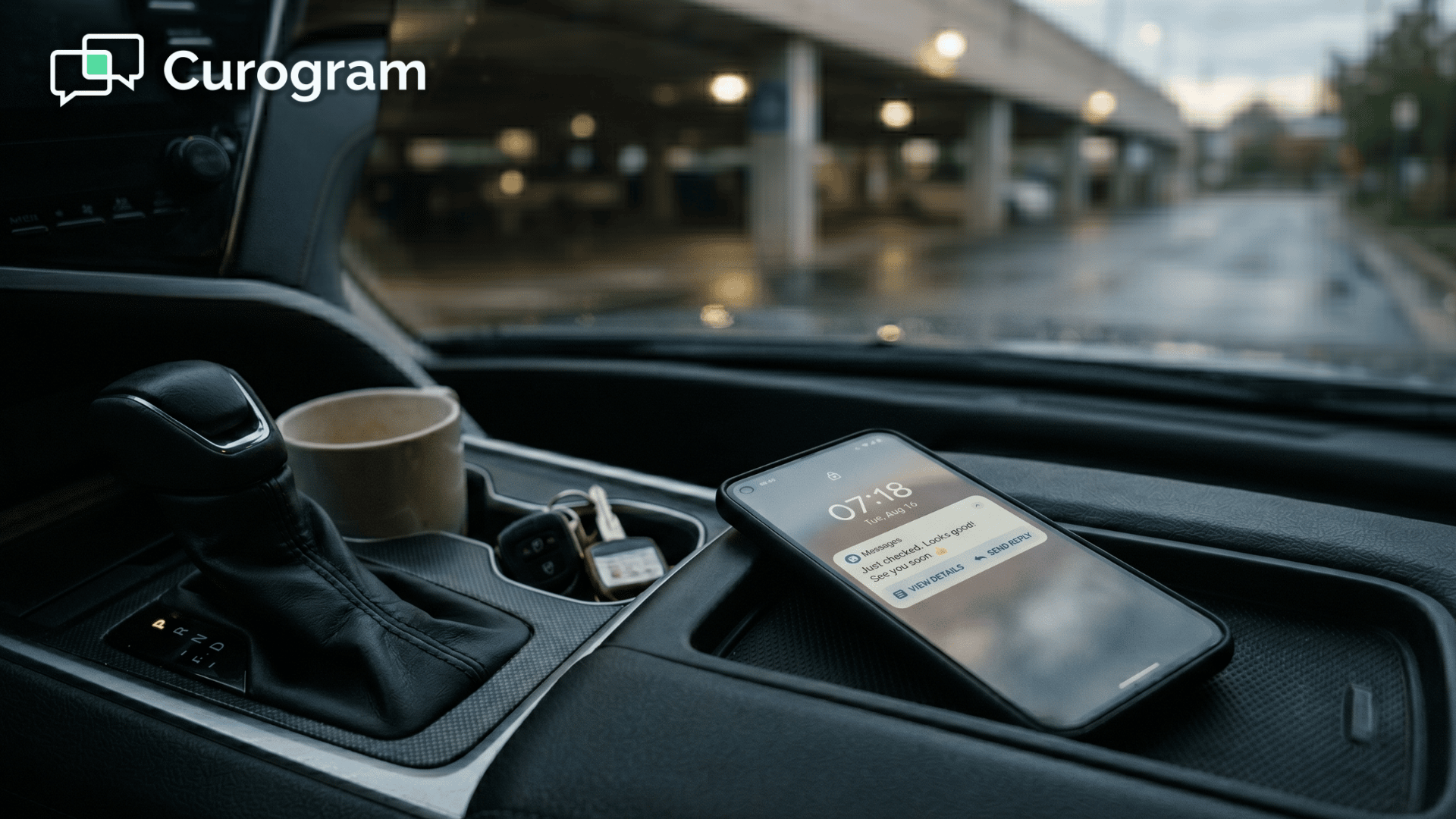
Consider a new psychiatry client preparing for a first telehealth session. She set the reminder. She moved her morning meeting. She is sitting in a parking garage with three minutes to spare.
She opens the Notenetic portal and sees "Forgot password." Her anxiety spikes. By 10:08, she has given up and asked to reschedule.
The video was never the problem. The Notenetic telehealth access workflow still asks her to log in, navigate, and locate the link before the session can even load.
Here is what those few steps actually require:
| Access step | What the client must do | Where it breaks down |
|---|---|---|
| Open the portal | Find the right site or saved page | Wrong link, expired bookmark |
| Log in | Recall username and password | Forgotten password, lockout |
| Find today's visit | Navigate the appointment list | Confusion, time pressure |
| Tap the session | Use the right device and browser | Mobile glitches, dead ends |
None of these steps is unreasonable on a calm afternoon. Stacked together, two minutes before care, they become the kind of cognitive task that defines the very conditions many clients came to treatment for.
The data backs this up. Behavioral health carries the highest no-show rates in the industry — around 23% in psychiatry, 20% to 30% across the field, and up to 50% in some practices. Portal-based logins fail this population more than any other.
This means the friction is not evenly spread. It lands hardest on the clients who can least afford it, and on the practices that depend on them showing up.

Curogram works as a patient engagement layer beside Notenetic. It does not replace your EHR or your video. It removes the steps between them and your client.
Here is what the behavioral health video session launch looks like once Curogram is in place:
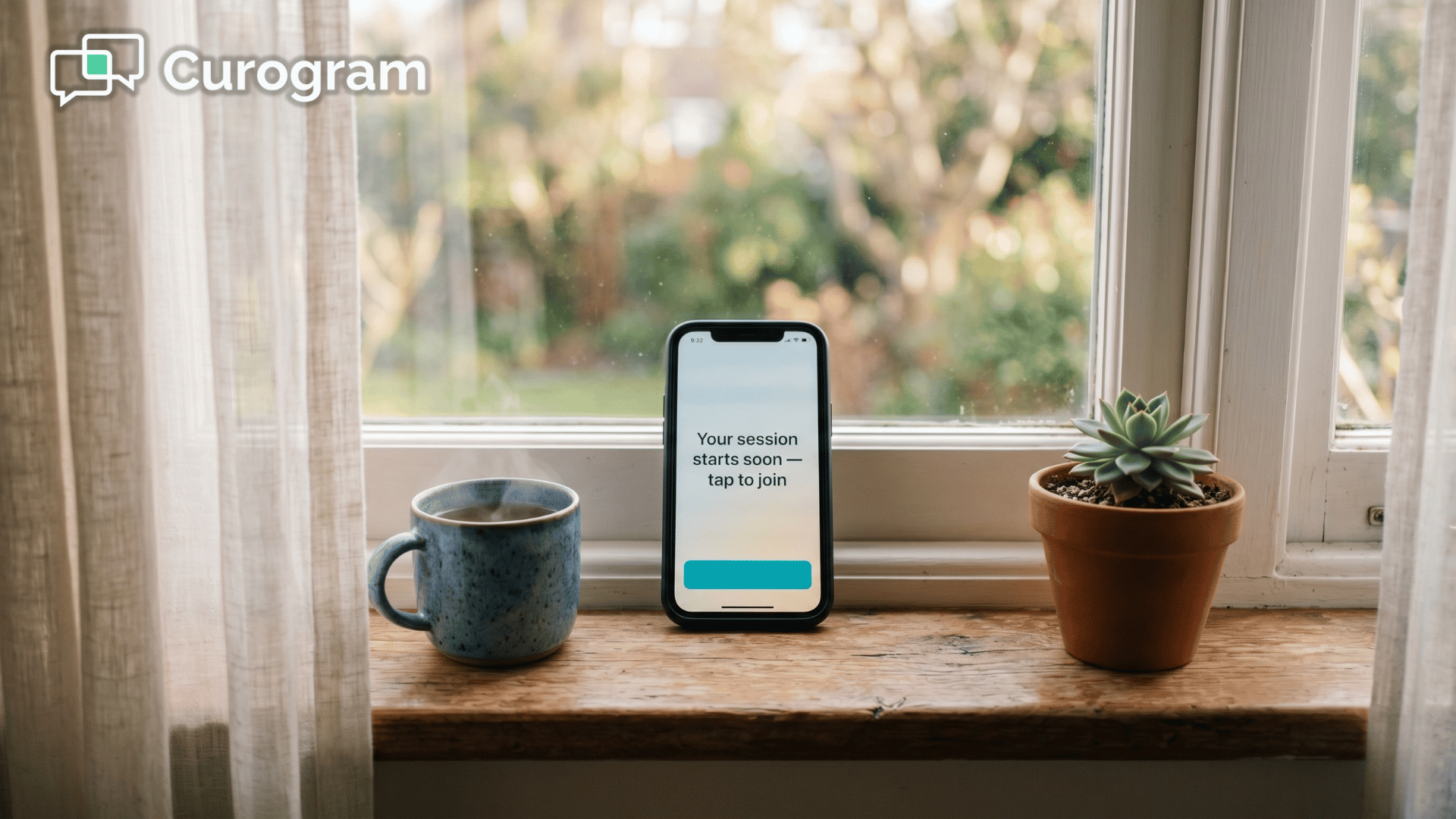
That is the whole flow. A one-tap telehealth session, delivered to the device the client already has in their hand.
Because Notenetic does not expose a public API, the launch link is configured against the appointment list kept in Curogram, with the session URL pointed at the Notenetic-hosted video for practices that want to keep telehealth on the EHR. Clinicians keep joining the exact sessions they know.
The change happens entirely on the client side, not the clinical side. This is what no-download therapy telehealth looks like in practice: nothing to install, nothing to remember, nothing to reset.

The behavioral health fit is the part that really counts.
The single-tap model meets clients where their challenges actually live:
The client keeps Notenetic's strong video. They just skip the obstacle course in front of it.
When access gets easier, attendance gets better. That is the whole story behind the numbers, and the numbers are clear.
Curogram clients average 53% below industry no-show rates across all specialties. That composite covers both in-person and telehealth visits, and the engine behind it is the same: low-friction access to the moment of care.
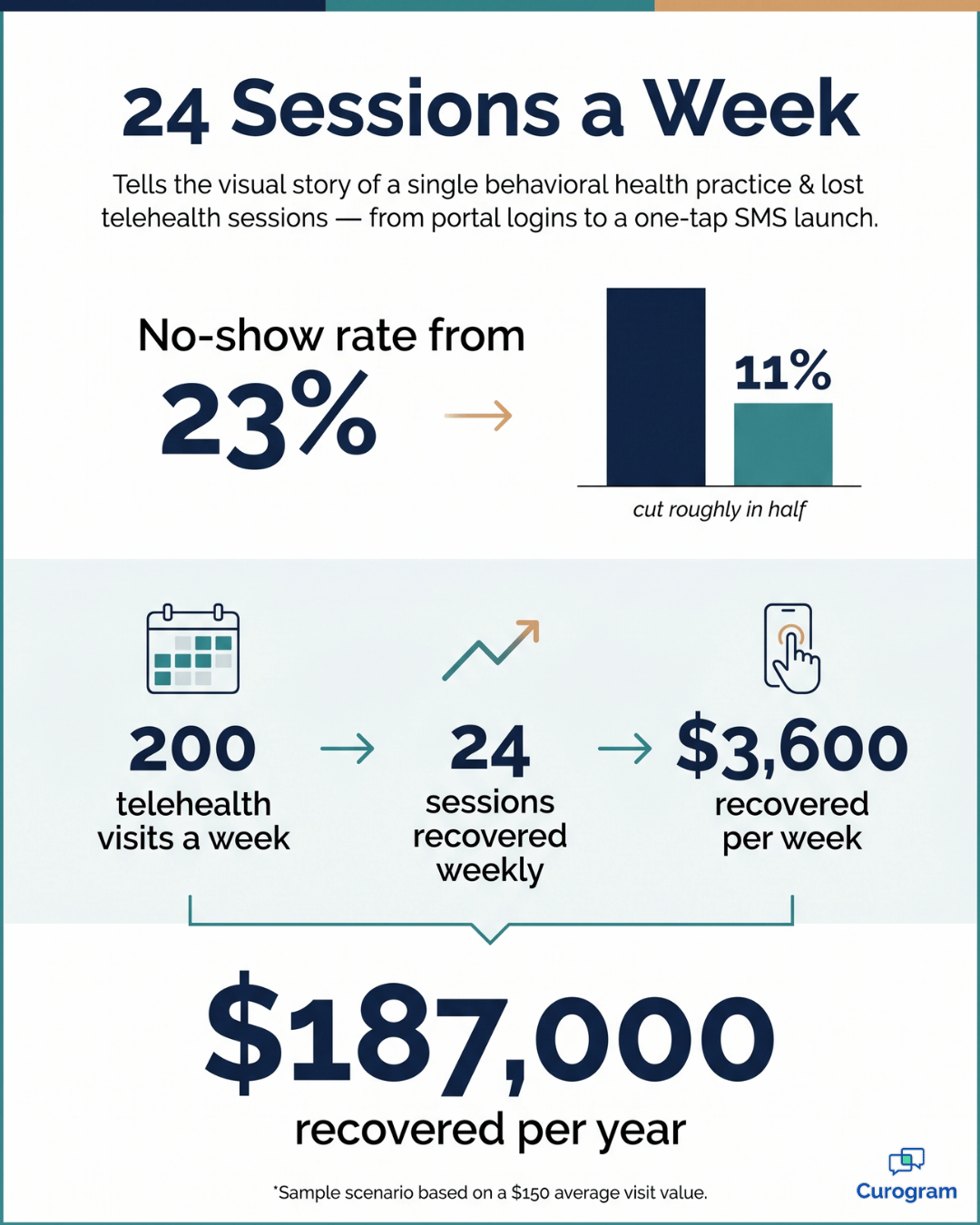
The behavioral health proof is sharper still. Psychiatry-specific Curogram clients run at 11.03% no-show versus the 23% industry average (ProspyrMed, 2024).
Psychiatry is overwhelmingly telehealth-driven, so that 12-point gap is the difference between SMS-launched access and portal-launched access for the population that struggles most with the second one. In plain terms, the psychiatry telehealth no-show rate gets cut roughly in half.
Here is what a 12-point swing can mean for a real practice. The figures below are a sample scenario, not a guarantee — plug in your own numbers to size it up.
Take a practice running 200 telehealth visits a week. At a 23% no-show rate, about 46 of those visits vanish. At 11%, only about 22 do. That is 24 sessions recovered every week.
At an average visit value of $150, those 24 recovered sessions are worth about $3,600 a week. Over a year, that is roughly $187,000 in care that used to slip through the cracks.
For your team, the win is not only financial. It is a clinician who no longer spends the first 10 minutes of a session troubleshooting access. It is a front desk that fields fewer "I can't log in" calls. It is a client who actually makes it into the Notenetic virtual waiting room on time, ready to do the work.
The session-start experience shifts from a drop-off to a habit. One tap, one room, on schedule.
Notenetic's video is the strength. The access step is the gap. You do not have to trade one for the other.
Curogram complements your Notenetic telehealth with SMS-launched access. The EHR keeps doing what it does well — documentation, billing, the video itself. Curogram handles the part that lives outside the chart: getting your client into the room without a fight.
Think of it this way.
Notenetic is built for your clinical surface. Curogram is built for their friction-free access to it. Together, behavioral health telehealth starts to really feel like a complete clinical experience instead of a tech-support exercise.
And the cost of skipping this is easy to miss because it hides in plain sight. Every missed login looks like a single rescheduled visit. Across a year, those single visits add up to a serious hole in both your schedule and your revenue.
The clients most likely to fall through are the ones who most need to stay in care.
So the question is simple. How many sessions are you losing in the 30 seconds between "the client is ready" and "the client is in the room"?
That gap is fixable today. No migration. No risk to your chart of record. No new tool for your clinicians to learn.
Just a text layer beside the EHR you already run, sending one link that lands your client exactly where they need to be.
Stop losing sessions at the login screen. Keep the Notenetic video your team relies on, and remove the last bit of friction standing between it and the people you treat.
Ready to see a client join a session in a single tap? Schedule a Demo and watch the one-tap launch work inside a real behavioral health workflow — built for therapy, psychiatry, and substance use practices like yours.
No — and we recommend you don't. Notenetic's integrated HIPAA-compliant video is a genuine strength, and it is the recommended target for Curogram's launch link in a Notenetic setup. The client gets a text with a one-tap link that drops them straight into Notenetic's native session. You keep your existing telehealth; Curogram adds only the access layer in front of it.
Yes. Curogram is HIPAA-compliant, SOC 2 Type II certified, and signs a Business Associate Agreement with every practice. The text itself carries only a secure session link, with no PHI in the message body. For substance use clients under 42 CFR Part 2, the content can be set to leave out any treatment-specific language, so the message reads as a neutral reminder.
The launch link is configured against the appointment list kept inside Curogram, with the session URL pointed at the Notenetic-hosted video for practices that want telehealth to stay on the EHR. No API exposure is required. Curogram runs as a parallel communication layer that delivers the client to Notenetic's existing room. For most small-to-mid behavioral health practices, that means no migration and no risk to the chart of record.
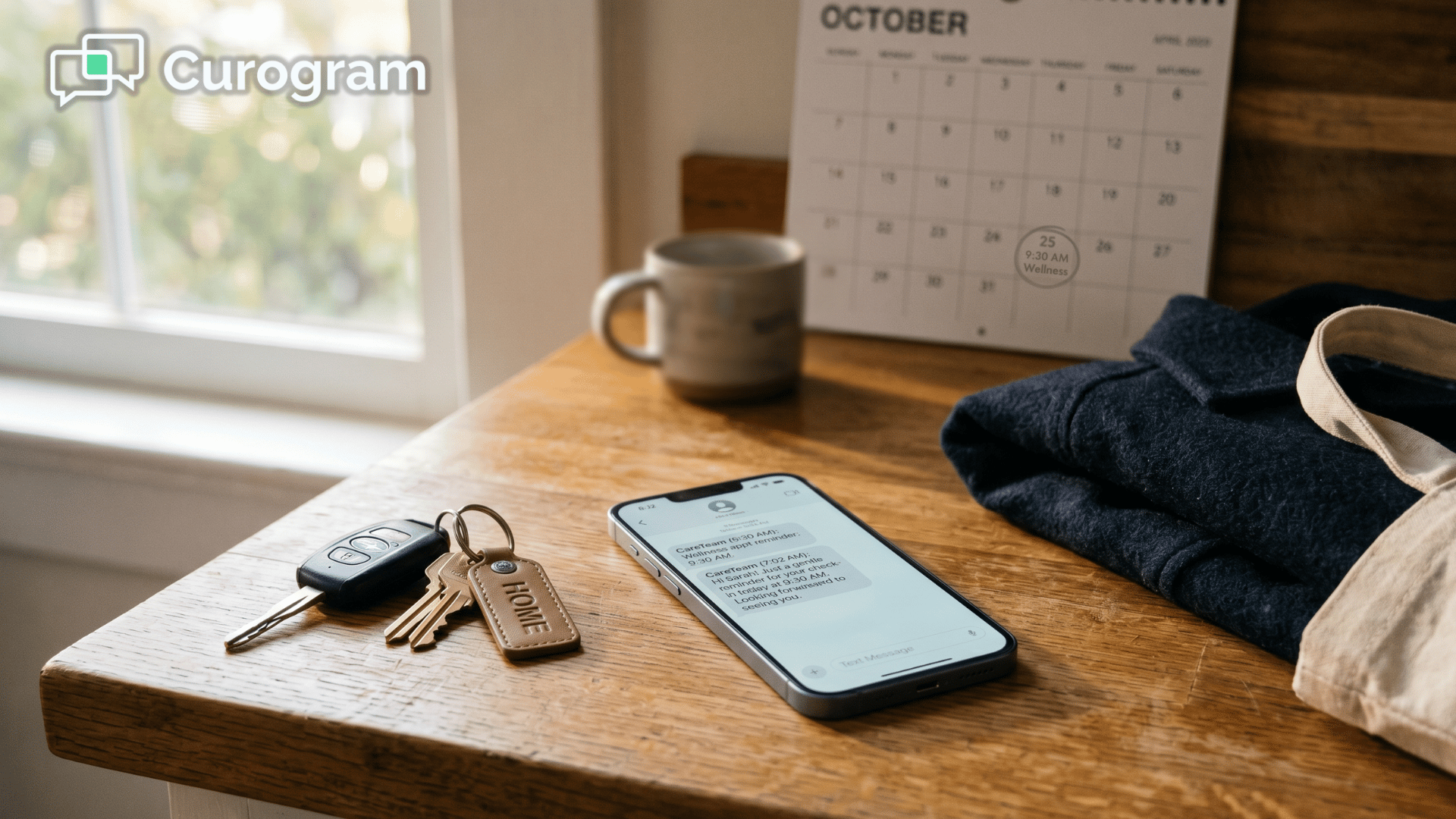
No. That is the point of the model. The client receives a normal text message, taps the link once, and the session opens in their phone's browser. There is no app to install, no account to set up, and no password to reset minutes before care.
For most behavioral health practices, setup is quick because nothing about your clinical workflow changes. Your clinicians keep joining the same Notenetic sessions, and your front desk keeps scheduling the way it always has. The only addition is the SMS launch link on the client side, which can be configured against your existing appointment list.
💡 Behavioral health coordinators lose their busiest five minutes to the same call every morning. A client can't find the portal login for a session...
💡 No-download telehealth for Notenetic behavioral health clients removes the four-step portal login that makes sessions fail in the final two...
💡 Notenetic gives behavioral health practices a solid schedule, but no automated SMS reminders. The Client Portal only shows appointments when...