8 min read
How Mobile Intake Forms Improve the SUD Client Experience Fast
Mira Gwehn Revilla
:
June 10, 2026
- A secure link arrives days before the first session — no app, no portal login.
- Clients complete PHQ-9, GAD-7, AUDIT-C, and consent forms in private.
- The text message never reveals treatment type on a lock screen.
- Practices save an estimated 15 to 20 minutes of paperwork per new client.
- Clinicians review scores first, so the session opens with care.
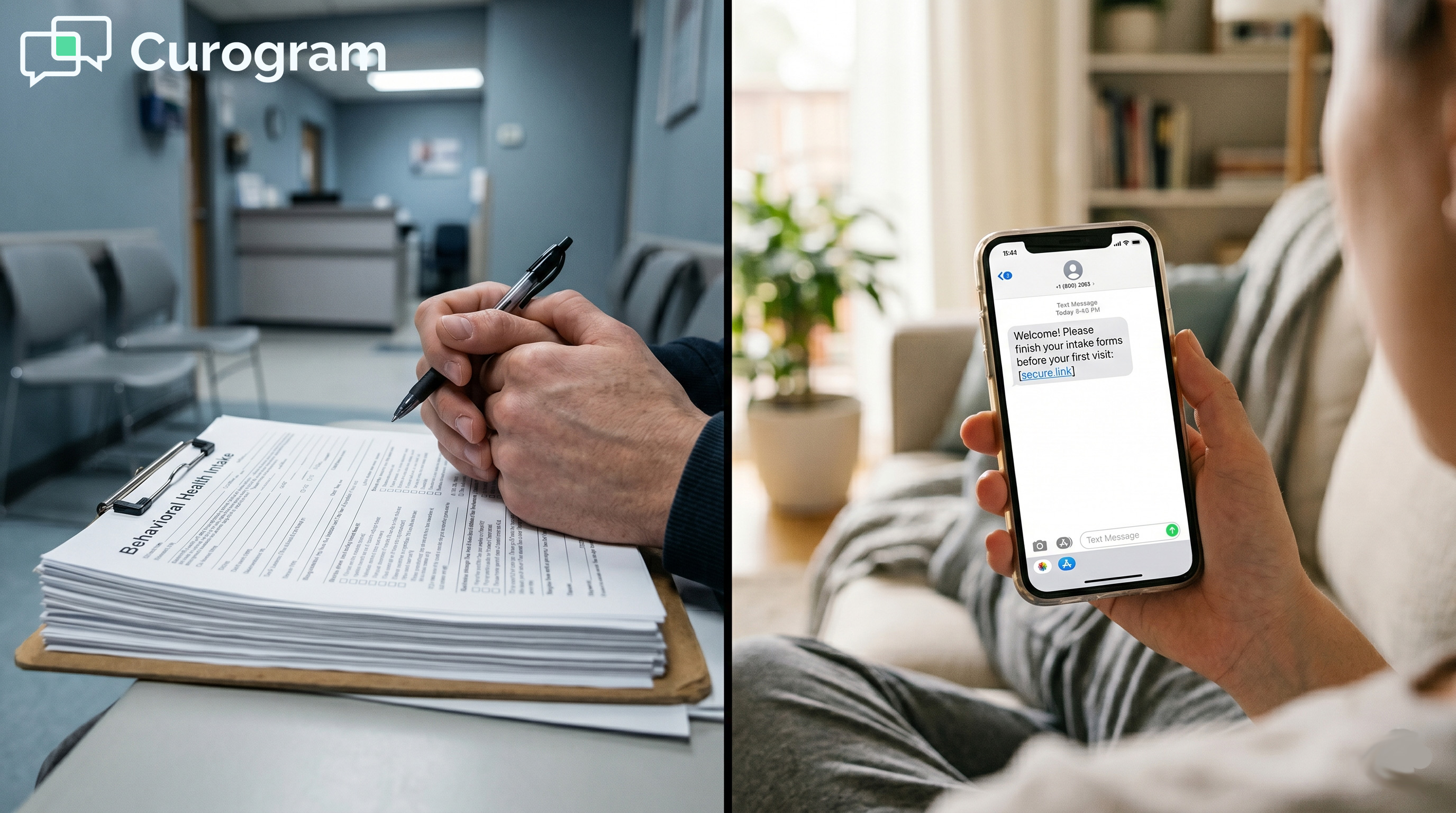
The first thing many new clients touch in your office is a clipboard. It holds 19 pages of dense forms. They must fill it out in a waiting room, near strangers, minutes before they meet you.
For a person seeking help with anxiety, depression, or addiction, this is not a small task. It is the moment their courage can break. They came to talk. Instead, they face questions about trauma and substance use in a public space.
Behavioral health SUD mobile intake forms change this client experience completely. A secure text link arrives on the client's phone days before the visit. They finish intake at home, in private, at their own pace. No app. No portal login. No clipboard.
This shift matters more than it seems. The waiting-room packet is a hidden barrier. It triggers avoidance and drop-off in the exact people you want to keep. Fragile motivation rarely survives a stack of legal forms.
A behavioral health paperless intake client experience removes that friction. Clients answer questions about mood, history, and use where they feel safe. They finish PHQ-9, GAD-7, AUDIT-C, and consent forms before they walk in.
The payoff is real for both sides. Practices save an estimated 15 to 20 minutes per new client. Clinicians review scores ahead of time and start with care, not forms.
This guide shows how text-delivered intake protects that first visit. You will see how it lowers anxiety and supports SUD treatment client engagement. You will also see how it meets strict privacy rules.
Your clients chose to seek help. The intake process should honor that choice, not test it.
The Villain: The Clipboard Gauntlet
Behavioral health clients face unique hurdles at intake. A client with social anxiety must write about symptoms in a public room.
A first-time SUD client must list substance use on a clipboard others could see. A client with ADHD or active use must focus through 19 pages of legal text in a strange place.
These are not minor annoyances. They are real obstacles to care. The setting works against the very people the practice wants to help.
The Agitation
Imagine a new client at their first counseling session. They are nervous. They have never seen a therapist before. The front desk hands them a clipboard and a thick stack.
The stack holds consent forms, a HIPAA notice, insurance details, emergency contacts, and a PHQ-9. It also holds a 42 CFR Part 2 form they do not understand. Their anxiety climbs.
They rush through the easy parts. They skip the questions that feel too personal. Then they hand the clipboard back, half done. The clinician walks in with an incomplete picture.
The Consequence
First sessions are where behavioral health programs lose the most clients. People schedule, then never complete intake or never show. The clipboard adds to this.
Asking clients to arrive early and fill out forms in a clinical space stacks friction high. For someone with shaky motivation, that load can be enough to cancel. Each step away from "Will I go?" toward "This is too much" raises the risk of a no-show.
The Result
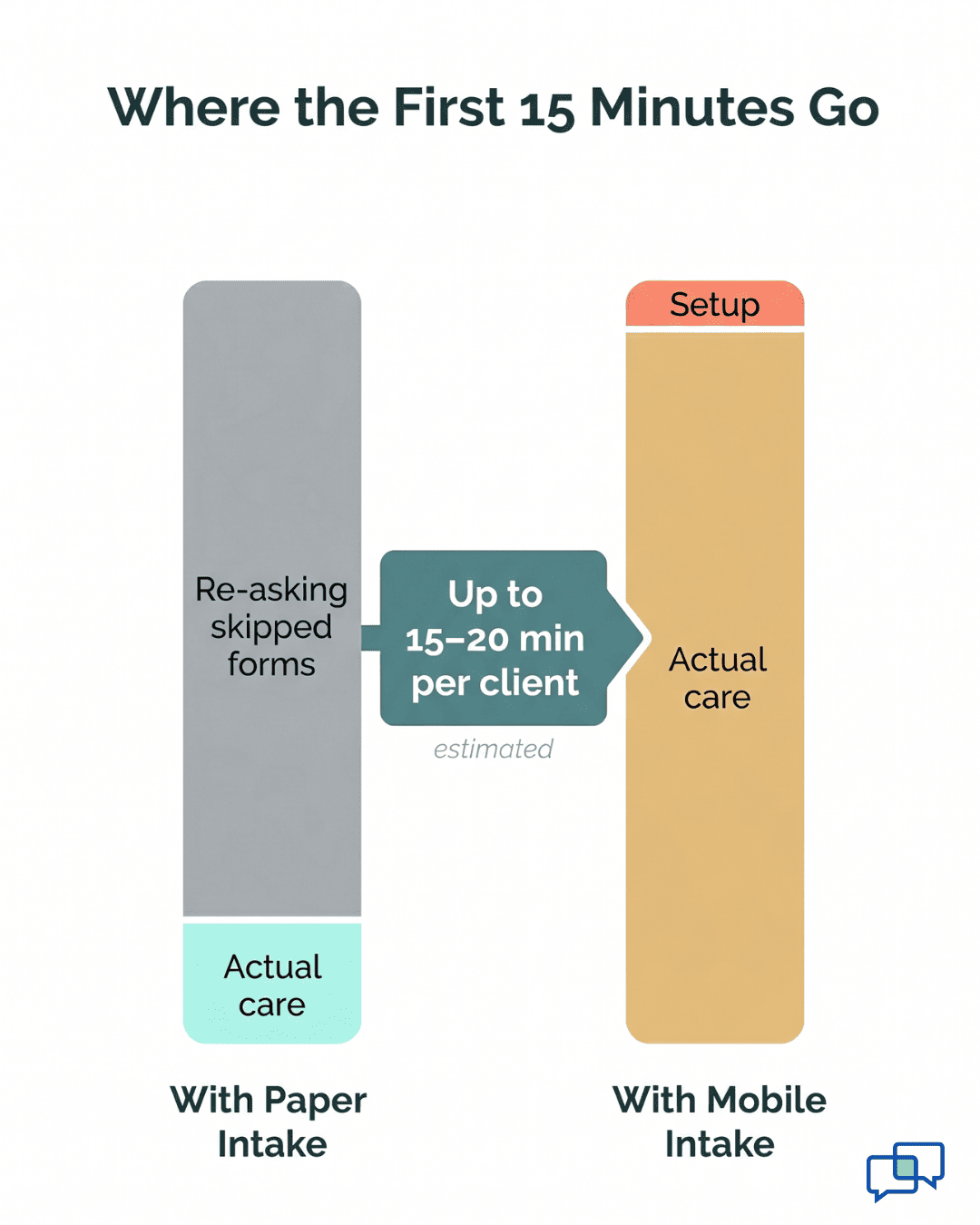
The therapist now reads a half-filled form. They spend the first 15 minutes asking the questions the client skipped on paper. The session feels like an interview, not support.
The client leaves with a quiet thought: "I came to talk, and instead I did paperwork." They wonder if it was worth it. The clinician wonders if they will return. Often, they do not.
That is the cost of the clipboard. It turns a brave first step into a test of patience. And it happens during the moment when trust matters most.

The Guide: Intake That Meets Clients Where They Are
Curogram moves intake out of the waiting room and into the client's home. A secure text link reaches their phone days before the session. They complete it in private, at their own pace, where they feel calm enough to answer hard questions.
Text-delivered forms make behavioral health onboarding feel simple and quiet. The client opens a link, not an account. Nothing about it feels clinical or rushed.
The Feature
Curogram's mobile-first form experience is built for a phone screen. Forms resize to fit, use plain words, and split long packets into short parts. Progress saves on its own.
So a client can start at night and finish in the morning. Their answers are still there. There is no app to download. There is no portal login or new account to set up.
The Integration
Completed forms land in Curogram's dashboard, ready for review. The clinician can check the client's PHQ-9, GAD-7, and AUDIT-C scores before the visit. They can also confirm consent status in one place.
The data flows into the clinical workflow without needing Sigmund API access. Curogram works as an independent intake layer. It fits beside your records system, not on top of it.

The Behavioral Health and SUD Fit
This design serves the population directly. Under 42 CFR Part 2, intake forms with mobile completion keep sensitive disclosures off any shared clipboard. Substance use history stays private from the start.
For clients with anxiety, private completion removes the waiting-room triggers. For clients with ADHD or cognitive strain, short sessions over a few days lower the mental load. For these clients, mobile forms drive real client intake anxiety reduction in a way paper cannot.
Mobile intake forms also lift SUD treatment client engagement from the first contact. The client feels the practice respects their privacy and their time. That feeling builds trust before the session even begins.
The technology adapts to the person. The person does not have to adapt to the technology. That is the core difference, and it is the whole point.
The Success: The First Session Starts with Conversation, Not Paperwork
Text-delivered intake saves an estimated 15 to 20 minutes of waiting-room paperwork per new client. Clients who finish forms before arriving are far more likely to show up. Pre-session contact is a key engagement touchpoint.
The impact on attendance is clear in our own results. Atlas Medical Center used a Curogram-powered engagement workflow with pre-session form completion built in. Based on our internal data, their no-show rate dropped from 14.20% to 4.91% in three months.
That is more than a small gain. Based on our internal data, Curogram clients see no-show rates about 53% lower than the industry average. Each kept appointment protects care and revenue at the same time.
|
Measure |
Before |
After |
|
Atlas Medical Center no-show rate |
14.20% |
4.91% |
|
Time spent on intake per client |
15–20 min in office |
Done at home |
|
Client privacy at intake |
Shared waiting room |
Private, on their phone |
Atlas figures based on Curogram internal data. Time savings shown as an estimate
The Shift
The first experience changes shape. The clipboard gauntlet becomes a welcome session. The client no longer meets a stack of paper. They meet a simple text: "Complete your intake whenever you're ready."
The session then opens in a new way. The clinician says, "I've read your assessments. Let's talk about what brought you here." That single sentence signals that the client was seen before they arrived.
This is the behavioral health first session experience improvement that programs aim for. The work that used to eat the first 15 minutes is already done. The hour belongs to the client.
The Outcome
Picture a new SUD client three days out from their first visit. They get a text: "Complete your intake forms before your appointment." That evening, on their couch, they finish the AUDIT-C, consent forms, insurance details, and emergency contacts.
No one is watching. No one is waiting. When they arrive, the clinician has already reviewed their scores. The conversation starts with context and warmth.
The client feels understood from the first minute. They are not a form to process. They are a person who was expected. That feeling is what brings them back for session two.
This is the quiet power of intake done right. It does not just save staff time. It removes a reason to give up. And for a client in early treatment, removing one reason to quit can change everything.
Why Curogram Protects the First Session Better Than the Waiting Room
The first session sets the tone for all of treatment. If it feels cold or clerical, the client may not return. Curogram is built to protect that moment, not crowd it.
The core idea is simple. Intake should happen where the client feels safe, not in a public room full of strangers. A secure text link lets them answer hard questions at home, on their own phone, at their own pace.
This matters most for behavioral health and SUD clients. Many arrive with anxiety, shame, or doubt about treatment. A clipboard packet can tip a hesitant person toward leaving. A private, mobile form lowers that pressure and keeps them moving toward care.
Privacy is built in at every step. The text notice never names the treatment type, so a lock screen reveals nothing. The forms open through a secure link and stay encrypted in transit and at rest. For SUD clients under 42 CFR Part 2, this keeps sensitive history off any shared surface.
There is no app to download and no portal login to remember. That removes two common points where clients give up. The form simply meets them on the device they already use every day.
For your staff, the gain is just as real. Completed forms arrive in one dashboard, ready for review. Clinicians see PHQ-9, GAD-7, and AUDIT-C scores before the visit. The first 15 minutes go to the client, not to catching up on paper.
Curogram does not replace your records system. It works beside it as an independent intake layer, with no Sigmund API access needed. It handles the client-facing part your records system was never built to do: collecting intake the way real clients need it.
Conclusion: Intake Should Feel Like the Beginning of Care, Not a Barrier to It
Paper intake creates barriers for the very people behavioral health practices serve. A clipboard in a public room is not a neutral step. For an anxious or hesitant client, it can be the reason they walk away.
Text-delivered mobile forms remove that friction. Clients complete intake at home, in private, before they arrive. They answer honestly about mood, history, and substance use. They feel respected from the first contact.
The change is bigger than convenience. It protects the first session, the most fragile point in treatment. It turns an administrative chore into a warm start. And based on our internal data, it helps cut no-shows in a measurable way.
Here is the key distinction. Your records system stores clinical data and treatment notes. Curogram handles the client-facing experience that decides whether clients finish intake and show up. The records system holds the data. The mobile form collects it the way your clients actually need.
Your clients chose to seek help. That choice took courage. Do not let the intake process become the reason they change their mind.
See what text-delivered, mobile-completed intake looks like for behavioral health and SUD programs. It takes just 15 minutes to see the full workflow.
See the text delivery, mobile completion, and clinician review flow live. Book a demo and watch it work in real time.
Frequently Asked Questions
The text notice never names the treatment type, so a lock screen reveals nothing. Forms open through a secure, encrypted link. Sensitive substance use history stays off any shared clipboard in a public waiting room.
Private completion removes the social pressure of a waiting room. With no receptionist or other clients nearby, people feel safer disclosing substance use, mood, or trauma. Honest answers give clinicians more accurate data before the first session begins.
The client arrives without a paperwork hurdle waiting. The clinician has already reviewed their scores. The session opens with conversation and context, not 15 minutes of skipped questions. That calm start helps a nervous client feel understood quickly.
A 19-page clipboard adds friction at a fragile moment. Early-treatment motivation is often shaky. Asking clients to arrive early and write about hard topics in public can tip them toward canceling or simply not showing up.
Curogram forms run on any phone with a browser and basic data. For the few without access, offer tablet completion in the office or keep paper as a fallback. Most clients get the mobile option; everyone keeps a path forward.