9 min read

Digital Imaging Intake | Stress-Free Patient Forms | RamSoft

Digital Imaging Intake | Stress-Free Patient Forms | RamSoft
💡 The radiology patient digital intake experience using text forms at an imaging center begins before the patient walks through the door.             

Instead of handing patients a clipboard at the front desk, imaging centers can send secure digital forms via text 24–48 hours before the appointment.      

This paperless radiology intake process reduces check-in time to under 5 minutes, improves form accuracy, and cuts imaging patient intake forms anxiety — especially for first-time patients who have never had an MRI or CT scan before.        

RamSoft and Curogram make this possible together.

A patient arrives at your imaging center for their very first MRI. They're already nervous — they've never been inside a scan room, they're not sure what to expect, and they've been told not to eat since the night before.

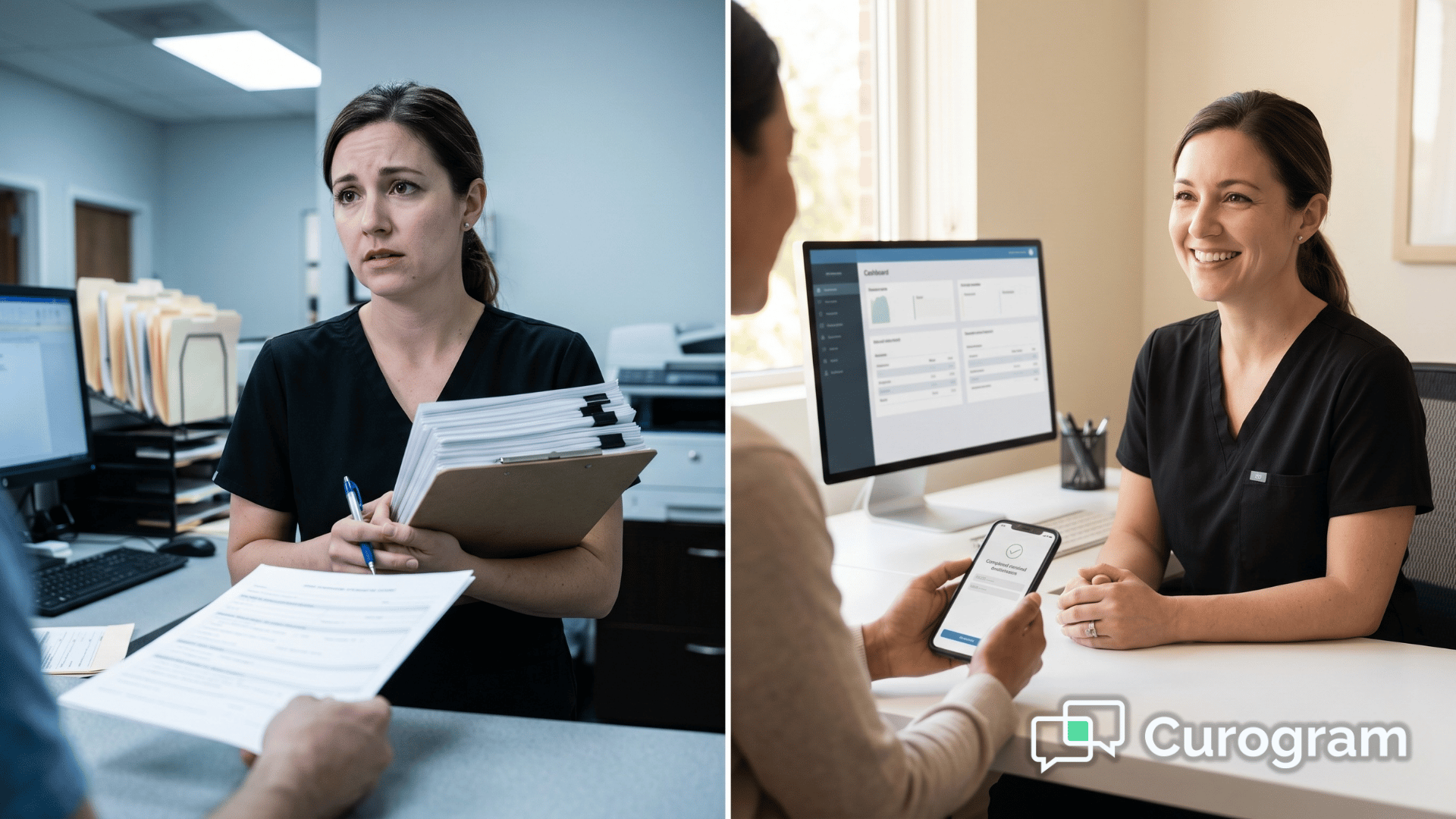
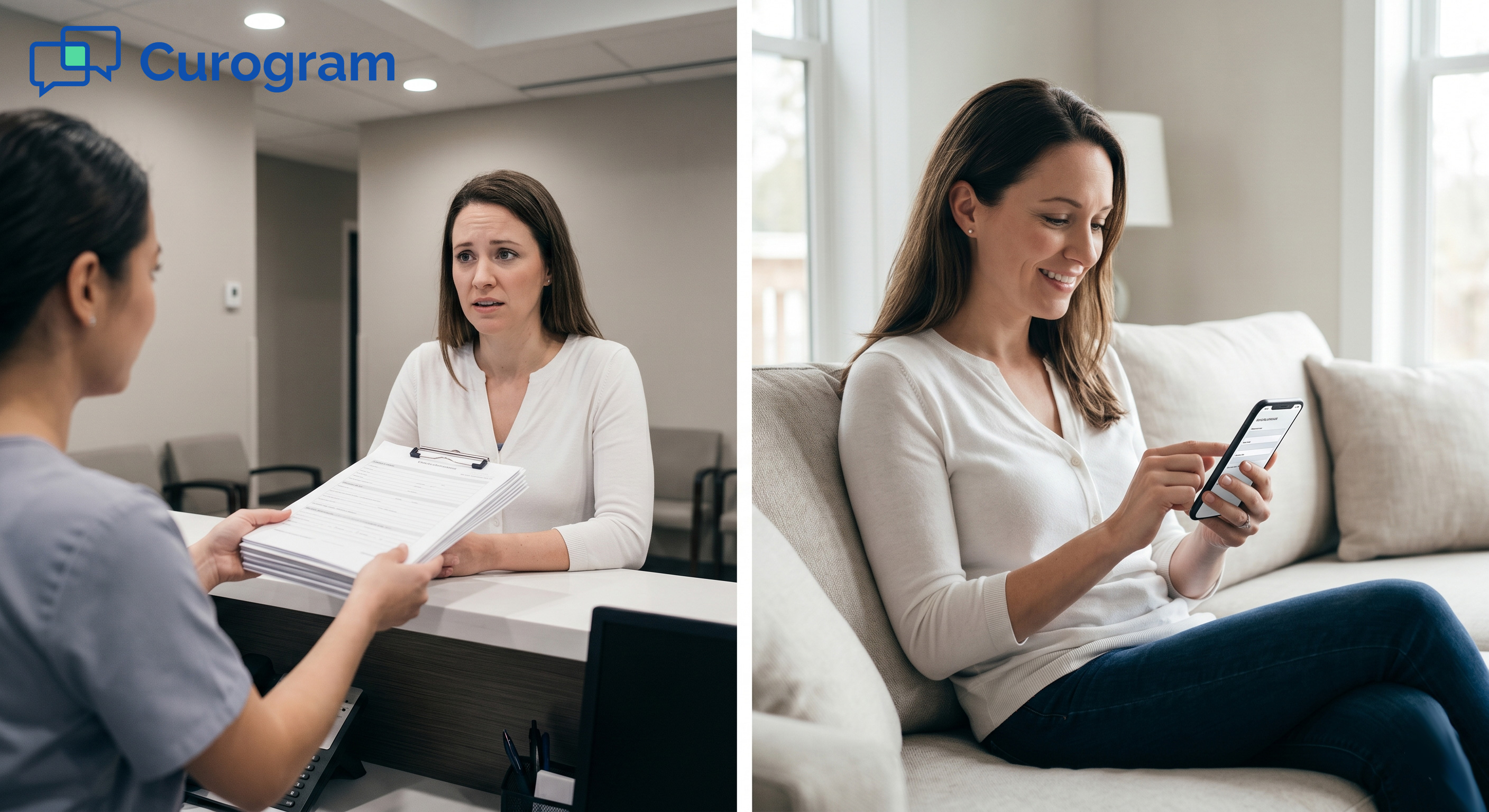
They check in at the front desk, and the receptionist slides a clipboard across the counter.

Four pages. Single-spaced. Medical history, insurance information, surgical history, and a full page of contrast screening questions written in clinical language they've never seen before.

Have you ever had a reaction to iodinated contrast media?

They stare at it. They're not sure. Their handwriting gets messy. They skip a question. Then another. They don't have their insurance card. They can't remember the name of the surgeon who fixed their knee in 2014.

A staff member eventually pulls them aside — the appointment is now running 20 minutes late.

The imaging study itself went fine. But the patient leaves with one clear memory: the paperwork was confusing, the wait was long, and no one warned them about any of it.

They leave a 2-star Google review. Their referring physician hears about it from a colleague. And just like that, a single intake failure starts quietly eroding your referral network.

This isn't a rare edge case.

It happens every day at imaging centers across the country, and it's almost entirely preventable.

The radiology patient digital intake experience using text forms at your imaging center has the power to change this completely.

Not by adding a new app or rebuilding your workflow from scratch — but by sending a single, secure text message 24 to 48 hours before the appointment.

The rest of this article will show you exactly how it works, why it matters, and what it means for your clinic's reputation and bottom line.

Why the Waiting Room Clipboard Is Still Costing Your Clinic

It sounds like a small thing. A clipboard with a few forms. In practice, it's one of the most friction-heavy moments in the entire patient journey — and most imaging centers haven't solved it.

Here's the root of the problem:

RamSoft's Blume app includes digital intake forms that are powerful, smart, and fully secure.

But they require the patient to have the app downloaded and set up before their appointment. For a regular primary care patient who visits the same clinic multiple times a year, that might make sense. But radiology is different.

70–90%

Of imaging patients visit an imaging center once — maybe twice — in their lifetime. They are not going to download an app for a single appointment.

So your clinic defaults to the analog fallback: a physical clipboard in the waiting room. And that's where the experience starts to fall apart.

What It Actually Feels Like to Be That Patient

Walk through the check-in experience from a first-time imaging patient's point of view. They arrived 15 minutes early, just like the reminder told them to. They check in. The receptionist hands them a clipboard.

And from that moment, the friction begins:

  • Medication list — they write down what they remember, and hope it's accurate enough.
  • Insurance information — they realize their card is in their other wallet.
  • Contrast screening"Have you had previous surgeries? Any metallic implants?" They're not sure whether a dental crown counts. They guess.
  • Blank sections — they leave two fields empty because they genuinely don't know the answers.

By the time they hand the clipboard back, three questions are skipped and the pharmacy number is wrong.

That's not a patient failure. That's a system failure.

The Downstream Damage Is Real

The intake coordinator reviews the forms and finds the gaps. She pulls the patient aside — the appointment is now running 25 minutes late. Other patients are waiting. The imaging technician doesn't have the information she needs before entering the scan room.

Your imaging patient intake forms anxiety hasn't just made the morning harder.

It's created real operational drag:

Delayed studies, rushed staff, and a patient who is now more stressed going into a procedure that already made them nervous.

The patient leaves frustrated. They write a review. And that review — the one born entirely from a clipboard and a waiting room — costs you future referrals from physicians who hear about the experience secondhand.

That's the real cost of clipboard-based intake. And it's hiding in plain sight.

A Smarter Way to Handle Pre-Visit Registration for Imaging Patients

The fix isn't complicated. It's a text message.

Specifically, it's a HIPAA-compliant, encrypted digital intake form delivered via secure text link 24 to 48 hours before the patient's scheduled appointment.

The patient receives the text on the phone they already carry, taps the link, and completes their intake forms at home — at their own pace, with full access to their medication bottles, insurance card, and as much time as they need.

No app download. No portal login. No password to create and immediately forget.

This is the foundation of a better pre-visit digital registration experience for imaging centers, and it starts with meeting the patient where they already are: their text messages.

Plain Language Changes Everything for First-Time Patients

One of the biggest reasons imaging patients leave questions blank isn't laziness — it's confusion. Clinical language assumes a baseline of medical knowledge that most patients simply don't have.

Curogram's smart forms are built around plain-language alternatives.

Instead of "Have you ever had a reaction to iodinated contrast media?", the patient sees:

"Have you ever had an allergic reaction to the dye used in some imaging scans?"

Instead of being asked about metallic implants with no context, they see a tooltip that explains: "

This includes things like pacemakers, metal joint replacements, or pins from an old surgery."

These aren't cosmetic changes. They directly improve the accuracy and completeness of the data your team receives.

Contrast screening questions explained in plain, patient-friendly language mean fewer blank fields, fewer clarification calls, and fewer delays on the day of the appointment.

For a first-time imaging patient who already doesn't know what to expect inside the scan room, removing that language barrier is a meaningful act of care.

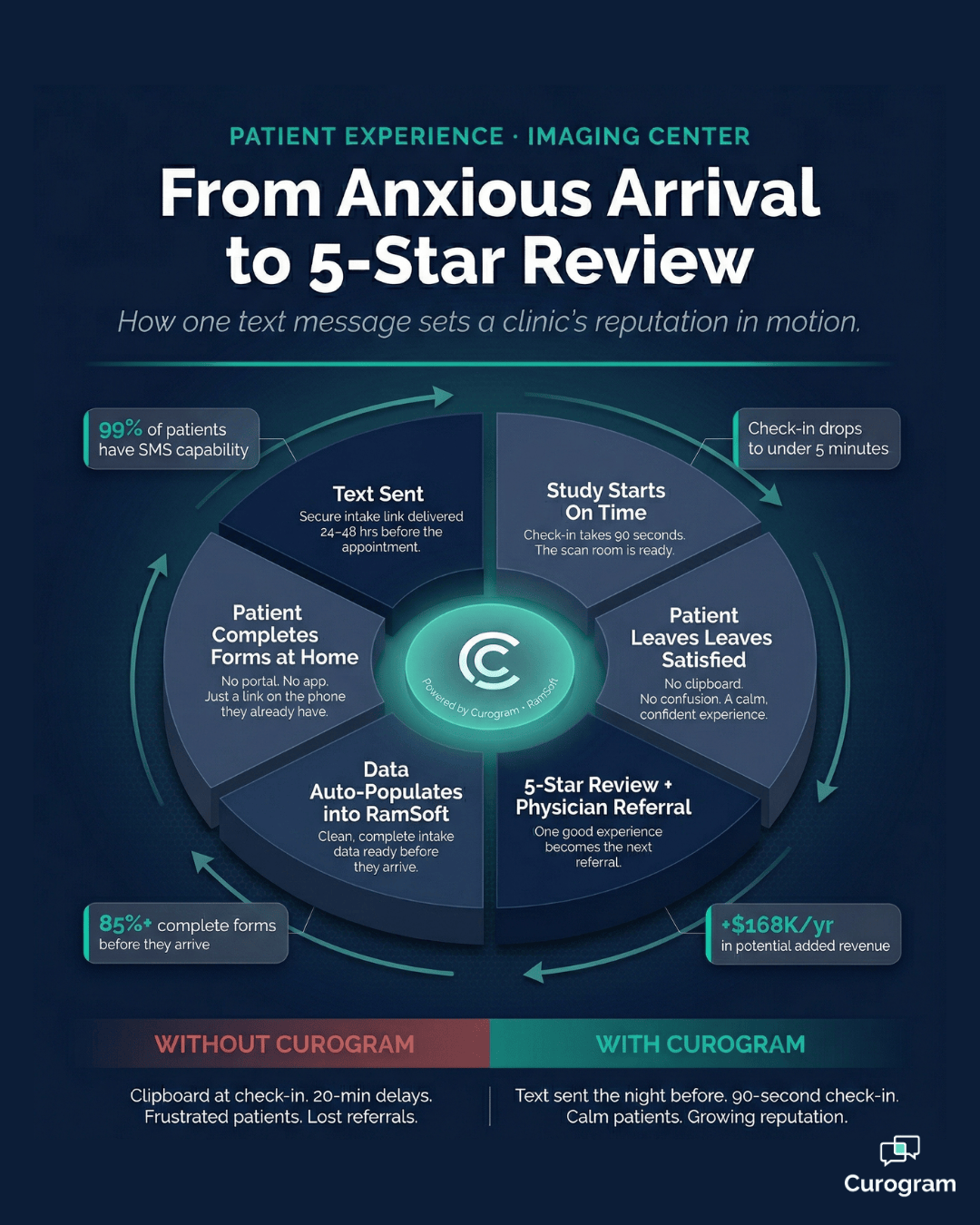
Infographic showing how radiology digital intake leads to 5-star reviews and more referrals

How It Connects to Your Existing RamSoft Workflow

Here's where the operational value really kicks in.

The workflow is straightforward:

  • The patient completes their digital intake via text link before the appointment — no login, no app.
  • Completed data auto-populates directly into RamSoft's patient records, with no manual re-entry required.
  • By the time the patient walks in, your staff confirms demographics in under 90 seconds and the technician enters the scan room with everything they need.

No surprises. No scrambling. No delays. That's what clipboard-free patient check-in actually looks like when it's done right.

What Happens When Your Imaging Center Gets This Right

The more important shift isn't measured in seconds at the front desk. It's measured in how the patient feels when they walk in.

85%+

Of patients complete their intake forms before they ever arrive — when text-based pre-visit digital registration is in place.

That means your staff walks into the day with complete data already in hand. No chasing. No delays. No clipboards.

From Overwhelmed to Prepared: The Patient Experience Shift

Think about what the first-time imaging patient experience looks like when intake is handled before the visit.

The patient receives a text the day before.

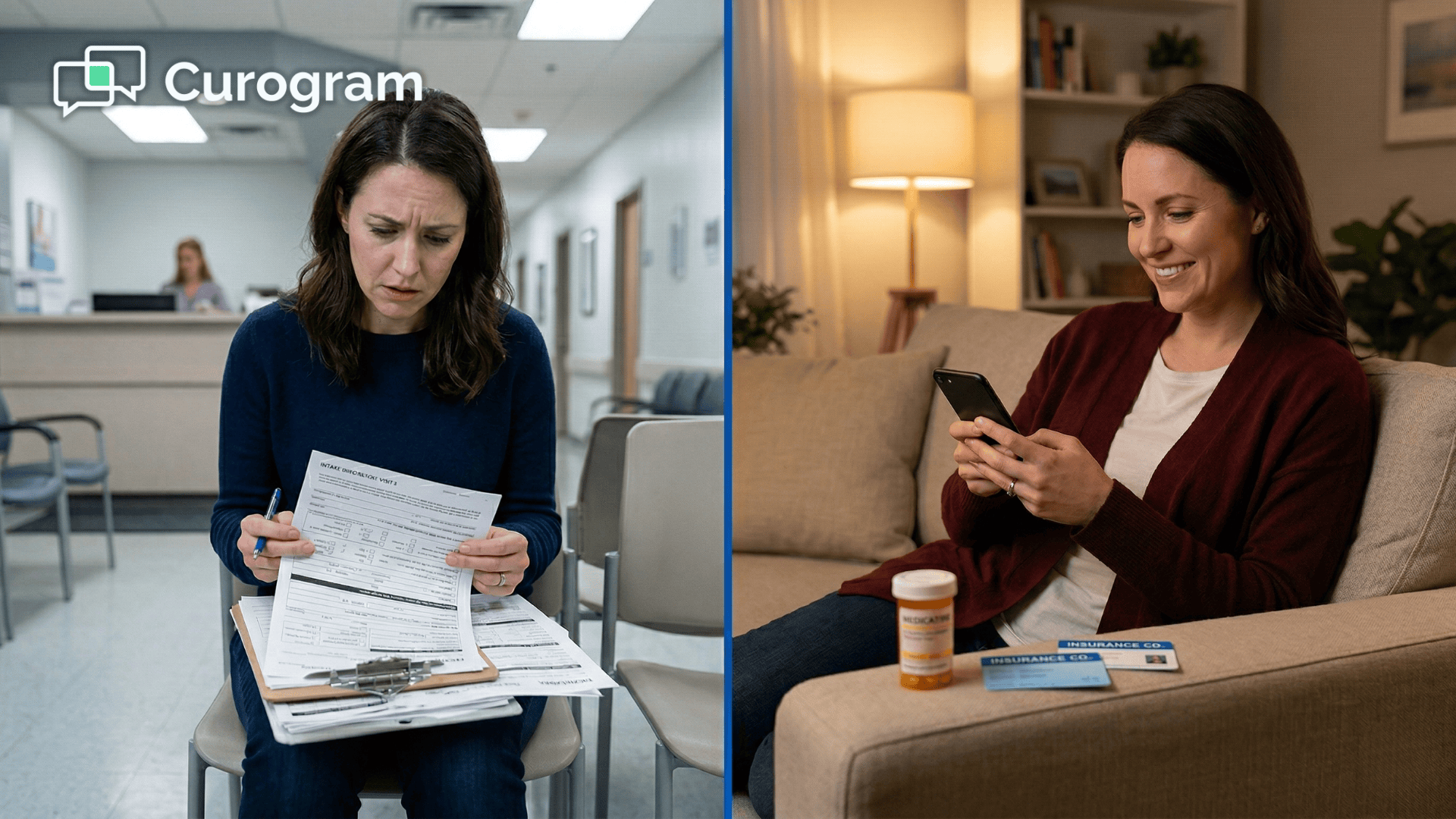
They open the form while sitting on their couch, medication bottle in hand, insurance card next to them on the coffee table. They read each question carefully. They look up a term they don't know. They answer every section completely and accurately, hit submit, and move on with their evening.

The next morning, they arrive at your imaging center. They check in. It takes 90 seconds. Their name is called right at their scheduled time. They walk into the scan room knowing the paperwork is done, the contrast screening questions are answered, and the only thing left is the study itself.

Their anxiety about the imaging procedure is still real. But imaging patient intake forms anxiety? Gone entirely.

The Referral Impact Is Where It Gets Interesting

Patient experience in radiology is directly tied to referral patterns. This matters more than most imaging center administrators realize.

Primary care physicians and specialists send patients to imaging centers based on two things: clinical reputation and patient feedback.

When a patient tells their doctor, "The forms were confusing and we waited forever", that plants a seed of doubt.

When they say, "It was seamless — I did everything from my phone the night before and walked right in", that's a referral-reinforcing moment.

A 20% increase in referrals — driven in part by a better patient intake experience — translates to roughly $168,000 in additional revenue per year for a clinic running 200 studies per month at $350 per study.

The intake form is not just an administrative detail. It's a revenue touchpoint.

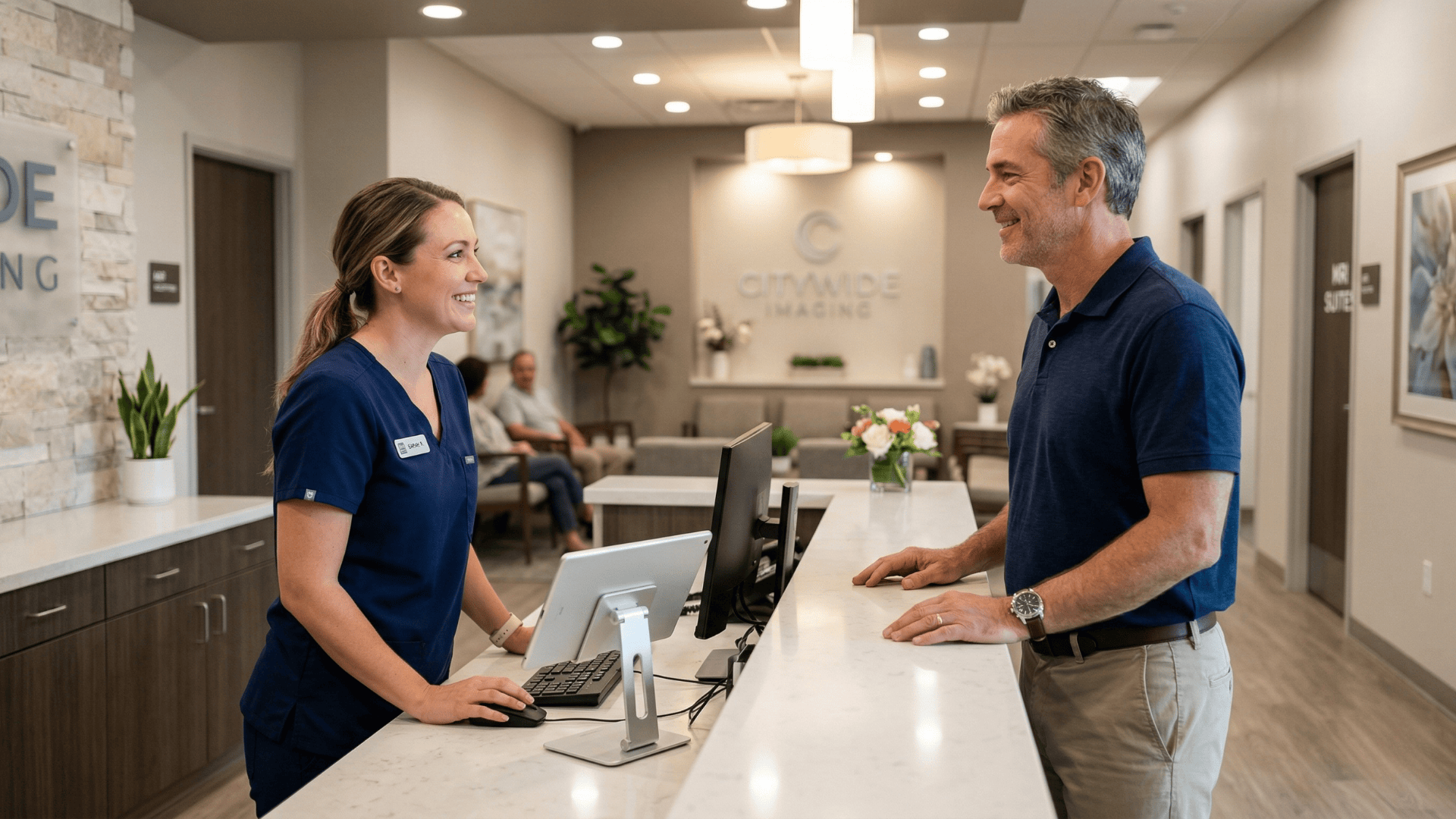
Patient checking in at imaging center front desk without paperwork using digital intake

The 99% SMS Reality

Here's a statistic worth sitting with:

99% of adults in the U.S. carry a phone with SMS capability.

That's your entire patient population, reached through a channel they already use dozens of times a day.

The contrast with app-based intake is stark:

  • App-based intake — realistically reaches 10–30% of your patient population, mostly returning patients who downloaded it for a prior visit.
  • Text-based intake — reaches 99% of patients, including the first-timers who make up the majority of your imaging volume.

Kill the clipboard! Streamline intake and decrease wait times with Curogram's mobile-friendly online forms.  

A text link feels native. Expected. Low-friction. Curogram's paperless radiology intake process is built around this reality.

Not because apps are bad — Blume is excellent for what it does — but because 70 to 90% of your imaging patients will never open it. Text reaches the patients Blume can't.

Your Patients Arrive Ready. Your Clinic Runs on Schedule.

When pre-visit digital registration works the way it should, the ripple effects touch every part of your day.

Under 5 minutes that's the average check-in time for imaging patients who completed their intake forms via text before the visit. Compared to 15–25 minutes with a clipboard at the front desk.

The shift is simple to describe: from waiting room overwhelm to prepared, confident patients. But the impact runs deeper than check-in speed.

What Changes for Your Staff

Your front desk team stops spending the first 20 minutes of every appointment tracking down incomplete information. Instead of pulling patients aside to clarify blank fields or decode rushed handwriting, they confirm demographics in 90 seconds and move on.

Your imaging technician enters the scan room with clean, accurate data already loaded.

No last-minute scrambles. No delayed study starts.

That's not a small operational improvement — it compounds across every appointment, every day.

What This Means for Your Referral Network

The patient experience your clinic delivers at check-in directly shapes what referring physicians hear next.

When intake runs smoothly, three things tend to follow:

  • Patients leave with a positive first memory of your clinic — not paperwork chaos.
  • Positive reviews accumulate, strengthening your online reputation with the physicians who check it.
  • Referring physicians hear good feedback firsthand and continue — or increase — their referral volume to your center.

Blume handles records after the study. Curogram handles intake before the study begins.

Both working together means complete patient engagement across the entire imaging visit — and that's exactly the standard your patients and referring physicians have come to expect.

The Clipboard Had a Good Run. Your Patients Deserve Better.

Here's the honest truth: the clipboard is not going away because imaging centers don't care about patients. It's going away slowly because the alternatives used to require more friction — not less.

App downloads, portal registrations, new passwords. For a first-time imaging patient who's already anxious about their procedure, any added step feels like a barrier.

Text-based digital intake removes the barrier entirely. One secure link, sent the day before. No download. No account. No confusion.

The result is a radiology patient digital intake experience using text forms at your imaging center that feels effortless — because for the patient, it largely is.

They complete their forms at home, in their own time, in language they can actually understand. They arrive at your clinic ready. Your team already has what it needs.

The study starts on schedule.

That's what a patient-first intake experience looks like in practice. And it pays for itself in the first referral it protects.

The imaging centers that move first on this aren't just improving check-in times.

They're quietly building a reputation as the clinic that gets it right — the one where patients don't dread the paperwork, where referring physicians hear good things, and where Google ratings reflect a genuinely smooth experience from start to finish.

Your staff spends less time chasing incomplete forms. Your technicians walk into the scan room prepared. And your patients leave with something far more valuable than a completed form: a positive first impression they'll pass along.

If you're ready to see what clipboard-free patient check-in looks like at your imaging center — with real numbers, a live demo, and a walkthrough of how Curogram integrates with RamSoft the next step is simple.

Schedule a demo today and see how Curogram and RamSoft work together to transform your intake process, from the patient's couch to your scan room.


Frequently Asked Questions

Are text-delivered medical intake forms HIPAA-compliant? Is patient information secure?

Yes, fully. Curogram's text-delivered forms are HIPAA-compliant and encrypted end-to-end. Each form link is patient-specific, time-limited, and accessible only to the intended recipient. Completed data flows encrypted directly into RamSoft's patient records through the Blume integration. Nothing is stored on public cloud servers, and patient consent is captured as part of the intake workflow itself. Your imaging center remains fully compliant with HIPAA, HITECH, and applicable state-level medical privacy regulations.

What about patients who don't have smartphones or who speak a different language?

Text-based intake works on any phone with SMS capability — not just smartphones. For patients without mobile access at all, your staff can send the form via email or have the patient complete intake on a clinic tablet at check-in. It's still faster and more accurate than a paper clipboard. For non-English-speaking patients, Curogram supports multilingual forms in Spanish, Mandarin, Vietnamese, and other languages, with plain-language explanations available in each to reduce medical terminology barriers.

What happens if a patient doesn't complete the forms before their appointment?

If a patient doesn't complete their pre-visit digital registration, your staff can send a reminder text on the day of the appointment — which typically pushes completion rates above 90%. At check-in, patients can finish any remaining sections on a clinic tablet with staff assistance. Either way, it's faster and produces cleaner data than a waiting room clipboard.

Does Curogram replace RamSoft's Blume app for intake?

No — it extends it. Blume is excellent for patients who want to access their imaging records after the study. Curogram reaches the 70–90% of first-time imaging patients who will never download an app for a single visit. Together, they cover the full patient journey: text-based intake before the study, in-app record access after it.

How quickly can an imaging center get set up with Curogram?

Curogram is designed to be implemented quickly, with staff training completed in as little as 10 minutes. It integrates with RamSoft and almost any other EMR system, meaning you don't need to rebuild your existing workflow. Most imaging centers are fully operational with text-based intake within days of setup, not months.