7 min read
Broadcast Texting for Prime Clinical | Activate Your List
Aubreigh Lee Daculug
:
August 13, 2026
Curogram runs that layer alongside Prime Clinical, so one message reaches the right patients in minutes instead of days.
This closes what many practices never name aloud: "The Dormant Patient List." Cardiology, internal medicine, family medicine, gastroenterology, OB/GYN, ophthalmology, and pediatrics all serve older patients who text fluently but rarely finish setting up a portal account.
Curogram clients running recall campaigns see 35% appointment reconversion within a month.
Prime Clinical broadcast text messaging patient announcements go out as filtered broadcasts, sent by patient criteria you set: age band, last visit date, provider, or appointment type.
Curogram runs that layer alongside Prime Clinical, so one message reaches the right patients in minutes instead of days.
That solves a quiet problem most practices never name. Call it "The Dormant Patient List."
Your database holds twenty years of relationships. Names, phone numbers, last visit dates, provider history. It is the most valuable thing your practice owns. Almost none of it is reachable in a single motion.
So outreach happens the slow way. Someone picks up the phone and starts dialing. A poster goes up in the lobby. A letter goes out to the twelve patients who still open letters.
Meanwhile a new clinic across town texts its 400 patients and fills a Saturday. You have ten times that list and no easy way to reach any of it.
The gap hits traditional specialties hardest. Cardiology, internal medicine, family medicine, gastroenterology, OB/GYN, ophthalmology, and pediatrics all serve older patients who have been with the practice for years.
Those patients text every day without thinking about it. Ask them to log into a portal and most never finish setting up the account.
Prime Clinical has been your foundation for years, and it does what it was built to do. It charts. It bills. It keeps your clinical record clean and complete.
It was never meant to be a broadcast tool.
That is the whole gap. Not a swap for your EHR, but a layer that turns a quiet database into something that books visits on a schedule you set. Nothing about your charting or your billing workflow has to change.
Curogram clients who run recall campaigns see 35% appointment reconversion within a month.
Why Twenty Years of Records Sit There Doing Nothing
Prime Clinical does not send broadcasts. There is no screen where you pick 600 patients and send one message. It was built to document care, not to mass text patients medical practice teams need to reach this week.
So every announcement, every recall, and every closure notice goes out one patient at a time. Or it does not go out at all.
Most practices know this. Fewer have counted what it costs.
Think about your October flu clinic.
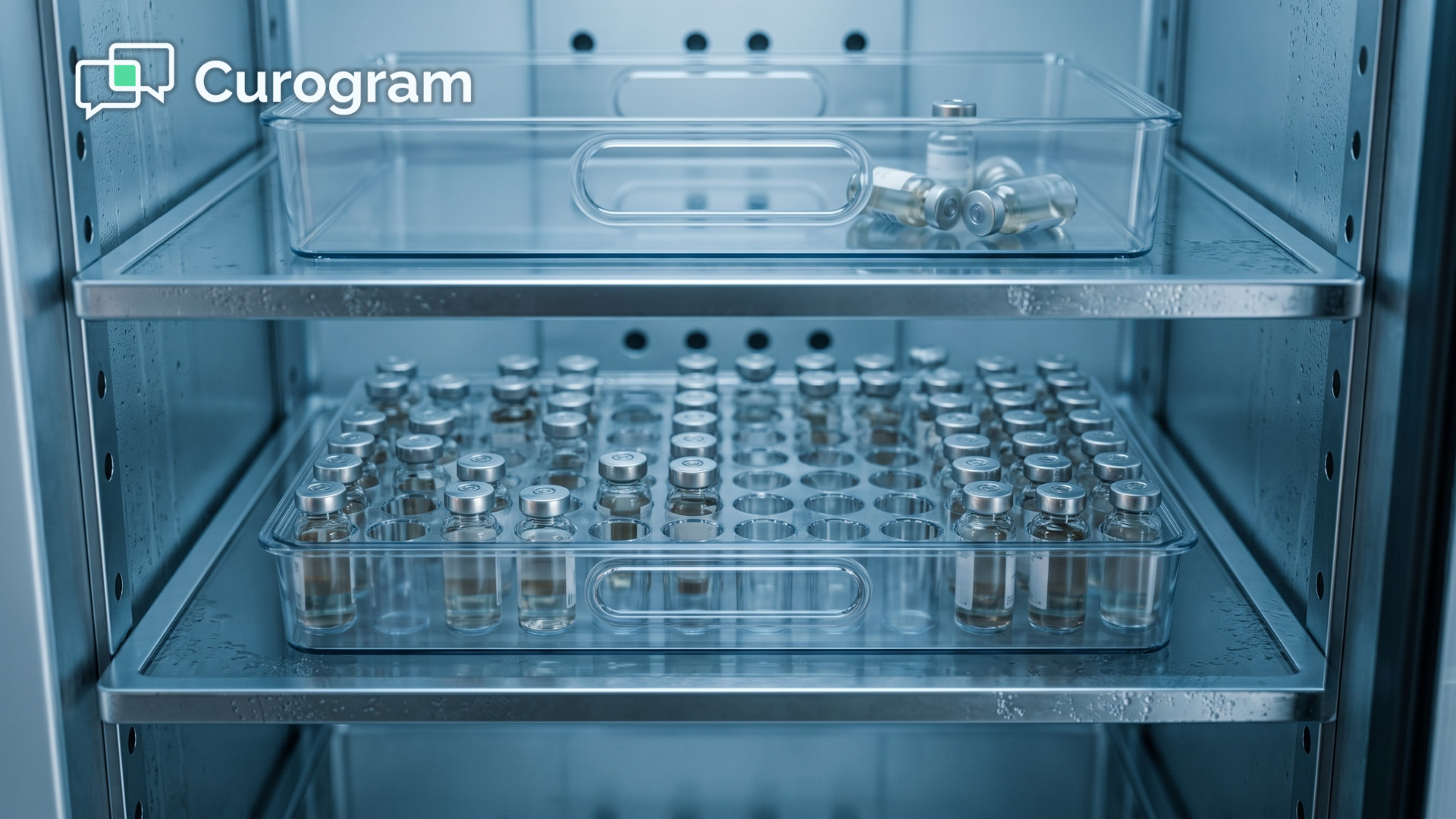
You order 200 doses in August. The plan for filling those slots is a lobby poster, a mention at checkout, and whatever calls your front desk can squeeze in between everything else.
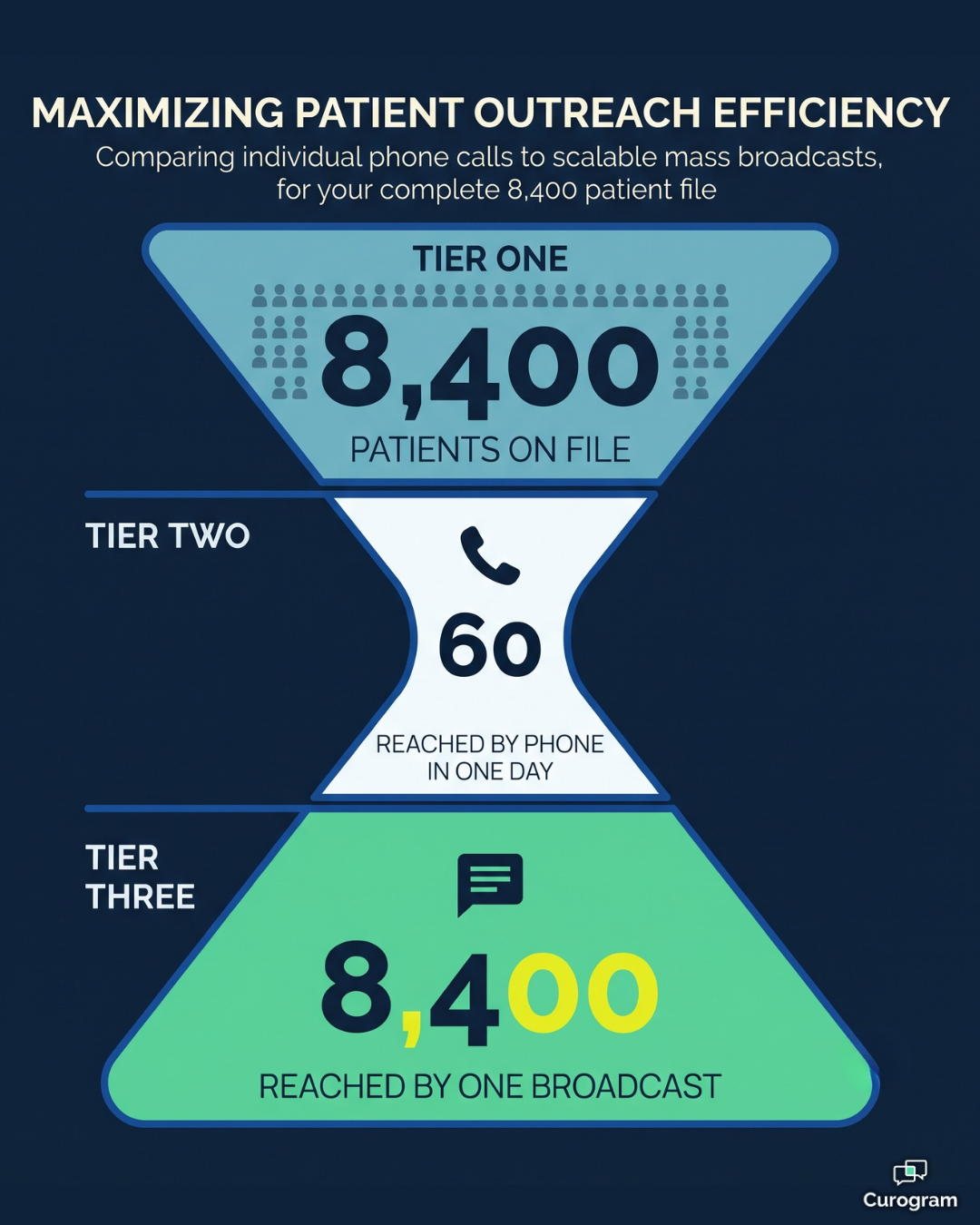
By late November, you have given 60 doses.
The other 140 sit in the fridge until they expire. And the loss is bigger than the vaccine itself, because each unused dose was also a visit that never happened.
| What you spent | Amount |
|---|---|
| 200 doses ordered (about $20 each) | $4,000 |
| 60 doses actually given | $1,200 |
| 140 doses expired | $2,800 |
| 140 missed visits (about $45 admin fee each) | $6,300 |
| Total value lost | $9,100 |
Those dollar figures are an example, not a quote, since vaccine and reimbursement rates vary. But the shape holds for most practices. One weak outreach channel turned a $4,000 purchase into a $9,100 hole.
Now widen that out. The same silence covers annual wellness reminders, overdue screenings, provider schedule changes, and every patient who drifted away eighteen months ago and simply never came back.
Established practices sit on the deepest asset in their market and cannot work it. Newer clinics with thin lists work theirs constantly. Guess which one grows faster.
Then there is the 6:30 AM problem.
Snow, a burst pipe, a provider out sick. Someone has to call the entire day's schedule before patients start driving in.
That someone is usually your office manager, working down a printed list for the next ninety minutes while the phones ring.
A HIPAA-compliant two-way texting platform solves that in one message. The question is how the message gets built.

Turning a Static Database Into a Working Channel
Curogram acts as the list activator. It does not touch your charting or your billing. It reads the patient data Prime Clinical already holds and gives you a way to reach any slice of it on purpose.
Think of it as the layer your EHR was never meant to be.
Filters Do the Sorting for You
A broadcast is only useful when it goes to the right people. Sending a diabetes screening reminder to your whole list annoys everyone and books almost no one.
So you set criteria before you send:
- Age band, for shingles vaccines or Medicare wellness visits
- Last visit date, to isolate patients unseen in 12, 18, or 24 months
- Provider, when one physician's panel needs a schedule change notification patients read before they leave the house
- Appointment type, so cardiac follow-ups and annual physicals get different messages
A flu shot reminder text campaign takes about ten minutes to build this way. Pick patients over 50 who were seen in the last two years, write four sentences, schedule the send.
The Data Arrives Without a Single Export
This is where most practices expect friction, and where there is none.
Patient demographics and visit data flow in through an HL7 connection that goes live in 48 hours. Your segments build themselves from live data.
No CSV exports, no spreadsheet cleanup, no staff member retyping phone numbers on a Friday afternoon.
That also means your filters stay accurate. A patient who came in yesterday drops out of your eighteen-month lapsed list automatically.
Built for Practices That Run on a Calendar
Some specialties live on annual cadence. Wellness visits, screenings, cardiac follow-ups, and post-op checks all have a natural due date sitting in the chart.
That due date is a campaign waiting to happen. Wellness visit recall texting turns your calendar into a booking engine that runs in the background.
Seasonal pushes work the same way. Flu season, back-to-school physicals, and end-of-year benefit reminders each fill from one well-targeted send. This is patient list marketing primary care practices can run without hiring an agency or writing a single email.
And replies do not vanish into a no-reply void. When a patient texts back, that message lands in your shared inbox as an individual conversation. A recall becomes a booking thread your front desk closes in three texts.
Opt-outs are handled automatically, which keeps a practice announcement broadcast compliant without anyone tracking a list by hand.
What Happens When Your List Starts Earning
The numbers from practices already doing this are specific.
At a multi-location practice, 35% of patients who received an SMS recall booked an appointment within a month. That effort brought back 1,240 patients from recall messages alone.
Read rates explain why it works. Texts get opened at roughly 98%, while most patient email lands in single digits.

Here is what that means for your team. Say you pull a list of 800 patients unseen in 18 months and send one recall.
| Step | Number |
|---|---|
| Patients contacted | 800 |
| Booked at 35% reconversion | 280 visits |
| Average visit value (example, $150) | $42,000 |
| Staff hours to build and send | Under 1 hour |
That $150 figure is illustrative and will differ by specialty and payer mix. Run it against your own average and the point survives. One hour of work reached patients that eighteen months of silence never would have.
| The shift is simple to state. Your list stops being a filing cabinet and starts being a channel. Outreach becomes a calendar instead of a phone marathon. |
The compounding effect matters more than any single send. Lapsed patients come back. Seasonal campaigns fill on schedule. Closures and announcements land in minutes instead of consuming a morning.
That is recurring revenue pulled from records you already own and already paid for. When you set your recall timing, the AAFP's clinical recommendations are a solid reference for which preventive services are due and when.
Practices that run structured recall campaigns usually add review requests to the same workflow, since a patient who just had a good visit is the easiest person to ask.
Your Next Campaign Is Already Sitting in Your Database
The division of labor here is clean. Prime Clinical for charting. Curogram for communication.
One system holds twenty years of patient relationships and protects them. The other reactivates them. Neither one is trying to do the other's job, and that is exactly why the pairing works.
Nothing about your clinical workflow changes. Your providers chart where they always have. Your billing runs where it always has. What changes is that the data sitting inside your EHR finally has a way out to the people it describes.
So here is a practical first step you can take before you talk to anyone.
Open Prime Clinical and pull one dormant segment. Patients not seen in 18 months is the easiest place to start, because those are people who already chose you once and simply fell off the calendar. Count them.
Now apply 35% to that number.
If you find 600 lapsed patients, that math points to roughly 210 appointments recovered from a single message. If you find 2,000, the number gets hard to ignore.
These are not new patients you have to earn from scratch. They are relationships you already built and already invested in.
The only thing missing was a way to reach them.
That is the whole gap, and it closes faster than most practice managers expect. Your patient demographics and visit data connect through HL7 in 48 hours, which means the campaign you sketch this week could send next week. That takes no new EHR and no extra staff.
See how Curogram fills the communication gap in 48 hours. Schedule a Demo and we will model a recall campaign on your actual list structure, using your segments, your specialties, and your appointment types.
Frequently Asked Questions
Yes, as long as you have consent and handle opt-outs properly. Curogram manages opt-out requests automatically, so a patient who asks to stop is removed without anyone updating a list by hand. These messages are practice announcements and care reminders, not marketing blasts, and they run on a HIPAA-compliant, SOC 2 Type II platform.
Yes. You filter by age, last visit date, provider, or appointment type before anything sends. That means a diabetes screening recall reaches exactly the panel that needs it, rather than your entire database. Better targeting also protects your opt-out rate, since patients only hear from you when the message actually applies to them.
Replies land in your shared inbox as individual conversations. A recall turns into a booking thread that your front desk finishes in a few texts, with full context attached. Nobody has to call anyone back, and no reply disappears into an unmonitored number.
Most practices send within a week. The HL7 link to Prime Clinical goes live in about 48 hours, and patient data starts flowing right away. Building your first segment takes minutes. Front desk staff need under five minutes of training to run a send.
It depends on what you send. Reminders, recalls, closures, and schedule changes count as practice operations, not promotion. Anything that sells a product or service is treated differently and needs clear prior consent. Ask your compliance counsel to confirm how your campaigns are classed.