
Automate Patient Recall Campaigns in Azalea Health
 Jo Galvez : Jun 25, 2026, 1:00:00 PM
Your staff can’t call every overdue patient. See how Curogram automates Azalea Health recall campaigns — 1,240 patients reactivated, no dialing one...

Somewhere in your Azalea Health system sits a quiet crowd. They are patients you treated once and have not seen since. A child is due for a checkup. A man is overdue for a blood pressure recheck.
They did not leave on bad terms. Life simply pulled them away. The drive felt long. The reminder never came.
Months passed, then years. Meanwhile, your front desk works hard to book new faces. Ads run. Referrals trickle in.
Yet hundreds of known patients sit dormant in your records, just out of reach. For a rural clinic, distance makes it worse. A missed visit can mean a sixty-mile drive skipped, then forgotten. The further away the patient, the easier they fade.
This is the forgotten panel. It is the slow leak that drains both care and revenue. Azalea Health stores every record well. It just was not built to text the whole panel or flag who is overdue.
And the math stings. You pay to find new patients while old ones sit free in your files. The cure is often already there, waiting in plain sight.
You are not alone in this. Practices everywhere carry the same quiet backlog of names. The pattern rarely changes.
That gap is the problem this guide solves. Mass text messaging and patient recalls for Azalea Health practices close it. You reach everyone in one send. You also bring lapsed patients back, one text at a time.
The payoff is real and grounded. In a comparable practice, a single recall effort brought back 1,240 patients, based on our internal research. Most of those visits would never have happened on their own.
The rest of this guide breaks it down. We meet the villain first, then the fix, then the results. Let us turn the lights back on.
Every practice carries a hidden roster of people it has lost touch with. They are not gone for good. They are just unreached. Before we fix that, it helps to see how the gap forms and what it costs.
Azalea Health holds every chart with care. Yet it offers no simple way to text the whole panel at once. It also cannot flag who has passed their follow-up window. So patients lapse in silence, with no nudge to return.
Picture a woman with diabetes, due for a check she keeps meaning to book. Picture a family whose yearly physical slipped off the calendar. No alarm sounds. The chart just sits there, waiting.
Azalea Health is a system of record, not a system of outreach. It remembers everything and reminds you of nothing. There is no flaw in the software. It was simply built for charting, not for chasing.
Meanwhile, the patient assumes all is fine. No news from the clinic reads as no need to return. Silence becomes permission to forget. That is how a full panel quietly thins.
Talk to the front-desk staff, and you hear the same worry. Their database has grown for years, holding thousands of names.
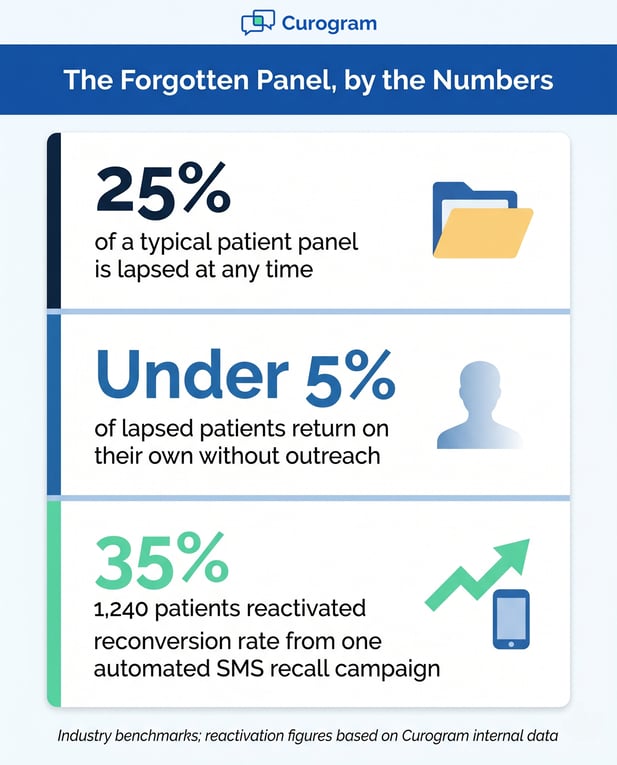
Many feel out of reach now, like a list too long to ever call. Industry data suggests roughly a quarter of a typical panel is lapsed at any time.
Each name there once meant a real visit. Now, many feel like ghosts in the machine. Staff want to reach them but lack the hours. So the list grows, and the worry grows with it.
One skipped visit often starts a long quiet spell. Without outreach, few of those patients come back on their own. Industry benchmarks put passive return below 5%. The rest simply drift, unless something reaches out first.
The longer the silence, the harder the return. A patient gone for three years can feel lost for good. Yet most still remember your name. A single, timely text can wake that memory.
Each lapsed patient is more than a blank slot. It is a broken continuity of care and lost visit revenue. For chronic conditions, the gap can mean real harm, not just missed billing.
There is a quality cost too. For an FQHC, lapsed patients can drag down care measures. Missed screenings and overdue checks show up in the data. The panel you cannot reach becomes the panel you cannot report.
And staff feel it daily. They sense the lost patients but have no tool to fix it. Phone calls eat hours and often reach voicemail. The work feels endless, and the panel keeps slipping.
Now layer on the spend. The practice pays to acquire new patients while known ones sit idle in Azalea Health. That is the cruel twist of the forgotten panel. The cure is often already in your files.
The good news is that the fix is not another database. You already have the records. You just need a line that reaches them, both all at once and one at a time. That line is Curogram.
Curogram is the reactivation line for your Azalea Health panel. It works through two linked tools that share one inbox. One speaks to everyone. The other speaks to the right person at the right moment.
Both tools live in the same simple inbox. Your team sees every reply in one thread. There is no new screen to learn. The work feels like texting, because it is.
One line does two very different jobs. It shouts to the crowd and whispers to the individual. Both happen from the same place. That is the quiet power of the reactivation line.
Mass texting sends one message to your full list in seconds. Use it to broadcast a text to patients about closures, weather alerts, or a flu and vaccine push. For a busy mass texting rural clinic, which replaces a frantic phone tree. One send, the whole community informed.
Speed is the point here. A storm rolls in, and one message goes out at once. Patients learn of a closure before they leave home. No one drives an hour to a locked door.
Automated recall does the quiet, steady work. The system spots patients past their recall window and texts them first. Patients then rebook by reply, with no staff dialing at all. This is how you reactivate lapsed patients by SMS, day after day.
Set the rules once, then let it run. You pick the window, like six months for a checkup. Curogram watches the dates and acts on time. The right patient hears from you at the right moment.
Both tools run off your Azalea Health data through Curogram’s integration. Recall logic reads the record, so the right overdue patient gets the right nudge.
When they reply, the rebooking lands back on your schedule. Azalea Health patient recall campaigns run on autopilot, yet stay tied to real charts.
Nothing falls through the cracks this way. The record drives the message, and the message drives the rebooking. Your schedule and your chart stay in sync. That trust is what makes the line dependable.
For dispersed rural panels, this fit matters even more. One broadcast handles a snow-day closure that used to eat up a morning of calls.
Recalls pull chronic-care and preventive visits back into view. Those same visits keep both patients and FQHC quality measures on track.
Reactivation is the highest-return growth a small practice has. The patients already trust you. They just need a reason and a reminder to come back.
Best of all, the cost stays low. You text patients you already serve, not strangers you must court. The spend is small, and the return is steady. That is rare in clinic growth.

So what changes once the line is live? The forgotten panel becomes a reconnected one. Numbers tell the story best, so let us look at them.
In a comparable multi-location practice, one recall effort did the heavy lifting. It reactivated 1,240 patients at a 35% reconversion rate. That figure is based on our internal data. The added staff cost was close to zero.
Sit with that 35% for a moment. More than one in three contacted patients came back. These were people the practice had nearly written off. One automated campaign changed that.
The lift did not come from a big ad spend. It came from patients already in Azalea Health. That is the whole promise in one line. Reach the people you already earned.
Set that against passive return. Industry benchmarks put unprompted return below 5%. So a 35% reconversion runs several times higher than waiting and hoping. The whole lift came from patients you already had.
|
Approach |
Patients who come back |
Staff effort |
|---|---|---|
|
Wait and hope, no outreach |
Under 5% |
None, and no result |
|
Automated recall with Curogram |
35% reconversion |
Near zero |
Recall figures based on our internal research. Passive-return range from industry benchmarks.
The cost gap is just as stark. Industry data pegs reaching a known patient at a few dollars. Acquiring a brand-new one can cost well over a hundred. That is the heart of recall versus new patient acquisition cost, and the warm list wins.
This is why smart practices start with their own list. New ads chase cold leads at high cost. Recall warms a list that already knows you. The math favors the patients you already have.
Recalls also help fill schedule gaps in Azalea Health without extra ad spend. Each rebooked visit slots into a slow day on its own. The schedule tightens, fed by the base you already built. No new marketing required.
Picture a Tuesday with three open slots. A recall batch goes out that morning. By afternoon, replies trickle in, and the slots fill. The day pays for itself, with no ad budget touched.
The shift goes deeper than one campaign. You trade a phone tree and a separate vendor for one engine.
Broadcasts and recalls now live beside your texting, reminders, and reviews. One platform, one inbox, one source of truth.
The team feels the change most of all. No more phone trees that swallow a morning. No more guessing who is overdue. The system surfaces the work and does the reaching.
The day-to-day feels different, too. Lapsed patients rebook themselves. Slow days fill from the existing base.
And when it matters, a closure or a flu clinic, one text reaches the whole community at once.
And patients feel cared for, not chased. A timely text reads as a clinic that remembers them. That goodwill keeps them loyal well past one visit. Reconnection is good care and good business at once.
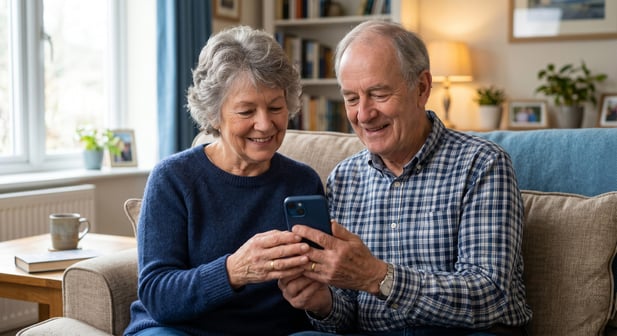
Here is the simple truth. Azalea Health holds your panel. Curogram reaches it, all at once, and one lapsed patient at a time. That is the whole idea behind the reactivation line.
None of this asks you to work harder. It asks you to reach smarter. The names are already yours. The tool simply helps you call them.
Think of it as a clean division of labor. Azalea Health is built for your records. Curogram is built for their return. It is the text that brings a forgotten patient back into care.
The forgotten panel is not a marketing problem. It is a reach problem, and reach is fixable. You do not need more names. You need a way to call the ones you have.
Remember what the line can do. Mass text messaging and patient recalls for Azalea Health practices reach the whole community in one send. They also rebook lapsed patients by text, with almost no added staff effort.
And the economics favor you. Reaching a known patient costs a fraction of finding a new one. Stop paying to discover strangers while loyal patients sit dormant in your files.
Your records hold years of trust. That trust does not expire the moment a visit slips. A single good text can revive it. Reactivation is simply that trust, put back to work.
Picture the panel a year from now. Overdue patients rebooked. Slow days filled. Closures handled with one calm text.
The forgotten panel will not fix itself. Every quiet month, a few more patients drift further away. The sooner you reach them, the more you bring back. Time is the one thing recall cannot recover.
So here is the ask. Look at your own lapsed list before you buy another ad. The answer may already be in your files.
Want to go deeper into the workflow? Two guides walk through it step by step.
See how to automate patient recall campaigns in Azalea Health. You can also bring lapsed Azalea Health patients back by text.
Both ride the same channel as two-way patient texting. Each recalled patient then flows into automated appointment reminders and confirmations.
Your next patient may not be a stranger at all. They may already be in your system, waiting for one good text.
Ready to turn the lights back on for the panel you already have? Book a free demo today.
 Jo Galvez : Jun 25, 2026, 1:00:00 PM
Your staff can’t call every overdue patient. See how Curogram automates Azalea Health recall campaigns — 1,240 patients reactivated, no dialing one...
 Jo Galvez : Jun 25, 2026, 3:00:00 PM
Overdue patients rarely return on their own. See how Curogram texts Azalea Health recalls that brought 35% of lapsed patients back, no portal, any...
 Jo Galvez : Jul 6, 2026, 9:00:02 AM
CollaborateMD has no mass messaging, so lapsed patients sit unreachable. See how Curogram’s recall texts brought back 1,240 patients.