

9 min read

Beyond 5 Stars: Using Feedback for Service Recovery in Osmind Clinics

Beyond 5 Stars: Using Feedback for Service Recovery in Osmind Clinics
💡 Mental health clinics using Osmind can protect their name and care standards through smart feedback systems. Managing patient feedback for Osmind practices works best with private internal surveys sent before public review requests.

This approach lets your team catch problems early—like billing errors or long wait times—and fix them fast. The result? Fewer bad Google reviews and more loyal patients.

When someone has a rough visit, they get help instead of a reason to vent online. This private-first system turns upset patients into happy ones who stay with your practice for the long haul.

Your ketamine clinic just got a 1-star review. The patient claims the staff were rude and the wait was too long. But here’s the twist—this person had a great session. They were just groggy after their infusion and wrote the review from the parking lot.

Now, this review sits on Google for years. New patients in crisis see it and pick a different clinic. You lose revenue. Worse, someone who needed your help went elsewhere.

This story plays out daily at mental health practices across the country. And it doesn’t have to.

The problem isn’t bad care. It’s bad timing. When you ask patients to review you right after a visit, you catch them at their most raw. In mental health settings, that’s a recipe for trouble.

Managing patient feedback for Osmind practices requires a smarter path. You need a system that acts like a safety net. It catches unhappy patients before they hit the public stage. It gives your team a chance to make things right.

Think of it as interventional psychiatry service recovery. Just like you intervene with treatment, you intervene with patient concerns. Fast action stops small issues from becoming big problems.

The clinics that thrive aren’t the ones with perfect care. They’re the ones who respond to imperfect moments with grace and speed. They turn a billing mix-up into a trust-building moment. They transform a long wait into proof that they listen.

This guide shows you how to build that system. You’ll learn why public reviews hurt mental health clinics more than most. You’ll see the exact steps of a feedback loop that works. And you’ll discover how the data you gather can improve your whole operation.

Your 5-star rating is worth protecting. So are your patients. Let’s explore how to do both.

The Public Venting Villain: Why Unfiltered Reviews Hurt Mental Health Clinics

Online reviews shape patient choices more than ever before. For mental health clinics, the stakes run higher than most medical settings. A single harsh comment can undo years of trust-building. Understanding why this happens helps you fight back with the right tools.

The Permanent Record

Public reviews don’t fade away. They stick around and shape first impressions for years to come.

How Negative Reviews Affect New Patients

Someone in crisis searches for help online. They see your clinic has mostly 5-star reviews, but one angry 1-star post about billing. That single review plants doubt. A person already anxious about seeking care now worries your practice might add stress instead of relief.

Studies show that 94% of patients use online reviews to evaluate providers. One bad review can drive away 22% of potential patients.

For a ketamine clinic patient satisfaction, those numbers hit hard. Your specialized care means nothing if people never walk through the door.

The Long Tail of a Bad Review

Reviews from 2019 still show up in 2026. That billing error you fixed years ago? It still hurts your reputation. Google’s algorithm treats older reviews as relevant data.

Your hard work to improve gets buried under ancient complaints. Mental health internal surveys can prevent this by catching issues before they go public.

The Clinical Misinterpretation

Mental health care creates unique review challenges. Patients write feedback in states that don’t reflect their true experience.

Post-Treatment Emotional States

A Spravato patient experience loop must account for altered states. Patients may feel foggy, emotional, or disoriented after treatment. These feelings pass within hours. But a review written during that window captures a fleeting moment, not the full picture.

The same patient who posts “awful experience” at 3 PM might feel grateful by dinner. But they rarely go back to update their review. Your public rating suffers from timing, not care quality.

Turning Private Moments Into Private Feedback

Private feedback channels let you support patients through tough moments. When someone shares a concern through a secure text, your team can respond with care. You address the real issue instead of defending yourself online.

This approach honors the sensitive nature of mental health care. It also protects your ability to reduce psychiatric clinic complaints before they spread.

The Missed Opportunity for Growth

Public reviews tell you something went wrong. They rarely tell you what or why. That makes them nearly useless for improvement.

Why Public Reviews Lack Detail

A Google review might say “the front desk was rude.” Was it one person? Everyone? Did the patient feel rushed or ignored? You can’t fix what you can’t understand. Public platforms don’t allow follow-up questions.

This vagueness hurts your ability to grow. You know there’s a problem, but lack the data to solve it. Staff morale drops when they face criticism without context.

The Value of Targeted Questions

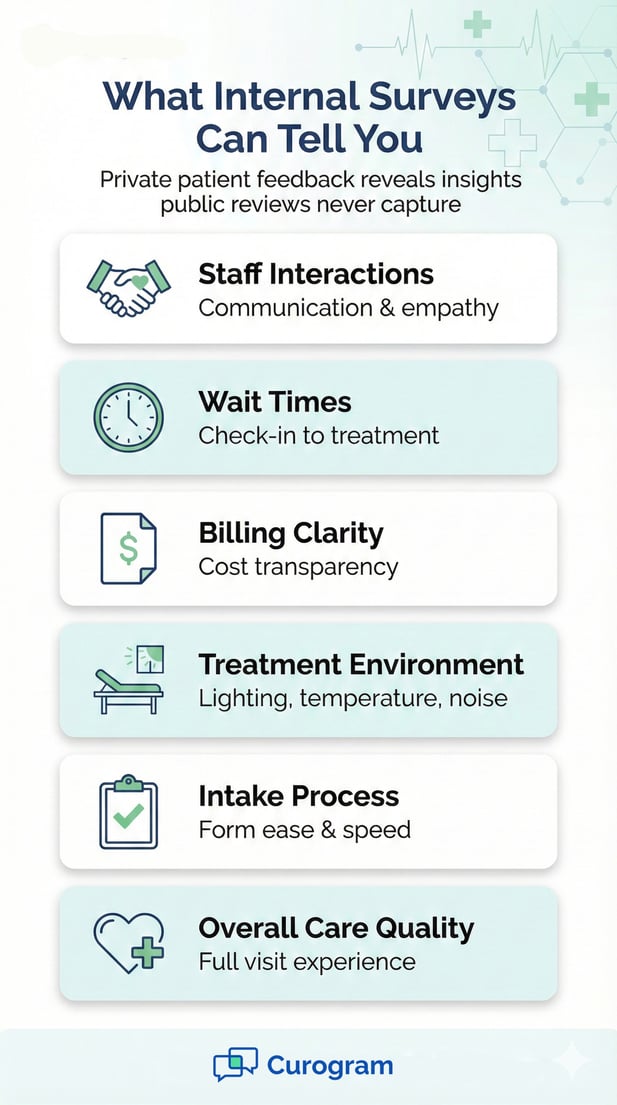
Internal surveys let you ask specific questions. How was the lighting in the infusion room? Did you feel informed about your treatment plan? Was the Osmind intake process easy to complete?

These pointed questions reveal patterns. Maybe three patients this month mentioned cold treatment rooms. That’s actionable data. You adjust the thermostat and watch satisfaction scores climb. Public reviews would never give you that level of insight.

The Anatomy of a Successful Service Recovery Loop

Great feedback systems don’t happen by chance. They follow a clear path from patient visit to problem solved. Each step builds on the last to create a smooth process. When done right, this loop turns unhappy patients into loyal advocates.

Step 1: The Prompt

Timing matters more than anything else in feedback collection. The goal is to capture honest thoughts while the experience stays fresh.

Why 2 Hours Post-Visit Works Best

Sending a survey 2 hours after a visit hits the sweet spot. Patients have had time to decompress but haven’t forgotten the details. For mental health settings, this gap also lets treatment effects settle. A Spravato patient won’t feel as foggy by then.

The prompt arrives via secure SMS. Text messages have a 98% open rate compared to 20% for email. Your request for feedback actually gets seen.

Crafting the Right Message

Keep the text short and warm. Something like: “Hi [Name], thanks for visiting today. We’d love to hear how it went. Tap here to share your thoughts.”

Simple language invites honest responses without pressure.

Step 2: The Filter

Not all feedback should go public. A filter system sorts responses based on patient satisfaction levels.

How Star Ratings Guide the Path

Patients rate their visit from 1 to 5 stars. Those who give 4 or 5 stars receive an invite to share their thoughts on Google. They’re happy and willing to spread the word. Those who give 1 to 3 stars stay in a private channel. Their concerns go straight to your team.

This isn’t about hiding problems. It’s about solving them in the right place. A billing complaint deserves a phone call, not a public debate.

Protecting Your Online Reputation

This filter helps you protect the ketamine clinic patient satisfaction scores online. Happy patients boost your rating. Unhappy patients get direct support. Both groups feel heard. Your Google profile reflects the true quality of your care.

Step 3: The Alert

Speed separates good service recovery from great. Instant alerts make fast action possible.

Real-Time Notifications for Staff

When a patient submits low feedback, your practice manager gets a text or email right away. No waiting for weekly reports. No checking dashboards. The alert arrives within seconds of submission.

This immediacy lets your team act while the issue is still fresh. The patient hasn’t stewed for days. They haven’t told friends about their bad experience. There’s still time to turn things around.

Assigning Ownership for Follow-Up

Clear ownership prevents issues from falling through cracks. The alert goes to one person who must respond. In most clinics, that’s the practice manager or quality director. They own the recovery process from start to finish.

Step 4: The Recovery

The final step is where magic happens. Personal outreach transforms frustration into loyalty.

The Power of a Personal Touch

A phone call within 24 hours shows you care. The patient expected that their grievances would be ignored. Instead, they hear a real voice saying, “I saw your feedback and want to make this right.”

This simple act flips the script. Research shows that resolving a complaint well creates more loyalty than never having a problem at all. The patient feels valued and understood.

Turning Critics Into Advocates

When you solve someone’s issue quickly, they often become your biggest fans. They tell friends about the clinic that actually listened. Some even go back and post positive reviews after their concern gets addressed.

This is the heart of interventional psychiatry service recovery. You intercept a problem before it spreads. You turn a critic into a champion for your practice.

Healthcare infographic showing categories of internal patient survey feedback and insights

Improving Clinical Operations with Data, Not Guesses

Feedback does more than protect your reputation. The data you collect reveals patterns that can reshape how your clinic runs. Instead of guessing what needs to change, you act on real patient insights.

Identifying Staff Training Needs

Patient comments often point to specific friction points. These insights guide targeted training that makes your whole team stronger.

Spotting Patterns in Feedback

When five patients mention the same issue, you’ve found a trend. Maybe they say the front desk seems rushed. Or perhaps check-in takes too long. These patterns emerge clearly when you track internal feedback over time.

Without private surveys, you might never learn about these issues. Patients rarely mention small annoyances in public reviews. They save those for bigger complaints. Mental health internal surveys capture the nuances that matter for daily operations.

Building Better Training Programs

Once you spot a pattern, you can act. If patients mention communication gaps, you train staff on clearer explanations. If they note billing confusion, you update how charges get discussed. Each training session ties directly to patient needs.

This approach also protects staff morale. Training based on data feels fair. Employees see the evidence and understand why changes matter.

Refining the Treatment Environment

The physical space where care happens shapes the patient experience. Small changes can yield big improvements.

The Sensory Experience Matters

Patients undergoing ketamine or Spravato therapy are highly aware of their surroundings. A room that’s too cold, too bright, or too noisy can ruin an otherwise good session. Internal surveys let you ask about these factors directly.

Questions might include: “How would you rate the comfort of your treatment room?” or “Was the lighting level right for you?”

These details seem small but make a huge difference for ketamine clinic patient satisfaction.

Making Data-Driven Environment Changes

Feedback data turns hunches into action plans. If 40% of patients say the room feels cold, you know to check the HVAC. If noise complaints spike on certain days, you investigate what’s changed.

These changes don’t require big budgets. A warmer blanket, dimmer lights, or a white noise machine can solve common issues. The feedback tells you exactly where to focus.

Documenting Patient Experience for Payers

Your feedback data has value beyond operations. It supports conversations with insurance companies and proves the quality of your care.

Building a Case for Value-Based Care

Payers want to know they’re paying for good outcomes. High internal satisfaction scores demonstrate that your Osmind-based clinic delivers value. You’re not just providing treatment; you’re creating positive experiences.

This data strengthens your position in rate negotiations. When you can show 95% satisfaction scores, you have leverage. Payers see evidence of quality, not just claims.

Creating Detailed Quality Reports

Regular reports on patient satisfaction support your practice in multiple ways. They guide internal improvements. They satisfy accreditation requirements. And they build trust with referral partners who want to send patients to proven providers.

The Spravato patient experience loop you build becomes part of your quality story. You can show how you collect feedback, respond to concerns, and track improvements over time.


Frequently Asked Questions About Internal Feedback

Clinic leaders often have similar questions about private feedback systems. These answers address the most common concerns and clear up misunderstandings about how the process works.

Does this “gate” reviews?
Some people worry that filtering feedback amounts to hiding problems. The reality is quite different. We call this approach guided feedback because it helps everyone find the right path.

Happy patients want a simple way to share their praise. They get a direct link to Google and can post in seconds. Unhappy patients want someone to listen. They get a direct line to your team and real help.

Both groups express themselves fully. The difference is venue, not volume. No voice gets silenced.

Patients with concerns often don’t want public drama. They want their problem fixed. A direct channel to your practice manager serves them better than a review page. They get action instead of attention.

This is how you truly reduce psychiatric clinic complaints while still addressing every concern.

Is the feedback stored in Osmind?
Understanding how feedback flows between systems helps you use it well.

Curogram manages the survey process from start to finish. The feedback lives in the Curogram platform, where your team can track and respond. Osmind remains your clinical record system.

When a clinical concern emerges from feedback, staff can add a note to the patient’s Osmind chart. This ensures providers know about the patient’s experience at their next visit.

This separation makes sense for most practices. Feedback about billing or wait times doesn’t belong in clinical notes. But concerns about side effects or treatment questions absolutely do. Your team decides what crosses over based on clinical relevance.

How quickly should we respond to negative internal feedback?
Speed matters enormously in service recovery. The window for turning a negative into a positive is shorter than you might think.

For mental health practices, aim to respond within 24 hours. Many issues can be resolved even faster. A quick call or secure text shows you take concerns seriously.

A lot of administrative frustrations can be dissolved with prompt attention. The patient just wants to know someone heard them.

When you reach out quickly, you send a powerful message. You’re saying: “Your experience matters. We’re paying attention. We want to help.” This builds the kind of trust that keeps patients coming back and referring others.


Healthcare professional on a call providing patient service recovery in a modern clinic office

Turn Every Experience into an Opportunity

Every patient visit creates a chance to learn and improve. The clinics that thrive treat feedback as a gift, not a threat. They build systems that catch concerns early and turn problems into proof of care.

Managing patient feedback for Osmind practices isn’t about gaming reviews. It’s about caring for patients at every step of their journey. When someone has a rough day, they deserve support. Your team can provide that support when you have the right tools.

The benefits ripple outward. Your Google rating climbs as happy patients share their experiences. Your operations improve as data reveals what to fix. Your payer relationships strengthen as satisfaction scores prove your value.

Most importantly, your patients feel heard. In mental health care, that feeling matters as much as any treatment. People in crisis need to know their provider listens. A good feedback loop proves you do.

Schedule a 10-Minute Demo today to see how Curogram’s internal survey tool can help you manage patient feedback for your Osmind practice and protect your 5-star reputation.

Reputation Management for Allscripts Practice Management with Curogram

Reputation Management for Allscripts Practice Management with Curogram

💡 Online reputation now defines patient choice. Reputation management in Allscripts PM helps practices manage reviews automatically. By integrating...

Read More
Google Review Automation for Cerbo: Build a 5-Star Reputation at Scale

Google Review Automation for Cerbo: Build a 5-Star Reputation at Scale

💡 Google review automation for Cerbo helps integrative medicine practices build a strong online reputation without extra work. Sends text review...

Read More
Reputation Management in StreamlineMD for Radiology Teams

Reputation Management in StreamlineMD for Radiology Teams

💡 Reputation management in StreamlineMD helps radiology, vascular, and IR practices build a stronger online presence through automated feedback...

Read More