Reputation Management for Meditab IMS Practices
💡 Reputation management for Meditab IMS practices helps capture real-time patient feedback. This creates early alerts about service issues before...
Table of Contents
A single bad review can shape how hundreds of people see your health system. Now picture that review spreading across ten, twenty, or fifty locations under your brand. That is the risk Oracle Health systems face every day.
Large health networks work hard to deliver great care. But one poor visit at one site can stain the whole system's image. Patients do not always know which clinic they visited. They just know the brand name, and that name takes the hit.
This is why reputation management for Oracle Health systems matters so much. It is not just about star ratings. It is about trust. When patients lose faith in one part of your network, they lose faith in all of it.
The problem grows with scale. Oracle Health systems span many sites, teams, and access points. Each one creates its own patient experience. Without a clear view of what happens at each site, gaps stay hidden. Small issues become big problems. And by the time a review goes public, the damage is done.
Reputation management gives you that view. It helps you catch concerns early, fix them fast, and protect your system's name. It also turns raw feedback into useful data. You can see where care falls short and where it shines.
This blog will walk you through how it works. You will learn why passive review methods fail, how proactive feedback helps, and what it takes to protect trust across your whole network. You will also see how patient experience workflows fit into the bigger picture.
Oracle Health systems do not operate like small clinics. They are large networks with many locations, units, and care teams. Every site shares one brand. And every patient touchpoint shapes how that brand is seen.
This is what makes reputation management a system-level concern. Without integrating automation systems, single clinic cannot protect the whole network on its own. Neither can a single department. The work must happen across the board.
Patients today have more ways than ever to share their views. They post on Google, Yelp, Healthgrades, and social media. One review from a bad visit can reach thousands of people in hours. And once that review is live, it sticks.
What is worse, that review often has nothing to do with clinical care. It may be about a long wait, a rude phone call, or a billing error. These are not medical failures. They are process failures. But patients do not see the difference. To them, it is all the same brand.
Reputation management helps you spot these gaps. It gives you tools to track what patients feel at each step of their visit. And it lets you act before the story hits the public.
Trust is not built in one visit. It takes many good moments over time. But trust can break in seconds. One poor experience can undo years of effort.
Patients choose where to get care based on what they believe about a system. They read reviews. They ask friends. They look for signs that a place will treat them well. If they see too many bad stories, they go elsewhere.
This is why patient experience matters so much. It is not just about making people happy. It is about earning and keeping their trust. When patients feel heard and cared for, they come back. They tell others and leave good reviews.
On the other hand, when they feel ignored or frustrated, the opposite happens. They leave, warn others, and post reviews that hurt your name.
For Oracle Health systems, this effect is even stronger. Your brand covers many sites. A bad review in one city can scare off patients in another. Your network is only as strong as its weakest link.
Think of it this way:
A patient visits your urgent care on a busy night. They wait two hours. No one tells them why. They leave angry. Later, they post a one-star review and name your whole system. Now, someone across town sees that review. They were thinking about booking with your primary care clinic. But after reading that post, they go to a rival.
This chain reaction is common. And it is hard to stop once it starts. This is why you need systems that catch these moments early. You need ways to know when a patient is upset before they go public. You need patient experience workflows that bring concerns to light in real time.
Reputation management gives you this power. It does not just track reviews. It captures feedback at the point of care. It alerts your team when something goes wrong. And it gives patients a way to vent in private before turning to the public.
Oracle Health systems are too big to rely on luck. You cannot hope that bad experiences stay quiet. You need a plan. And that plan starts with treating reputation as a system-wide job.
When every location follows the same feedback process, you get clear data. You can compare sites, find patterns, and fix issues at the root.
This is what it means to manage reputation at scale. It is not about damage control. It is about building a system that protects trust every day.
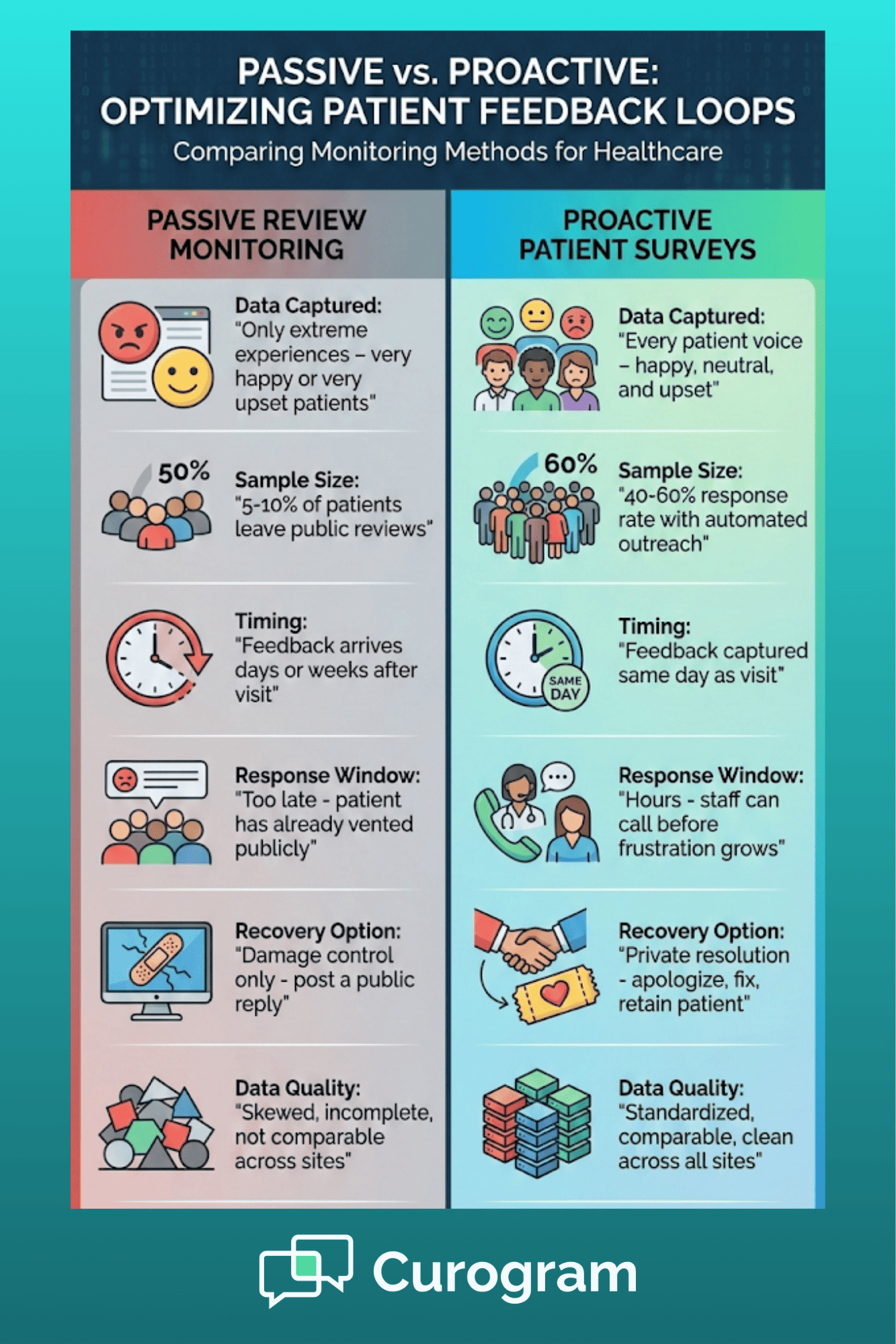
Most health systems wait for reviews to come to them. They check Google once a week. They scan Yelp when someone flags a bad post. They react after the fact. This is passive review collection, and it does not work for large networks.
The problem is simple. People who leave public reviews are not a fair sample. They tend to be either very happy or very upset. The quiet middle stays silent. That means your public reviews do not reflect your true patient experience.
Worse, by the time a review goes live, it is too late. The patient is already gone. The damage is already done. You cannot fix what you do not know about.
Public reviews show only part of the picture. They skew toward extremes. A patient who had a normal visit will likely not write anything. But one who waited an hour and got no apology may write a long post.
This creates a false view of your care. Leaders see mostly complaints and raves. They miss the everyday issues that quietly push patients away.
There is also a timing problem. Public reviews often come days or weeks after a visit. By then, the patient has moved on. You have no chance to make things right. And your staff may not even recall the visit.
For Oracle Health systems, this gap is even harder to manage. You have dozens or hundreds of sites. Each one gets its own reviews. Tracking them all by hand is a huge task. And even if you catch a bad post, what can you do? The patient already vented. The review is live. Your only move is to post a reply and hope others see it. That is not a strategy but damage control.
When patients feel ignored, they do not just leave bad reviews. They leave your system.
Think about what happens when someone has a poor visit. Maybe the front desk was cold. Maybe they got wrong info about a referral. Maybe their call went to voicemail and no one called back.
These are small things. But they add up. And if no one ever asks how the visit went, the patient has no outlet. They may stew for days. Then, when they have time, they post a review. Or they tell ten friends. Or they switch to a rival and never look back.
This is the cost of silence. When you do not ask for feedback, you do not get a chance to fix things. You lose patients without ever knowing why.
For large systems, this cost multiplies. One unhappy patient at one site is a small loss. But if ten sites each lose ten patients a month, that is 1,200 patients a year. Each one may tell others. Each one may post online.
Passive review methods also leave leaders in the dark. Without proactive data, you cannot compare sites. You cannot spot trends. You cannot tell if a new policy is helping or hurting.
You end up making guesses. And guesses are not good enough when your brand is on the line.
This is why proactive feedback matters. When you reach out to patients after visits, you capture more voices. You hear from the quiet middle. You catch issues early. And you give patients a private way to share before they go public.
Reputation management for Oracle Health systems must go beyond watching review sites. It must include active outreach, fast follow-up, and clear data. Otherwise, you are always playing catch-up.

Passive methods leave you blind. Proactive feedback opens your eyes. When you reach out to every patient after every visit, you get a full picture of what is happening across your system.
This is how modern reputation management works. It does not wait for reviews. It asks for input. It collects data in real time. And it gives you the insight you need to act fast.
For Oracle Health systems, scale is the key challenge. You may have 50, 100, or more sites. Each one sees hundreds of patients a week. Tracking all that feedback by hand is not possible. You need systems that do the work for you.
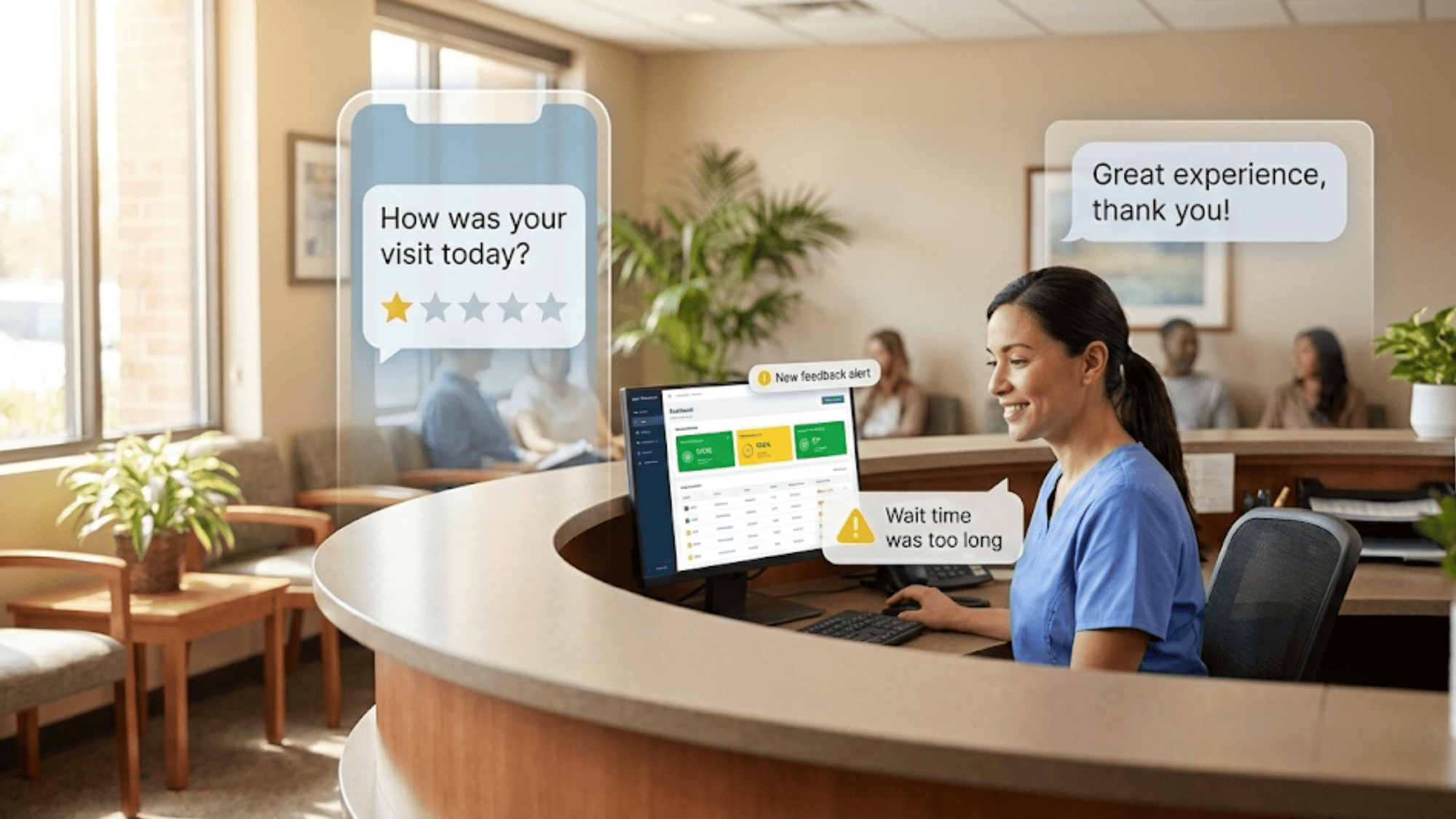
This is where automated outreach comes in. After each visit, the patient gets a message. It may be a text or an email. It asks a simple question: How was your visit today? The patient can reply with a quick rating or a short note.
This small step changes everything. You now have data from every site, every day. You can see trends as they form. You can catch problems before they grow. And you can compare locations to find where things are going well and where they are not.
One of the biggest risks for large networks is variation. Each site may handle feedback in its own way. Some ask patients to fill out paper cards. Some rely on front desk staff to note concerns. Some do nothing at all.
This patchwork approach creates blind spots. You cannot compare data if each site collects it differently. You cannot trust your numbers if the process varies.
Standardized outreach fixes this. When every patient at every site gets the same survey, you get clean data. You can line up results side by side. You can see which clinics shine and which ones lag.
For example:
Site A has a 4.5 average rating and Site B has a 3.2. With standard surveys, you can dig into the reasons. Maybe Site B has longer wait times. Maybe its front desk is less friendly. Maybe its follow-up process is broken.
Without standard data, you would never know. You would just see that Site B gets more bad reviews, and you would not know why.
Patient experience workflows tie this process together. They ensure that feedback does not just sit in a database. It flows to the right people. It triggers alerts when scores drop. It prompts follow-up when a patient is upset.
Think of it like a health check for your system. Just as doctors track vital signs, you can track patient sentiment. And when something looks off, you can act.
Raw feedback is just data. The real value comes when you turn it into action. Let us look at a common example:
A patient rates their visit as poor. They leave a comment saying they waited 45 minutes and no one told them why.
In a passive system, this feedback goes nowhere. Maybe someone reads it in a report weeks later. By then, the patient has already posted online. The moment is lost.
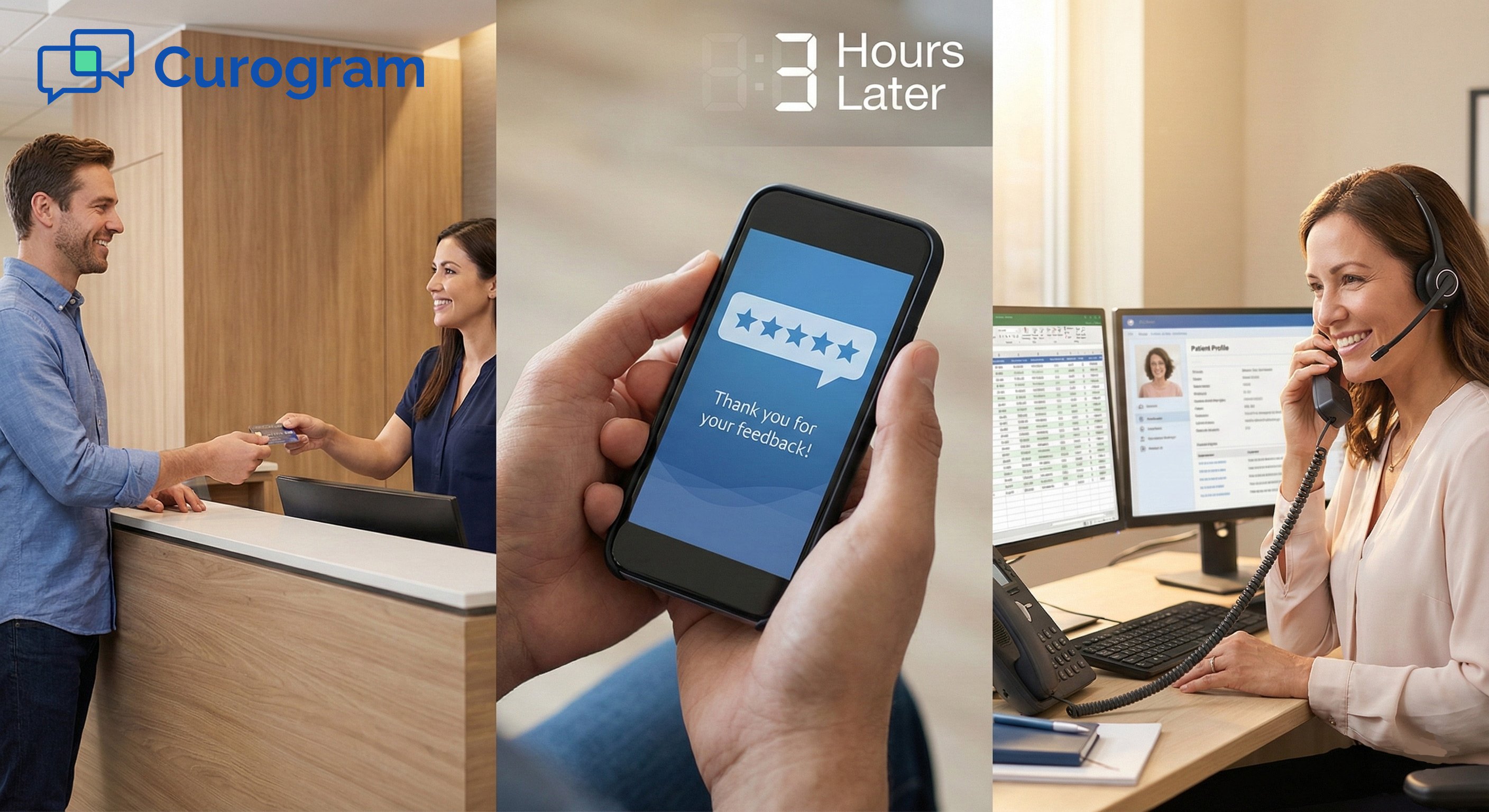
In a proactive system, this feedback triggers an alert. A staff member sees it within hours. They call the patient to apologize. They explain what happened. They offer to help. This one call can change everything. The patient feels heard. They may not post a bad review. They may even come back.
Now, multiply that by thousands of visits. Every poor rating gets a fast response. Every concern gets addressed. You are not just collecting feedback. You are acting on it. This is what it means to treat feedback as an operational signal. It is not a box to check. It is a tool to improve.
For Oracle Health systems, this approach also reveals systemic issues. If ten sites all report long waits on Monday mornings, that is a pattern. Maybe your scheduling system is broken. Maybe your staff levels are wrong for that time slot.
Without proactive feedback, you would never see this pattern. You would just see scattered complaints, and you would not know they were linked. With clear data, you can fix the root cause. You can adjust schedules, add staff, or change policies. You can also track whether the fix works.
Here is another scenario:
Your network rolls out a new online check-in process. Leadership thinks it will cut wait times and boost scores. But after a month, scores at three sites drop.
With standard surveys, you can see exactly when the drop started. You can read the comments. Patients say the new system is confusing. They do not know where to go when they arrive. They feel lost.
Now, you have a clear signal. The new process needs work. You can fix the signage, train staff, or tweak the flow. And you can watch the scores to see if things improve.
Without proactive feedback, you might blame the drop on something else. Or you might not notice it at all until reviews pile up.
This is why reputation management for Oracle Health systems must include active data collection. Waiting for reviews is not enough. You need real-time input from every patient at every site.
The goal is not to avoid all bad reviews. That is not realistic. The goal is to catch issues early, fix them fast, and protect your system's name over time.
When you do this well, you build a culture of listening. Patients feel valued. Staff feel empowered to make things right. And leaders have the data they need to steer the ship. This is feedback at scale, and it is the foundation of effective reputation management.
The best time to fix a problem is before it spreads. In reputation management, that means catching patient concerns before they become public complaints.
Private feedback channels make this possible. When patients can share concerns directly with your team, you get a chance to respond. You can apologize, explain, and make things right. As a result, the patient does not feel the need to vent online.
This is service recovery in action. It turns bad moments into second chances. And it protects your system's trust.
Speed matters. A patient who is upset today may post a review tomorrow. If you wait a week to respond, you have already lost.
Proactive systems solve this with automated alerts. When a patient gives a poor rating, the system flags it. A staff member gets a notice. They reach out within hours, not days.
For example:
A patient rates their visit as 2 out of 5. The comment says they felt rushed and dismissed. An alert goes to the clinic manager. The manager calls the patient that same day. They listen, apologize, and ask what could be done better.
This one call can shift the outcome. The patient feels heard. They may give your system another try, and they are far less likely to post a harsh review.
Early intervention also helps your staff. When they hear feedback fast, they can recall the visit. They can learn from it. And they can adjust their approach.
Over time, this builds a culture of care. Staff know that patient input matters. They know leadership is watching. And they take more pride in every visit.
Not every upset patient will post online. But enough will. And each post can shape how others see your brand.
When you intervene early, you lower the odds of public damage. Patients who feel heard are less likely to vent. They have already told their story. They have already been acknowledged.
This does not mean you will avoid all bad reviews. Some patients will still post. But the volume drops. And when it does, your overall rating rises.
For Oracle Health systems, this effect scales up. If each site reduces negative reviews by even a few per month, the network gains hundreds of better ratings per year. Over time, this lifts your online presence.
It also gives you more control. Instead of reacting to public posts, you are shaping the narrative. You are showing patients that you listen. And you are proving it with action.

Large networks face a unique challenge. Each site may have its own way of handling feedback. Some respond fast. Some do not respond at all. This creates gaps. Patients notice these gaps. If one clinic follows up and another ignores complaints, the brand feels uneven.
Standardization solves this. When every site uses the same survey, the same alerts, and the same follow-up rules, you get consistent care.
This means setting clear policies. How fast should staff respond to a poor rating? Who is responsible for follow-up? What should they say?
With unified rules, patients get the same treatment everywhere. And leaders can compare data across sites without guessing.
Central oversight does not mean central control. Local teams should own their responses. They know their patients best.
The role of leadership is to watch the data, spot patterns, and guide improvements. They do not need to handle every call. They need to ensure the system works.
This balance keeps teams engaged while protecting the brand. Local staff feel trusted. Leaders stay informed. And patients benefit from both.
Feedback is not just for defense. It is a tool for growth. When you collect input from every visit, you learn what works and what does not. Over time, patterns emerge. You may see that wait times are a top concern. Or that billing questions confuse patients. Or that follow-up calls are missing.
The care journey has many steps. Scheduling, check-in, the visit itself, follow-up, and billing. Each step can go well or poorly.
Proactive surveys let you pinpoint where gaps occur. If patients love the care but hate the billing process, you know where to focus. If check-in is smooth but follow-up is slow, you can target that step.
This level of detail is hard to get from public reviews. But with direct surveys, it becomes clear.
Improvement is not a one-time project. It is an ongoing effort. When you treat feedback as a regular signal, you can track progress over time.
Set goals, measure results, and adjust as needed. This cycle keeps your system moving forward. And when patients see that things are getting better, they notice. Scores increase, reviews improve, and trust grows.
Healthcare data is sensitive. Any system that collects patient input must protect that data. For Oracle Health networks, this is not optional. It is the law.
Consumer survey tools may seem easy to use. But they often lack the safeguards healthcare requires. Data may be stored on insecure servers. Access may be too open.
HIPAA-compliant channels solve this. They ensure that patient feedback is encrypted, stored safely, and accessed only by the right people. This protects your patients and your system. It also reduces legal risk.
Compliance is not just about security. It is also about records. You need to show who collected what, when, and how.
Centralized feedback systems make this easy. They log every survey, every response, and every action. When auditors ask, you have the proof. This keeps your system ready for review at any time.
Oracle Health networks need tools built for scale. Consumer apps do not cut it. You need a platform that handles enterprise workflows.
Curogram was designed for this. It integrates with your EMR. It automates outreach after every visit. And it gives you a single view of feedback across all locations.
Curogram offers consistent feedback capture across sites. Every patient gets the same survey. Every poor rating triggers the same alert. Every follow-up follows the same rules. This creates clean data you can trust. Leaders see the full picture. Local teams act on real-time signals.
The platform also supports early risk detection. When scores drop, you know right away. You can intervene before problems spread. Since Curogram is HIPAA-compliant, your data stays safe. You meet governance standards without extra work.
For Oracle Health systems, this is what reputation management should look like. Scalable, secure, and built for healthcare.
Reputation management is not about chasing reviews. It is about building trust at every step. For Oracle Health systems, this means capturing feedback across all sites, acting on concerns fast, and using data to drive real change.
When you do this well, you protect your brand. You improve patient experience. And you give leaders the insight they need to guide the network.
The tools exist. The process is clear. The question is whether you are ready to put them in place.
Explore how enterprise patient feedback workflows can transform your system. Learn how online reputation protection keeps your brand strong. And see how Curogram brings it all together.
How Curogram Supports Reputation Management for Oracle Health Systems
Curogram brings all the pieces together in one platform. It was built for healthcare from the start. That means it handles the needs of large networks without compromise.
The platform integrates with your EMR. This matters because it lets you automate outreach based on visit data. When a patient checks out, they get a survey. No manual steps. No missed patients.
Curogram also uses HIPAA-compliant channels. Your feedback data stays safe. Patient info is protected. And your system meets compliance standards without extra effort.
It gives you real-time alerts. When a patient gives a low score, your team knows right away. They can call, apologize, and fix the issue before it spreads.
Curogram supports standard processes across sites. Every location uses the same survey logic, the same thresholds, and the same follow-up rules. This creates data you can compare and trust.
This integration can also help you turn satisfied patients into public advocates. When someone gives a high score, they can be invited to leave a Google review. This boosts your online presence with real, positive voices.
The result is a system that protects your reputation while improving patient experience. You catch problems early. You fix them fast. And you build a feedback loop that drives ongoing improvement.
For Oracle Health systems, this is not a nice-to-have. It is a must. The scale of your network demands tools that match. Curogram delivers that scale with the care healthcare requires.
Reputation management for Oracle Health systems is not about chasing stars. It is about trust. Trust that takes years to build and moments to break.
Large networks face unique risks. A bad review at one site can hurt the whole brand. A gap in feedback can hide growing problems. And passive methods leave you reacting instead of leading.
Proactive feedback changes this. It captures patient voices at every location. It alerts your team to concerns in real time. And it gives you data to guide real change. Patient experience workflows tie it all together. They ensure that feedback flows to the right people, triggers the right actions, and drives the right outcomes.
Compliance matters too. Healthcare data is sensitive. The tools you use must protect patient info and meet HIPAA standards. Oracle Health systems need solutions built for scale. Consumer apps fall short. You need platforms that integrate with your EMR, standardize processes, and support enterprise governance.
Curogram was built for this. It automates outreach, captures feedback, and helps you act fast. It protects your reputation while improving patient experience. The path forward is clear. Stop waiting for reviews to tell you what went wrong. Start capturing feedback at every visit. Intervene early. Fix issues fast. And use data to keep getting better.
Your reputation is your promise to patients. It tells them what to expect. It shapes whether they choose you or go elsewhere.
Invest in systems that let you listen, learn, and act. Book your demo today to see how Curogram supports better care workflows with Oracle Health.
Aim for same-day response. The faster you reach out, the better your chance of service recovery. Delays let frustration grow and increase the odds of public posts.
It must encrypt data, control access, store info securely, and log all actions. Consumer survey tools often lack these features and create compliance risk.
After a patient gives a high score, invite them to share on Google or another review site. This channels happy voices into visible reviews that boost your online presence.
💡 Reputation management for Meditab IMS practices helps capture real-time patient feedback. This creates early alerts about service issues before...
💡 Reputation management in DrChrono helps small clinics grow their practice. They can attract new patients effortlessly through the following...
1 min read
💡Automated review requests in Office Ally help small and mid sized medical practices collect more accurate feedback without adding work to the...