

10 min read

Online Reputation Protection for Meditab IMS

Online Reputation Protection for Meditab IMS
💡 Online reputation protection for Meditab IMS organizations helps reduce risk and build patient trust. When negative feedback goes public without warning, it can damage your organization's standing.
  • Early detection of patient concerns through private channels
  • Reduced public complaints
  • Better service recovery with timely follow-up
  • HIPAA-compliant feedback that protects sensitive data
Structured feedback workflows surface issues before they become public. Organizations using patient communication automation see stronger trust and fewer escalations. The ROI comes from cost avoidance and value creation through preserved relationships.

Your organization's online reputation shapes patient decisions every day. One negative review can turn away dozens of potential patients. When concerns go public without warning, recovery becomes harder and costlier.

Meditab IMS organizations face unique challenges. Multiple locations mean more points of risk. Different providers create varied experiences. Without consistent oversight, small issues become big problems.

The reactive approach no longer works. Waiting for public complaints means missed chances to fix problems. It leads to trust erosion and revenue loss. Most organizations discover issues too late to prevent damage.

Online reputation protection for Meditab IMS organizations requires a proactive strategy. Private feedback channels catch concerns early. Structured workflows enable quick responses. Patient communication automation makes this possible at scale.

This approach goes beyond damage control. It builds a system for continuous improvement. Teams can identify patterns before they escalate. Service recovery happens in real time. Patient trust grows stronger through demonstrated responsiveness.

The financial impact is clear. Early issue resolution costs less than public crisis management. Preserved trust translates to patient retention. Positive experiences drive referrals and growth.

This guide explores how Meditab IMS organizations protect their reputation through structured feedback. You'll learn about risk reduction strategies, compliance requirements, and measurable ROI. You'll also discover why patient communication automation is essential for modern healthcare organizations.

Why Online Reputation Protection Matters for Meditab IMS Organizations

Patient decisions start with online research. Your online reputation directly affects access to care and revenue.

Negative reviews spread quickly. One bad experience can appear on multiple platforms within hours. Google, Healthgrades, and Vitals amplify patient voices. Without intervention, a single complaint becomes your organization's public face.

Meditab IMS organizations face compound risk. Each location operates somewhat independently. Provider experiences vary by site. When one office struggles, the entire organization suffers reputational damage. This creates financial exposure across all facilities.

The cost of reactive management adds up fast. Public complaints require extensive time to address. Staff morale drops when teams constantly fight fires. Patient acquisition costs rise as trust declines.

Unaddressed feedback creates cascading problems. Frustrated patients tell friends and family. Social media amplifies their stories. Competitors gain an advantage as your reputation weakens. The cycle accelerates without intervention.

The Risk of Reactive Reputation Management

Reactive approaches create unnecessary risk for healthcare organizations. Waiting for public complaints limits your options significantly. Once feedback appears online, damage control becomes the only path forward.

Limited Recovery Opportunities

Public complaints reduce service recovery success rates. Patients who post negative reviews have usually reached their limit. They feel unheard and frustrated. Your response must be perfect, but restrictions on what you can say publicly make this nearly impossible.

Time works against you in public forums. Other potential patients see the complaint immediately. Even if you respond within hours, the damage spreads. Research shows negative reviews influence decisions for weeks after posting.

Issue Escalation Patterns

Small problems grow into major crises without early intervention. A billing question becomes a fraud accusation. A scheduling mix-up becomes evidence of systematic neglect. Patient frustration amplifies their perception of every issue.

Loss of patient confidence affects more than individual relationships. Staff become defensive and burned out. Quality improvement efforts lose momentum. The organization's culture shifts toward crisis management rather than proactive care.

How Structured Feedback Protects Online Reputation

Structured feedback creates a protective layer for your organization. Private channels surface concerns before they reach public platforms. This gives teams crucial time to respond effectively and resolve issues.

The approach transforms how organizations handle patient concerns. Instead of discovering problems through public reviews, teams identify issues through controlled workflows.

Private feedback channels work because patients want to be heard. Most don't want to harm your reputation publicly. They want acknowledgment and resolution. When you provide a direct path to communicate concerns, they use it.

Capturing Dissatisfaction Before Public Posting

Early detection prevents public escalation. Automated surveys after appointments catch concerns within 24 to 48 hours. This timing is critical because patients are still open to resolution at this stage.

Real-Time Concern Identification

Patient communication automation enables immediate feedback collection. Text messages reach patients where they already spend time.

The system flags negative responses instantly. Staff receive alerts when patients report poor experiences. This creates an opportunity for same-day outreach and resolution. Many organizations resolve a lot of flagged concerns before patients consider public posting.

Reduced Public Complaint Volume

Organizations using structured feedback see dramatic drops in negative reviews. The average reduction is 60-75% within six months. This happens because concerns get resolved privately instead of publicly.

The impact extends beyond quantity. Remaining public reviews tend to be less severe. Patients who felt heard through private channels write more balanced feedback. Even when issues weren't fully resolved, acknowledgment reduces negativity.

Supporting Service Recovery

Service recovery works best with quick action. Structured feedback enables rapid response cycles that turn negative experiences into positive outcomes.

Timely Follow-Up Protocols

Speed matters in service recovery. Automated systems ensure no concern goes unaddressed. Staff receive clear priorities based on feedback severity.

Clear Resolution Pathways

Structured workflows remove guesswork from recovery. Teams know exactly how to escalate different issue types. Billing concerns route to billing. Clinical issues reach clinical leadership. This clarity speeds resolution and improves outcomes.

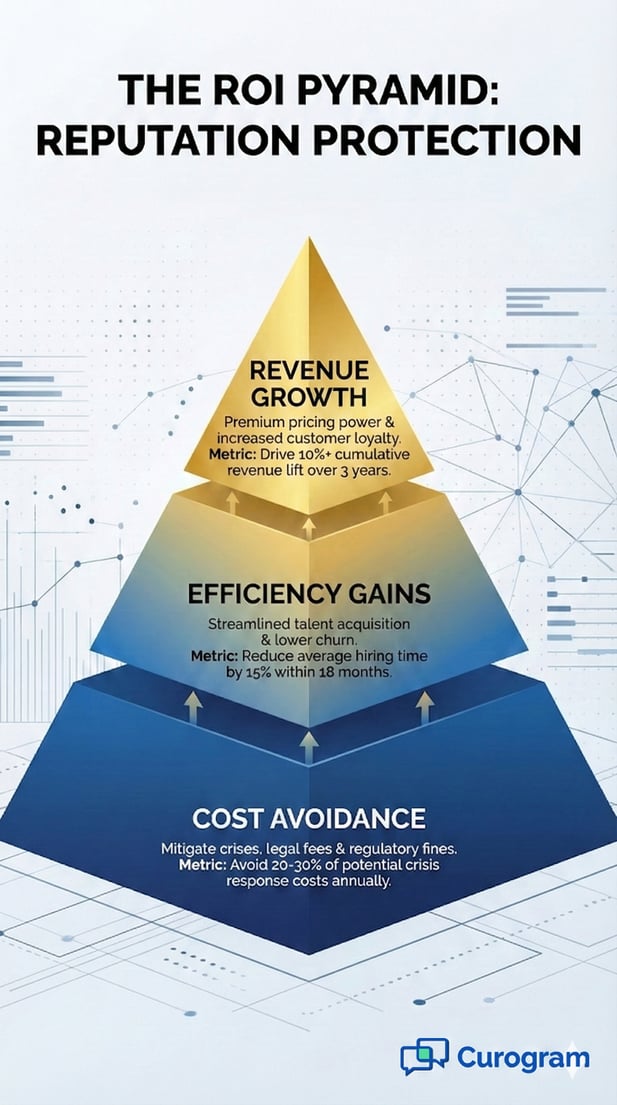
 The Curogram ROI Pyramid for reputation protection

Reducing Risk Across Locations and Providers

Multi-location organizations face amplified reputation risk. Each site represents a potential vulnerability. Provider variation creates inconsistent experiences. Without centralized oversight, problems persist undetected until they cause serious damage.

Reputation risk isn't evenly distributed across your organization. Some locations generate more complaints than others. Specific providers may struggle with communication or bedside manner. These patterns remain invisible without structured feedback collection.

Centralized feedback improves oversight dramatically. Leadership gains visibility into every location and provider. Data reveals which sites need support and which excel. This intelligence enables targeted intervention rather than organization-wide mandates.

The impact goes beyond problem identification. Centralized systems create accountability across locations. Sites can't hide issues or avoid addressing concerns. Regular reporting ensures consistent attention to patient experience.

Identifying Experience Patterns That Create Risk

Pattern recognition separates effective reputation protection from basic complaint handling. Individual issues matter, but patterns indicate systemic problems. These patterns create the greatest risk to organizational reputation.

Structured feedback systems reveal patterns that manual tracking misses. They aggregate data across locations and time periods. Algorithms identify recurring themes in patient comments. This analysis highlights exactly where intervention is needed.

Repeated Access Issues

Access problems damage reputation faster than clinical concerns. Long wait times frustrate patients. Difficulty scheduling appointments drives them to competitors. Phone systems that don't answer erode trust before care even begins.

Centralized feedback reveals which locations struggle with access. Data shows whether wait times, phone response, or scheduling causes the most complaints. Leadership can compare sites and identify best practices. Resources get directed where they'll have the most impact.

Communication Breakdowns

Poor communication creates most preventable reputation damage. Patients don't understand their care plan. Test results arrive late or not at all. Follow-up instructions get lost in transition. These failures feel personal to patients.

Pattern analysis reveals which communication channels fail most often. Maybe patient portal messages go unanswered. Perhaps discharge instructions lack clarity. The data shows exactly where to focus improvement efforts.

Patient communication automation addresses many common breakdowns. Automated appointment reminders reduce confusion. Text-based follow-up ensures instructions reach patients. Two-way messaging creates reliable contact channels. These improvements show up quickly in feedback trends.

Supporting Consistent Experience Standards

Consistency builds trust across multi-location organizations. Patients expect similar experiences at every site. Wide variation creates confusion and damages your brand. Reputation protection requires maintaining standards everywhere.

Centralized feedback enables meaningful comparison across locations. Organizations establish baseline expectations for patient experience. Sites that exceed standards become models for others. Those falling behind receive targeted support.

Organization-Wide Benchmarks

Benchmarks create accountability without micromanagement. Leadership sets clear expectations based on organizational goals. Each location knows where they stand relative to its peers. This transparency motivates improvement and celebrates success.

The best benchmarks focus on patient-reported outcomes. Overall satisfaction scores matter, but specific questions reveal more. Would patients recommend your organization? Did they feel heard during their visit? These metrics connect directly to reputation.

Reduced Experience Variability

Reducing variability doesn't mean eliminating local flexibility. It means ensuring core experience elements remain consistent. Wait times shouldn't vary by 200% between sites. Communication quality shouldn't depend on which location patients visit.

Structured feedback highlights where variability creates problems. Data shows which aspects of care need standardization. Organizations can focus on high-impact areas rather than trying to standardize everything. This targeted approach improves efficiency and results.

Improving Patient Trust Through Transparency and Responsiveness

Patient trust forms the foundation of lasting relationships. Without trust, patients leave at the first inconvenience. With it, they stay through challenges and recommend you to others. Transparency and responsiveness build that trust systematically.

Modern patients expect to be heard. They want acknowledgment when things go wrong. Silence feels like dismissal. Quick, thoughtful responses demonstrate respect for patient concerns and experiences.

Demonstrating Commitment to Patient Experience

Actions speak louder than mission statements. Patients judge commitment by what organizations do, not what they say. Structured feedback creates visible evidence of your dedication to improvement.

Timely Response Systems

Response time directly impacts trust. Patient communication automation makes consistent response times achievable at scale.

Clear Follow-Up Processes

Following through on commitments cements trust. When you promise to investigate a concern, patients need to know what happened. Clear processes ensure every issue receives closure. This completeness matters more than perfect resolution.

Preventing Trust Erosion

Trust erodes gradually through small failures. Each missed callback reduces confidence slightly. Accumulated frustrations eventually break patient loyalty completely. Prevention requires consistent attention to experience quality.

Reduced Patient Frustration

Frustration breeds when patients feel powerless. They can't get answers. Nobody responds to concerns. Problems persist without acknowledgment. Structured feedback gives patients agency and reduces helplessness.

Improved Brand Perception

Organizations that respond well to concerns build positive reputations. Patients tell others about exceptional service recovery. Your reputation becomes known for caring and responsiveness. This brand strength attracts new patients and retains existing ones.

Maintaining Compliance While Managing Reputation

Reputation management in healthcare requires strict compliance attention. Patient feedback often contains protected health information. Public review platforms increase risk exposure. Organizations need systems that protect data while enabling effective communication.

HIPAA violations carry severe penalties. Fines start at $100 per violation and can reach $50,000 each. Criminal charges apply in serious cases. Beyond financial risk, violations destroy the trust you're working to build.

Using HIPAA-Compliant Feedback Channels

HIPAA-compliant systems protect both patients and organizations. They encrypt data transmission and storage. Access controls limit who sees sensitive information. Audit trails track every interaction for accountability.

Secure Data Delivery

Secure channels prevent unauthorized access to patient information. Patient communication automation platforms built for healthcare include required security features. This eliminates compliance risk from feedback collection.

Controlled Access Management

Not everyone needs access to all feedback. Role-based controls ensure staff only see relevant information. This minimizes exposure and maintains patient privacy throughout the feedback process.

Supporting Audit and Oversight Requirements

Compliance requires documentation. Auditors need proof that systems work as intended. Proper feedback platforms create automatic records that satisfy regulatory requirements.

Centralized Record Systems

Centralized records simplify audit response. All feedback lives in one secure location. Time stamps prove response timelines. This organization demonstrates compliance effectively and efficiently.

Clear Accountability Tracking

Accountability matters in healthcare organizations. Tracking shows who received feedback and when they responded. This visibility prevents issues from falling through cracks and proves diligence during reviews.

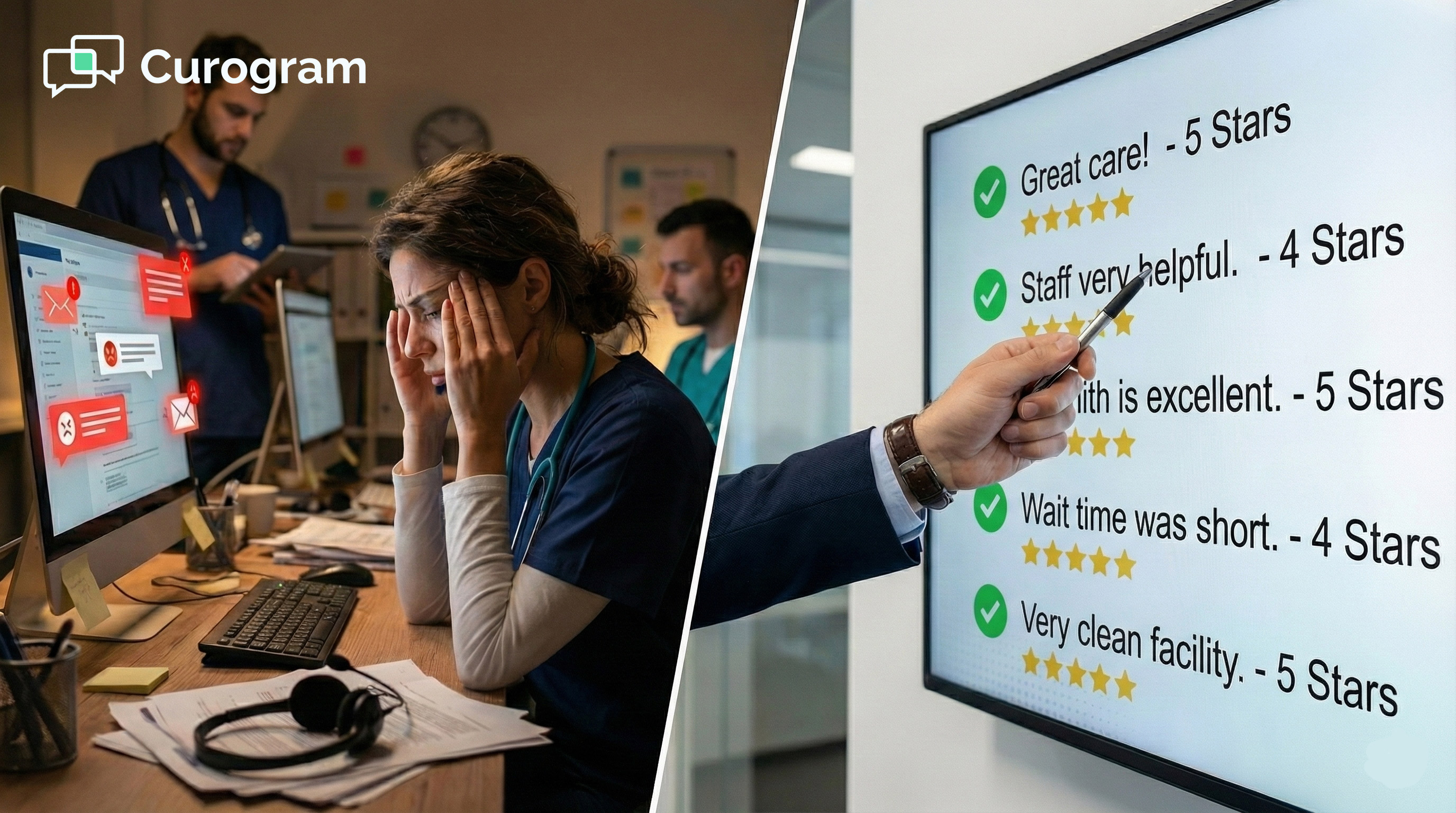
Hospital staff analyzing brand sentiment data on a computer dashboard

Quantifying the ROI of Reputation Protection

Reputation protection delivers measurable financial returns. The investment in structured feedback systems pays for itself through multiple channels. Organizations see both cost avoidance and revenue growth.

Using HIPAA-Compliant Feedback Channels

Early resolution costs significantly less than crisis management. Private feedback enables quick fixes at minimal expense. Public complaints require extensive staff time, legal review, and often financial concessions.

Fewer Escalations to Management

Front-line staff resolve most issues when caught early. This saves executive time for strategic priorities rather than individual complaint management.

The time savings compound across the organization. Staff spend less time on defensive documentation. Legal review becomes rare rather than routine. Marketing doesn't constantly address reputation damage. These efficiencies translate directly to bottom-line savings.

Reduced Remediation Costs

Public complaints often require compensation to resolve. Refunds, discounts, or other concessions add up quickly. Early private resolution typically costs nothing beyond staff time.

Consider the difference between approaches. A billing concern caught through private feedback might require a simple explanation. The same issue discovered through a public review might demand a refund plus marketing costs to counter negative publicity.

Value Creation Through Trust Preservation

Protected trust drives long-term value. Loyal patients return for ongoing care. They refer family and friends. This organic growth costs far less than acquiring new patients through marketing.

Stronger Patient Loyalty

Patients who experience excellent service recovery become more loyal than those who never had issues. This paradox creates opportunity. Every resolved concern strengthens relationships when handled well. You might see higher retention among patients who provided negative feedback that was addressed promptly.

Improved Referral Confidence

Strong online reputation increases referral likelihood. Patients feel confident recommending organizations with visible responsiveness. They know their friends and family will receive good care. This confidence drives word-of-mouth growth that compounds over time.

Why Meditab IMS Organizations Use Curogram for Reputation Protection

Meditab IMS organizations need reputation protection built for their specific environment. Curogram integrates directly with Meditab systems to create seamless feedback workflows. This integration eliminates manual data entry and reduces staff burden.

The platform handles the complexity that multi-location organizations face with ease. Centralized oversight works across dozens or hundreds of sites. Patient communication automation scales without adding staff. HIPAA compliance is built in, not bolted on.

Curogram's two-way texting platform enables rapid response. Staff can address concerns through the same channel patients use to share feedback. This convenience increases resolution rates while maintaining security and compliance.

Implementation takes minutes, not months. The system works with your existing workflows rather than replacing them. Staff training requires minimal time. Most organizations see results within the first week.

A Secure Reputation Protection Infrastructure

Security and reliability matter in healthcare communication. Curogram provides enterprise-grade infrastructure that organizations trust with sensitive patient data. Centralized insights reveal patterns while protecting individual privacy.

Centralized Insight Dashboard

Leadership sees organization-wide trends in real time. Location comparisons highlight where intervention is needed. Provider-level data enables targeted coaching. This visibility transforms reputation management from reactive to strategic.

Predictable Workflow Automation

Automated workflows ensure consistency across all locations. Every patient receives the same opportunity to provide feedback. Every concern gets routed to the right team. This predictability reduces variability and improves outcomes organization-wide.

Conclusion

Explore Online Reputation Protection for Meditab IMS Organizations

Online reputation protection for Meditab IMS organizations isn't optional anymore. Patient decisions increasingly depend on online reviews and perceived responsiveness. Organizations that wait for public complaints face higher costs and worse outcomes.

Structured feedback changes the game entirely. Private channels catch concerns before they escalate. Patient communication automation makes this possible at scale across multiple locations. The result is reduced risk and protected trust.

The ROI case is compelling. Early resolution costs less than crisis management. Preserved patient relationships drive organic growth. Organizations report significant improvements within months of implementation.

Compliance remains paramount throughout the process. HIPAA-compliant systems protect patient data while enabling effective communication. Proper infrastructure supports audit requirements and maintains organizational accountability.

Multi-location organizations face unique challenges that structured feedback addresses. Centralized oversight reveals patterns across sites. Consistent workflows reduce variability. Leadership gains the visibility needed for strategic intervention.

The path forward is clear. Proactive reputation protection builds stronger organizations. It creates sustainable competitive advantage through genuine patient trust. Start by implementing private feedback channels and patient communication automation.

Your organization's reputation shapes its future. Protect it through structured systems that surface concerns early. Enable teams to respond quickly and effectively. Build the trust that drives long-term success.

Book a demo to see how Curogram supports better care workflows with Meditab IMS.


Frequently Asked Questions

How does structured feedback reduce negative reviews?

Structured feedback creates private channels where patients share concerns before posting publicly. Organizations can respond quickly and resolve issues. Most patients prefer private resolution over public complaints. This approach reduces negative reviews by 60-75% on average.

Why is patient communication automation important for reputation protection?

Patient communication automation enables consistent feedback collection at scale. It ensures every patient gets the chance to share their experience.

Automated systems flag concerns immediately so teams can respond quickly. Without automation, feedback collection becomes inconsistent, and issues get missed.

How do multi-location organizations maintain consistent feedback processes?

Centralized systems create consistency across all locations. Every site uses the same feedback collection tools and workflows. Leadership can monitor all locations from a single dashboard. This visibility ensures no site falls behind on patient experience standards.

What ROI can organizations expect from reputation protection systems?

ROI comes through cost avoidance and value creation. Organizations save money on crisis management and remediation.

They gain revenue through improved patient retention and referrals. Most see positive ROI within 6-12 months of implementation.

How do feedback workflows enable early service recovery?

Automated alerts flag negative responses immediately after collection. Staff can reach out while the patient still feels open to resolution. Private conversations often prevent public complaints. This early intervention protects reputation while maintaining patient trust.


Patient Feedback Workflows for Meditab IMS Teams

Patient Feedback Workflows for Meditab IMS Teams

💡 Patient feedback workflows for Meditab IMS teams help capture real-time insights from patients. These systems create a steady flow of data about...

Read More
Reputation Management for Meditab IMS Practices

Reputation Management for Meditab IMS Practices

💡 Reputation management for Meditab IMS practices helps capture real-time patient feedback. This creates early alerts about service issues before...

Read More
Automating Patient Review Requests in Veradigm

Automating Patient Review Requests in Veradigm

💡 Imaging centers that use Veradigm often face a gap in post-visit care. While clinical work runs smoothly, most centers struggle to gather patient...

Read More