9 min read
OncoEMR Telemedicine Without Patient App Download: How It Works
Mira Gwehn Revilla
:
May 7, 2026
- No app, no portal, no login
- HIPAA-compliant and SOC 2 Type II certified from day one
- Built for post-chemo check-ins, survivorship visits, and palliative consults
- Text message open rates clear 98%, while older patient portal adoption sits near 20-30%
- Audio-only fallback by phone for any patient who needs it
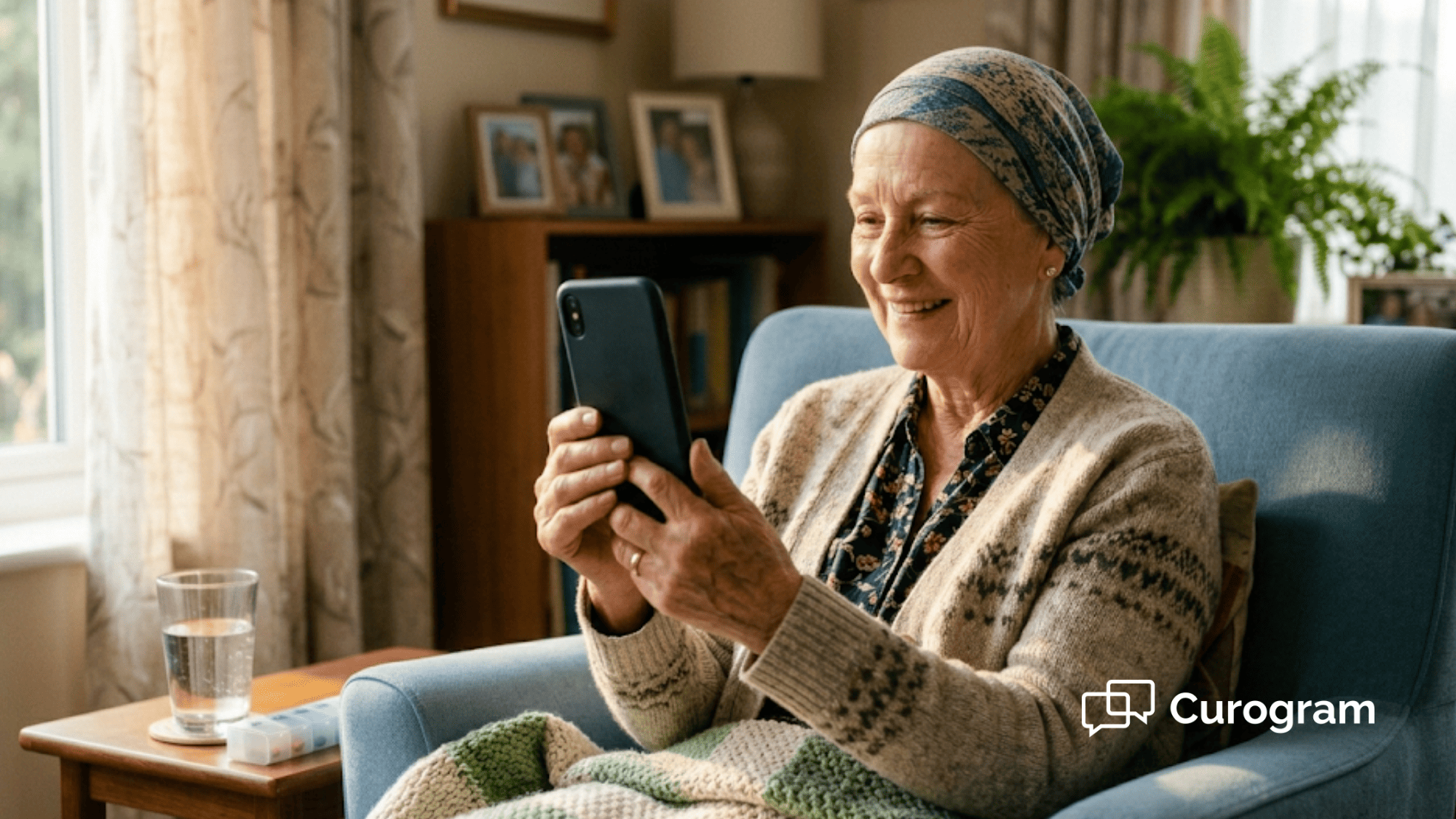
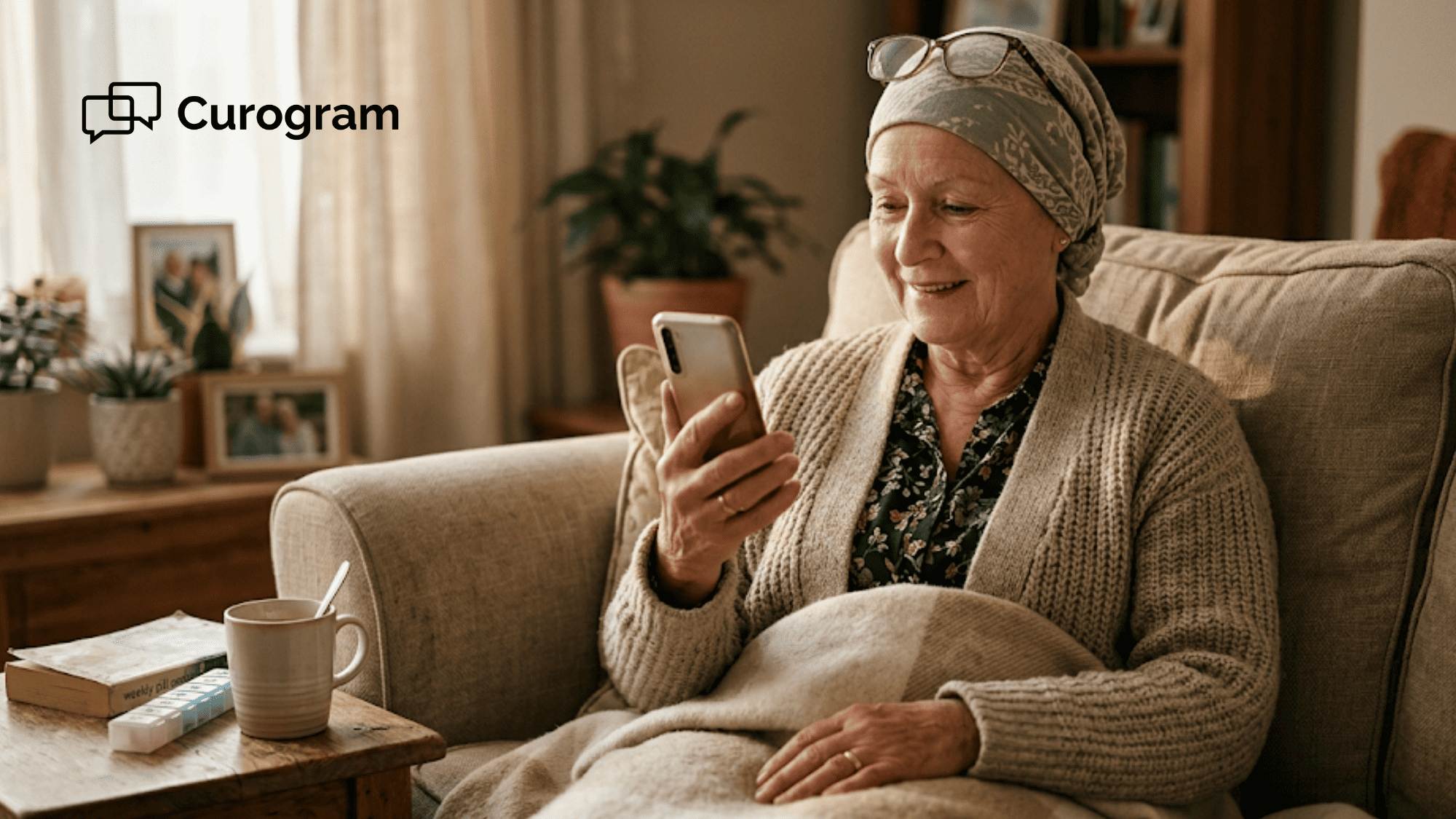
A 68-year-old patient finishing her third chemo cycle should not have to install an app to reach her oncologist. Yet many oncology platforms still expect that. She is tired, foggy, and out of patience for password resets. The system fails her at the worst possible time.
OncoEMR telemedicine without patient app downloads is now possible with Curogram. The platform works alongside OncoEMR to handle post-chemo check-ins, survivorship visits, and palliative care consults.
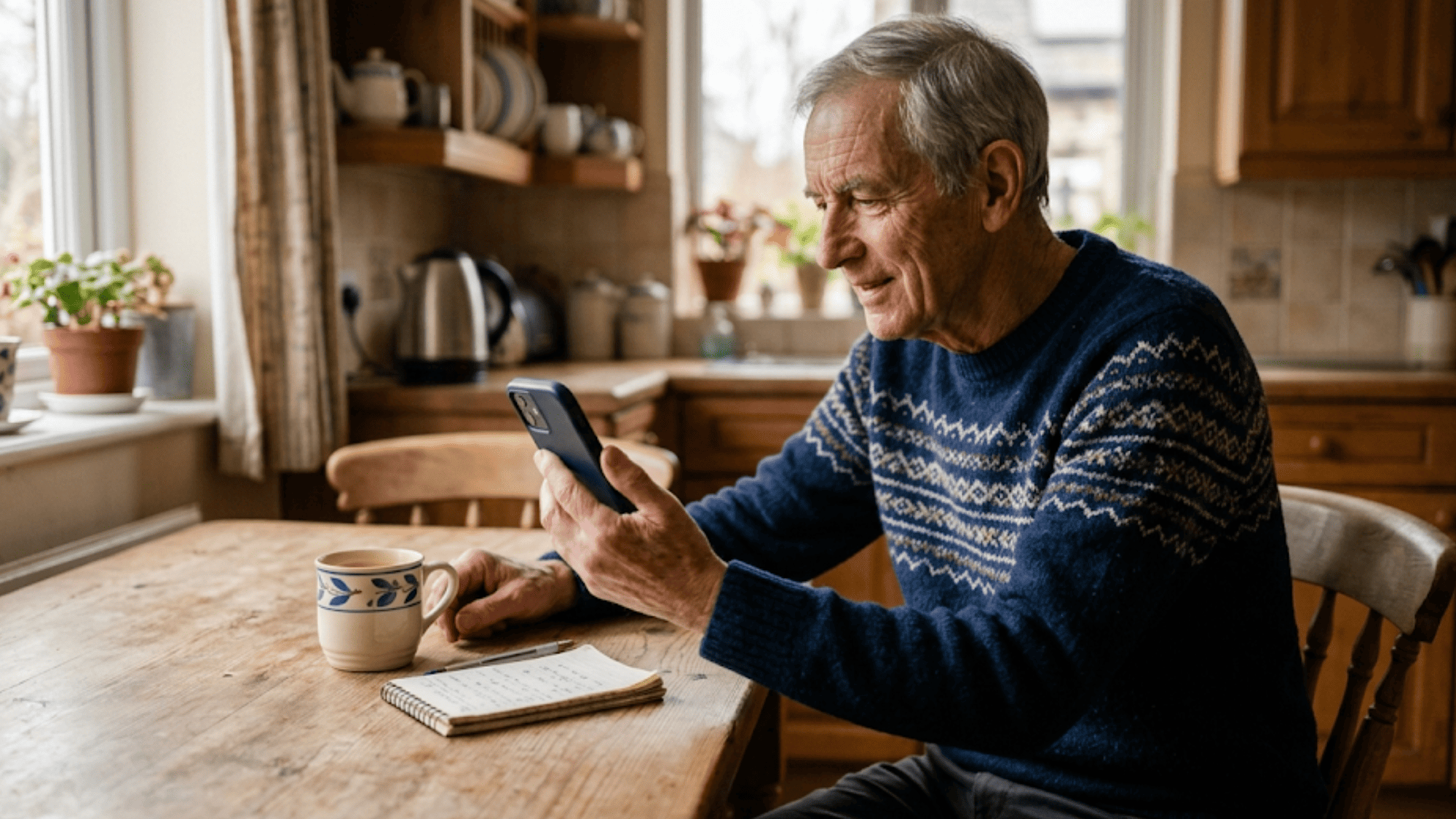
Patients tap one text link, and the video visit opens in their browser. No portal, no login, no setup.
This matters because the median oncology patient is in their late 60s. Many face fatigue, brain fog, and immune system risks. Any extra step in the access path becomes a clinical barrier. When a patient skips a follow-up because they cannot log in, that is a care failure.
Curogram is built differently than CareSpace, which has weak video tools. It also differs from Willowglade, which bundles telemedicine inside a portal-first system at extra cost. Curogram is SMS-first. One text. One tap. The visit starts.
Practices using this model report fewer no-shows and faster response times. Older patients who once avoided video visits now join from home. Staff stop chasing patients by phone for confirmations. SOC 2 Type II and HIPAA certification clear compliance from day one.
This article explains how text-link telemedicine for cancer patients works in real oncology workflows. We will cover the access problem, the Curogram fix, and what your practice can expect after rollout. You will also see how OncoEMR virtual visits with no login change patient behavior.
The Villain: The Oncology Tax
The oncology tax is the hidden cost of asking cancer patients to fight apps, portals, and login screens. It is what your patients pay in time and frustration just to reach you. It is also what your practice pays in missed visits and staff overhead. For oncology, this tax is steeper than for any other specialty.
The Access Barrier
OncoEMR is strong at chemo order management and protocol records. It is not built for patient video calls. CareSpace, the native portal, is designed for clinical record viewing. It is not designed for video.
Willowglade does offer telemedicine for oncology practices, but only as part of its bundled "Unified Digital Patient Experience." That bundle costs extra.
It also forces patients to remember another login and learn another portal. So your team faces two bad options: ask patients to travel for follow-ups, or buy a separate platform that adds friction instead of removing it.
For an immune-compromised patient, travel during treatment carries real risk. For a fatigued post-chemo patient, learning a new portal is exhausting. Neither option respects the patient's actual condition.
The Patient Friction
The median oncology patient is 66 years old. Many are managing brain fog, neuropathy, and treatment-related anxiety. Asking them to download an app, create an account, set a password, and log in is asking them to solve a tech puzzle when they should be focusing on health.
Portal adoption among older patients sits at 20-30%. Text message open rates clear 98%. The gap is not small. It reflects how patients actually want to engage with care.
When the choice is click a text link or remember a portal password, patients pick text every time. Asking older cancer patients to use a portal is like asking them to read fine print through fogged-up glasses.
The Clinical Consequence
A missed telemedicine visit in oncology is not a missed haircut. It can mean a delayed check for cancer recurrence. It can mean a missed sign of long-term toxicity. It can mean a palliative patient managing pain that someone could have eased.
When the access barrier is technical, every missed visit is a system failure, not a patient failure. Your protocols depend on consistent follow-up. If patients drop out because the tech is hard, your treatment plan loses data. Survivorship visits OncoEMR teams need for long-term monitoring become guesswork.
Recurrence detection windows matter. So do toxicity check-in rhythms. Friction at the access layer breaks both.
The Operational Cost
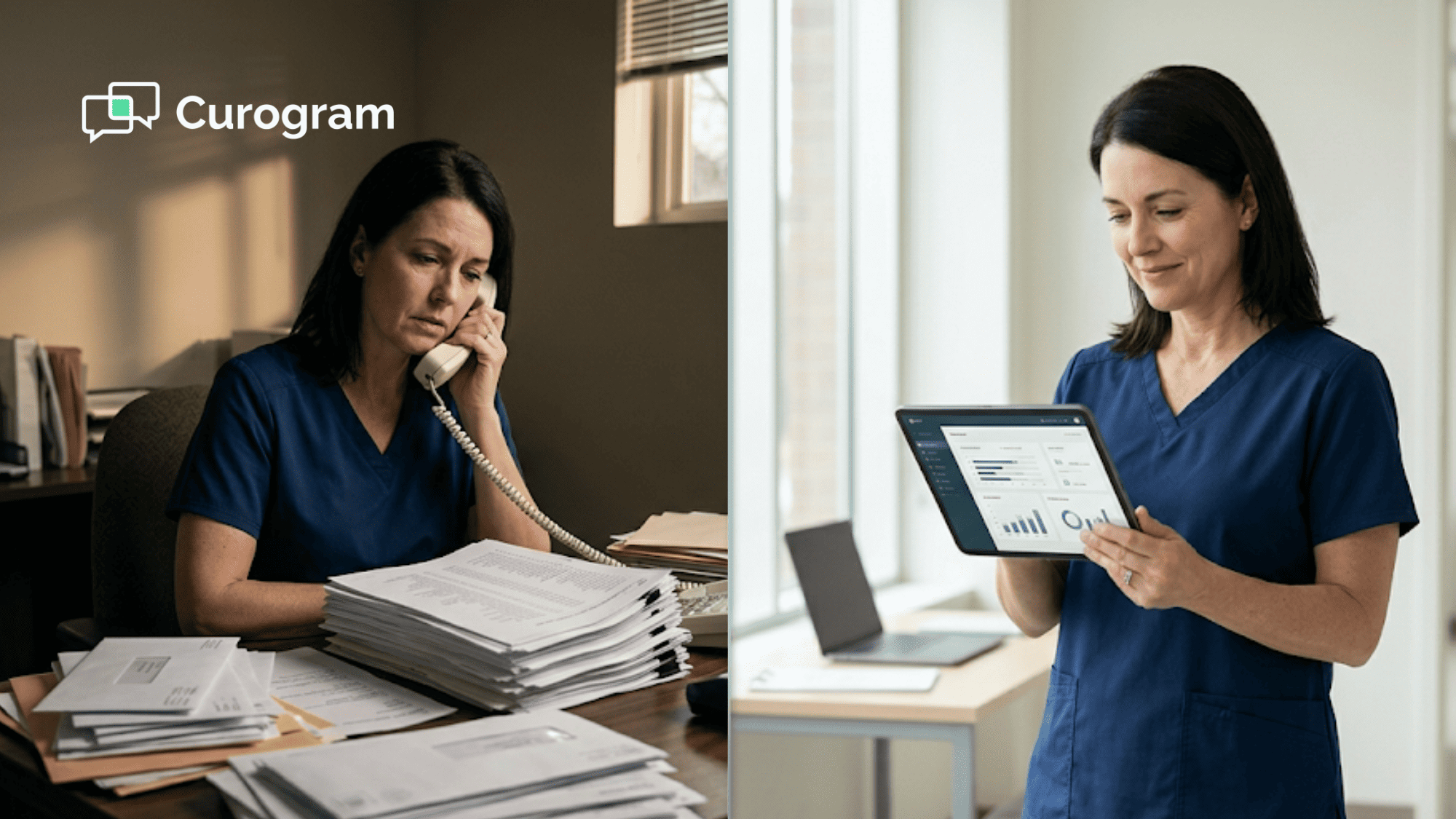
When portal-based video does not work, staff fall back to phone calls. That creates two problems. First, clinicians and nurses spend time troubleshooting access instead of managing care. Second, phone calls do not scale.
A 5-provider oncology practice with 50+ patient contacts per day cannot run that volume on phone calls. The math breaks. One staff member spends an hour on hold or in voicemail tag for every cluster of patients. That is paid time the practice could spend on real care.
The oncology tax hits the patient first. But it also hits your nurses, your front desk, and your bottom line. The cost shows up in burnout, in turnover, and in revenue you never collect.
The Guide: The Zero-Friction Video Visit
The fix is simple in concept and simple in execution. Replace the portal with a text. Replace the app with a browser. Replace the login screen with a single tap. That is what Curogram does, and it is why oncology teams are leaning in.
How It Works
Curogram sends the patient a text message before the visit. The text contains a video link. The patient taps the link, and the video call opens in their phone or browser.
There is no app to install. There is no account to create. There is no login to remember. When the visit ends, Curogram logs the interaction and stores notes in the dashboard. Staff review, document, and move on.
If the patient is uncomfortable with links, staff can call them with a PIN code. They can also dial in by phone for an audio-only visit. There is always a fallback.
The Feature: Text-Link Video Visits
Most telemedicine tools are portal-first. The video sits behind a login. The patient must navigate to find it. Curogram flips that. The text message is the invitation, the access point, and the launch button all at once.
That single design choice explains the gap between portal engagement and SMS engagement. Portal notifications get opened by 20-30% of patients. Texts get opened by over 98%. When you remove the steps between message and visit, patients show up.
For text-link telemedicine cancer patients can use comfortably, that simplicity is the entire product. There is nothing else to learn.
Integration & Data
Curogram works alongside OncoEMR, not through it. The platform pulls appointment data from OncoEMR with read-only API access. It then sends text reminders, confirms visits, and hosts the video call.
Visit summaries log in the Curogram dashboard. Staff can export them or share them through secure documents. Curogram does not write back into OncoEMR's clinical record, and it does not need to. Telemedicine notes are administrative communication, not clinical data entries.
That clarity is a feature, not a limit. It removes integration complexity. It avoids HL7 interface costs. It gets your practice live in days, not months.
Oncology-Specific Use Cases
Four workflows fit Curogram's text-link model especially well.
-
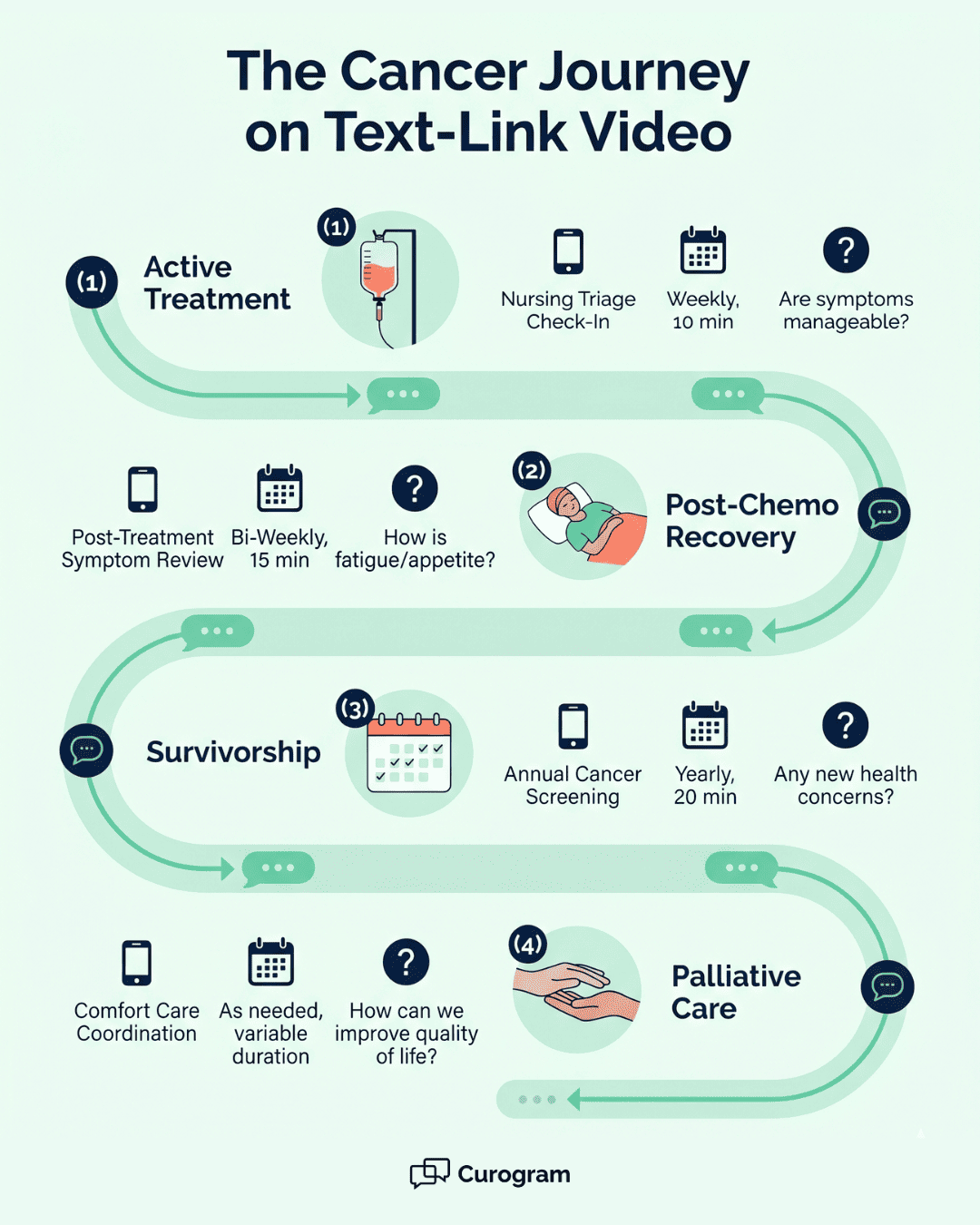
Post-chemotherapy check-ins. Patients call in from home to report symptoms while still managing fatigue and nausea. They do not have to drive to the clinic the day after treatment.
-
Survivorship visits OncoEMR teams use for long-term monitoring. Patients who finished active treatment can keep up with annual or quarterly check-ins from home. Continuity stays intact.
-
Palliative care consults. Patients in advanced stages can join care planning meetings without travel. Family members can join the same call from a different location. The whole care circle is in the room.
Fourth, nursing triage. An oncology nurse can do a 10-minute symptom check before an in-person visit. If the symptom is mild, the patient avoids a clinic trip. If it is serious, the nurse routes them in faster. The right patients show up at the right time.
For post-chemotherapy telehealth, the value is clear. The patient is too tired to travel and too foggy to fight a portal. A text link meets them where they are.

The Success: Telemedicine Adoption & Patient Continuity
The shift from portal-based video to text-link video does not just change the click path. It changes who shows up. Older patients, fatigued patients, and patients in rural areas all start to engage. The numbers reflect that change quickly.
The Metric
Based on our internal data, Covina Arthritic Clinic scaled from 369 confirmed appointments in May 2024 to over 1,310 confirmed appointments by November 2024. That is a 255% increase in just six months.
The driver was simple: SMS-based reminders and one-tap appointment links replaced phone tag and missed voicemails.
While Covina is a rheumatology clinic, the pattern translates directly to oncology. The patient profiles overlap. Both specialties serve older adults with chronic conditions. Both rely on consistent follow-up to manage long-term care.
For an oncology practice currently scheduling 50 telemedicine visits per month, the same trajectory points to roughly 175 visits within six months. That is not a guess. That is what happens when access barriers come down.
Here is a simple way to see the math:
|
Month |
Practice scheduling 50 video visits at start |
Projected with text-link model |
|
Month 1 |
50 |
65 |
|
Month 3 |
50 |
105 |
|
Month 6 |
50 |
175 |
The gain is not from new patients. It is from existing patients finally able to attend the visits already on the schedule.
The Shift: From No-Show Risk to Patient Access Certainty
When telemedicine requires a portal login or app download, two things happen. Adoption stalls, and no-show rates climb. The patient wants to attend, but the access path defeats them.
When telemedicine requires one text click, the curve flips. Adoption rises fast. No-shows drop. Curogram clients across specialties report 75%+ appointment confirmation rates, based on our internal research.
For oncology, this matters more than for almost any other specialty. Each missed video visit is a delayed care check. Each delay can mean a missed signal for recurrence or treatment-related side effects.
A 75% confirmation rate is not just a stats line. It is the difference between catching a problem at week 6 versus week 12. In oncology, those weeks matter.
Atlas Medical Center, another Curogram client, dropped its no-show rate from 14.20% to 4.91% in three months, based on our internal data. That is a 65% drop. Apply that to oncology, and the math is striking.
If your practice runs 200 telemedicine visits per month at a 14% no-show rate, that is 28 missed visits. Drop that rate to 5%, and you save 18 visits per month. Over a year, that is 216 visits recovered. Each one is a chance to catch a complication early.
The Outcome
Three patterns show up consistently in oncology practices that switch to text-link video.
-
Continuity of care improves. Patients who used to skip telemedicine because of portal friction now attend follow-ups. The treatment record becomes more complete. Decisions about chemo adjustments or supportive care happen with better data.
-
Staff phone tag drops. Nurses and front desk staff stop spending half their day on confirmation calls. Based on our internal data, Curogram cuts phone call volume by up to 50% across client practices. For a 5-provider oncology practice, that is roughly 2 hours of staff time per day reclaimed.
-
Patient satisfaction rises. Patients tell their oncology team they actually use the video option now. Family members join calls. Video visits OncoEMR teams schedule no longer feel like a chore the patient is going to skip.

How Curogram Turns OncoEMR Into a Real Telemedicine System
OncoEMR is excellent at clinical documentation. It tracks chemo orders, protocols, and oncology-specific data better than most. What it does not do well is patient communication. CareSpace covers the basics, but it was never designed to be a video platform.
Curogram fills that gap without trying to replace OncoEMR. It runs alongside it. Appointment data flows in through a read-only API connection. From there, Curogram handles every patient touchpoint that does not need to live inside the clinical record.
That includes text reminders, confirmation messages, intake forms, and most importantly, video visits. For OncoEMR virtual visits with no login, Curogram is the access layer. The patient gets a text. The patient taps. The visit starts.
For your team, the interface is just as simple. Staff see a clean dashboard with a list of upcoming visits, confirmations, and notes. They do not have to switch between five tools.
They do not have to retrain on a new EMR. They keep working in OncoEMR for clinical entries and use Curogram for everything that touches the patient directly.
Implementation is fast. Most practices are live within a week. Staff training takes about 10 minutes per person. SOC 2 Type II and HIPAA certification mean your compliance officer signs off without weeks of review.
What makes this work for oncology specifically is patient demographics. Older patients respond to texts. Fatigued patients tap links. Family caregivers receive copies of the same messages. Curogram fits the way your patients actually behave.
In short, Curogram does not ask OncoEMR to be something it is not. It just adds the missing patient access layer. That is why text-link telemedicine cancer patients can use is now a realistic option, not a wishlist item.
Conclusion: Telemedicine Is a Communication Channel, Not a Platform
OncoEMR is your clinical record. Curogram is your patient communication layer. They complement each other. You do not replace OncoEMR or CareSpace. You layer Curogram alongside them to solve the one problem neither was built for: getting cancer patients into video visits without friction.
Telemedicine should work like texting a friend. One message, one tap, one conversation. That is the model your patients already use for everything else. It is also the model that respects what they are going through.
For an immune-compromised patient, every avoided clinic trip is a small win. For a fatigued post-chemo patient, every barrier you remove is energy saved for healing. For a survivorship patient, every easy check-in is one more chance to catch a problem early. The patient experience and the clinical outcome are the same thing.
Stop asking cancer patients to download apps. Stop asking them to navigate portals. Stop using phone calls as the workaround for a broken video tool. Offer them telemedicine the way they already communicate.
Map your top three oncology telemedicine workflows to a real text-link setup with our team. Schedule a demo and see a clear rollout plan for your practice.
Frequently Asked Questions
Curogram pulls appointment data from OncoEMR using a read-only API. It handles texts, confirmations, and video visits. Notes log inside the Curogram dashboard. Your clinical entries stay in OncoEMR where they belong.
Text message open rates clear 98%, while portal adoption among older patients sits near 20-30%. Patients already know how to read texts. They do not need to learn a new app or remember another login.
Most practices are live in under a week. Staff training takes about 10 minutes per person. Compliance review is fast because Curogram leads with SOC 2 Type II and HIPAA documentation, not behind it.