
Notenetic Appointment Reminders: Cut Behavioral No-Shows
💡 Notenetic gives behavioral health practices a solid schedule, but no automated SMS reminders. The Client Portal only shows appointments when...
6 min read
Aubreigh Lee Daculug
:
June 17, 2026
A client books a therapy session. They want to be there. Then the day comes, and the chair sits empty.
It happens more than most practices admit. And here's the part that stings. The client wasn't avoiding therapy. They simply forgot.
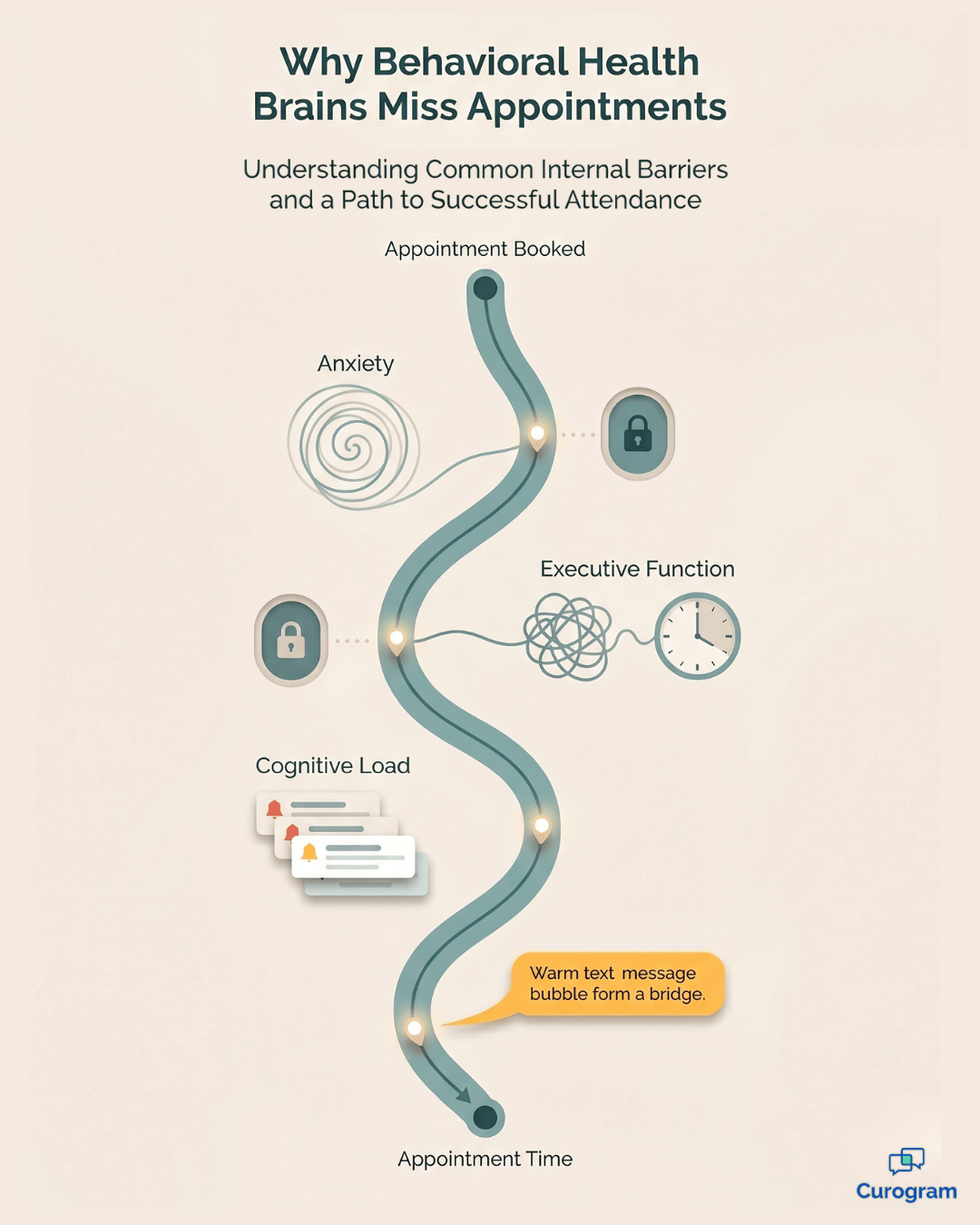
For behavioral health clients, forgetting isn't carelessness. Anxiety, depression, and executive function challenges make tracking time genuinely hard. The very reasons someone seeks help are often the reasons they miss the visit that would help.
So where does Notenetic fit?
Its Client Portal does its job well. It shows clients their upcoming visits — if they log in. But logging in is the exact task that fails.
A passive portal waits quietly to be found, and a forgetful brain rarely goes looking for it.
That gap has a cost. Behavioral health no-show rates run 20% to 30% across the field. Some practices report half their slots empty. Each missed visit is lost revenue, a longer waitlist, and in psychiatry or substance use care, a real clinical risk.
For clients in active treatment, an empty slot can stall progress that took weeks to build.
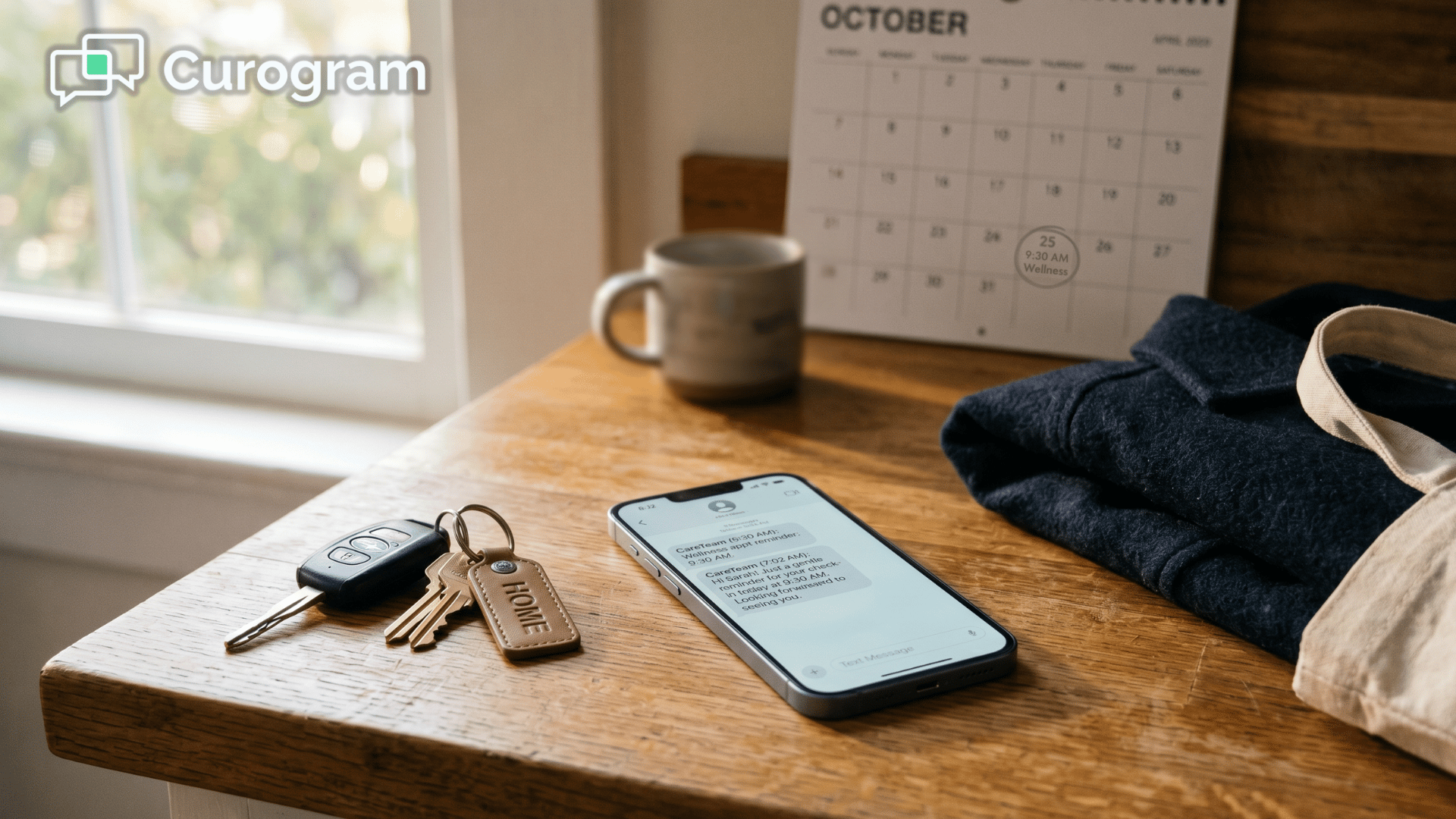
This is where SMS appointment reminders for therapy clients on Notenetic change the math. A text meets the client on the device they already check dozens of times a day.
No login. No friction. Just a gentle nudge at exactly the right hour.
That's the role Curogram plays. It runs beside Notenetic, sending reminders the portal can't. The numbers back it up. Curogram's psychiatry clients sit at 11.03% no-shows, against a 23% industry average.
Less than half. Same clients. Same schedule. One small change in how they're reminded.
The rest of this guide breaks down why portals fall short, how the reminders actually work, and what the shift looks like for both your practice and your clients.
Most no-shows in behavioral health aren't acts of defiance. They're slips. The client meant to come. Life got loud, and the visit slipped out of view.
Behavioral health clients miss visits they truly wanted to keep. Not because therapy failed. Not because the relationship doesn't matter.
The executive function, anxiety, or mental fog they came to treat is exactly what makes remembering hard. Asking that brain to track time and log in asks it to do the one thing it struggles with most.
Notenetic's Client Portal is a sound system on paper. Clients log in and see their next visit. But a portal is passive — it waits to be opened.
It assumes the client remembers they have a visit at all, which is the exact step that breaks down. By the time they think to check, it's already past, and the slot is gone.

For clients living with anxiety, the evening before a session can tip into avoidance. A warm text 24 hours out doesn't pile on pressure. It gives them an anchor.
"See you tomorrow at 10 with Dr. Chen — reply C to confirm."
An anxiety and executive function appointment reminder like that lands at the right moment, while a morning-of login adds friction at the worst one.
The numbers are stark. Behavioral health no-show rates run 20% to 30% industry-wide, and some practices report 50%. DialogHealth's 2024 data puts psychiatry at 23%.
The clients in that gap are often the ones who need steady care most — substance use treatment clients, trauma clients, and clients in active medication titration. In those cases, a missed visit isn't a scheduling hiccup.
It's a clinical risk. Strong behavioral health no-show prevention starts with seeing these misses for what they really are.
So what actually closes the gap?
A reminder that reaches the client without asking anything of them first. That's the whole idea behind Curogram.
Curogram works as the gentle nudge. It's a HIPAA-compliant SMS system that sends the right message at the right time, on the device clients already trust.
No portal to navigate. No friction at the wrong moment.
Its Customizable Smart Reminders go out at intervals your practice sets.

A common cadence looks like this:
Each message is two-way. The client confirms, cancels, or asks to reschedule with a single tap. A therapy client reminder text like this reads like a real person, not a system alert — and that tone is yours to set.
Compliance matters here, especially in substance use care. For clients governed by 42 CFR Part 2 — a rule stricter than HIPAA — reminder content can be set to leave out any diagnostic or treatment language. The text reads as a plain appointment confirmation.
No program is named, and nothing is exposed to anyone glancing at the client's screen.
The cadence respects the therapeutic relationship instead of fighting it. For clients on shared devices, an opt-out sits on every message.
Think of these as behavioral health client experience reminders, not cold system pings — small touches that make people feel seen. This is mental health client engagement done with care.
Here's what the shift looks like in practice.
Curogram's psychiatry clients run at 11.03% no-shows, against the 23% industry average. That's less than half — and it traces directly to clients who receive and act on a reminder instead of missing it.
Across every specialty, the platform composite sits 53% below the industry rate. Atlas Medical Center, a proof point on the DrChrono platform, dropped from 14.26% to 4.91% in just 90 days.
Same patients. Same calendar. A different way of reminding them.
So what does that mean in dollars?
Say a psychiatry practice runs 1,000 scheduled visits a month. At a 23% no-show rate, that's 230 empty slots. Drop to 11%, and only 110 slip away.
That leaves 120 recovered visits every month. At an average $150 per visit, you're looking at about $18,000 back each month — roughly $216,000 a year. (These are sample figures to show the scale, not a quote.)
The behavior changes from "I meant to come" to simply showing up. A client confirms her medication management visit at 8:45 PM the night before. She sees the 2-hour reminder over coffee and arrives on time.
A DBT group member who'd have forgotten Thursday gets the nudge Wednesday evening. A substance use intake client on the fence sees a confirmation that never names his program — and replies yes.
That's the quiet power of a psychiatry appointment text on Notenetic. It catches the client at the moment they need catching, not the moment they happen to remember.
Most behavioral health no-shows aren't a sign that therapy isn't working. They're forgotten appointments — visits your clients fully meant to keep. SMS reminders catch them. Portals don't.
Think of it this way.
Notenetic is your record of the appointment. Curogram is your client's reminder of it.
One lives in your system. The other lives in their pocket. Together, they get the client into the chair.
That distinction matters more than it sounds. A portal asks the client to come find the information. A text brings the information to them, right when they need it, without a single login. For a brain wrestling with anxiety or executive function, that small difference is the whole game.
So stop blaming your clients for missing visits your system was never built to remind them about. The fix isn't a stricter policy or a guilt-laden voicemail. It's a gentle nudge at the right hour, in a format they will actually open.
The payoff is real and easy to measure. Fewer empty slots. Shorter waitlists. Recovered revenue.
And clients who feel supported rather than chased. That's better care and a healthier bottom line at the same time, and few changes deliver on both at once.
You don't have to take the numbers on faith. See what a friction-free reminder thread looks like from your client's side — the warm tone, the one-tap reply, the quiet reliability that keeps your calendar full.
Ready to see it work? Schedule a Demo and watch how Curogram runs alongside your Notenetic schedule. We'll walk through your current no-show rate, show you exactly where the recovered visits would come from, and what each one is worth to your practice.
In practice, the opposite is true. Clients often say a text feels more personal than a portal alert and less stressful than a phone call. Curogram's reminders are fully customizable in tone and wording. So a therapist's reminder can read warm and conversational — a colleague checking in, not a machine pinging.
Curogram captures TCPA-compliant SMS consent at onboarding, and every message carries an automatic "Reply STOP" opt-out. Clients can opt out anytime and fall back to phone or portal reminders. For shared phones or clients under 42 CFR Part 2, the content can be set to leave out any diagnostic or treatment language. The text simply reads as a neutral appointment confirmation.
No. The cadence is multi-touch by design: 72-hour, 24-hour, and 2-hour reminders. A client who missed the first often replies to the second or third.
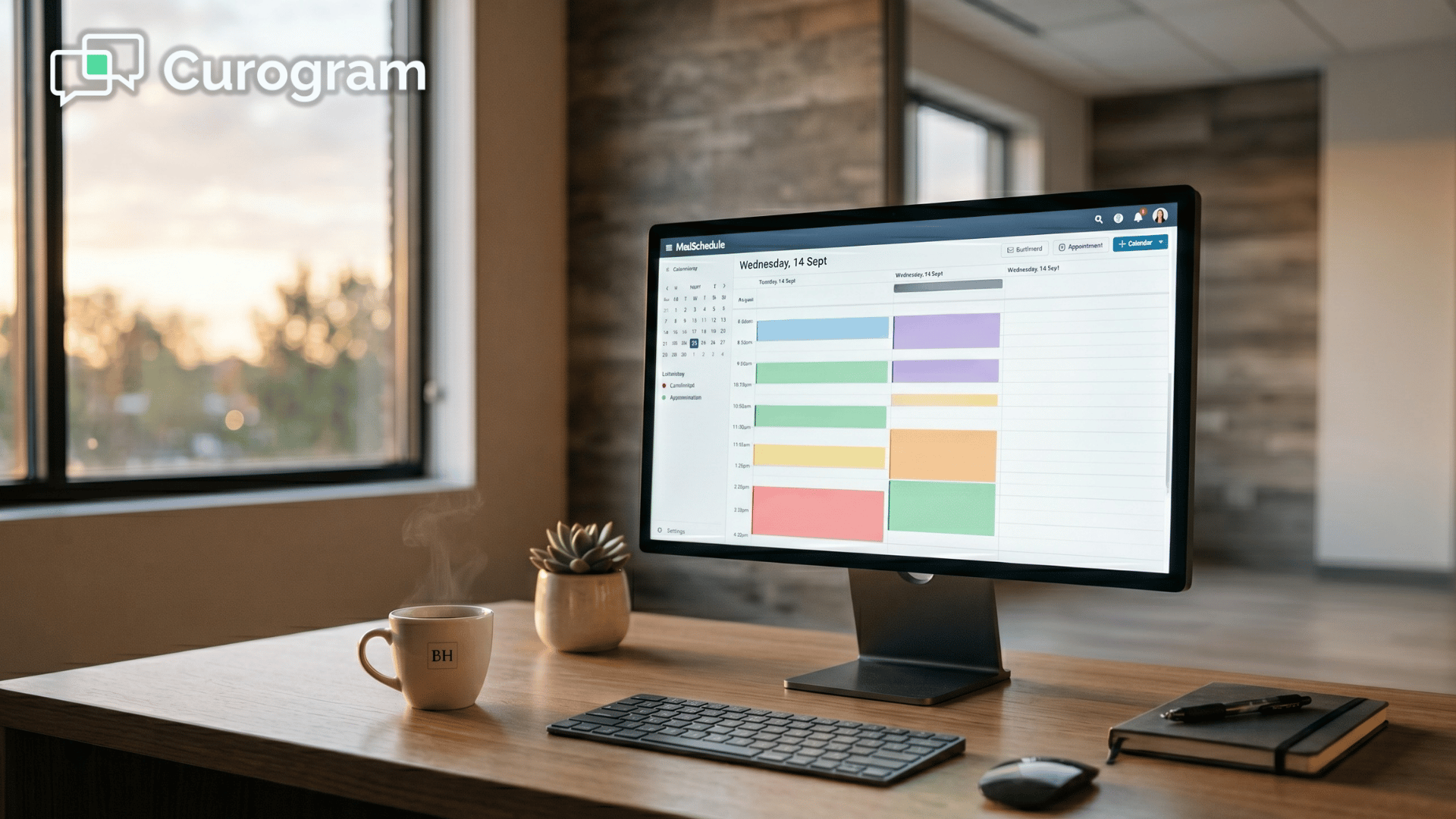
It runs alongside it. Curogram doesn't replace your clinical record or your scheduling system. It sits beside Notenetic as a parallel messaging layer, pulling appointment details and sending the reminders the portal can't. Your team keeps working in Notenetic exactly as they do today.
Setup is light, and it won't pile onto your front desk's daily load. Once the cadence is configured, reminders run on their own — no one sends texts by hand. Staff only step in for the small handful of unconfirmed slots the dashboard flags. The day-to-day workflow gets lighter, not heavier.
💡 Notenetic gives behavioral health practices a solid schedule, but no automated SMS reminders. The Client Portal only shows appointments when...
💡 Veradigm patient appointment reminder text message without portal enrollment means patients confirm their visit by replying YES to a single text...
💡 Modmed patients respond to SMS appointment reminders at a 98% open rate because text messages arrive in the same app patients already use every...