
7 min read

Reduce No-Shows for Netsmart BH | Reminders

Reduce No-Shows for Netsmart BH | Reminders
💡 To reduce the no-show rate at a Netsmart mental health clinic, add automated 2-way SMS appointment reminders through a HIPAA-compliant platform like Curogram that runs alongside your Netsmart scheduling.           

Behavioral health no-show rates run 23% to 50%, costing $20,000 to $30,000 per month per location.

Curogram texts each consumer at set intervals, and they confirm or reschedule by replying. No portal login is needed, and text lands through a channel with a 98% open rate.

Curogram practices see no-show rates 53% lower than the industry average. Atlas Medical Center dropped from 14.2% to 4.91% in three months.  


Your schedule looked full this morning. By noon, it has holes in it.

A consumer who needed a medication check never arrived. A therapy slot during a fragile stretch of treatment sits empty. Your front desk has been dialing all day, and the gaps keep opening anyway.

This is the quiet tax on behavioral health practices, and it's heavier here than almost anywhere else in medicine. No-show rates in this field run between 23% and 50%, far higher than most specialties.

At $150 to $250 a session, each miss adds up fast. Across a single month, one location can lose $20,000 to $30,000.

The cost isn't only money. In behavioral health, a missed appointment is a clinical event.

Skipped medication management. Interrupted therapy during a critical phase. Worst of all, a person who quietly slips out of care before anyone notices they're gone.

Here's the frustrating part. Most clinics already have a reminder tool sitting right inside their system.

Netsmart and myHealthPointe send portal-based nudges, but the reach is tiny. Only an estimated 15% to 20% of behavioral health consumers keep an active portal account.

The reminder goes out, and almost no one ever sees it.

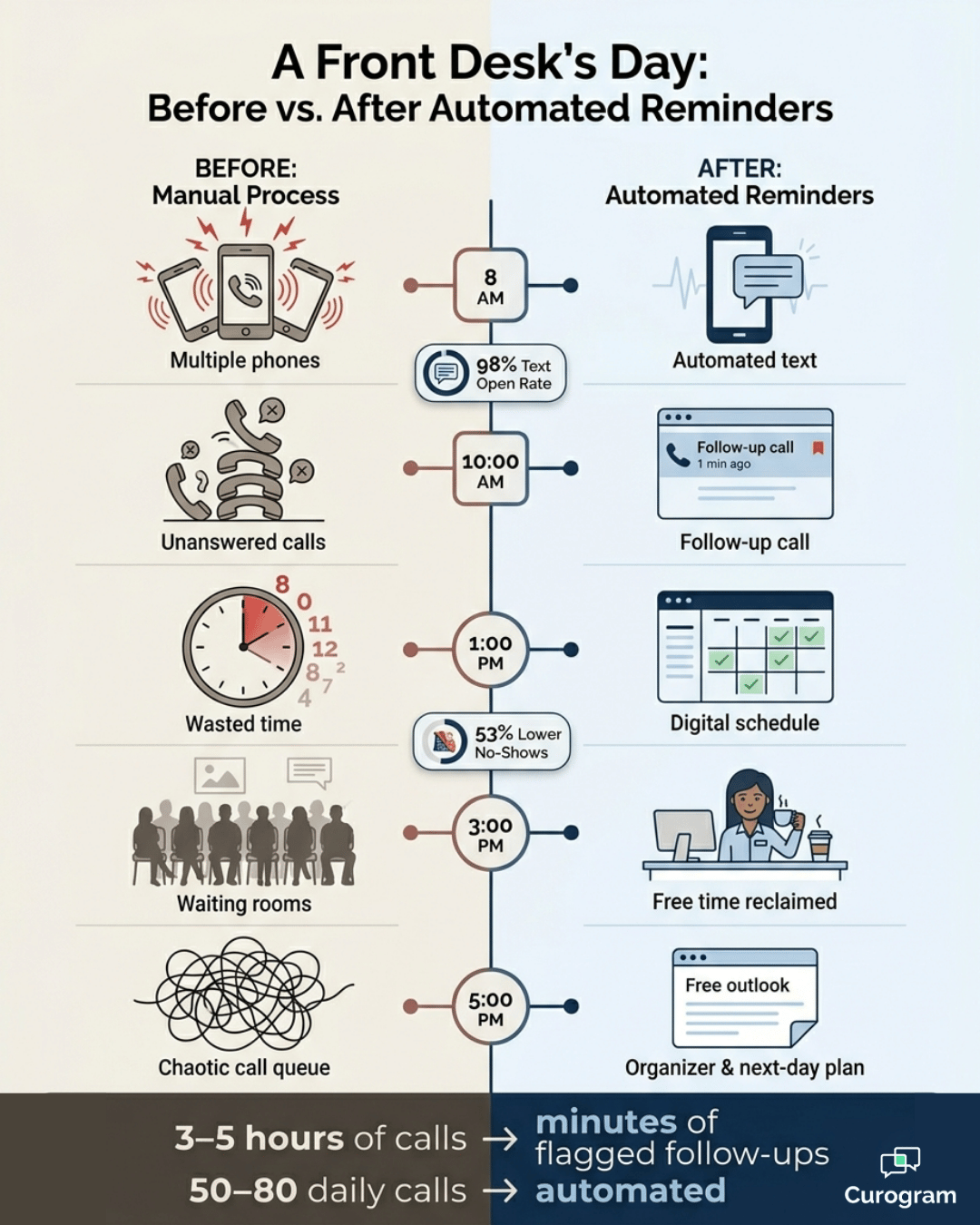
So staff fall back on the phone. Three to five hours a day, 50 to 80 calls, most of them ringing into voicemail. It's draining, repetitive work that pulls people away from the patients standing right in front of them.

There's a better way to handle this, and it doesn't mean ripping out the system you depend on.

To reduce the no-show rate at a Netsmart mental health clinic, you need reminders that actually land. This guide walks through why the spiral happens, why portal reminders fall short, and how a simple texting layer turns a chaotic schedule into a steady one.

How One Missed Appointment Turns Into a Spiral

A no-show feels like a single empty chair. It rarely stays that way. In behavioral health, one missed visit tends to pull the next one down with it, and the damage spreads through your revenue, your staff, and your patients all at once.

The real cost of an empty slot

Behavioral health no-show rates sit between 23% and 50%. Psychiatry alone averages around 23%, and that's the optimistic end. In a same-day scheduling model, you can't backfill the gap, so the slot is simply gone.

Here's what that looks like in plain numbers for a busy location:

What you lose Per session Per month (per location)
Average session value $150–$250
Typical lost revenue $20,000–$30,000

That bottom number isn't a worst case. It's the everyday math for a single site running normal volume. Multiply it across a multi-location group and the leak becomes a flood.

The hidden cost your front desk carries

Now add the labor. Staff spend 3 to 5 hours a day making 50 to 80 confirmation calls, and each unanswered attempt eats 3 to 4 minutes.

While they dial, they can't help the people walking in or calling in. The phones back up. The lobby waits. The work is repetitive, thankless, and never actually finished.

It's busy. It isn't working.

Why behavioral health is different

In most specialties, a missed appointment is an inconvenience. In behavioral health, it's a break in care.

Skipping a visit doesn't just cost a slot; it interrupts the treatment itself:

  • A missed psychiatry visit stalls medication management.
  • A skipped therapy session during a hard stretch can undo weeks of progress.
  • One absence makes the next one more likely, pulling people further from care.

That last point is what quietly turns a single no-show into a trend. Behavioral health no-show reduction isn't only an operations problem. It's how you keep people connected to treatment.

The spiral that follows

Put it together and you get a cycle that feeds itself. Revenue drops. Schedules turn unpredictable. Clinical leaders watch consumers fade out of care and feel powerless to stop it.

As one practice leader put it:

They were losing people not because they couldn't help them, but because they couldn't reach them.

A Reminder System Built the Way Your Consumers Actually Communicate

The fix isn't more phone calls. It's reaching people on the channel they already check.

That's the idea behind Curogram's no-show prevention system:

Automated reminders that reduce no-shows alongside Netsmart, without changing how your team schedules.

Infographic comparing a clinic front desk's day before and after automated SMS reminders

Reminders that ask for a reply

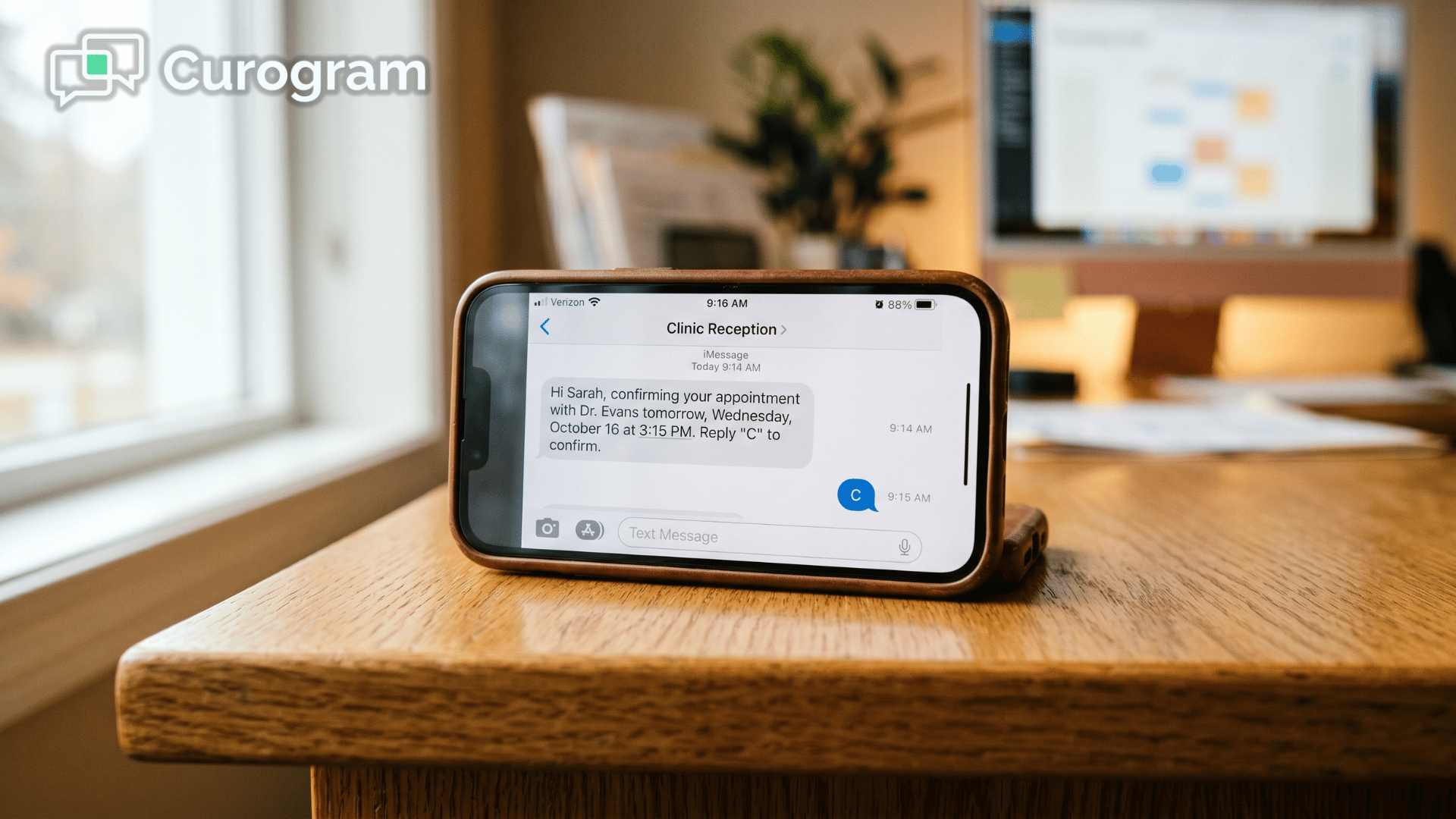
Curogram sends automated 2-way text reminders at intervals you set, usually 48 hours, 24 hours, and 2 hours before the visit.

Consumers respond with a single character:

  • C to confirm
  • R to reschedule
  • X to cancel

Every reply shows up on your dashboard in real time, so your team always knows where the schedule stands.

This kind of SMS appointment confirmation for Netsmart clinics works because text reaches people through a channel with a 98% open rate, while portal reminders reach only the small share of consumers who still log in.

Flagging the consumers most likely to vanish

Reminders alone help, but follow-up still matters. Curogram's At-Risk Flagging marks anyone who hasn't responded within a window you choose.

Instead of calling all 80 names on the schedule, your staff calls the handful who went quiet.

The work shrinks from "everyone" to "the people who actually need a nudge."

No API, no migration

Here's the part practice administrators tend to like most. The Curogram reminders Netsmart integration needs no API access at all.

Your team keeps scheduling in Netsmart exactly as they do today. Curogram simply adds the reminder and confirmation layer on top. Nothing gets disrupted, and no one has to learn a new scheduling system.

Sensitive by design

Behavioral health messaging has to be careful, and these reminders are. Texts are warm, discreet, and free of any clinical detail in the body.

They comply with 42 CFR Part 2 for substance use treatment, and there's no app icon sitting on the consumer's phone to reveal where they get care.

That's what makes Netsmart appointment reminders for behavioral health feel safe to use, not risky.

Patient at home reading an automated appointment reminder text from their mental health clinic

What Changes When Reminders Finally Land

The shift is bigger than a few extra confirmations. Practices that adopt automated reminders move from a manual call center to a calm, exception-based routine, and the numbers back it up.

Results practices are seeing

Curogram practices report no-show rates 53% lower than the industry average.

A few specifics make that real:

Practice Result
Atlas Medical Center No-show rate fell from 14.2% to 4.91% (a 65% improvement)
Covina Arthritic Clinic 1,100+ automated confirmations every month
Psychiatry benchmark Drops from the 23% average to about 11.03%

For a 10-clinician practice, that can mean $30,000 or more per month in recovered revenue. In practice, the platform usually pays for itself within the first week.

How the workday changes

The old routine was simple and exhausting: call every name, hope someone picks up, repeat. The new one flips it.

Reminders handle the confirmations. Flagging surfaces the few who need attention. Your staff spends time on clinical coordination instead of voicemail. That's the everyday value of automated reminders that reduce no-shows alongside Netsmart.

The bigger payoff

When the reminders land, the schedule steadies. Revenue becomes something you can predict instead of something you hope for.

And the clinical side improves too. Consumers stay connected through messages they actually read, which protects continuity in CBT, DBT, and medication management. Fewer people slip away, and that's the whole point.

Getting Started Without Disrupting a Single Workflow

The numbers make the case, but most administrators ask a more practical question first. How hard is this to actually roll out? The honest answer is that it's lighter than almost any other system change you've taken on.

A setup measured in days, not months

There's no API to build and no patient data to migrate, so onboarding moves fast. Your schedule stays exactly where it lives now, and the texting layer simply switches on beside it.

Most practices follow the same short path:

  1. Sync or import your consumer contact list so reminders know where to send.
  2. Set your reminder intervals and write the wording your clinic prefers.
  3. Turn on At-Risk Flagging and pick the follow-up window that fits your day.
  4. Go live and watch confirmations start landing on the dashboard.

That's the full lift for most clinics. There's no months-long implementation project and no downtime where your front desk has to work around a half-finished tool.

What your team actually has to learn

Almost nothing, which is the part that surprises people. Staff keep scheduling in Netsmart the same way they always have.

The only new habit is glancing at the dashboard, where confirmations, reschedules, and flagged consumers appear in real time. There's no new scheduling system to memorize and no workflow to rebuild from scratch.

Stop Losing Consumers to Empty Slots

Every no-show is a person who needed care and didn't get it. Every hour your staff spends chasing confirmations is an hour they can't spend on coordination, intake, or the patient at the desk.

The math is hard to ignore. Automated 2-way SMS reminders alongside Netsmart cut behavioral health no-show rates by 53% and recover $20,000 to $30,000 or more per location each month. At the same time, they keep consumers tied to the treatment that's helping them.

The split is clean. Netsmart manages your schedule. Curogram makes sure people show up for it. The EHR records the appointment, and a simple text makes sure it happens.

You don't have to choose between the system you already rely on and reminders that actually work. They run side by side, quietly, in the background.

No API. No migration. No new scheduling tool for your team to learn.

So picture the version of your week where the phones aren't ringing off the hook with confirmation calls. Where the schedule you build in the morning is mostly the schedule you keep by night. Where the consumers who need you most don't quietly disappear.

That's not a fantasy. It's what behavioral health no-show reduction looks like once reminders reach people where they already are.

The best way to see it is to run your own numbers against your real schedule. A short demo will show you how reminders work next to Netsmart and what your no-show savings could realistically add up to over a single month and across a full year.

Schedule a demo and find out how much of your revenue, and how many of your consumers, you can stop losing to missed appointments. The setup is light, your scheduling stays put, and the payoff starts almost right away.


Frequently Asked Questions

Are automated text reminders HIPAA-compliant for behavioral health appointments?

Yes. Curogram is HIPAA-compliant and SOC 2 Type II certified. Reminder messages are customizable to leave out sensitive clinical details. For substance use disorder treatment, the messages also meet 42 CFR Part 2 confidentiality requirements.

Does Curogram require Netsmart API access for reminders?

No. Curogram runs alongside Netsmart scheduling without any API access. Your staff keeps scheduling in Netsmart, while Curogram handles the reminder delivery and confirmation tracking on its own.

How quickly can we see results from automated reminders?

Atlas Medical Center saw its no-show rate fall from 14.2% to 4.91% within three months. Most practices see measurable improvement in the first month, and the platform typically covers its own cost within the first week.

Can we control when reminders go out and what they say?

Yes. You choose the timing, such as 48 hours, 24 hours, and 2 hours before each visit. You can also tailor the wording so it stays warm and discreet, with no clinical details in the message body.

Will text reminders reach consumers who don't use the patient portal?

Yes, and that's the whole advantage. Text reaches people through a channel with a 98% open rate, while portal reminders reach only the 15% to 20% with active accounts. SMS also works on any phone that can receive a message, not just smartphones with an app installed.


Reducing Revenue Leakage with 2-Way Reminders | Curogram

Reducing Revenue Leakage with 2-Way Reminders | Curogram

💡 Oracle Health appointment reminders work best when they match the appointment type, not a fixed schedule. Routine visits need 48-hour reminders....

Read More
Automated Reminders for Modmed Practices | Cut No-Shows by 65%

Automated Reminders for Modmed Practices | Cut No-Shows by 65%

💡 Automated appointment reminders and confirmations for Modmed specialty practices are available through Curogram, an independent patient...

Read More
SMS Reminders Keep BH Consumers in Care

SMS Reminders Keep BH Consumers in Care

💡 The behavioral health appointment reminder SMS consumer experience is simple. A text lands on the consumer's phone, they reply with one letter,...

Read More