8 min read

Automated Reminders for Modmed Practices | Cut No-Shows by 65%

Automated Reminders for Modmed Practices | Cut No-Shows by 65%
💡 Automated appointment reminders and confirmations for Modmed specialty practices are available through Curogram, an independent patient engagement platform that closes the confirmation gap Klara leaves open inside the Modmed EHR.  

Klara sends reminders, but its confirmation tracking is unreliable, so front desk teams at dermatology, orthopedic, and ophthalmology clinics still chase patients by phone.  

Curogram sends multi-step SMS sequences, captures one-tap replies, and updates appointment status in real time, with zero manual follow-up. 

Atlas Medical Center cut no-shows from 14.2% to 4.9% in three months. Covina Arthritic Clinic confirms over 1,100 appointments monthly through full automation.


A Modmed specialty practice can do everything right. Skilled providers. Fully booked schedule. Reminders going out on time. And still lose six figures a year because patients never confirm and never show.

That gap between "reminder sent" and "patient confirmed" is where the money disappears.

You can see it on the schedule by 8 AM. Open slots that were supposed to be Mohs procedures. Surgical consults marked "pending." A coordinator on the phone trying to fill chairs that were full yesterday.

Here is the strange part.

The practice is already paying for automation. Klara is bundled into the Modmed stack. Reminders are technically being sent. Yet the front desk team is still dialing patients all morning to confirm appointments by hand. The automation runs. The work continues anyway.

This is the daily reality for dermatology, orthopedic, and ophthalmology groups running on Modmed.

Reminders go out. Confirmations do not come back. Staff guesses. Revenue leaks. Repeat.

The cost is not small. A specialty practice losing 8 to 10 procedural appointments a day at $200 to $500 each is staring at $20,000 to $30,000 a month in unrealized revenue. Across a year, that is enough to fund another provider, two new exam rooms, or a full marketing overhaul.

This article walks through why Klara's confirmation tracking falls short for specialty workflows, what a real confirmation engine looks like, and how Curogram's automated appointment reminders confirmations Modmed specialty practices can rely on actually close the loop.

You will see the numbers. The workflow. The recovery math. By the end, you will know whether you are running a confirmed schedule or a hopeful one.

Why Klara's Reminders Are Not Enough for Specialty Schedules

The Automation That Only Looks Like Automation

Let's be fair to Klara. It does send appointment reminders. This is not a missing feature. The problem is what happens after the reminder goes out.

Klara's appointment confirmation tracking is the part Modmed users keep flagging as weak. Messages send fine. But the confirmation loop does not reliably close, and the data your front desk sees on the dashboard cannot be trusted. So staff calls anyway.

The Klara appointment confirmation gap Modmed EHR users describe is not a bug. It is the difference between a system that talks to patients and one that listens to them.

You are paying for automation. You are still doing the work by hand. That is the worst of both worlds, and it sets the stage for what your front desk actually deals with every Monday.

A Morning in a Modmed Dermatology Practice

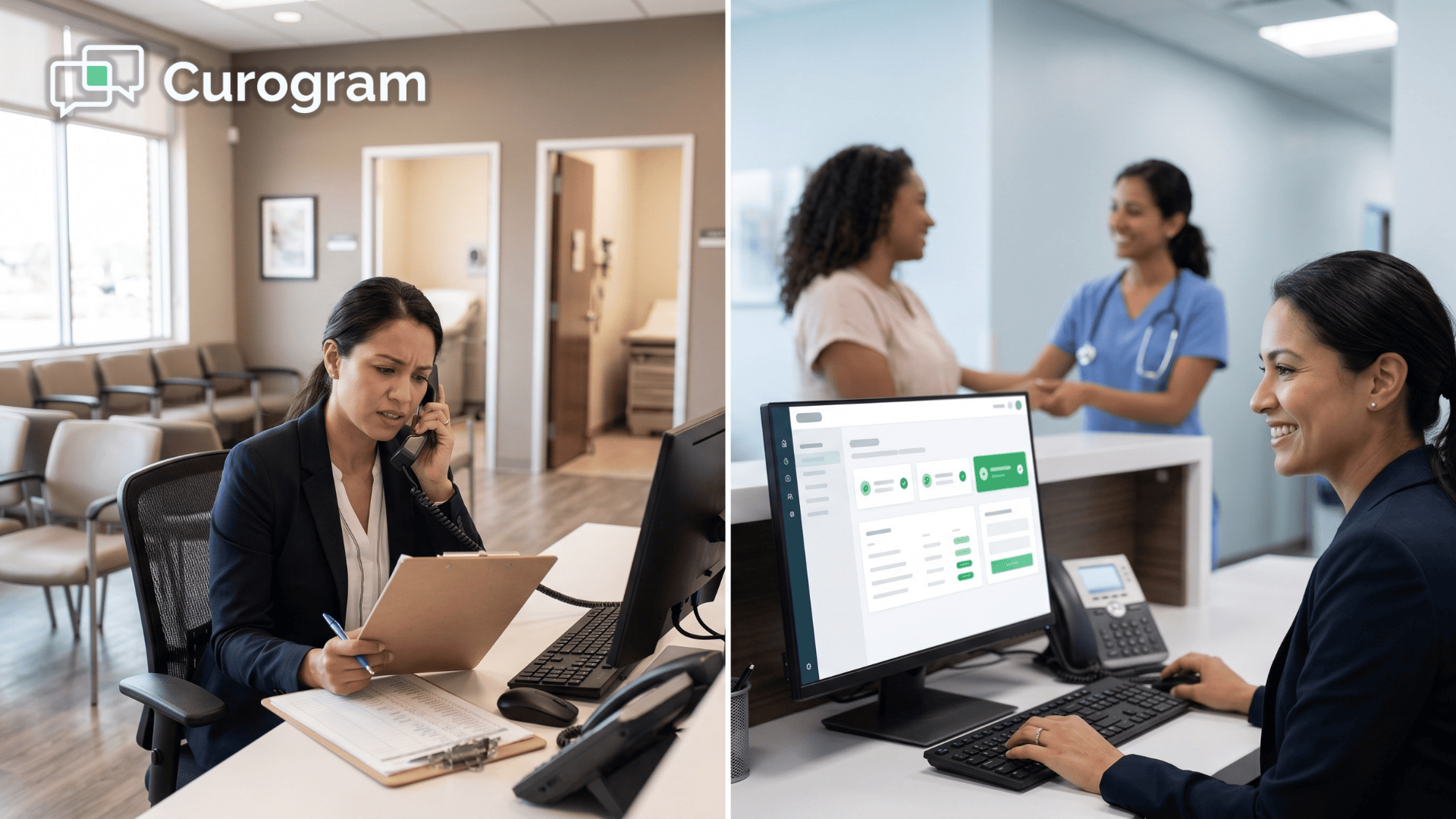
Monday morning, 45 appointments on the books across three dermatology providers. Klara sent reminders over the weekend. Your coordinator opens the dashboard.

Eighteen confirmations. Twenty-seven unknowns.

Are those 27 patients planning to show? No way to tell from the data. So she starts calling at 8 AM. Sixty% of calls go to voicemail.

By 9:30, four Mohs procedure slots have already no-showed. That is $2,000 in empty chairs before lunch. Two more cancel last-minute. The waitlist exists, but by the time she gets to it, the same-day window is gone.

This is not a one-off. It is the rhythm of every week, and it leads directly into a math problem most administrators only catch at month-end.

The Real Cost of an Unconfirmed Schedule

No-show rates at practices running basic reminder systems land between 10% and 25%. Peak season can push that toward 50%. Specialty practices feel this the most because their slots are not interchangeable, and the dollar value per slot is far higher than primary care.

Here is the math, plainly:

Specialty Avg. Visit Value No-Shows Per Day Monthly Loss
Dermatology (procedural) $200–$500 8–10 $20,000–$30,000+
Ophthalmology (surgical consult) $300–$800 5–8 $25,000–$40,000+
Orthopedics (with PT cascade) $150–$400 6–10 Up to $50,000 over the treatment plan

For your team, this means the schedule on paper is not the schedule that gets billed. The gap is where the revenue lives. And that gap sits on top of a software bill that is already significant.

The Cost Stacked on Top of the Cost

Modmed users already pay $800 to $1,000 per provider per month for EMA, plus add-ons for PM, Klara, Analytics, and sometimes ModMed Pay. Klara is supposed to be the patient engagement layer that covers reminders and confirmations.

When that layer only does half the job, the practice ends up paying twice. Once for the software. Again for the staff time spent doing what the software was supposed to handle.

That is the trap a lot of Modmed practices feel locked inside, and it is the reason the search for an appointment reminder system alternative to Klara keeps coming up in specialty admin circles.

What a Confirmation Engine Actually Does

Reminders Are the Easy Part. Confirmations Are the Whole Game.

The fix is not more reminders. It is closing the loop those reminders open.

Curogram is built around this idea. It sends multi-step SMS sequences, captures two-way patient responses, and updates appointment status the moment the patient replies.

Confirmed. Rescheduled. Canceled. No guessing. No follow-up calls. No more staring at a dashboard wondering if the 10 AM Mohs is going to walk through the door. This is what Curogram automated confirmations Modmed integration is designed to deliver.

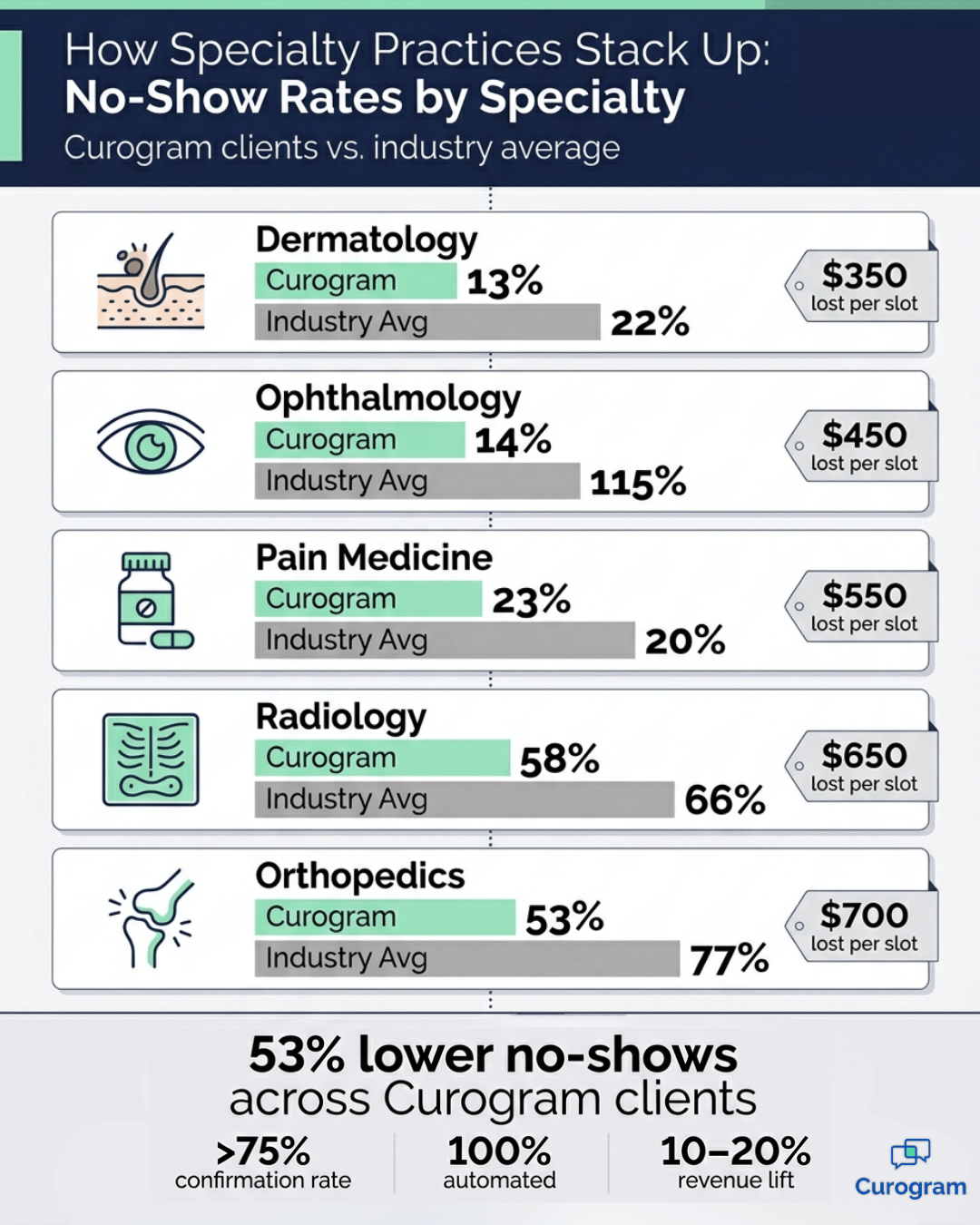
Specialty no-show benchmark chart comparing Curogram clients vs. industry average rates

How the Sequence Works

A typical Curogram reminder sequence runs in three touches before the appointment:

  • 72 hours out: First SMS with appointment date, time, provider, and location. One-tap reply to confirm.
  • 24 hours out: Follow-up reminder if no response. Patient can still confirm, reschedule, or cancel.
  • 2 hours out: Final nudge, same one-tap response options.

If a patient cancels, the system can automatically alert the waitlist to fill the slot. The entire flow runs at 100% automation, which is why Curogram clients average more than a 75% confirmation rate without lifting a finger.

Built for Modmed, Not Bolted Onto It

Curogram pulls appointment data from Modmed through HL7/FHIR protocols. So reminders sync with your actual schedule.

No CSV uploads. No double entry. No second source of truth to manage.

When patients reply, you see the status update inside Curogram's dashboard in real time. Full write-back into the Modmed scheduling module may go through API marketplace review, depending on your setup.

That part the Curogram team handles. What matters day-to-day is that your team finally has a confirmation source they can trust, which sets up the next question: does this actually fit how specialty practices schedule?

Why Specialty Practices Get the Most Out of It

SMS appointment reminders dermatology orthopedics ophthalmology practices use are not interchangeable with primary care reminders.

Specialty slots carry higher revenue and tighter prep requirements, and the patterns are different for each discipline.

  • Dermatology: Mohs surgery and cosmetic procedure slots are time-blocked and high-value. Automated reminders pull Mohs no-shows from 15%+ down to under 5%.
  • Ophthalmology: Cataract pre-op visits need medication scheduling and transportation prep. Reminders carrying those instructions improve both attendance and surgical readiness.
  • Orthopedics: PT follow-up no-shows cascade into abandoned treatment plans. Sequenced reminders keep patients on track across the full multi-visit arc.
  • Pain management: Controlled substance follow-ups carry both revenue and regulatory weight. Automated reminders protect both.

In practice, this is how Modmed no-show reduction automated reminders translate into specialty-specific outcomes the front desk can actually feel.

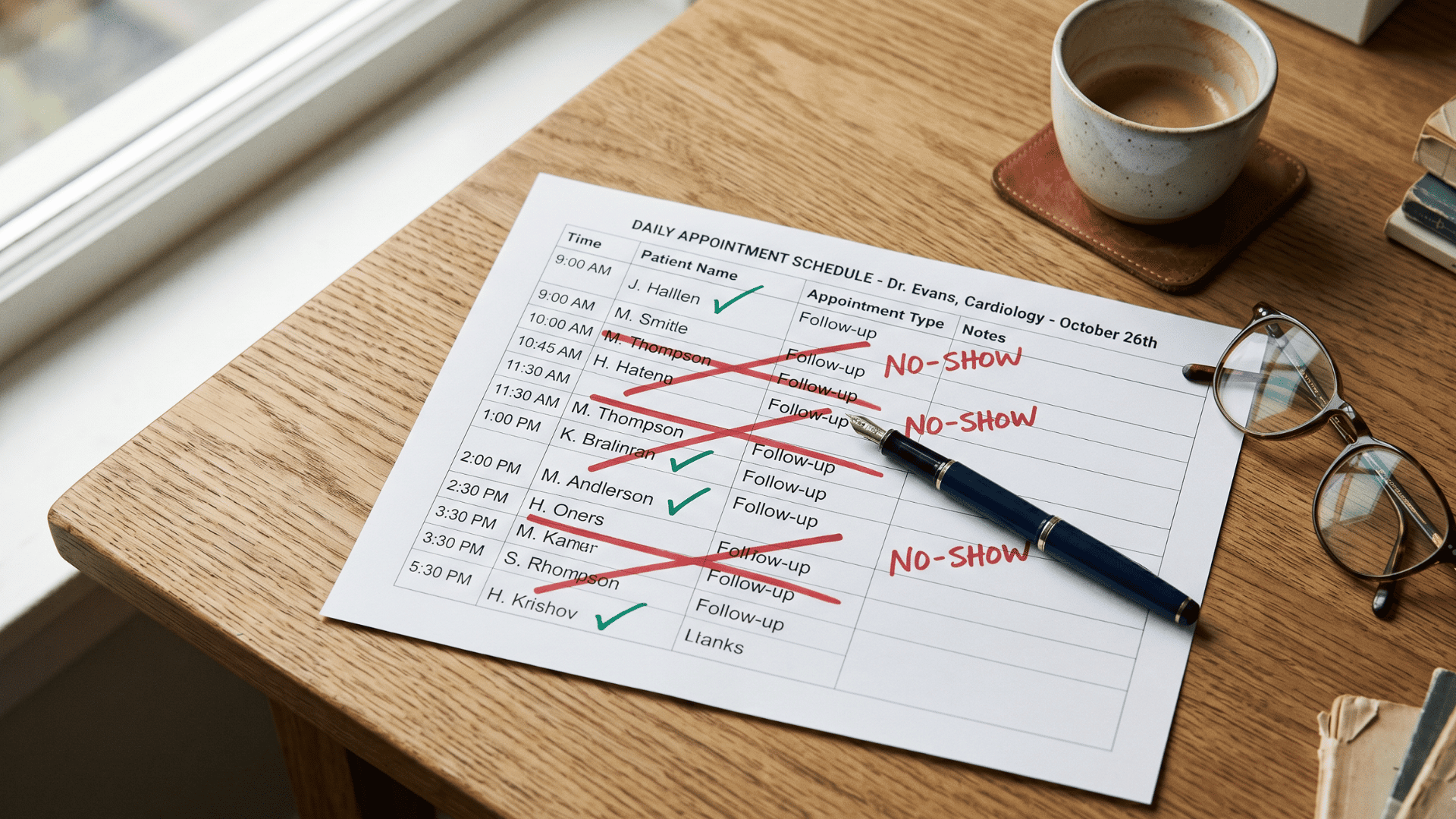
Clinic schedule with no-show slots marked in red, highlighting lost appointment revenue

From Revenue Leak to Recovered Schedule

The Numbers That Move

Two Curogram clients tell the story better than any pitch.

Atlas Medical Center cut no-shows from 14.20% to 4.91% in three months — roughly a 3X improvement over the industry average.

Covina Arthritic Clinic now confirms more than 1,100 appointments per month, fully automated, with no staff intervention.

Across all Curogram clients, no-show rates run 53% lower than industry benchmarks.

Specialty-specific snapshots:

Specialty Curogram Avg. No-Show Industry Avg. Gap
Dermatology 9% 25% 16 points
Specialty clinics 10% 23% 13 points
Radiology 8% 18% 10 points

This means a typical specialty practice using Curogram recovers more than half the revenue it was losing to no-shows.

That is real money showing up in the monthly P&L, not a projection. And the operational shift behind those numbers is just as important as the dollars.

A Schedule You Can Actually Plan Around

The bigger shift is what happens to the daily routine.

Your coordinator opens the dashboard at 7:30 AM. Most of the day's appointments already show a green confirmed status. The few that do not are flagged. Cancellations from overnight have already pinged the waitlist, and some of those slots are filled before the first patient walks in.

The schedule turns from a list of hopes into a list of commitments. That is the real win, and it is what makes the recovery math believable instead of theoretical.

Sample Recovery Math for a Modmed Dermatology Group

Take a practice with 40 daily appointments across 3 providers, currently running a 12% no-show rate.

Here is what a drop to under 5% looks like, conservatively:

  • 3 fewer empty procedural slots per day
  • $350 average procedure value
  • 3 × $350 = $1,050 recovered per day
  • $1,050 × 20 working days = $21,000 per month
  • $21,000 × 12 = $252,000 per year in recovered revenue

That is one practice, one feature, one year. And the hidden gain sitting next to that number is staff time. The coordinator who used to burn two hours a day on confirmation calls now spends zero. That time gets redirected to insurance verification, which catches eligibility issues upstream and reduces claim denials.

The administrator stops writing off no-shows as a cost of doing business and starts treating confirmed appointments as the baseline.

This is what reduce no-shows Modmed specialty clinic teams actually look like once the loop closes.

See the Confirmation Engine in Action

The summary is short. Modmed specialty practices are bleeding $20,000 to $30,000 a month because Klara's confirmation tracking does not match the demands of high-value scheduling.

The reminders go out. The confirmations do not come back. The schedule looks full until the morning shows it isn't.

There is a cleaner way to think about this. Modmed's EMA is for your providers. It handles clinical documentation, and it does that part well. But your schedule's financial health is a different job, and it needs a different tool. That is where an independent confirmation engine pays for itself.

Atlas Medical Center cut no-shows from 14.2% to 4.9%. Covina Arthritic Clinic locks in more than 1,100 confirmed appointments every month, hands-off.

The same setup is available to your practice, and the math scales with your appointment volume and your procedure values.

If you are a Modmed dermatology, orthopedic, ophthalmology, or pain management group running on Klara today, this is the easiest revenue recovery on the table.

You already have the patients booked. You already have the staff. You just need the layer that closes the loop.

Schedule a Demo. In 15 minutes, the Curogram team will walk you through automated reminders and confirmations running alongside your existing Modmed scheduling workflow.


Frequently Asked Questions

Can Curogram's reminders integrate directly with Modmed's scheduling system?

Yes. Curogram pulls appointment data from Modmed through HL7/FHIR protocols, so reminders sync automatically with your scheduled appointments. There is no manual entry or CSV upload. Confirmation statuses live inside Curogram's dashboard in real time. Full write-back into Modmed's scheduling module may require API marketplace approval, which the Curogram team navigates alongside your practice.

How customizable are the reminder sequences for different appointment types?

Fully customizable. You can set different cadences for different appointment types. A routine derm follow-up might use a 72/24/2-hour sequence. A cataract surgery prep might use a 7-day, 72-hour, and 24-hour sequence with medication and transportation instructions baked in. Message content adjusts per appointment type. You control the timing, the wording, and the number of touchpoints.

What happens when a patient cancels through the reminder system? Can the slot be filled automatically?

When a patient cancels by text, Curogram can trigger an automated waitlist notification, alerting other patients that a slot just opened. This makes same-day and next-day slot filling possible without staff calling through the waitlist by hand. For a specialty practice, a recovered Mohs slot or surgical consult can mean $300 to $800 added back into the day's revenue within hours.

How long does it take to roll Curogram out alongside a live Modmed setup?

Most practices are live within two to four weeks. The Curogram team handles the HL7/FHIR connection to Modmed, builds out your reminder sequences by appointment type, and trains your front desk on the dashboard. There is no rip-and-replace. Klara can stay on for messaging if you want it to, while Curogram takes over the reminder and confirmation layer. Practices usually see their no-show rate drop inside the first 60 days of go-live.

Is the reminder and confirmation flow HIPAA compliant?

Yes. Curogram is a HIPAA-compliant patient communications platform, and the entire reminder-to-confirmation flow runs inside that compliance envelope. Patient data pulled from Modmed stays encrypted in transit and at rest. SMS content is configurable so you control how much detail goes into each message. For specialty practices managing controlled substance follow-ups or surgical prep instructions, this matters as much as the revenue recovery does.