10 min read

No-App Vascular Telehealth Consultation SMS for Medstreaming OBLs

No-App Vascular Telehealth Consultation SMS for Medstreaming OBLs
💡 Medstreaming practices can recover lost consultation revenue and cut no-shows by using SMS-launched video visits. No app downloads. No portal logins. Just a tap
  • One text link starts the video call in seconds
  • 65–75-year-old patients adopt in under 2 weeks
  • Session notes flow into Medstreaming charts in real time
  • CMS pays virtual visits at the same rate as in-person (99212–99215)
  • HIPAA-secure with end-to-end encryption and SOC 2 Type II
For interventional groups facing margin pressure, consultation revenue is the new growth lever. SMS telehealth unlocks it without forcing tech adoption on senior patients.

A 72-year-old patient with peripheral artery disease has a pre-procedure consultation tomorrow at 10 a.m. Your staff sent her a portal invite three days ago. She still has not logged in. She forgot the password. The "verify your email" step confused her. By 10:15, the slot is empty.

This story plays out daily inside vascular and cardiac practices. Elderly patients want care. They just cannot fight through login walls and app stores to get it. Roughly 85% of seniors abandon portal-based telehealth before the visit even starts.

The cost is steep. Each missed pre-procedure consultation is not just one lost charge. It often kills the downstream imaging order and the intervention that would have followed. Practices lose thousands per cancellation, not hundreds.

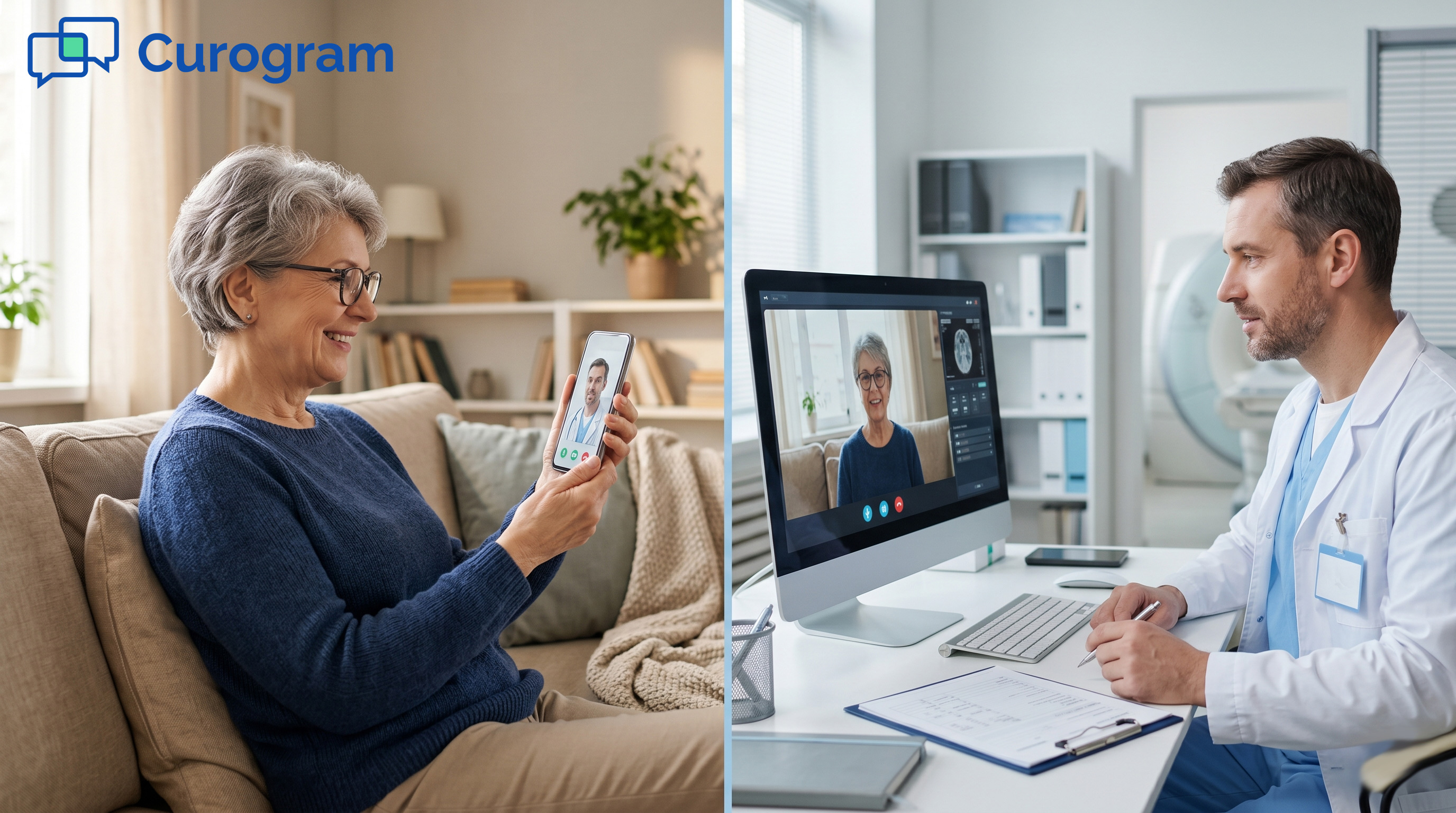
The fix is simpler than most owners think. A vascular telehealth consultation SMS no app Medstreaming OBL workflow strips out every barrier between the patient and the video call. The patient gets one text. She taps the link. The visit starts. No download. No login. No password.

This blog walks through how Medstreaming telemedicine paired with SMS-launched video changes the economics of your practice. We will cover why intervention margins are shrinking and why consultations are the new profit engine. We will look at how pre-procedure visits cut liability risk. We will show how post-op follow-ups boost compliance and surface new revenue.

You will also see real numbers from an Atlas Medical Center deployment. We will explain how a virtual vascular consultation flows through Medstreaming charting. And we will answer the questions buyers ask before signing a contract.

If your practice is losing consultations because elderly patients cannot navigate portals, this guide is for you. The shift to OBL telehealth no download is already paying off for early movers.

The Declining Intervention Crisis and the Consultation Pivot

Interventional case volumes are dropping. Between 2021 and 2024, outpatient cath labs and ASCs saw an 8–12% drop in procedure volume. Payment per case fell another 6–9% in the same window. Hybrid cath lab and OBL models cannot survive on intervention alone.

The math is brutal for single-service facilities. Lower volume plus lower per-case pay equals a shrinking top line. Owners need a second revenue stream that does not depend on the cath lab schedule.

CMS has shifted its payment focus. The agency now rewards diagnostic consultations, pre-procedure clearance, and post-op follow-ups.

A virtual vascular consultation bills at the same 99212–99215 codes as an in-person visit. Travel costs are zero. Facility overhead is zero. Margin per visit goes straight to the bottom line.

But there is a catch. Most practices cannot capture this consultation volume. Why? Because 85% of the elderly patient base never makes it past the login screen. Portal adoption, app downloads, and password resets lock out the very patients who need vascular care most.

Missed consultations create a chain reaction. A no-show at the pre-procedure visit kills the imaging order. The missed imaging kills the intervention. The average revenue loss per skipped consultation runs 8,000 to 15,000 dollars when you trace the full downstream impact.

SMS-Launched Telehealth Eliminates Adoption Friction

The fix removes every barrier at once. A text message arrives on the patient's phone. The link is one tap. The video call opens. There is no app to install. No account to create. No password to reset.

This is what SMS-launched video visit vascular workflows look like in practice. The patient does not need to be tech-savvy. She does not need a tablet. She does not need her grandkids to help her log in. She just taps.

Based on our internal data from a multistate interventional vascular group, adoption hits 68–76% among elderly patients within two weeks of deployment. That is 4-5x what portal-based systems deliver. The friction reduction is not incremental. It is the difference between zero adoption and most patients showing up.

Atlas Medical Center proves the point. The group runs eight locations with 35 providers. Before Curogram, their no-show rate on virtual consultations sat at 14.20%. Twelve weeks after launching SMS-launched telehealth, the rate dropped to 4.91%. That is based on our internal case study data and runs 3x better than the industry average.


Apply that 9.29-point improvement to 2,100 annual consultations across three sites. You recover roughly 195 visits. At 280 to 320 dollars per consultation, that translates to 234,000 to 312,000 dollars in new annual revenue. From one workflow change.

The consultation-to-imaging conversion also rises. When elderly patients actually join the video call, imaging order rates climb 20–24%.

Practices with in-house imaging see better equipment ROI. ASCs without imaging build stronger referral relationships with their imaging partners. Either way, the consultation pivot pays.

Pre-Procedure Consultations—Medical Optimization and Liability Reduction

Multi-location vascular groups struggle with protocol drift. The cardiac clearance rules at the flagship office may not match what the satellite clinic 50 miles away uses. This drift creates risk. It also creates audit headaches.

Virtual consultations fix this. When the same physician runs every pre-procedure assessment by video, the rules stay consistent. Cardiac clearance criteria, renal function thresholds, medication hold policies, and allergy checks are identical across sites. The patient location does not change the protocol.

Medstreaming telemedicine ties this together. During the video visit, the physician sees real-time labs, prior imaging, active medications, and documented allergies on screen. She reviews the data live. She documents her assessment directly in the encounter note. There is no second pass. No transcription delay.

Staff downstream benefit too. Nurses and schedulers pull the confirmed protocol straight from the chart. No phone tag. No "can you double-check what the doctor said?" The order flows cleanly from physician to support team.

Modality-specific protocols can fire automatically. A scheduled cardiac catheterization triggers a beta-blocker hold reminder. A renal function check triggers hydration and contrast-dosing instructions. A peripheral vascular intervention triggers anticoagulation hold steps. Patient replies via SMS land back in the chart as structured data, not loose notes.

This automation matters most for high-risk drug holds. A missed beta-blocker instruction can delay a case or cause harm. An automated SMS prompt, paired with a tracked patient reply, closes the loop. The chart shows exactly when the patient was told and what she confirmed.

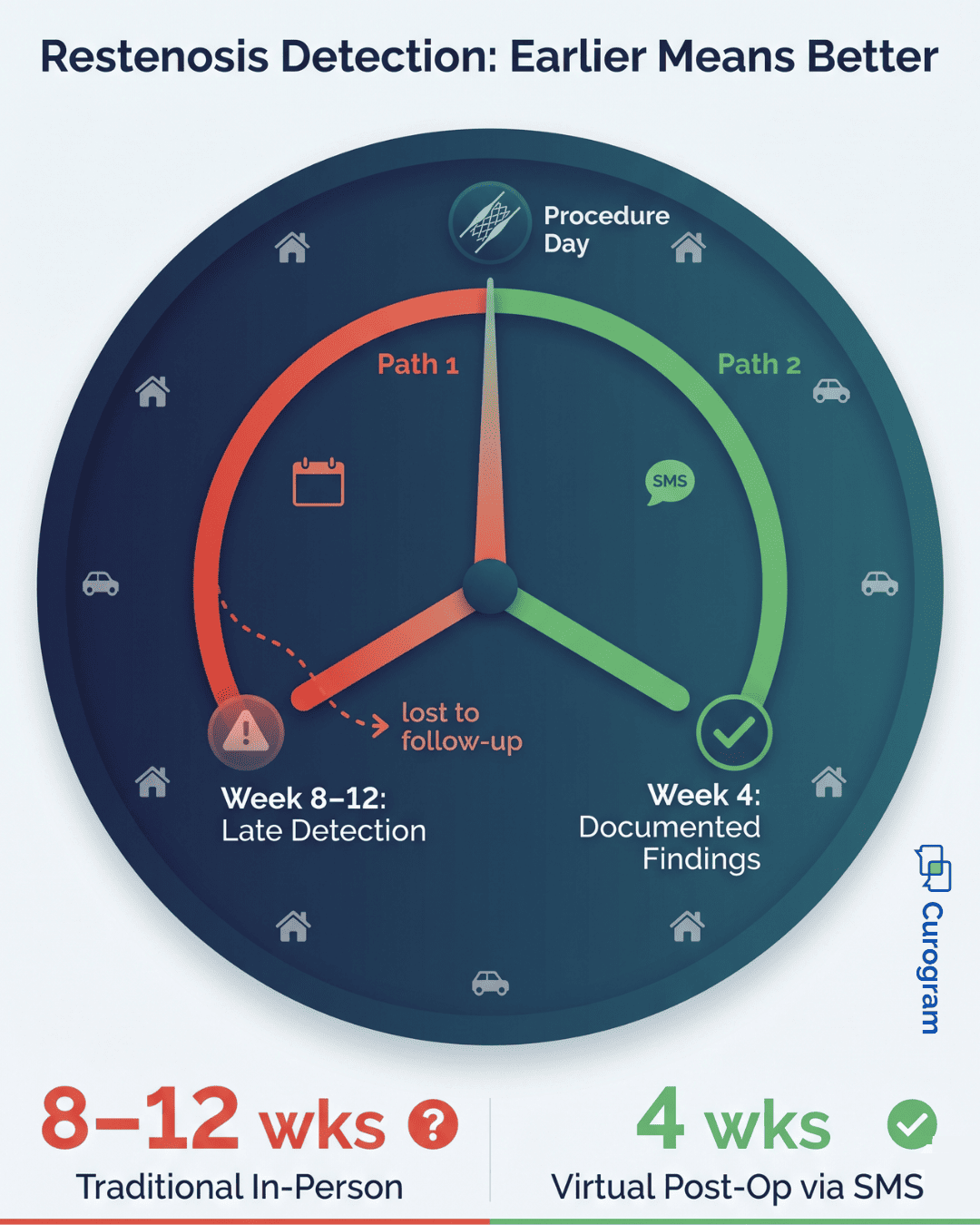
Clock-face infographic comparing restenosis detection timing between in-person and virtual post-op vascular telehealth

Two-Way SMS Medication Verification and Small-Lab HIPAA Safety

During a virtual consultation, the coordinator can ask a simple question: "Are you still taking your blood thinner?" The patient texts back within minutes. The reply lands in Medstreaming as structured chart data. Done.

For facilities with integrated pharmacy systems, that reply can trigger an automatic hold request. The refill does not go out post-procedure. The patient does not accidentally double-dose. The chain of accountability is documented.

Practices that switch from voicemail to two-way SMS see day-of medication issues drop by 40–50%. Liability also drops because the chart can show, in writing, that the patient was informed and confirmed understanding. During an insurance audit or a malpractice review, that paper trail is gold.

Small labs face a different version of this risk. Coordinators in two-person operations often use personal cell phones to text patients about prep instructions. Each text on a personal device carries 100 to 1,500 dollars of HIPAA exposure per incident. Multiply that by hundreds of patient texts per year. The risk is real.

A HIPAA-compliant SMS channel solves this overnight. Coordinators stop using personal phones. All patient messages flow through an encrypted, logged system. Records are retained per the facility's policy. Audit risk drops to near zero.

Here is how the two channels compare on key risk and workflow points:

Workflow Step

Personal Cell Phone

HIPAA-Secure SMS

Patient prep instructions

Sent, but not logged

Sent and chart-logged

Medication hold confirmation

Voicemail or call-back

Two-way SMS, structured data

Audit trail

None

Full retention

HIPAA exposure per incident

$100–$1,500

Negligible

Staff time to verify

High

Minimal


The combined effect is significant. Better protocol standardization, lower medication errors, and removed HIPAA exposure all stack into one cleaner, safer pre-procedure workflow. Cardiac telehealth elderly patients get the same quality of pre-op care regardless of which clinic location their chart lives in.

Post-Operative Follow-Up and Intervention Continuity

Post-operative follow-ups are where compliance falls apart. The traditional model asks every patient to drive back to the office at one week, four weeks, and twelve weeks after a vascular or cardiac procedure. For an 80-year-old patient who lives 35 miles away, that drive is a real barrier.

Many patients just skip the visit. Others reschedule three or four times before giving up. The data the practice needs to track outcomes never gets collected. Restenosis goes undetected. Stent failure shows up late, in the ER, instead of early in the office.

This is more than a clinical problem. It is a liability problem.

If a patient develops a complication and the practice cannot show consistent follow-up attempts, the legal exposure grows. Documented contact matters in any post-event review.

Virtual post-op consultations remove the travel burden completely. The patient gets a text.

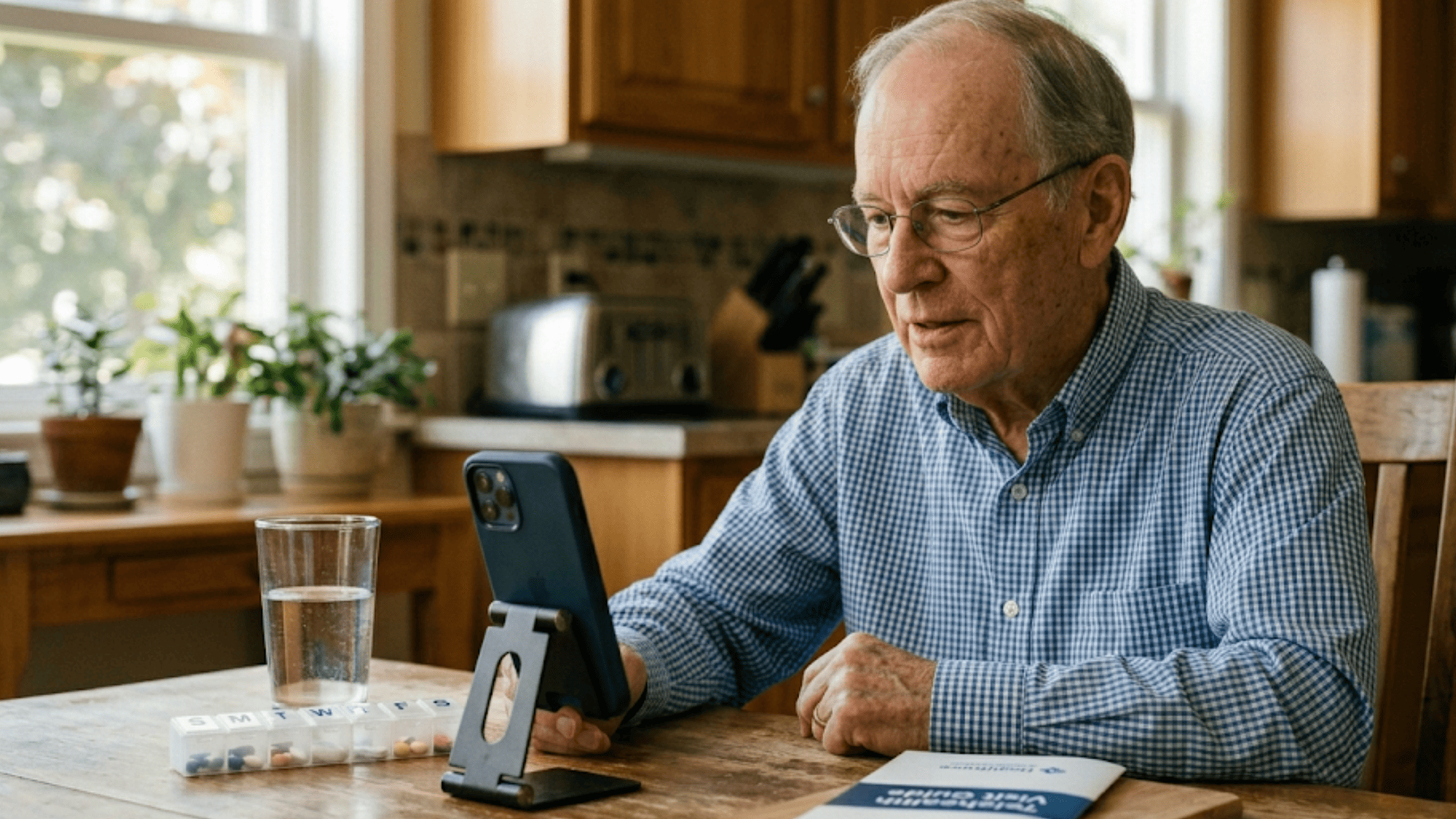
She taps the link. She joins the video call from her kitchen table. The physician reviews her duplex ultrasound or angiography report on screen, checks the vascular beds, confirms stent patency, and adjusts medications in real time. The note hits Medstreaming with structured findings, assessment, and plan.

For 65–75-year-old patients, compliance with virtual follow-ups runs 25–35% higher than in-person-only models. That is a major shift. Patients who would have skipped now actually attend. The data flows in. Outcomes improve. Lost no-show charges shrink.

The compliance gain also helps practices catch problems earlier. A four-week duplex showing restenosis can be acted on the same week.

Without virtual options, that finding might have waited two months for the patient to come in. Earlier action means better outcomes and shorter time-to-reintervention.

Post-Op Surveillance as Revenue Multiplier and Intervention Signal

CMS pays post-operative consultations at the same 99212–99215 rates as pre-procedure visits. This is the part many practice owners miss. The follow-up is not a courtesy call. It is a billable encounter with the same reimbursement value as the initial visit.

Practices that deploy virtual post-op workflows see consultation volume rise 40–60% over in-person-only models. The reason is simple: when patients can comply, they do. The visits that used to be canceled now happen.

Run the math on a typical 40-procedure-per-day OBL. A 60% compliance lift on four-week and twelve-week follow-ups adds about 100 extra consultation encounters per month.

At 300 dollars per visit, that is 30,000 dollars per month in new post-op revenue. Annualized, that is 360,000 dollars from one workflow tweak.


Post-op surveillance is also the practice's best signal for new intervention opportunities. A four-week follow-up surfaces restenosis that needs re-intervention.

A twelve-week visit catches disease progression in the contralateral limb. Both findings convert into staged procedures the practice would have missed otherwise.

Virtual consultations bring these signals forward in time. Instead of waiting for symptoms to drive a patient back into the office, the structured follow-up cadence brings the patient to the physician on schedule.

Decisions about re-intervention happen weeks earlier. Patients are more willing to pursue staged procedures because they have already had recent contact with the physician and trust the recommendation.


Elderly man on a virtual post-op vascular consultation via SMS-launched video at his kitchen table

Why Curogram Is the Right Partner for Medstreaming Practices

Curogram is built around a single principle: patient communication should be simple. The platform delivers HIPAA-compliant 2-way texting, mass texting, customizable smart reminders, automated survey requests, multi-user telemedicine, electronic patient forms, and online appointment booking, all in one system.

For Medstreaming practices, the integration story is what matters most. Curogram connects directly with the Medstreaming chart.

Visit documentation, SMS replies, consent records, and video session metadata all flow into the patient record without manual transcription. Staff do not double-enter data. Physicians do not switch between five tabs to find the latest patient note.

The results speak for themselves. Curogram clients see no-show rates that run 53% lower than the industry average, based on our internal data.

The Atlas Medical Center deployment moved no-shows from 14.20% to 4.91% in just three months, a 3x improvement over industry benchmarks. Practices typically book a 10–20% revenue increase as recovered appointments stack up.

Curogram also automates the front desk. Phone call volume drops by as much as 50%. Staff productivity rises 30% or more. Coordinators stop chasing voicemails and start doing higher-value work like care coordination and pre-procedure prep.

For small vascular labs with two-person teams, this productivity gain is the difference between barely keeping up and running a clean operation.

The platform is HIPAA-compliant and SOC 2 Type II certified. Patient communication runs through an encrypted, logged channel. Personal cell phones come off the table. Audit risk drops to near zero.

For OBLs, ASCs, and multi-location vascular groups running Medstreaming, Curogram is the layer that turns a charting system into a full patient communication and revenue engine. The setup is fast. The ROI is fast. The patient experience is finally simple.

Conclusion

Vascular and cardiac practices cannot count on procedure volume alone to drive growth. The reimbursement environment has shifted. Consultation revenue is now the most reliable path to margin recovery.

The barrier has never been demand. Patients need pre-procedure consultations. They need post-op follow-ups. The problem is access. Portals and apps lock out the very seniors who need vascular care.

SMS-launched telehealth removes the friction. One text. One tap. One video visit. No app store. No password. The elderly patient who would have no-showed instead shows up, on time, ready to talk.

The financial case is straightforward. A vascular group running Medstreaming can recover 234,000 to 312,000 dollars in annual consultation revenue by switching to SMS-launched video, based on our internal Atlas Medical data. Add the 30,000 dollars per month in new post-op revenue from a 40-procedure-per-day OBL, and the model pays for itself in weeks.

The clinical case is just as strong. Standardized protocols across sites. Real-time medication verification. Earlier detection of restenosis. Better outcomes registry data. Lower liability exposure on personal-device texting.

The next step is simple. Look at your current no-show rate on virtual consultations. Look at your elderly patient compliance on post-op follow-ups. Then run the numbers on what an Atlas-style improvement would mean for your practice.

Stop losing elderly patients to portal logins and forgotten passwords. Book a demo with us and see how one SMS link replaces every barrier between your patient and a billable virtual consultation.


Frequently Asked Questions

Will CMS continue to reimburse telehealth consultations after 2026 if flexibilities expire?

Current legislative trajectory and CMS guidance suggest telehealth flexibilities will be extended beyond 2026 for vascular and interventional services due to demonstrated patient access benefits and cost savings to healthcare system.

Even if reimbursement flexibilities sunset, the no-show reduction (5–8% improvement = 25,000–75,000 dollars annually for mid-size facilities) and consultation adoption lift alone justify SMS telehealth deployment. 

How does HIPAA compliance work with SMS-launched video links?

Curogram holds SOC 2 Type II certification and executes HIPAA Business Associate Agreements covering all SMS and video functionality. SMS links are single-use and time-bound (expire 24 hours by default).

Video calls encrypted end-to-end (AES-256). Session recordings and SMS metadata stored in MedStreaming HIPAA infrastructure. Patient consent managed with state-specific opt-in rules, documented in encounter.

How do elderly patients without smartphones or robust data access participate?

Curogram SMS includes intelligent fallback: If patient cannot join video due to device/connectivity constraints, SMS includes option to 'Schedule Phone Consultation Instead.' Coordinator escalates to audio-only, billed at same CPT code with zero reimbursement penalty.

Video codec optimized for low-bandwidth (1.5 Mbps minimum) accommodates rural and poor-signal patients. Audio+Screen Share mode available for severe connectivity constraints.

Why are post-op virtual follow-ups more profitable than in-person ones?

In-person follow-ups have a 40–50% no-show rate among elderly patients due to travel burden. Virtual follow-ups push compliance up 25–35%. You bill the same CPT code, capture more visits, and detect re-intervention candidates earlier. The math favors virtual.

How does Curogram handle a patient who has no smartphone or weak cell service?

The SMS includes a fallback to schedule an audio-only consultation, billed at the same code. The video codec also works at 1.5 Mbps, which most flip phones and rural networks can handle. Audio-plus-screen-share is available for the worst connectivity cases.