7 min read

HIPAA-Compliant Telemedicine for StreamlineMD

HIPAA-Compliant Telemedicine for StreamlineMD
💡 Curogram delivers telemedicine StreamlineMD integration through SMS-launched video, no app or portal required. Patients tap a text link and join a HIPAA-compliant video call from home in seconds.

This matters most for imaging centers serving patients aged 55-75+. Vein, cardiac, and interventional teams need pre-procedure consults and post-procedure follow-ups that older patients can actually use.

StreamlineMD handles billing and procedural notes well. It does not include native video for consults or follow-ups. Curogram fills that exact gap.

The result: less travel for patients, more time for providers, and better prep compliance. Curogram client data from clinical settings shows fewer no-shows and stronger engagement when SMS replaces portal logins. The full StreamlineMD telemedicine workflow stays intact while patient access widens.

Most older patients will not download a new app. They will not log into a portal. They will tap a text message link.

That gap costs imaging centers real money and provider time each week. Generic video tools like Zoom were not built for clinical use. They miss HIPAA rules in default settings. They also miss the patient who is 68 and nervous about an upcoming ablation.

Telemedicine for radiology practices needs a different shape. It needs to start with SMS. It needs to skip the login screen. It needs to feel as easy as a phone call.

That is the focus of this guide. We will look at why pre-procedure consults pile up. We will show how SMS-launched video closes the gap. We will share what telemedicine StreamlineMD integration looks like in real practices.

StreamlineMD does great work on the procedural side. The billing flows clean. The notes stay tight. But native video for consults and follow-ups is missing.

That is where the bottleneck forms. Curogram plugs into that exact spot. Practices can run pre-procedure screenings, prep reviews, and post-procedure follow-ups by video. No app store. No download. Just a text and a tap.

For interventional radiology and OBL teams, this matters more each year. Hospital outpatient departments now offer telehealth as standard. Smaller imaging centers need to match that without losing their specialty edge.

By the end of this article, you will see why the Consultation Bottleneck holds practices back.

You will also see how to fix it without rebuilding your stack. Curogram client data from clinical settings backs each step of the way.  

The Villain: The Consultation Bottleneck

The villain in your StreamlineMD telemedicine workflow is rarely the EHR itself. It is the gap that sits next to it. Consults stack up. Phones ring all day. Patients drive in for talks that could have been a video call.

The Problem: Patients Want It But Cannot Use It

The shift to telehealth is real. Patients ask for it. Providers want to offer it. Yet adoption stalls in most imaging centers.

Why? The tools are wrong for the demographic. Vascular and cardiac patients trend older, often 65 or up. They will not install a new app on a phone they barely use.

Some practices try generic video tools instead. Those tools fail HIPAA in most setups. They also fail the patient who cannot find their password. The result feels like failure even when the want is there.

The Agitation: The Pre-Procedure Bottleneck

Each consult eats 30 to 60 minutes of provider or staff time. Multiply that by a busy week. Time vanishes fast.

Provider Time Drains

Pre-procedure talks pile up across modalities. Vein patients need treatment plans. Pain patients need clinical checks.

Cardiac patients need risk reviews. All of it lives outside the procedure room and inside your provider's calendar.

Phone Tag Cycles

Staff call to confirm prep steps. Patients call back at lunch. Voicemails grow. Notes get lost between systems. The cycle never ends, and the schedule slips.

The Consequence

Phones become the choke point. Calls bleed into evenings. Front-desk teams answer the same prep questions all day. Anxiety builds in patients who cannot reach anyone fast.

The cost is hidden but heavy. Ten extra minutes per call adds up. Spread that across a hundred patients a month and the hours stack up. HIPAA-compliant telemedicine imaging fixes the channel, not just the call volume.

The Result

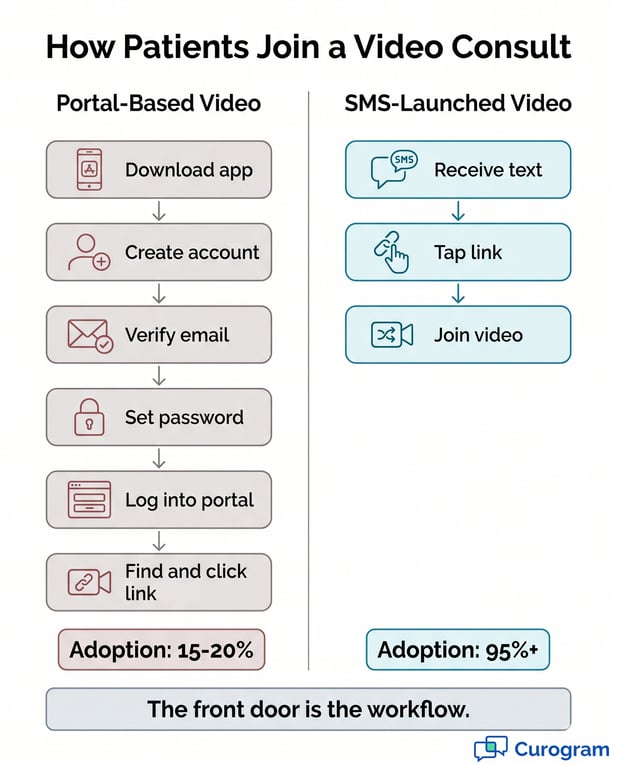
Most telemedicine apps demand a download. Some need a portal login. Both lose the older patient at the door. Adoption sits at 15-20% in many practices, which makes the tool useless at scale.

That gap is not a patient problem. It is a tool problem. Generic platforms skip HIPAA in default mode. Video calls fail because access fails first.

Telemedicine for interventional radiology will not work until the front door changes. The patient has to be able to walk through it without help. SMS does that. Apps do not.

Comparison of the process of joining a video consult with portal-based video vs sms-launched video

The Guide: The SMS-Launched Consultation Layer

The fix is not another app. It is a smarter front door. Curogram replaces the login screen with a text message, and the change spreads through the rest of the workflow from there.

The Solution

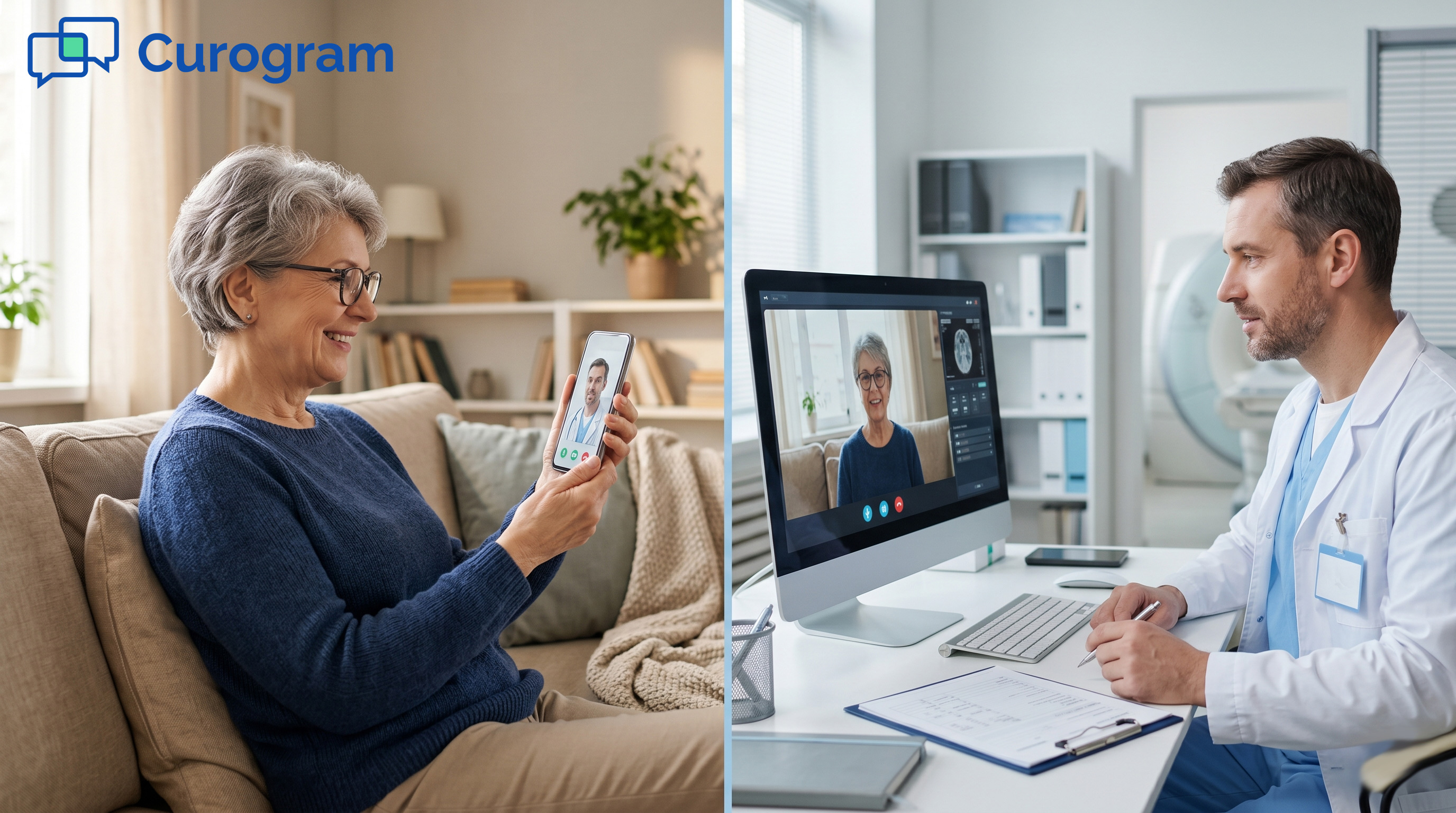
Curogram launches video consults through a single SMS. The patient gets a text. They tap. They join. No app store. No password. The link is a secure token, not patient data.

Picture Sarah, age 67, scheduled for endovenous ablation tomorrow. The practice texts: “Hi Sarah, Dr. Chen is ready to discuss your procedure.”

Sarah taps the link. The video opens.

In twelve minutes, Dr. Chen reviews her history, confirms her prep steps, and walks her through compression garment use. Sarah never leaves her kitchen. The schedule never slips.

The Feature

Pre-procedure and post-procedure visits both work through the same flow. The use cases are different, but the patient experience is the same.

Pre-Procedure Screening

Vein, pain, and cardiac patients all need a prep talk. Now it does not block the calendar. Providers screen for contraindications, review meds, and clear the patient on a video call. The procedure room stays open for procedures.

Post-Procedure Follow-Up

Marcus had a facet joint injection three days ago. Instead of driving back, he taps a text link. He shows his range of motion on camera.

He reports pain levels. The provider adjusts the plan in real time and notes it back to StreamlineMD.

The Integration

Curogram plugs into your StreamlineMD telemedicine workflow without rebuilding it. Staff training takes under 30 minutes.

The dashboard shows real-time status: sent, opened, joined, completed. You see the engagement as it happens.

This makes telemedicine imaging center integration practical, not theoretical. Bills still flow through StreamlineMD.

Notes still land in the right chart. Curogram only handles the layer StreamlineMD does not.

The Specialty Fit

This is not a generic platform with a healthcare sticker on top. Curogram is purpose-built for radiology and interventional teams.

It speaks the language of OBLs, vein centers, and cardiac imaging. Modality details that other tools miss are baked in.

That fit matters when your patient is 72 and your procedure is endovenous. Telemedicine for radiology practices has to respect both the clinical workflow and the patient on the other end. SMS-launched video does both at once. 


The Success: Telemedicine Transformation

What does it look like when this works? The metrics show up first. Then the schedule eases. Then the patients start to notice.

The Metric

Curogram client data from clinical settings shows clear gains across three areas. Time savings come first. No-show drops follow. Patient access widens past anything portal-based tools can match.

Time Reclaimed Per Provider

A typical 5-provider practice can reclaim around 3 hours per provider per week. That works out to 780 hours a year. Move those hours into procedures and the math shifts fast.

At $400-600 per procedure hour, recovered time can mean $62,400-93,600 per location each year. Curogram client data from clinical settings also shows no-show rates falling from 14.20% to 4.91% after rolling out SMS-first patient engagement. That kind of swing reshapes the schedule.

Follow-Up Wins

Post-procedure follow-ups often do not need an in-office visit. A wound check by video is enough. So is a pain-level review. So is a quick medication tolerance check.

Defer the in-person reassessment if no problem is visible. Patients save the drive. Providers save the slot. Everyone wins, and recovery still gets tracked.

The Shift

For high-volume imaging centers, follow-up scheduling chews through the calendar. Virtual follow-ups change that math. Three hours a week on in-person follow-ups becomes 45 minutes on video.

The rest of those hours can move back to revenue-generating work. Or to the patients who really do need a clinical visit. Either way, the calendar gets healthier each week.

Patient satisfaction climbs too. No second drive. No waiting room. Just a quick video and back to the day.

The Outcome

StreamlineMD handles documentation and billing well. Curogram handles patient engagement and the video layer. Together, they form a workflow your competitors do not have.

Telemedicine for interventional radiology stops being a buzzword. It becomes a daily tool that staff use without thinking. The Consultation Bottleneck breaks. The schedule starts to breathe again.

Hospital outpatient departments offer telehealth as a baseline. Smaller imaging centers can match them and beat them on patient experience. That is what HIPAA-compliant telemedicine imaging looks like when it actually fits the practice. 

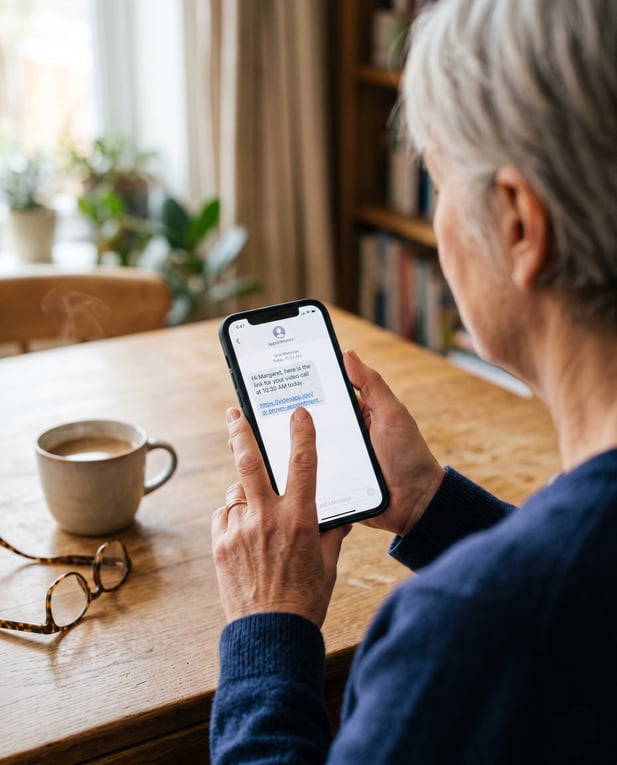
Elderly patient looking at a text message

ConclusionTransform Your Telemedicine Workflow

Most fixes in healthcare are not technology problems. They are workflow problems. The Consultation Bottleneck is one of those.

The bottleneck is not the EHR. It is the missing channel between the procedure and the patient. Imaging centers feel it most because their patients are older and their procedures are time-sensitive.

Curogram closes that gap with SMS-first video that patients aged 55-75+ can actually use. You do not have to replace StreamlineMD. You do not have to rebuild your stack. You simply add the layer that was missing all along.

StreamlineMD owns the clinical and billing side of the practice. It does that part very well. Curogram owns the patient side: the messaging, the engagement, the video. The two systems do not compete. They complete each other.

That is the real shape of telemedicine imaging center integration in 2026. Two systems, one workflow, zero app friction.

The result is a practice that runs faster without working longer. Curogram client data from clinical settings shows the pattern holds across vein, pain, and cardiac centers alike.

If your team still books pre-procedure talks in person by default, the math has shifted under you. Fifteen-minute video screenings can replace 45-minute office visits.

Post-ablation checks can happen in three days instead of three weeks. The savings are real, and the patients prefer it.

Schedule a Demo with Curogram to see how SMS-launched telemedicine fits into your StreamlineMD workflow. 


Frequently Asked Questions

How does SMS-launched telemedicine stay HIPAA-compliant?

Curogram is SOC 2 Type II certified and HIPAA-compliant from end to end. The SMS link is a secure token, not patient health data. Video calls are encrypted in transit, and patient data never travels in the clear. This setup exceeds the baseline HIPAA rules for clinical communication.

Why do older patients struggle with portal-based video calls?

Most patients aged 65 and up did not grow up with app stores or password managers. Portal logins fail at the first step, often before they even reach the camera screen. SMS works because it uses the one tool they already know how to use: text. That is why adoption jumps so sharply when the front door changes.

How does Curogram fit into an existing StreamlineMD telemedicine workflow?

Curogram sits next to StreamlineMD, not on top of it. Staff click “send video consultation” inside the scheduling flow, and Curogram handles the SMS, the link, and the video room. StreamlineMD still owns the chart, the notes, and the billing. The result is a complete StreamlineMD telemedicine workflow without any rip-and-replace work.

Why is SMS-first video a better fit for interventional radiology than generic platforms?

Interventional radiology patients trend older, more anxious, and more procedure-driven than the average telehealth user. Generic platforms treat them like a Zoom user.

Curogram treats them like a vein, pain, or cardiac patient with a real procedure in two days. The workflow respects the modality, the prep, and the demographic at the same time.

How can telemedicine actually reduce no-shows in imaging centers?

When the patient does not have to travel, friction drops sharply. They are already at home, already on their phone, already in reach of a tap.

Curogram client data from clinical settings shows no-show rates falling from 14.20% to 4.91% after SMS-first engagement rolled out. That swing alone pays for the integration in most practices.