7 min read
Eliminate Paper Intake at Your Meditab IMS Practice | Text-Link Forms
Aubreigh Lee Daculug
:
May 12, 2026
Patients receive their intake forms by text 48 to 72 hours before each visit and complete everything on their phone in under 8 minutes.
Curogram skips the portal login that most patients ignore and connects directly to the IMS schedule. Pre-arrival completion rates climb above 70%, compared to under 30% for portal-based forms.
Staff stop typing handwritten paper into IMS and start verifying clean digital data — turning the front desk into an exception desk instead of a transcription desk.
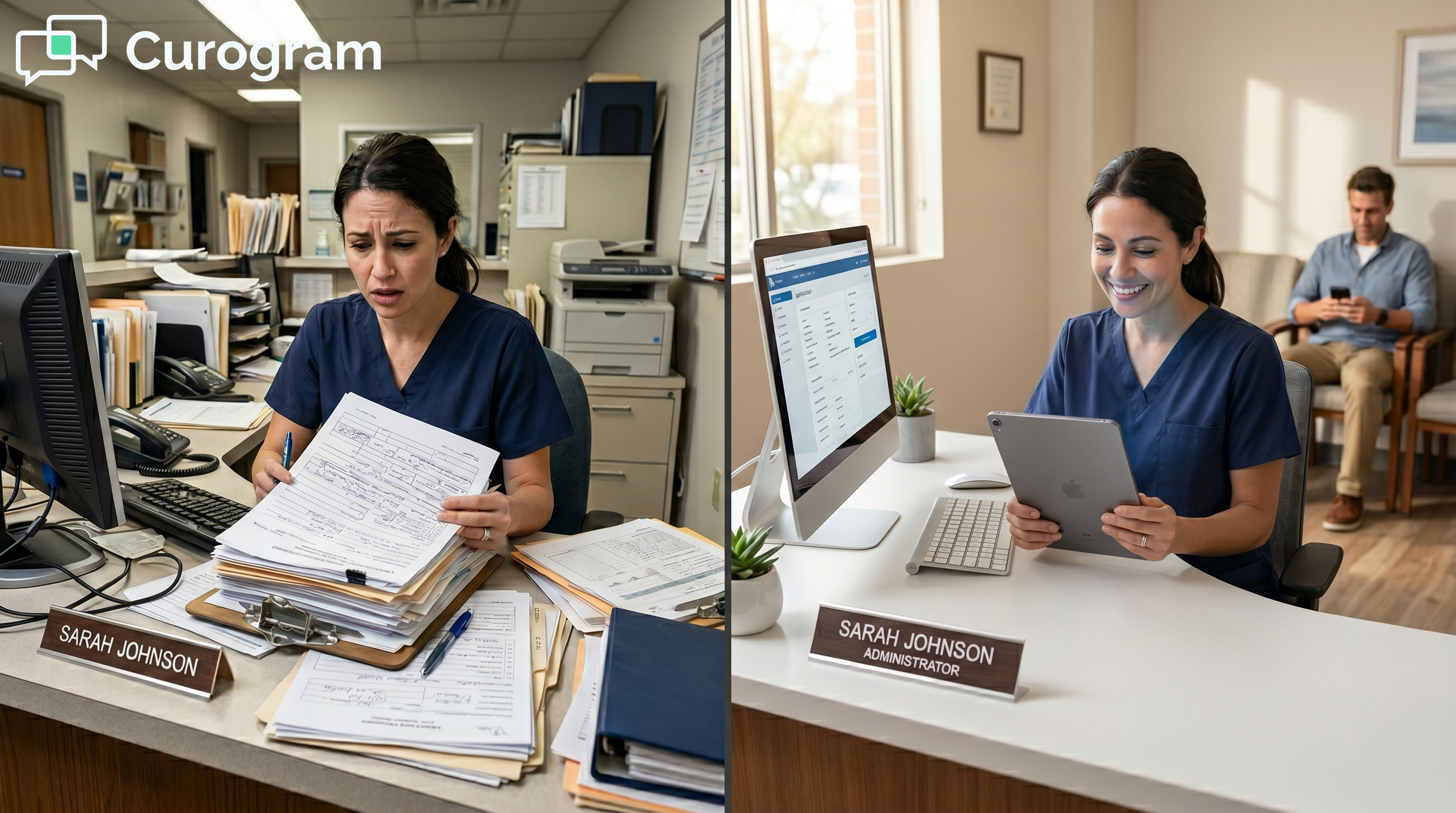
The clipboard is the most expensive piece of equipment in your front office. Nobody talks about it that way. But add up the hours your staff spend handing it out, collecting it, and decoding the answers, and the numbers tell the truth.
Every new patient at a Meditab IMS practice generates 15 to 20 minutes of manual data entry. Multiply that by 30 new patients a week, and you've lost between 7.5 and 10 hours of front desk time.
That's nearly a quarter of a full-time employee — gone, every week, to transcription.
Now think about what those hours could be doing instead. Insurance verification. Phone triage. Patient outreach. Anything that actually moves your practice forward.
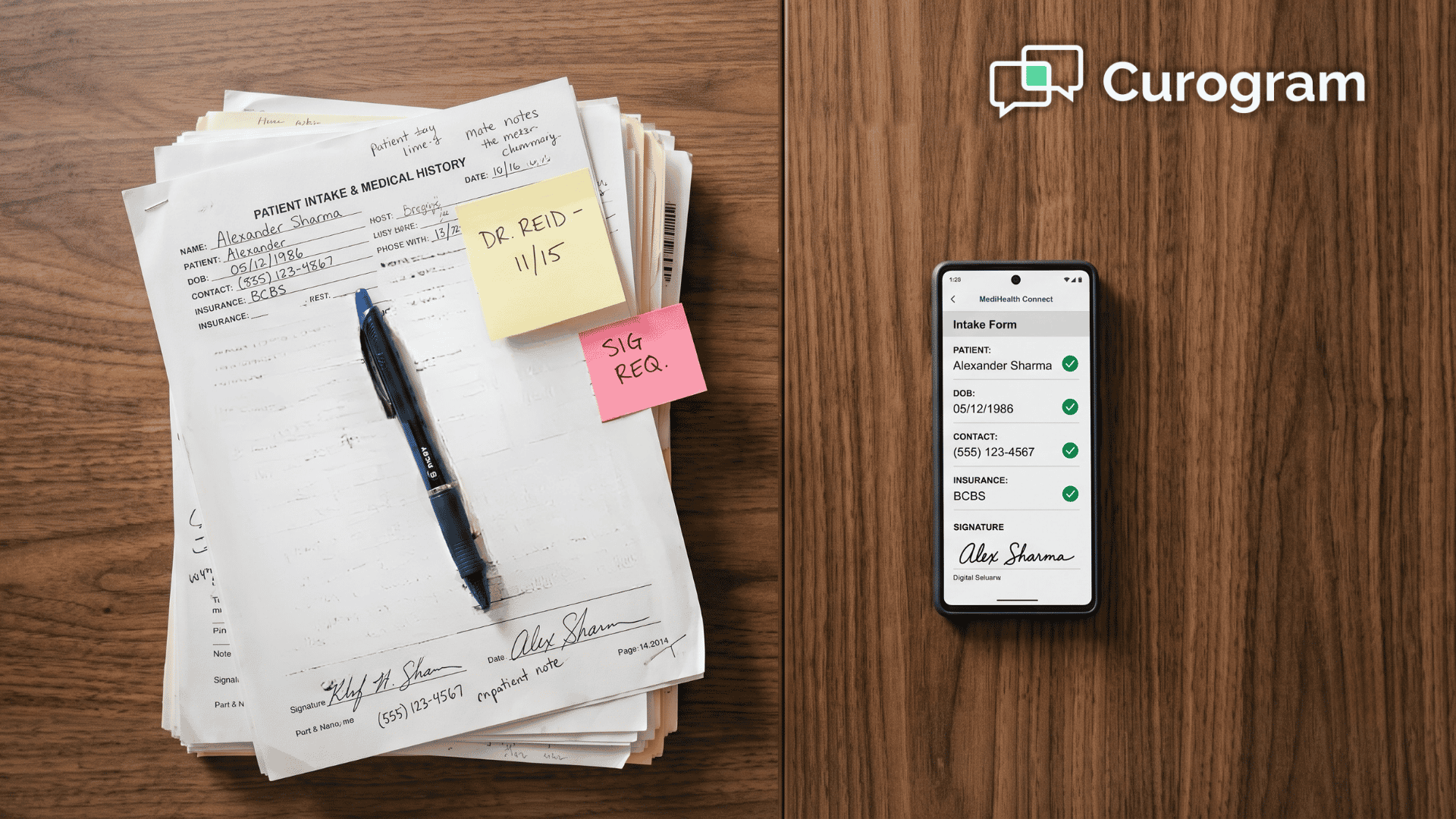
Instead, your team is squinting at someone's handwriting trying to figure out if that's a B or an 8 in their insurance ID.
They're calling patients to fix a missing date of birth. They're answering "how much longer?" while typing demographics from a paper form into IMS.
It sounds like a small problem. It isn't. It's a tax on every other priority your front desk has.
The frustrating part?
Most Meditab IMS practices already pay for digital forms inside CarePortal.
The forms exist. Patients just don't use them. Portal logins are the wall that keeps your practice stuck on paper, even when the digital option is sitting right there.
There's a simpler path. Send the form by text. Skip the login. Capture the data before the patient walks in.
This article walks through exactly how to eliminate paper intake forms at a Meditab IMS practice using front desk text-link digital forms — what the workflow looks like, what it costs your team today, and what your mornings look like once paper is gone.
Why Paper Intake Is Quietly Draining Your Practice
Paper intake feels like a fixed part of running a medical office. Patients show up, they fill out forms, your staff types it all in. But nothing about that workflow is actually fixed.
Every part of it is a choice — and most of the choices cost you time you can't get back.
The Labor You're Not Tracking
A single paper intake form takes 10 to 15 minutes of staff time to process. That includes demographics, insurance details, medication lists, medical history, and consent acknowledgments.
Your team isn't just typing — they're squinting, guessing, and re-checking every line.
Here's what the Meditab IMS front desk workflow paper intake load looks like across a typical week:
| New Patients per Week | Avg. Minutes per Form | Total Staff Hours |
|---|---|---|
| 20 | 15 | 5 hours |
| 30 | 17.5 | 8.75 hours |
| 50 | 17.5 | 14.5 hours |
This means a busy practice can lose more than 14 hours a week to one repetitive task. That's almost a full workday, every week, spent on transcription that shouldn't exist in the first place.
The Morning Rush You Already Know
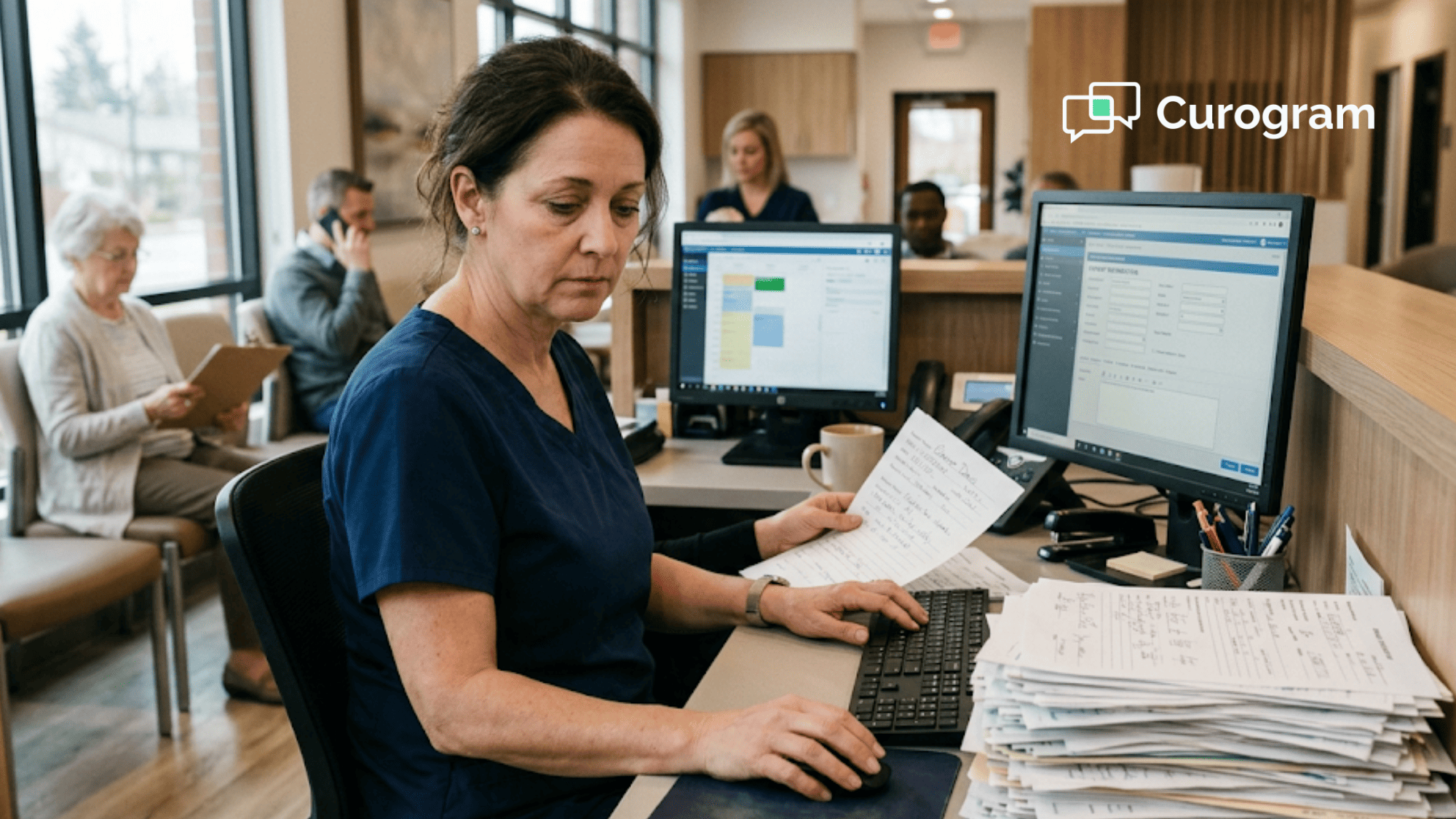
Your front desk opens at 8 AM. By 8:15, three new patients are working through clipboards. Two more need updated insurance entered. The phone won't stop.
A patient from the 8:30 block is already asking how much longer.
Your team is checking people in, answering calls, and typing — all at once. The waiting room slides behind schedule before the first hour is over. The bottleneck isn't clinical care. It's the stack of paper forms waiting to become data.
The Errors That Cost You Twice
Handwritten forms are the top source of intake errors.
A few of the same problems show up in almost every paper-driven practice:
- Misspelled or illegible insurance IDs that delay claims
- Medication names staff have to interpret or call back to confirm
- Missing dates of birth, phone numbers, or signature fields
- Inconsistent formatting on dates, addresses, and ZIP codes
Each error adds 5 to 10 minutes of rework downstream. Billing fixes one. Clinical staff catches another.
The only sustainable way to reduce data entry errors IMS intake forms generate is to capture the data cleanly the first time — and paper makes that almost impossible.
Why Staff Burnout Spikes
Front desk teams don't burn out from helping patients. They burn out from typing things a computer should already know.
Every hour of transcription is an hour they're not spending on phone triage, follow-ups, or insurance work.
Repetitive admin tasks are the strongest predictor of burnout in front office roles. Paper intake sits at the very top of that list.

How Text-Link Forms Replace the Clipboard
The fix is simpler than most practices expect. You stop sending forms through a portal that requires a login. You start sending them through a text message that opens with one tap.
The Core Idea
Curogram sends intake forms by text 48 to 72 hours before each appointment. The patient taps the link, fills out everything on their phone — demographics, insurance card photos, medical history, consent signatures — and submits.
By the time they walk in, the data is already in Curogram's dashboard. Clean. Legible. Complete. Your staff verify it instead of typing it.
Pre-Visit Intake That Runs Itself
The system sends the first text 2 to 3 days before the visit. Patients who don't complete the form get a gentle reminder 24 hours before arrival. Most patients finish the entire form in under 8 minutes.
Staff get a completion notification and can text the patient to fill in any missing fields ahead of time. No surprises at the front desk. No clipboards waiting on the counter.
This is what real pre-visit patient registration Meditab IMS automation looks like in practice — quiet, automatic, and finished before anyone walks through the door.
Built Around the Meditab IMS Schedule
Curogram connects to your IMS schedule and triggers intake texts for new patients and annual updates.
There's no manual sending, no CSV exports, no extra clicks. The system reads who needs forms and sends them at the right time.
It turns the digital check-in process Meditab practice teams have been promising patients for years into something patients will actually use.
The schedule drives the form. The form drives the data. Staff drive the patient experience.
Smart Routing for Multi-Specialty Practices
If your practice runs more than one specialty, the form sets aren't the same.
Each department needs intake content built around its own clinical questions:
- Dermatology: skin condition history, sun exposure, biopsy consent
- Gastroenterology: symptom trackers, dietary history, prep instructions
- Pain management: current medication inventory, pain scales, treatment history
- Primary care: full medical history, immunizations, family history
Curogram routes the right form packet automatically based on appointment type.
Front desk staff don't pick form sets manually. The system matches the form to the visit and pulls only what that department actually needs.

What Changes When Your Front Desk Stops Transcribing
Numbers are the clearest way to see the impact. When intake moves from paper to text, almost every front desk metric improves at once.
The Completion Rates That Matter
Practices using text-link intake see pre-arrival completion rates above 70%. Compare that to portal-based forms, which typically come in below 30%.
That gap is the reason so many Meditab IMS practices stay stuck on paper.
The reason is simple. Patients open texts. They skip portals.
Time Savings You Can Actually Feel
Staff data entry time per new patient drops from 15–20 minutes to 2–3 minutes of verification.
Here's the difference across a 30-new-patient week:
| Workflow | Minutes per Patient | Weekly Total |
|---|---|---|
| Paper intake (entry) | 17.5 | 8.75 hours |
| Text-link intake (verification) | 2.5 | 1.25 hours |
| Time recovered | 15 | 7.5 hours |
This means the staff time savings digital intake Meditab practices report aren't theoretical.
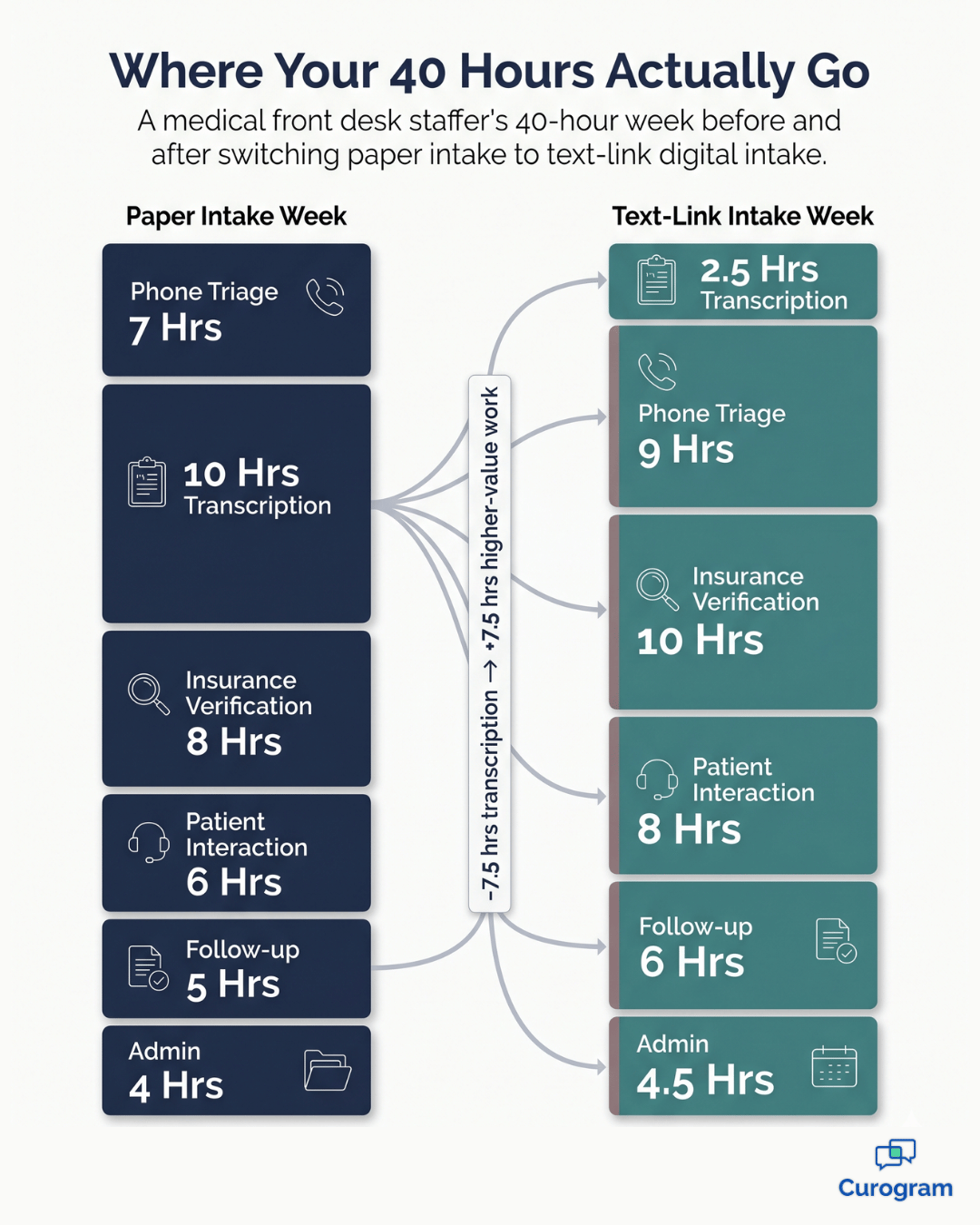
They're 7+ hours every week that get redirected to higher-value work — phone reduction, insurance verification, or simply being present for the patients in the lobby.
From Transcriber to Verifier
The role itself changes. Your front desk stops being a data entry desk and starts being an exception desk. Staff review pre-filled responses, flag anything unusual, and spend more time on the patients standing in front of them.
The clipboard goes away. The morning rush gets manageable. The phones get answered.
A Real Example
A multi-specialty practice with 3 front desk staff was losing more than 30 hours a week to paper intake across departments.
After moving to Curogram's text-link forms, the numbers shifted fast:
- Weekly intake processing time: 30+ hours → under 8 hours
- Average check-in wait time: 22 minutes → 6 minutes
- Pre-arrival form completion: under 30% → above 75%
- Staff redeployed to phone triage and follow-up: 2 of 3
The biggest win wasn't on a dashboard — it was that the most tedious part of the job disappeared. That's the kind of front desk efficiency Meditab IMS text forms deliver once they replace paper for good.
Trade the Clipboard for Capacity
Paper intake isn't a feature of running a medical practice. It's a workaround for forms patients won't use. Once you take that workaround away, the whole front desk runs differently.
Meditab IMS is built to manage clinical data. Curogram is built to capture patient data. When intake happens by text before the visit, IMS gets cleaner records and your staff get their hours back.
The two systems do what each one does best, and your team stops paying the price for the gap between them.
Your front desk wasn't hired to type for a living. They were hired to greet patients, solve scheduling questions, and keep the day moving.
Every hour they spend transcribing handwriting is an hour they aren't doing the work that actually matters.
The shift away from paper isn't dramatic. It's a text message instead of a clipboard.
A pre-filled form instead of a pen. A verification screen instead of a typing marathon. Small change, huge difference.
The fastest way to know if this fits your team is to watch it run with your own Meditab IMS setup. Most practices go live within 48 hours of onboarding.
There's no long-term contract, no IT lift on your side, and no reason to keep paying the paper tax for another quarter.
Schedule a Demo with Curogram and see the workflow in action. We'll walk through how text-link intake connects to your IMS schedule, how forms get built around your specialties, and what your weekly numbers look like once paper is out of the way.
Frequently Asked Questions
Most practices have their custom form packets built and ready within the first 48 hours of onboarding. A dedicated onboarding specialist handles the setup. You provide your existing paper forms as a reference, and Curogram recreates them digitally with mobile-optimized layouts, branching logic, and insurance card capture. No IT work is required from your team.
Less, not more. Curogram's forms use required fields, validation rules, and branching logic to make sure patients complete every necessary section before submission. If something is missing, staff follow up by text before the visit — a 30-second exchange instead of a 5-minute phone call or a delayed check-in.
The system sends an automatic reminder 24 hours before the appointment. If the patient still hasn't completed the form, they can finish it in the waiting room on their phone using the same text link — still faster than paper. Staff always have a fallback option, but most practices see 70%+ pre-arrival completion within the first month.
Yes. Curogram is fully HIPAA compliant and signs a Business Associate Agreement with every practice. The text message itself only contains a secure link — no PHI ever moves through SMS. When the patient taps the link, the form opens in an encrypted, HIPAA-compliant environment, and the submitted data is stored on secure servers only your authorized staff can access.
Most practices are surprised by how smoothly text-link intake works across age groups. Around 90% of adults over 65 own a smartphone and use text messaging regularly, and the form is built to be readable without zooming. For the small group of patients who can't or won't use the link, paper stays available at the front desk — but it shifts from being the default to being the rare exception.