
9 min read

Pay Your Imaging Bill by Text | Simple & Secure

Pay Your Imaging Bill by Text | Simple & Secure
💡 Paying your imaging bill by text is fast, simple, and secure. Curogram, integrated with Exa PACS/RIS, sends patients a single text with a secure payment link right after their MRI or CT scan. No paper statements, no portal sign-up, and no confusing billing codes.

Patients tap the link, see their balance, and pay in under 60 seconds from their phone. The amount shown is always accurate because it pulls directly from Exa Billing after insurance is applied. Billing staff spend less time chasing payments, and patients leave the experience feeling respected. One text is all it takes to go from balance due to paid in full.

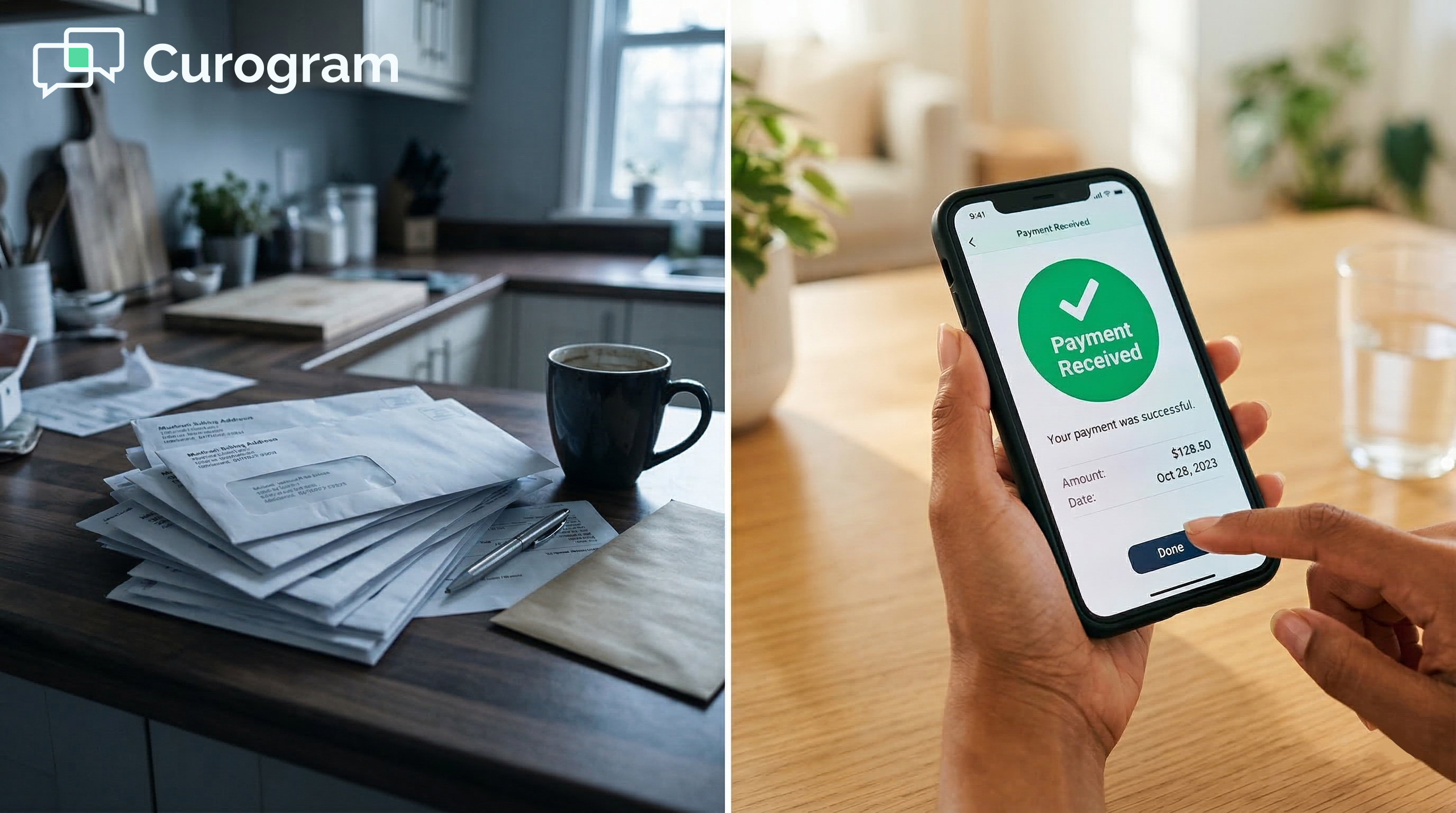
You just had your MRI. The scan went well. You feel relieved. Then, three weeks later, a paper statement shows up in the mail.

The bill is full of codes you don't recognize. You're not sure if your insurance paid the right amount. You set it aside, planning to deal with it later. Then a second statement arrives with a bold red "PAST DUE" notice.

This is how most radiology billing works today. And for patients, it is one of the most stressful parts of getting medical care.

It doesn't have to be this way. The same phone you use to text your family can now be used to pay your radiology patient billing in seconds.

Curogram's text-to-pay feature, built for imaging centers that use Exa PACS/RIS, changes the whole billing experience. Instead of paper chasing and phone tag, patients get a clear text message with a link to pay their balance.

No account needed. No app to download. Just tap, review, and pay.

This article walks through why the old billing process frustrates patients, how a text message payment link fixes it, and what that means for your imaging center's revenue. 

The Villain: The Bill You Can't Figure Out

Medical billing is confusing for most people, but radiology billing can be especially hard to understand. Patients often receive their bill weeks after the visit. By then, they have forgotten details about the service and have no easy way to ask questions.

The result is delayed payments, frustrated patients, and more work for your billing team. Understanding where the old process breaks down is the first step toward fixing it.

The Paper Statement Problem

Picture this: it has been three weeks since your CT scan. A paper statement finally arrives in the mail. You open it and see a grid of CPT codes, insurance notes, and three different dollar amounts. You are not sure which one you actually owe.

This is the reality for most radiology patients today. The billing experience feels opaque. Patients don't know if insurance was applied correctly.

They don't know if this is the final bill or just an estimate. So they set it aside.

Why Delayed Bills Hurt Collections

When a bill arrives weeks after a visit, the patient's memory of the service has faded. The emotional connection to the care they received is gone. What remains is confusion and mild frustration.

That gap between service and statement is one of the biggest reasons imaging centers struggle to collect balances in full. The longer the delay, the lower the chance of prompt payment.

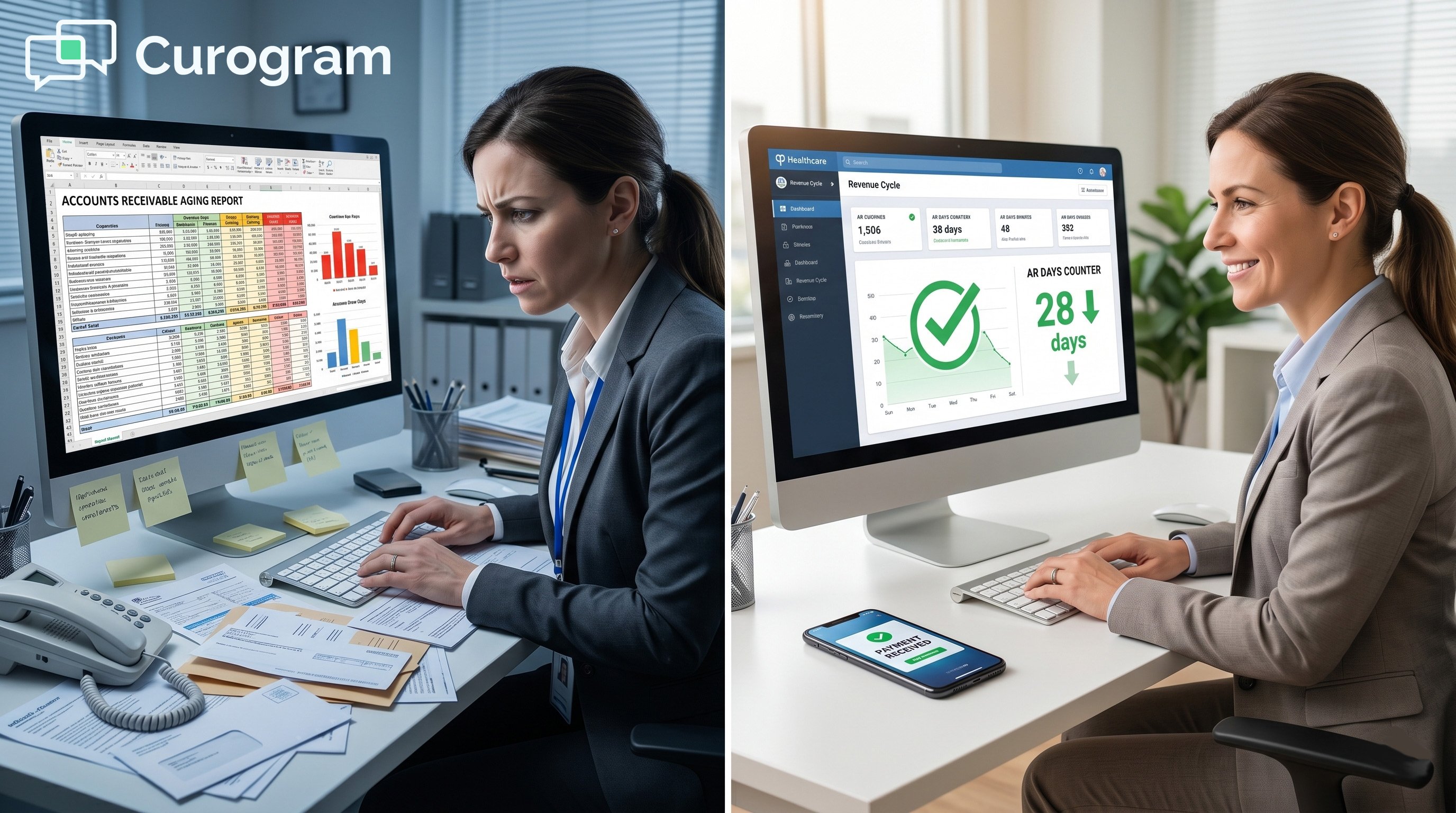
Based on Curogram client data from clinical settings, text-based payment links reduce average time-to-payment from 30 to 90 days (with paper) down to just 1 to 3 days.

The Hidden Cost of Paper Statements

Beyond delayed payment, paper statements cost money to produce and mail. Printing, postage, and re-sending missed statements add up fast.

When patients don't pay, staff must follow up with phone calls that take 15 minutes or more each.

For a $350 balance that could be resolved in 60 seconds via text, the old process can eat up 20+ minutes of staff time per patient. That's time and money your team cannot afford to waste.

The Portal Problem

Many imaging centers offer an online payment option, which sounds like a modern fix. But most patients have never created an account on that portal.

They click the link, get asked to create a username and password, and give up within minutes.

For radiology, this is especially hard. Most patients visit an imaging center only once. They have no reason to create an account for a site they may never use again.

The portal-based approach is built for patients with ongoing relationships, not for the episodic nature of radiology care.

Password Resets and Abandoned Payments

The most common outcome? The patient clicks "forgot password," gets a reset email that lands in spam, and closes the browser.

The payment is never made. The imaging center sends another paper statement. The cycle repeats.

A radiology patient financial experience built on portals is mismatched to the way imaging center visits actually work. Patients need a path that requires zero setup and zero memory of past login details.

Phone Tag as a Last Resort

Some patients skip the portal entirely and call to pay by phone. They navigate the IVR menu, wait on hold, and finally reach a billing rep. The call takes 15 minutes on average. For your billing staff, this is not scalable.

One or two calls per day is manageable. But when dozens of patients need this kind of hands-on help, your team's time is gone.

The imaging center mobile payment link solves this by giving patients a path that requires no staff involvement at all.

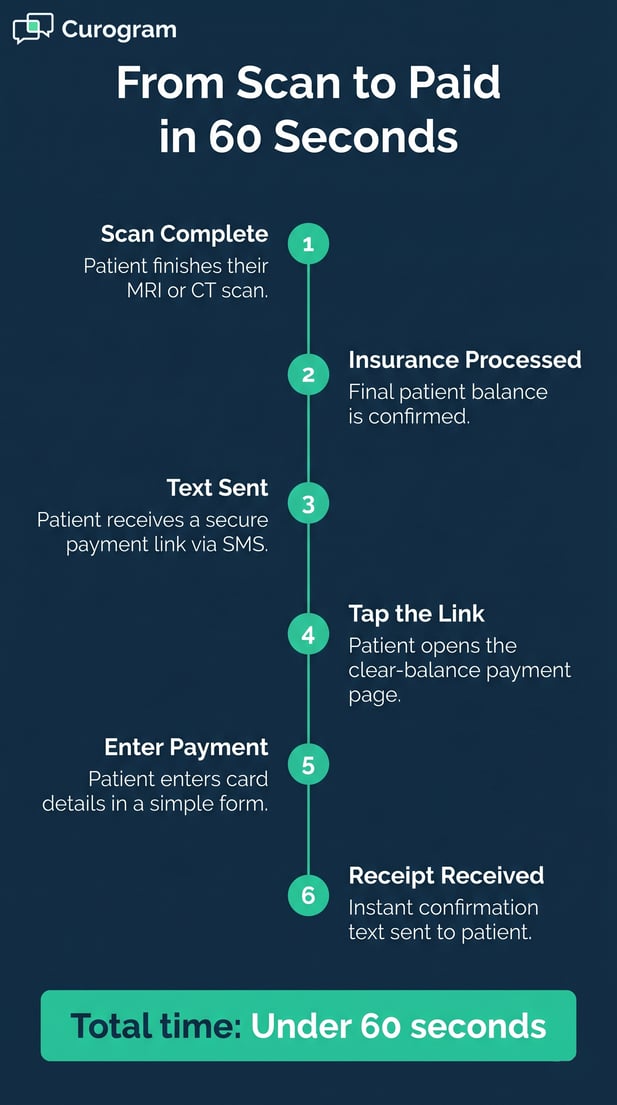
Fast patient payment process from scan to receipt, in an easy-to-follow infographic

The Guide: The One-Text Payment

When billing is simple, patients pay. That's not a guess. It's a pattern seen again and again across imaging centers that have moved away from paper statements and toward mobile-first payment options.

Curogram's text-to-pay feature is built around one idea: make it so easy that patients have no reason to delay.

How It Works in Plain Terms

After a patient's scan is complete and insurance has been applied, Curogram sends them a text. The message comes from their imaging center. It tells them their balance and includes a link to pay. That's it.

No account creation. No app download. No phone call. The link opens a simple page in their phone's browser. They see what they owe, enter their card details, and tap "Pay."

Under 60 seconds later, they have a receipt. This is what paying your MRI CT bill by text actually looks like in practice.

The Clear-Balance Payment Page

Curogram's payment page is designed to remove all confusion. It shows the imaging center's name, the date of service, and the amount owed. There are no CPT codes. No insurance adjustment tables. No confusing line items.

The patient sees one number and one action. If they have a question about their balance, they can reply to the text. Their message goes straight to the billing team, who can respond the same way.

Why Clarity Drives Faster Payment

When patients understand what they owe and trust the number they see, they pay. Confusion, on the other hand, creates hesitation. Every unclear line item on a bill is a reason to wait, to call, or to set the bill aside.

Curogram's payment page removes that friction entirely. Based on Curogram client data from clinical settings, imaging centers using text-to-pay see patient satisfaction with billing improve right away, often as soon as paper statement volume starts to drop.

The Integration That Makes It Accurate

Accuracy is everything in billing. If a patient receives a payment text for the wrong amount, trust erodes fast. Curogram handles this by pulling patient responsibility data directly from Exa Billing through the API platform.

No text is sent until the final patient amount is confirmed, meaning insurance adjustments are fully applied first. This prevents the dreaded double-billing confusion that makes patients feel like they're being charged twice for the same visit.

Automatic Confirmation and Reconciliation

When the patient pays, two things happen at once. The patient gets an instant receipt via text. The imaging center's revenue cycle system updates automatically to reflect the payment. There's no manual entry, no delay, and no risk of a payment being missed.

This level of automation means your billing team can focus on exceptions rather than routine follow-ups. The system handles the easy collections. Staff handle the edge cases.

Built for How Radiology Patients Actually Behave

Radiology is different from primary care. Patients often visit an imaging center exactly once. They don't want a relationship with your billing portal. They want the experience to be clean, simple, and over quickly.

Curogram's approach to imaging center convenient billing matches that reality. A patient who texts their friends all day long will find a text payment link completely natural. It meets them where they already are, on their phone, in a channel they already trust.

A Quick Comparison: Old Billing vs. Text-to-Pay

Factor

Paper Statement

Text-to-Pay

Time to Payment

30 to 90 days

1 to 3 days

Staff Time Per Payment

15 to 20 minutes

Near zero

Account Required?

Sometimes (portal)

No

Patient Confusion Risk

High (CPT codes)

Low (clear balance)

Payment Confirmation

Mailed receipt

Instant text receipt


The Success: Paid in 60 Seconds, Not 60 Days

The best billing experience is one the patient barely notices. They get a text, they pay, they move on with their day. No stress, no confusion, no follow-up calls.

That's the goal, and it's what text-to-pay delivers for imaging centers that make the switch.

What the Numbers Actually Show

Paper-based radiology patient billing typically drags out for 30 to 90 days. Some balances are never collected at all. By contrast, patients who receive a text message payment link tend to act within 1 to 3 days.

The reason is simple: the action is easy. When patients can pay from their couch in under a minute, they do. When they have to navigate a portal or find a stamp, they don't.

Based on Curogram client data from clinical settings, text-to-pay increases patient balance conversions and strengthens the overall revenue cycle.

Fewer Calls, More Collected

Every time a patient pays by text, that's one fewer call your billing team has to make. Multiply that across dozens of patients per week and the time savings become significant. Staff can redirect that time to more complex billing tasks that actually require human judgment.

The shift also reduces the emotional burden on your team. Chasing payments is one of the most stressful parts of medical billing. Automating the easy collections makes the job better for everyone.

Better First Impressions at the End of the Visit

The last thing a patient experiences with your imaging center is billing. If that experience is confusing or frustrating, it colors their memory of the entire visit. If it's smooth and simple, it reinforces the professionalism of your care.

Patients who pay by text tend to have a cleaner end to the imaging experience. They receive a receipt, the transaction is done, and they move on. That's the kind of radiology patient financial experience that generates good reviews and repeat referrals.

From Dreading the Bill to Done in a Tap

Let's walk through what this looks like for a real patient. They finish their MRI on a Tuesday morning.

The next day, they get a text: "Hi [Name], your balance for your imaging visit is $175. Pay securely here: [link]."

They tap the link. They see the amount. They enter their card. They get a receipt. It took 45 seconds. They didn't have to call anyone. They didn't have to create an account. They didn't have to find a stamp.

No More Billing Anxiety

Medical billing is the top source of consumer financial stress after mortgage payments. Patients approach bills with fear, not because they refuse to pay, but because the process is usually confusing and slow.

Text-to-pay removes almost all of that anxiety. The amount is clear. The process is fast. There are no surprises.

Patients who use it often describe the experience as shockingly easy, which says a lot about how low the bar has been set by traditional billing.

The Imaging Center Advantage

For imaging centers, text-to-pay is not just a convenience. It's a competitive signal. Patients notice when a facility makes things easy. Word travels, especially among patients who have been burned by confusing bills at other locations.

An imaging center that offers pay imaging bill from phone options is telling patients: we value your time. That message is just as powerful as the quality of the scan itself.

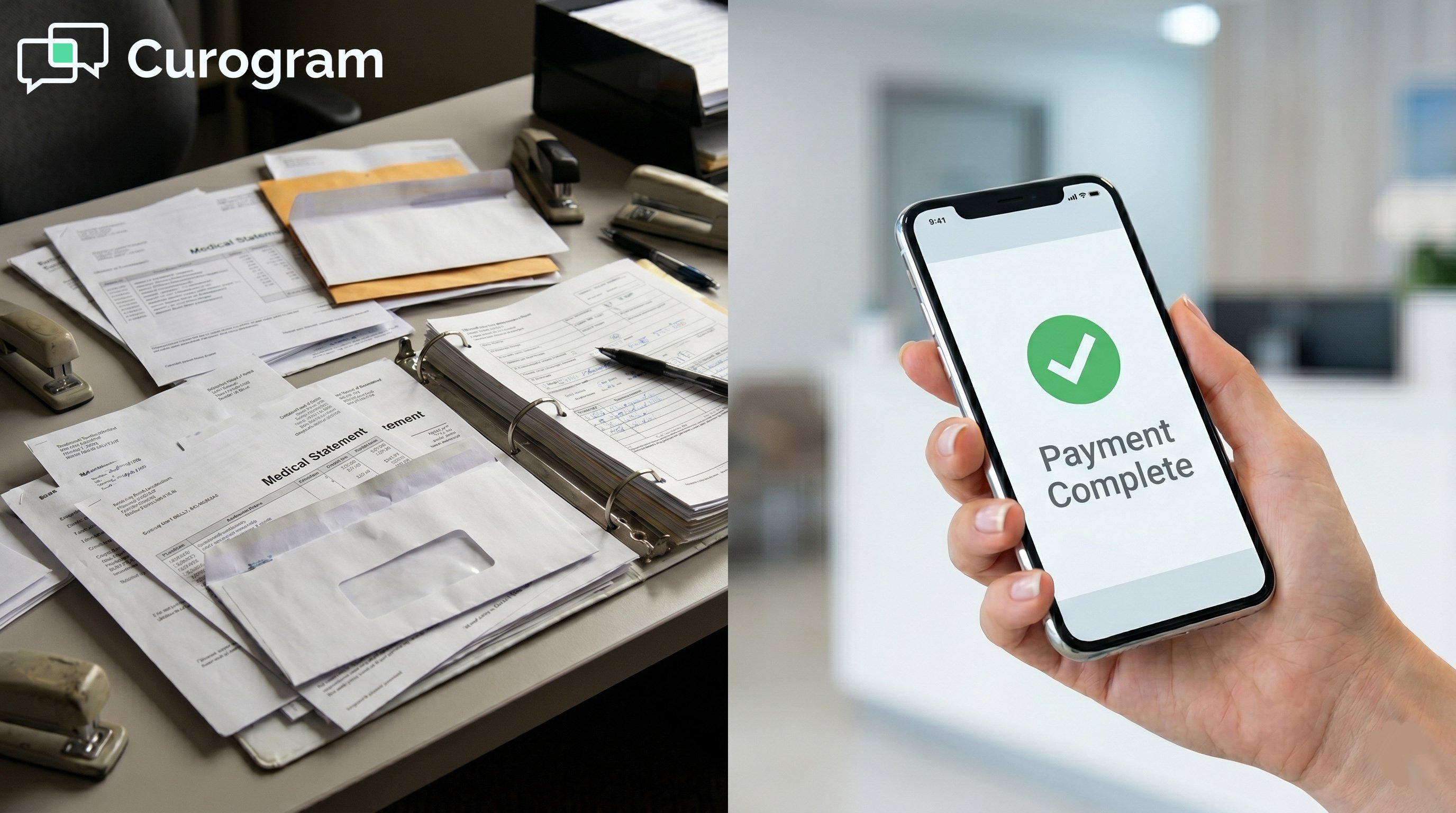
Patient successfully completing a mobile payment for healthcare from home

Conclusion: Your Imaging Bill, Made Simple

Medical billing doesn't need to be complicated. A clear bill, sent at the right time, through the right channel, gets paid. It's that direct.

Curogram makes this possible for imaging centers running on Exa PACS/RIS. The platform handles the patient communication side of billing: sending the text, showing the balance, processing the payment, and confirming the receipt. Everything is accurate, secure, and fast.

Exa PACS/RIS is built for clinical and billing operations. It handles imaging workflow and claims with precision.

Curogram fills the gap in the patient communication layer, the part that determines whether patients actually act on their balance and pay it promptly.

Together, they create a complete experience: world-class imaging and a billing process that patients can handle in under a minute. That combination is rare in radiology today, and it shows.

Most imaging centers that add Curogram's text-to-pay feature see results quickly. Paper statement volume drops. Collection times shrink. Staff spend less time on follow-up calls. And patient satisfaction with billing goes up, often right away.

Based on Curogram client data from clinical settings, practices that use SMS-based payment tools see measurable gains in both collection rate and patient experience scores. The improvements come not from pushing harder on collections, but from making it easier to pay.

Give your patients a billing experience that matches the quality of your imaging. One secure text, one clear balance, one tap to pay.

Schedule a demo to see how Curogram connects to your Exa billing workflow.


Frequently Asked Questions

How does Curogram know when to send the payment text?

Curogram pulls patient responsibility data directly from Exa Billing through the API. It waits until insurance has fully processed and the final patient amount is confirmed before sending any payment text. This means patients are never asked to pay a number that might change later. The timing is automatic, so your billing team doesn't have to trigger anything manually.

How safe is it to pay a medical bill through a text link?

The text itself contains no financial or medical information, just a link to a secure payment page. That page uses bank-level encryption and meets PCI DSS standards, the same rules major banks and online retailers follow. Curogram is also SOC 2 Type II certified and fully HIPAA compliant. Your card information is encrypted and never stored by the imaging center.

Why does text-to-pay work better than a patient portal for radiology billing?

Most radiology patients visit an imaging center only once. They have no reason to create an account on a portal they'll likely never use again. Text-to-pay requires no account, no app, and no password. Patients tap a link in their phone's browser, pay, and receive a receipt. It fits the episodic nature of radiology in a way that portals simply don't.

How does a patient ask a question about their balance before paying?

If a patient is unsure about the amount, they can reply directly to the payment text. Their message goes to the imaging center's billing staff, who can explain the charges and answer questions via text. Patients never have to call or wait on hold. The payment page also includes the imaging center's phone number for anyone who prefers a direct call.

How does this approach improve the overall patient financial experience?

The biggest driver of billing frustration is confusion, not the bill itself. When patients see a clear amount at the right time, through a channel they already use, they are much more likely to pay quickly and feel good about the experience.

Text-to-pay removes the paper chase, the portal friction, and the phone tag. The result is a billing interaction that feels respectful of the patient's time, which directly improves satisfaction scores.