7 min read

Why GE Centricity Patients Leave Google Reviews When Asked by Text

Why GE Centricity Patients Leave Google Reviews When Asked by Text
💡 OA great patient Google review experience in GE Centricity post-visit SMS review requests starts with timing. Most patients leave the clinic happy, but they forget to post a review. A short text within an hour of the visit fixes that gap.

The text names the provider, the clinic, and includes one clickable link. The patient taps once and lands on the Google profile. No login. No search. No friction.

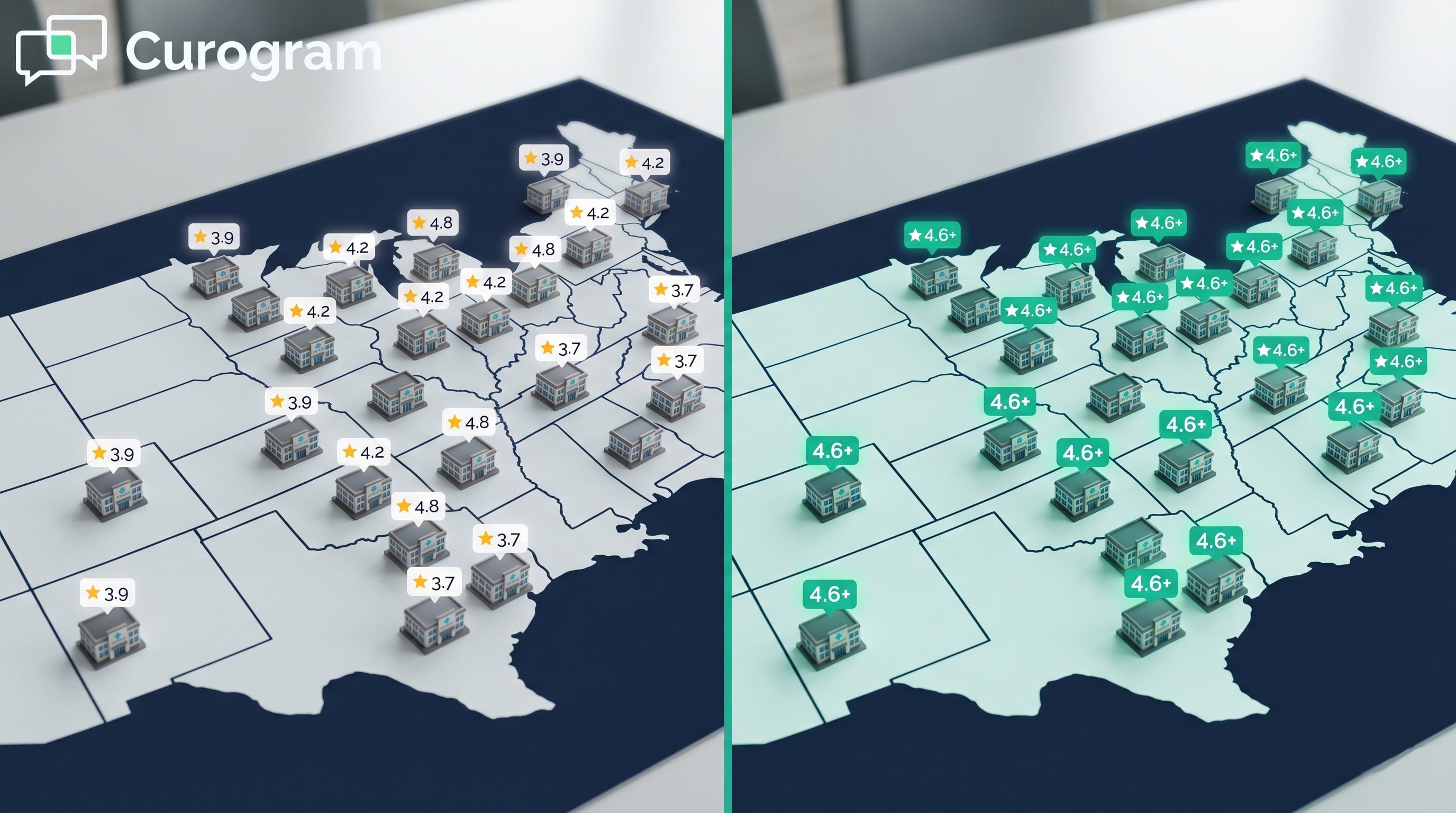
Centricity practices using this method see 10% to 15% of texted patients leave a review. Passive practices see only 1% to 3%. That gap turns into thousands more 5-star reviews per year across a large health system.

A patient walks out of your clinic happy. The provider was kind. The front desk was warm. The visit ran on time. By the time the patient reaches the car, the good feeling is at its peak.

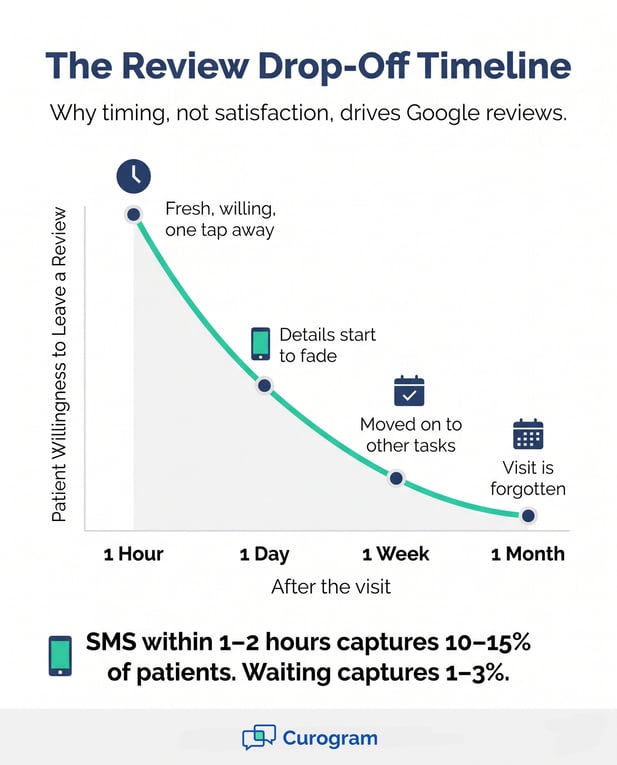
Then life happens. Errands, work, kids, dinner. By the next morning, that visit fades. By next week, the details blur. A month later, the patient could not write a review even if they wanted to.

This is the quiet problem behind weak Google ratings. It is not bad care. It is not unhappy patients.

It is a timing gap between the visit and the moment a patient might post a review. Without a nudge in that window, the moment slips away for good.

That is where post-visit SMS patient engagement healthcare workflows change the math. A short text within an hour or two catches the patient while the visit is fresh. The link is one tap. The review takes a minute. The friction is gone.

For GE Centricity practices, this matters even more. Centricity is built for large, multi-site groups. Each clinic has its own Google Business Profile.

Each profile needs steady reviews to rank well in local search. With 20 or more sites, manual review chasing is a lost cause.

Curogram closes the loop. We pull visit data from Centricity and send a personal, mobile-first text to each post-visit patient.

The link opens that exact clinic profile in one tap. The result is a steady patient SMS review request experience that scales across every location at once.

This guide walks through how the system works, why timing wins, and what the numbers look like in real clinics. We will keep it simple, plain, and useful.

The Villain: The Forgotten Experience

Most clinics lose reviews not because care was poor, but because the moment passes. Below are the four ways that moment dies, and the one channel that brings it back. Each one explains why a patient who loved their visit still never posts a word about it online.

The Care Is Excellent, But the Review Never Comes

A patient finishes a strong visit at a Centricity clinic. They felt heard. The provider was sharp. The front desk was kind. Driving home, they feel good about the visit.

But they do not think about Google. A week later, the details fade. A month later, they have moved on. With no nudge, that great visit creates zero reputation value for the practice.

The Portal Review Request That Nobody Sees

Some clinics post a review prompt inside the patient portal. The hope is that patients will see it next time they log in. The trouble is, most patients rarely log in at all.

Portal use sits between 5% and 15% for most groups. When patients do log in, they want lab results or a refill. A review banner gets skipped. The portal is the wrong place for this ask.

The Phone Number on a Receipt That Gets Thrown Away

Some clinics print a review prompt on the visit receipt. A web address or QR code sits at the bottom. Patients glance, fold it, and forget.

Paper is the slowest path to a digital action. By the time the patient is home, the receipt is in the trash. The friction of typing a URL is too high when life is moving fast.

Why Paper Prompts Fail At Scale

A receipt has to survive the drive home, the bag, the kitchen counter, and a busy week. Most do not. Even when a patient sees the prompt later, the link still costs effort to type.

Why QR Codes Still Need Timing

A QR code is faster than typing, but only if the patient scans it within minutes. Once the receipt is filed away, the QR code is just ink. Timing always beats format.

The SMS Moment That Wins

Patients open text messages within minutes. SMS open rates sit above 98%. When a Google review workflow patient perspective is built around mobile patient messaging Centricity teams, the message lands while the visit is still fresh.

Three things tip the scale: the channel, the timing, and the one-tap link. SMS timing review response rates rise sharply when the text arrives within one to two hours of the visit. That is when feelings are fresh and the patient is most willing to share. 


Infographic: Why timing, not satisfaction, drives medical patient Google reviews

The Guide: The Review Moment Optimizer

Curogram acts as the review moment optimizer for GE Centricity practices. We send the right message to the right patient at the right time.

Below are the three parts that make it work, plus how each one shows up in the patient flow.

One-Tap Review Links Built for Mobile

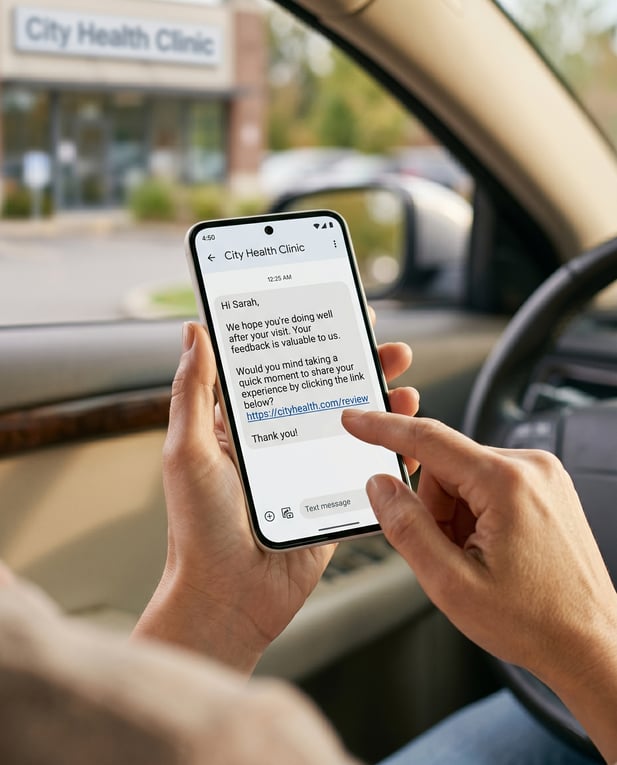
Curogram connects to Centricity visit data. When a patient finishes a visit, the system flags them. Within one to two hours, a short text goes out. The message reads like a person wrote it.

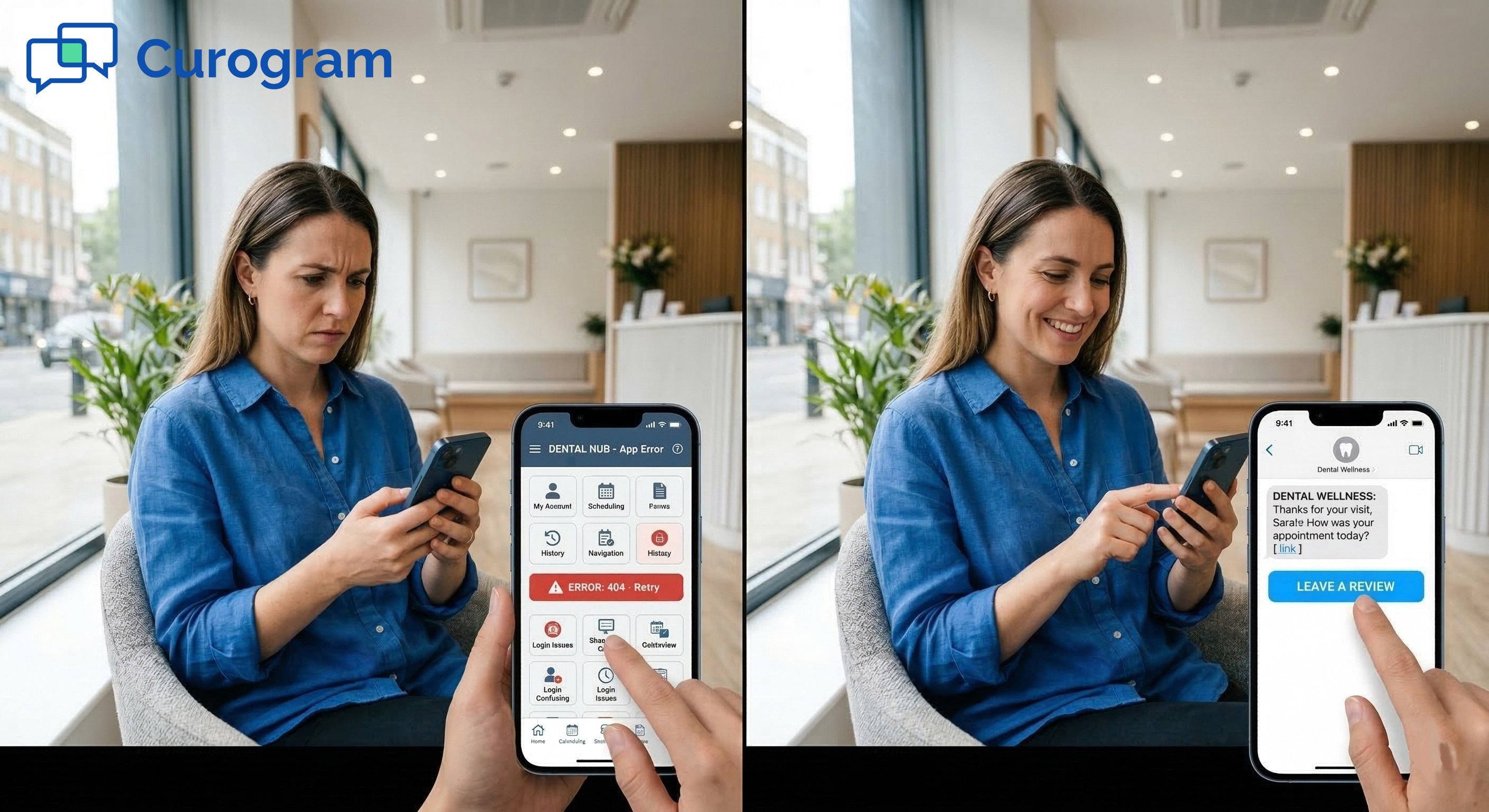
For example: “Hi Sarah, thanks for visiting Main Street Clinic today with Dr. Johnson. We would love your feedback on Google: [link].”

One tap opens the clinic’s Google profile. The review form is ready to fill.

Timing That Catches the Patient at Peak Feeling

Speed matters more than most teams think. A text within an hour of the visit pulls a much higher reply rate than a text the next day. The visit is still vivid. The patient is still in the moment.

Wait 24 hours, and the visit blurs. Wait three days, and the patient has moved on. The window for healthcare provider patient review incentives is short, and Curogram fits inside it.

The One-Hour Rule

Texts that arrive within the first hour after checkout earn the highest reply rates in our data. The patient is still close to the visit, often still on the road. The ask feels timely and fair.

Why The Next Day Is Too Late

By the next morning, the patient is back at work or school. The visit is just one more thing on the list. The same text earns far fewer reviews when sent 24 hours late.

Personal Messages, Not Spam

A message that says “Hi Sarah, thanks for seeing Dr. Johnson at our Main Street clinic today” feels human.

A generic blast saying “Please review our clinic” feels like spam.

Curogram pulls the patient name, provider, and location from Centricity. Each text reads as a personal note, not a mass email. That small detail is what turns a request into a reply.


The Success: The Converted Review

When the channel, timing, and friction are all right, the numbers move fast. Below are the three big shifts that Centricity practices see after switching on post-visit SMS reviews. Each one builds on the next.

From a 1% Trickle to a 10% to 15% Lift

Most clinics that wait for reviews to happen on their own see only 1% to 3% of patients post one.

With post-visit SMS, that figure jumps to 10% to 15%. That is a 5x to 10x lift in review volume from the same patient base.

Here is what the gap looks like side by side:

Approach

Patient Review Rate

Result Over 1 Year

No outreach (passive)

1% to 3%

Slow growth, weak rank

Post-visit SMS request

10% to 15%

Steady, scalable lift


Volume That Scales With Visits

A 20-site Centricity group with about 200 visits per site per day sees 4,000 visits each day. That is 80,000 to 120,000 post-visit texts per month. At a 10% to 15% reply rate, that is 8,000 to 18,000 reviews per month.

Based on our internal data, one multi-site practice earned 1,064 new 5-star reviews in just three months using Curogram’s review workflow. The same group grew from about 993 reviews per location to more than 8,159 over a year.

How The Lift Adds Up

Each location adds reviews on a steady curve, not a spike. The volume grows month over month. After a year, every clinic looks busy, trusted, and well rated on Google.

What It Means For Local Search

Google rewards steady review volume in local rankings. A clinic with fresh, frequent 5-star reviews shows up first. That climb pulls in new patients who are searching nearby.

From Passive Hope to Active Request

The old model is hope. Hope the patient remembers. Hope they post. Hope the rating holds. Hope is not a plan.

With Curogram, the practice moves to an active ask. Review volume rises with visit volume, not luck. Centricity captures care quality. Curogram turns that quality into a visible Google reputation.

Close up of patient reading clinic review request SMS on smartphone

Conclusion: Your Patients Already Like You. Now Just Ask.

Most clinics have a quiet truth. The care is strong. The staff is kind. The visits go well. The only thing missing is a steady stream of online proof.

That gap is not a satisfaction problem. It is a timing and friction problem. Patients love their visits and forget to post. The window to capture their voice is short, but it is real.

Post-visit SMS review requests close that window for you. The text arrives while the visit is fresh. The link is one tap. The Google profile loads on the patient’s phone. The review takes a minute.

For GE Centricity practices, this matters at scale. A single dashboard runs the workflow across every location. Each clinic gets its own steady review velocity. Each Google profile climbs in local search.

The numbers back this up. Practices using Curogram see 10% to 15% of texted patients leave a review.

Passive practices see only 1% to 3%. That gap is what turns a 500-review clinic into a 5,000-review clinic.

Based on our internal data, multi-site Centricity clients have grown from under 1,000 reviews per location to over 8,000 in a year.

Some hit 1,064 new 5-star reviews in just three months. That is real, repeatable lift, not a one-time bump.

The shift in mindset is just as big. Practices stop hoping for reviews and start asking for them. The ask is short. The patient is willing. The system is automatic.

Curogram does not change the quality of your care. Your team already delivers that. We just make sure Google sees what your patients already feel. The EHR records the visit. The engagement layer captures the reputation.

If your Google reputation is stuck and your clinics deserve better, the fix is easier than you think.

Book a consultation with Curogram and we will show you how the post-visit text looks from a real patient’s phone.   


Frequently Asked Questions

How soon after a visit should the SMS review request be sent?

The sweet spot is within one to two hours of checkout. The visit is still fresh, and the patient is most open to sharing. Waiting until the next day cuts response rates sharply. Curogram triggers texts off Centricity visit data, so timing stays tight at every location.

Why does SMS work better than email or the patient portal?

Text open rates sit above 98%, while email and portal logins lag far behind. Patients check texts within minutes, not days. The ask reaches them in the channel they already use. That is why mobile patient messaging Centricity workflows pull such strong reply rates.

How do you keep the request from feeling like spam?

Each text uses the patient’s name, the provider’s name, and the clinic location. It reads like a quick note, not a mass blast. We also cap how often a patient hears from us, and every text includes an opt-out. The personal touch is what turns a request into a real reply.

What about patients who had a bad experience?

Curogram lets you filter who gets a request. Short visits, no-shows, and patients flagged in Centricity for low satisfaction can be skipped. You can also route unhappy feedback to a private survey first. That protects your Google rating from preventable negative posts.

How does this affect HCAHPS or other patient satisfaction scores?

HCAHPS and Google reviews measure different things. HCAHPS rates clinical care. Google reviews shape your public reputation and patient acquisition. A strong HCAHPS score is wasted if no one sees it online. Curogram makes sure both stories match.


Automated Google Reviews for Multi-Location GE Centricity Practices

Automated Google Reviews for Multi-Location GE Centricity Practices

💡 Automated Google reviews for GE Centricity multi-location practices enterprise reputation tools fix a real problem. Centricity holds patient data...
Read More
Practice Fusion Reputation Management | Automated Google Reviews

Practice Fusion Reputation Management | Automated Google Reviews

💡 Practice Fusion automated Google review requests, powered by Curogram's Review Engine, send a post-visit text to every patient after each...

Read More
How Operations Teams Manage Google Reviews from One Dashboard

How Operations Teams Manage Google Reviews from One Dashboard

💡 Operations staff at GE Centricity multi-location Google Business Profile health systems face a hard truth. Manual review collection across 20 or...

Read More