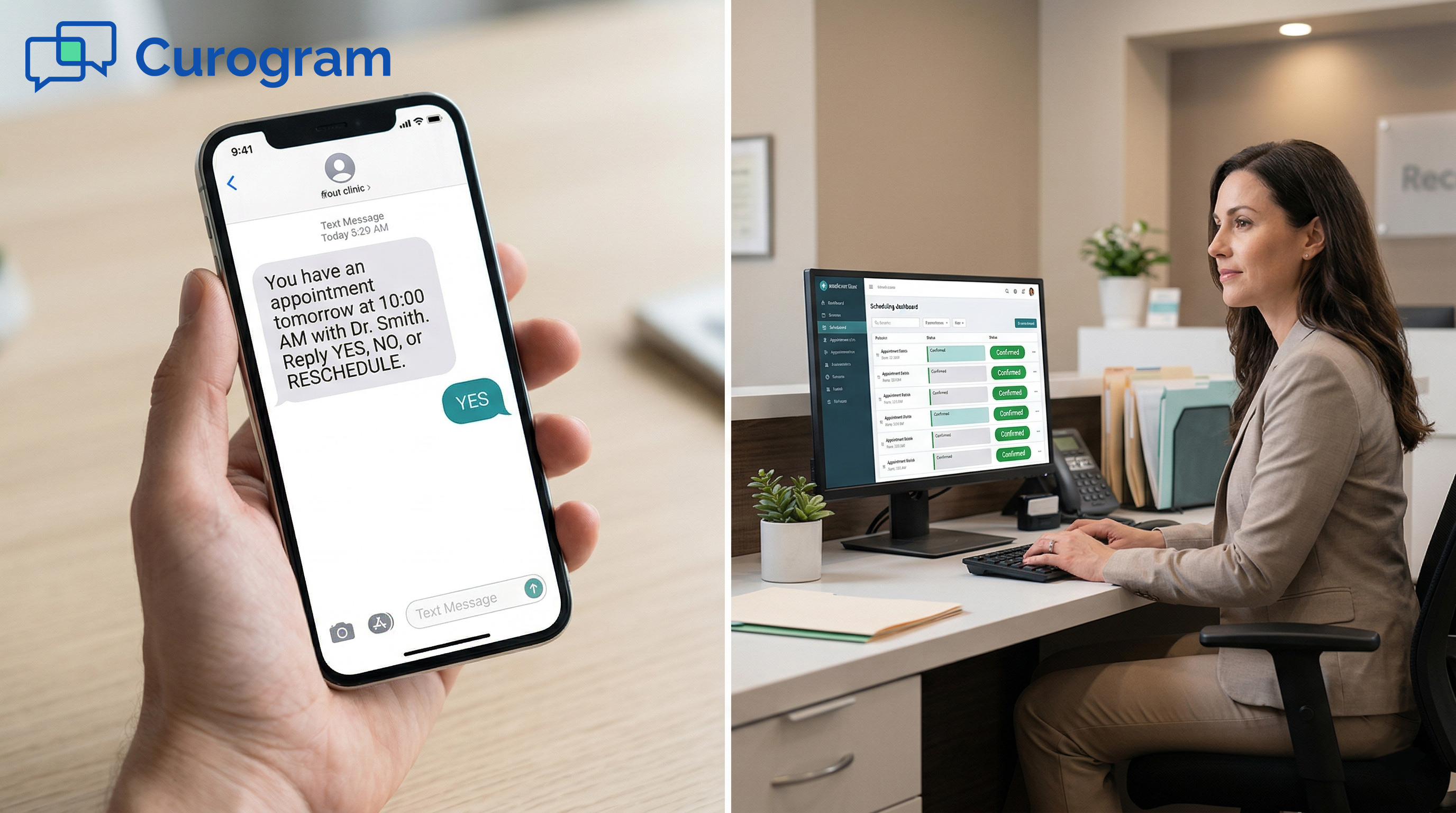
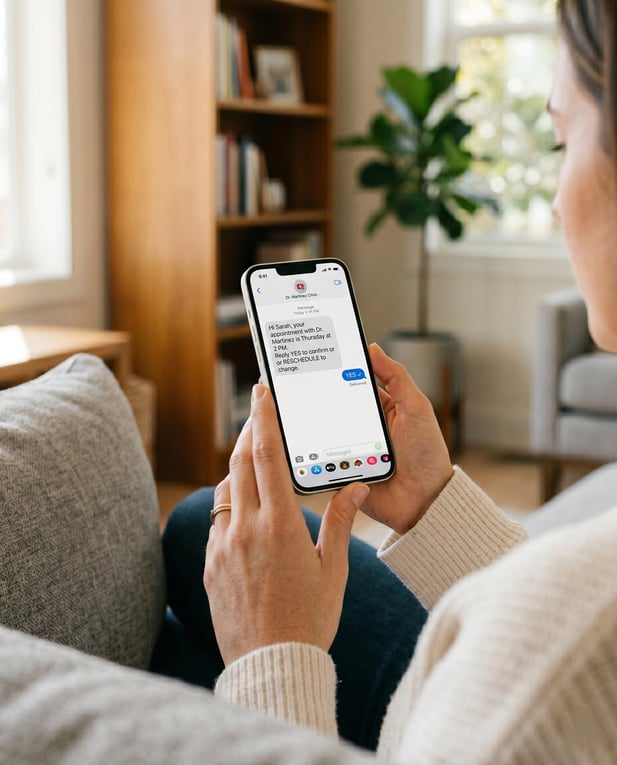
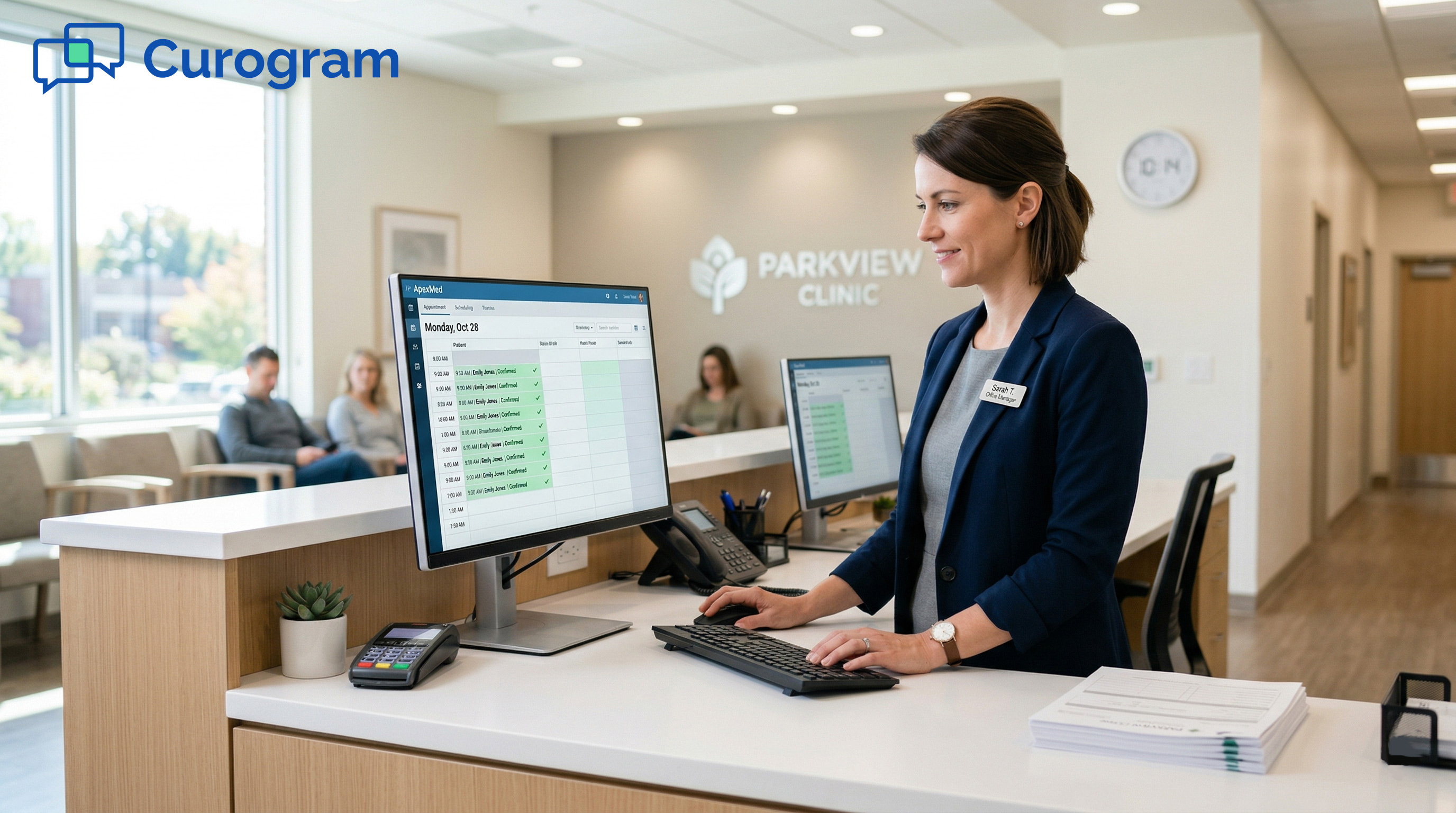
Patients reply by text to confirm, reschedule, or cancel. All sites share one live dashboard with real-time data. Deployment takes 2 to 4 weeks. There is no EHR swap and no clinical workflow shift.
Most groups cut no-show rates from 15% to under 5% within 60 days. That recovers $15,000 to $25,000 per week in lost revenue. Manual confirmation calls drop by 90% or more. The system scales across 20+ sites with shared visibility and per-site control.
Your 30-provider practice books 800 visits each week. The front desk team calls patients all day to confirm them. Yet 15% of patients still fail to show up.
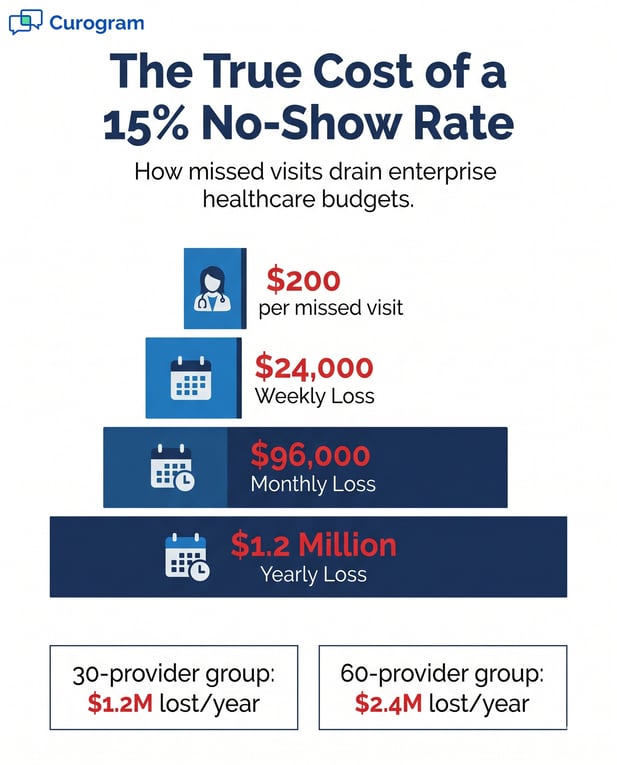
That gap costs your enterprise $24,000 every single week. Over a year, that adds up to $1.2 million in lost income. A 60-provider group can lose $2.4 million in the same span.
Here is the hard truth. You already sent appointment reminders today. GE Centricity pushes them out by email and phone call. But these messages are one-way only.
You have no proof that the patient saw the message. You have no signal that they plan to show up. That blind spot drains millions of dollars each year. And your staff must still call to confirm by phone.
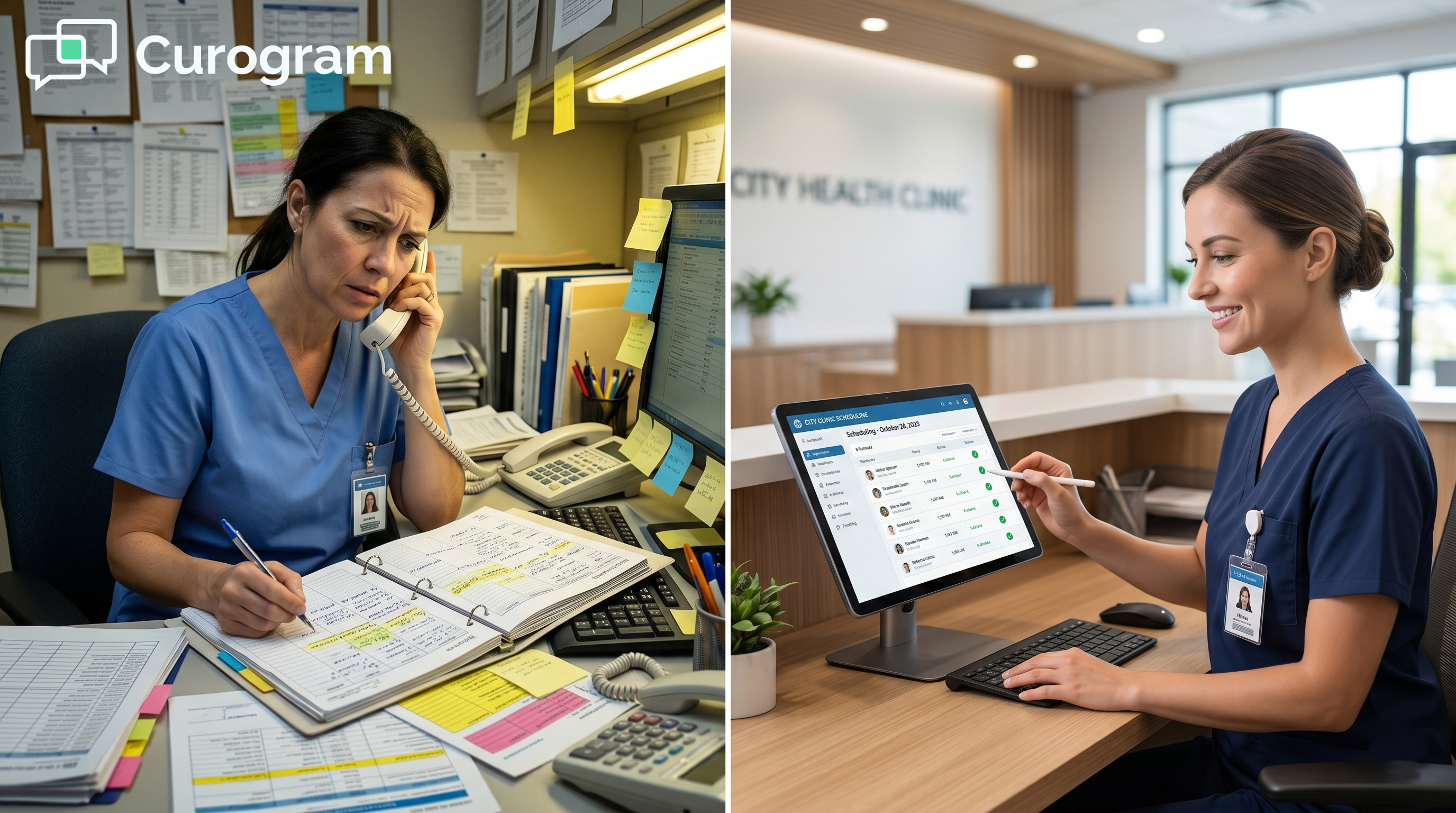
Front desk teams spend 40+ hours each week dialing patients. Many calls go straight to voicemail.
Others get a quick yes that does not hold by morning. The treadmill drains time, money, and morale.
The fix is not a full EHR change. A swap to Epic or athenahealth costs $2 to $5 million. It also takes 12 to 24 months to roll out. Most enterprise groups cannot stomach that risk.
The real fix is much simpler. Two-way SMS reminders turn broadcasts into live chats. Patients reply by text to confirm, reschedule, or cancel. Staff see real data across all sites on one screen.
This guide shows how automated appointment reminders work with GE Centricity integration to reduce no-shows across the enterprise.
We cover the math behind the crisis. We map how the tech works. And we share the ROI you can expect within 60 days.
By the end, you will know exactly how to close the gap. You will see how staff hours come back to your team.
The No-Show Crisis at Enterprise Scale
No-shows hit enterprise groups harder than most leaders realize. The losses go far beyond missed billing alone.
They also touch staff morale, schedule control, and patient access. Let us break it down across three angles.
The Math of No-Show Losses
A 30-provider group with 800 visits per week loses big to no-shows. At a 15% miss rate, 120 patients fail to show each week.
At a $200 average visit value, the gap adds up fast. The numbers scale with provider count and visit volume.
The math is stark for any leader to face. Weekly loss sits at $24,000 in unbilled visits. Yearly loss hits $1.2 million in vanished income. A 60-provider group can lose $2.4 million in the same span.
Per-site pain feels even sharper. A single 15-provider clinic books about 400 visits per week. At the same 15% rate, 60 patients miss visits weekly. That is $12,000 lost from one site alone.
Cascading Schedule Damage
No-shows do more than cut topline revenue. They wreck the daily schedule, too. Empty slots cannot get filled in real time. Staff lacks live signals about who plans to come.
Clinicians end up with gaps in their day. Other patients who needed care get pushed out. The schedule turns into a guessing game. Smart capacity planning becomes nearly impossible.
The One-Way Reminder Problem
GE Centricity sends reminders out by email and phone call. But these go out as one-way broadcasts only.
The practice sends them, and then goes blind. The system has no built-in reply path. There is no record of intent at all. Front desk teams have to call to fill the gap.
Why Staff Still Pick Up the Phone
Since one-way reminders build no real commitment, staff still must call to confirm. At 80 calls per site across 20 sites, that means 1,600 daily calls.
The team spends 40+ hours each week on this task. The no-show rate barely moves.
The result is the worst of both worlds for ops leaders. Automation looks active on paper. But manual work still drains the team every day. The dual cost shows up in budgets and team morale alike.
The Two-Way Confirmation Alternative
What if reminders worked as real chats, not blasts? What if patients texted back to confirm or reschedule? What if leaders had live data across every site? The whole flow could shift in one move.
Patients reply fast when given a simple text option. SMS open rates hit 98% across most age groups. Most replies arrive within 3 hours of send time. The data flows back in near real time, ready for action.
This shift turns the schedule into a smart tool. Unconfirmed visits can trigger a second reminder right away. High-value visits with no reply can prompt a direct staff call. The data drives action instead of guesswork.

How Automated SMS Reminders Work in GE Centricity
The tech behind two-way SMS reminders is simpler than most leaders expect. The system reads from your EHR, sends out smart messages, and captures replies in real time. Here is how it works across three core layers.
The Reminder Automation Architecture
Curogram links to GE Centricity through a live HL7 feed today. The platform pulls appointment data on a steady loop in the background. When a visit reaches a set trigger point in the schedule, the system fires off a text right away. The patient gets a clear note with date, time, and provider name.
Triggers can match your needs at each site. You can set 7-day, 48-hour, and 24-hour pings for surgical visits.
You can set 48-hour and 24-hour pings for office visits. Custom rules can match each clinic, specialty, or visit type.
Patient Opt-In and Compliance
Reminders only go to patients who have opted in to SMS. The system reads consent and contact data from Centricity.
Invalid numbers and dead lines get flagged for cleanup. Patient choice stays at the center of every message.
The Two-Way Confirmation Mechanism
Each reminder comes with a simple reply path. Patients can text YES to confirm a visit. They can text NO to cancel. They can text RESCHEDULE to change the time.
These replies log in real time on the dashboard. Staff can also push the data back into Centricity notes. The visit status updates without a single manual call. The whole loop closes in seconds.
Patients pick text over voice for good reason. They can reply on their own time without phone tag. They can act in 10 seconds during a busy day. The ease drives reply rates well above 75%.
Smart Escalation Rules
Unconfirmed visits can trigger smart escalation steps. A second reminder fires at 24 hours before the visit. A third nudge can fire at 2 hours before the visit. Staff get a flag if no reply arrives by then.
When a patient texts RESCHEDULE, the system offers open slots. Some groups prefer a staff member to call back instead. Either path closes the loop without lost data. The schedule never sits in the dark.
Multi-Location Confirmation Management
One live dashboard tracks every site at once. Ops leaders can see confirmed rates by site, by provider, and by visit type.
The data updates in near real time across all 20+ clinics. No site stays hidden from the view of leadership.
Each site can still tweak timing to match its own flow. Early-open clinics may want morning sends to patients.
Late-open clinics may want evening sends after work hours. The brand and core message stay the same across the board.
Daily reports flag every unconfirmed visit by name and provider. Staff can call high-value patients with no reply on file.
Patterns in cancellations can drive scheduling shifts at the source. The data turns into action across the whole group.
Enterprise ROI Analysis
The ROI math on two-way SMS reminders is clear and fast. Most groups see returns within 60 days of go-live. The gains span three core areas. Each one adds up across the enterprise.
No-Show Revenue Recovery
Curogram client data from clinical settings shows strong no-show cuts. One large enterprise group saw rates drop from 14.20% to 4.91% after rollout.
That marks a 65% gain in visit adherence in just a few weeks. The shift was driven by two-way confirms at scale across all sites.
For a 30-provider group, the math is sharp and clear. Recovered visits hit 80 per week at the $200 average value.
That equals $16,000 per week or $832,000 per year in fresh revenue. A 60-provider group can pull in $1.66 million over 12 months.
The Compound Effect
The gains do not stop at no-show recovery. Confirmation data reveals new trends in real time. Leaders can spot high-cancel slots and shift them around. Each pass through the data unlocks more lift over time.
Staff Efficiency Recovery
Manual confirm calls drop by 90% or more after launch. That frees up 35 to 50 hours per week for each 10-site cluster.
A 20-site group recovers 70 to 100 hours per week in staff time. The shift is both fast and steady to scale.
At a $22 loaded hourly rate, 100 hours per week is huge. That equals $2,200 per week or $114,400 per year in saved labor. Larger groups can pull in $200,000 or more in yearly gains. The math grows with site count.
Where the Hours Go
The freed-up time does not vanish from the team. Staff can shift to face-to-face patient care. They can dig into complex scheduling cases. They can tackle insurance work that often slips.
Patients feel the lift too. Staff members smile more when they are not stuck on hold all day.
The whole tone of the front desk changes for the better. Care and warmth come back to the team.
Comparison to EHR Migration Alternative
Many groups think a full EHR swap is the only fix. That path costs $2 to $5 million up front. It also takes 12 to 24 months to deploy across all sites. Disruption to clinical flows lasts the whole first year.
Curogram deploys in 2 to 4 weeks at platform cost only. There is no migration risk to bear. There is no clinical workflow shift for your team. ROI starts within the first 60 days of go-live.
Most ops leaders fear the migration path for good reason. Past stories of failed EHR swaps loom large.
The cost runs into the millions and pulls focus from clinical care. Curogram skips all that pain with a lean rollout.
Even better, the system stays flexible long term. If you move to Athenahealth, Epic, or NextGen later, Curogram still works. The reminder flows migrate with you. The investment is never stranded.
Side-by-Side: Curogram vs. Full EHR Migration
|
Factor |
Curogram |
Full EHR Migration |
|---|---|---|
|
Deploy time |
2 to 4 weeks |
12 to 24 months |
|
Up-front cost |
Platform fee |
$2 to $5 million |
|
Clinical disruption |
None |
Year-long |
|
ROI start |
60 days |
After year one |
|
Future flexibility |
Works with any EHR |
Locked into platform |
Closing the Gap on Enterprise No-Shows
The no-show crisis at enterprise scale is not a mystery anymore. The cost is clear at $1.2 million per year for a 30-provider group.
The cause is also clear: one-way reminders that go into a black hole. The fix is much simpler than a full EHR change.
The pain shows up in every weekly board meeting. The losses show up on every income statement. The frustration shows up in every front desk huddle. But the fix has been within reach all along.
Two-way SMS reminders close the gap fast. Patients reply by text to confirm or reschedule.
Staff see real data across every site on one live screen. The whole flow shifts from guesswork to action in days.
The flow shift starts with a simple truth. Patients want quick text options, not phone tag. Staff wants real data, not blind broadcasts. Leaders want one dashboard, not 20 silos.
Curogram's GE Centricity integration lives in production today. Live HL7 links pull schedule data on a steady loop.
Smart triggers fire reminders at the right time for each visit type. Replies log in real time for staff and leaders alike.
The ROI math is hard to ignore. No-show rates drop from 15% to under 5% in 60 days. Revenue recovery hits $15,000 to $25,000 per week at scale. Staff hours come back at 70+ per week per cluster.
Manual confirm calls fade out of the daily grind. The team can shift to face-to-face care and complex cases.
The schedule turns into a smart tool, not a guessing game. Patients feel the lift in tone and ease.
Beyond the numbers, the team feels the shift fast. Morale climbs when calls drop. Care quality climbs when staff feel less drained. Patient trust climbs when the system feels modern.
Best of all, the path forward does not need a migration. There is no $5 million swap. There is no 24-month rollout. There is no clinical workflow shift to fear.
Deployment takes 2 to 4 weeks with minimal IT lift. Your team keeps Centricity in place. Your patients get a better experience. Your books recover lost income within the first quarter.
Enterprise leaders who delay this fix pay a steep price each week. Every 7 days of waiting equals $16,000 to $24,000 in lost visits.
Every month of waiting drains $96,000 in unbilled care. The cost compounds quietly in the background.
Every day of delay is money on the table. Every week, more staff time is lost to dead-end calls. Every month is patients who never show up. The black hole keeps draining the budget.
The shift is yours to make when you are ready to act. The tools are proven across many real clinics.
The math is clear in your books. The fix is here and waiting today.
Schedule a consultation with Curogram to see the full path forward. The walk-through takes less than 30 minutes to complete and shows your exact ROI.
Frequently Asked Questions
Most groups deploy Curogram's GE Centricity integration in 2 to 4 weeks. The HL7 link is live in production today and does not require a full IT project. Reminder flows go fully active within 30 days of go-live. ROI starts inside the first 60 days for most groups.
Patients prefer text because it is quick, simple, and fits into a busy day. SMS open rates reach 98% across most age groups today. A reply takes 10 seconds and skips phone tag or portal logins. Curogram client data from clinical settings shows reply rates between 75% and 89% within 24 hours.
When a patient texts RESCHEDULE, the system can offer open slots by text. Some groups prefer staff to call back to talk through the reason and rebook the visit. Either path keeps the schedule clean and the data in sync. No lost slots and no manual back-and-forth.
A full EHR swap costs $2 to $5 million and takes 12 to 24 months to roll out. Curogram deploys in 2 to 4 weeks at the platform fee only. There is no clinical workflow shift and no migration risk to bear. The same fix arrives much faster and at a fraction of the cost.
One live dashboard shows confirm rates by site, provider, and visit type in real time. The data updates across all 20+ clinics with no silos. Leaders can spot weak spots and act fast on the trends. Daily reports flag every unconfirmed high-value visit by name.