
 Aubreigh Lee Daculug

The biggest risk is "The Unannounced Change." A text about a child from an unknown number gets ignored, deleted, or met with a worried phone call. The missed confirmations go with it.
Curogram's "Rollout Playbook" sends the first text from each clinic's own local number, with a friendly hello before any request. Well-introduced launches pass a 75% confirmation rate within the first reminder cycles.
Parents will forgive a lot. A stranger who knows their child's schedule is not on that list.
That's the risk most clinics overlook when they switch on texting. The software is ready, the front desk is trained, and reminders start going out on Monday. Then the phone starts ringing for all the wrong reasons.
Introducing text communication to families at Ensora Fusion clinics sounds like a simple technology upgrade. It isn't. It's a trust test, and you only get one first impression with each family. Pediatric therapy practices serve parents who are already protective about who can contact their child.
Here's the difficult part.
Parents rarely read practice emails, and they skim the welcome packet if they open it at all. So when an unexpected text arrives with their child's name in it, there's no context to reassure them.
What follows is a moment of hesitation. Some parents ignore the message, some delete it, and others call the clinic worried that someone has accessed their child's information.
Each of those reactions has a real cost. A missed confirmation can leave an empty session slot, and a worried call consumes front desk time you were trying to save. Across several clinic locations, those small losses add up quickly.
Now consider the opposite experience. Families who hear about texting at pickup, notice a sign at the desk, and receive a friendly first message from a familiar number usually adopt it immediately. Most parents already manage their busy lives by text. They simply need to know the message is genuine.
The difference between those two outcomes isn't the software. It's the rollout. One deliberate week of preparation beats one confusing quarter of cleanup.
This guide explains how to launch family texting so it's trusted from the first message, at every clinic, every time.
Why a Surprise Text Turns Into a Security Scare
Every rollout has a villain. In this case, it's "The Unannounced Change," the moment texting simply begins without anyone telling families it was coming.
Parents Pay Attention in Person, Not in Their Inbox
Your practice might send a polished email announcing the new texting service, but most parents won't read it. Their attention lives in a few specific moments: pickup, the front desk, and the message on their phone.
If the change isn't announced in those moments, then for most families it was never really announced.
So what's the best way to announce texting to parents? Clinic staff say it out loud, face to face, during visits families already attend.
One Text, One Worried Mom
Here's how it typically unfolds.
A mom receives a text that reads, "Reply Y to confirm Leo's session."
She has never seen the number before, yet a stranger seems to know her son's name and his therapy schedule. She doesn't confirm. Instead, she calls the clinic, alarmed, asking who has her child's personal details.
Your launch just made its first impression as a security scare.
Why Worried Calls Are Adoption in Reverse
When children are involved, a mystery text doesn't just get ignored. It creates the exact phone traffic that texting was supposed to reduce. The front desk receives more calls instead of fewer, and every one of them starts with an anxious parent.
Here's an illustrative example.
Suppose one clinic sends 200 reminders during launch week, and 1 in 10 parents calls to ask whether the text is legitimate.
That's 20 extra calls in the same week you expected the phones to quiet down.
Every family's reaction to that first text from the clinic happens within seconds, and once doubt sets in, it's difficult to undo. A channel families would have loved can launch into suspicion that lingers at that location for months.
How to Launch Texting So Every Family Knows It's Coming
The fix isn't better software. It's a better introduction. Curogram's "Rollout Playbook" includes a family-facing launch: a scripted, multi-touch welcome that every clinic runs the same way.
Think of it as family onboarding: new channel, same trusted clinic.
Here's how the playbook works in practice.
- Say it at pickup. Staff use one simple line: "We text now, from this number. Save it." Run the launch script, pickup conversation by pickup conversation, until every family has heard it once.
- Repeat it at the front desk. A small sign shows the same words and the same number. Parents see it while they wait.
- Put it in the welcome folder. New families get the same message in writing, so the story never changes.
- Send the Recognized First Text. It comes from the clinic's existing local number and introduces itself by name before asking for anything. For example: "Hi, this is [Clinic Name]. We'll text you session reminders from this number, and you can reply STOP anytime to opt out."
- Set clear expectations. Tell families what you'll text about, how to reply, and how to stop.
Notice that none of these steps adds a new meeting. Consent capture rides on intake and pickup moments that are already happening.
Get the order right: parent consent, texting launch, then reminders.
That clarity changes how the whole thing feels. Texting stops being a change forced on families and becomes a service offered to busy parents. For the bigger picture across sites, see our guide to rolling out patient texting across Ensora Fusion clinics.
What Happens When Families Trust Message One
Here's the good news.
When trust is built in, parent adoption is close to instant. Well-introduced launches pass the 75% confirmation benchmark within the first reminder cycles.
Visibility was never the problem. Texts already see a 98% open rate, so parents will read your message. The real question is whether they trust it enough to reply.
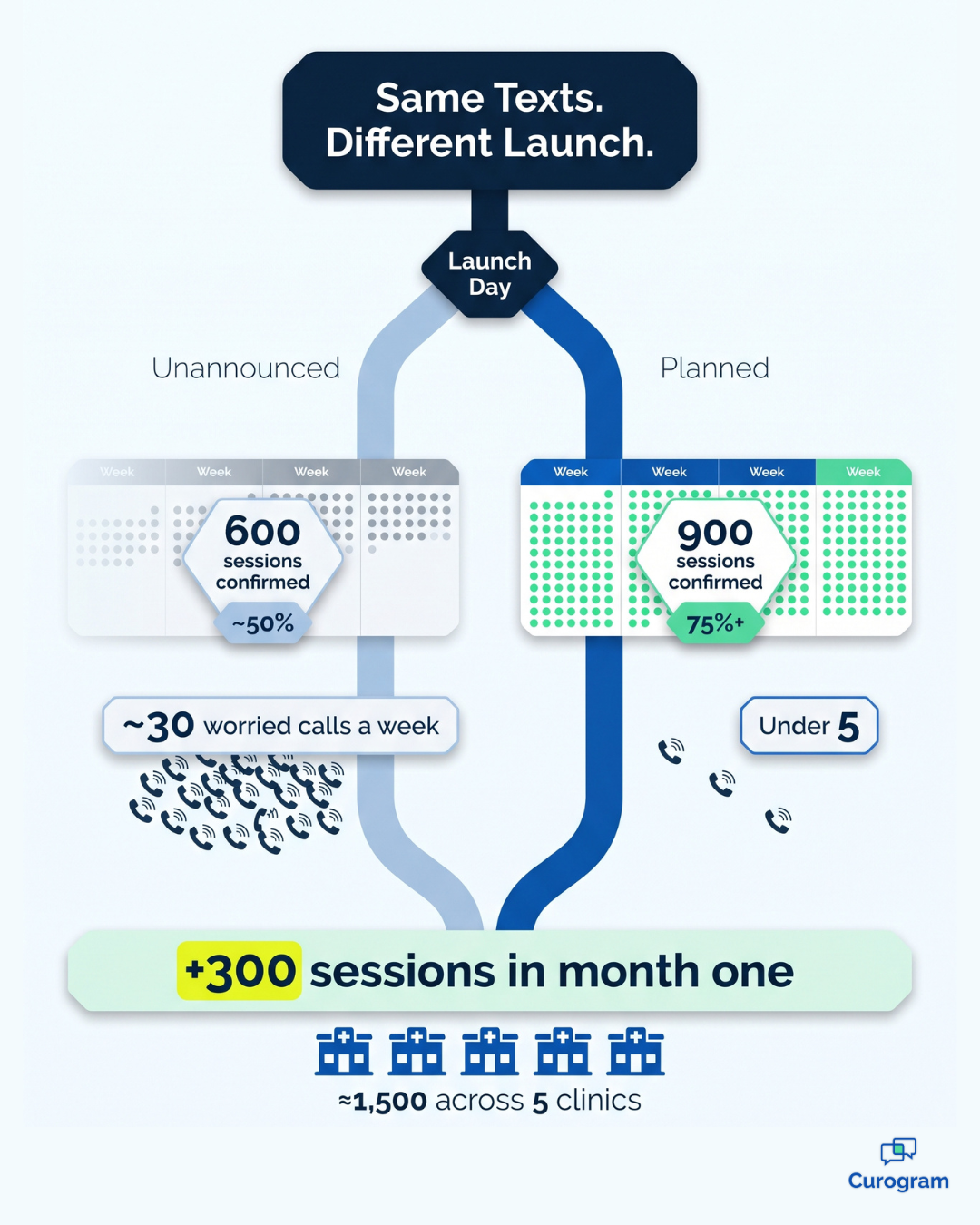
The table below shows an illustrative example for one clinic sending 300 reminders a week during launch month.
| Illustrative launch month (300 reminders per week) | Unannounced launch | Planned launch |
|---|---|---|
| Confirmation rate | About 50% | 75% or higher |
| Sessions confirmed per week | 150 | 225 |
| Sessions confirmed over 4 weeks | 600 | 900 |
| "Is this text real?" calls per week | About 30 | Fewer than 5 |
This means a planned launch could confirm 300 more sessions in the first month at a single clinic. Across five clinics, that's about 1,500 more confirmed sessions. For your team, it also means fewer anxious calls during the busiest weeks of the rollout.
The bigger change is how parents feel. The reaction shifts from "Who is texting about my child?" to "Oh good, the clinic texts now." That second reaction is exactly what the launch script is built to produce.

From week one, families confirm, coordinate, and reschedule by reply. Strong family adoption of text reminders also frees up phone lines. Curogram practices have seen call volume drop by 50%.
Those replies land in Curogram's Multi-Location Command Center, so each site's team sees its own families' messages from day one. Many parents even tell the front desk they wish every provider did this.
Launch Mistakes That Quietly Break Family Trust
Even a well-planned rollout can stumble on small details. Most problems come from inconsistency, not bad intentions. One clinic follows the script while another improvises, and families notice the difference.
These are the mistakes that cause the most confusion during launch month:
- Texting before telling. Reminders go out before staff mention the new channel at pickup. Parents meet the change cold, which is exactly how "The Unannounced Change" begins.
- Switching numbers. A clinic sends texts from a new or shared number instead of its familiar local line. Even a friendly message looks suspicious when the sender is unknown.
- Leading with a request. The first message asks parents to confirm, pay, or complete a form before it explains who is writing.
- Letting each site improvise. Every clinic writes its own wording, so a family that visits two locations hears two different stories.
- Skipping the opt-out line. Parents who can't see how to stop messages are more likely to ignore them entirely.
Each of these mistakes chips away at the trust your launch script is designed to build. Scam texts have taught many parents to pause before replying, so any detail that feels off gives them a reason to hold back.
The fix is simple, though it takes discipline. Before launch day, have each site manager review the same short checklist: script, signage, number, first text, and opt-out language.
When every clinic launches the same way, families get the same reassuring experience at whichever location they visit.
Make the First Hello the Habit at Every Clinic
Here's the simple truth about family texting: parents want it.
They already handle school updates, sports schedules, and pharmacy pickups by text. Getting them to use your channel is almost automatic, as long as the first impression is designed instead of left to chance.
The clinics that struggle usually aren't using worse tools. They simply skipped the introduction. A text about a child from an unfamiliar number will always raise concern, no matter how helpful it was meant to be.
So keep the roles clear. Ensora Fusion is for your record of consent and contact details. Curogram is for the family's first hello, sent from a number they already trust. When both systems do their jobs, launch week feels organized instead of stressful.
Start with one pickup sentence: "We text now, from this number. Save it." Then make that sentence a habit at every clinic for the entire launch month. Every staff member says it, every sign displays it, and every welcome folder repeats it.
That level of repetition might feel excessive. It isn't. Parents absorb a lot during a short pickup window, and the message needs to land more than once to stick.
The payoff arrives quickly. Families confirm sessions with a quick reply, and your front desk spends less time returning calls and more time with the families in front of them. The trust you build in month one carries into every reminder that follows.
You don't have to build the launch from scratch, either. Curogram's family launch kit includes first-text scripts, signage, and a consent flow, each ready to customize with every clinic's name, number, and local details.
Ready to see how it works? Schedule a demo to walk through the family launch kit and plan a rollout your families will trust from the very first message.