10 min read
Improve Patient Digital Form Experience at Elation Health Clinics
Mira Gwehn Revilla
:
May 22, 2026
- Forms arrive by SMS, with no app or portal login needed
- Patients complete intake from anywhere, on their own time
- All data is HIPAA-compliant and encrypted end-to-end
- Front desk staff get clean info ready for the visit
- Waiting rooms stay calm, with no clipboards in sight
A new patient walks into your clinic for the first time. They've heard great things, read the reviews, and chose your practice over five others. Then the front desk slides a clipboard across the counter with 14 pages of forms.
The mood shifts in seconds. The patient frowns, finds a seat, and starts hunting for their insurance card. By the time the provider walks in, the patient is already tired and a little annoyed.
This scene plays out every day across primary care and DPC clinics on Elation Health. The clinical care inside the exam room is excellent. But the patient digital form experience Elation Health mobile intake completion still starts with paper, pens, and small print.
Patients notice the gap. They live on their phones, bank on their phones, and book travel on their phones. When a medical practice asks them to handwrite their address in 2026, it feels out of step.
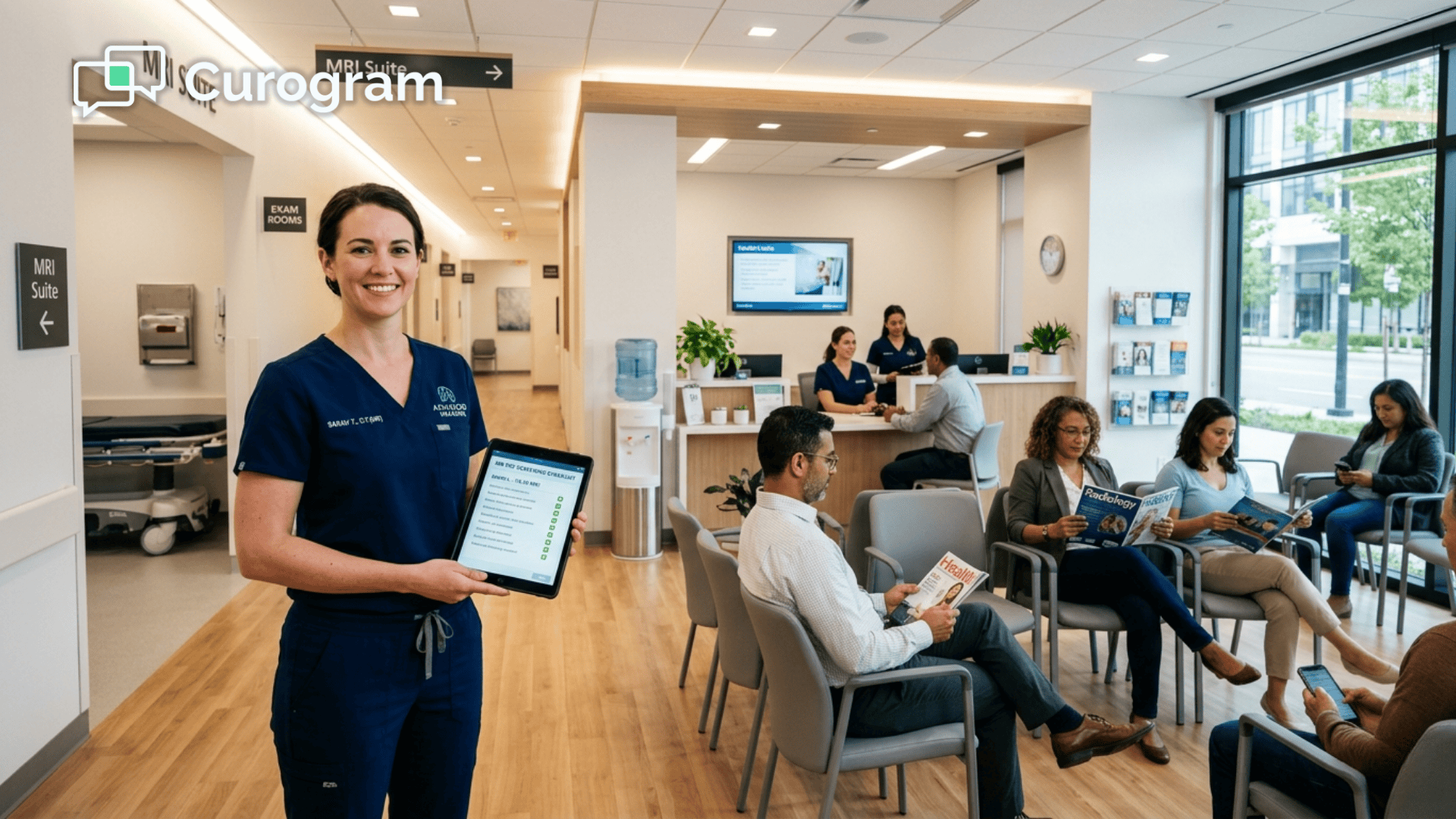
Patient-friendly intake forms fix this gap without changing your clinical workflow. Curogram sends forms by text the day before the visit. Patients tap the link, fill in their info from their couch, and arrive ready to be seen.
This article walks you through why the paper intake habit hurts your practice. We'll show how mobile form completion Elation works in real settings.
You'll also see what pre-visit digital forms patient experience looks like from the patient's side, and how this shapes Elation Health patient intake from start to finish.
By the end, you'll know how a smarter front-desk process can lift satisfaction scores, protect your DPC value, and free your staff to focus on the people in front of them. The clipboard had a long run. It's time to retire it.
The Villain: The Clipboard First Impression
Paper intake forms used to be the only option. Today, they are the weakest part of a new patient visit. They shape how patients feel before the provider even says hello.
The clipboard sends a message your practice didn't write. It tells the patient that the back office runs on habits from another decade. That message lingers long after the visit ends.
The Waiting Room Gauntlet
A new patient walks in with hope and a bit of nerves. They expect a healthcare experience that matches your reputation. Instead, they get a clipboard, a cheap pen, and a stack of forms.
They squint at small print and try to recall their mother's date of birth. They wonder why a clinic on Elation Health is asking them to handwrite the same info three times. The first impression is not the provider. It is the paperwork.
The Accessibility Barrier
Paper forms shut out large parts of your patient panel. Older patients struggle with tiny fonts and tight boxes. Patients with limited English have trouble with medical terms on paper.
Patients with arthritis or tremors can't grip a pen for long stretches. Parents with toddlers can't focus on 12 pages while a child climbs the chair. Paper does not bend for the people who need help the most.
The Time Theft
Most practices ask new patients to arrive 15 to 20 minutes early. That is not a courtesy. It is a tax on people who already rearranged their day to be there.
Patients who arrive on time still face the clipboard. They delay their own visit and push every other patient back. The schedule slips, the staff scrambles, and the practice ends up punishing punctuality.
The DPC Disconnect
For DPC practices charging $150 to $300 a month, the clipboard hurts even more. Members pay a premium for concierge-level service. They expect quick replies, short waits, and modern tools.
Handing a $250-per-month member a paper form sends the wrong signal. It says the membership covers the doctor but not the back office. That gap quietly chips away at the value story DPC practices work so hard to build.
What the Clipboard Really Costs
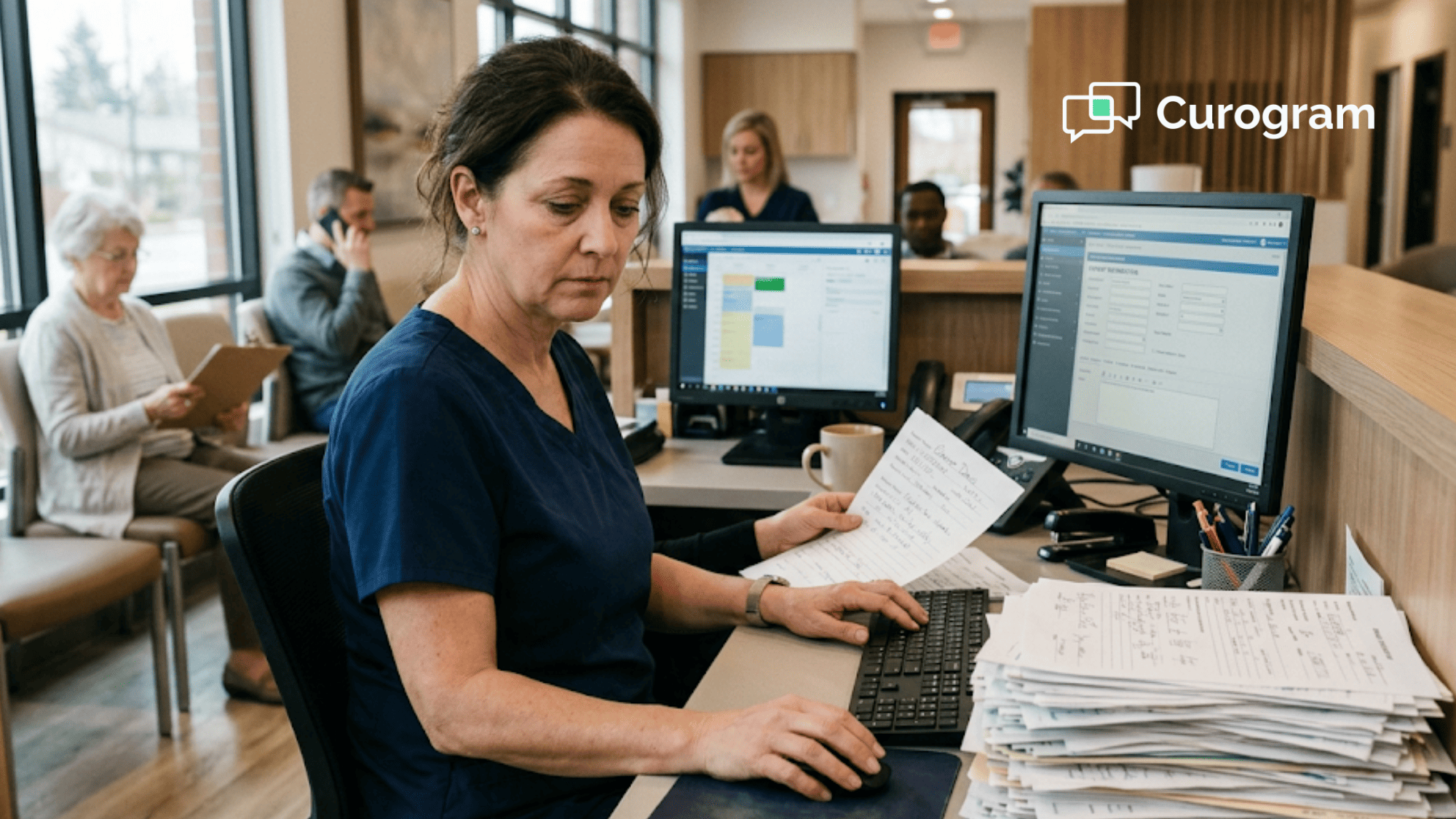
Think about a clinic that sees 20 new patients a week. If each one takes 12 extra minutes on paper intake, that is four hours of waiting room delay every week. The staff also re-types every field, which doubles the work and invites errors.
|
Hidden Cost |
Weekly Impact (20 new patients) |
|
Patient wait time added |
~4 hours |
|
Staff re-entry time |
~3.3 hours |
|
Paper, ink, and storage |
$30–$60 |
|
Risk of legibility errors |
High |
These numbers grow fast at the monthly and yearly level. The clipboard is not free. It just hides its bill.
The Guide: The Modern First Impression
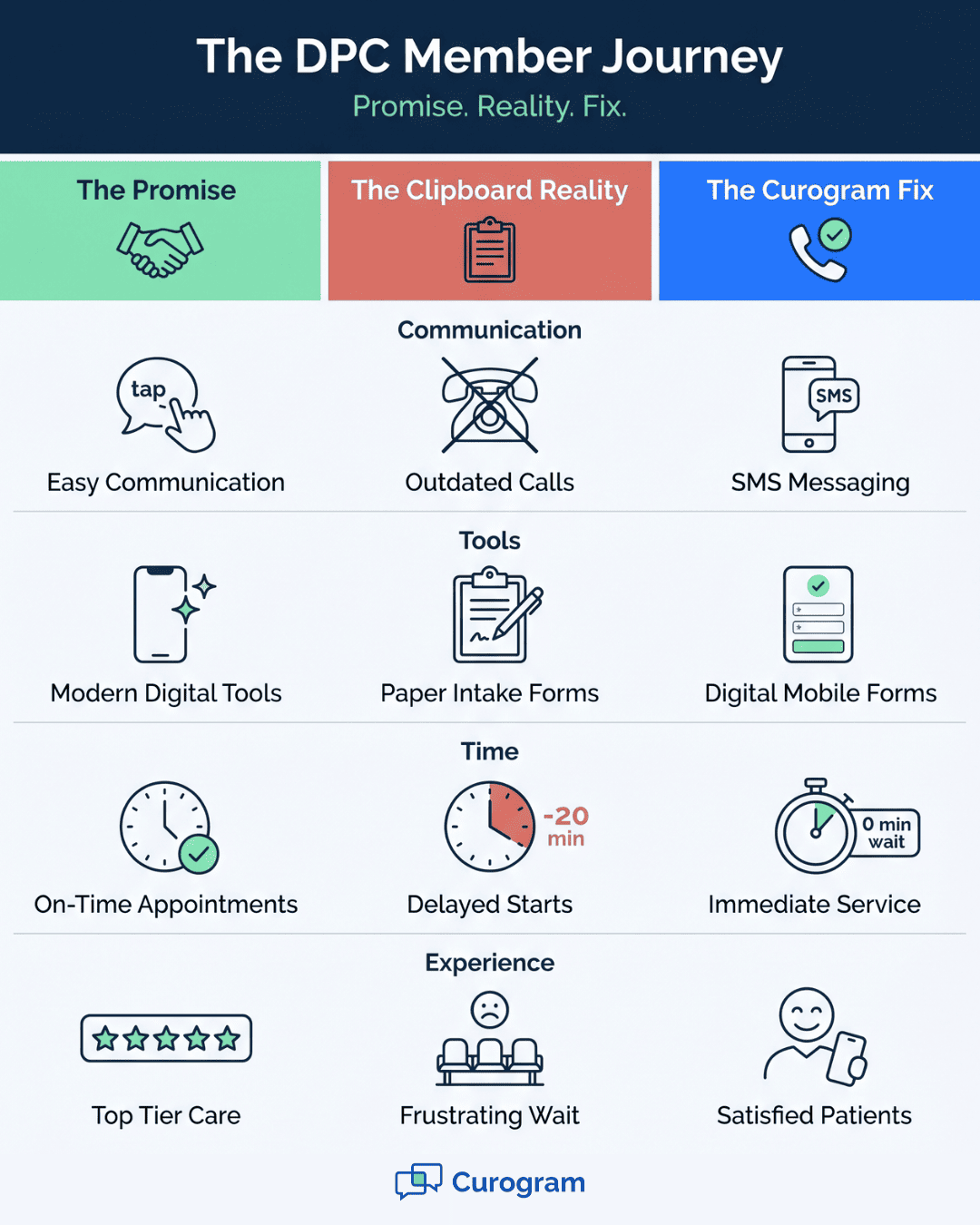
Curogram steps in as the Modern First Impression for Elation Health practices. It swaps the clipboard for a mobile form sent by text before the visit. The patient's first interaction is convenience, not paperwork.
The shift is simple in concept and large in impact. The same text channel patients trust for reminders now carries their intake. The whole experience feels like one smooth ribbon, not five different stops.
Couch-to-Clinic Completion
Curogram's mobile-friendly online forms arrive as a text link. The patient taps it and the form opens in their phone's browser. There is no app to install and no portal password to recover.
Patients fill out the form from their couch, their lunch break, or the school pickup line. Large fields and touch-friendly buttons make typing easy. Auto-fill works for things like address and email, which cuts the time in half.
A Unified SMS Experience
Forms ride on the same SMS channel patients already use with the practice. They get a reminder on Monday, confirm by text, then fill out intake on Tuesday. By Wednesday, they walk in having interacted three times without a single phone call.
This unity builds trust quickly. The patient never wonders which app to open or which portal to log into. The practice shows up on their phone the same way a friend would, which feels modern and respectful.
Built for Elation Health
The integration with Elation Health is the part that makes this practical for your team. Forms are mapped to Elation fields, so completed answers flow straight into the chart. There is no staff member re-typing the patient's medication list at 9 a.m.
Front-desk staff start the day with clean charts instead of stacks of paper. The provider walks into the room with the history already loaded. The visit starts with care, not catch-up.

The DPC Advantage
For DPC clinics, mobile intake is also a brand signal. A new member gets a warm welcome text, then a sleek mobile form, then a 20-second check-in. The whole journey feels like the concierge service they paid for.
This is the kind of detail that makes members renew. It also gives them a story to share with friends. Word of mouth in DPC is everything, and a smooth intake gives members something good to talk about.
The Channel Most Patients Already Use
Text is now the most reliable way to reach a patient. Adults check their phones over 100 times a day. Email open rates hover near 20%, while SMS open rates run above 90%.
That gap explains why portal-based forms fail so often. Patients forget the password, lose the link in their inbox, or never open the email at all. SMS lands in the place they already check, which is why patient-friendly intake forms work best when they ride on text.
A Tool That Respects Time
Curogram's design choices reward the patient for engaging. Forms remember progress, so a patient who stops halfway can pick up later. Drop-down menus replace long handwriting fields, and date pickers replace messy birthdate boxes.
These small choices add up to a faster, kinder experience. The patient feels heard before the visit even starts. That feeling is what turns a first-time patient into a long-term one.
The Success: The Seamless Arrival
The shift from clipboard to mobile changes more than the front desk. It changes how patients describe your practice to friends, family, and online reviewers. It also changes how your team feels at the end of a long day.
This section walks through the real numbers and the real human shifts. Both matter. One earns the deal, the other keeps it.
The Numbers Tell the Story
Based on our internal data, Atlas Medical Center cut their no-show rate from 14.20% to 4.91% in just three months with Curogram's reminder system. That's a 3X improvement compared to the industry average. The same engagement habit carries over to digital intake forms.
When practices send forms by SMS instead of email or portal, completion rates climb sharply. Many practices see 85% to 90% of patients fill out forms before they arrive. Portal-based forms often sit below 50%, since patients never log in.
From Waiting Room Writing to Walk-In Ready
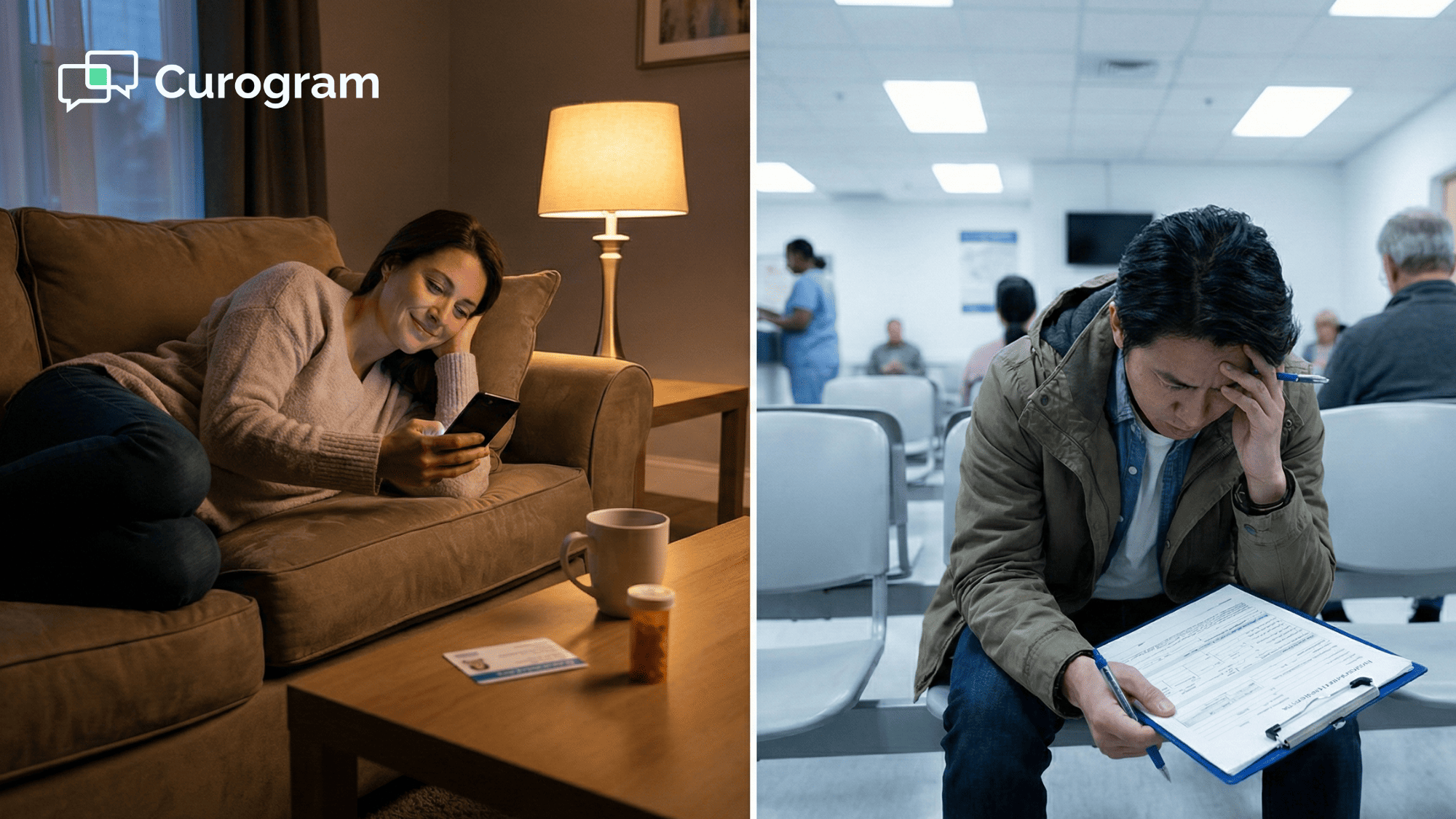
Picture the same new patient from earlier. This time, they got a text the night before with a friendly form link. They filled it out while watching Netflix and uploaded a photo of their insurance card.
They walk in the next morning, give their name, and sit down. Within three minutes, the medical assistant calls them back. There is no clipboard, no pen, and no wait for paperwork to be processed.
Real Operational Wins
Staff feel the change just as much as patients. Front-desk teams stop chasing pens and stop typing in handwriting they can't read. They have time to greet patients warmly and answer real questions.
The phone rings less because patients aren't calling to ask, "What forms do I need?" Curogram's brand data shows phone call volumes can drop by as much as 50% with 2-way texting in place. That alone gives back hours of staff time every week.
Cleaner Charts, Faster Visits
When intake info flows straight into Elation Health, the provider opens the chart with the work already done. Medication lists are spelled correctly. Allergies are listed in the right format. Past surgeries are documented in full.
This means more time for the conversation patients actually want. The provider can spend the first minute making eye contact, not scrolling. The quality of the visit goes up because the prep work was done well.
A Boost to Your Online Reputation
Patients who have a smooth first visit are far more likely to leave a 5-star review. Based on our internal research, one multi-location practice using Curogram saw 90% of patients leave 5-star reviews after their visit. That added 1,064 new 5-star reviews in just three months.
The intake experience is a big part of why those reviews happen. People remember how a place made them feel. A practice that respects their time earns goodwill that shows up in Google rankings.
Better Retention for DPC Members
DPC practices live and die by retention. A member who has a polished first visit is less likely to question their monthly fee. A member who fights a clipboard is more likely to drop the membership at renewal.
Mobile intake helps lock in the value perception from day one. It signals that the practice has invested in the whole experience, not just the exam room. That investment pays back many times over in renewal rates.
Less Staff Burnout
The clipboard hurts staff almost as much as it hurts patients. They handle paper, re-type fields, and answer the same five questions all day. Over time, this grinds down even the best team.
Mobile intake removes the grunt work. Staff get to spend their day on real problems and real people. They go home with energy left, which is the quiet reason practices that switch rarely look back.

Why Mobile Intake Wins for Modern Elation Health Practices
Mobile intake works because it meets patients where they already live. Curogram delivers forms through the same SMS channel that drives appointment confirmations, reminders, and 2-way messaging. Every touchpoint with the practice now rides on one trusted thread.
The platform was built with HIPAA compliance at its core. Forms are encrypted in transit and at rest, and access is gated by authenticated accounts. Audit trails track every view, which gives your practice protection that paper filing cabinets never could.
The Elation Health integration is the part that turns a nice idea into a daily win. Form fields map directly into the patient chart, so there is no double entry. Staff start each morning with charts that are already prepped for the day's visits.
For DPC and primary care practices, this matters at every level. Front-desk teams save hours each week. Providers walk into the room with clean info ready to read. Patients walk out feeling like the practice respected their time from the very first text.
Curogram also pairs intake forms with broader engagement tools. The same platform handles automated reminders, text-to-pay, post-visit surveys, and review requests. Each tool reinforces the others, which is how practices see compound gains across no-shows, collections, and online reputation.
Setup is fast. Most teams train on the platform in about 10 minutes. There is no long IT project, no months-long rollout, and no need to retrain your whole front-desk on a new system.
The result is a practice that feels modern from the patient's first interaction. The clipboard gives way to a phone screen. The waiting room calms down. The reviews start to mention how easy the visit felt.
That is the real promise of mobile form completion Elation: a smoother day for everyone in the building, including the people who never set foot inside. To see how it would feel from the patient's chair, book a demo and we'll send you a sample form by text.
Conclusion: Your Intake Process Is Your First Impression
The clipboard is not just an inconvenience. It is a quiet signal that tells patients what to expect from the rest of the visit. Replace it, and the whole tone of your practice shifts.
Mobile-friendly intake forms delivered by text turn a stressful start into a calm one. Patients arrive ready, staff start their day with clean charts, and providers spend more time on care. Elation Health gives you a strong clinical experience, and Curogram gives you a strong patient experience to match.
The numbers from our internal data make the case clear. Practices using Curogram see big drops in no-shows, faster check-ins, and more 5-star reviews. Each of those wins traces back to small choices like sending intake by SMS instead of paper.
Your intake process is the first thing patients experience and the last thing they forget. Every new visit is a chance to either confirm your reputation or quietly damage it. The clipboard sides with damage more often than practices realize.
The fix is not a giant project. It is a 10-minute training, a few mapped form fields, and a text channel your patients already trust. The lift in satisfaction and retention starts the very first week.
Show your members the concierge experience they're already paying for. Book a quick demo to see see Curogram's mobile intake live.
Frequently Asked Questions
Mobile forms are more secure than paper. Curogram encrypts data in transit and at rest, gates access with authenticated accounts, and keeps audit trails of every view. Paper forms can be lost, misfiled, or seen by the wrong staff, with no record either way.
Older patients text more than ever, and over 97% of U.S. adults own a cellphone. Curogram's forms use large fonts, big input fields, and simple layouts. If a patient needs help, staff can guide them on a practice tablet at check-in.
Patients can stop at any point and return to the same text link to pick up where they left off. This helps people who need to look up medication names or surgical dates. The form waits for the patient instead of forcing a one-sitting completion.
The completed answers flow straight into the patient's Elation Health chart through the integration. Staff don't re-type anything. The data is ready for the provider to review before the visit, which cuts prep time and reduces typing errors.
SMS open rates run above 90%, while email open rates sit near 20% and portals require a login. Patients see and act on text right away. That is why mobile form delivery often hits 85% to 90% completion before the visit.