Streamlining Digital Intake Workflows in Veradigm
💡 Digital intake workflow, along with Veradigm solutions, helps imaging centers eliminate delays and errors from paper-based processes. Patients...
10 min read
Jo Galvez
:
Updated on January 29, 2026
Picture your front desk at 8:45 AM. Three new patients stand at the counter. Each one holds a clipboard stacked with forms. Your staff member smiles but knows what comes next. Thirty minutes of typing data into Elation. Squinting at messy handwriting. Scanning insurance cards. Calling patients back to verify what they wrote.
This is the clipboard logjam. It happens every single day in small clinics.
Your team wastes hours each week on this task. Time that could go toward patient care. Time that costs your practice money. And the worst part? The errors that slip through. A wrong phone number. A missed drug allergy. Bad data that leads to denied claims or worse problems.
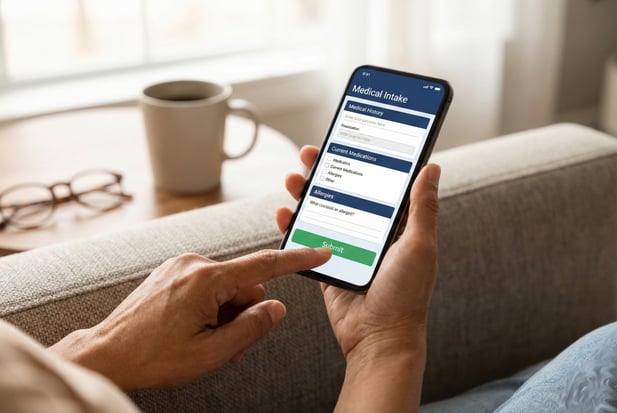
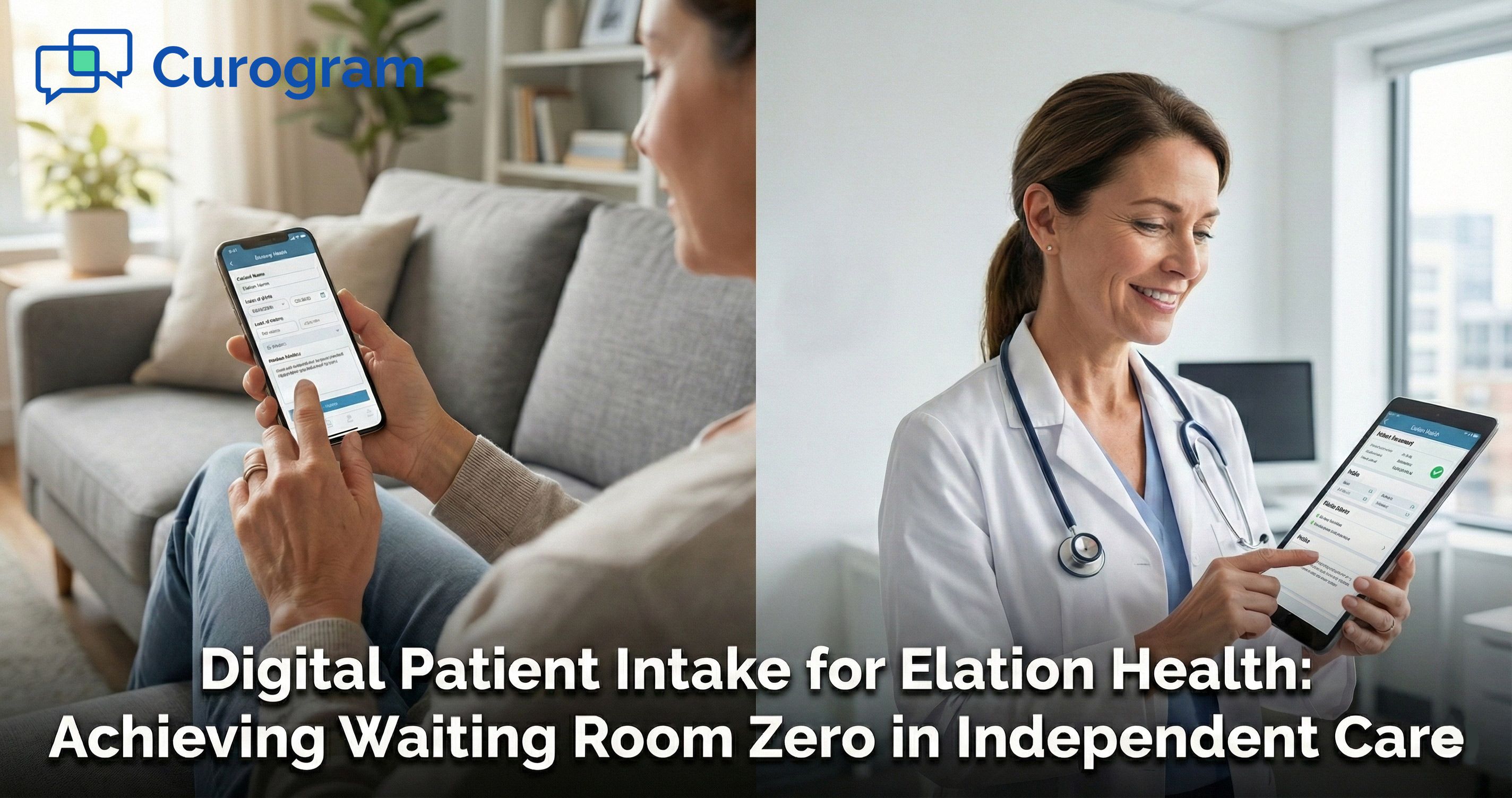
There is a better way. Elation Health digital intake forms change how your practice collects patient data. Instead of paper and pens, patients use their phones. They get a text message with a secure link. They fill out forms before they arrive. The answers flow right into your Elation EMR.
No typing. No scanning. No guessing at handwriting.
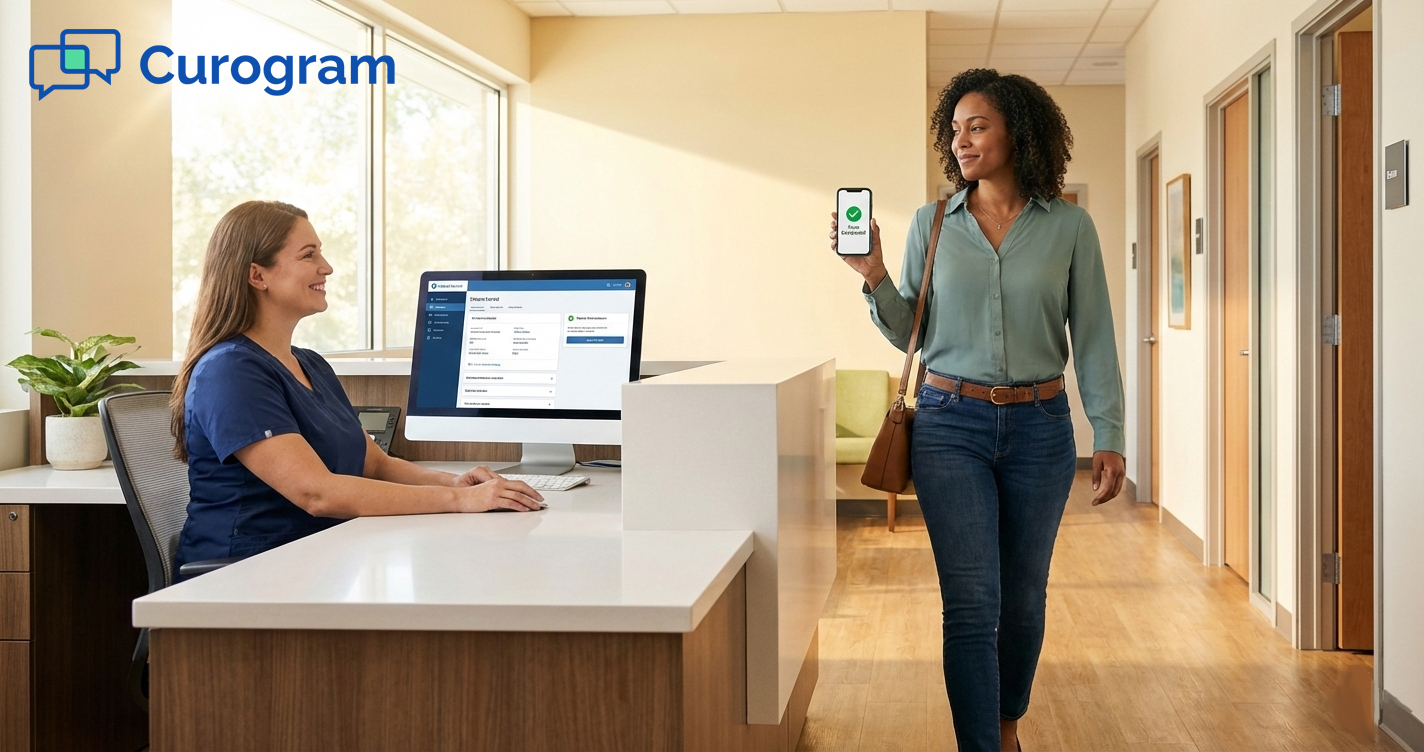
When patients walk through your door, their chart is ready. Staff can greet them and send them straight to the exam room. Your doctor opens a complete record. Every field is filled in. Every required question has an answer. The visit starts on time.
This approach is called specialty clinic workflow automation. It helps you reduce medical office paperwork without adding extra work for your team. The system runs in the background. It monitors your Elation schedule. It sends the right forms to the right patients at the right time.
The payoff is real. Practices that make this switch save 15 minutes per patient visit. Front desk staff get their time back. Doctors see more patients. Everyone feels less rushed. And your practice moves one step closer to becoming a truly paperless medical office.
Small clinics feel the pain of paper forms more than anyone else. You do not have large teams to handle the workload. Every minute spent on admin tasks is a minute lost on patient care. The clipboard logjam creates three big problems that hurt your practice every day.
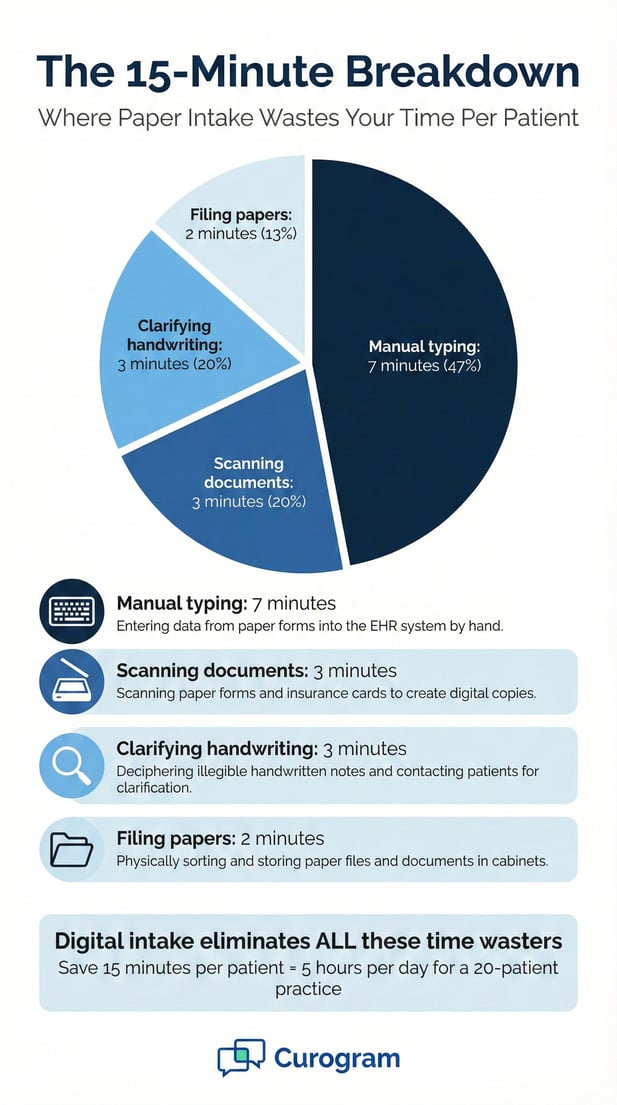
Your staff loses hours every week typing handwritten forms into Elation. A new patient fills out five pages of history. Someone at your front desk must read each line. Then they type it all into the computer. This takes 10 to 15 minutes per patient.
The work is boring and easy to mess up. Small mistakes happen when you type the same data all day. A wrong birthdate here. A misspelled drug name there. These errors create gaps in clinical data that can cause real problems later.
Think about what your team could do with that time instead. They could call patients who need follow-ups. They could prep charts for afternoon visits. They could actually talk to the people standing in front of them. But instead, they are stuck typing what someone already wrote down.
Every hour spent on data entry is money your practice does not make. If your staff person earns 20 dollars per hour, and they spend 10 hours a week on manual entry, that is 200 dollars gone. Over a year, that adds up to more than 10,000 dollars in labor costs for work that adds no value.
Paper does not just slow down data entry. It also creates physical clutter. Patients hand over insurance cards. Your staff makes copies or scans them. Then those copies need to be filed or attached to charts.
This is another low-value task that eats up time. The scanner jams. The copy is too dark to read. Someone forgot to scan the back of the card. Now you need to call the patient and ask them to come back or send a photo.
This back-and-forth frustrates everyone. Patients wonder why they have to show up early if the office is still not ready. Staff feel stressed because they are always behind. The whole process slows down how fast you can room patients.
Stacks of paper forms pile up on desks. Files get lost. Someone needs to organize everything at the end of the day. This creates more work and more chances for something to go missing. When everything is digital, there is nothing to lose or file away.
Here is the scariest part of paper forms. You cannot always read what patients write. They may have messy handwriting. They use abbreviations you do not understand. They skip questions or give vague answers.
When your staff types unclear data into Elation, they have to guess. Maybe they get it right. Maybe they do not. A wrong medication dose in the chart could lead to a serious error during treatment. A misspelled drug name might not trigger an allergy alert.
Even small mistakes hurt your practice. Insurance companies deny claims because the data does not match. You have to call patients to verify details. This wastes more time and delays payments. The whole system breaks down because it starts with bad information.
The solution is a workflow that fills your charts before patients arrive. When you connect Curogram to your Elation EMR, the system handles intake automatically. No one on your team needs to lift a finger. Patients do the work from home. The data lands in the right place every time.
This is what we mean by independent practice intake automation. The technology does the heavy lifting. Your staff gets time back. Patients get a smoother experience. Everyone wins.
Curogram watches your Elation schedule in real time. When a new patient books an appointment, the system knows. It sends a text message with a secure link to the intake forms. The message goes out automatically at the right time.
You can set when messages are sent. Some practices send links 48 hours before the visit. Others send them a week ahead. The choice is yours. The system follows your rules without anyone needing to remember.
This beats the old way by a mile. No one has to print forms and mail them. No one has to call patients and remind them to show up early. The text lands on their phone. They click the link. They fill out forms while sitting on their couch.
Many EMR systems have patient portals. But getting patients to use portals is hard. They forget passwords. They do not want to create accounts. The process has too many steps.
Curogram skips all that. Patients just click a link in a text. No login required. This is why completion rates hit 90% or higher. When something is easy, people actually do it.
Here is where the magic happens. Most digital form tools just create a PDF. Your staff still has to look at the PDF and type data into Elation. That is not automation. That is just digital paper.
Curogram works differently. The platform knows which fields in your forms match which fields in Elation Health. When a patient enters their medication list, that data populates the medication section of the chart. When they list allergies, those go straight to the allergy field. Everything maps correctly.
This is what we call Elation EMR data sync. The two systems talk to each other. Data flows from the patient's phone into the exact right spot in your EMR. No copying. No pasting. No human error.
When patients type their answers into specific fields, the data stays clean. Required fields must be filled out before the form can be submitted. This means no blank spots in your charts. No missing information that you have to chase down later.
The structure also helps with billing. Insurance companies want data in exact formats. When your digital intake forms collect information the right way from the start, you get fewer claim denials. Payments come faster. Your revenue cycle improves.
Patients do not need a scanner at home. They just use their phone camera. The form asks for a photo of their insurance card. They snap a picture of the front and back. They do the same with their driver's license.
Curogram uploads these images securely and attaches them to the Elation record. Your staff can view them right in the chart. No more asking patients to bring cards to the window. No more making copies. The images are already there, waiting for you.

When you eliminate the clipboard logjam, the benefits show up everywhere. Your staff feels less stress. Your patients move through the office faster. Your doctors spend more time on medicine and less time on paperwork. The whole practice runs more smoothly.
This is the goal every practice should aim for. Patients arrive at your office and walk straight to the exam room. No sitting in the lobby for 20 minutes filling out forms. No waiting while staff processes paperwork.
They already did their part at home. The chart is complete. Staff just needs to verify insurance and room the patient. The whole check-in process takes two minutes instead of fifteen.
This creates a concierge feel that patients love. They feel respected. They see that your practice values their time. Word spreads. Happy patients tell their friends and family. Your reputation improves without spending a dime on marketing.
Less Time in the Lobby
Think about the message you send when patients sit in your waiting room for half an hour. It says their time does not matter. It says your office is not organized. Even if that is not true, that is what they feel.
When patients spend less time waiting, they rate your practice higher. Satisfaction scores go up. Online reviews get better. Satisfied patients are more likely to keep their appointments and follow treatment plans.
Your doctor walks into the exam room. They glance at the chart on their computer. Every section is filled in. Medical history is complete. Current medications are listed. Allergies are flagged. Everything is ready.
Now the first five minutes of the visit can focus on the patient. The doctor asks about their main concern. They listen. They build a relationship. They do not waste time saying, "Let me just verify your medications real quick."
This is what medicine should feel like. The technology handles the data. The doctor handles the care. Patients notice the difference. They feel heard. They trust you more. The quality of care improves because there is time to actually provide it.
Doctors are expensive. When they spend time verifying basic patient data, that is a waste of their skills. They should diagnose and treat. That is what they trained for. That is what patients need.
By moving data collection to before the visit, you free up provider time. They see more patients in a day. Or they spend more time with each patient. Either way, the practice benefits. Revenue goes up, or quality goes up - often both.
Digital forms force patients to give complete answers. You can mark fields as required. If someone tries to skip a question, the form will not let them submit. This means your charts have fewer blank spots.
The data is also more accurate. Patients type instead of scribbling. The system can validate entries. For example, if someone enters a phone number, the form checks that it has the right number of digits. If it does not, the patient gets a message to fix it.
Clean data helps everywhere in your practice. Billing runs smoother. Clinical decisions are based on good information. Staff waste less time chasing down missing details. The whole operation becomes more reliable because it starts with better data.
We hear the same questions from practices every time we talk about digital intake. Let's address the big ones so you can see if this solution fits your clinic.
Does this replace the Elation portal?
No. Curogram and the Elation portal serve different purposes. The Elation portal is great for ongoing communication with existing patients. They can message your office. They can view test results. They can manage appointments.
But portals have low engagement for intake forms. Patients need to create accounts. They need to remember logins. The extra steps cause many people to just give up. That is why completion rates for portal-based intake often sit below 50%.
Curogram acts as a high-engagement front door for data collection. It bypasses all the login friction. Patients get a text. They click a link. They fill out forms. Done. This is why completion rates reach 90% or higher.
The two tools can work together. Use Curogram for intake to ensure you get complete data upfront. Use the portal for everything else. This gives you the best of both worlds.
People check text messages within minutes. Email and portal notifications can sit unread for days. When you send intake forms via text, patients respond quickly. This means the data is ready when they arrive. No last-minute scrambling at check-in.
Can we use our specific clinical questionnaires?
Yes. Curogram lets you build custom forms that match your practice's needs. If you run a cardiology clinic, you can ask heart-specific questions. If you focus on pediatrics, you can collect a child's health history.
You are not locked into generic templates. The platform is flexible. You design forms that gather exactly the data you need. Then you map those fields to the right spots in your Elation Health chart.
This is important for specialty practices. You have unique workflows. You need specific information from patients before visits. Generic intake forms miss what you really need. Custom forms ensure you collect the right data every time.
You do not need to be a tech expert to create forms. The interface is simple. You drag and drop fields. You write questions in plain language. You set which answers are required. The system handles the rest.
If you need help, Curogram support can build forms for you. They know what works. They have templates for common specialties. You can start with a template and tweak it to fit your exact needs.
How does the data look inside Elation?
This is the most important question. The data does not arrive as a blob of text. It does not come in as a PDF that you have to read. Each answer goes into the correct section of the Elation Health record.
Medication lists populate the medication section. Surgical history goes where it belongs. Insurance information fills the right fields. When your staff or doctor opens the chart, they see structured data in all the usual places.
This makes the data instantly useful. You can run reports. You can trigger alerts. You can trust that the information is where you expect it. The chart looks like someone on your team entered the data manually, but it happened automatically.
Your workflow in Elation does not change. You do not open a separate screen to view intake responses. Everything is just there, in the chart, ready to use. This means no training is necessary. Your team already knows how to use Elation. Now the data just shows up faster and more completely.

Making the switch to Elation Health digital intake forms is easier than you think. You do not need to overhaul your whole practice. You do not need new computers or devices. You just need to connect Curogram to your Elation EMR and turn on the feature.
Most practices go live in less than a week. Support staff helps you build your intake forms. They help you set up the schedule monitoring. They make sure data maps correctly. Then you test it with a few patients before rolling it out to everyone.
The cost is low compared to the time you save. Remember, 15 minutes per patient adds up fast. If you see 20 patients a day, that is 5 hours of staff time saved. Over a month, that is 100 hours. Over a year, that is more than 1,200 hours back.
Your staff can use that time for higher-value work. They can focus on patient care. They can handle billing issues. They can do the tasks that actually help your practice grow. Manual data entry helps no one.
Going paperless also reduces your environmental impact. No more printing hundreds of forms every month. No more filing cabinets full of old paperwork. Everything lives securely in your EMR where it belongs.
Many practices link their digital intake to other automated workflows. For example, you can set up automated appointment reminders through the same system. Patients get texts about upcoming visits. They can confirm or reschedule with a quick reply. This reduces no-shows and keeps your schedule full.
The shift to a paperless medical office is not just about technology. It is about giving your team better tools. It is about respecting patients' time. It is about building a practice that runs efficiently so you can focus on what really matters: providing excellent care.
Schedule a Quick Demo today to see how Elation Health digital intake forms can eliminate your manual data entry and help your team focus on high-touch clinical care.
💡 Digital intake workflow, along with Veradigm solutions, helps imaging centers eliminate delays and errors from paper-based processes. Patients...
💡 Independent practices can achieve digital patient intake for Elation Health by using Curogram to automate the collection of history, consents,...
💡 Online patient forms in Veradigm enable imaging centers to transition away from paper-based intake that causes delays and errors. Patients...