
Easy Telemedicine for eCW Practices | No App Needed
💡 Easy telemedicine for eClinicalWorks practices with no app download starts by trading the download-and-login barrier for a single text link....
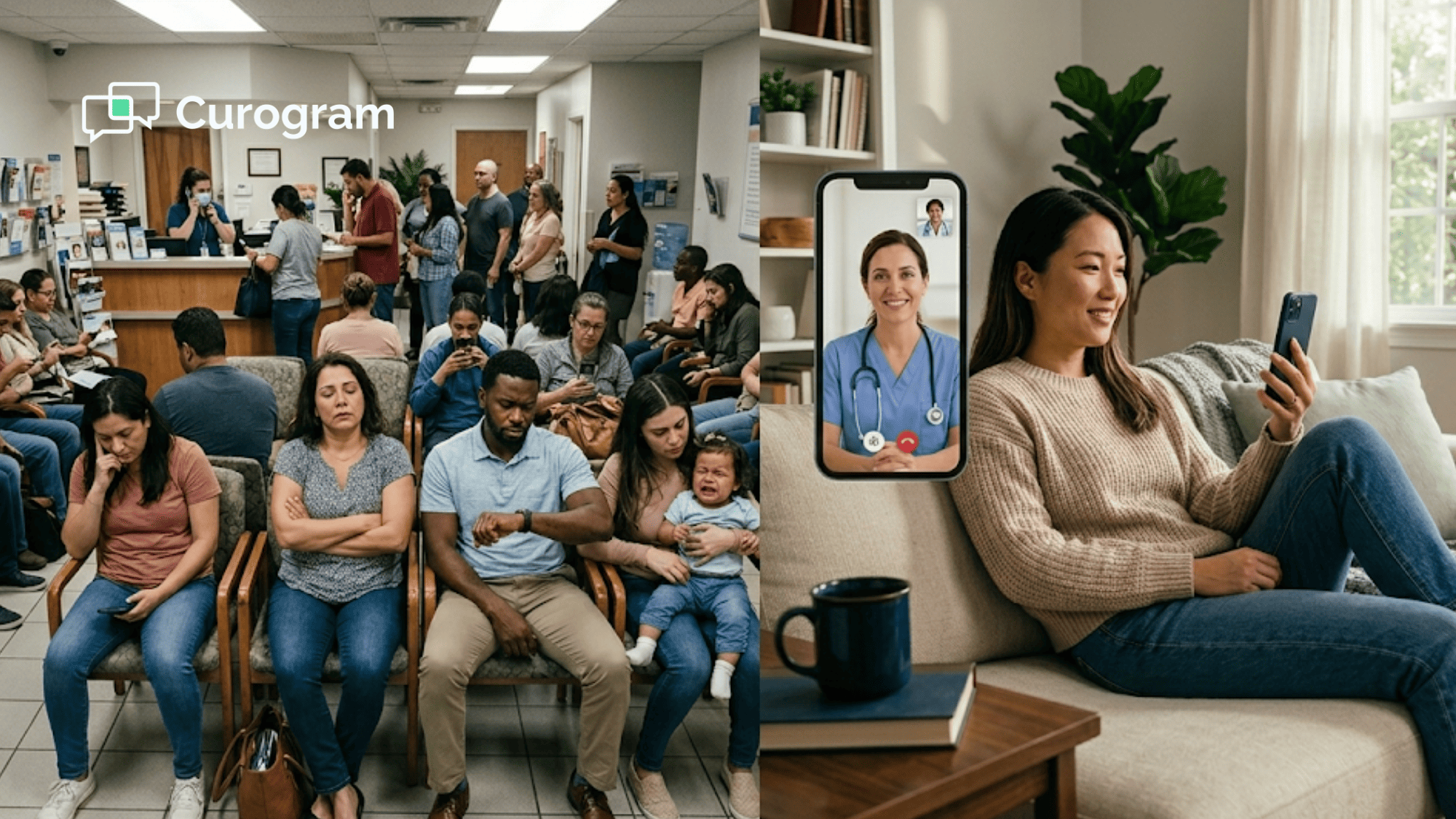
A five-minute medication check does not need an exam room. Yet in most practices running eClinicalWorks, that is exactly what it gets — a full room, a same-day slot, and a patient who drove across town for a two-question conversation.
It sounds like a small thing. It isn't.
Every one of those visits ties up space a sicker patient needed. The room gets used, the slot gets burned, and nobody in the building notices, because it all looks like a normal day.
That is the quiet problem hiding inside a busy schedule.
You feel it most in the afternoon. The day is packed, yet half of what filled it never needed to happen in person. A results review, a chronic-disease touch-base, a quick check that a medication is working — none of them required hands on a patient, and all of them cost you a room.
Here is the part that stings.
While that room sits busy with a no-exam visit, a new patient who genuinely needed to be seen could not get a slot. Your capacity did not shrink. You simply spent it in the wrong place, on the wrong kind of visit.
Most providers already sense there is a better way to run these visits. The hesitation is rarely about video itself. It is the fear that going virtual means bolting a clunky new system onto an already full schedule.
That fear is fair. It is also solvable.
Virtual follow-up visits for eClinicalWorks providers fix this without touching your clinical workflow. The provider sends a text link, the patient joins from a browser, and eClinicalWorks stays exactly where it is.
Here is how that works, what it gives back, and why it never adds a single click to your entire day.
That wasted exam room is worth naming, because it hides in plain sight. eClinicalWorks treats every visit the same, so a follow-up that needs no exam still books a room and a slot as if it were a full workup. The "wasted exam room" becomes a quiet tax on your whole schedule.
Think about what that patient actually does.
They drive in, sit in the waiting room, get roomed, and wait again — all for a touch-base the provider could have closed in five minutes over video.
Meanwhile, a new patient who needed that slot could not get one.
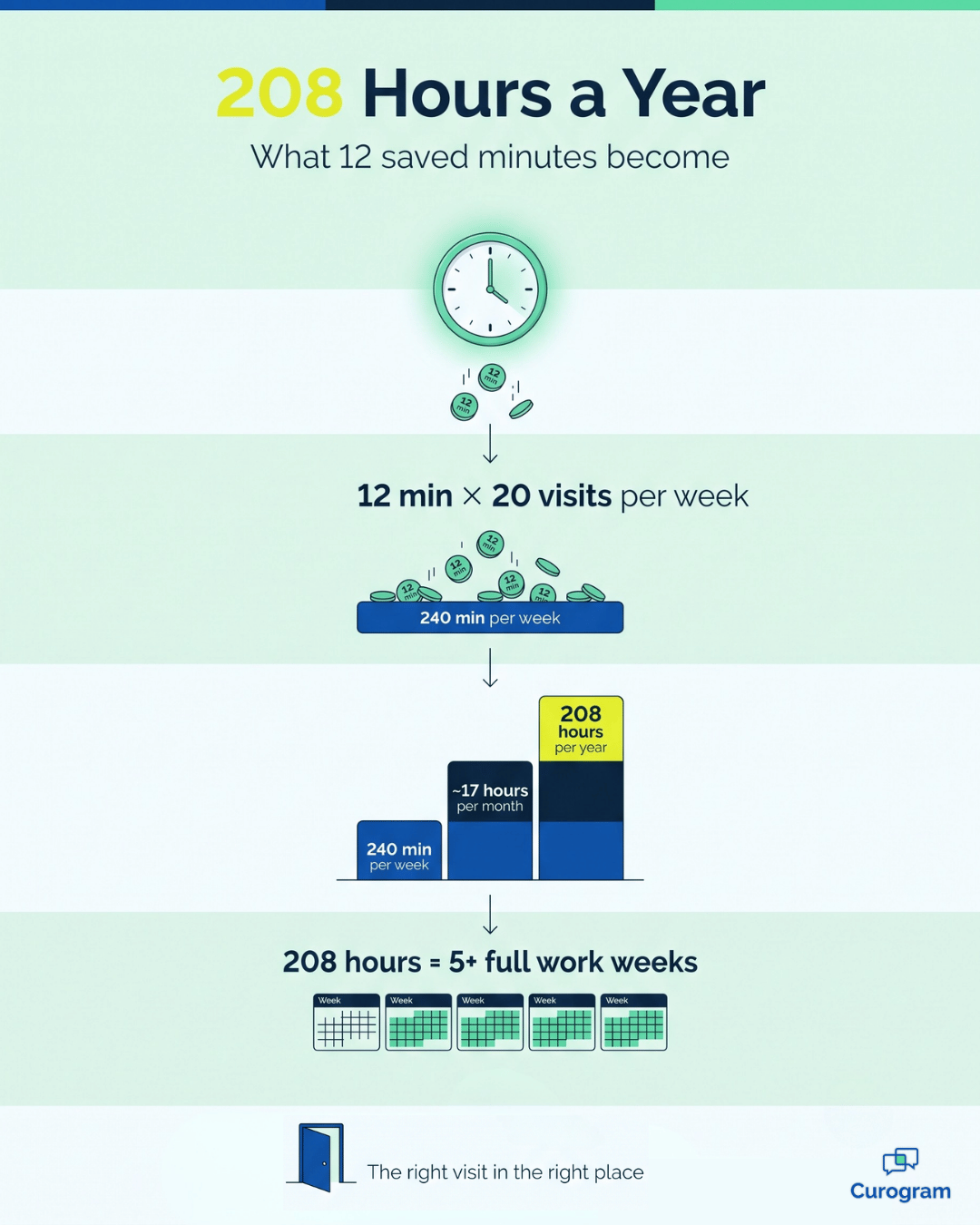
That trade adds up faster than it looks. Providers lose an estimated 10 to 15 minutes of overhead per encounter — rooming, charting logistics, hallway walking — on visits that never required a physical exam.
Here is what that costs in plain terms.
| No-exam follow-ups per week | Overhead minutes lost (at 12 min each) | Hours lost per year |
|---|---|---|
| 10 | 120 min/week | ~104 hours |
| 20 | 240 min/week | ~208 hours |
| 30 | 360 min/week | ~312 hours |
For a provider clearing 20 no-exam follow-ups a week, that is roughly 208 hours a year — more than five full work weeks — spent on overhead a video call would trim.
Exam-room capacity is the real bottleneck. It decides how many patients your practice can see in a day, and no-exam visits are eating into it.
Clinical leaders feel this every afternoon. The day clogs with visits that did not need to be in person, and the same-day slots that could have gone to sicker patients quietly disappear.
None of this means those follow-ups should stop happening. It means they belong somewhere other than a room. The fix is not a new way of working — just a better place to put the right visits.

Curogram acts like a virtual front-desk assistant. It lets providers handle no-exam follow-ups by video — simply, and right alongside eClinicalWorks.
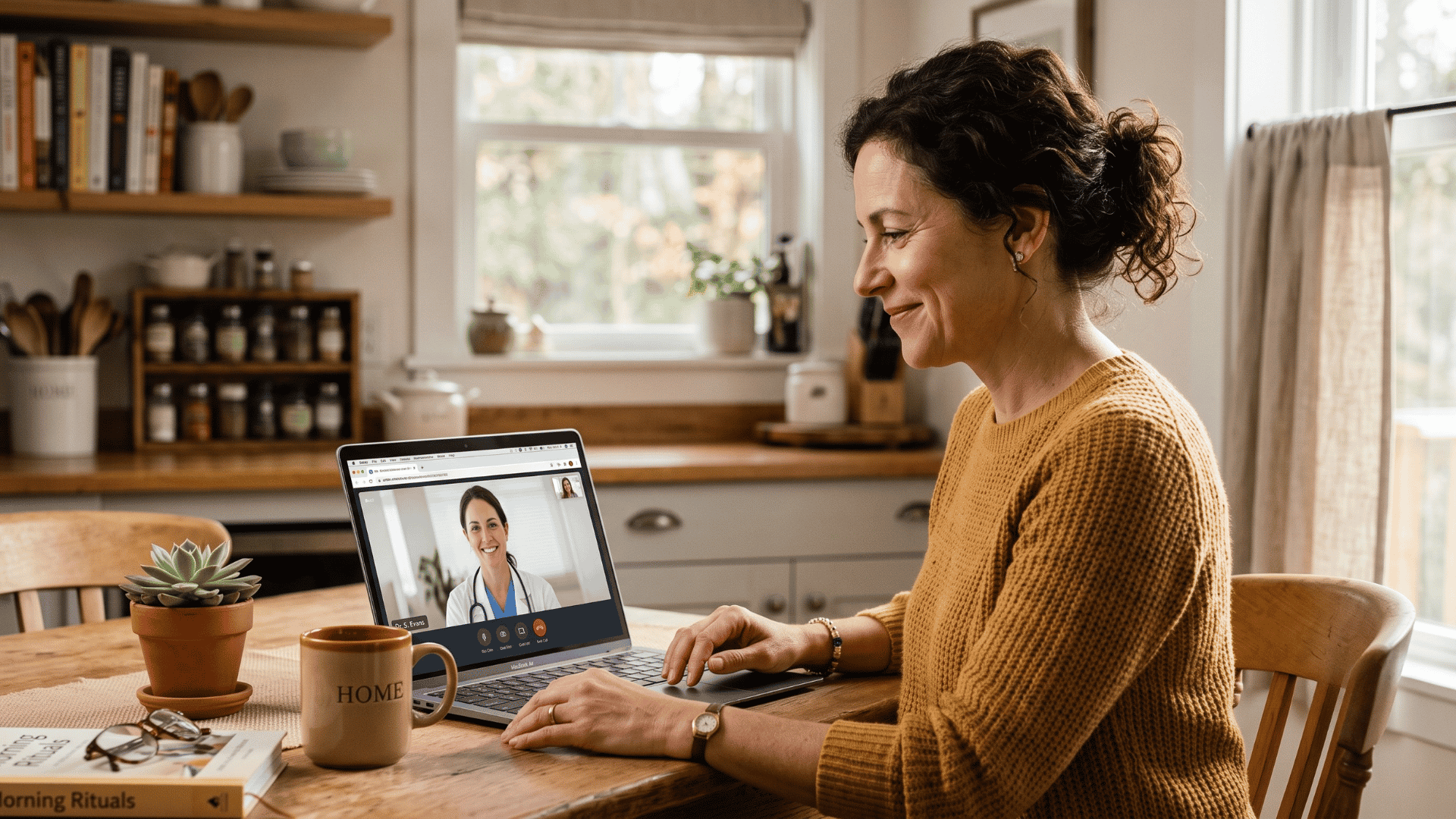
The feature is called Easy Telemedicine. The provider triggers a video visit by text link in seconds, and the patient joins from a browser. There is no app to install and nothing to update mid-clinic.
That last part matters more than it sounds. The download-and-login step is where most telehealth visits fall apart, and removing it removes the failure point.
Video runs on the same platform that already sends your texts and reminders.
No separate login. No new workflow to learn.
This is the whole key to provider buy-in. A no-exam follow-up video visit in eCW should feel like one more thing your existing tools already do, not a second system your team has to fight.
eClinicalWorks stays your clinical system of record. Curogram simply handles access — the part that gets the right patient onto the screen. Nothing about your charting changes.

The provider workflow for telehealth in eClinicalWorks looks different across specialties,
And Easy Telemedicine flexes to fit each one:
The pattern holds across all three. The provider decides a visit fits video, sends a link, and the patient is on-screen in seconds — no clicks added to the clinical flow.
Every no-exam follow-up you move to video hands three things back to your practice at once. It frees an exam room. It opens a same-day slot. And it trims the overhead minutes that pile up across a full day.
The shift is easy to picture. Your schedule moves from "the wasted exam room" to "the right visit in the right place," with in-person rooms reserved for the patients who genuinely need one.
Here is what that looks like when you save provider time with telehealth in eCW across a typical week.
Same-day slots reclaimed: Moving 20 eClinicalWorks follow-up visits to video frees 20 slots a week. Fill even 60% of them with patients who needed to be seen, and that is 12 added visits weekly — around 576 a year.
Overhead hours returned: At roughly 12 minutes saved per moved visit, 20 visits a week gives a provider back about 208 hours a year to spend on clinical work instead of logistics.
Revenue you can model: If those 12 reclaimed weekly slots each average $120 in reimbursement, that is about $1,440 a week — close to $69,000 a year in capacity you already had but could not use.
These are sample numbers, not a promise. Your reimbursement, no-show rate, and visit mix will shift the math. But the direction never changes.
When you free up an exam room with eCW telemedicine, you do not just save minutes. You let the practice see more patients per day in eClinicalWorks without adding a single room, and you grow capacity you were quietly throwing away.
A visit that needs no exam should not need an exam room. It should not need an app, a download, or a stack of extra clicks either.
That is the quiet insight your schedule has been waiting for. eClinicalWorks is built for your clinical record. Curogram is built for your patient's access. Together, they let providers see the right patients in the right setting.
You already own the capacity. It is just trapped inside no-exam visits that tie up rooms and slots they never needed.
The math is hard to argue with. Move 20 follow-ups to video each week, and you can reclaim roughly 208 hours a year and hundreds of same-day slots — capacity you paid for but could not reach.
None of this asks your providers to work harder or learn a clunky new system. Launching a virtual follow-up visit for your eClinicalWorks providers takes seconds. The patient joins from a browser. eClinicalWorks stays exactly where it is, running your clinical record like always.
Setup takes about five minutes. There is no IT department to loop in and no disruption to your eCW workflow. Video simply starts living on the same platform your team already uses for texts and reminders.
So stop spending exam-room capacity on visits that could happen by video. Every single wasted room is a patient who could not get a slot, and an hour your provider will never get back.
The right visit in the right place is not a bigger practice. It is the practice you already have, used the way it should be.
See how a provider launches an eClinicalWorks follow-up by video in seconds — without leaving the flow of their day.
Book Your eCW Integration Demo and watch it work in your own workflow.
No. Launching a visit is as simple as sending a text link, and it lives on the same platform your team already uses for texts and reminders. It is designed to remove steps from the day, not add a new system for providers to fight.
That is always the provider's clinical call. Typically it is follow-ups that need no physical exam — medication checks, results reviews, chronic-disease touch-bases, and behavioral-health sessions. Curogram simply makes those visits easy to run once the provider decides video fits.
The patient joins from a browser with no app to install or update, so the most common point of failure — the download-and-login step — is removed entirely. Fewer moving parts on the patient's side means fewer visits that fall apart before they start.
No. eClinicalWorks stays your clinical system of record, and Curogram sits on top of it to handle patient access and the video link. Your charting and clinical workflow do not change.
Setup runs about five minutes with no IT department required. Because video lives on the same platform already sending your texts and reminders, there is no separate login and no new workflow to roll out to your team.
💡 Easy telemedicine for eClinicalWorks practices with no app download starts by trading the download-and-login barrier for a single text link....
💡 Athenahealth telemedicine powered by Curogram's Virtual Front Door lets urgent care clinics triage patients by video before they walk in — all...
💡 Telemedicine with CharmHealth integration without extra add-on fees lets your practice run video visits from the same platform that already...