
Reduce Front Desk Phone Calls at Meditab IMS | Two-Way Texting
💡 Two-way HIPAA-compliant texting for Meditab IMS practices lets your front desk hold real-time SMS conversations with patients alongside your IMS...
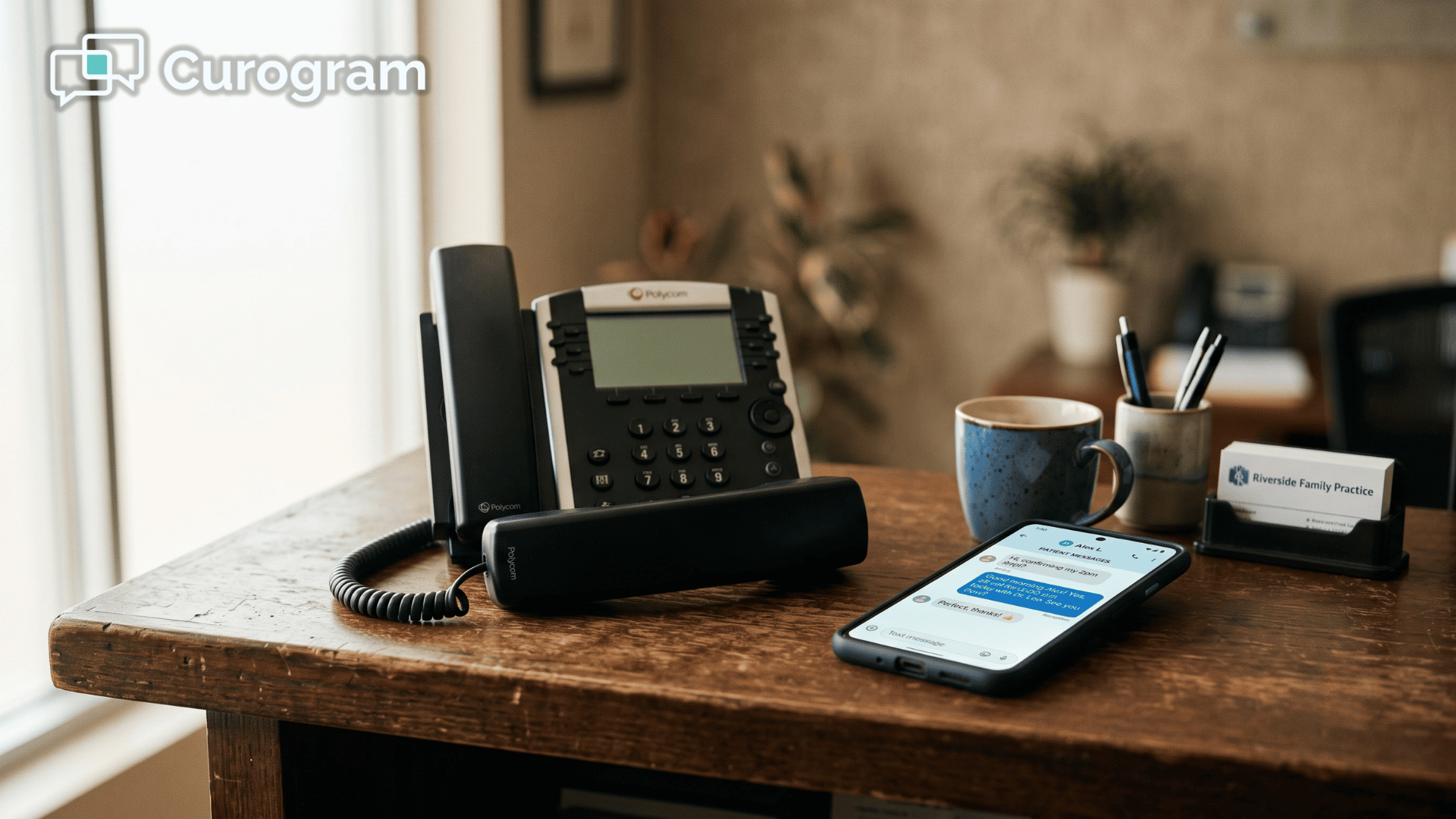
Imagine this. A patient calls your front desk with a simple question about a refill.
No one is free to pick up, so the call rolls to voicemail. Twenty minutes later, your staffer calls back — and now the patient is the one who can't talk. The message bounces again, and nobody actually gets an answer.
It sounds small. It isn't.
Multiply that single call by a hundred, and your whole morning disappears into a game nobody wanted to play. It's called phone tag, and it quietly drains hours your team will never get back.
Here's the frustrating part.
eClinicalWorks handles your charts, scheduling, and billing beautifully, but it was never built to stop the phone from ringing. So every refill check, every appointment confirmation, and every billing question turns into one more call stacked in the queue.
For a busy primary care, pediatric, or behavioral-health office, that queue grows fast. A front desk fielding 80 to 120 calls a day can lose 4 to 8 hours to the phone alone. For your team, that's a full-time role's worth of time spent on hold music instead of helping the patient at the window.
There's a better way to run the front office — and it doesn't mean hiring anyone new.
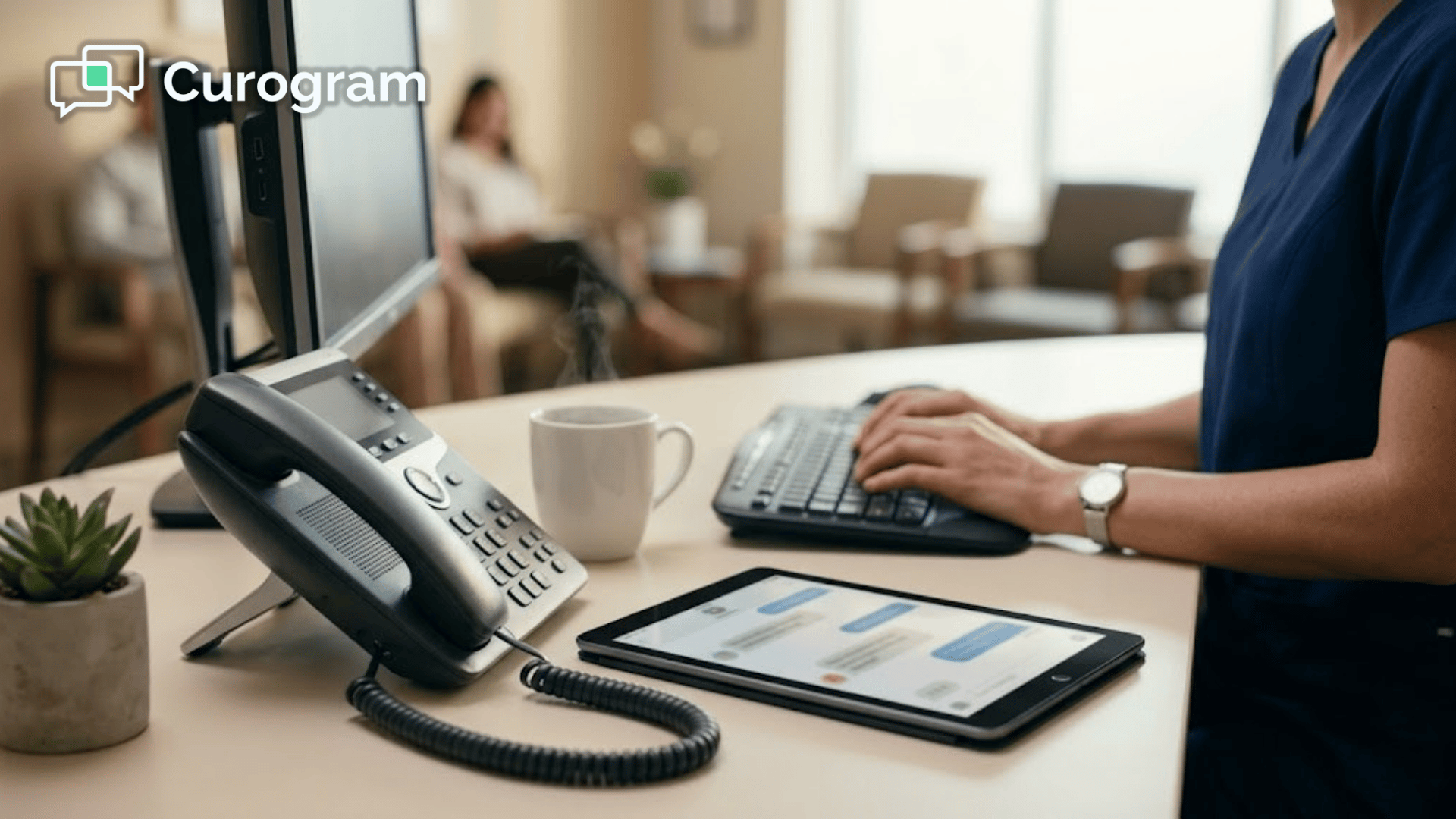
A patient texting workflow for eClinicalWorks front-desk staff swaps those endless callbacks for a single shared inbox. Your team answers routine questions by text, on their own schedule and right beside the chart, so patients get faster replies while staff stop chasing voicemails.
Think of it as a virtual front-desk assistant that quietly handles the routine, repetitive conversations, so your people can focus on real patient care.
Below, you'll see how phone tag drains your day, why the usual fixes fall short, and how texting hands your front desk its time back.
eClinicalWorks keeps your charts in perfect order. It does not stop the phone from ringing.
So every routine question turns into a call. Every missed call turns into a voicemail. Every voicemail turns into a callback. The loop never really closes.
Here's how it plays out. A staffer calls a patient about a refill, but the patient is at work and can't pick up, so your staffer leaves a voicemail. The patient calls back during the lunch rush, when no one is free.
Multiply that by a hundred, and the whole morning is gone.
That loop has a name:
Phone tag. It's the invisible workload that quietly eats 4 to 8 hours a day.
Any honest look at how to reduce front desk phone tag in eCW has to start with what it actually costs you.
| The daily reality | The math | What it means for your team |
|---|---|---|
| Inbound calls per day | 80–120 calls | A nonstop queue from open to close |
| Time per call | 3–5 minutes each | Small alone, brutal in bulk |
| Total phone time | 4–8 hours a day | Roughly one full-time employee (FTE) |
| Staff turnover | $3,000–$7,000 per hire | A cost that repeats when people quit |
Read that bottom row again. Phone tag isn't just a time problem — it's a people problem. It's one of the top reasons front-desk staff burn out and walk, and every exit restarts a hiring cycle that can run $3,000 to $7,000.
In practice, that means real front desk burnout solutions for eCW practices can't just add another person to the phones. They have to remove the calls.
And the human cost shows up everywhere. The desk is always behind. The office manager is always apologizing for hold times. Good people leave for jobs that don't feel like an endless game of catch-up.

The fix isn't a bigger phone system. It's a way to move routine conversations off the phone entirely.
Curogram acts as a virtual front-desk assistant. It absorbs the repetitive, low-stakes conversations so your team can focus on the patients in the building.
A shared texting inbox for medical front desk teams turns scattered calls into a single, organized queue. Every thread is tied to a patient, can be assigned to the right person, and gets resolved on your staff's schedule instead of the phone's.
That's the shift. Your team stops reacting to whoever rings next and starts working a clean list.
Two-way texting runs on your practice's existing number. There's nothing new for patients to download or learn — they just get a text back where they expected a phone call.
Among the simplest eClinicalWorks front desk workflow tips: give patients a reply they can read on their own time, and most routine calls simply stop coming in.

Curogram works alongside eClinicalWorks rather than replacing it. Your staff still chart and schedule in eCW. They just stop fielding the calls that never needed a voice.
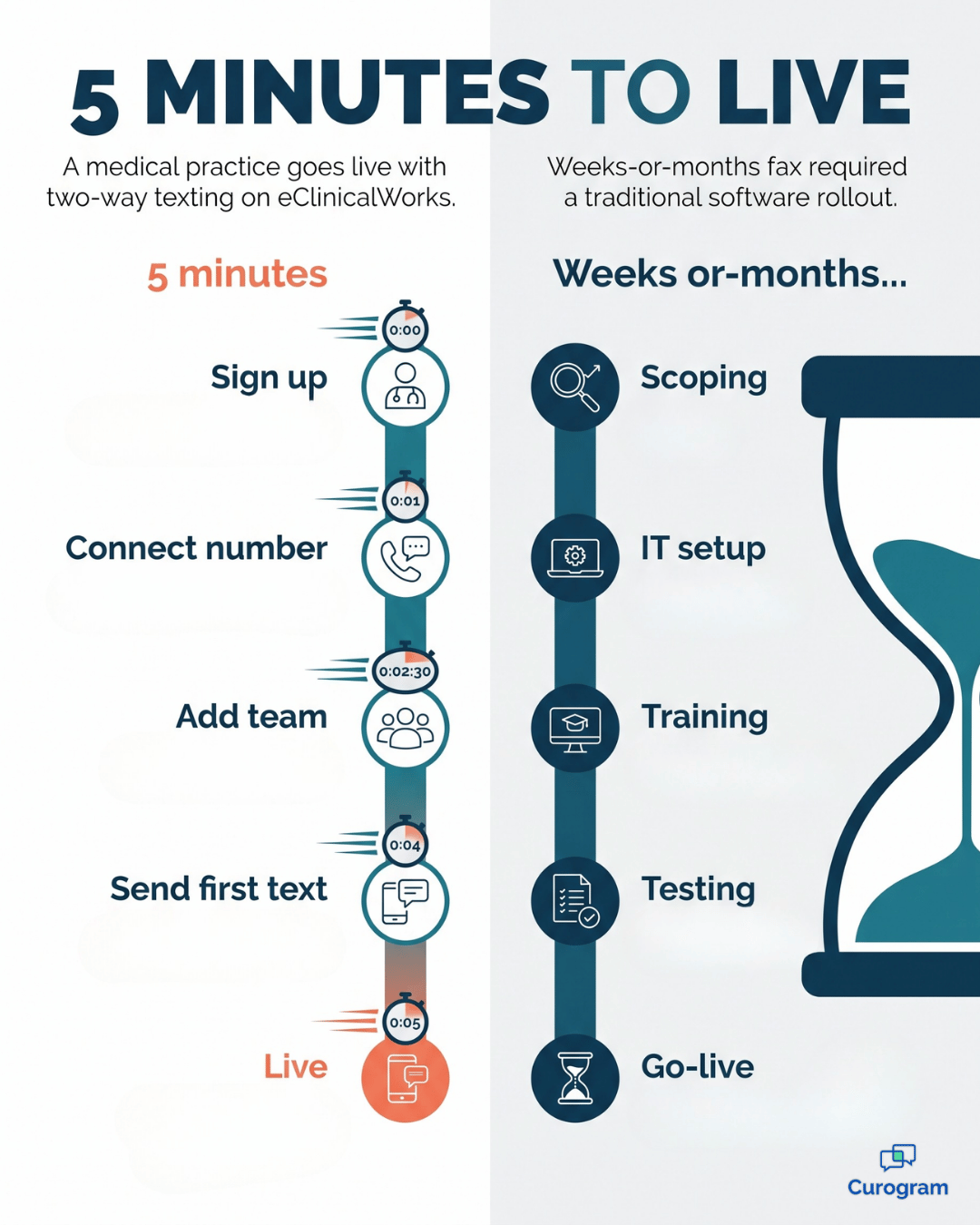
Training takes about five minutes, and there's no IT department required. These are texting tools an eCW office manager can actually roll out before lunch, not a six-month software project.
The same inbox flexes to your patients.
A pediatric desk batches well-child and vaccine questions between rushes.
A behavioral-health coordinator answers scheduling texts discreetly, with no phone conversation at all.
An internal-medicine team clears refill-status texts in minutes instead of an afternoon of callbacks.
Take the calls off the phone, and the whole day changes shape. The numbers back it up.
A multi-site community health center reduced phone-call volume by 24% after switching to two-way texting. Many practices go further, cutting routine call volume by up to 50% and recovering hours of staff time daily.
Here's what that looks like when you cut call volume for eCW staff on a typical desk:
For your team, that's not a rounding error. It's an entire workday each week freed up for the patients standing in front of you.
The change is more than a number, though. It's a change in the job itself.
Staff move from "answering machines" to "patient coordinators." One approved Curogram client described it exactly that way after going live — the front desk now spends its time on higher-value interactions instead of the phone.
Voicemails stop piling up. The hold queue shrinks. The desk ends the day caught up instead of buried, with real breathing room to help the patient at the window.
The relief your front desk needs isn't another headcount. It's a texting workflow that finally ends phone tag for good.
Think about everything that shifts.
No more measuring the morning in voicemails, no more apologizing for hold times, and no more losing good people to a job that feels like an endless game of catch-up.
The logic behind it is refreshingly straightforward. eClinicalWorks is built for your clinical work, while Curogram is built for their questions. Together, they let your staff stop chasing calls and start coordinating care.
The math is just as convincing. When a busy desk hands back 3 to 4 hours a day and up to 16 hours a week, you're recovering close to a full-time role's worth of time — without adding a single hire or restarting a $3,000 to $7,000 hiring cycle.
Your team already knows how to text, and that's the quiet advantage here. There's no steep learning curve, no new number for patients to memorize, and no disruption to the eCW workflows they depend on every single day. Setup takes about five minutes, and the call volume starts dropping almost immediately afterward.
Now fast-forward a month. The phone rings less, the inbox stays organized, and staff answer routine questions between patients instead of drowning in callbacks. The whole office simply feels lighter and more in control. Your best people finally have room to do their real work.
That isn't a someday goal or a distant promise. It's a change you can switch on this week.
So stop measuring your morning in voicemails. See the shared texting inbox clear routine questions in real time, running right alongside eClinicalWorks, with five-minute training and no IT project to slow you down.
Schedule a Demo, and watch your front desk get its day back for good.
Yes. Staff text from Curogram's HIPAA-compliant dashboard, not their personal phones, so patient messages stay protected and controlled. Permissions and a shared, auditable thread mean the right team members handle the right conversations.
No separate number is needed. Curogram texts from your existing practice line and runs alongside eClinicalWorks instead of duplicating it. Staff keep charting and scheduling in eCW, and texting simply removes the calls that used to interrupt that work.
Most front-desk staff are comfortable in about five minutes, because it works like the texting they already do. There's no IT project to manage, and because it cuts call volume almost immediately, it tends to relieve a short-handed team rather than burden it.
Yes. Patients can text photos and replies whenever it's convenient, and your team answers when they're ready — no live phone call required. Messages wait safely in the shared inbox, so nothing gets lost after hours and nothing forces a callback the next morning.
Yes. The shared inbox scales across locations and flexes to your patient mix, whether that's pediatrics, behavioral health, or primary care. Threads can be routed and assigned to the right desk, so each site or team sees only the conversations that belong to them.
💡 Two-way HIPAA-compliant texting for Meditab IMS practices lets your front desk hold real-time SMS conversations with patients alongside your IMS...
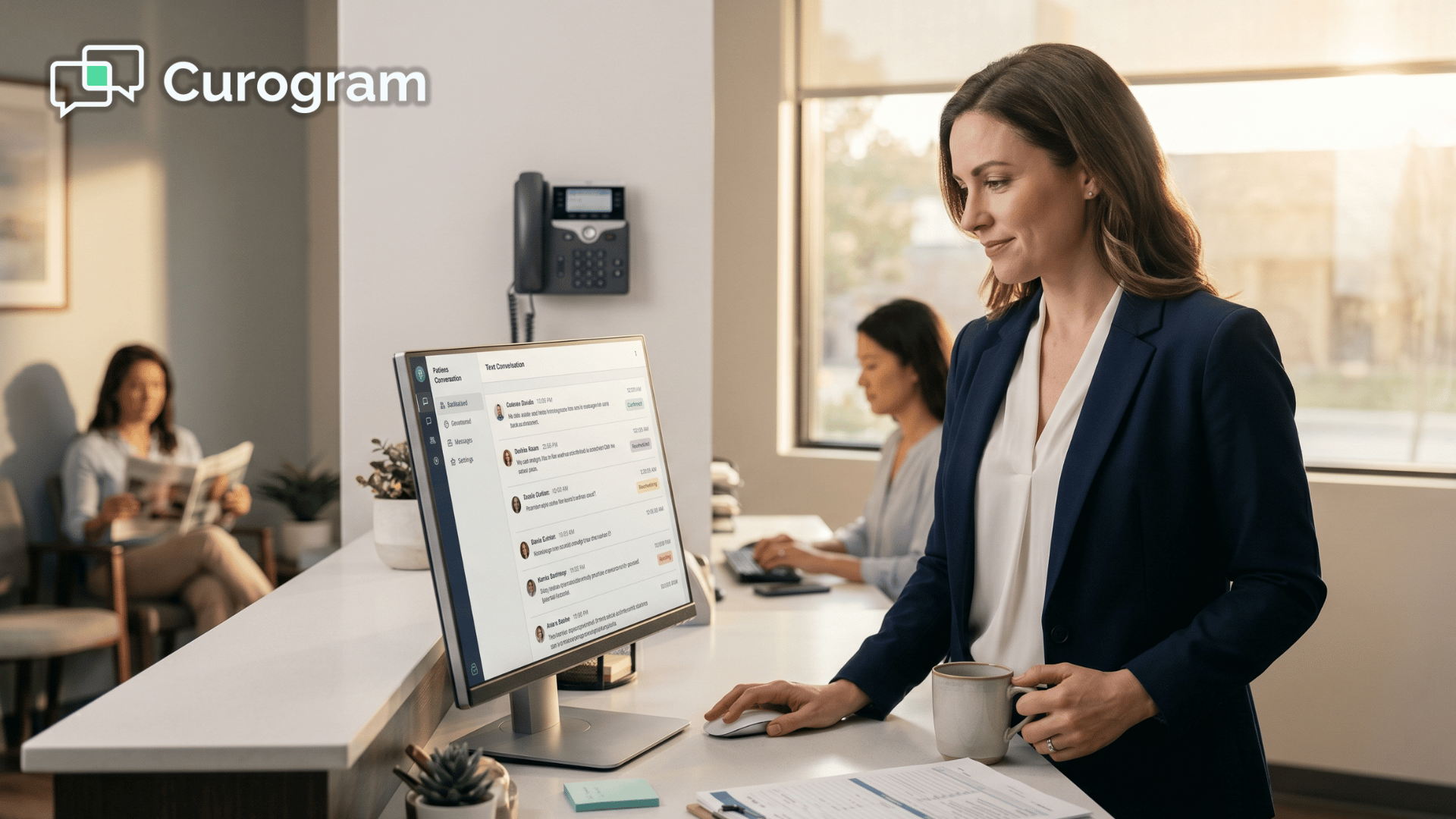
💡 Reducing front-desk phone calls in your eClinicalWorks practice starts with one simple shift: let patients text the questions they currently call...
💡 Two-way HIPAA-compliant texting for Meditab IMS practices turns one-way InTouch reminders into real conversations between your front desk and...