8 min read

Cloud 9 Orthodontics: 18-Month Appointment Reminder Workflow

Cloud 9 Orthodontics: 18-Month Appointment Reminder Workflow
💡 A Cloud 9 orthodontic appointment reminders texting workflow sends two-way reminders on ortho cadence: bonding, adjustments every four to eight weeks, aligner checks, debond, and retention. Curogram runs it alongside Cloud 9 and texts the parent who books the visit.

Replies land in one staffed inbox. Curogram clients average above 75% appointment confirmation, with no-show rates 53% below the industry average.

Adjustments stay on schedule, debond dates hold, and emergency slots stay open for real emergencies.

One orthodontic patient is not one appointment. Over an 18-month treatment plan, that same patient sits in your chair 20 or more times. Bonding, adjustments every four to eight weeks, aligner checks, a debond, then retention follow-ups.

Now multiply that number by every single active case on your treatment board.

That is the part general dental advice keeps missing. In most practices, a no-show costs you one open hour. In orthodontics, a missed visit breaks a link in a chain that already has a finish date attached to it.

The wire does not get changed. The tooth movement planned for those six weeks simply does not happen. The next visit turns into a catch-up visit, and the debond quietly slides.

Families feel that slide before you do. They are paying every month for a plan you told them would take a year and a half. When month 18 turns into month 22, the conversation at the front desk gets harder, and it is rarely about clinical care.

Meanwhile, your emergency slots fill with problems a kept appointment would have caught. A poking wire. A bracket that came loose two days after bonding. The schedule you built for real emergencies is now absorbing the fallout from missed ones.

Here is the twist that makes ortho different from every other specialty.

The person you are scheduling with is usually not the patient. It is a parent who is working around school pickup, a work shift, and two other kids. Reach that parent at the wrong hour and your message sits unread until dinner.

Miss the parent, and you miss the appointment.

Cloud 9 already runs the clinical side beautifully. What follows is how ortho practices close the stubborn gap between a scheduled adjustment and a family who actually turns up for it.

Ortho Math: Why One Missed Adjustment Costs You More Than One Slot

Most scheduling advice treats a missed visit as a single lost hour, which is reasonable enough in a general practice. Comprehensive cases usually run 18 to 24 months, and every visit inside that window is a scheduled step rather than a nice-to-have.

Run the same numbers across a full orthodontic panel and the picture changes considerably.

Say you have 400 active patients in treatment. If each one comes in every six weeks, that is roughly 3,470 visits a year, or about 290 a month. At a 10% no-show rate, 29 of those slots sit empty every month. That is 348 empty slots a year.

Here is what that means for your team.

Those 348 slots were not spare capacity.

They were scheduled steps in 400 treatment plans, and each one that slips pushes a finish date further out.

The second cost is quieter but more expensive. Patients who skip an adjustment tend to call several days later with something that hurts, and those calls land squarely in your emergency slots.

One missed visit therefore turns into two appointments:

The one that never happened, and the urgent one you had to squeeze into an already full day.

The third cost shows up in your reviews. A family that expected 18 months and got 24 rarely blames the wire. They blame the office.

None of this is a clinical problem. It is a communication problem wearing a clinical costume, and it responds to communication tools rather than chairside skill.

Where Native Reminders Stop and Real Conversations Start

Cloud 9 practices are not starting from zero. Planet DDS bundles Legwork, its own patient engagement product, and it sends appointment reminders. Plenty of practices run it today, and it handles the outbound job.

The gap is not whether a message goes out. It is what happens in the ten seconds after it lands.

What a parent is trying to do Reminder-only setup Two-way, ortho-cadence texting
Confirm the next visit Covered Covered
Confirm a series of visits across an 18-month plan Usually one visit at a time Tied to the recurring adjustment series
Ask to move a visit to after school Often ends in a callback Answered in the same thread
Ask whether a loose bracket can wait Not built for triage Routed to a staffed inbox
Keep the whole exchange in one record Varies by tool One logged thread per family
Keep the workflow if the practice changes systems Tied to the vendor stack Works alongside any practice system

Read that table as a depth question, not a quality question.

A reminder tool that sends is doing its job.

A staffed conversation layer answers the reply that comes back, which is where ortho schedules are actually won or lost.

The portability line matters too. Because Curogram runs alongside Cloud 9 rather than living inside a single vendor stack, the reminder workflow your team learns this year still works if your software mix changes later.

That flexibility is worth something to any practice weighing a system change in the next few years.

One more note before you compare tools internally. Engagement products get updated constantly, so confirm the current feature scope of whatever reminder tool you already run before you decide what is missing.

If you are still mapping out how texting fits into your Cloud 9 setup overall, our guide to patient communication for Cloud 9 practices is the better starting point.

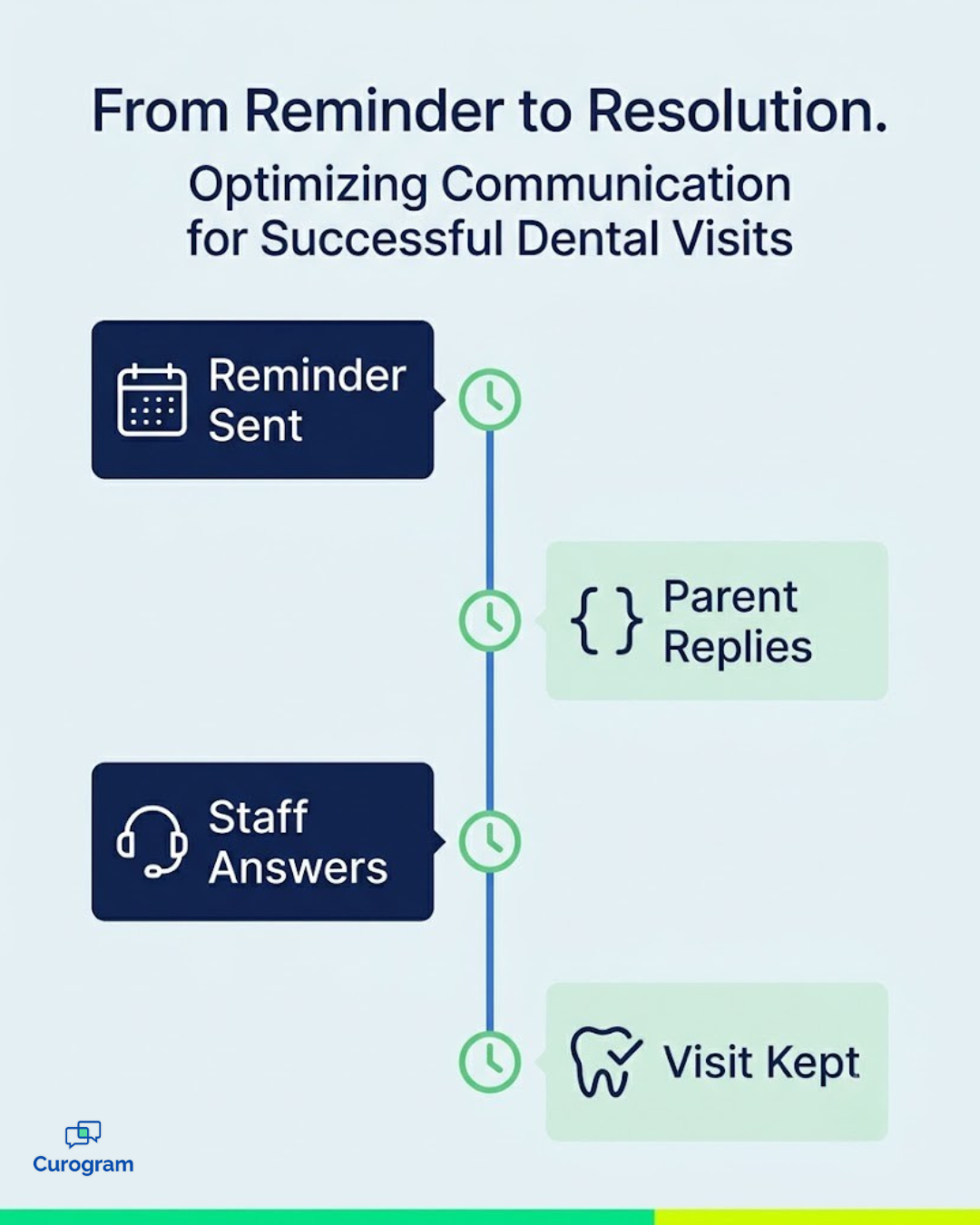
Infographic of a four-text reminder and triage flow for Cloud 9 ortho practices

How the Reminder Workflow Actually Runs, Day to Day

Setting up a Cloud 9 orthodontic appointment reminders texting workflow is less complicated than most practices expect, because nothing about your clinical system changes.

Here is the shape of it.

  1. Cloud 9 holds the schedule and the treatment plan, exactly as it does now.
  2. Curogram pulls upcoming visits and sends reminders on an ortho cadence, not a generic one.
  3. Messages go to the parent or guardian on file, addressed to them by name.
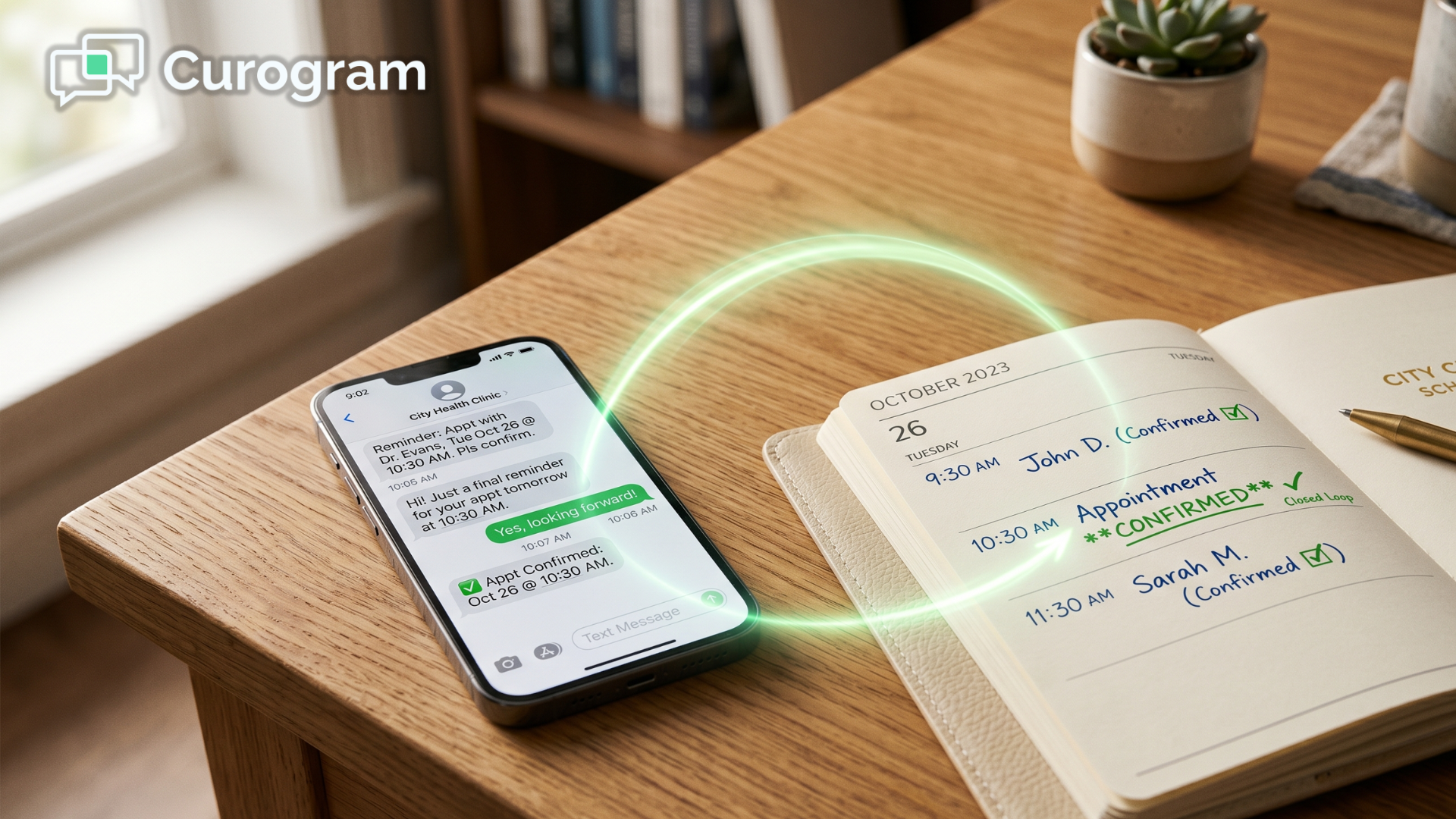
  4. The parent replies C to confirm, R to reschedule, or just types a question.
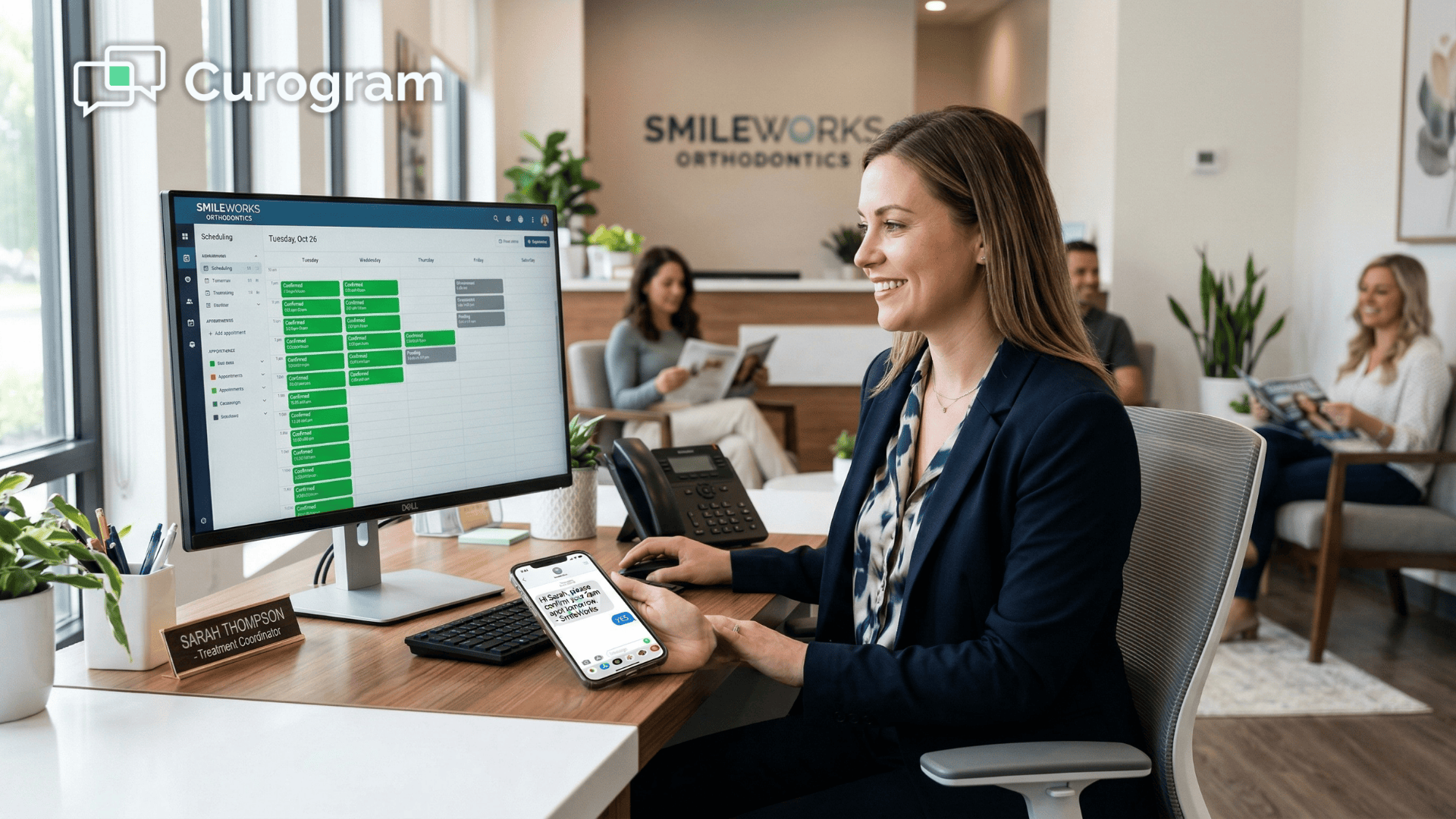
  5. Every reply lands in one shared inbox where a real person picks it up.

Reminders That Follow the Treatment Plan

A generic reminder treats every visit as a one-off event.

Orthodontic patients do not really have one-off visits;

They have a series, and that series follows a predictable rhythm across the treatment plan.

So the cadence bends to the phase. New bonding gets a day-three check-in. Adjustments get a reminder tuned to the four-to-eight-week gap. Aligner checks and retention visits get their own timing, because a missed retention check has a different cost than a missed adjustment.

Timing Built Around School and Work Hours

Send a reminder at 9 a.m. on a Tuesday and you are texting a parent in a meeting and a patient in third period. Neither replies.

The message is not wrong; the hour is.

Reminder timing can be configured to land when parents are actually able to answer, and reschedule offers can favor after-school blocks whenever your template allows it. Small change. Very different confirmation rate.

Replies That Land Somewhere Staffed

This is the piece that separates a reminder from a workflow.

When a parent texts back "his bracket came off last night, do we need to come in?", that message needs a human, not an auto-reply.

In a shared inbox, a coordinator sees it, answers it, and logs it against the family record. Most of the time the answer is reassurance and a note to mention it at the next adjustment. Occasionally it is a genuine emergency, and then you want the slot open.

That sorting is the quiet win. Your emergency capacity stops absorbing questions that a two-minute text exchange could have settled. We break that triage flow down further in our guide to treatment-plan follow-up texting between adjustments.

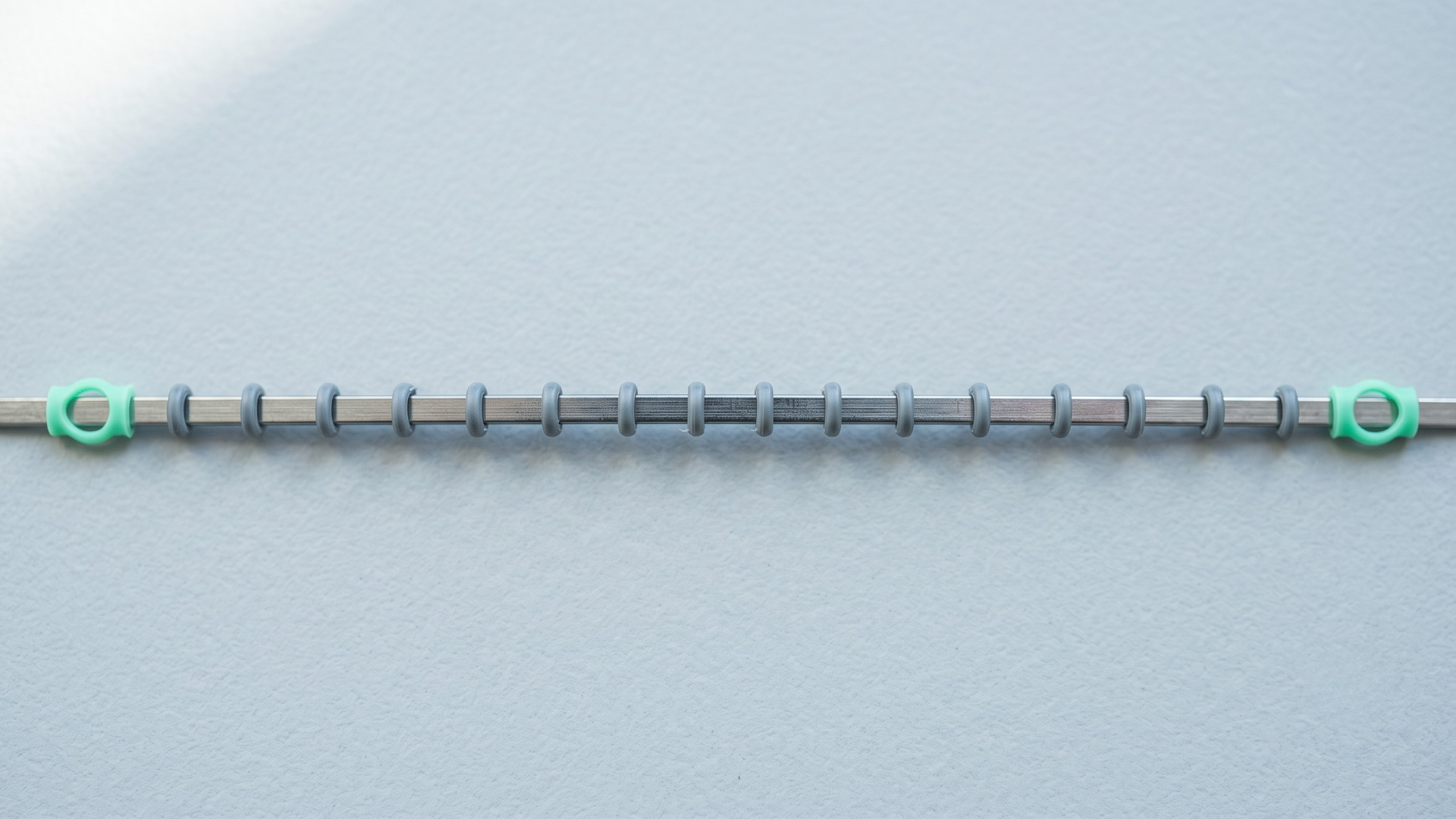
Orthodontic archwire laid out as a timeline marking 18 months of adjustment visits

What On-Schedule Treatment Looks Like in Real Numbers

Curogram publishes its platform numbers, and they translate cleanly to an ortho board.

Verified Curogram metric What it means for your schedule
Above 75% average appointment confirmation rate Roughly 3 in 4 visits are confirmed before the day arrives
No-show rates 53% lower than the industry average Fewer chairs sit empty during adjustment blocks
Atlas Medical Center: 14.20% to 4.91% no-shows in three months A drop of about 65%, achieved in a non-ortho clinic
10% to 20% revenue increase from recovered appointments Recovered slots go straight to the bottom line

Apply that confirmation number to the example above. On roughly 290 monthly visits, moving from mostly unconfirmed to above 75% confirmed gives your team an accurate picture of the coming week before it actually starts.

You know which slots look shaky while there is still time to fill them from your waitlist.

There is a staff-hours side too. Confirming 290 visits by phone at three minutes each is about 14.5 hours a month, or nearly two full workdays. Text confirmations hand most of those hours back to your treatment coordinators.

The Atlas result is worth reading carefully. It comes from a medical clinic, not an orthodontic practice, so treat it as directional rather than a promise. What it shows is the size of the swing when reminders become two-way.

For your team, the shift is easier to describe than to measure precisely. Treatment plans finish closer to the date you quoted at the consultation. Debonds land on the calendar you promised the family.

And your emergency slots go back to holding actual emergencies.

That is what an on-schedule treatment plan looks like in practice. Not a dramatic overhaul of how you run adjustments, just a steady reduction in the small scheduling failures that stretch cases by weeks.

Texting Parents of Minors Without the Compliance Headache

Ortho raises a question most specialties never have to answer. Almost every message goes to someone other than the patient, and the patient is usually a minor.

The rules here are workable. They just have to be set up on purpose rather than assumed.

  • Message the parent or guardian named on the record, and keep that record current as contact details change.
  • Capture consent before texting starts, and store it where your team can actually see it.
  • Honor opt-outs written in plain language, not only keyword replies. FCC rules updated in April 2025 require this.
  • Keep every thread inside a HIPAA-compliant platform, encrypted and logged.

Set up properly, none of this slows your front desk down. Consent gets captured alongside insurance details, opt-outs are automatic, and threads sit against the family record.

What you gain is a documented trail. When a family asks in month 20 why a visit was missed, you have the reminder, the timestamp, and the reply that came back.

Cloud 9 Runs the Plan. Someone Has to Keep Families Showing Up for It.

Cloud 9 does the hard clinical work here. It holds the treatment plan, the imaging, the schedule, and the full sequence that moves a case from bonding through to debond. That is not the part that tends to break.

What breaks is the handoff to the family. A parent who does not see the reminder, or sees it and cannot reply, or replies and hears nothing back. That gap is where an 18-month plan quietly becomes a 22-month plan.

A two-way reminder layer closes it without touching your clinical workflow. Reminders go out on ortho cadence. Parents reply in the channel they already use for everything else.

A coordinator picks up anything that needs a person, and the whole exchange stays logged and HIPAA-compliant.

Nothing about your Cloud 9 setup changes. Curogram runs alongside it, complements it, and never replaces it.

The practices that get this right stop thinking about no-shows as a monthly number to complain about.

They start thinking about on-schedule treatment plans as something they manage on purpose. Those are very different mindsets, and they produce very different debond calendars.

Consider what this would be worth across your whole active panel. If a stronger confirmation rate recovers even a handful of adjustment slots each week, you gain back chair time you already paid for, staff hours you already scheduled, and finish dates you already promised to families.

Your families are not disengaged. They are busy, they are scheduling around a school day, and they answer texts.

Curogram gives Cloud 9 orthodontic practices a two-way texting workflow built for the way ortho actually runs: recurring visits, parent schedulers, and questions that need an answer today.

Book a demo and we will walk your team through a real adjustment reminder thread, start to finish, on your own ortho cadence.


Frequently Asked Questions

Are appointment reminder texts sent to a parent HIPAA-compliant?

Yes, as long as they go out through a HIPAA-compliant platform and the parent is the guardian on record. Curogram is HIPAA-compliant and SOC 2 Type II certified. Messages are encrypted, logged, and visible only to the staff you authorize.

We already have Legwork. Why would we add Curogram?

Legwork is a real product and it sends reminders well. The difference shows up on the reply side, and in portability. Curogram adds a staffed two-way inbox tuned to ortho cadence, series-level confirmations across an 18-month plan, and triage threads for questions like a loose bracket. It also works alongside any practice management system, so the workflow stays with you even if your software mix changes.

Can reminders avoid school hours?

Yes. Send windows are configurable, so reminders can land when a parent is free to reply. Reschedule offers can favor after-school blocks as well. This matters more in ortho than in most specialties. Your panel is pediatric-heavy, which means the patient is in class and the scheduler is at work.

Does this replace Cloud 9's scheduling or communication tools?

No. Cloud 9 stays the system of record for scheduling, charting, and treatment planning. Curogram sits alongside it as the conversation layer, so the two run in parallel rather than competing.

What happens when a parent replies with a question instead of a confirmation?

The message routes to a shared inbox where a coordinator answers it. That is the point of a two-way setup. A confirmation is automated, a real question gets a real person, and both stay in the same logged thread for the family.