Secure Online Patient Forms for MD Systems Intake Without Paper
💡 Secure online patient forms for MD Systems intake let practices save up to 15 minutes per visit by cutting out paper and manual data entry. ...
8 min read
Aubreigh Lee Daculug
:
March 2, 2026
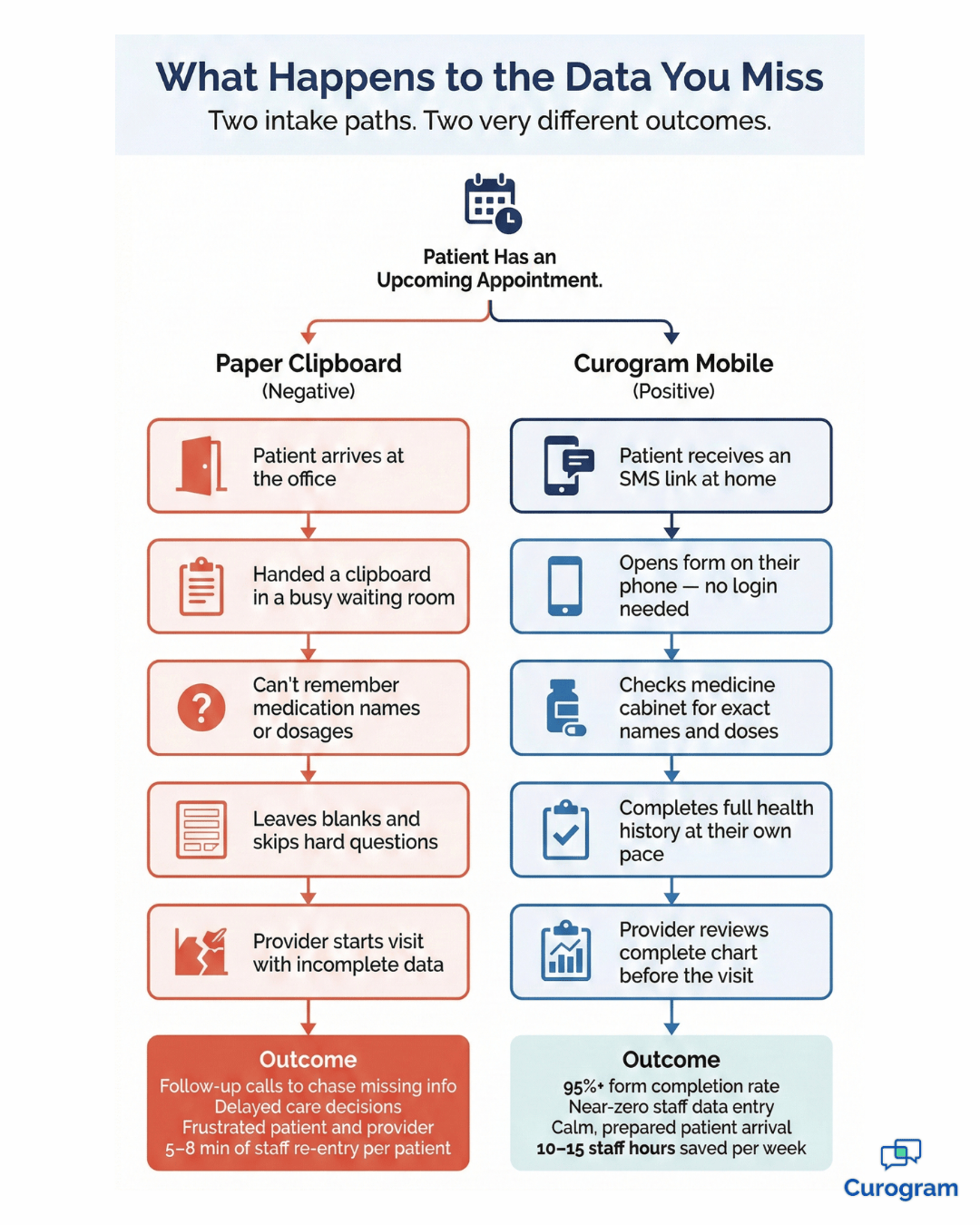
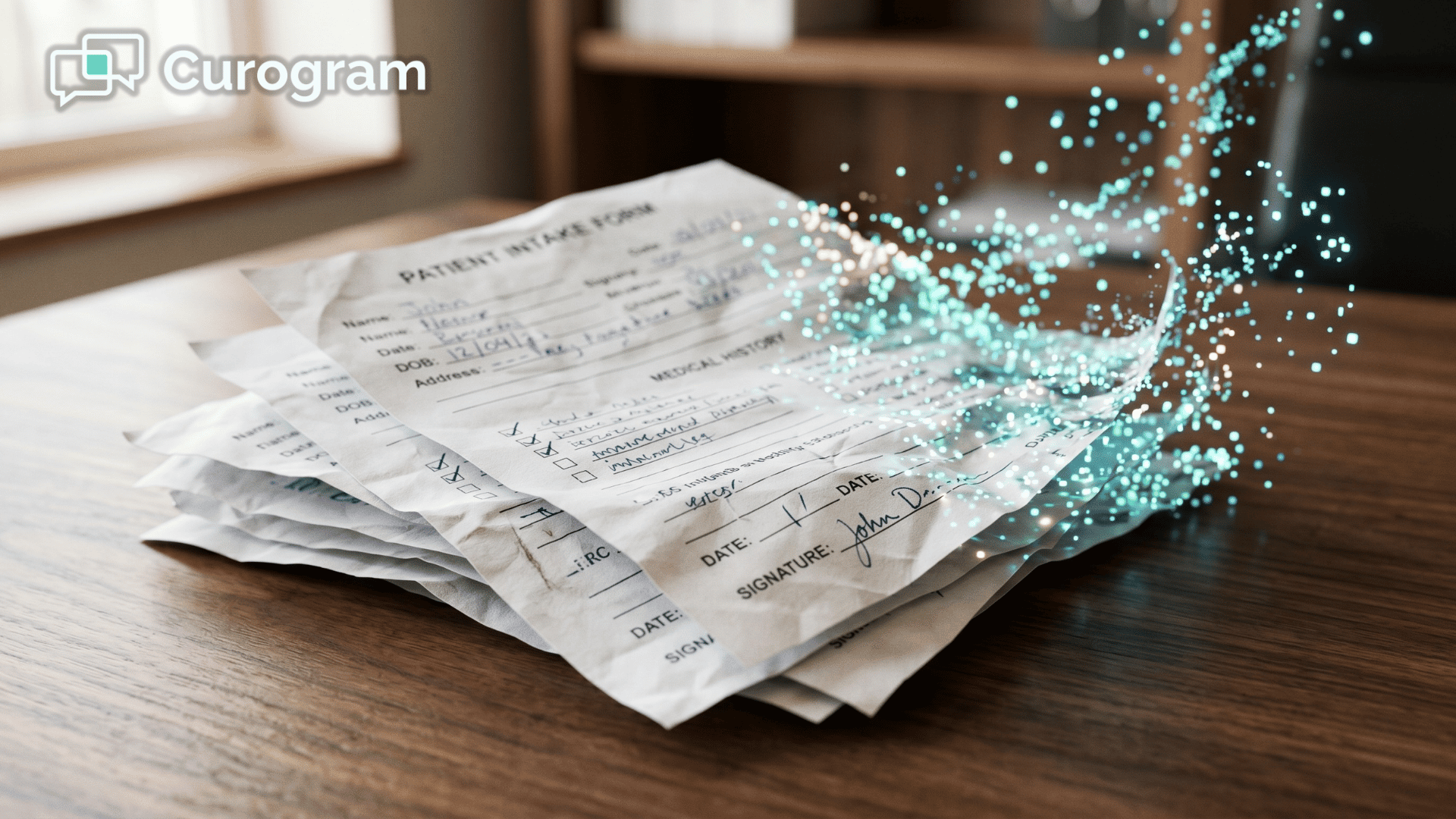
A patient walks into your CharmHealth practice for the first time. They sit down in the lobby, and someone hands them a clipboard stacked with paper forms. The waiting room is loud.
A child is crying two seats over. And now this patient needs to remember the exact name and dosage of every supplement they take.
Good luck with that.
This is what we call the waiting room test, and most patients fail it. Not because they don't care, but because the setting works against them. They rush through the form, skip the hard questions, and scribble "I'll tell the doctor" in the margins.
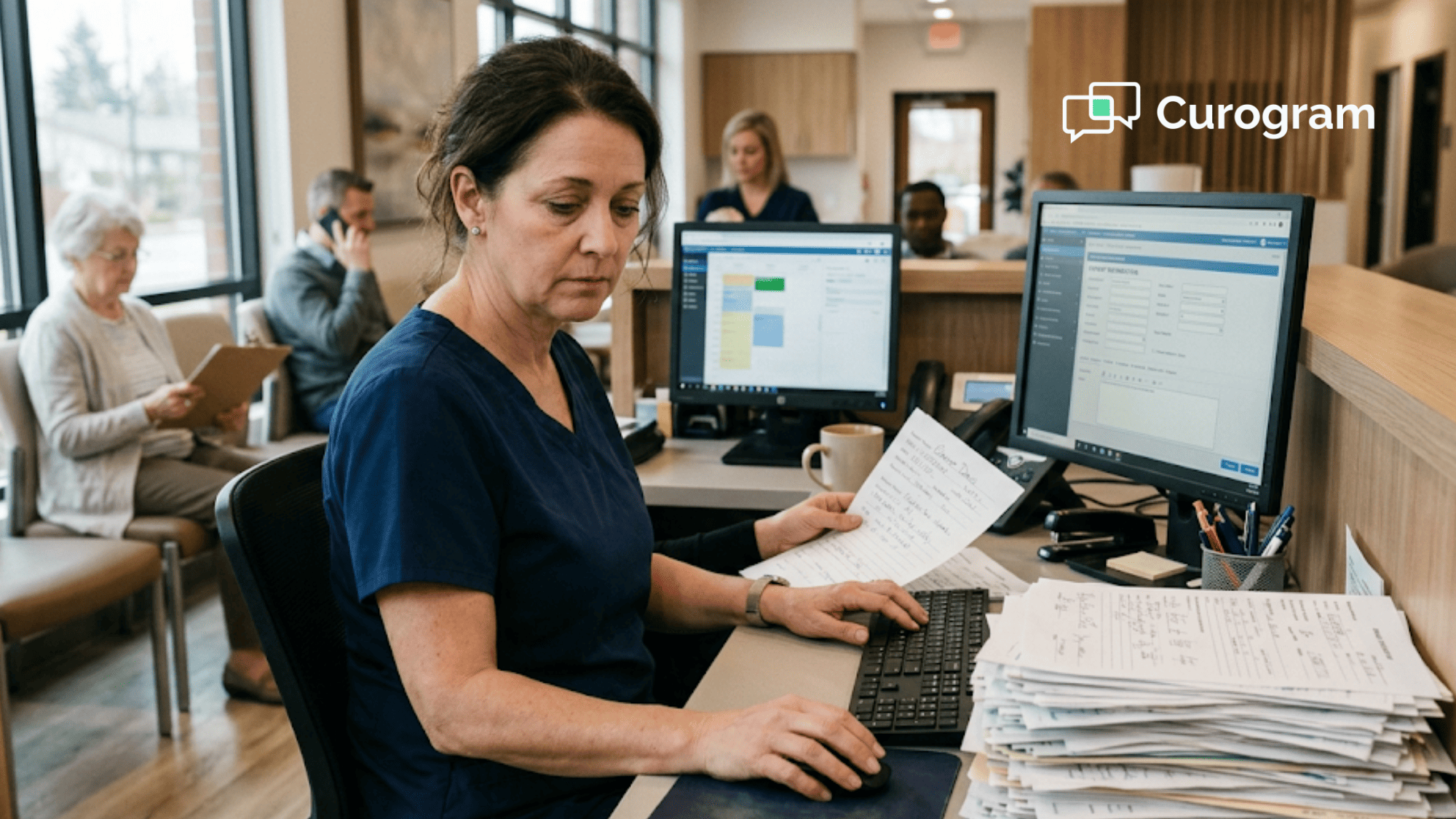
The result? Incomplete charts, frustrated staff, and a first impression that feels more like a pop quiz than a welcome.
The patient preference for mobile intake forms has grown steadily in recent years, and for good reason. People are used to doing everything on their phones.
They bank on their phones. They order groceries on their phones.
So why are we still asking them to fill out their entire medical history with a pen and a clipboard?
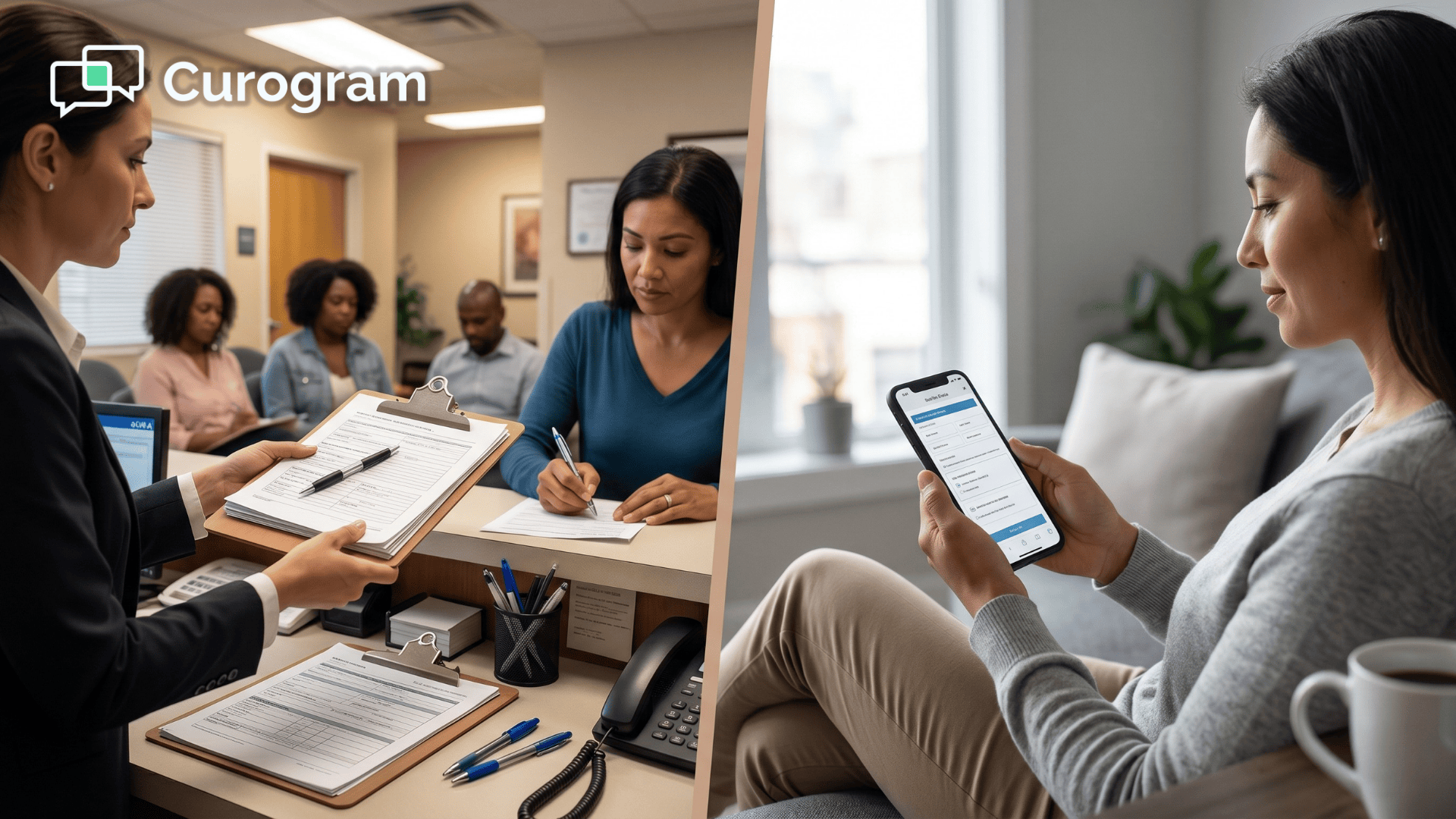
Curogram's SMS-based digital forms give your CharmHealth patients a better option. Instead of struggling through paperwork in a crowded lobby, they complete their intake at home, on the couch, where they can actually think.
They can walk to their medicine cabinet, read the labels, and enter the right information. They can take their time and get it right.
This article explores why mobile-friendly intake is quickly becoming the standard for practices that care about the integrative medicine patient experience.
We will look at what makes the old way so painful, how Curogram solves the problem, and what changes when your patient's first impression of your office is a warm greeting instead of a stack of paper.
For many patients, the intake form is not just a quick task. It is a full biography.
This is especially true in integrative medicine, where providers need to know about supplements, herbs, past procedures, lifestyle habits, and more. Asking someone to recall all of that while sitting under fluorescent lights in a busy lobby is asking a lot.
Most practices do not design their intake process to be stressful. It just ends up that way.
The forms are long because they need to be. The waiting room is loud because it is full of people. And the patient is anxious because they are about to see a doctor. Put all of that together, and you have a recipe for incomplete data.
Think of it as a memory test with no study guide. The patient tries to remember the name of a supplement they started six months ago.
Was it 500 mg or 1,000 mg? They cannot quite recall, so they leave it blank. Multiply that by a dozen questions, and you end up with a form full of gaps that follow the patient straight into the exam room.
These gaps are not harmless. When a provider does not know about a supplement or medication, they cannot account for potential interactions. They may ask about the same thing twice, which wastes time and makes the patient feel like nobody is paying attention.
What started as a small blank on a form can snowball into a frustrating visit for both sides.
Now imagine a parent walking in while carrying a sick toddler. The front desk hands them a clipboard and a pen.
How is that parent supposed to hold a child, a pen, and a clipboard all at the same time? They cannot. So the form gets half-finished, or it does not get done at all. This scenario plays out every day in pediatric and family practices across the country.
It is not just parents of young children who face this problem. Elderly patients with mobility challenges, patients dealing with pain, and people with language barriers all struggle with paper-based intake.
The clipboard assumes a level of comfort and ability that not every patient has when they walk through the door.
The result is always the same. Patients rush through the form and leave blanks.
They tell themselves they will mention it to the doctor later, but they often forget. The provider then starts the visit with an incomplete picture, which means more questions, more back-and-forth, and less time for actual care.
Waiting room anxiety makes everything harder for everyone involved.

Curogram solves this problem by moving the paperwork out of the waiting room entirely.
Instead of handing patients a clipboard when they arrive, your practice sends them a simple text message before their appointment. That message contains a link to a mobile-friendly intake form they can fill out from anywhere.
The forms are built to look and feel like a modern app, not a shrunken-down PDF.
Patients tap through the questions on their smartphone just like they would with any other mobile experience. The layout is clean, the text is easy to read, and the whole thing takes a fraction of the time it would on paper.
There is no download required and no app to install. The patient simply taps the link in their text message, and the form opens in their phone's browser. It works on any device, whether the patient uses an iPhone, an Android, or a tablet.
That simplicity is a big part of why the mobile-friendly intake approach gets such high completion rates.
This is where the real difference shows up for CharmHealth practices focused on integrative medicine. When patients fill out their digital health history forms at home, they have access to everything they need. Instead of guessing in a loud lobby,
they can take their time and get the details right.
That kind of access changes the quality of the data your practice receives.
Providers no longer have to guess what a patient meant by a half-written answer or chase down missing details over the phone. The information arrives complete, accurate, and ready to review before the patient even steps foot in the office.
The result is a form that is more complete and more accurate than anything you would get from a clipboard. As a CharmHealth patient portal alternative, Curogram's text-based approach removes the login barrier entirely.
Patients do not need to remember a username or password. They just tap the link, fill out the form, and they are done. It is intake on their terms, and that makes all the difference.

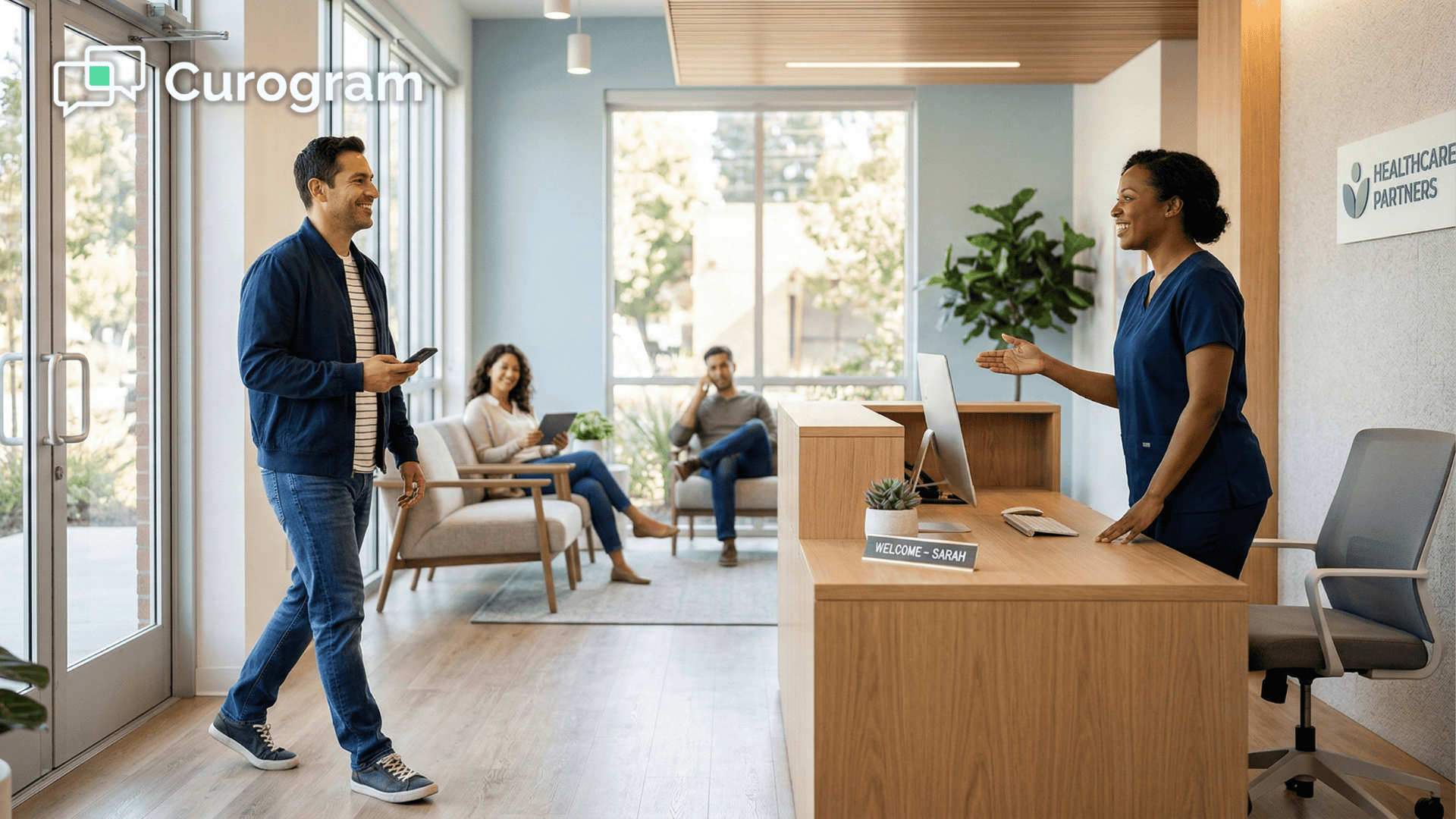
Something changes when a patient walks through your door and everything is already done. There is no clipboard waiting. No stack of forms.
The front desk simply smiles and says,
"Welcome, we're ready for you." That moment matters more than most practices realize.
First impressions shape how a patient feels about the entire visit. When the first thing they experience is a warm greeting instead of a pile of paperwork, it sets a completely different tone.
They feel like the practice was expecting them, not just processing them.
Instead of spending 15 minutes in the lobby filling out forms, the patient sits down and waits only for the provider. Or better yet, they walk straight back. The visit starts on time, and the tone is set from the very first interaction.
This zero-wait arrival reshapes the entire patient experience from the ground up.
There is a deeper benefit here, too. When patients complete their intake at home, they have time to think about what they want to say. They can write out their full history without feeling rushed.
By the time they meet the provider, they feel heard. They know their story has already been told, and the provider has already read it. That feeling of being heard and valued is a huge part of the integrative medicine patient experience.
This also changes how patients talk about your practice to others.
People remember how a visit made them feel, and a smooth, stress-free check-in leaves a lasting impression. Patients who feel respected from the start are more likely to return, leave positive reviews, and refer friends and family.
The benefits of mobile-friendly intake are not just about how it feels. They show up in measurable ways across your practice.
The table below compares the traditional clipboard experience with Curogram's SMS-based digital forms across the metrics that matter most to CharmHealth practices.
| Metric | Paper Clipboard | Curogram Mobile |
|---|---|---|
| Form Completion Rate | 60–70% | 95%+ |
| Avg. Time to Complete | 12–18 min (in-office) | 8–10 min (at home) |
| Data Accuracy | Frequent blanks & errors | Verified at-home entries |
| Staff Data-Entry Time | 5–8 min per patient | Near zero |
| Patient Satisfaction | Mixed — stressful start | High — calm arrival |
| Login or Password Required | N/A (paper) | None — SMS link only |
When you line the two approaches up side by side, the difference is hard to ignore. Practices that switch to digital health history forms consistently see higher completion rates, fewer data gaps, and less time spent on manual entry. Those are not soft benefits.
They translate directly into hours saved each week and fewer follow-up calls to chase missing information.
For a mid-size CharmHealth practice seeing around 30 patients per day, the savings add up quickly. Here is a snapshot of the estimated return on investment when you move from paper intake to Curogram's mobile forms.
| ROI Metric | Estimated Impact |
|---|---|
| Staff hours saved per week | 10–15 hours |
| Reduction in follow-up calls for missing data | Up to 40% |
| Increase in form completion before arrival | 80–95% of patients |
| Average check-in time saved per patient | 8–12 minutes |
| Estimated monthly cost savings (staff time) | $1,200–$2,400 |
These numbers will vary depending on your specialty, patient volume, and current workflow. But the direction is consistent across practices of all sizes. Less paper means less rework, and less rework means more time and money going toward what actually matters: patient care.
On the clinical side, the provider walks into the room already up to speed. They have reviewed the completed form, noted any concerns, and prepared questions.
The visit becomes a conversation instead of an interview. The patient is more relaxed, the provider is more prepared, and the entire office runs more smoothly. This is what it looks like when you reduce waiting room anxiety and put the patient first.
When intake is done before the visit, the entire flow of the day improves. Appointments stay on schedule. Staff spend less time chasing paperwork and more time engaging with the people in front of them.
It is a simple shift that creates a ripple effect across every part of your practice.
Is it hard to type long answers on a phone?
Not at all. Curogram forms work with the voice-to-text feature built into every smartphone. Patients can simply dictate their answers instead of typing them out. This is especially helpful for longer responses like medical history details or lists of current medications.
Yes. If a patient gets interrupted, whether by a phone call, a child, or anything else, they can close the browser and come back later. When they click the link again, the form picks up right where they left off. Nothing is lost.
Never. Curogram verifies patients through a secure code sent directly to their phone. There are no usernames to create and no passwords to remember or reset. It is simple, secure, and fast.
Your intake form is more than just paperwork. It is the first impression of your clinical care. Before a patient ever meets their provider, the intake experience tells them exactly what kind of practice they are walking into.
A clipboard and a pen say, "We value our process." A text message with a mobile-friendly intake form says, "We value your time."
That distinction matters more than you might think. In a world where patients can choose from dozens of providers, the small things add up quickly.
The practices that stand out are the ones that make patients feel seen and respected from the very start. Sending a digital form before the visit is one of the simplest and most effective ways to do that.
Curogram was built for practices like yours. Whether you run an integrative medicine clinic, a pediatric office, or a multi-provider group on CharmHealth, our SMS-based forms fit right into your existing workflow. Patients get a smooth, mobile-friendly experience that feels natural and easy.
Staff get complete, accurate data without chasing down missing fields. And providers get to start every visit with a full picture instead of a half-finished form.
The patient preference for mobile intake forms is not a passing trend. It reflects how people already live their daily lives. They want things that are easy, private, and convenient. Your intake process should match those same expectations.
If you are ready to see what your patients see. Start Your 30-Day Free Trial and experience the form from their perspective.
💡 Secure online patient forms for MD Systems intake let practices save up to 15 minutes per visit by cutting out paper and manual data entry. ...
💡 Online patient forms in GE Centricity help specialty clinics cut down wait times and reduce errors. GE Centricity digital intake connects...
💡 Digital intake workflow, along with Veradigm solutions, helps imaging centers eliminate delays and errors from paper-based processes. Patients...