

Automate Patient Recall Campaigns in Azalea Health
💡Automated patient recall campaigns for the Azalea Health front desk find your overdue patients and text them to rebook. They run entirely on their...
7 min read
Aubreigh Lee Daculug
:
June 29, 2026
You have the list. Thousands of patients who came in once, fully intended to come back, and never returned. Their names sit right there inside CharmHealth, waiting for a reason to return.
So why does reaching all of them feel so difficult?
Here is the frustrating part.
CharmHealth stores every patient record, but its built-in texting runs through a paid add-on that caps how much you can actually send in a single campaign. The complete guide to patient recall texting for CharmHealth practices covers the full picture in detail.
The short version is this. The tool technically exists, yet it cannot reach everyone affordably without batching messages into small groups or paying an extra fee for each one.
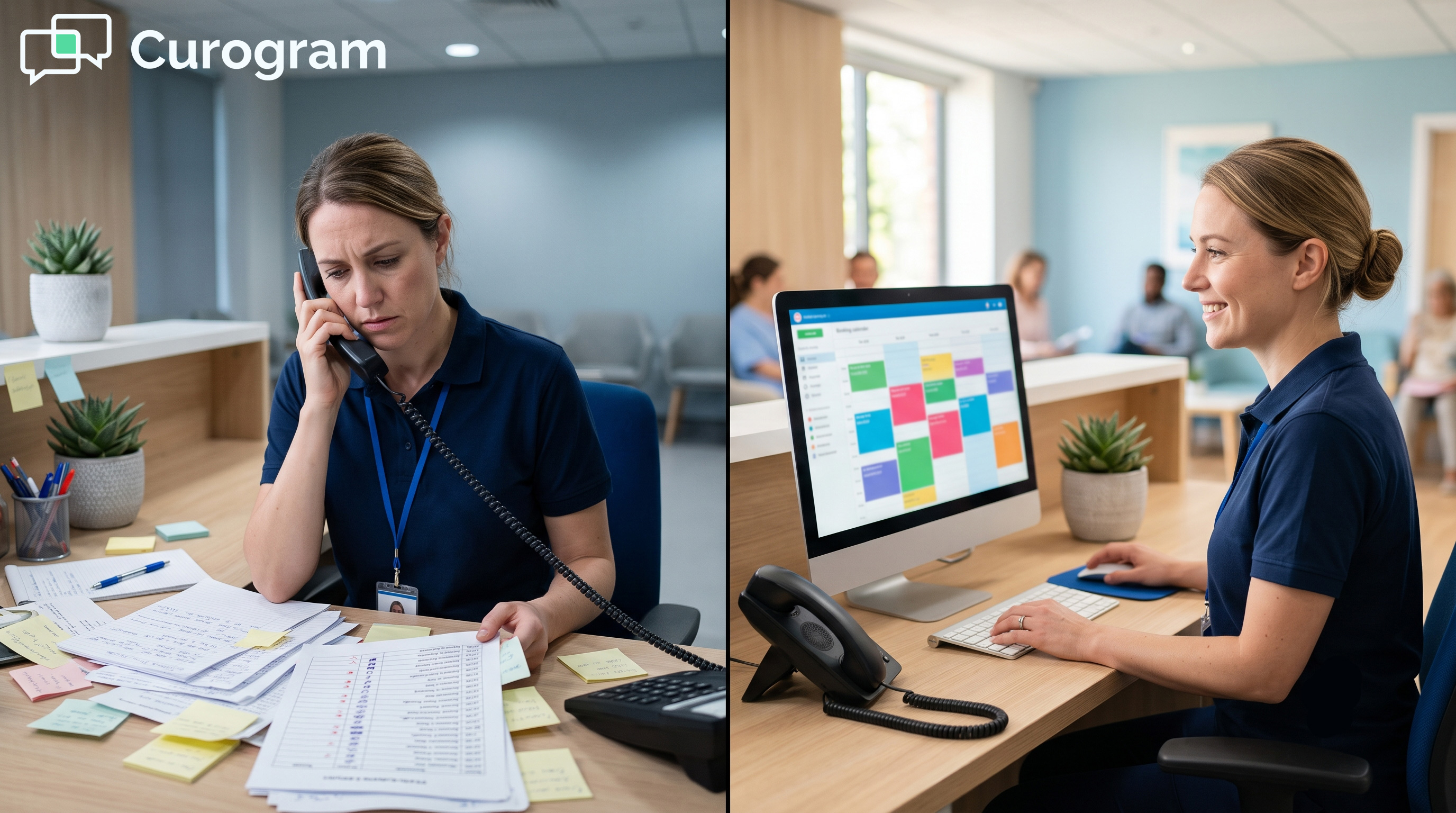
So your front desk does what it reasonably can. They pull a few hundred names, send a wave of texts, watch the running meter climb, and stop before the bill becomes painful. The rest of the list never hears from you at all.
It sounds like a small limit. It isn't.
Consider what that ceiling genuinely costs you over time. Every patient you do not text is a visit you do not book and recoverable revenue that quietly walks out the door.
A database of 10,000 lapsed patients is not a marketing nicety; it is real income sitting unused inside your own system.
Most practices accept this situation as normal. They assume bulk texting always arrives with caps and overage fees, so they ration their outreach and hope a handful of patients happen to rebook on their own.
But the cap is not a law of nature. It is merely a feature limit, and feature limits can be removed entirely.
This article shows how practices reach their whole database in one uncapped campaign, and what that recovery looks like in real numbers.
The barrier is not your patient list. It is the meter attached to it.
CharmHealth keeps every record, but its Bulk SMS lives behind the Text/Voice add-on. That add-on limits how many messages you send, and once you pass the included amount, each extra text carries a fee. So the CharmHealth Bulk SMS limits decide your reach, not your actual database.
In practice, that ceiling tends to bite in three predictable ways:
Here is how that plays out for a practice sitting on 10,000 lapsed patients.
| Step | What happens | Cost |
|---|---|---|
| Included messages | The first 250 texts go out | $0 |
| Remaining patients | 9,750 still need a message | — |
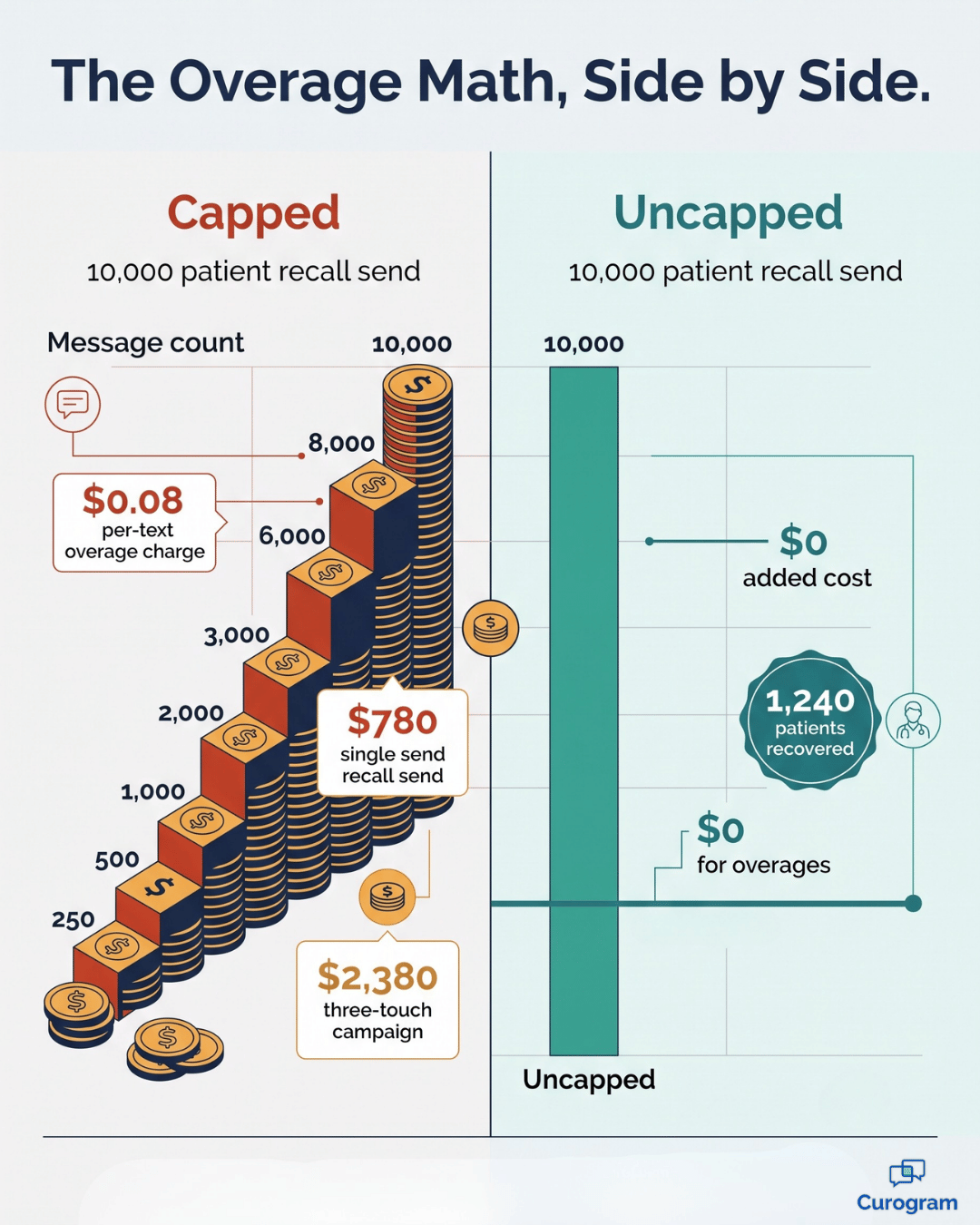
| Overage at $0.08 each | 9,750 × $0.08 | $780 per send |
| A three-touch campaign | About 30,000 texts to finish the job | About $2,380 |
Most teams never actually pay that full bill, because they deliberately stop well before the campaign finishes. The result is a send that was only ever partial, reaching a small fraction of the people who needed a message.
The result is brutal in its simplicity.
When capped, manual outreach is your only option, most lapsed patients are never contacted at all. The 5% to 10% who rebook on their own become everything you recover.
That is the genuine, underlying cost of the outreach ceiling.
You are holding a list full of recoverable revenue and using a tool that slows down at the exact moment it should speed up.

Now flip the problem.
What if a single campaign could reach the entire list, with no batching and no cap?
That is what Curogram does. It works as a reactivation engine that sits on top of CharmHealth and texts your whole database at once.
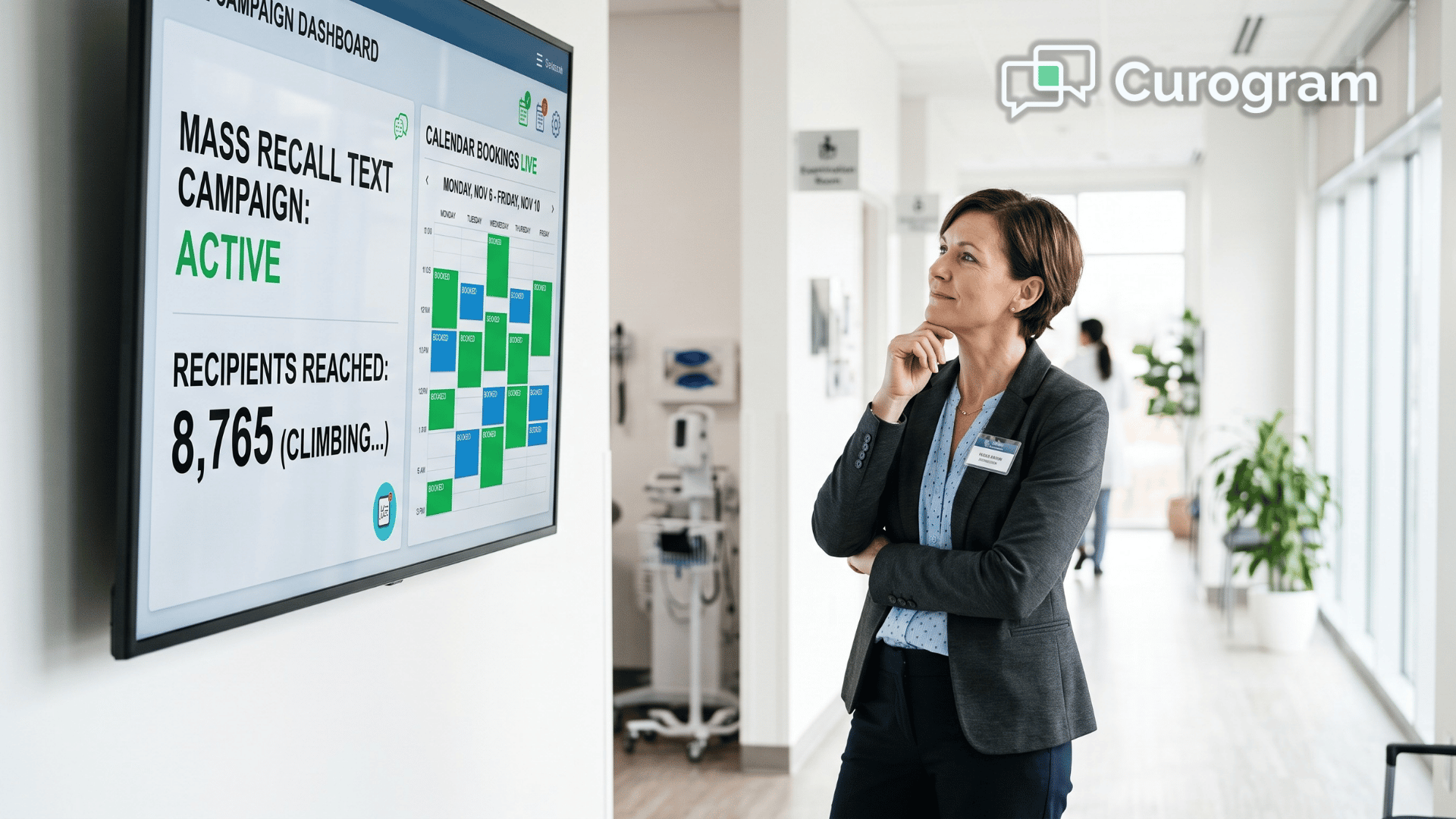
Curogram sends one campaign to every patient who is due, no matter how large the list. There is no 250-message wall and no per-message fee waiting at the end. This is uncapped mass texting medical practices can run without watching a meter.
The engine runs on Mass Messaging with personalized recall sequences. Each patient gets a message that uses their name and their reason to return, not a generic blast.
And because there is no overage, you can follow up more than once without the cost climbing.
Curogram pulls patients past their recall window straight from CharmHealth, so there is no list to build by hand.
When a patient replies and books, that rebooking writes back to the CharmHealth schedule.
No double entry, no spreadsheet, no copy-paste. This is the recall campaign workflow running on autopilot.
This matters most when you are scaling. A 1 to 20 provider practice moving from the free plan toward a paid plan needs the schedule full to justify the growth. Scalable patient outreach CharmHealth offices can actually finish is the fastest way to get there.
Put together, that is bulk patient messaging CharmHealth practices can run as one clean campaign instead of a dozen careful batches.

So what does an uncapped send actually recover? The numbers are bigger than most teams expect.
| One comparable practice recovered 1,240 patients in a single campaign, with a 35% reconversion rate among responders, at roughly $0 in added staff cost. |
Break that result into its three moving parts:
Let me put that in plain terms. Say each recovered visit is worth $150 in direct revenue.
That single campaign brings back about $186,000. For your team, that is income from patients you already had, not new ones you had to find.
The shift is bigger than one number, though. Instead of policing a message meter, staff launch one campaign and move on. The schedule fills from the database you already own.
And those rebooked patients do not just vanish into the calendar. They flow into your automated reminders and confirmations, so the visits you worked to recover actually show up. This is no overage texting healthcare teams can scale without fear of the next bill.
Lapsed patients also respond more often than most front desks expect, which is its own quiet advantage. There is a closer look at why they rebook by text worth reading next.
Knowing the cap can come off is one thing. Actually running that first large campaign is another thing entirely.
The encouraging part is that an uncapped recall is considerably simpler to launch than the manual batches you have grown used to.
That is the entire workflow, start to finish. One window, one message, one send, and a schedule that gradually fills from patients you already had.
Most teams are genuinely surprised by how quickly those first responses begin landing.
Here is the takeaway.
The cap was never about your database. CharmHealth holds every record perfectly well. The limit lives entirely in the add-on that meters how many patients you can reach, and that limit can come off.
Uncapped mass messaging removes the outreach ceiling without changing how CharmHealth stores your list. You keep your existing system as it is. You simply stop rationing the one asset most likely to fill your schedule.
Think about the contrast for a moment.
CharmHealth holds the database, while Curogram lets you reach all of it at once. One side quietly stores names, and the other side turns those names back into booked visits.
That is the whole shift. Mass text messaging for CharmHealth practices without message caps is not simply a bigger blast; it is the difference between a list that sits idle and a list that actively works for you.
The math tends to be lopsided in your favor. Bringing back even a few hundred lapsed patients usually pays for the platform many times over, and the patients you already have cost far less to recover than new ones you have to chase down. The AAFP offers solid resources on small-practice economics if you want the wider context.
So stop policing a message meter. Stop sending in careful little batches and hoping the rest of the list rebooks on its own.
Reactivate the entire database in a single send and let the schedule fill from people who already chose you once before.
Want to see what your own list could realistically recover? Schedule a Demo and we will help size the campaign your specific database could support, including how many patients sit past their recall window today.
Correct. Curogram does not meter recall messages the way CharmHealth's Text/Voice add-on does. A single campaign can reach 10,000 or more patients without batching or overage charges.
No. Curogram finds lapsed patients straight from the CharmHealth database and books responders back to the schedule. Your staff launch the campaign rather than assembling it.
Campaigns run on opt-in with a STOP option, and the first message carries no protected health information. That keeps bulk outreach aligned with TCPA rules while the platform stays HIPAA-compliant.
Quickly. Because Curogram pulls the recall list from CharmHealth for you, there is no list to build first. Most teams can set up a personalized recall sequence and send it the same day.
Yes. The same uncapped send works whether you have 1,000 records or 10,000. Smaller offices often see the fastest return, since one campaign can fill weeks of open slots with patients they already had.
💡Automated patient recall campaigns for the Azalea Health front desk find your overdue patients and text them to rebook. They run entirely on their...
💡 Mass text messaging and patient recall campaigns at Meditab IMS practices close the gap between IMS InTouch's individual appointment reminders...
💡 Overdue Meditab IMS patients respond to text recalls instead of phone calls because texting matches how patients actually communicate in 2026....