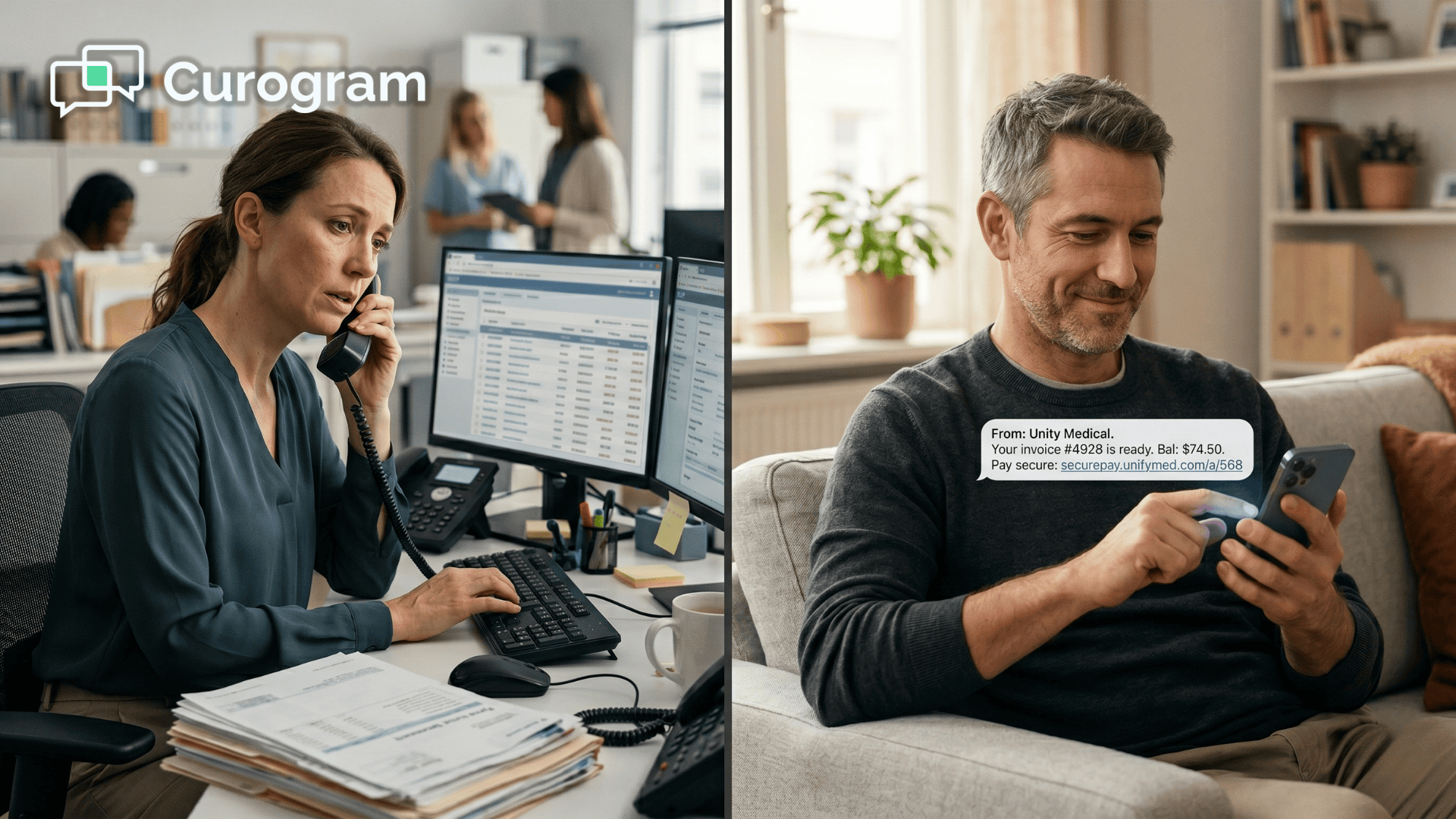
The contrast is the point. Paper statements collect only about 20% of what they bill and cost $800 to $1,000 a month to mail. A text link costs a fraction of that and settles balances the same week care happens.
Cerbo's subscription billing stays exactly where it is, handling memberships and recurring charges well.
Curogram clears the one-off visit balances that stall behind a login screen.
Your patient loved the visit. They asked good questions, thanked the provider, and walked out happy. Six weeks later, they still owe you $420.
Nothing went wrong with the care, and nothing went wrong with the relationship either. What went wrong sits in the gap between the end of the appointment and the moment the money actually moves.
That gap has a familiar shape, and you can probably recite it from memory. The invoice posts to the portal overnight, the patient means to log in, and the password is long gone. Thirty days later a statement goes in the mail, and eventually somebody in billing picks up the phone.
For a cash-based practice, that delay costs more than it does anywhere else, because there is no insurance payment waiting behind the balance. If the patient does not pay, nobody does.
Cerbo handles the record side of this well. Memberships renew on schedule, recurring payments post cleanly, and the online invoicing is solid. None of that needs replacing.
The problem is not your billing system. It is the login screen standing between a willing patient and a balance they would have cleared in the parking lot.
That gap is the entire argument for text-to-pay billing for cash-based Cerbo practices. Rather than asking patients to travel to your portal, you deliver the payment request to them, inside the same thread where they already text your front desk about refills.
It sounds like a minor change. It isn't. Moving a $400 balance from day 45 to day one reshapes your cash flow, your administrative hours, and the tone of every conversation your billing manager has this month.
Here is what that friction costs a cash-pay practice, why paper statements keep failing, and what changes once patients can settle a balance in two taps.
Why Willing Patients Still Leave Balances Sitting
Start by giving Cerbo credit where it earns it. Memberships, recurring charges, and online invoicing all function the way they should, so if your revenue runs primarily on subscriptions, that engine stays reliable month after month.
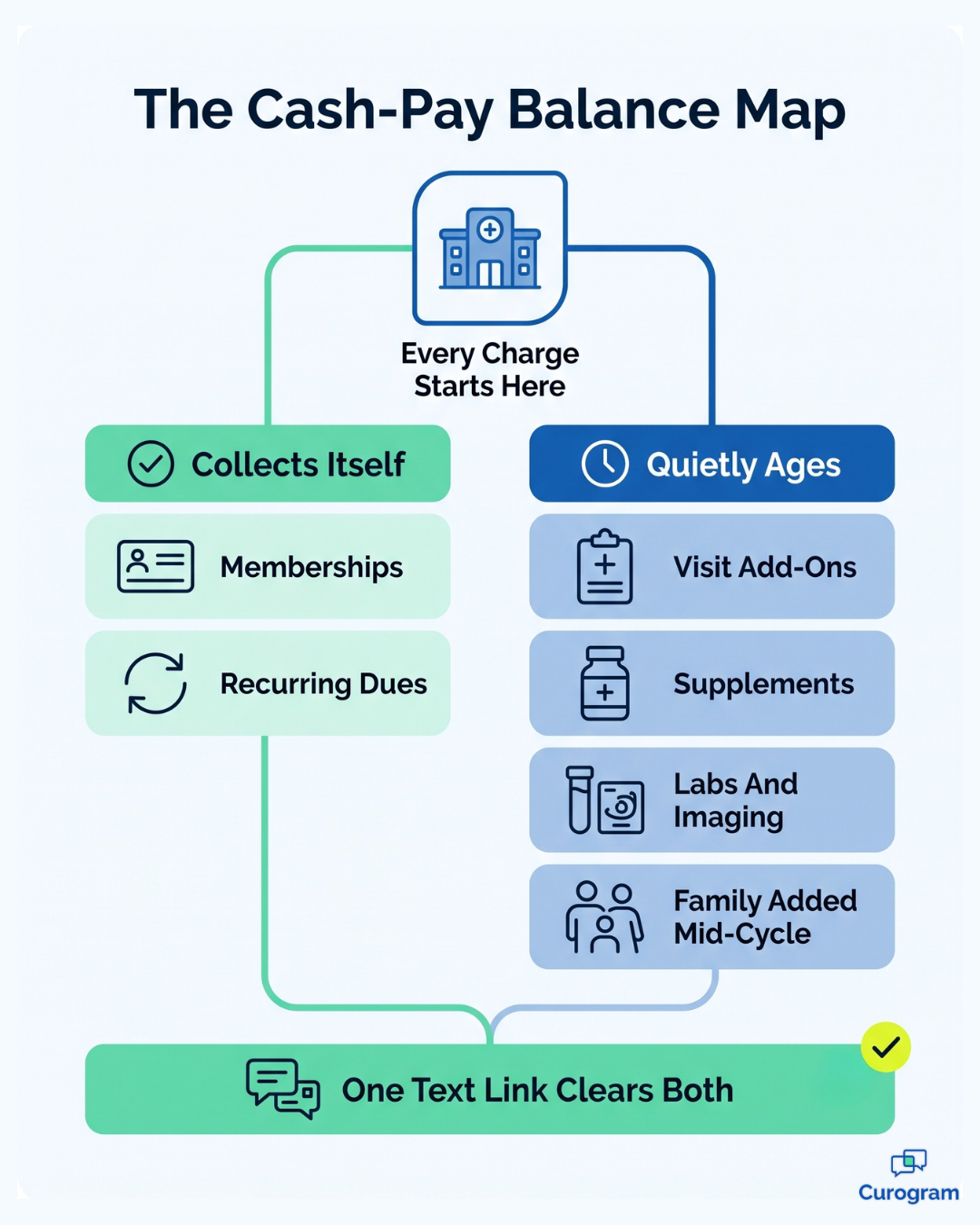
The difficulty is everything that doesn't repeat. A one-off visit balance, a supplement order, a lab add-on charged after the fact. Each of those still routes through a portal login before a single dollar moves.
Watch how a $400 balance ages when nobody involved does anything wrong:
- The visit ends and the patient fully intends to pay.
- The invoice posts to the portal that evening.
- The patient attempts to log in, cannot remember the password, and abandons it.
- Day 30 arrives, so a printed statement goes into the mail.
- Day 45 arrives, and your billing manager starts making phone calls.
Cerbo patient payment collection doesn't stall because your team is slow. It stalls because the patient hit a login screen at the exact moment they most wanted to pay you.
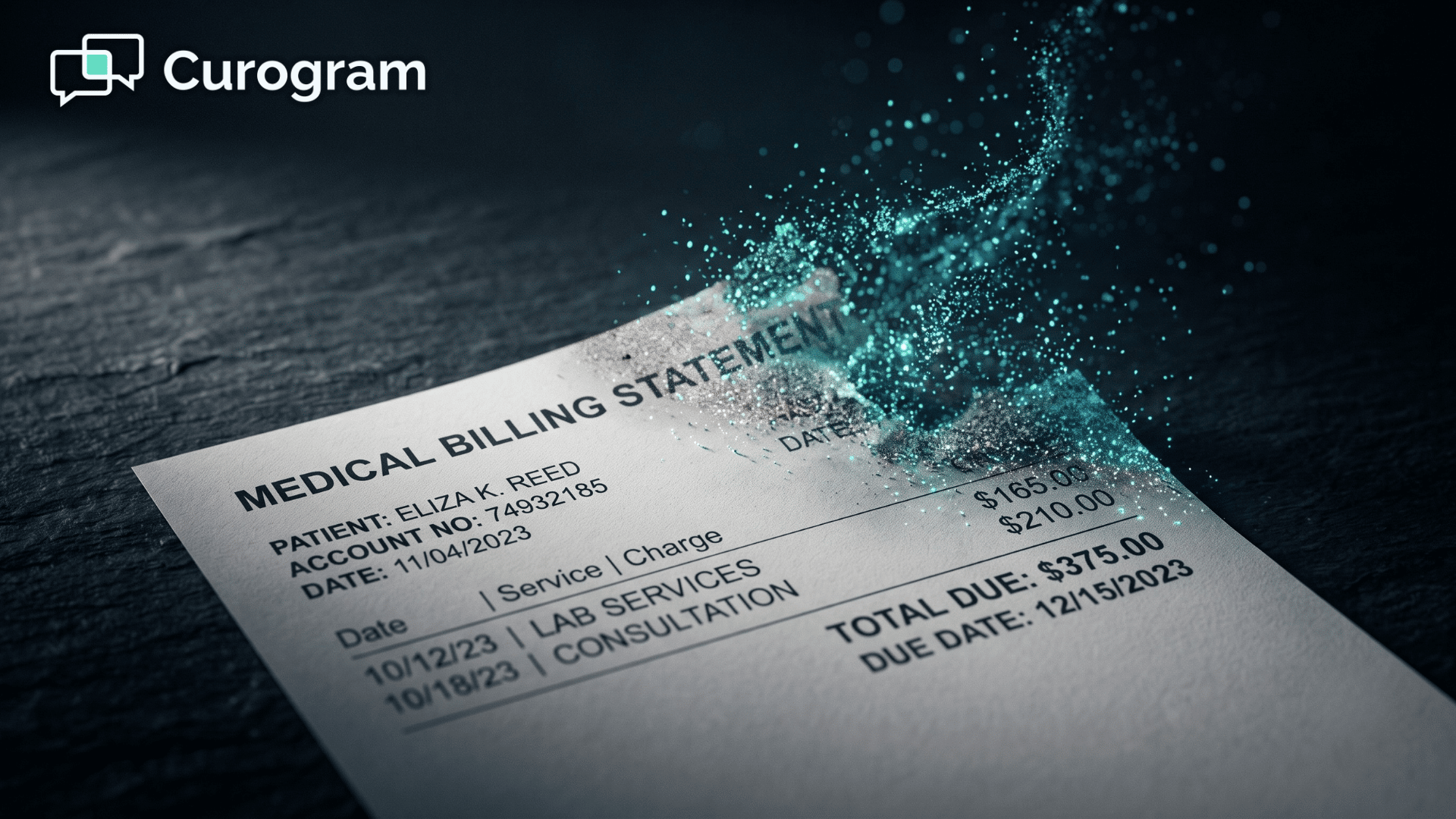
Then the backup plan makes it worse. Paper statements collect only about 20% of what they bill, and mailing them costs most practices $800 to $1,000 a month. You are paying for a channel that misses four times out of five.
Now measure that against your price point. At $300 to $500 per visit with no insurance floor underneath it, aging accounts receivable stops being a rounding error and becomes operating cash sitting in somebody's kitchen drawer.
The human cost lands on one desk. Your billing manager spends entire afternoons functioning as a collections agent, chasing patients who were happy to pay from the beginning.
Nobody in that story is the villain. The path between care and payment is.
The Shortest Route From Care to Cash
The fix isn't a louder reminder. It's a shorter path. Curogram turns the open balance into something a patient can clear in two taps, on the phone already in their hand.
One link, no login, any phone
A secure payment link arrives by text shortly after the visit concludes. The patient taps it, enters a card, and receives an automatic receipt. There's no application to download and no forgotten password to recover.
SMS payment link medical billing works for a plain reason:
People read their texts. Open rates for SMS run near 98%, while portal emails sit buried in a crowded inbox.
You aren't asking patients for new behavior. You're meeting behavior they already have.

Cerbo keeps the books, Curogram clears the balance
Balances trigger from Cerbo, and finished payments post back into the record on their own. Your subscription billing keeps running untouched, and your billing history stays in one place.
That split matters. Cerbo manages your billing records, and Curogram removes your patient's payment friction. Neither tool is trying to do the other's job.
Where cash-pay practices feel it fastest
DPC membership billing friction rarely shows up in the monthly dues, since those charges run on a fixed schedule.
It shows up in everything sitting next to the membership.
- Visit charges that fall outside the covered scope
- Supplement and in-house dispensary orders
- Lab draws, imaging referrals, and procedure add-ons
- Family members enrolled partway through a cycle
Those are the charges that quietly age past 60 days.
When you collect patient balances by text, they settle inside the same conversation where the patient already asks about refill timing and appointment availability.
Most clinics begin with a single balance type, then become a paper statement replacement practice within a quarter.

What Changes When Money Arrives in Days
Numbers illustrate this better than adjectives do. Consider a practice carrying 40 open visit balances each month at an average of $400 apiece, which puts $16,000 on the table.
| Monthly snapshot | Paper statements | Pay by text |
|---|---|---|
| Open visit balances | $16,000 | $16,000 |
| Collection rate | 20% | 65% |
| Dollars collected | $3,200 | $10,400 |
| Statement mailing cost | $900 | $0 |
| Net to the practice | $2,300 | $10,400 |
| Typical days to payment | 45 or more | 3 |
The 65% figure above is a planning estimate, not a promised result. Even so, the gap holds its shape under almost any number you swap in.
In practice, that is about $8,100 more per month, or roughly $97,000 a year, on revenue you already earned.
The timing improvement matters as much as the total. Accounts receivable aging compresses from months into days, which means your cash flow finally corresponds to the direct-pay model you deliberately chose.
Staffing math shifts with it. Cut even 10 hours of collections calls a month and your billing manager wins back more than a full workday for claims, coding, and real patient questions.
Closing that gap is exactly what the text to pay healthcare cash practice model is built to do.
For your team, the daily routine improves in three quiet ways:
- Fewer awkward money talks at the checkout desk
- No envelope stuffing, postage runs, or returned mail to sort
- A clean record of who paid, when, and how much
None of this is dramatic. It's simply the difference between a practice that waits to get paid and one that gets paid on the day care is delivered.
What the First 30 Days Actually Look Like
Most practices assume a payment change means retraining the front desk. It doesn't.
The rollout works best when you start narrow and let one balance type prove the pattern.
- Pick one charge type to start, usually visit balances or supplement orders.
- Send the payment link from the thread your staff already uses for scheduling.
- Track two numbers for a week: how many paid, and how fast.
- Expand to the other balance types once that week holds up.
Watch settle time more closely than collection rate. A balance that clears in two days instead of 45 tells you the friction was the login, not the patient's willingness to pay.
You'll still have people who prefer to hand over a card at checkout, and that's fine. Keep those lanes open. The text link catches balances that would otherwise drift past 60 days, not force everyone onto one method.
One thing worth pairing with it. Automated appointment reminders cut no-shows, and fewer no-shows means fewer empty slots earning nothing.
Payment friction and schedule gaps drain the same account, so practices that fix both see cash flow change faster.
Stop Mailing Envelopes to People Who Live on Their Phones
Patients who choose a cash-based practice have already told you something useful. They opted out of the insurance maze and agreed to pay you directly, which makes them a group with clear intent.
Your job isn't about convincing them to pay. Your job is clearing out everything standing between that intent and the payment itself.
Right now, the only real obstacle is a login screen. It's small, it's boring, and it quietly costs you thousands a month in balances that age past the point where anyone wants to chase them.
Keep the division of labor clear. Cerbo manages your billing records, your memberships, and your invoicing, and it performs that role well. Curogram removes your patient's payment friction by delivering a secure link to the place where they already read messages.
The financial comparison isn't complicated. Paper statements cost $800 to $1,000 monthly and recover roughly 20% of what they bill, while a text link costs a fraction of that and settles balances during the same week care happened.
The softer wins add up quickly too. Your billing manager stops working as a collections agent, your front desk stops apologizing for the portal, and your patients stop feeling nagged about money they always meant to pay.
There's no good reason left to keep mailing envelopes to people who live on their phones. The behavior you need already occurs dozens of times each day inside your existing text thread.
Book Your Demo and watch a real balance settle by text in under a minute. We'll walk through your actual numbers, including your current statement spend and your average visit balance, then show you what that same week looks like on the other side.
Frequently Asked Questions
Cerbo builds the list and Curogram sends it. Your team runs the Advanced Patient Search, or works from synced fields like last appointment date and tags. Curogram delivers the campaign by SMS from your practice number. Replies arrive in a shared inbox, and staff book the resulting visits back in Cerbo.
Cerbo's help center describes the portal notice as passive, with no notification prompting patients to check it. A message counts as read only after the patient logs in and opens the Secure Message tab. Someone who stopped engaging four months ago is not logging in, so the follow-up sits unread while the chart looks handled.
Start narrow. Patients last seen 6 to 12 months ago, with no future appointment, who never finished a protocol. That group has the clearest reason to hear from you and the shortest path to a booking. Once it performs, add protocol-stage segments so a recheck message never reaches a patient seen last week.
Reminders protect a visit already on the calendar. Recalls go to patients with nothing booked at all. The two work as a pair, since a recall reply becomes an appointment and the reminder then keeps that appointment from turning into a no-show. Practices running only reminders protect the schedule they already have.
Members pay monthly for access, and access feels real only when they hear from you. A seasonal protocol note or a practice update keeps the fee connected to something visible. Silence between visits is where renewal doubt starts, and a quarterly message costs far less than winning that member back.