Secure Online Forms | Eliminate Paper Intake Delays for Azalea Health
💡 Secure online intake forms for Azalea Health rural clinics let patients complete registration, medical history, and consent documents on their...
9 min read
Aubreigh Lee Daculug
:
March 18, 2026
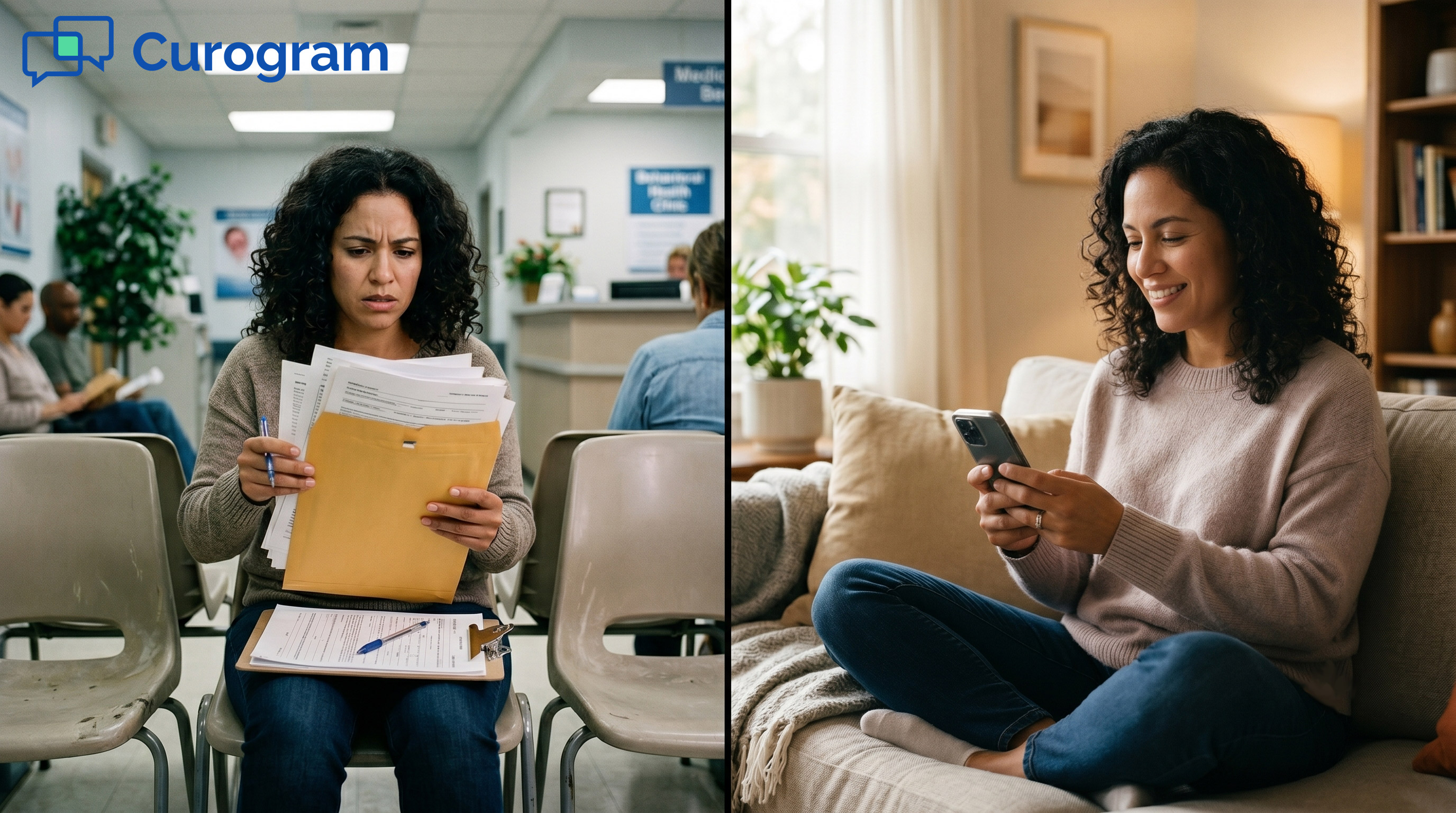
A patient drives 40 minutes to your Azalea Health clinic. She left work early, arranged childcare, and arrived on time. The front desk hands her a clipboard with six pages of forms.
By the time she finishes and gets called back, her 2 PM appointment has turned into a 2:40 start. That gap — those 40 minutes of waiting, writing, and frustration — is what rural patient pre-registration via text for Azalea Health clinics is built to eliminate.
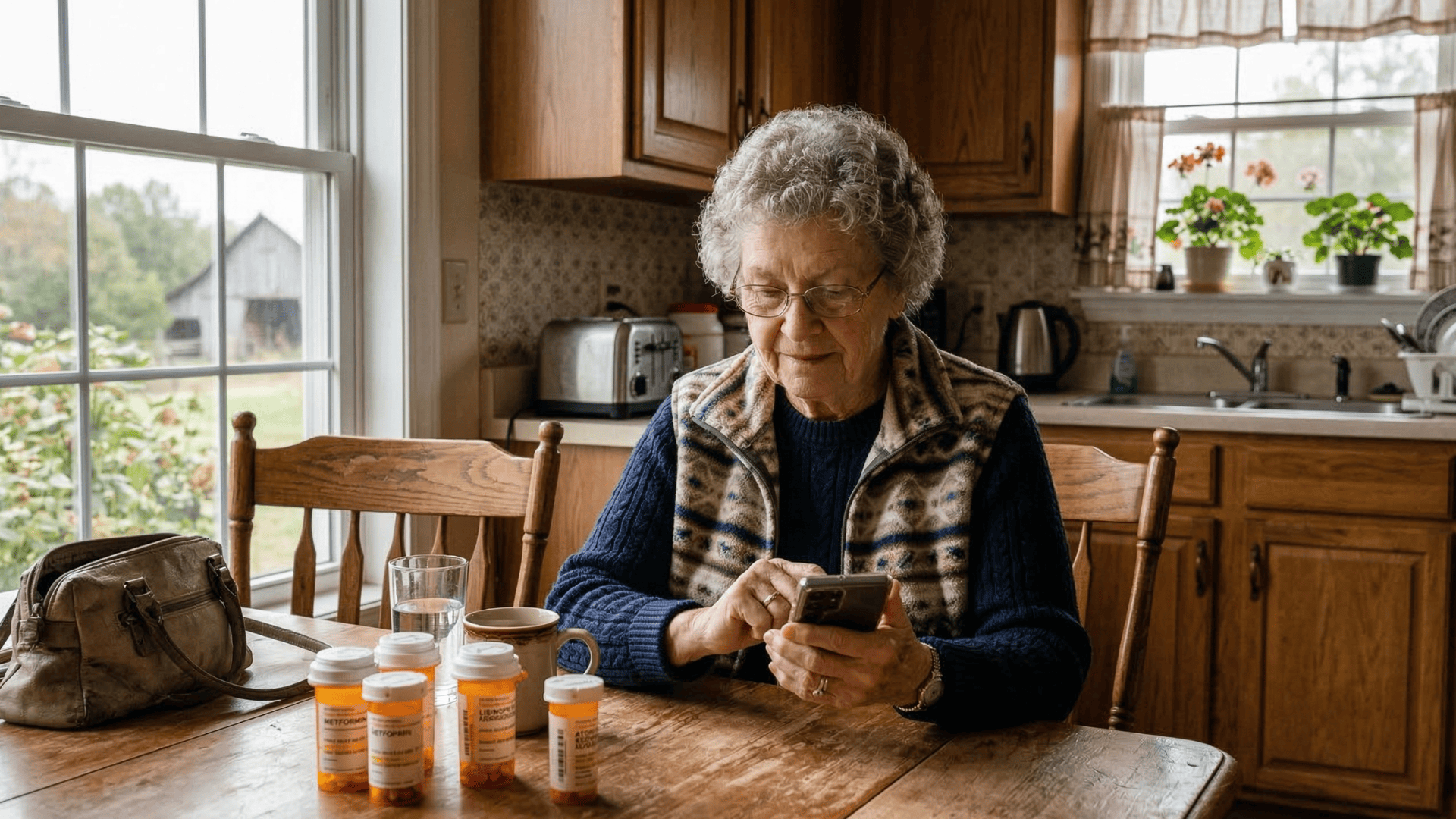
Curogram sends a secure form link to the patient's phone before her appointment. She fills out her demographics, insurance information, medical history, and consent forms at her kitchen table — reading glasses on, medication bottles nearby, no rush.
When she arrives at the clinic, her information is already in the system. She checks in and gets seen.
No app to download. No patient portal login. No clinic Wi-Fi needed to submit. Just a text message and a form that works on any phone.
For rural clinics, the waiting room clipboard is more than a minor inconvenience. It delays providers, backs up schedules, and sends a quiet signal to patients: "We weren't ready for you."
That signal matters — especially when your patients have made a real effort to be there.
The good news is that fixing it doesn't require an overhaul of your EMR or a new patient portal rollout. It requires a text message sent the day before.
This article walks through what that looks like in practice, how Curogram's mobile intake forms are built for the patient experience your rural population actually needs, and what the shift from "waiting room paperwork" to "walk-in ready" looks like for Azalea Health practices.
The clipboard doesn't have to be the first thing your patients touch when they walk through the door.
Walk through the arrival experience from your patient's point of view. She scheduled her appointment two weeks ago, confirmed yesterday by text, and made it to your clinic on time.
She did everything right. Then the clipboard comes out — six pages, small print, fields asking for the exact dates of surgeries from 15 years ago.
She finds a seat in the lobby. The chairs are uncomfortable. Her reading glasses are in the car. The medical history section asks for details she can't remember off the top of her head.
By the time she returns the clipboard to the front desk and they process her forms, her 2 PM appointment doesn't start until 2:40. She was on time. The system wasn't.
This scenario plays out dozens of times a day in rural clinics across the country. It's so routine that most staff don't think twice about it. But your patients notice — and they remember.
Not everyone in your waiting room experiences the clipboard the same way.
For some patients, it's more than an inconvenience — it's a real barrier.
The clipboard doesn't treat all patients equally. And in a rural setting, where many patients already made a significant effort just to show up, the stakes of that experience are higher.
A 30-minute drive to your clinic is time that patient could have spent at work, at home, or with their family. Asking them to spend another 25 minutes on forms when they get there is a real cost — and most won't say so out loud.
When the first 25 minutes of a visit are spent on paperwork, the unspoken message to the patient is that the clinic wasn't ready for them. For patients in rural areas who arranged a ride, took time off work, or drove a long distance to be seen, that feeling sticks.
Over time, it contributes to disengagement. FQHC patient check-in without paperwork isn't a luxury feature — for underserved rural communities, it's a trust-building signal that the clinic values their time.
Think about what that patient's first impression tells them about the care that follows. If the front end of their visit feels disorganized, it plants a seed of doubt — even if the clinical care is excellent.
First impressions in healthcare shape how patients interpret everything else, from provider interactions to treatment recommendations.
The irony is that these same patients text their grandchildren, order prescriptions by mail app, and check the weather on their phones. They're perfectly comfortable with mobile technology. The barrier isn't the phone — it's that nobody ever sent them the form ahead of time. Once you do, most patients complete it without any issues at all.

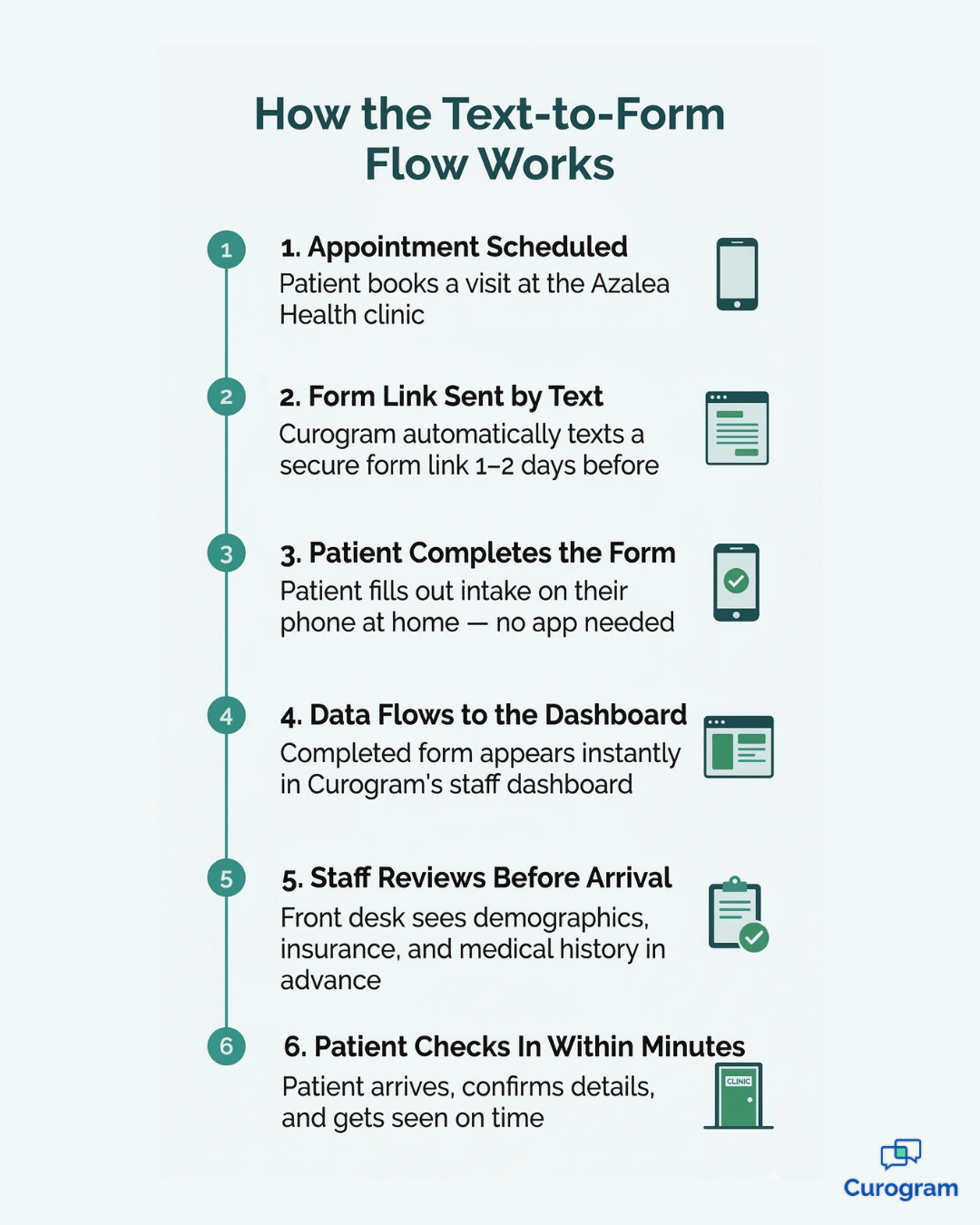
Curogram functions as the pre-visit convenience layer between your Azalea Health practice and your patients. Two days before the appointment,
The patient receives a text message:
"Hi Sarah, please complete your registration forms before your visit on Thursday. Tap here: [link]." She opens it on her phone.
No login. No account creation. No password to remember.
The process sounds simple because it is. That simplicity is intentional. Every step that requires a patient to create an account, remember a password, or navigate a portal is a step where someone gives up. Curogram removes those steps entirely.
A text arrives. A patient taps. A form opens. That's it.
The information patients submit covers everything your front desk would otherwise collect in the lobby: demographics, insurance details, medical history, current medications, and consent forms.
By the time the patient walks in, your staff already has a complete picture. The check-in conversation becomes a quick confirmation rather than a data-collection exercise.
The form is built around what might be called grandma-proof design — and that's intentional.
Every design decision was made with low tech literacy and mobile-first use in mind.
These aren't cosmetic choices. They're the difference between a patient who completes the form and one who closes the tab after the third confusing screen.
The design reflects a real understanding of who rural patients are and what their digital experience actually looks like day to day.
For patients who lack home broadband, the form link works over a basic cellular connection. It's a lightweight web form — not a data-heavy app — so it loads quickly even on slower rural networks.
Patients can start at home anxd finish in the parking lot, or complete it entirely at a family member's house or the public library. The Azalea Health mobile intake forms patient experience is designed to meet patients wherever they are, not wherever it's convenient for the system.

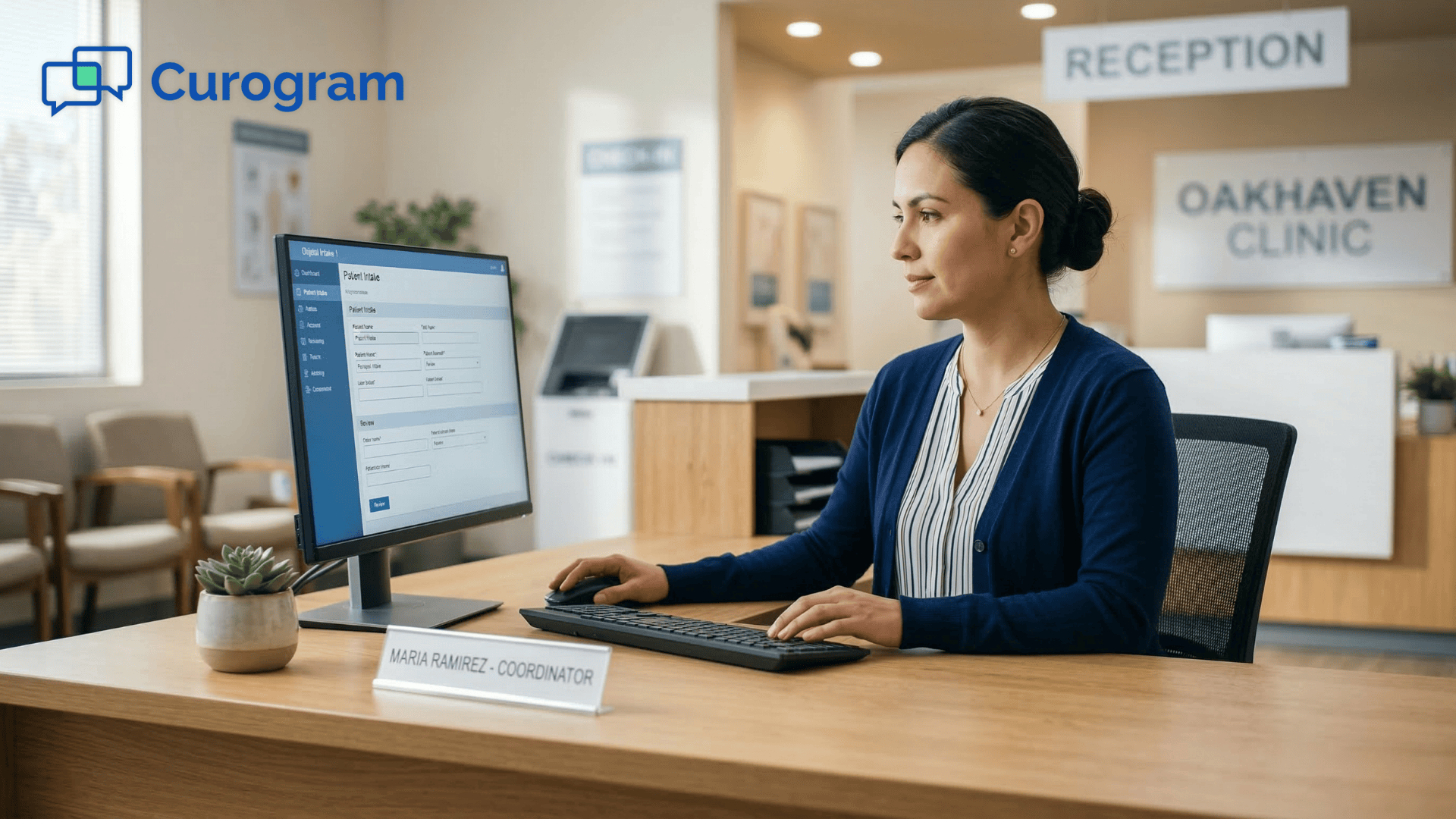
When Sarah submits her form, the information flows directly into Curogram's dashboard through Azalea Health integration, allowing staff to review patient details before she even arrives.
Your front desk staff can see her demographics, insurance details, medication list, and consent forms before she walks through the door.
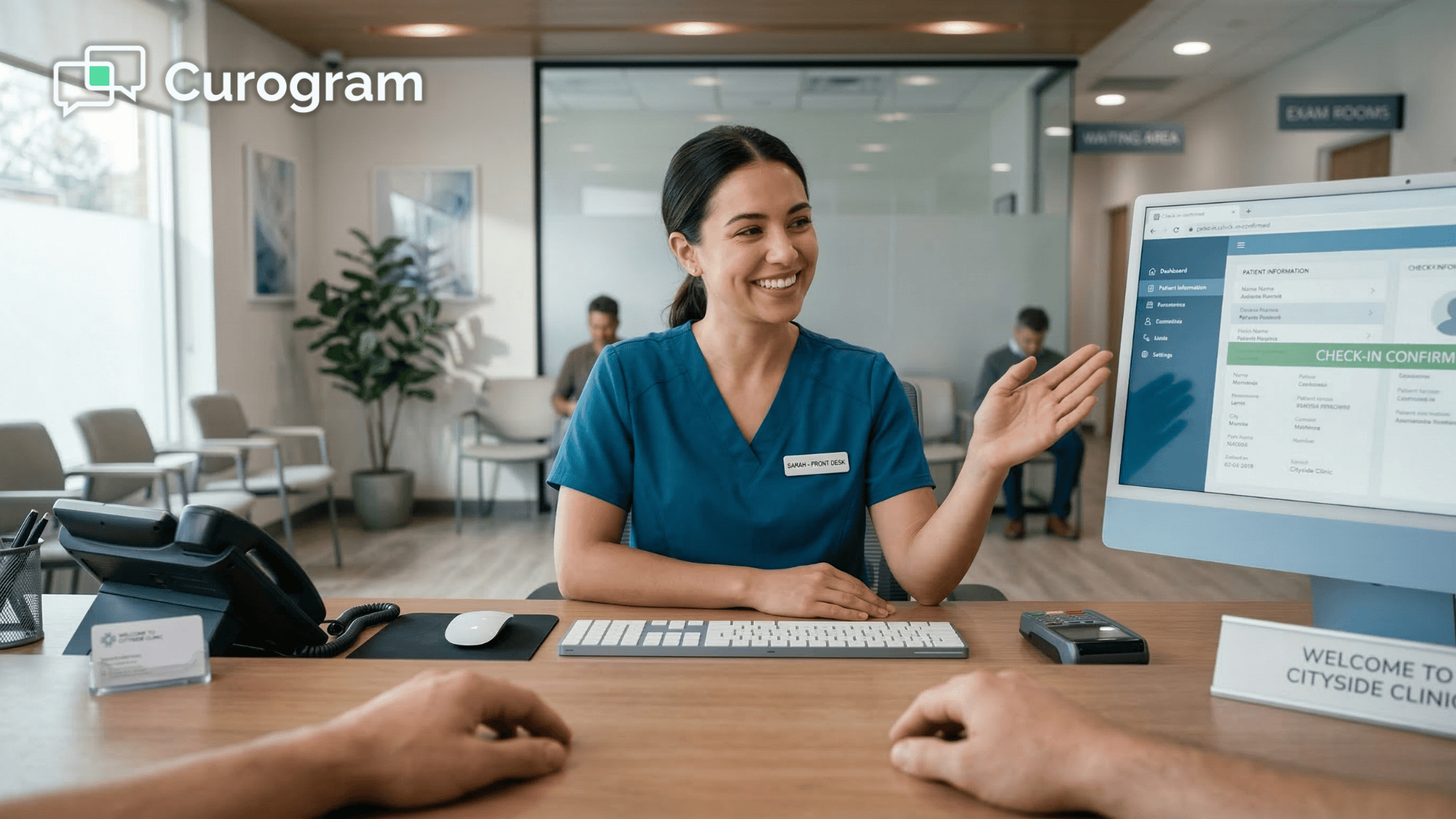
The check-in conversation changes from
"Here's a clipboard" to "Hi Sarah, we already have your information — has anything changed?" That shift is small in words but significant in how it makes a patient feel.
Staff spend less time processing paperwork and more time actually greeting patients. That matters in a busy rural practice where the front desk is often managing phones, walk-ins, and scheduling at the same time.
Removing intake from the arrival equation reduces the pressure on staff and creates a calmer, more organized check-in experience for everyone in the lobby.
This matters especially for no-portal patient registration at rural clinics, where patients are often older, less digitally connected, and more likely to abandon a process that requires too many steps. A text link that opens a simple form is a low barrier. It asks almost nothing of the patient — and gives back a better visit for everyone.
Picture the same patient — Sarah — but this time with Curogram in place. She received her form link on Tuesday. She filled it out Wednesday evening at home, her reading glasses on, her prescription bottles lined up on the kitchen table. She submitted it in about eight minutes.
No stress. No guesswork. No rushing.
She arrives at 1:55 for her 2 PM appointment. The front desk greets her by name and confirms they already have her forms. She takes a seat. At 2:02 PM, she's in the exam room. Her provider has already reviewed her medication list and medical history.
The visit starts with a conversation about her health — not with "Did you fill out all the forms?"
That eight-minute difference in the waiting room isn't just a scheduling win. It tells Sarah something important: this clinic was ready for her. It prepared. It respected her time before she even walked through the door.
That message shapes how she experiences everything that follows — the provider interaction, the treatment discussion, the follow-up instructions.
The gains from pre-registration go beyond one patient having a smoother morning. Based on our internal data, Curogram helps speed up patient wait times and reduces the administrative burden that keeps front desk staff from focusing on higher-value tasks.
Provider schedules stay on track because intake is no longer a bottleneck at the start of each visit block.
When providers start on time, they finish on time. That means fewer rushed appointments, fewer late days, and a healthier working environment for your clinical staff.
It also means patients who are scheduled later in the day aren't penalized by the delays that built up throughout the morning — a problem that compounds quickly in a full rural clinic.
Patient satisfaction improves because the first interaction with the clinic is seamless. The experience communicates — without anyone saying a word — that the practice values its patients' time.
That feeling doesn't stay in the exam room. Sarah tells her neighbor. Her neighbor calls to schedule. The practice's reputation grows not through marketing spend, but through the simplest possible signal: they didn't waste my time.
That word-of-mouth effect is especially powerful in rural communities, where personal recommendations travel fast and patient loyalty runs deep. When your intake experience becomes the thing patients talk about positively, it becomes one of your strongest referral tools — and it costs nothing extra to maintain.
Your patients drove 45 minutes to be on time for their appointment. The least your clinic can do is be ready for them when they arrive.
Curogram's patient pre-registration text message system is built for exactly this moment. It respects the time and effort rural patients invest in their healthcare. It takes the clipboard out of the equation — before they walk through the door — and replaces it with a seamless, mobile-friendly experience that works on any phone, over any cellular connection.
Azalea Health gives your practice the clinical tools to deliver excellent care. Curogram gives your patients an excellent first impression of the practice delivering it.
When text-based intake for elderly rural patients and anyone else in your community is this simple to set up, there's no reason the clipboard has to be the first thing a new patient touches.
The transformation isn't complicated. Send a text before the visit. Let your patients complete their forms at home. Watch the lobby clipboard stack disappear and the check-in line shrink.
Based on our internal research, practices that streamline intake this way see real gains in patient satisfaction, staff productivity, and schedule efficiency — without adding complexity to anyone's workflow.
If you're ready to stop handing out clipboards and start making your patients feel like you've been waiting for them — not the other way around — Curogram is the place to start.
Schedule a demo today and see how Curogram's pre-registration forms work inside an Azalea Health workflow.
Yes. The form link opens a HIPAA-compliant, encrypted web form. Patient data is sent through secure channels and covered by Curogram's signed Business Associate Agreement (BAA). The link is unique to each patient and expires after submission, so unauthorized access isn't possible. No health information is stored on the patient's phone.
Curogram's forms auto-save progress as patients go. If someone completes half the form at home and finishes the rest in the clinic parking lot — on their phone or a clinic tablet — all their previous entries are preserved. Staff can also see partial submissions in the dashboard, so even an incomplete form saves time compared to starting from scratch on paper.
Yes. Curogram's form builder supports multilingual forms. Practices can create Spanish-language versions — or forms in other languages relevant to their patient population — and send the right version based on the patient's language preference. For FQHCs serving diverse rural communities, this is a meaningful improvement over English-only paper forms.
Yes. Curogram is built to integrate with Azalea Health, so patient information submitted through the pre-registration form flows directly into the practice's workflow — no manual re-entry, no double data entry by staff. The integration means your team isn't copying information from one system to another. The data arrives where it needs to be, ready to use before the patient walks in.
Curogram supports a wide range of patient-facing forms, including new patient intake, demographics updates, insurance verification, medical history, medication lists, and consent forms. Practices can customize their form set to match what they collect today — so there's no need to rebuild your intake process from scratch. You're simply moving it from the clipboard to the patient's phone.
💡 Secure online intake forms for Azalea Health rural clinics let patients complete registration, medical history, and consent documents on their...
💡 Azalea Health staff digital intake forms eliminate data entry by moving patient registration from paper to mobile-optimized digital forms that...
💡 Athenahealth secure online forms powered by Curogram replace paper intake with a text-based digital form that writes data straight into Athena's...