
Text Patients Without the myHealthspot Portal Login
 Jo Galvez : Jun 30, 2026, 9:00:00 AM
Rural patients won’t download an app or log into myHealthspot. See how Curogram texts Azalea Health patients on any phone — 98% open, no portal...
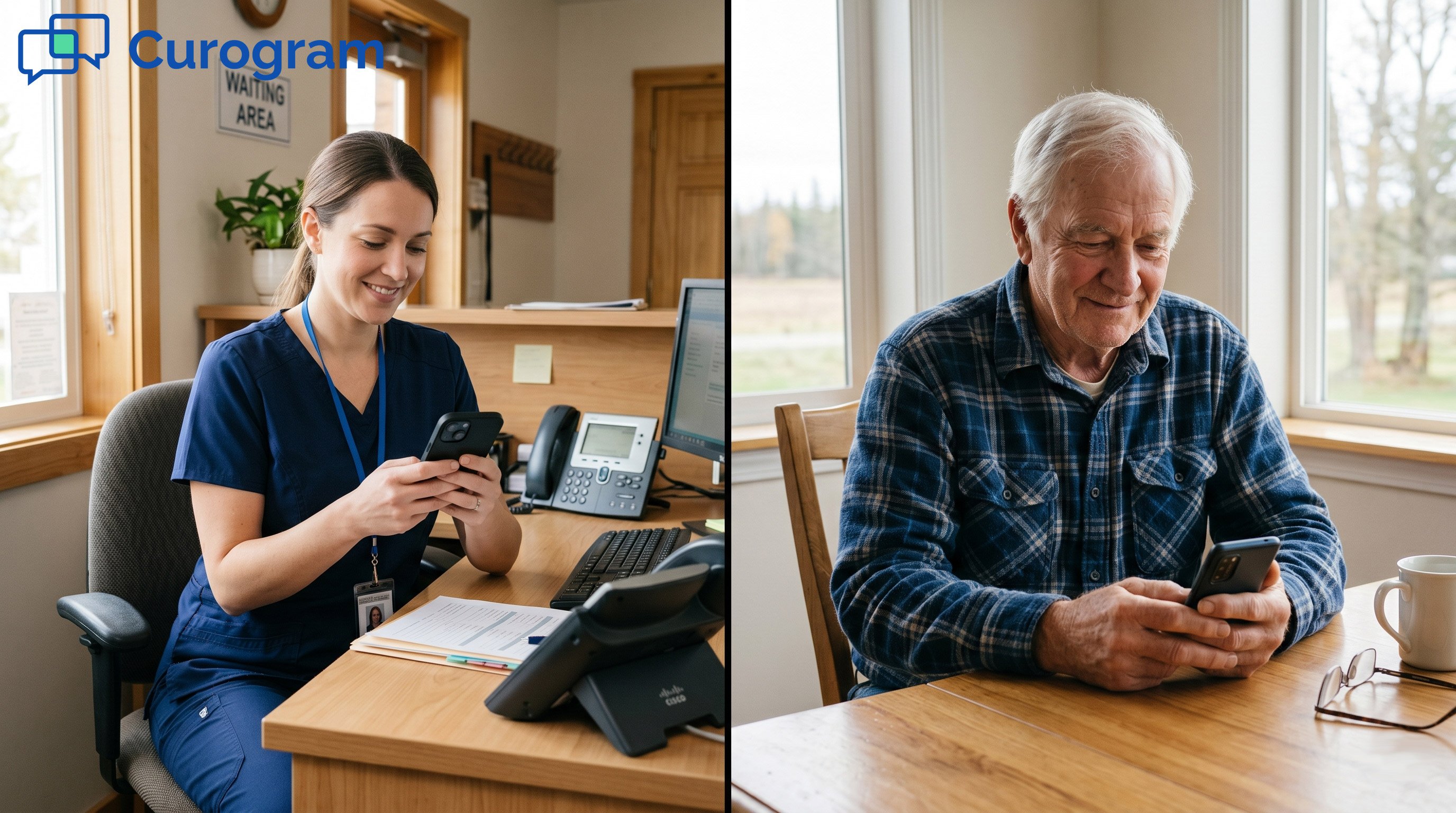
It’s 9 a.m, and the rural practice’s front desk is already busy. The phone lines are full, and voicemails pile up. Most calls ask one small thing that a text could solve in seconds.
This is the daily reality for many practices on Azalea Health. The EHR runs the clinical and billing work well. Yet the myHealthspot portal keeps the patient conversation behind a login. And rural patients often will not log in.
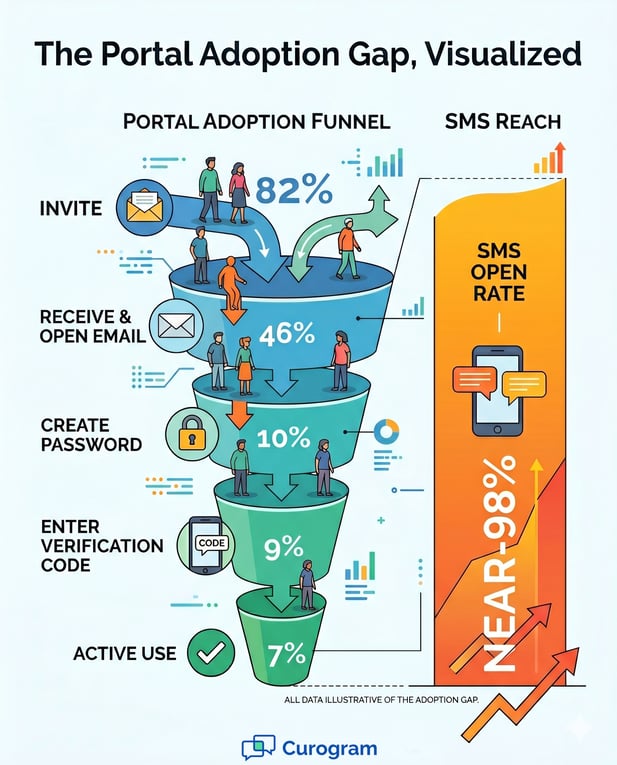
That gap has a name, and we call it the portal adoption gap. A patient gets a portal invite but cannot finish the email code.
They give up and call the desk instead. Soon, the staff becomes a switchboard, not a care team.
They chase confirmations by phone and play phone tag over refills. Meanwhile, no-shows climb, and revenue slips away.
Each empty slot in an encounter-based clinic stings. The simplicity Azalea promised seems to stop at the front desk.
There is a simpler path that meets patients where they already are. HIPAA-compliant two-way texting for Azalea Health practices works as plain SMS. It needs no portal, no app, and no separate vendor. Curogram layers this channel on top of Azalea Health.
Texting reaches the whole panel, not just the tech-savvy few. It reaches the patient 45 minutes out from the clinic. It reaches the grandparent on a flip phone. It reaches the family with spotty broadband at home.
The phone still rings, of course, but far less often. Patients who once avoided the portal now reply by text. That single shift changes the whole rhythm of the day.
This guide breaks down the problem and the fix in plain terms. You will see why the portal stalls for rural panels.
You will see how a direct text line restores the conversation. And you will see the results that rural clinics report.
The myHealthspot portal does its job for records and refills. But every workflow starts with one hard step: account creation.
For an older, rural panel, that first step is where engagement quietly dies. Here is how the gap forms, and why it costs your clinic real money.
Azalea Health patient texting solves a problem the portal creates by design. The portal needs an email, a password, and a code to verify.
Many rural patients stall at step one and never return. They may be older, busier, or simply less sure online.
The portal assumes a patient who logs in often and likes apps. Rural panels do not always match that picture. One missed verification code, and the patient drops off for good. After that, the clinic loses its online line to them.
Think about your oldest patients for a moment. They may not own a smartphone at all. A portal asks them to learn a new tool just to talk. Most will not, and the clinic loses touch.
When the portal is your only secure channel, reach stays painfully low. Single-digit portal use is common across rural and community sites.
So the practice ends up with almost no patient-messaging channel at all. A myHealthspot portal messaging alternative closes that gap quickly.
Low reach is not a staff failure; it is a channel failure. You cannot push a message a patient never opens. Text meets them on a tool they already check all day. That one change lifts reach across the entire panel.
Reach is the whole game in rural care. A clinic cannot help a patient it cannot reach. Text quietly raises that number for everyone. The panel comes back into view.
Take the portal out, and the phone is all that is left. Staff spend the day buried in hold music and voicemail.
They play endless phone tag for refills and simple questions. SMS patient communication for rural clinics finally ends that loop.
A small rural desk cannot scale by phone alone. Two people cannot call an entire panel each day.
So calls slip, patients wait on hold, and tempers fray. The work piles up while the schedule slowly suffers.
Picture the phone ringing while three people wait at the counter. Staff cannot do both jobs well at once.
Something always slips through the cracks. Usually, it is the patient who needs a quick answer.
Unanswered calls turn into missed confirmations. Missed confirmations turn into no-shows. In encounter-based RHC slots, every empty chair stings. Curogram client data from clinical settings shows no-show rates 53% below the industry average.
Each no-show is care that simply did not happen. It is also revenue that the clinic can never recover. A quick text confirms the visit before the patient forgets. That keeps chairs full and keeps care on track.
A texted reminder lands in a place patients check. They tap back yes or no in seconds. The schedule firms up a full day ahead. The clinic plans instead of scrambling.
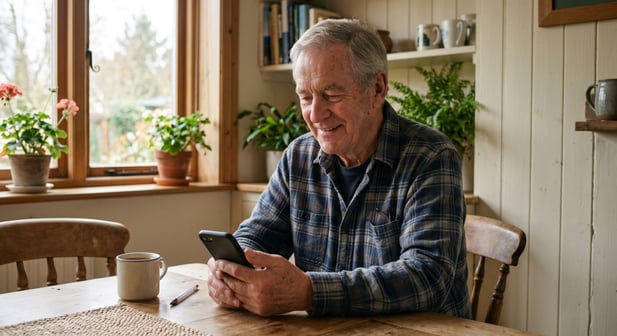
Curogram is the direct line your rural patients will actually answer. It is two-way texting that needs no login and no app to install. Patients reply on the simple phone they already carry. Here is what your front desk gets in return.
Patient texting without a portal login sits at the heart of this. There is no sign-up wall for anyone to clear. The patient just texts the clinic and gets a real, human reply. Curogram offers secure text messaging for Azalea Health EHR users, built for HIPAA from day one.
No login means no drop-off before the conversation even starts. Older patients text the clinic the same way they text family. The barrier that killed portal use simply disappears. Reach climbs because the friction is gone.
Setup does not fall on the patient at all. The clinic turns the channel on, and texting just works. There is nothing for patients to download or recall. That is why adoption climbs so fast.
Curogram’s two-way texting inbox gives the desk one secure thread per patient. Confirmations, refill questions, and ride coordination all live in one place. The team works from a single dashboard, not a buried portal queue. Nothing gets lost between staff or systems.
Any team member can pick up a thread and see the full history. Handoffs stop dropping the ball at shift change. Patients feel like they are talking to one steady clinic. That continuity builds trust over time.
One thread also means one clear record of every chat. Staff scrolls back to see what was said. Patients never repeat themselves to a new face. The conversation feels personal, not scripted.
Curogram works beside Azalea Health, not on top of it. Messages and records stay in sync through the EMR integration.
Staff stop double-keying the same details into two systems. The clinical record stays clean and current.
Sync means the text channel never becomes a silo. What happens in the thread shows up where care teams expect it. No one has to copy notes over by hand. The whole picture stays in one trusted place.
Your team keeps working inside familiar tools. Texting rides alongside without adding new screens to learn. The EHR remains the source of truth. Curogram simply opens a door that patients will walk through.
Compare two-way texting vs Updox for Azalea Health, and the math gets clear. Updox covers one slice, billed and supported on its own.
Curogram folds texting, reminders, forms, and reviews into a single login. For RHCs and FQHCs, texting is the one channel that reaches the whole panel.
Fewer vendors means fewer contracts, logins, and support lines to chase. Your budget stops leaking across overlapping tools.
One platform handles the patient conversation end-to-end. That is simpler for a lean rural team to run.
Lean rural teams have no time for vendor sprawl. Each extra login is one more thing to manage. Curogram trims that list down to one. The savings show up in both time and money.
|
What patients face |
myHealthspot portal |
Updox in marketplace |
Curogram direct line |
|---|---|---|---|
|
Login to reach you |
Yes |
Often |
No |
|
App download |
Sometimes |
Sometimes |
No |
|
Typical open rate |
Single digits |
Varies |
Near 98% (SMS) |
|
One shared inbox |
Portal queue |
Separate tool |
Yes |
|
Syncs with Azalea Health |
Native |
Add-on |
Yes, via integration |
|
Extra vendor to manage |
No |
Yes |
No |

The shift is real, and it is easy to measure. One secure inbox replaces the portal queue and the extra vendor.
Patients answer in seconds, and the morning call list shrinks. Here is what the numbers and the front desk actually show.
Pew Research Center reports that nearly all U.S. adults text. Industry data puts SMS open rates near 98%.
Portal engagement, by contrast, often sits in the single digits. The gap between those two numbers is not small.
It is the difference between reaching patients and missing them. Text simply lands where the portal cannot.
A message only helps if someone reads it. Text wins that test almost every time. The portal, sadly, loses it most days. So the channel choice decides the outcome.
River Valley Family Health Center proves the point in practice. The three-site rural FQHC moved patient chats to text.
Inbound phone volume fell 24% after the switch. Front-desk staff finally got their mornings back.
That 24% drop is not a vanity stat; it is hours returned. Those hours go back to patients standing at the counter. The phones grow quieter without anyone working harder. The whole front desk breathes easier.
Quieter phones change the mood at the desk. Staff greet patients instead of apologizing for the wait. The clinic feels calmer to walk into. That calm is worth as much as the time saved.
Patients reply to a confirmation in seconds, not days. The day’s call list gets noticeably shorter. A two-person desk stops chasing people who will not log in. Time flows back to the patients in the building.
Quick replies also mean fewer surprises in the schedule. Staff see who is coming and who needs a new slot.
Gaps get filled before they turn into empty chairs. The day runs on rails instead of guesswork.
A shorter call list is not just a nicer day. It frees a small team to work at the top of its skills. Front-desk staff coach patients instead of dialing numbers. The whole clinic moves a little faster.
Texting also powers your automated appointment reminders and confirmations, all on one channel.
And it scales up for mass messaging, and patient recalls that bring lapsed rural patients back.
Curogram client data from clinical settings shows more than 75% of patients confirm their appointments.
That is care kept on schedule, not lost to silence. Each confirmed slot is a patient who gets seen on time. It is also revenue the clinic keeps instead of losing.
The busywork that drained the day starts to fade. Staff stop playing phone tag over simple questions. They spend that time on the people in front of them. Texting turns a switchboard back into a care team.
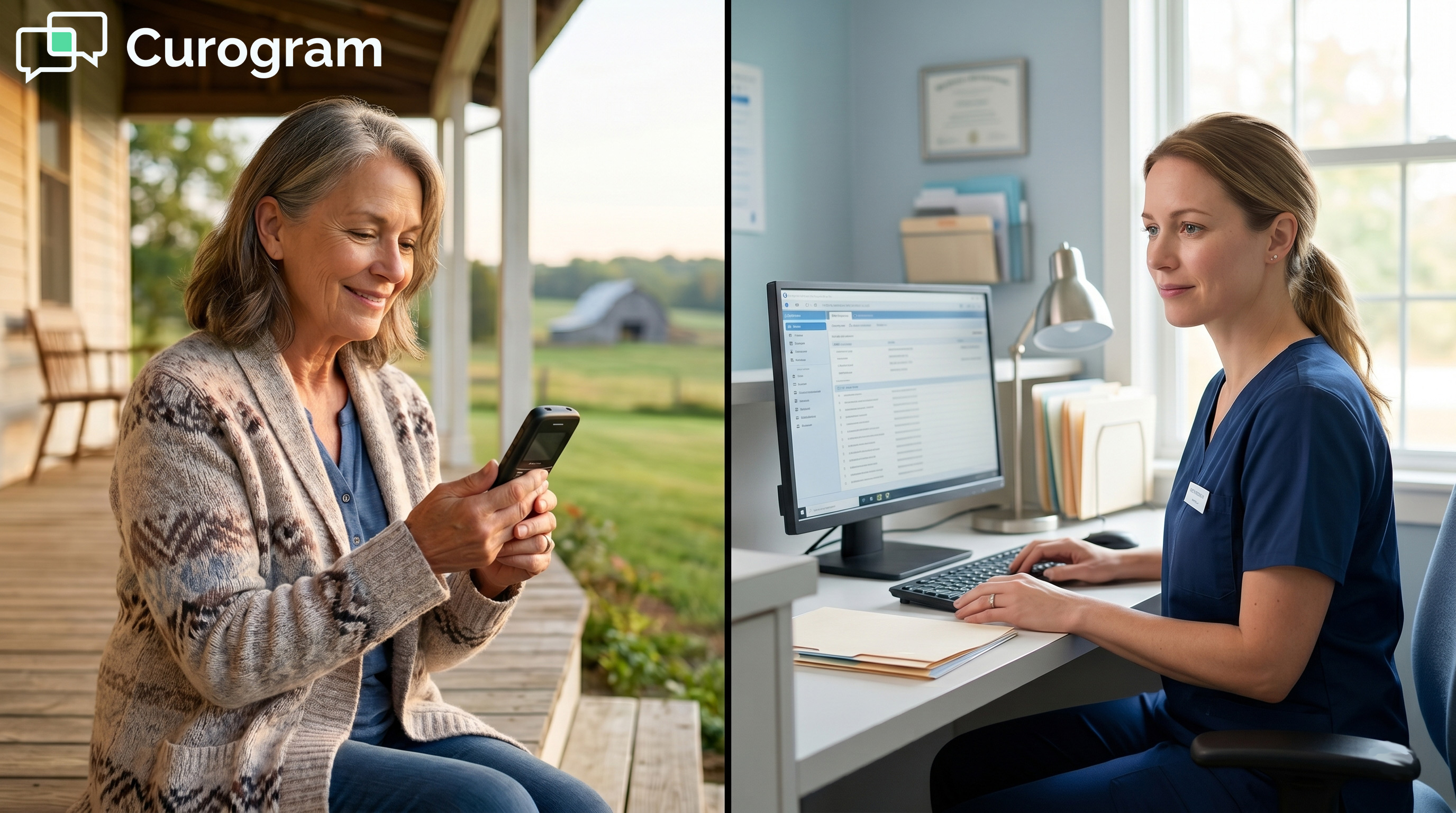
Azalea Health runs the clinical and billing backbone of your rural clinic. It was built for rural care, and it does that part well.
But the patient conversation was quietly slipping through the portal. Curogram brings that conversation back to life.
Think of the split this way. Azalea Health is for your record and your billing. Curogram is for your patients’ convenience. It is the text thread they will actually answer.
HIPAA-compliant two-way texting for Azalea Health practices closes the portal adoption gap. It reaches the patient living far from the clinic. It reaches the grandparent on a flip phone. It reaches the family with weak broadband at home.
Trust matters here, too. Curogram signs a Business Associate Agreement with your practice. Patient texts stay secure from end to end. You get the ease of SMS with the safeguards that an audit demands.
The payoff shows up fast for the whole clinic. Fewer missed confirmations lead to shorter call lists.
More patients get seen, and more revenue stays in the door. River Valley’s 24% drop in inbound calls is one clear example.
None of this asks your patients to change their habits. They keep using the same phone in their pocket. The portal stays in place for those who like it. Everyone else finally has a simple way in.
Your team feels the difference first. The phones quiet down within a few weeks. Staff spend their hours on care, not on hold music. A lean rural desk starts to feel manageable again.
Patients feel the change too, even if they never name it. They get a quick reply instead of a voicemail loop.
They text a question and hear back the same day. That small ease builds real trust over time.
This fits the reason you chose Azalea Health in the first place. You wanted a system that understood rural care.
Now the patient conversation matches that same promise. The simplicity reaches all the way to the front desk.
Set up stays light, so the change does not stall your week. Curogram layers on top of the EHR you already run. There is no portal to rebuild and no app to push. Your patients keep the phones they already own.
Stop running a switchboard for patients who will not log in. Give them a number they can text today.
Schedule a demo today and see it live.
 Jo Galvez : Jun 30, 2026, 9:00:00 AM
Rural patients won’t download an app or log into myHealthspot. See how Curogram texts Azalea Health patients on any phone — 98% open, no portal...
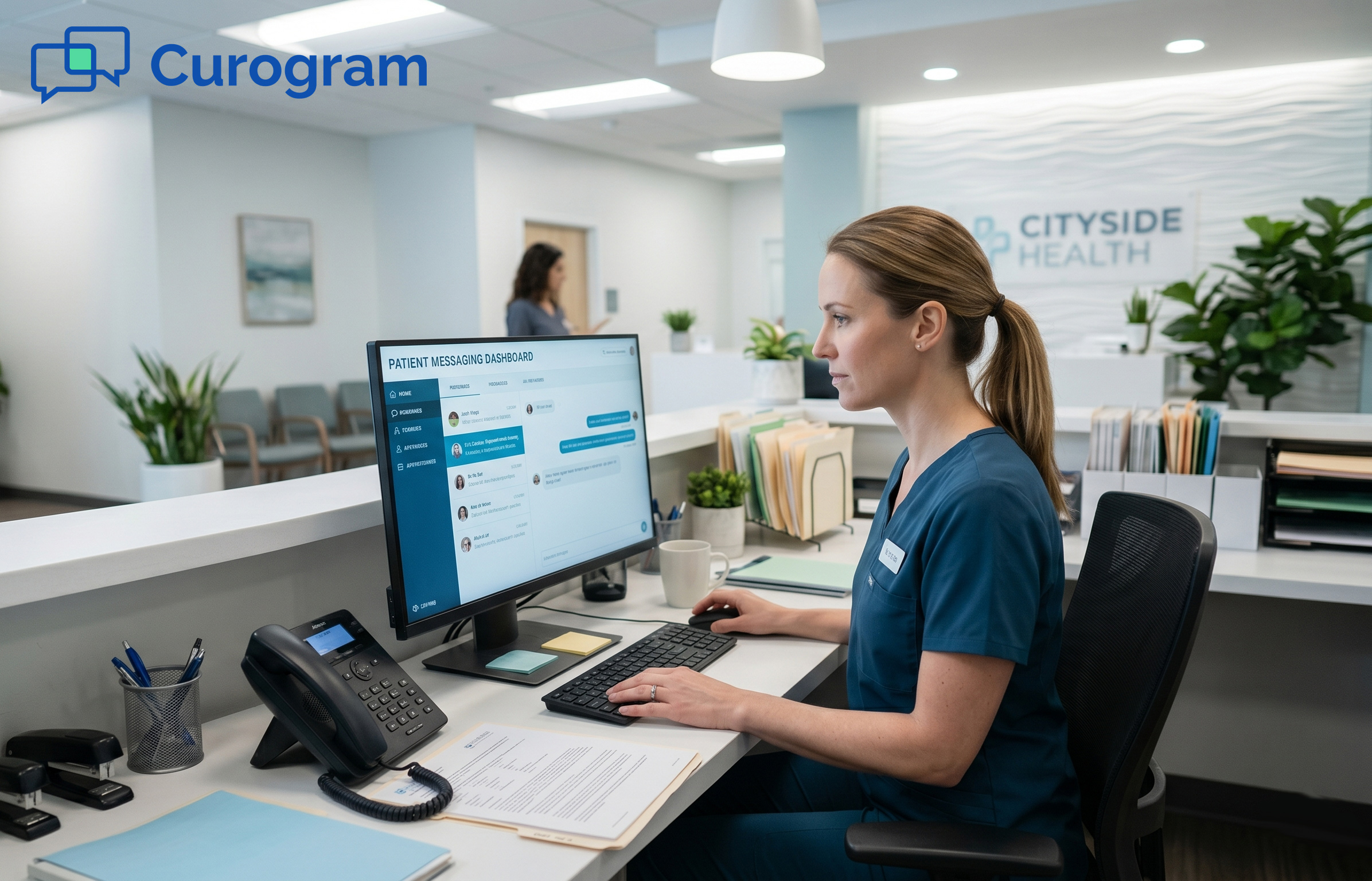 Jo Galvez : May 1, 2026, 3:00:01 PM
Add HIPAA-compliant two-way texting to your GE Centricity clinics with Curogram's live integration. Deploy across 20+ locations, no EHR migration...
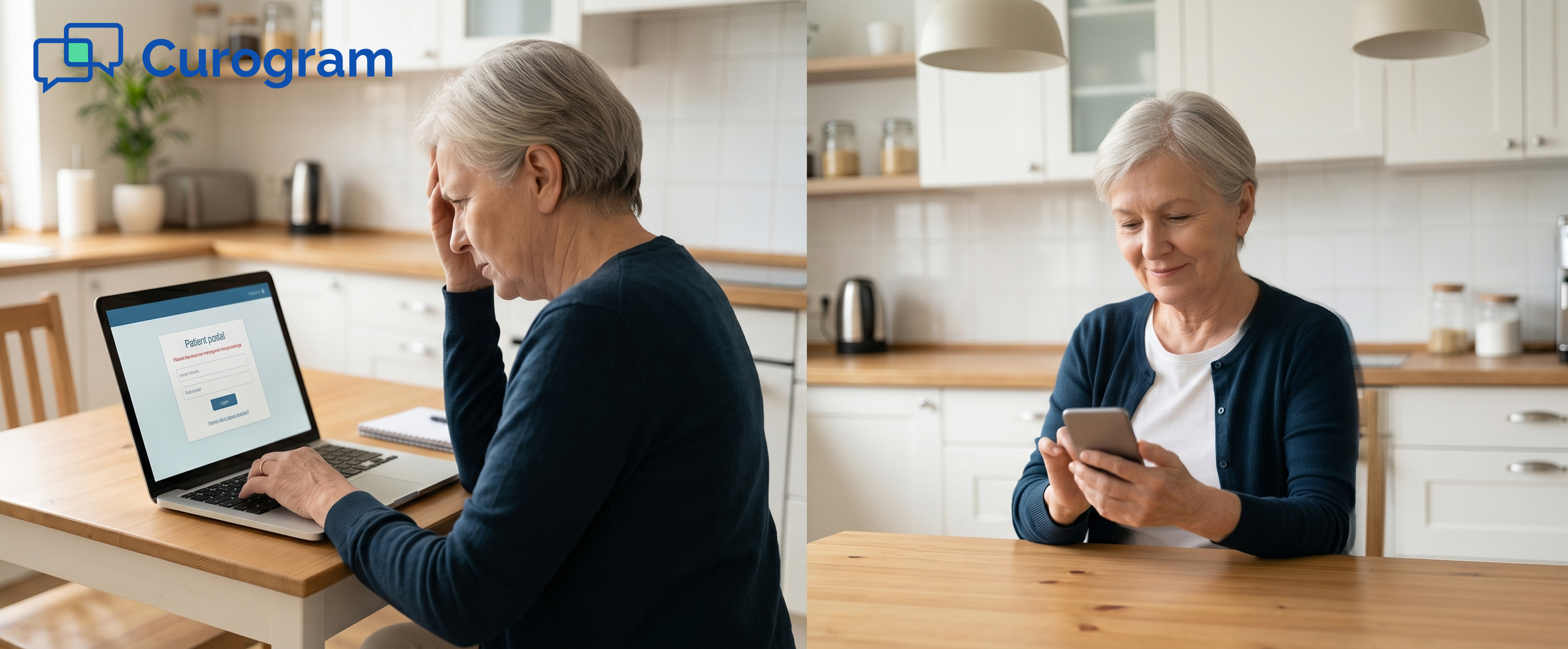 Jo Galvez : May 5, 2026, 12:00:00 PM
See how 2-way HIPAA texting via Curogram & StreamlineMD improves the experience at imaging centers. Less friction, better engagement, higher...